Broken stair tread
A broken stair tread is a fall hazard. Start by checking whether the damage is just at the front edge, a split through the tread, or movement from loose support before deciding on repair or replacement.
Use wobble, loose fasteners, squeaks, damaged posts, tread movement, and safety concerns to find the right repair guide.

A broken stair tread is a fall hazard. Start by checking whether the damage is just at the front edge, a split through the tread, or movement from loose support before deciding on repair or replacement.
Figure out whether cat-damaged stair trim is just surface scratching, loose trim, or broken stair parts. Start with safe checks, then repair or replace the right stair trim piece.
Figure out whether a cat-scratched stair railing needs a simple finish repair, wood filler work, trim replacement, or a sturdier railing repair before you start sanding or painting.
Figure out whether the damage is just cosmetic trim, a loose railing part, or a safety problem. Start with simple checks, then repair, replace, or call a pro before someone gets hurt on the stairs.
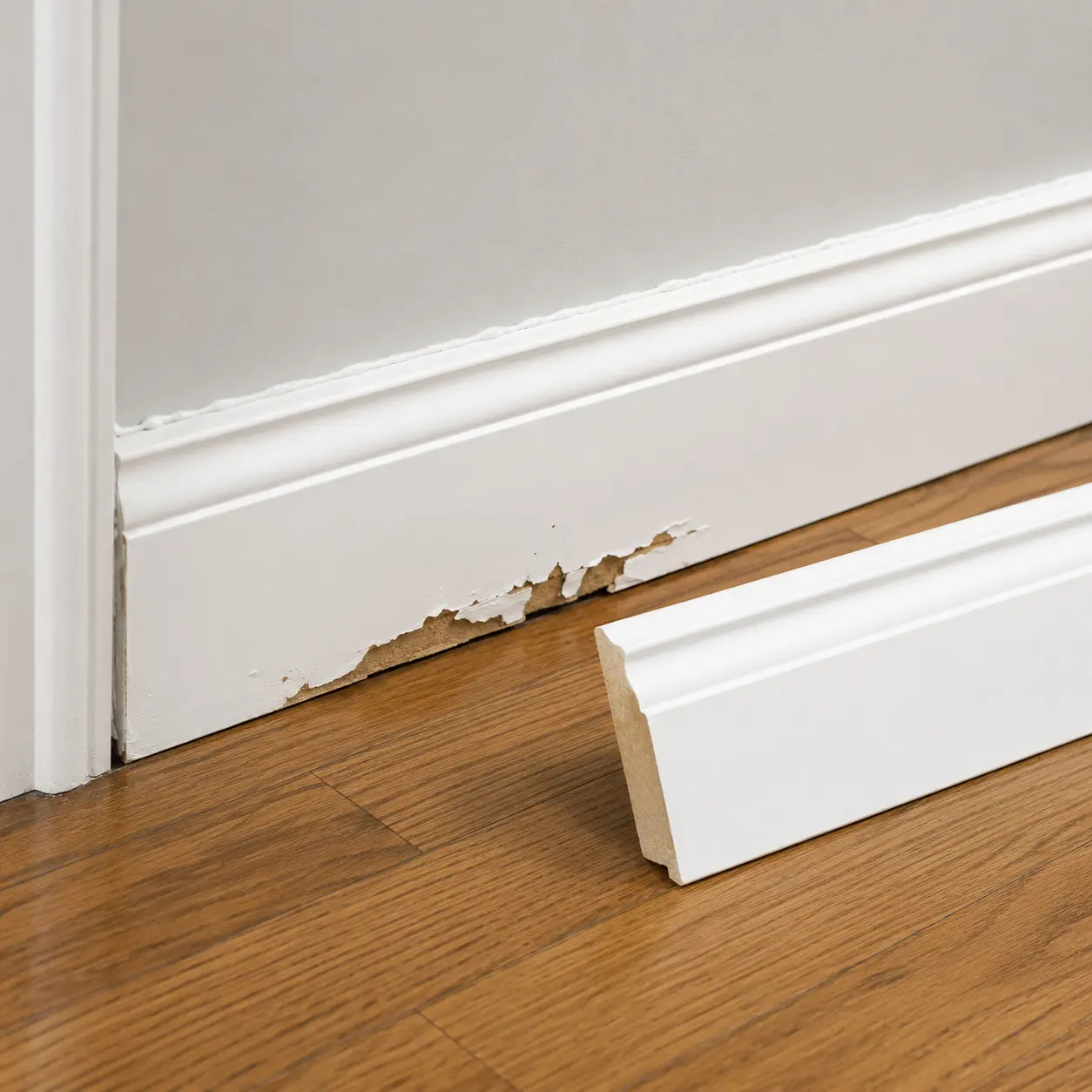
Figure out whether dog-chewed stair trim is just cosmetic or a loose, unsafe stair-edge problem. Start with stability checks, then repair, fill, or replace the damaged trim.
A loose handrail is usually a failed bracket, stripped mounting point, or movement in the wall or post. Start with where the play is, then tighten, resecure, or stop and call for structural repair.
Figure out why a stair handrail is pulling away from the wall, from loose brackets to failed wall anchoring, and know when the wall itself is no longer safe to trust.
Figure out whether rabbit-chewed stair trim can be filled, patched, or needs replacement. Start with safety, check for loose trim, and fix the damage without guessing.
Figure out whether a cracked stair railing is a surface split, a loose connection, or a structural failure. Start with safe checks, stabilize the area, and choose the right repair path.
Troubleshoot a loose stair railing by separating a loose bracket or handrail section from a weak wall anchor or damaged post before you tighten or replace anything.
A wobbly stair railing usually comes from loose mounting, stripped fasteners, or a split post or rail. Start with movement checks, then tighten or replace the failed railing hardware only after you know where the play is.
Find out why a stair creaks loudly by separating tread noise, loose railing noise, and structural movement before tightening or replacing anything.
Find out why a stair handrail feels loose, wobbles, or pulls away. Start with brackets and mounting points, then decide whether you can tighten it safely or need a carpenter.
A stair landing that feels springy usually points to loose framing, weak support, or damaged subfloor. Start with movement checks, then tighten, reinforce, or call a pro if the structure is compromised.
Find out why a stair landing sags, separate loose trim from real structural movement, and know when a simple support repair is possible versus when to call a pro fast.
Find out why a stair landing squeaks by checking for loose finish flooring, movement at the landing frame, and railing-related noise before you open anything up.
A wobbly stair newel post usually means loose anchoring at the floor, stair tread, or railing connection. Start with movement checks, tighten what is accessible, and stop if the post or surrounding structure is cracked.
Find out why a stair post feels loose, separate a simple trim or fastener issue from a structural anchoring problem, and know when to stop and call a pro.
A stair post that moves at the bottom is usually loose where it fastens to the stair or floor, but movement can also mean split wood or weak framing below. Start with the safest checks, tighten only what is actually loose, and stop if the post base or stair structure is damaged.
A stair railing post that twists is usually loose at the base, poorly anchored, or split. Start with movement checks, find the exact failure point, and fix the right part before someone falls.
Find out why a stair railing rattles when kids run by checking for loose brackets, balusters, newel posts, or wall anchoring before the railing gets unsafe.
A wobbly stair railing is usually loose mounting, a weak newel post, or failed wall anchoring. Start with the movement point before tightening or replacing anything.
Figure out whether a cracked stair riser is a cosmetic split, a loose riser, or a sign the stair is moving. Start with safe checks, then repair or call a pro before the crack spreads.
Find out why a stair shakes when used by separating loose railing movement from tread, stringer, or landing movement, then take the right repair path safely.