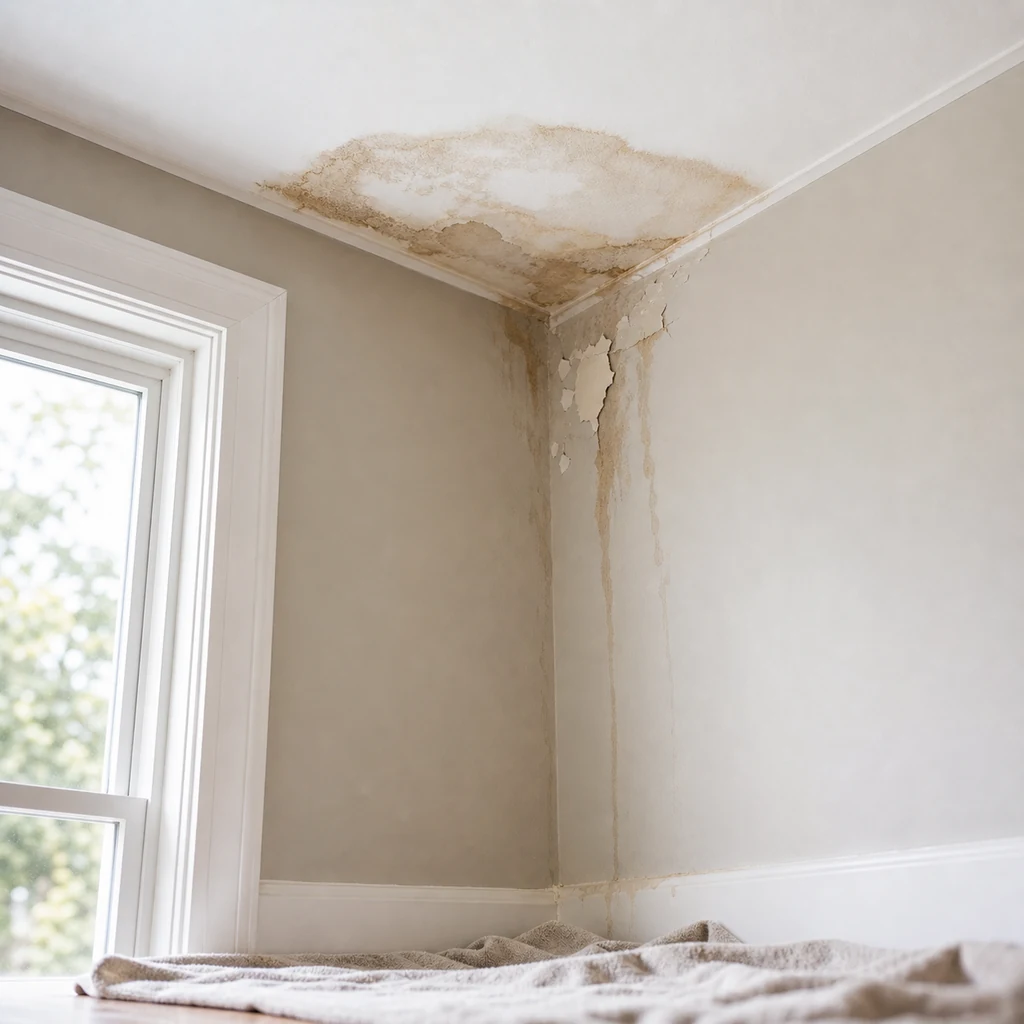
Brown ring on ceiling
A brown ring on a ceiling usually means past or present moisture. Start by checking whether the stain is dry and old, active and spreading, or really condensation before you patch or paint.
Start with stains, cracks, sagging, drips, texture damage, or moisture clues before patching the ceiling surface.
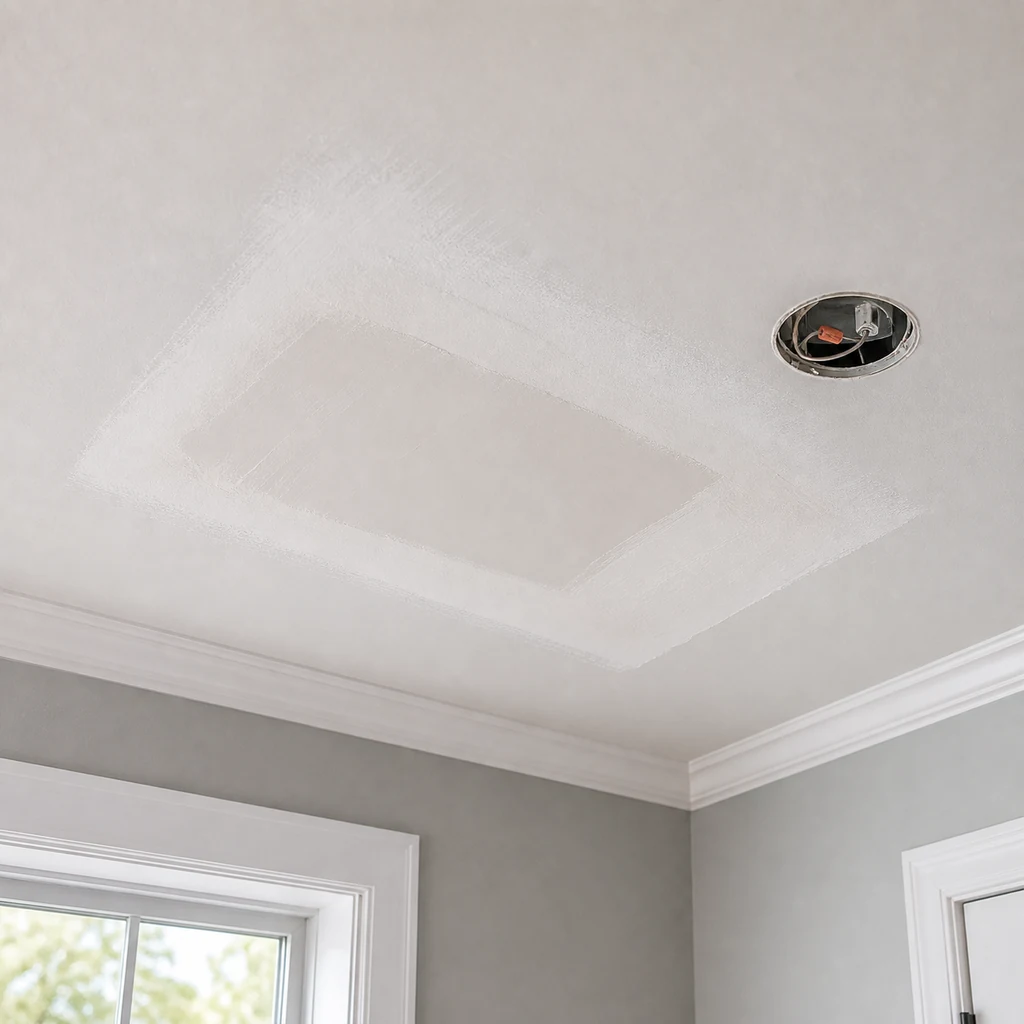
A brown ring on a ceiling usually means past or present moisture. Start by checking whether the stain is dry and old, active and spreading, or really condensation before you patch or paint.
A ceiling that bows down usually points to moisture, loose drywall, or failing fasteners. Start by checking for active water, soft spots, and movement before patching.
Find out why ceiling paint is bubbling, separate moisture from old paint failure, and fix the right problem before you scrape and repaint.
A bulging ceiling usually means trapped moisture, loose drywall, or failing joint tape. Start by checking for active water and sagging before you patch anything.
Find out why moisture is forming on your ceiling, separate condensation from a true leak, and fix the source before patching paint or drywall.
Find out why moisture forms on a ceiling near an exterior corner, how to tell condensation from a leak, and when to dry, air-seal, insulate, or call a pro.
Find out why your ceiling gets wet in winter, separate condensation from a roof or plumbing leak, and fix the source before patching the ceiling.
Figure out whether a ceiling crack after freeze-thaw is simple seasonal movement, moisture damage, or a bigger ceiling problem before you patch it.
Figure out whether a growing ceiling crack is simple joint movement, loose drywall tape, moisture damage, or a sagging ceiling problem before you patch it.
A ceiling crack over a doorway is often from normal movement at a weak spot, but width, staining, sagging, or a growing crack can point to a bigger problem. Check the pattern first, then choose the right repair path.
Figure out whether a cracked ceiling is a simple drywall seam issue, settling, moisture damage, or a structural warning before you patch it.
If your ceiling drips after snow melt, start by separating roof leak clues from attic condensation. Check timing, stain location, attic frost, and wet insulation before patching the ceiling.
If ceiling drywall is sagging after a leak, treat it like wet damaged material first. Check whether it is still wet, how wide the sag is, and whether the drywall has pulled loose before patching.
Find out whether a spreading ceiling hairline crack is simple drywall movement, a bad seam, moisture damage, or a structural warning before you patch it.
A ceiling stain under winter icicles usually points to attic condensation or an ice-dam leak, not just a bad paint spot. Start with moisture pattern, attic clues, and ceiling condition before patching.
Water around a ceiling light usually means a roof, plumbing, or attic moisture problem above it. Start by shutting off power, catching the leak, and tracing the source before patching the ceiling.
Track down a hard-to-find ceiling leak by separating roof, plumbing, and condensation clues before you patch the ceiling.
Ceiling paint bubbling after rain usually means moisture is getting above the paint film. Start by separating an active leak from attic condensation, then repair the ceiling only after the source is dry.
A ceiling that sags after snow usually means roof leakage, attic condensation, or water-loaded drywall. Start with safety, confirm whether the ceiling is wet, and avoid patching until the source is controlled.
Find out why a ceiling is sagging under insulation, how to tell moisture from overload, when to stabilize it, and when a drywall patch is actually safe.
A musty ceiling usually means trapped moisture, attic condensation, or an old leak that never fully dried. Start with moisture clues before patching or painting.
Track down a musty smell near a ceiling light by separating surface mildew, attic condensation, and hidden leaks before patching or painting.
A soft spot in a ceiling usually means moisture-damaged drywall or plaster. Start by checking for active water, sagging, and source clues before patching.
If a ceiling stain shows up after running the bathroom fan, start by separating condensation from a true roof or plumbing leak. Check the fan grille, attic duct, and moisture pattern before patching the ceiling.