Blades stiff or scraping?
Mechanical drag, rub, bearing, or obstruction path.
If a ceiling fan hums but will not spin, the motor is getting some power but cannot start. Start with the fan off: check whether the blades turn freely, then sort reverse switch, wall control, capacitor, and motor heat clues.
Good clues are blades that feel stiff, a reverse switch stuck between positions, a fan that starts only when pushed, a bad capacitor pattern, or a motor housing that gets hot while humming.
The useful split is mechanical drag versus an electrical starting problem.
Don’t start with: Do not keep forcing the fan to hum or spin by hand. A stalled motor can overheat quickly.
Mechanical drag, rub, bearing, or obstruction path.
Starting circuit, capacitor, control, receiver, or motor path.
Capacitor is a strong suspect after controls are ruled out.
Set it fully with blades stopped and retest.
Stop using it and plan service or replacement.
The stopped blades, reverse switch, and capacitor area help separate drag from an electrical starting problem.
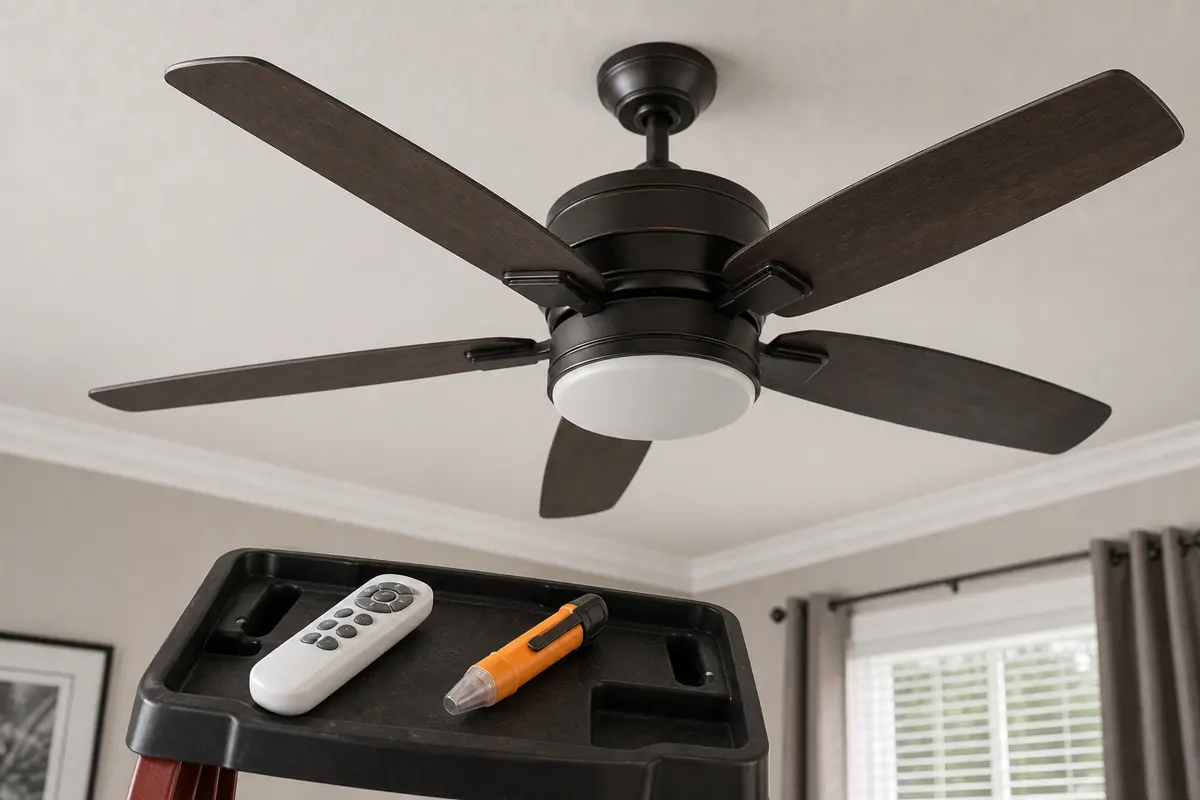
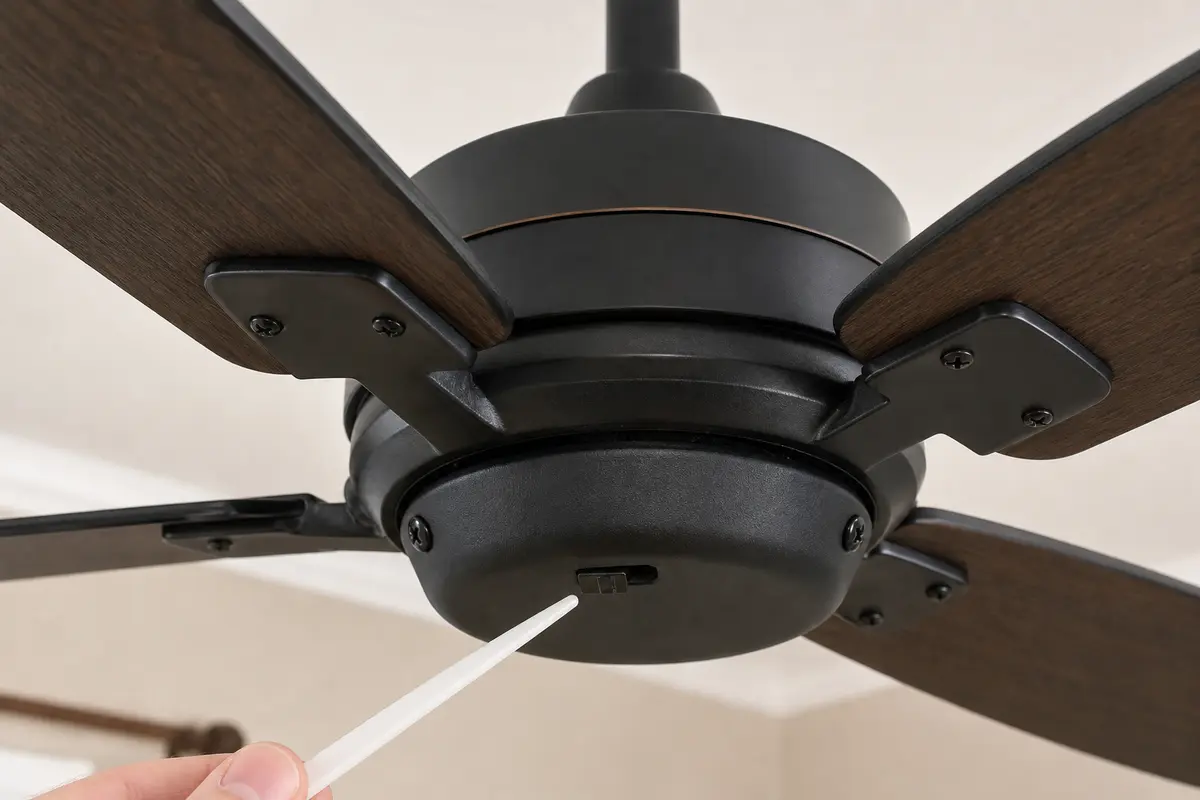
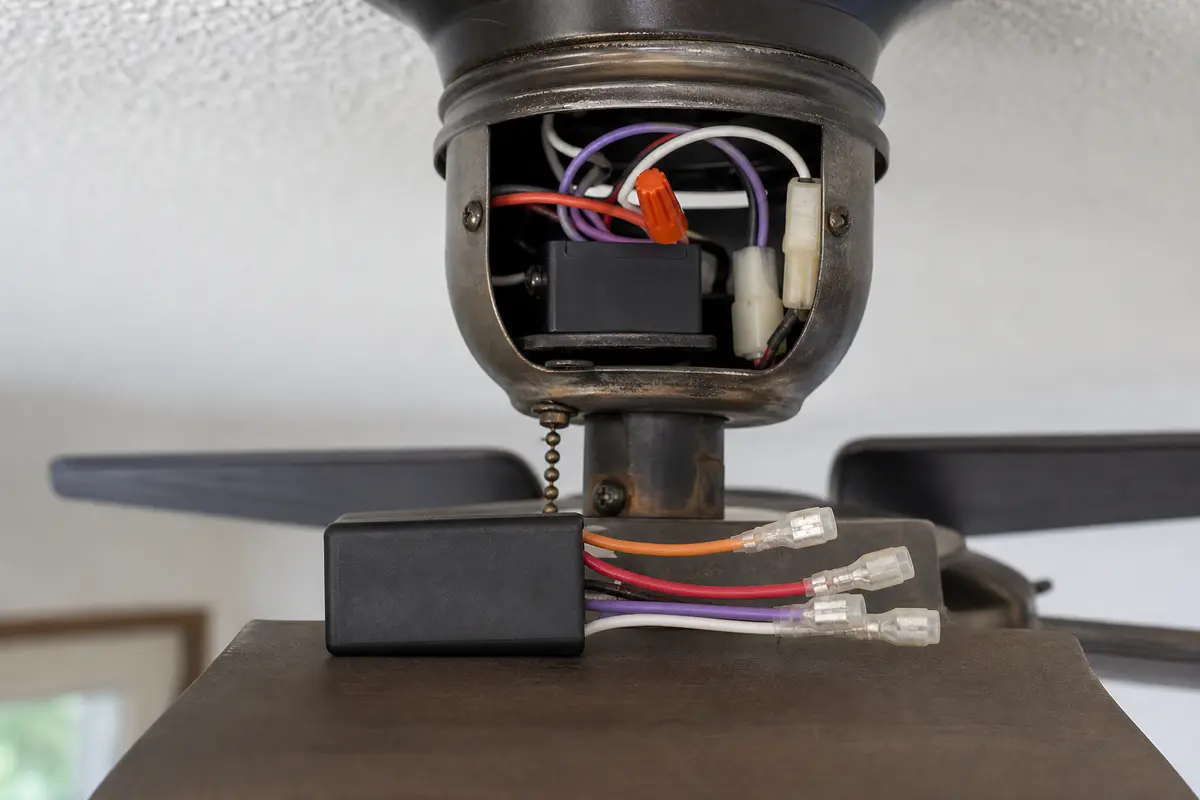
Confirm whether the hum is mechanical drag, reverse-switch position, control trouble, capacitor weakness, receiver failure, or motor heat. Match the exact fan model, control setup, symptom pattern, measurements, and confirmed diagnosis before ordering anything.
When a fan hums but does not turn, it is not completely dead. In practice, the first good clue is whether the blades feel free with power off.
The usual mistake is trying the switch over and over or pushing the blades every time. Watch for heat and stop before a stalled motor cooks itself.
Use blade feel, push-start behavior, and heat to choose the next safe path.
| Pattern | Likely path | Next move |
|---|---|---|
| Blades stiff by hand | Drag, rub, or bearing | Find contact before parts. |
| Spins freely, hums | Capacitor/control/motor | Check controls and exact part fit. |
| Push-start works | Weak start capacitor likely | Match capacitor exactly. |
| Only remote path fails | Receiver or control | Compare wall/pull/remote behavior. |
| Heat or smell | Unsafe stalled motor | Turn it off. |
Mechanical drag can sound like an electrical failure because the motor cannot overcome the resistance. Good clue: the blades should coast smoothly by hand when power is off.
A capacitor is plausible when the blades spin freely, the fan hums, and a push-start makes it run. It is still not universal; exact values and wiring matter.
These tools support safe power-off checks before any canopy, switch housing, or capacitor access.
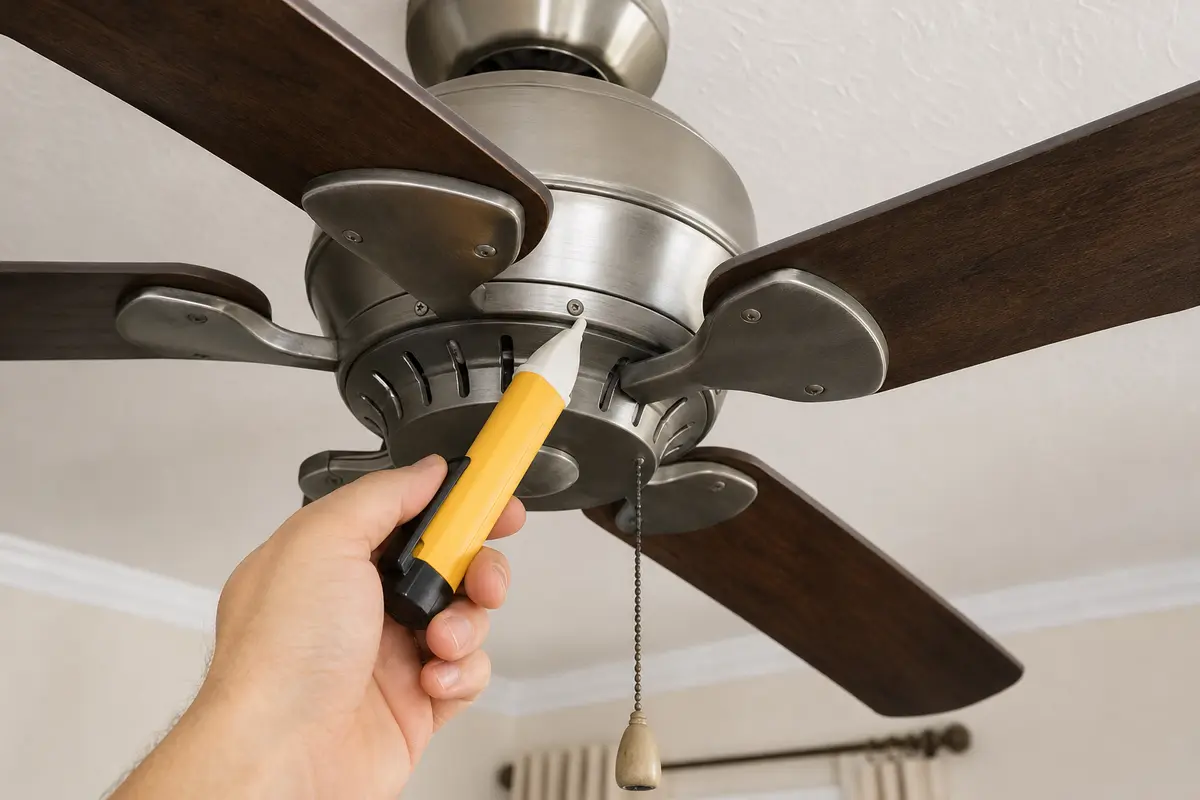
Helps when: Screens for power after the breaker is off before canopy, switch housing, wall control, or capacitor access.
Skip it when: Skip DIY electrical checks if readings are confusing, the breaker trips again, or the fan wiring is unfamiliar.
Compare voltage testers on Amazon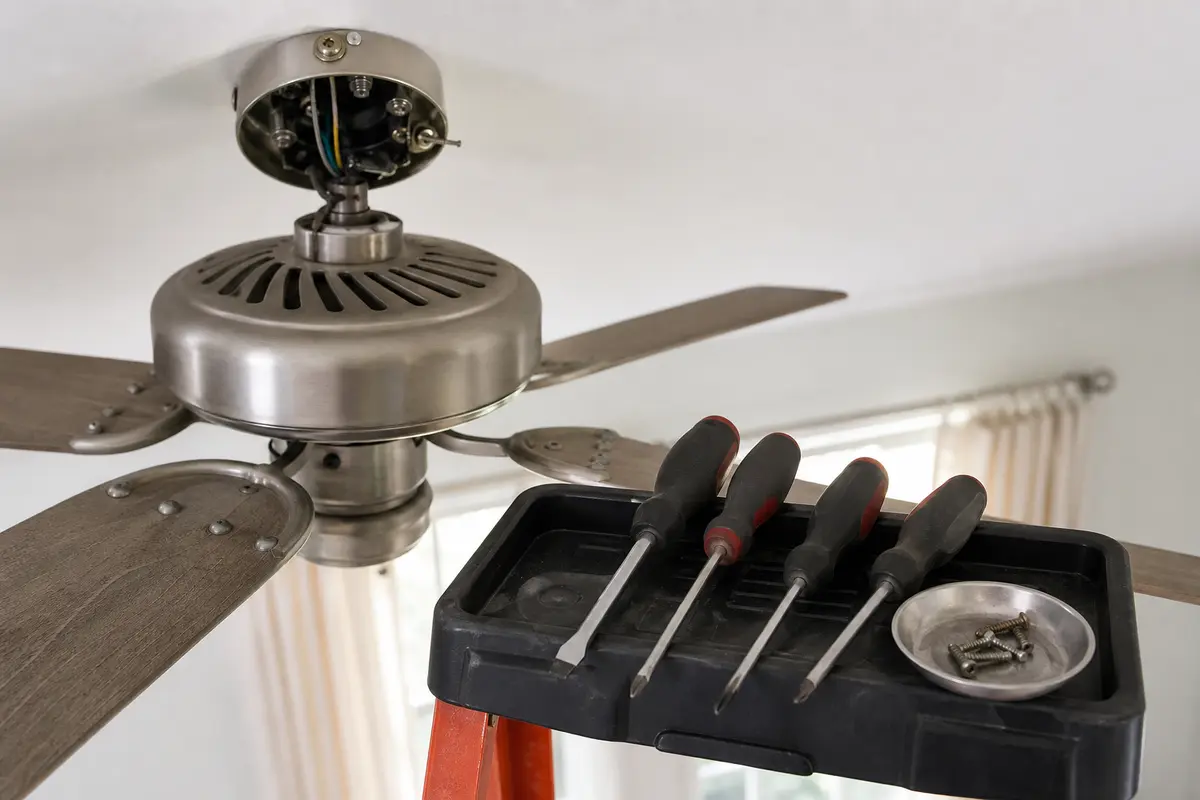
Helps when: Tightens blade arms, light-kit screws, canopy screws, set screws, and switch-housing screws without stripping hardware.
Skip it when: Skip tightening if the fan is moving at the box, the ladder position is unsafe, or the screw head is damaged.
Compare screwdriver sets on Amazon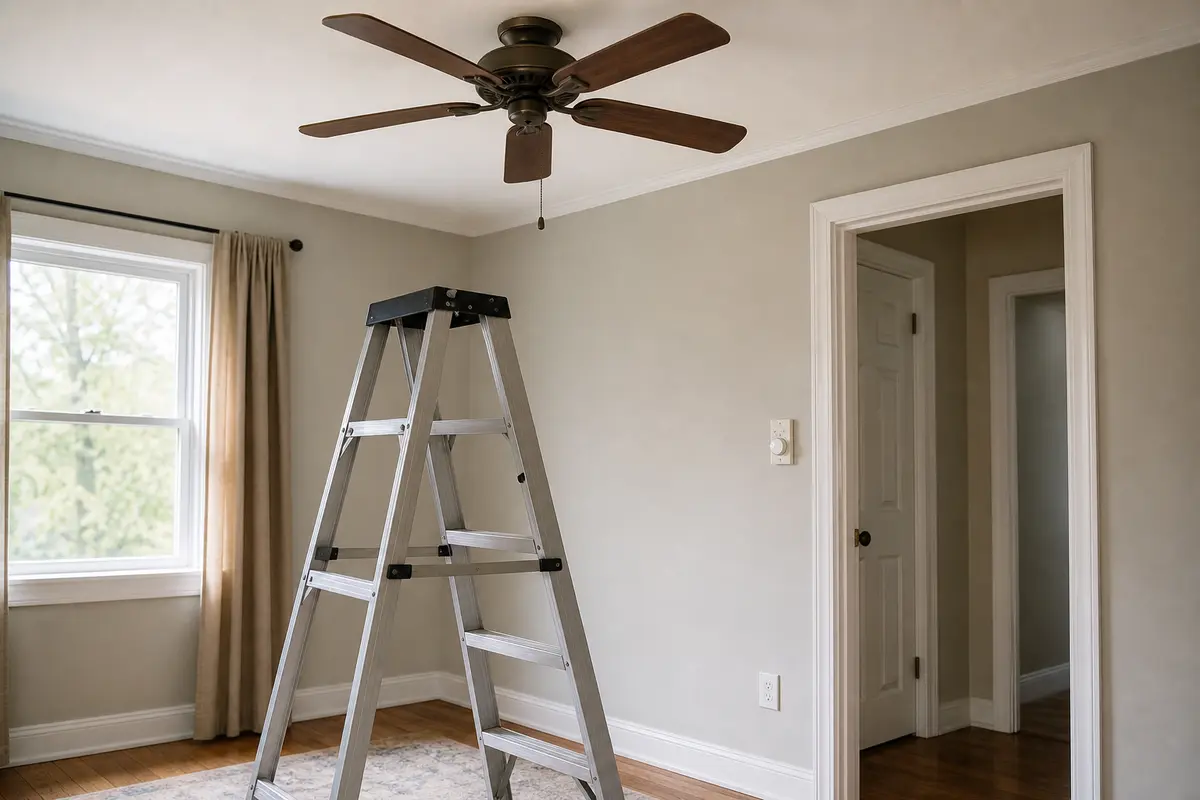
Helps when: Lets you reach the fan housing while standing flat-footed instead of leaning from furniture or the top cap.
Skip it when: Skip DIY overhead work if the fan is over stairs, furniture, a bed, or any spot where you cannot stay balanced.
Compare step ladders on AmazonAs an Amazon Associate I earn from qualifying purchases. Repair Riot may earn a commission at no extra cost to you.
This part belongs in the cart only after the no-start pattern points to it and the exact fan label and capacitor markings match.
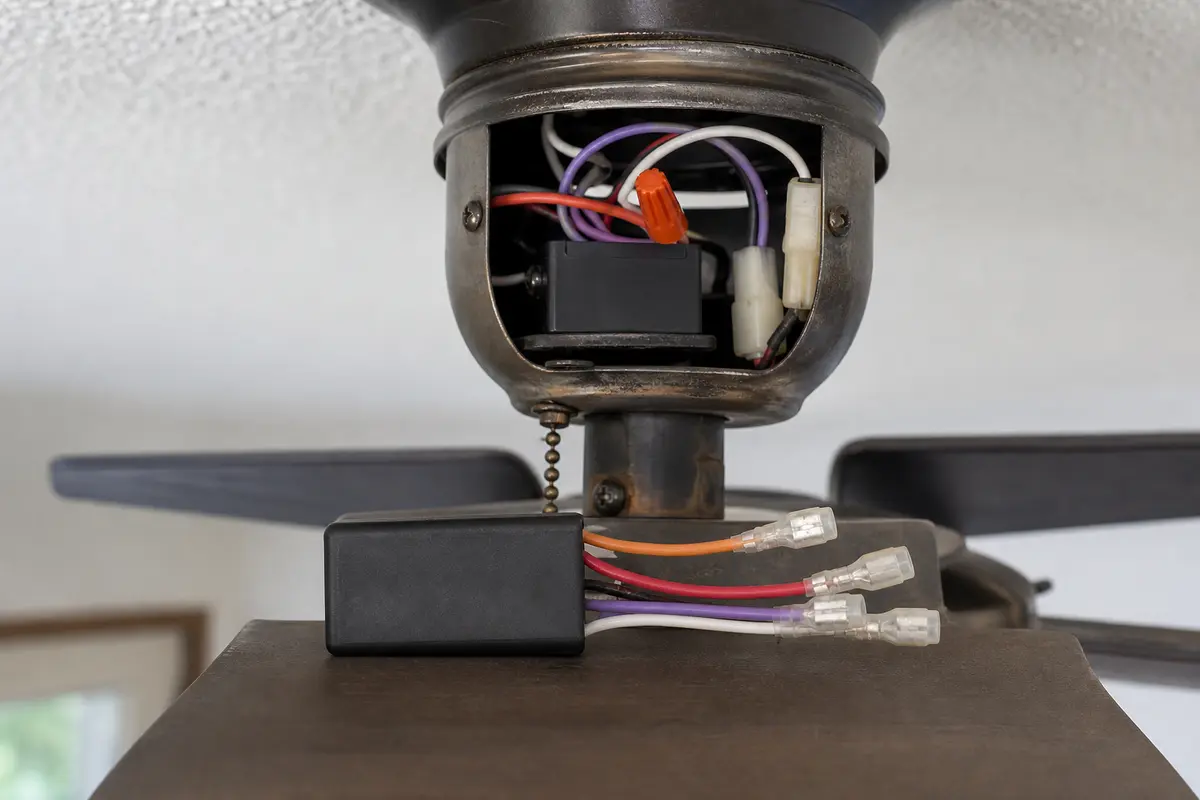
Helps when: Fits the classic hum, weak-start, crawl, or push-start pattern after drag, reverse switch, and control clues are ruled out.
Skip it when: Skip it if you cannot match microfarad values, voltage rating, wire count, connector style, and mounting space exactly.
Compare fan capacitors on AmazonAs an Amazon Associate I earn from qualifying purchases. Repair Riot may earn a commission at no extra cost to you.
The motor is getting some power but cannot start. Common paths are blade drag, reverse switch trouble, a weak capacitor, a control/receiver fault, or a failing motor.
That is a strong weak-start clue, often a capacitor, after drag and control problems are ruled out. Do not use pushing as a workaround.
Yes. Some failed capacitors do not bulge or leak, so symptom pattern and exact matching matter.
Usually no. Most modern ceiling fans are not homeowner-oilable, and oil does not fix a capacitor, bad control, or damaged motor.
No. Repeated humming without rotation can overheat the motor and damage the fan.
Stop for ceiling-box movement, heavy wobble, hot smell, breaker trips, sparking, grinding from the motor, or any check that requires wiring you cannot verify de-energized.
Photograph the canopy, downrod, blade arms, light kit, wall control, remote, model label, and the exact part or setting that changes the noise.
Usually no. Most fan noise and no-start symptoms should be sorted by support, hardware, controls, drag, capacitor clues, and model-specific fit before motor replacement is considered.
Repair Riot reviewed this page around ceiling fan hum/no-start symptoms, blade drag, reverse switch position, capacitor matching, motor heat, and power-off electrical boundaries. The source links support home electrical safety and general fan context; the diagnostic sequence is original guidance.