Rub mark visible?
Trim, housing, blade bracket, or light kit path.
A ceiling fan grinding noise usually means contact: lower housing rub, light-kit trim, blade bracket clearance, pull-chain hardware, or worn motor bearings. Stop using it if the motor housing gets hot or the grind comes from inside the motor.
Good clues are shiny rub marks, a scraping sound on startup or shutdown, one bracket touching the housing, a chain dragging, or grinding that stays after visible parts are clear.
The useful split is outside rubbing versus internal motor or bearing trouble.
Don’t start with: Do not spray lubricant into the motor housing or keep running a fan that sounds like metal dragging.
Trim, housing, blade bracket, or light kit path.
Loose trim or blade flex may be touching briefly.
Bearing or internal motor path; stop using it.
Balance, support, or blade bracket path.
Turn it off and call for help.
Look for rub marks, motor-area clues, and bracket clearance before assuming a motor replacement.
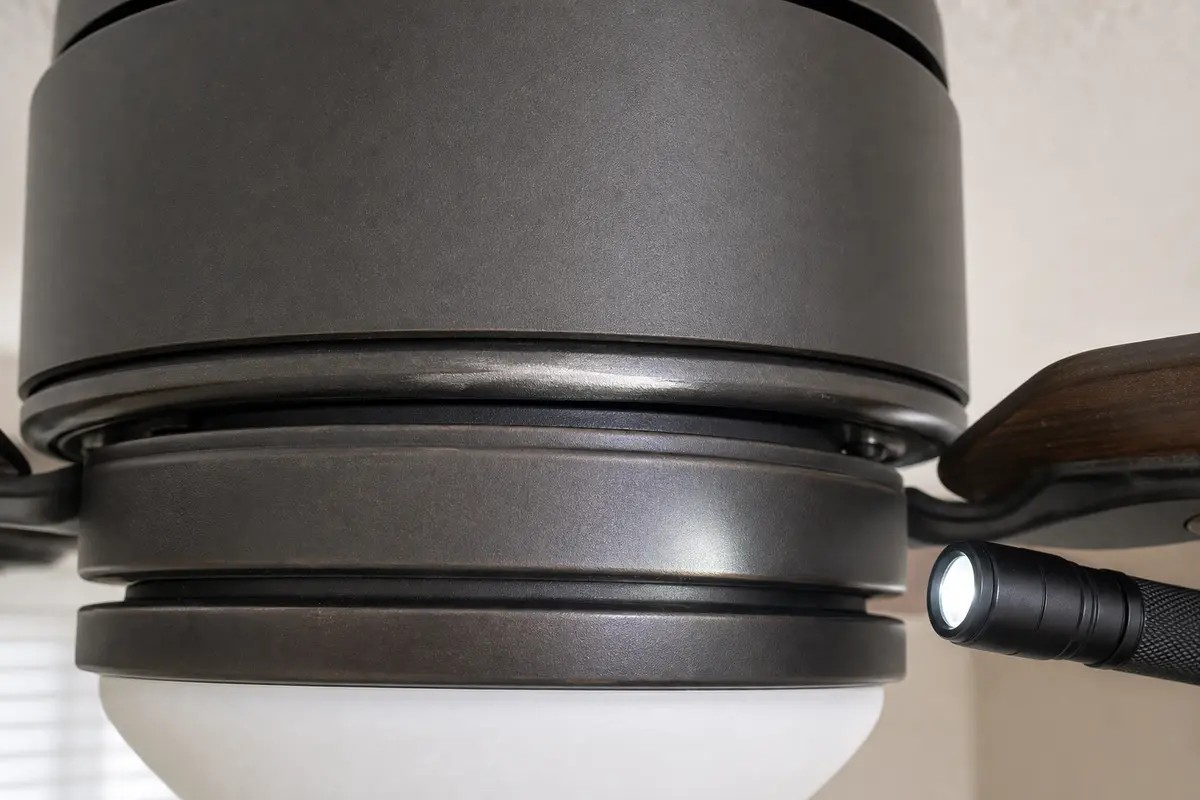
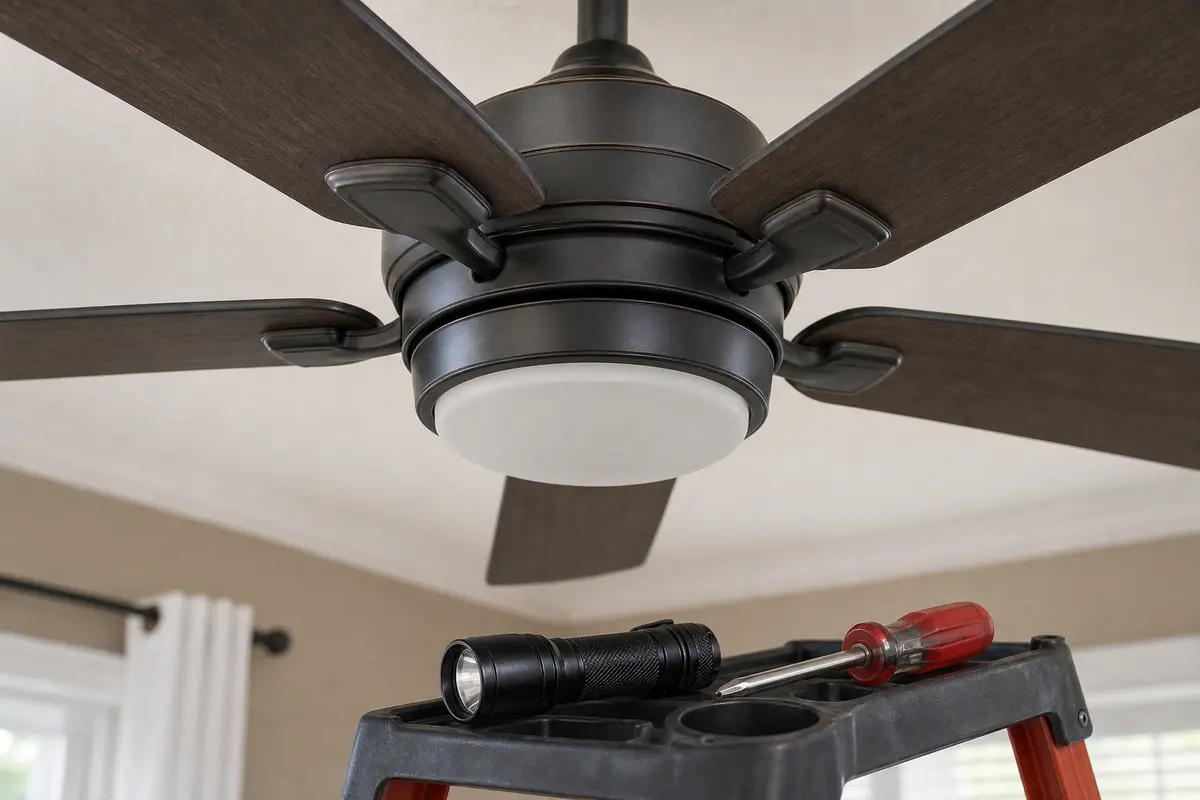
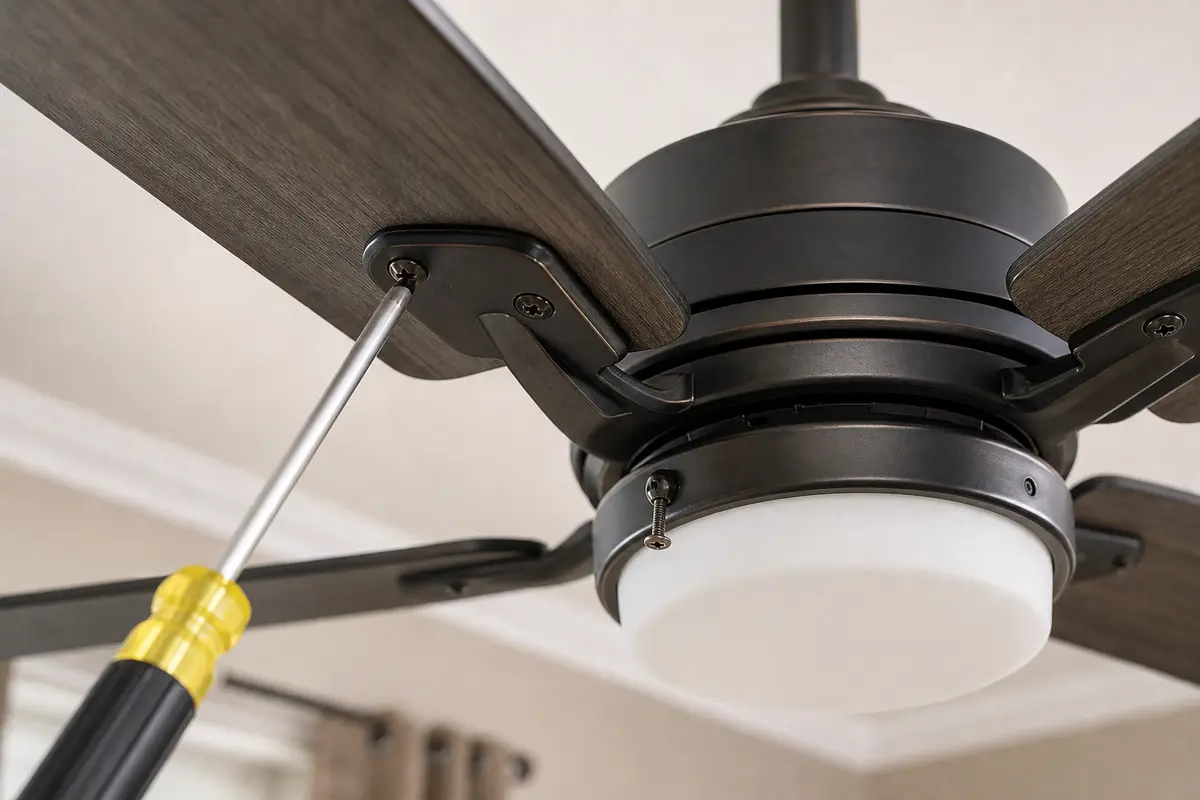
Confirm whether grinding is lower-housing rub, blade bracket clearance, light-kit trim, pull-chain contact, bearing noise, or support movement. Match the exact fan model, control setup, symptom pattern, measurements, and confirmed diagnosis before ordering anything.
Grinding is rougher than buzzing or clicking. In practice, the first good clue is a rub mark, scrape timing, or heat at the motor housing.
The usual mistake is spraying lubricant or running the fan to listen longer. If it sounds like metal dragging, use short tests only after visible hardware is checked.
Match the grind to timing and location. Startup, shutdown, high speed, and motor-area noise mean different next checks.
| Pattern | Likely path | Next move |
|---|---|---|
| Visible rub mark | Housing or trim contact | Loosen, center, and snug correctly. |
| Only at high speed | Blade flex or imbalance | Check bracket and balance. |
| Startup/shutdown scrape | Loose trim or canopy shift | Find contact point. |
| Constant motor grind | Bearing or motor trouble | Stop using fan. |
| Grinding plus heat | Unsafe motor/electrical clue | Turn it off. |
Most fixable grinding starts outside the motor. Work slowly and avoid forcing parts into alignment.
If the grind remains after every outside contact point is clear, the motor or bearings move higher. Good clue: the sound follows motor rotation even with no trim or chain contact.
These tools help you see rub marks, tighten exterior hardware, and verify power is off before any cover is opened.
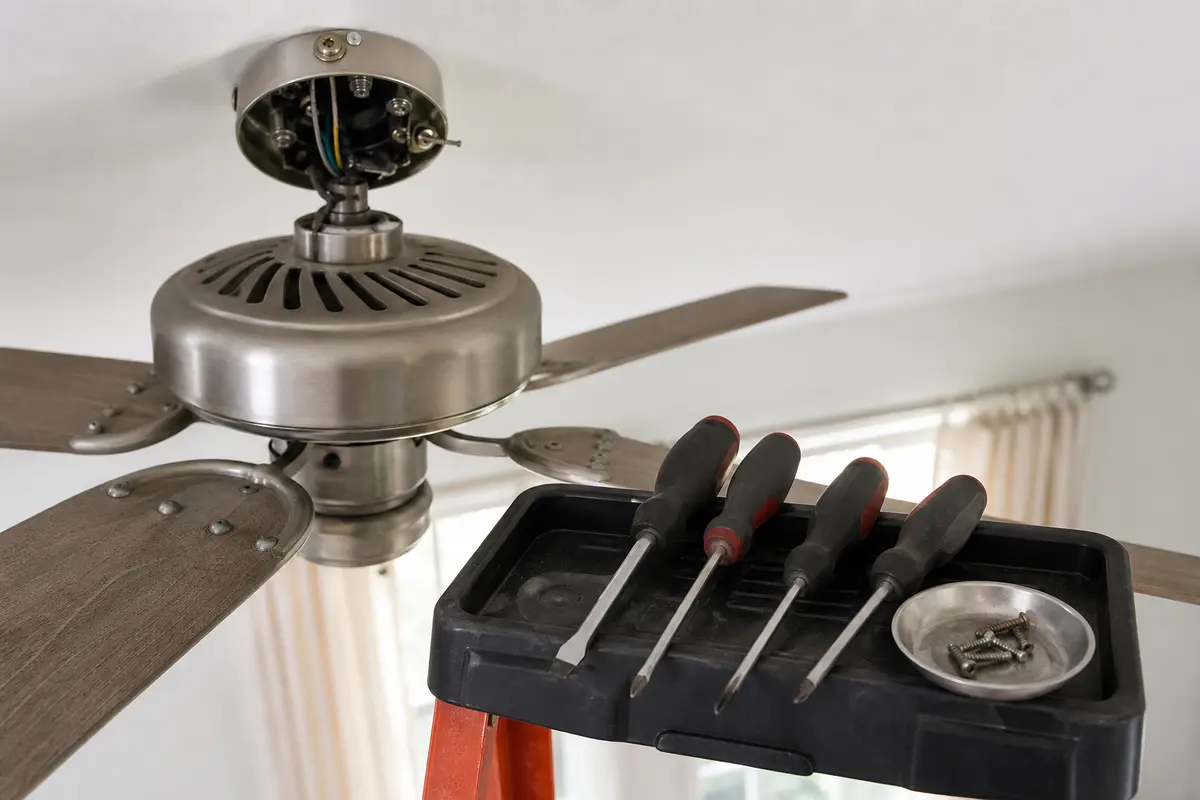
Helps when: Tightens blade arms, light-kit screws, canopy screws, set screws, and switch-housing screws without stripping hardware.
Skip it when: Skip tightening if the fan is moving at the box, the ladder position is unsafe, or the screw head is damaged.
Compare screwdriver sets on Amazon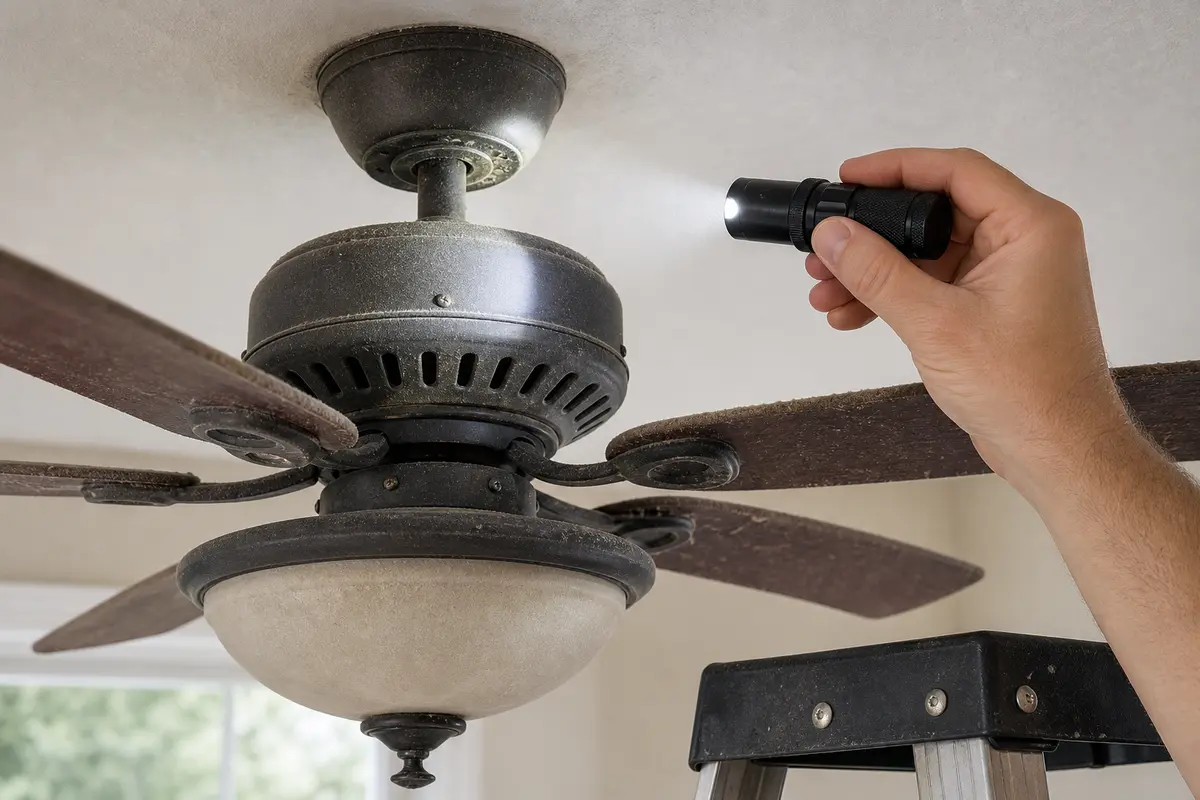
Helps when: Helps see rub marks, loose screws, pull-chain contact, scorch marks, and model labels with the breaker off.
Skip it when: Skip overhead inspection if better light still leaves you unsure about support, wiring, or heat.
Compare inspection flashlights on Amazon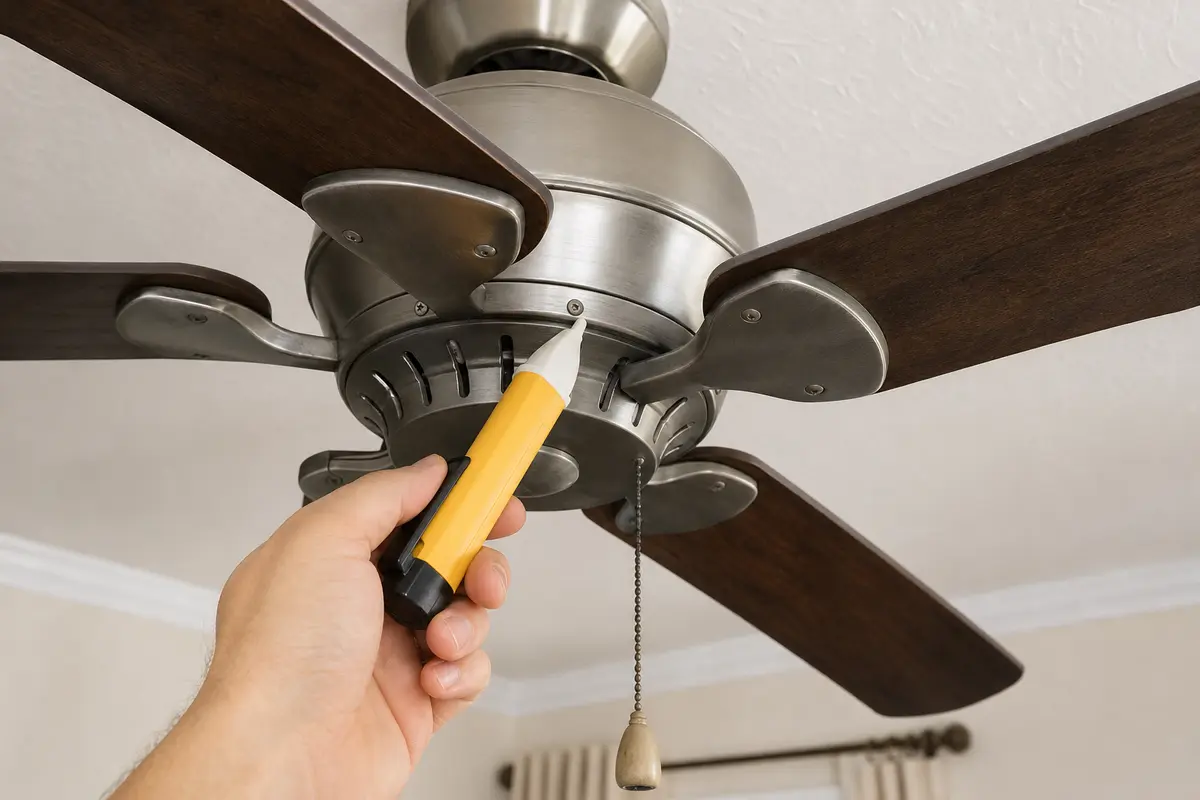
Helps when: Screens for power after the breaker is off before canopy, switch housing, wall control, or capacitor access.
Skip it when: Skip DIY electrical checks if readings are confusing, the breaker trips again, or the fan wiring is unfamiliar.
Compare voltage testers on AmazonAs an Amazon Associate I earn from qualifying purchases. Repair Riot may earn a commission at no extra cost to you.
It can be. Loose trim may be simple, but grinding from the motor, heat, support movement, or electrical smell means stop using the fan.
Usually no. Most residential fan motors are not meant for homeowner lubrication, and spraying into the housing can make things worse.
Grinding is rough, scraping, or metal-on-metal. Clicking is rhythmic and usually tied to one loose or tapping part.
High speed can flex a blade arm, shift trim, or reveal imbalance enough for one part to touch.
If the motor or bearings are truly grinding, replacement is often cleaner than overhead motor repair. Rule out outside rubbing first.
Stop for ceiling-box movement, heavy wobble, hot smell, breaker trips, sparking, grinding from the motor, or any check that requires wiring you cannot verify de-energized.
Photograph the canopy, downrod, blade arms, light kit, wall control, remote, model label, and the exact part or setting that changes the noise.
Usually no. Most fan noise and no-start symptoms should be sorted by support, hardware, controls, drag, capacitor clues, and model-specific fit before motor replacement is considered.
Repair Riot reviewed this page around ceiling fan grinding, rub marks, lower housing and light-kit contact, motor heat, support movement, and power-off inspection. The source links support home electrical safety and general fan context; the diagnostic sequence is original guidance.