Click matches blade speed?
Blade screw, bracket, chain, shade, or trim contact path.
A ceiling fan clicking noise usually means one loose or touching part: pull chain, shade, blade arm, canopy, or downrod. If the click follows blade speed, shut power off and check those visible points before blaming the motor.
Match the sound to speed first. If it speeds up with the blades, inspect the pull chain, shade, trim, and blade hardware with power off. Noise from the ceiling area means stop the fan and check the canopy, downrod, and support before running it again.
The useful split is blade-speed rhythm versus canopy or support movement.
Don’t start with: Do not take the fan down or buy a motor before checking the visible tapping points with power off.
Blade screw, bracket, chain, shade, or trim contact path.
Balance, blade tracking, or loose trim is likely.
Shade, bulb, light-kit screw, or pull-chain contact path.
Mounting, downrod, canopy contact, or support path.
Internal hardware or service diagnosis moves higher.
Pull-chain tapping, one loose blade arm, and canopy movement create most ceiling fan clicks before the motor is guilty.
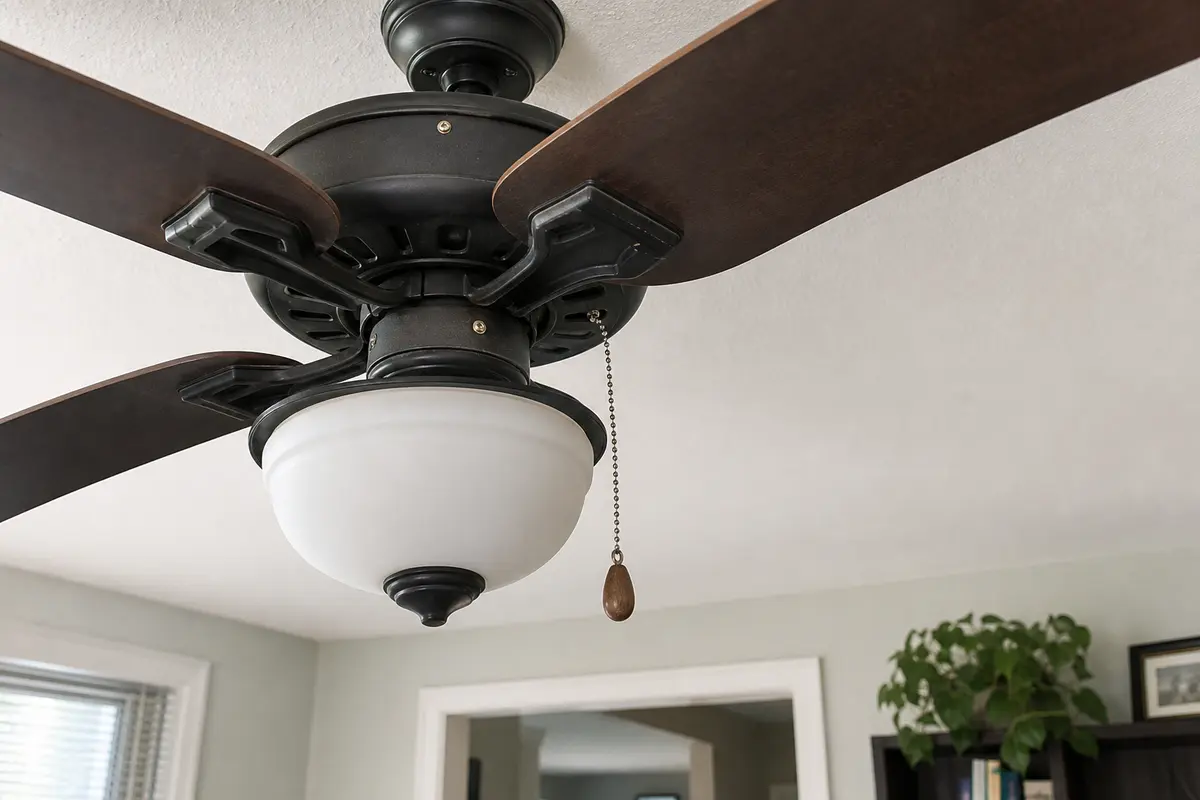
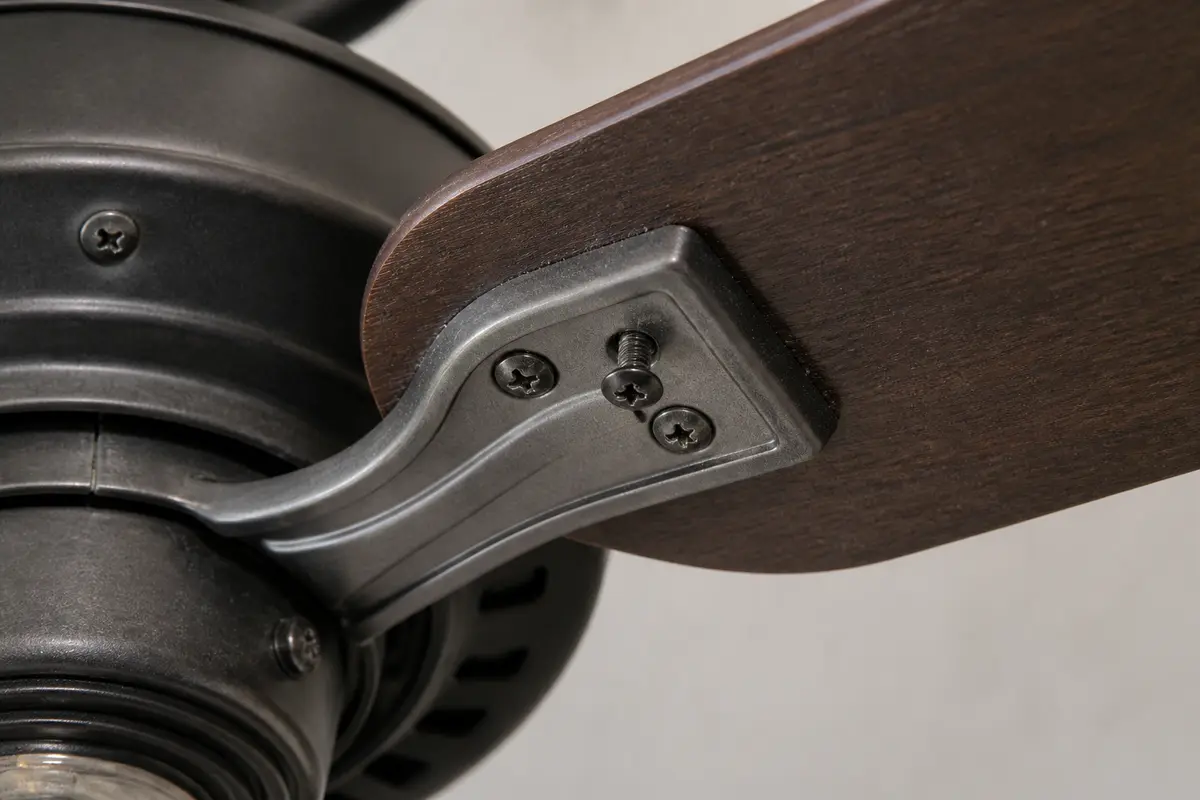
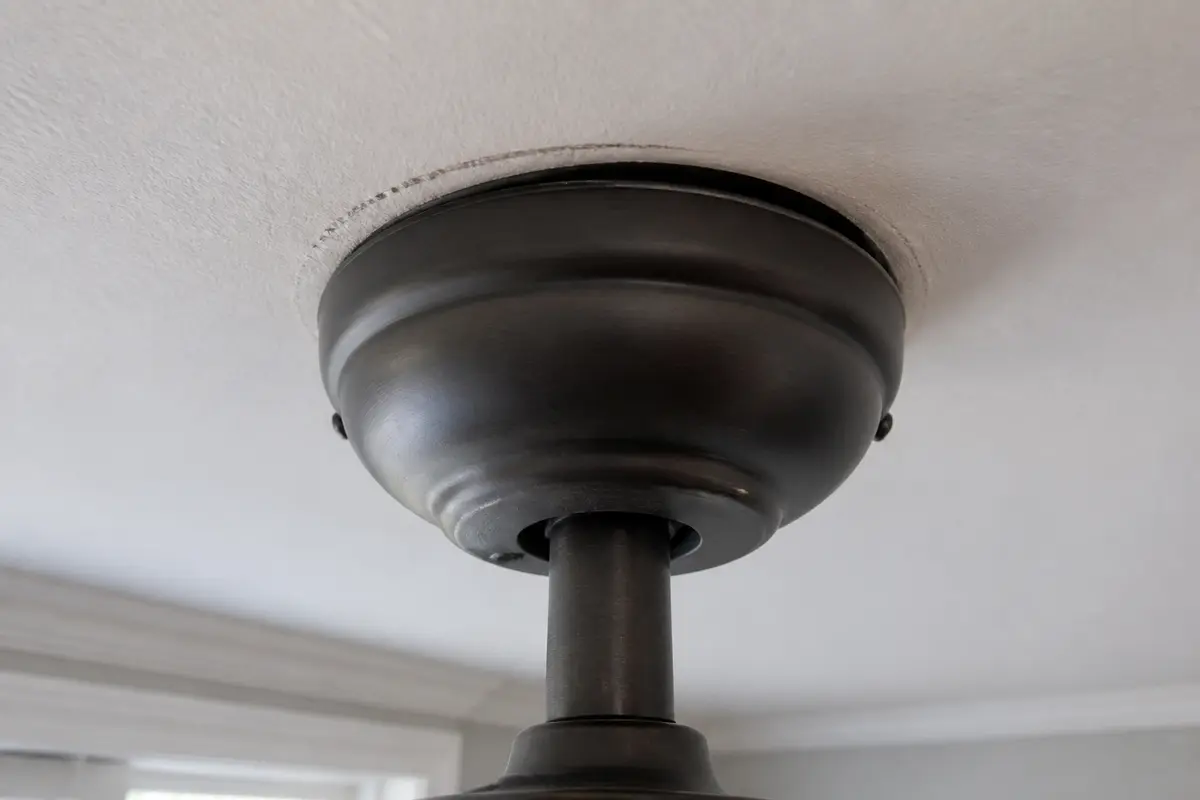
Confirm whether the clicking is pull-chain contact, blade hardware, light-kit movement, canopy rub, or support movement. Match the exact fan model, control setup, symptom pattern, measurements, and confirmed diagnosis before ordering anything.
A rhythmic click usually means one part touches, shifts, or flexes at the same point each turn. If it speeds up and slows down with the blades, check the pull chain, blade arm screws, glass shade, and canopy before you look inside the motor.
The usual mistake is tightening every screw hard or blaming the motor. In practice, watch the blade path and find the part that moves with the click.
Use the rhythm and location. A blade-speed click, light-only click, and canopy click point to different fixes.
| Pattern | Likely path | Next move |
|---|---|---|
| Once per rotation | Blade, chain, shade, or trim | Find the touching part. |
| Only with light | Light kit or shade | Tighten and center the shade. |
| Only on high | Balance or blade tracking | Check screws and blade pitch. |
| At canopy | Mount or downrod | Stop and verify support. |
| Random internal clicks | Switch or motor hardware | Stop after outside checks. |
Start with the parts that move, hang, or vibrate. The fan should be off and stable before you touch anything.
A click near the ceiling can be canopy rub, downrod movement, or a support problem. If the support moves, the fan should stay off until it is checked.
These tools help you reach, see, and tighten visible fan hardware without guessing or working from an unsafe position.
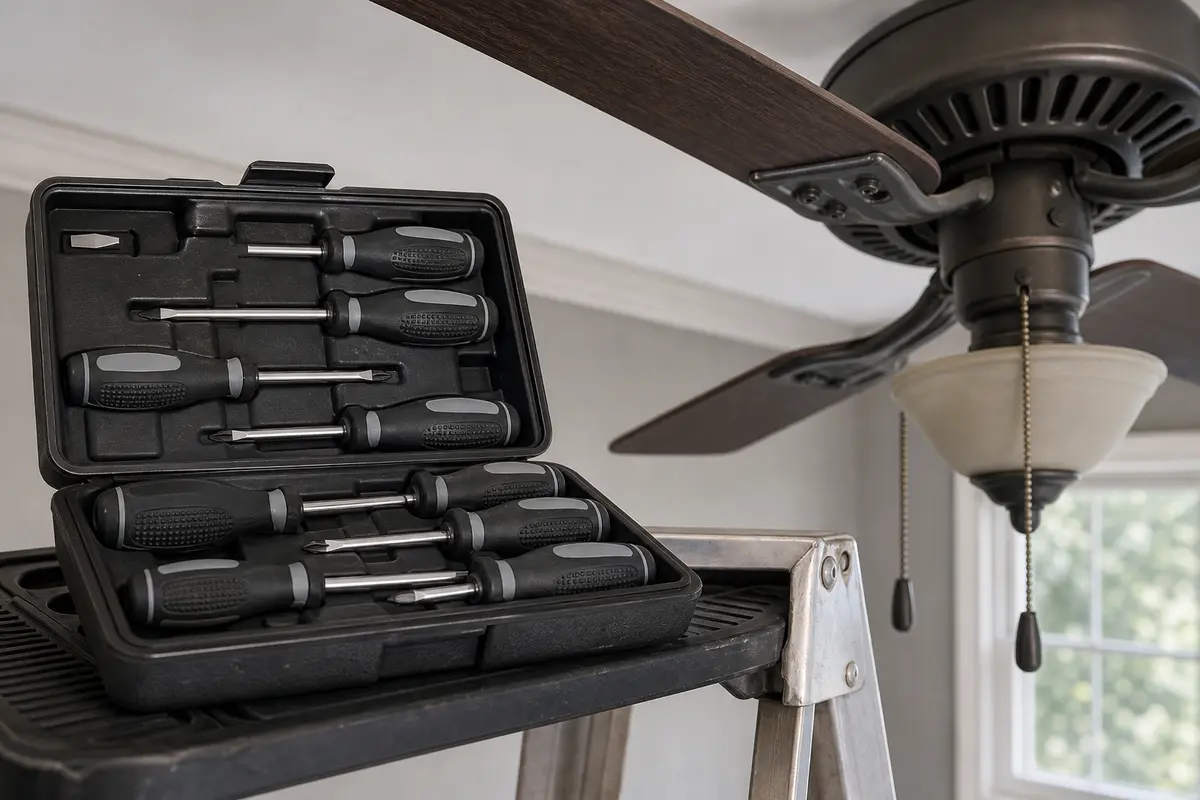
Helps when: Tightens blade arms, light-kit screws, canopy screws, set screws, and switch-housing screws without stripping hardware.
Skip it when: Skip tightening if the fan is moving at the box, the ladder position is unsafe, or the screw head is damaged.
Compare screwdriver sets on Amazon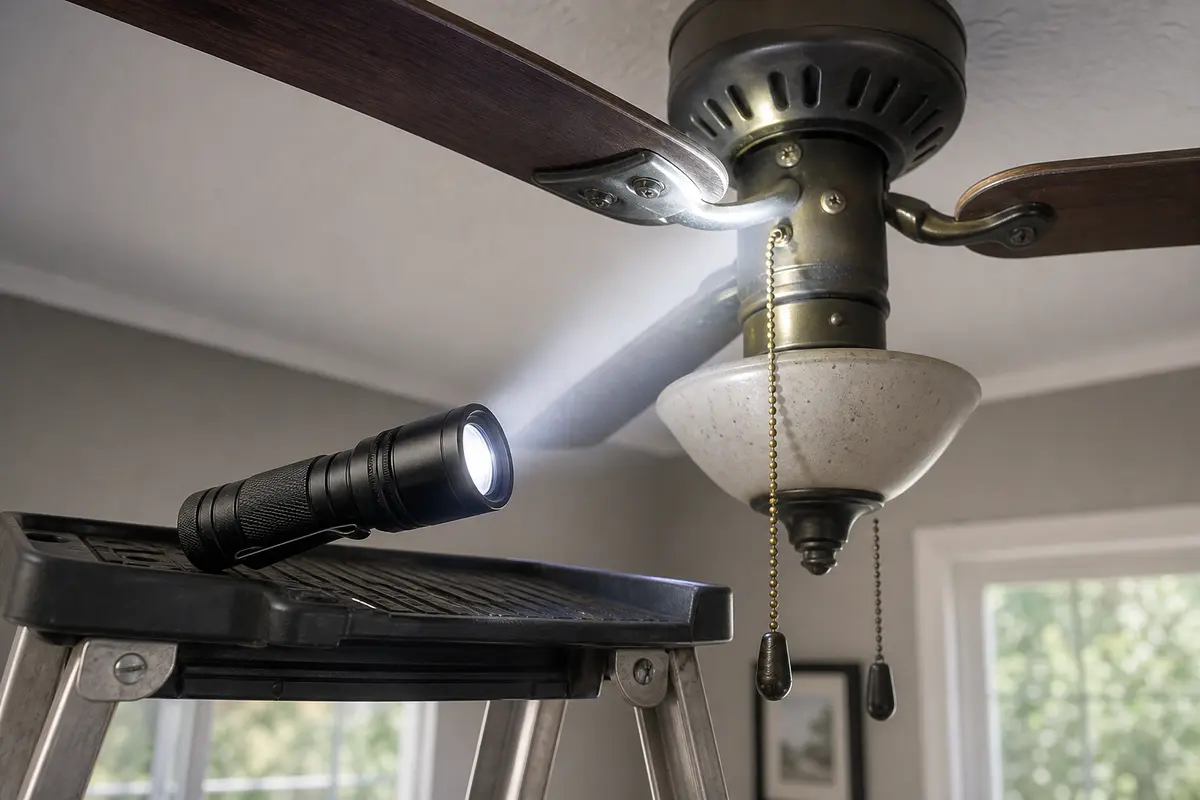
Helps when: Helps see rub marks, loose screws, pull-chain contact, scorch marks, and model labels with the breaker off.
Skip it when: Skip overhead inspection if better light still leaves you unsure about support, wiring, or heat.
Compare inspection flashlights on Amazon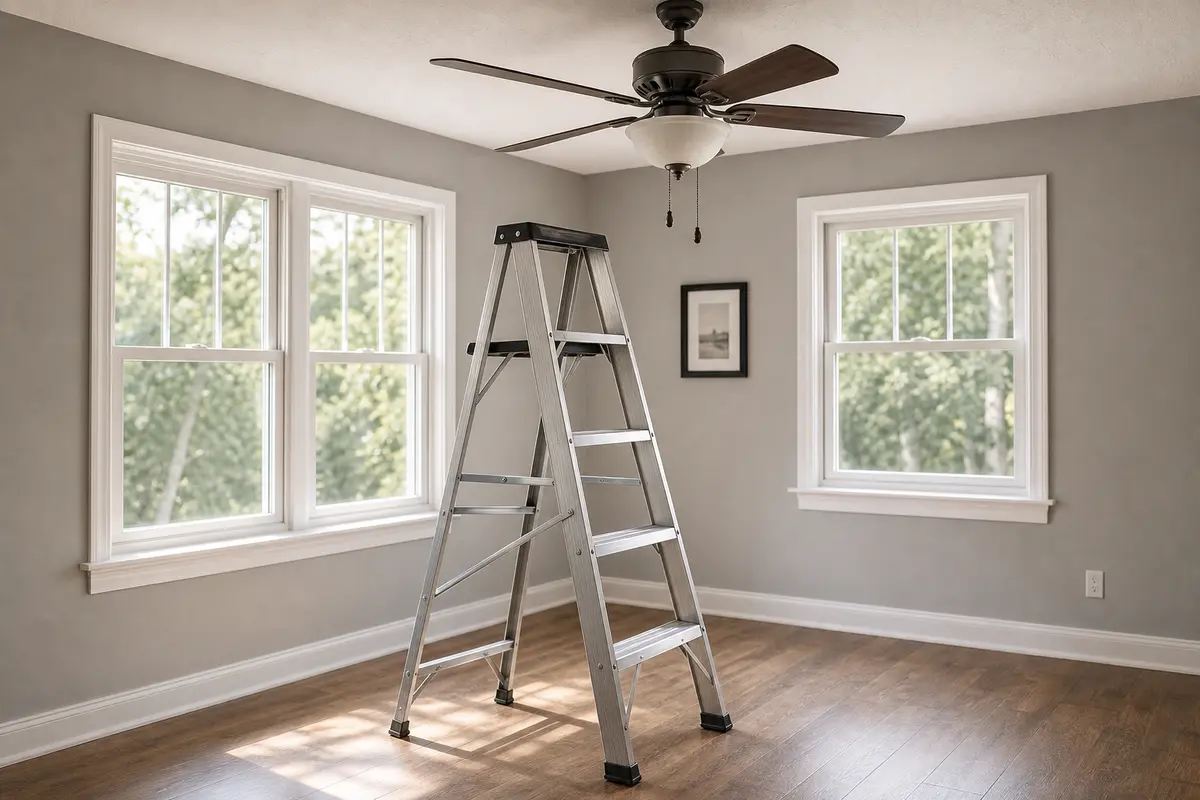
Helps when: Lets you reach the fan housing while standing flat-footed instead of leaning from furniture or the top cap.
Skip it when: Skip DIY overhead work if the fan is over stairs, furniture, a bed, or any spot where you cannot stay balanced.
Compare step ladders on AmazonAs an Amazon Associate I earn from qualifying purchases. Repair Riot may earn a commission at no extra cost to you.
That usually means one blade arm, chain, shade, or trim piece is touching or shifting at the same point each turn. Watch whether the click follows blade speed, then check those visible contact points with the power off.
A chain or shade tick may be minor. A canopy, downrod, or ceiling-box click should be treated as a support warning until proven otherwise.
Only after support is solid and visible hardware is checked. High speed can make imbalance and loose parts worse.
Usually no. Oil will not fix a loose blade screw, tapping chain, shade, trim, or support movement.
Not usually. Motor or internal hardware moves up only after blade, light-kit, chain, canopy, and support checks fail.
Stop for ceiling-box movement, heavy wobble, hot smell, breaker trips, sparking, grinding from the motor, or any check that requires wiring you cannot verify de-energized.
Photograph the canopy, downrod, blade arms, light kit, wall control, remote, model label, and the exact part or setting that changes the noise.
Usually no. Sort fan noise and no-start symptoms by support, hardware, controls, drag, capacitor clues, and model-specific fit before considering a motor. For anything past visible hardware, turn the breaker off and stop if the check requires wiring you cannot verify de-energized.
Repair Riot reviewed this page around ceiling fan clicking rhythm, pull-chain and light-kit contact, blade hardware, canopy support clues, and power-off inspection. The source links support home electrical safety and general fan context; the diagnostic sequence is original guidance.