Buzz changes with speed?
Blade balance, blade screws, light kit, or canopy vibration path.
A ceiling fan buzzing is usually blade vibration, loose trim, canopy contact, a wrong wall control, or a motor hum under load. Start by checking whether the buzz changes with speed, light use, or the wall control.
Good clues are a buzz only on high, a light-kit rattle, a canopy that touches the ceiling, a standard dimmer on the fan motor, or a fan that hums without moving enough air.
Use the sound trigger first: speed, light, canopy, wall control, or wobble.
Don’t start with: Do not open live wiring, keep running a hot motor, or replace the fan before checking the visible hardware and control setup.
Blade balance, blade screws, light kit, or canopy vibration path.
Bulb, shade, light kit, or dimmer/control path.
Wrong dimmer or receiver/control mismatch is likely.
Stop using the fan until support is verified.
Turn it off and call an electrician.
The wall control, blade hardware, and canopy tell you whether the buzz is electrical/control hum or mechanical vibration.
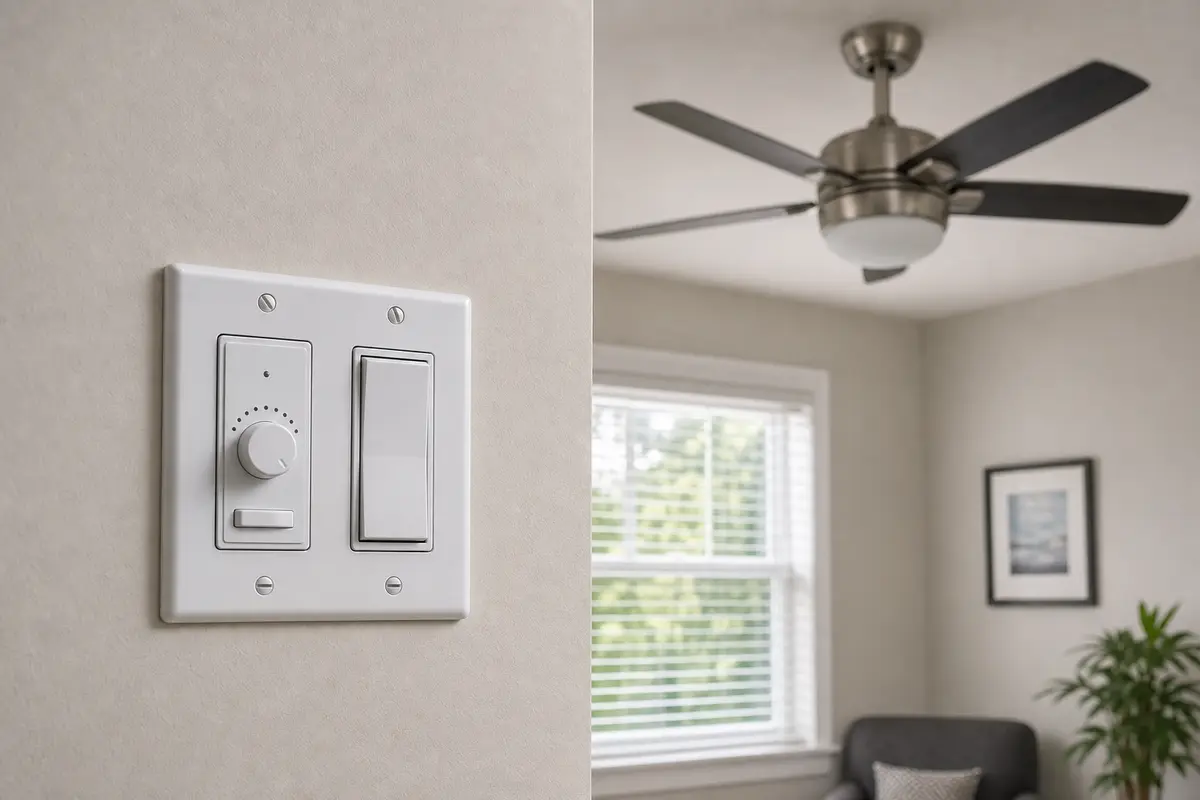
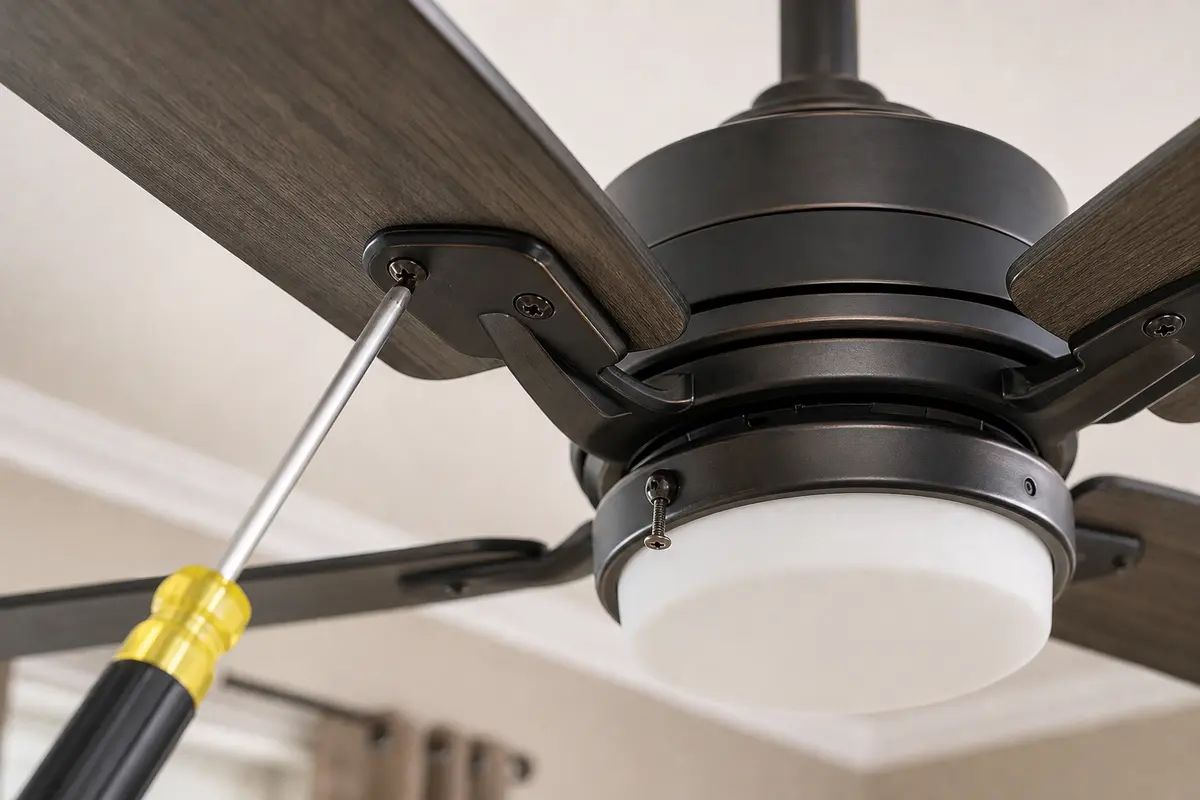
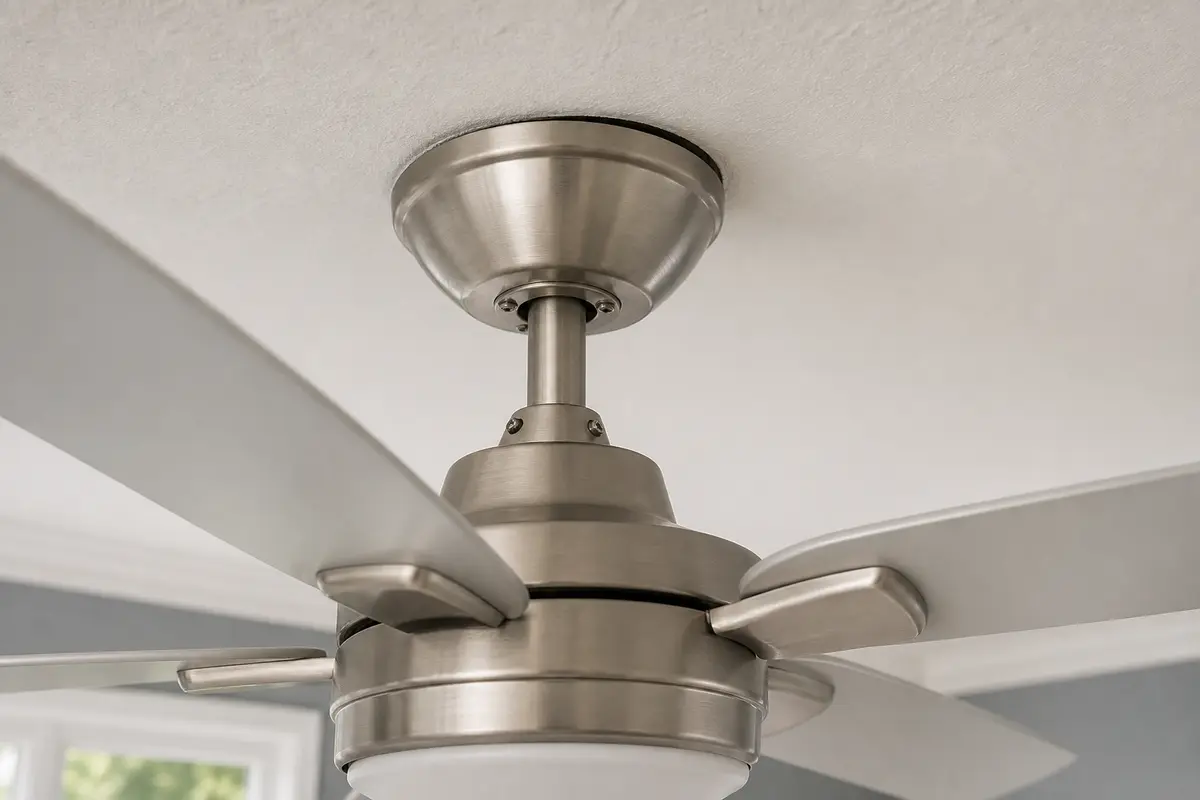
Confirm whether the buzz is blade vibration, canopy contact, light-kit rattle, control hum, or support movement. Match the exact fan model, control setup, symptom pattern, measurements, and confirmed diagnosis before ordering anything.
A buzz is a steady vibration or hum. In practice, the trigger matters more than the sound label: speed, light, wall control, or movement at the ceiling.
The usual mistake is replacing the motor before proving the outside clue. Good clue: if the buzz changes when the light is off or the speed changes, the motor is not the only suspect.
Use the setting that creates the buzz as the map. Watch for what changes the sound before you buy a receiver, capacitor, or new fan.
| Pattern | Likely path | Next move |
|---|---|---|
| Buzz only with fan speed | Blade balance or fan control | Check hardware and fan-rated control. |
| Buzz only with light | Bulb, shade, trim, or dimmer | Tighten trim and remove dimmer mismatch. |
| Canopy vibrates | Canopy/downrod contact | Power off and inspect fit. |
| Motor hums hot | Electrical or motor fault | Stop using it. |
| Buzz plus wobble | Balance or support issue | Solve movement before parts. |
Most buzzes are one loose or touching part away from quiet. Work with the breaker off, then test at low speed before high.
A fan motor is not a light bulb load. If the wall control is wrong, the fan can buzz, run hot, or act weak even when the hardware is tight.
These tools support power-off hardware checks, blade balance, and safe control screening before any wiring access.
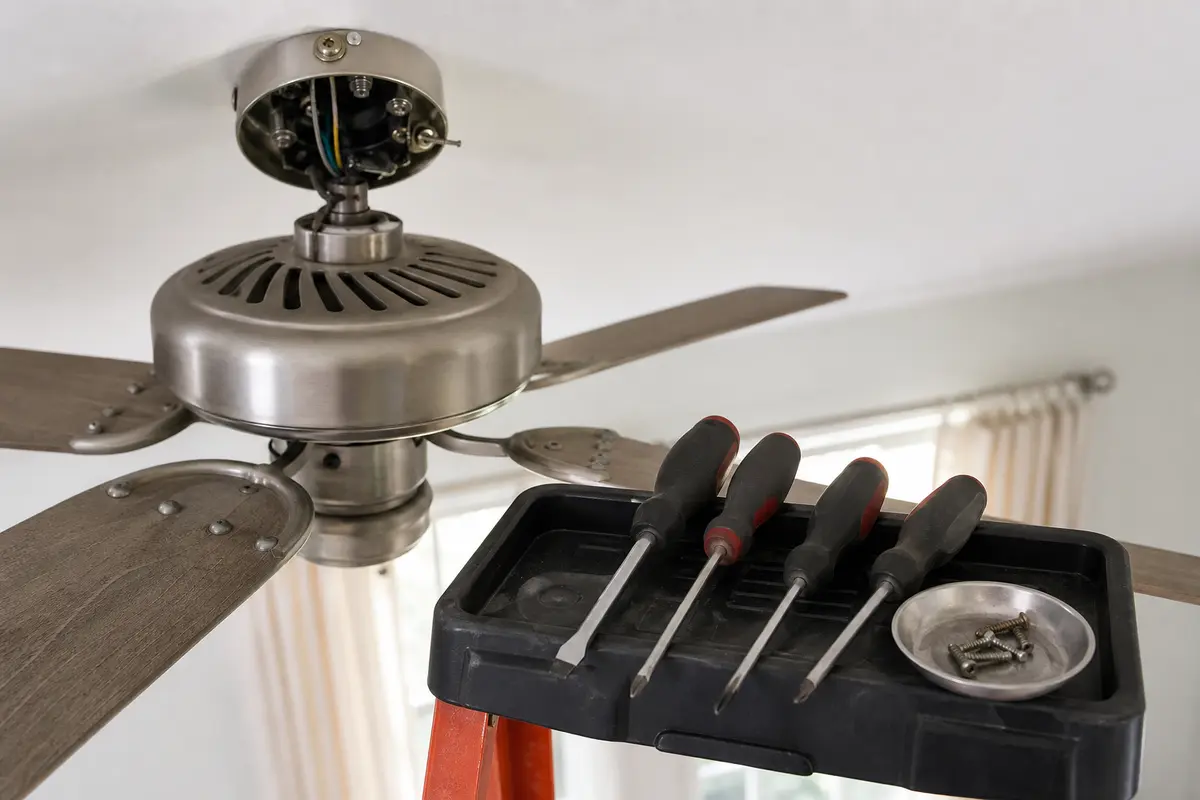
Helps when: Tightens blade arms, light-kit screws, canopy screws, set screws, and switch-housing screws without stripping hardware.
Skip it when: Skip tightening if the fan is moving at the box, the ladder position is unsafe, or the screw head is damaged.
Compare screwdriver sets on Amazon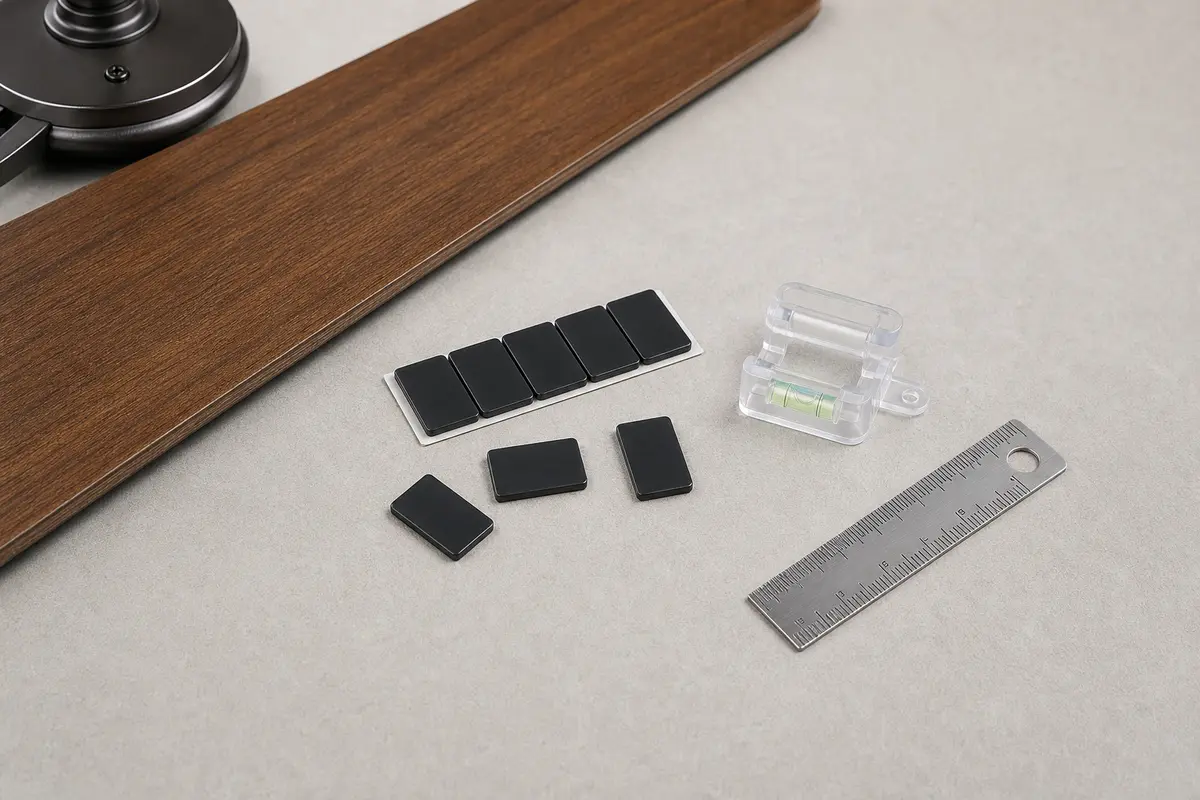
Helps when: Helps prove whether buzz, clicking, or reverse-only noise is blade imbalance after the mount and hardware are tight.
Skip it when: Skip balancing if the ceiling box, bracket, canopy, or downrod moves; support problems come first.
Compare balancing kits on Amazon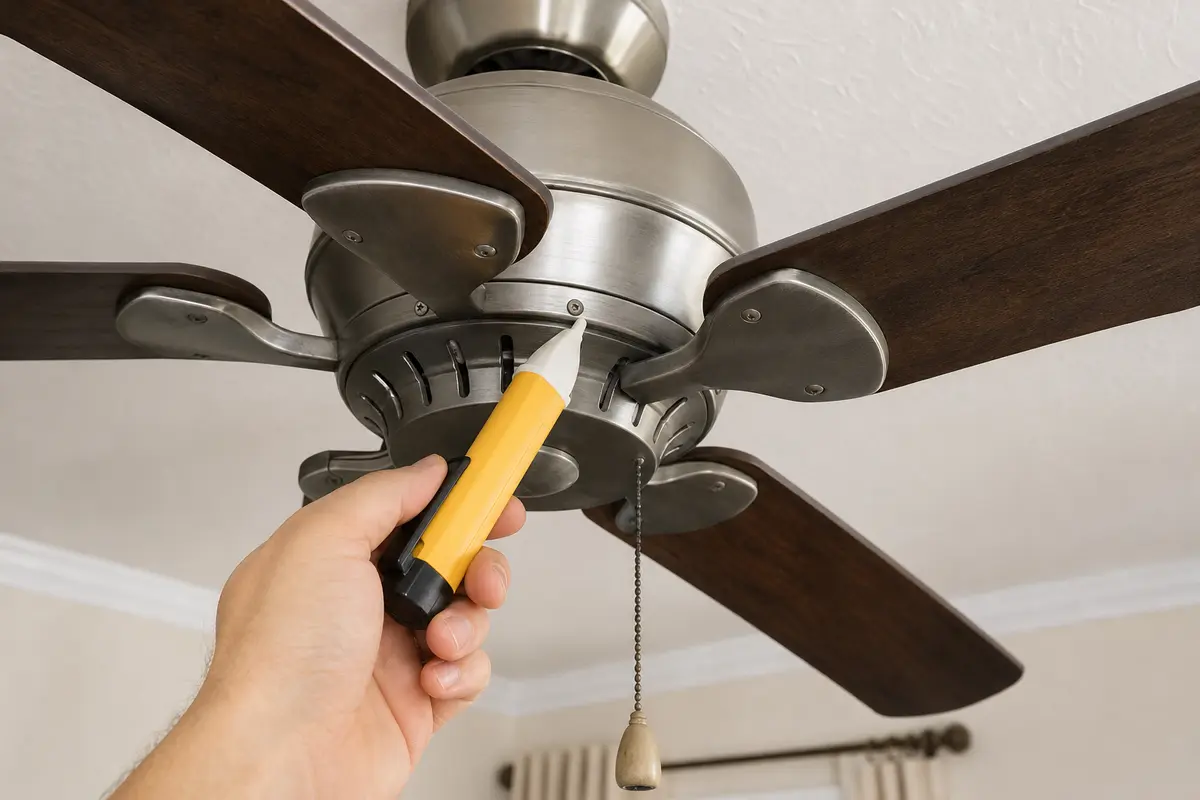
Helps when: Screens for power after the breaker is off before canopy, switch housing, wall control, or capacitor access.
Skip it when: Skip DIY electrical checks if readings are confusing, the breaker trips again, or the fan wiring is unfamiliar.
Compare voltage testers on AmazonAs an Amazon Associate I earn from qualifying purchases. Repair Riot may earn a commission at no extra cost to you.
Common causes are blade imbalance, loose hardware, canopy contact, light-kit vibration, a wrong wall control, or motor/receiver hum.
Yes. A standard light dimmer can make a fan motor buzz, run hot, or behave weakly. Use a fan-rated control or the manufacturer setup.
A light mechanical buzz may be minor, but buzzing with heat, electrical smell, breaker trips, or ceiling movement is a stop-use condition.
Only after the mount, canopy, blade screws, and light kit are secure. Balancing does not fix loose support or wrong controls.
High speed often reveals blade imbalance, canopy contact, or a control issue. Test low first and stop if movement grows.
Stop for ceiling-box movement, heavy wobble, hot smell, breaker trips, sparking, grinding from the motor, or any check that requires wiring you cannot verify de-energized.
Photograph the canopy, downrod, blade arms, light kit, wall control, remote, model label, and the exact part or setting that changes the noise.
Usually no. Most fan noise and no-start symptoms should be sorted by support, hardware, controls, drag, capacitor clues, and model-specific fit before motor replacement is considered.
Repair Riot reviewed this page around ceiling fan buzzing, blade and canopy vibration, fan-rated controls, power-off checks, and electrician stop points. The source links support home electrical safety and general ceiling-fan use context; the diagnostic sequence is original guidance.