Damp-earth smell?
Look for wet concrete, storage, and soil-water pressure.
A basement odor that gets worse after rain usually means one wet spot is waking up. Good clue: damp-earth odor at one wall points to seepage; rotten drain odor beside a floor drain needs trap and backup checks.
The usual sources are a wet cove joint, damp cardboard or shelving, a dry or disturbed floor drain trap, or humidity rising after storms.
Smell-location matters. Walk the wall edges, drain, storage, and utility corners before buying anything.
Don’t start with: Do not start with fragrance, waterproof paint, or odor bags. They can hide the smell while the moisture source keeps feeding it.
Look for wet concrete, storage, and soil-water pressure.
Pull boxes and shelves away from cool walls.
Stop covering it and check the drain/trap path.
Trace the matching outside drainage path.
Leave the area and escalate.
Odor repairs work only after the wet source is exposed.
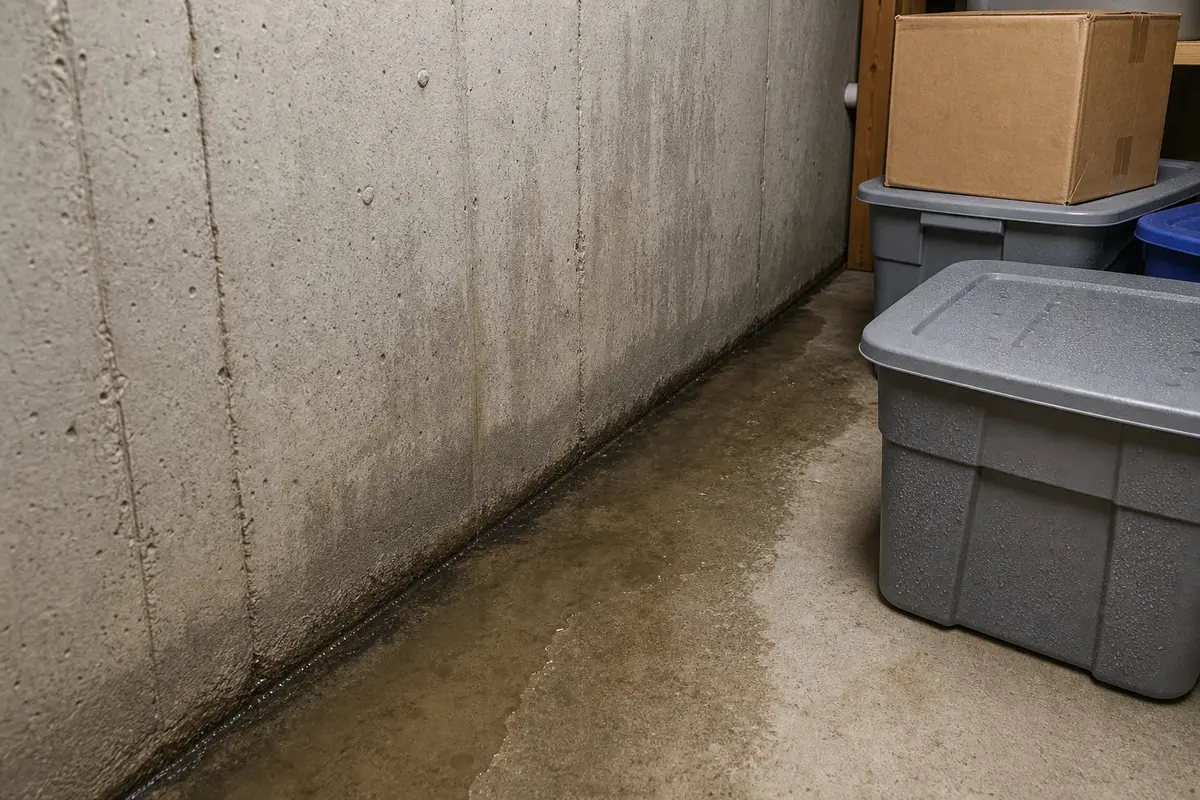
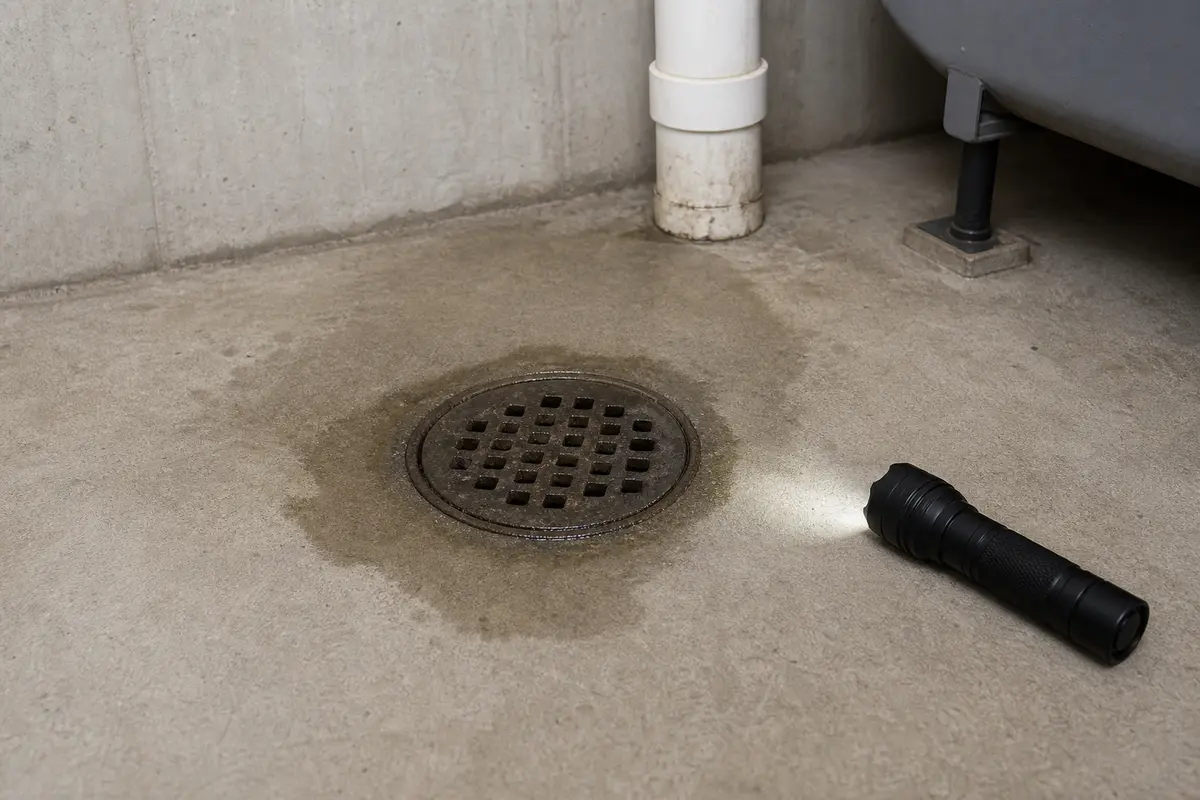
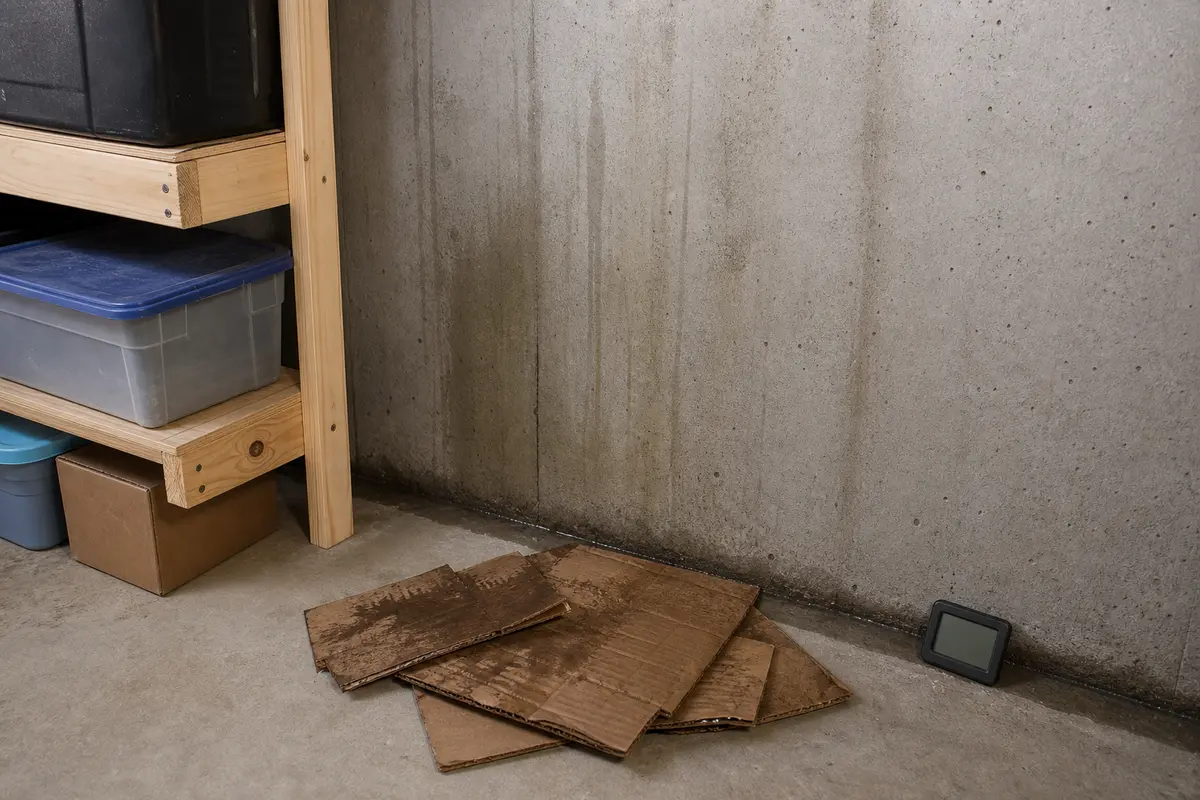
Match the exact diagnosis before shopping. Confirm odor type, strongest location, rain timing, humidity, water path, and whether the smell is sewer, fuel, or chemical.
The strongest smell usually points closer to the moisture source than the open room air does.
Odor cover-ups waste time when water is still returning.
Use smell, timing, and moisture before products.
Fix water first, dry materials second, and deodorize last.
Use these after finding the wet source so odor control follows moisture control instead of masking it.
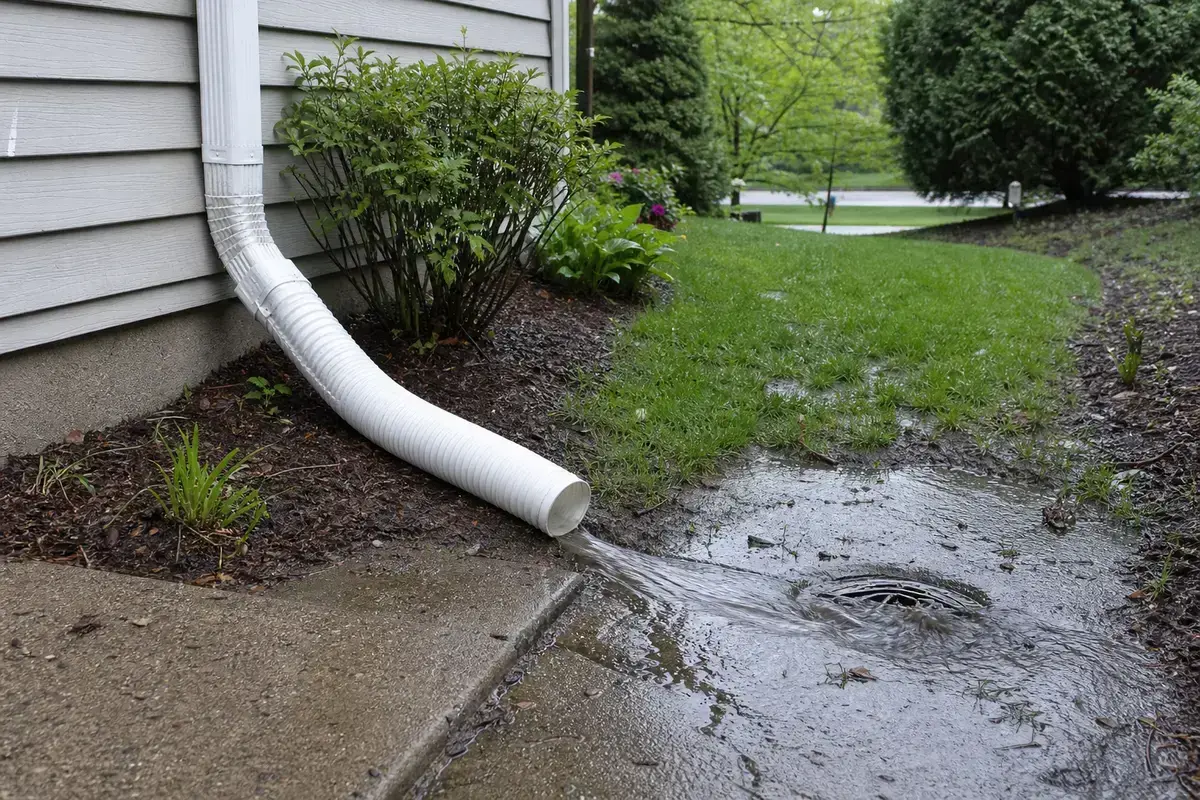
Helps when: Use a downspout extension when damp-earth odor is strongest along a wall below a short downspout after rain.
Skip it when: Skip deodorizing first if roof water is still feeding the damp wall area.
Compare downspout extensions on Amazon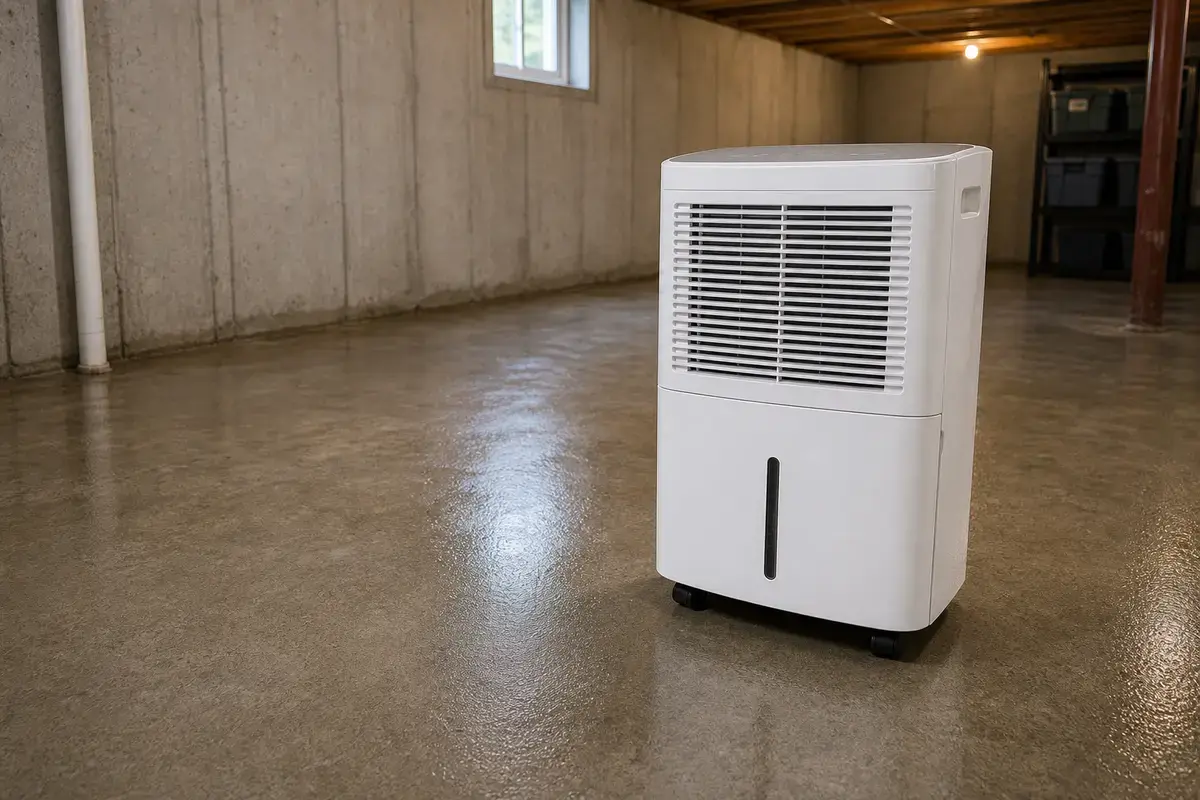
Helps when: Use a basement dehumidifier after liquid-water paths are handled and humidity still stays high after rain.
Skip it when: Skip relying on a dehumidifier if the odor returns from one wet joint, drain, or wall crack.
Compare basement dehumidifiers on Amazon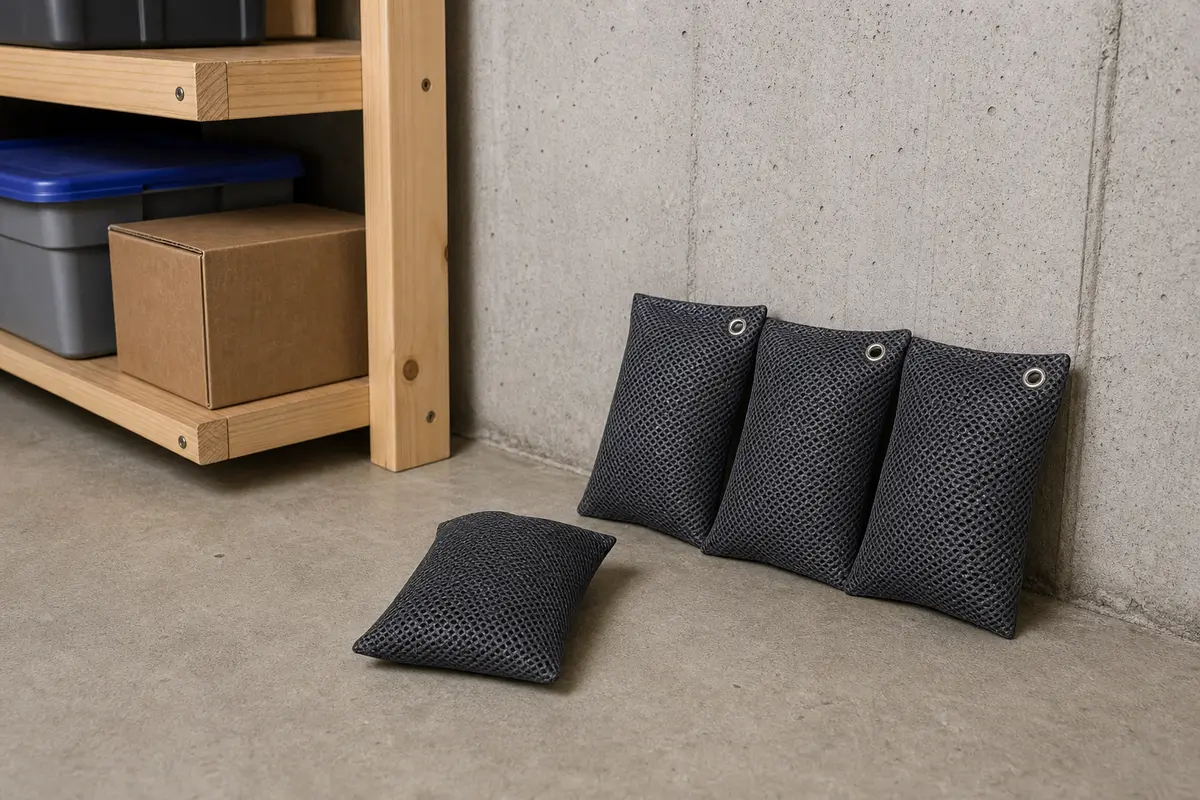
Helps when: Use activated charcoal odor absorbers after the moisture source is fixed to reduce leftover storage-area odor.
Skip it when: Skip odor absorbers as the main fix while materials are still damp or moldy.
Compare activated charcoal odor absorbers on AmazonAs an Amazon Associate I earn from qualifying purchases. Repair Riot may earn a commission at no extra cost to you.
Use these tools to prove whether odor follows humidity, hidden dampness, or a clean-water cleanup area.
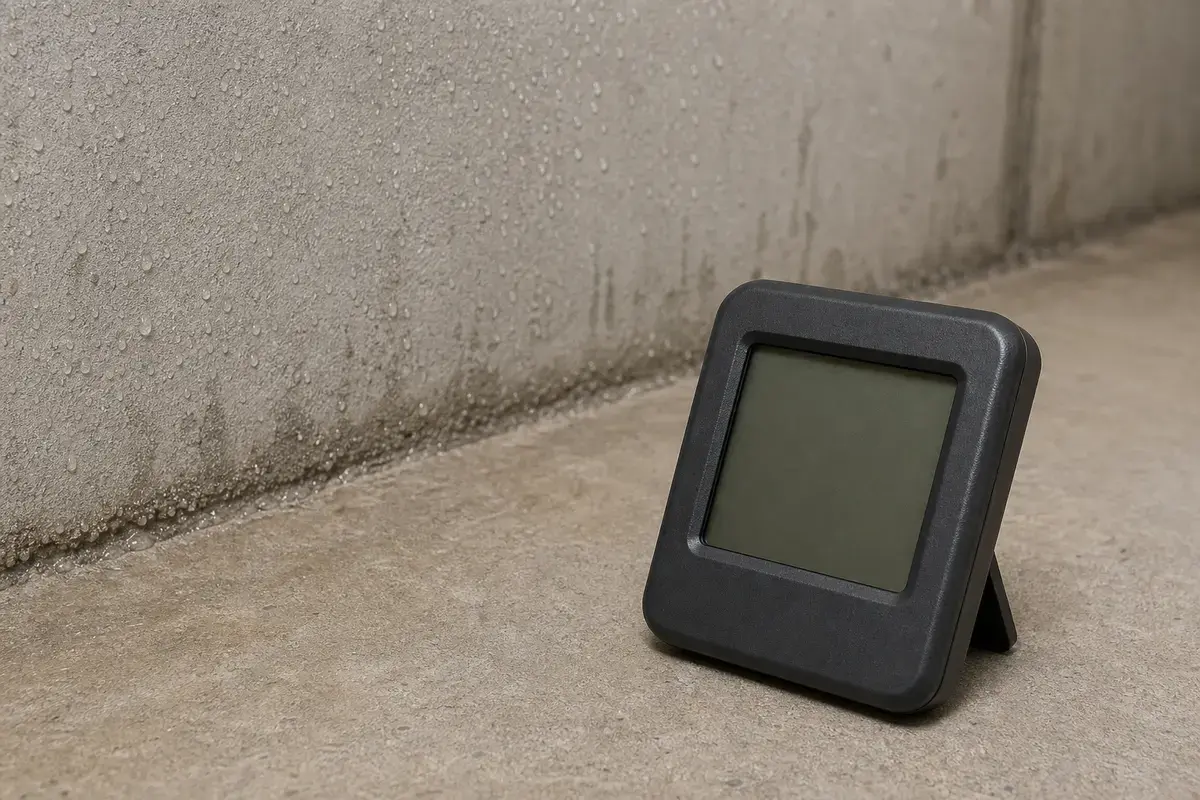
Helps when: Use a digital hygrometer to prove whether humidity rises when the basement smell or dampness returns.
Skip it when: Skip deodorizer decisions until humidity is checked in the smelly area, not just in the center of the room.
Compare digital hygrometers on Amazon
Helps when: Use a pinless moisture meter to compare the smelly wall edge, the back of shelving, and a dry control spot.
Skip it when: Skip assuming dry conditions because the floor surface looks clean; stored materials can stay damp behind shelves.
Compare pinless moisture meters on Amazon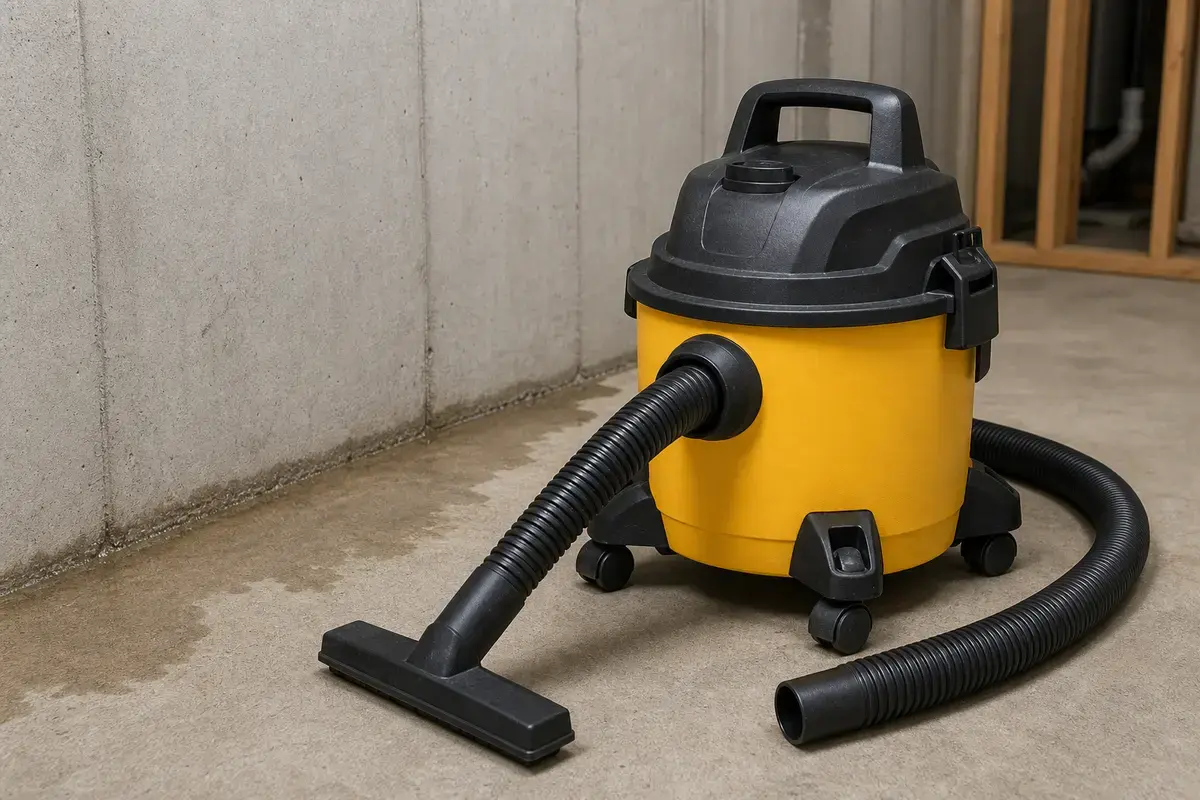
Helps when: Use a wet/dry vacuum only for small confirmed clean-water pickup after the odor source area is identified.
Skip it when: Skip vacuuming sewage, fuel, moldy debris, or any unknown contamination.
Compare wet/dry vacuums on Amazon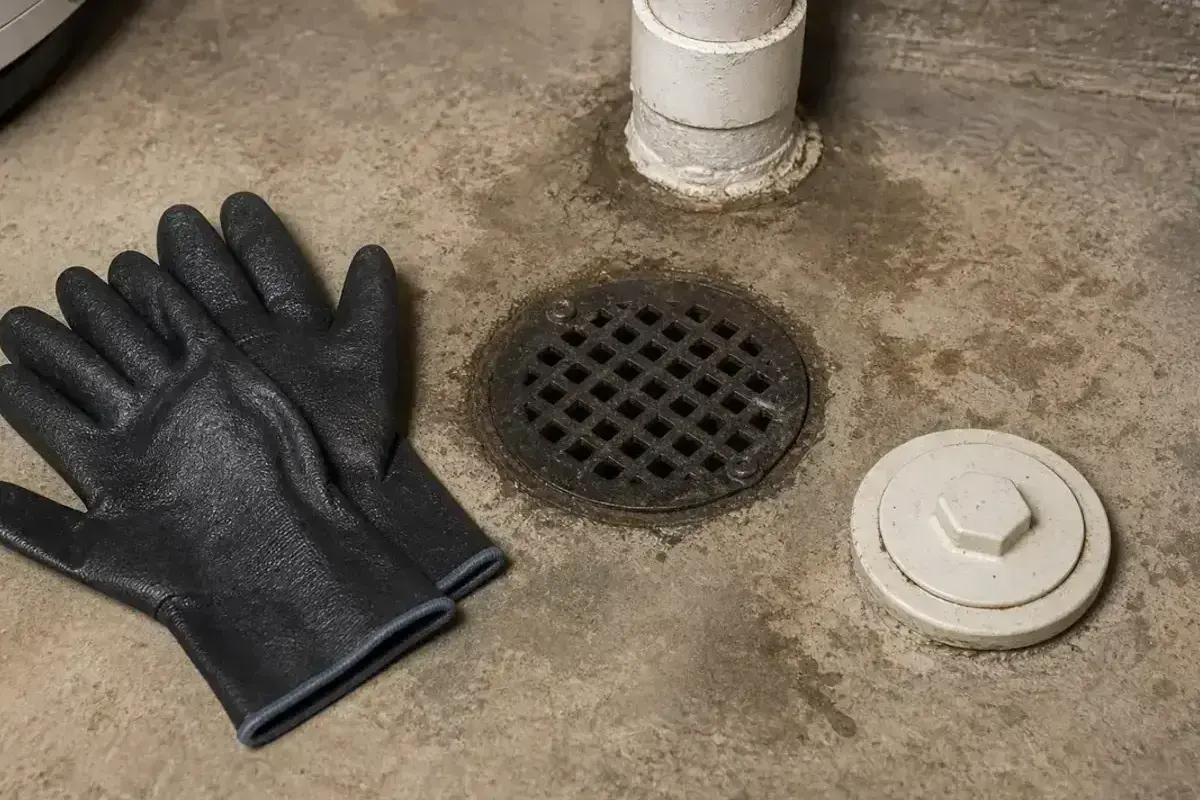
Helps when: Use waterproof work gloves when moving damp boxes, lifting wet mats, or handling musty cleanup towels.
Skip it when: Skip bare-handed cleanup around sharp debris, moldy materials, or suspect contamination.
Compare waterproof work gloves on AmazonAs an Amazon Associate I earn from qualifying purchases. Repair Riot may earn a commission at no extra cost to you.
Rain can raise humidity, wet the cove joint, dampen stored materials, or disturb floor drain behavior. The odor type and strongest location separate those paths.
Only if humidity is the cause and liquid water is controlled. It will not fix sewer odor, active seepage, or wet cardboard left in place; sewer odor means stop and check the drain path.
Use them only after the wet source is fixed and materials are dry. They are not a repair for active moisture.
Call for sewer odor, fuel smell, chemical odor, repeated seepage, contaminated water, or visible wall movement.
Pull storage away from the wall and check for damp cardboard, cold-wall condensation, and a wet cove joint before deodorizing.
The same area should stay dry and smell neutral through a comparable rain, with humidity controlled and wet materials removed.
Porous storage, dust, and old damp concrete can release odor as humidity rises, even before enough water appears to make a puddle.
Not first. Sealing a damp slab or cove joint can trap moisture and hide the source that is feeding the smell.
Repair Riot built this page around odor-after-rain clues: odor type, strongest location, moisture timing, drain behavior, damp storage, and source-first odor control.