Flat dry hairline crack?
Photograph, measure, and monitor before using a cosmetic crack filler.
A cracked basement floor is often shrinkage in the slab, but width, vertical offset, moisture, and movement decide whether it is a simple patch or a foundation warning sign. Measure before filling.
Hairline flat cracks are usually lower concern. Wide, offset, wet, heaved, or spreading cracks need more diagnosis before any filler.
Good clue: a straightedge that sits flat across the crack points toward a cosmetic repair. If it rocks, watch for heave or settlement.
Don’t start with: Do not fill the crack just to hide it. First check if the slab is flat, dry, stable, and not changing.
Photograph, measure, and monitor before using a cosmetic crack filler.
Treat vertical offset as movement and stop before filler.
Check drainage and seepage before any floor repair product.
Mark width and call for evaluation if it changes.
Look for a broader foundation movement pattern, not an isolated slab patch.
Width, offset, and moisture tell you whether this is cosmetic or a stop point.
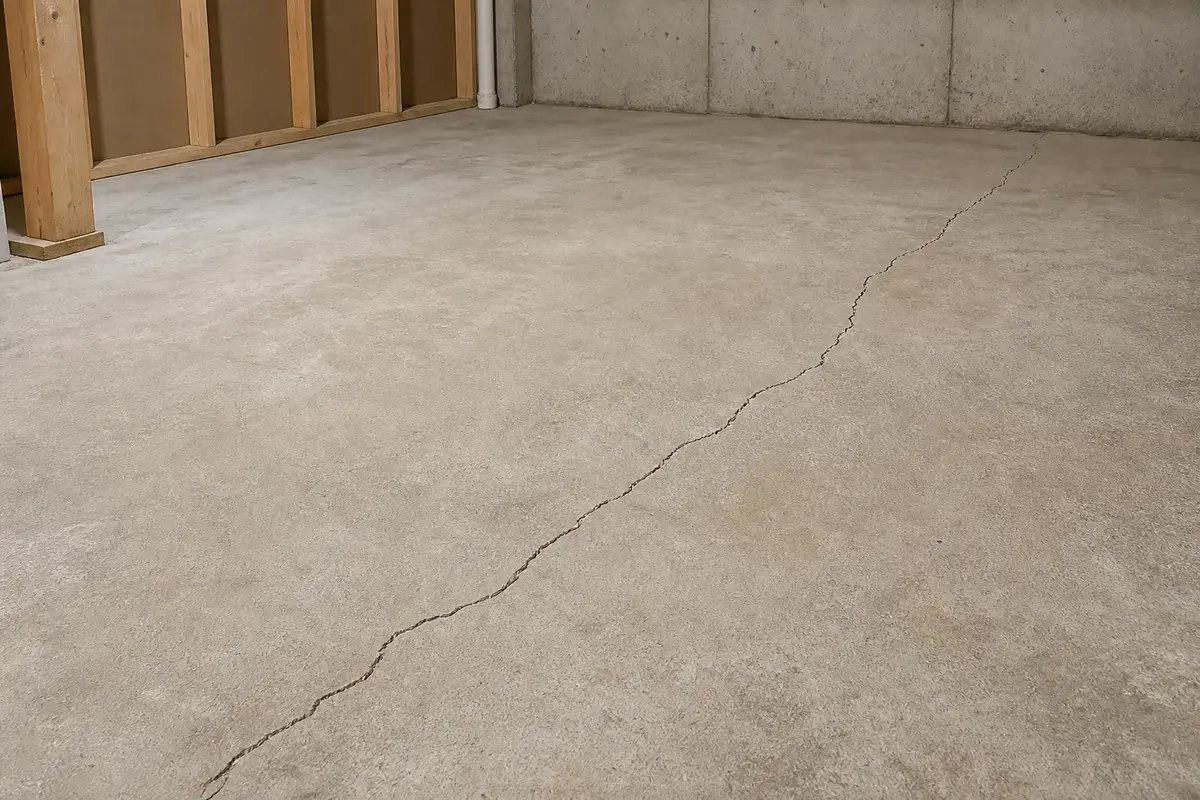
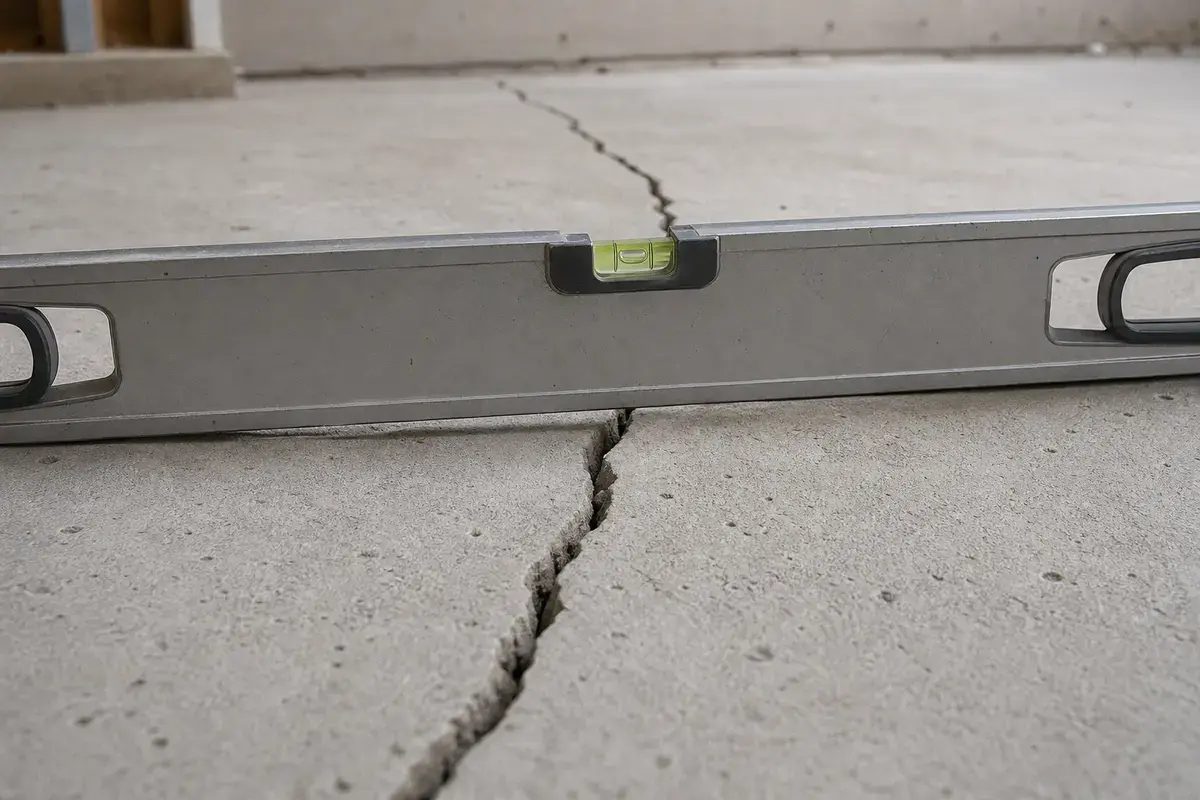
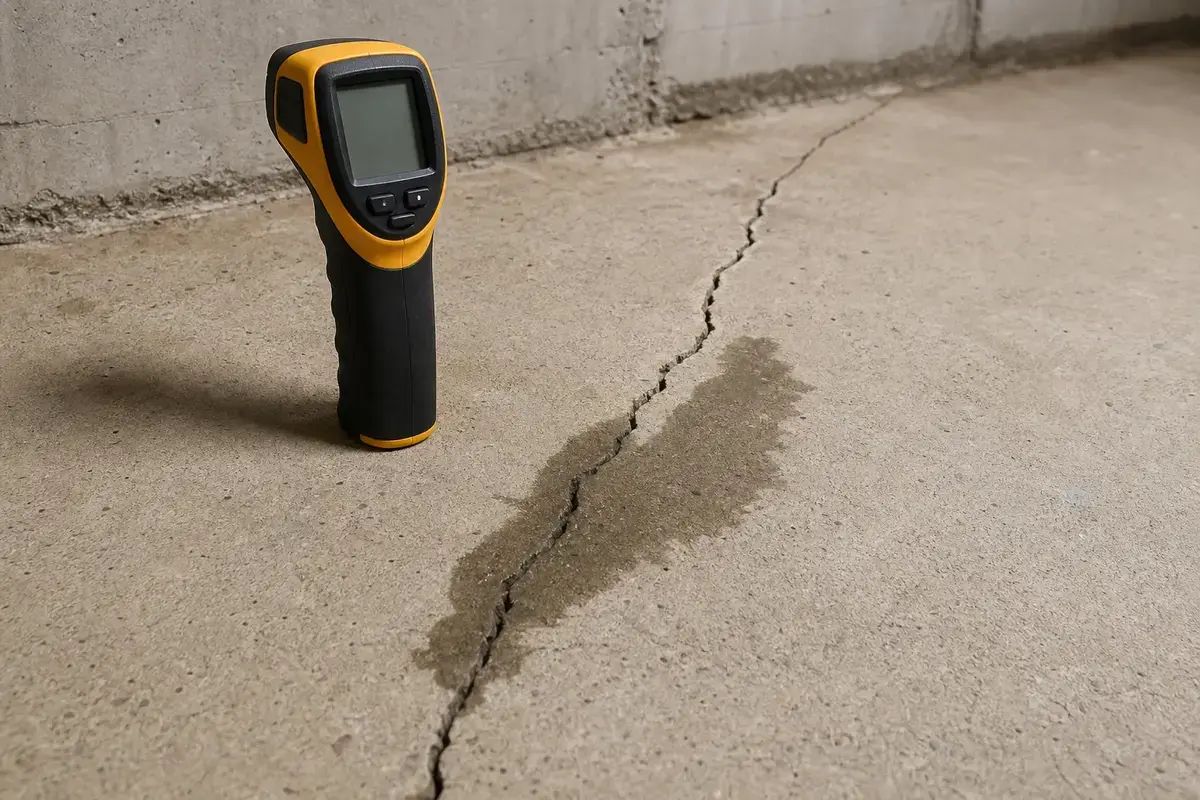
Match the exact diagnosis before shopping. Confirm crack width, vertical offset, moisture, movement, nearby wall cracks, and whether the slab stays dry after rain.
A basement slab crack needs shape, moisture, and movement checks before repair.
A neat patch can hide a crack that still needs watching.
Use simple measurements before buying filler.
A stable crack earns a different repair than a moving crack.
Use these only when the crack is stable, dry, and non-structural.
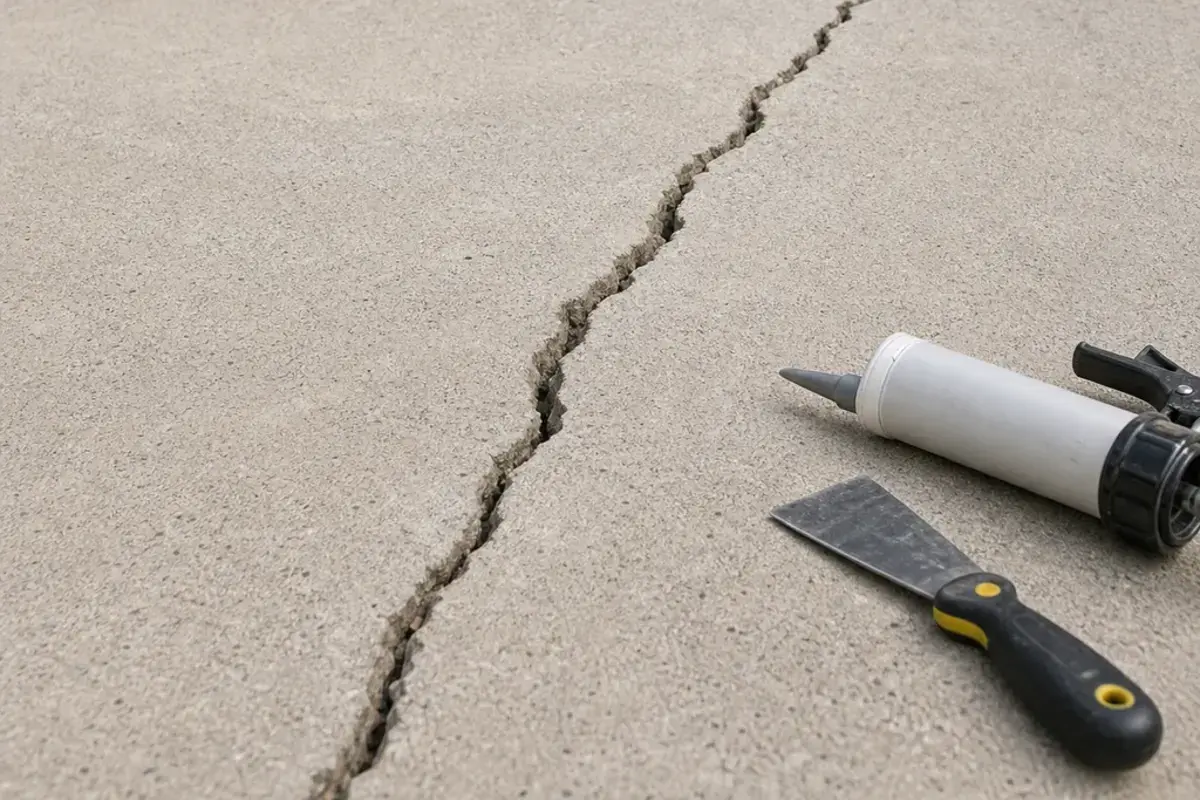
Helps when: Use for a narrow, dry, stable, non-structural basement slab crack after moisture and movement are ruled out.
Skip it when: Skip for wide, offset, wet, heaving, spreading, or structural cracks.
Compare concrete crack fillers on Amazon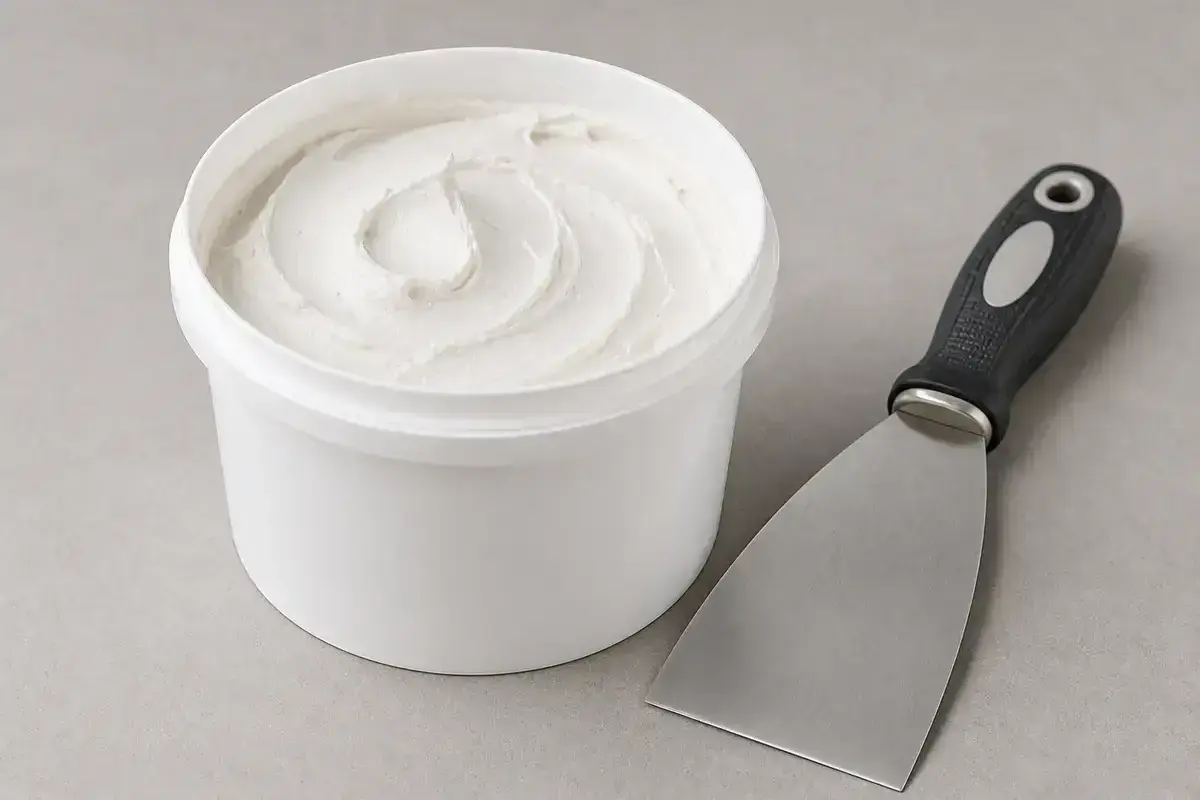
Helps when: Use for a shallow chipped edge or small spalled spot after the slab is dry and stable.
Skip it when: Skip for moving cracks, active water, heave, settlement, or deep structural damage.
Compare concrete patch materials on AmazonAs an Amazon Associate I earn from qualifying purchases. Repair Riot may earn a commission at no extra cost to you.
These help decide whether a patch is appropriate or premature.
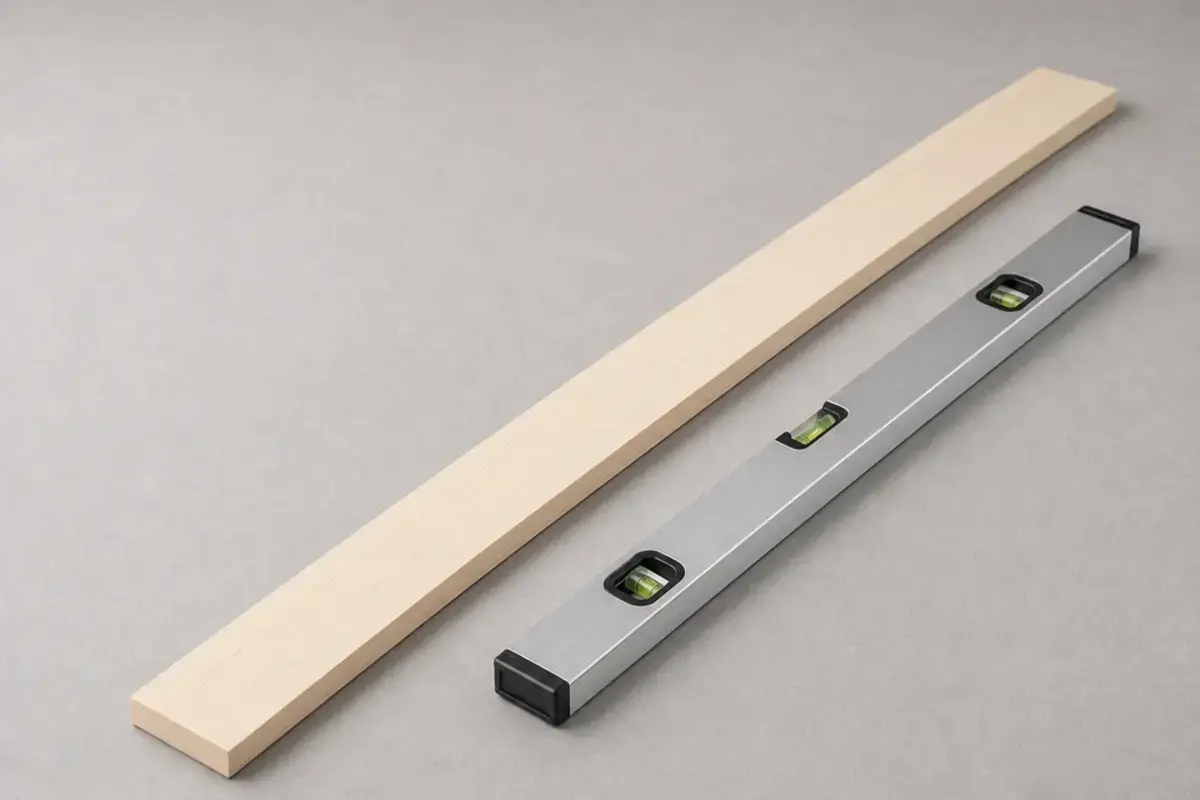
Helps when: Use to check whether the floor crack is flat, offset, sunken, or heaved.
Skip it when: Skip relying on a short tool if the slab has broad slope or movement across a larger area.
Compare levels and straightedges on Amazon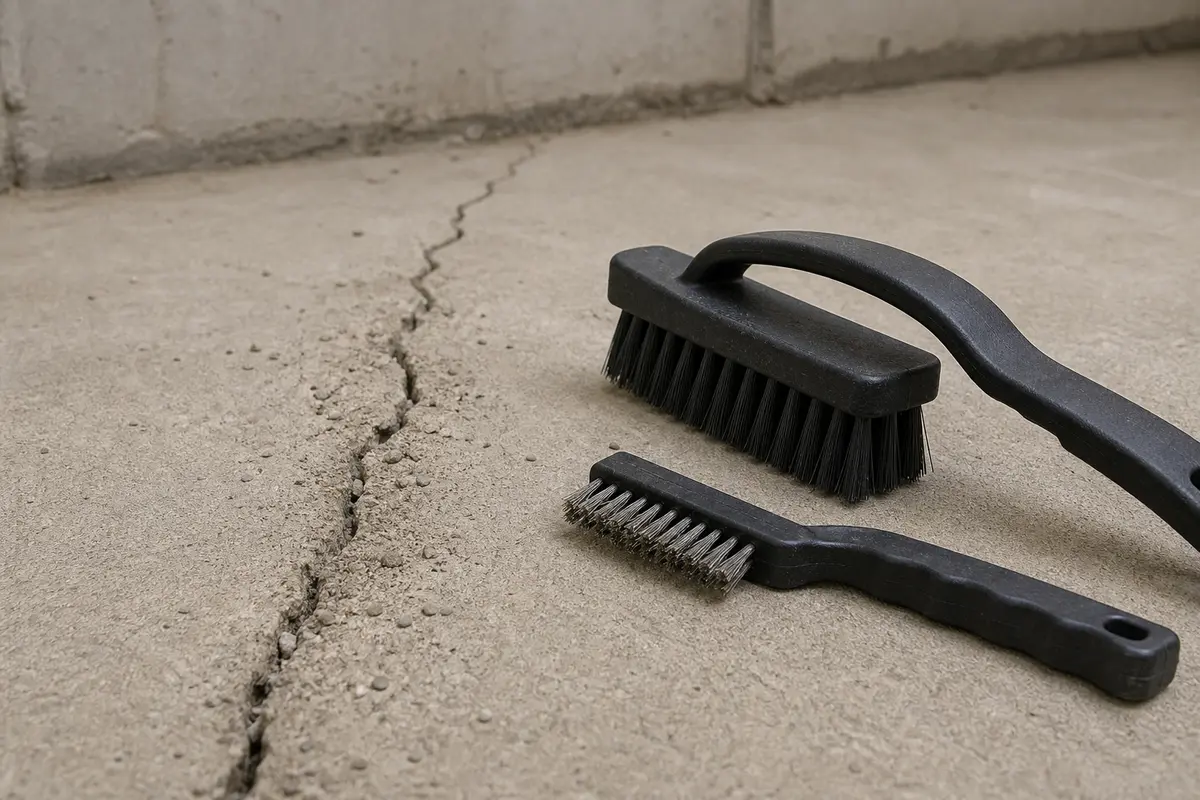
Helps when: Use to clean loose grit or residue from a small dry masonry repair area after the water source is controlled.
Skip it when: Skip aggressive brushing on wet, crumbling, painted, or contaminated surfaces without the right protection.
Compare masonry brushes on Amazon
Helps when: Use to compare the wet area with nearby dry wall, floor, cove joint, or control area before patching.
Skip it when: Skip treating meter readings as proof by themselves; pair them with rain, thaw, humidity, and visible clues.
Compare pinless moisture meters on Amazon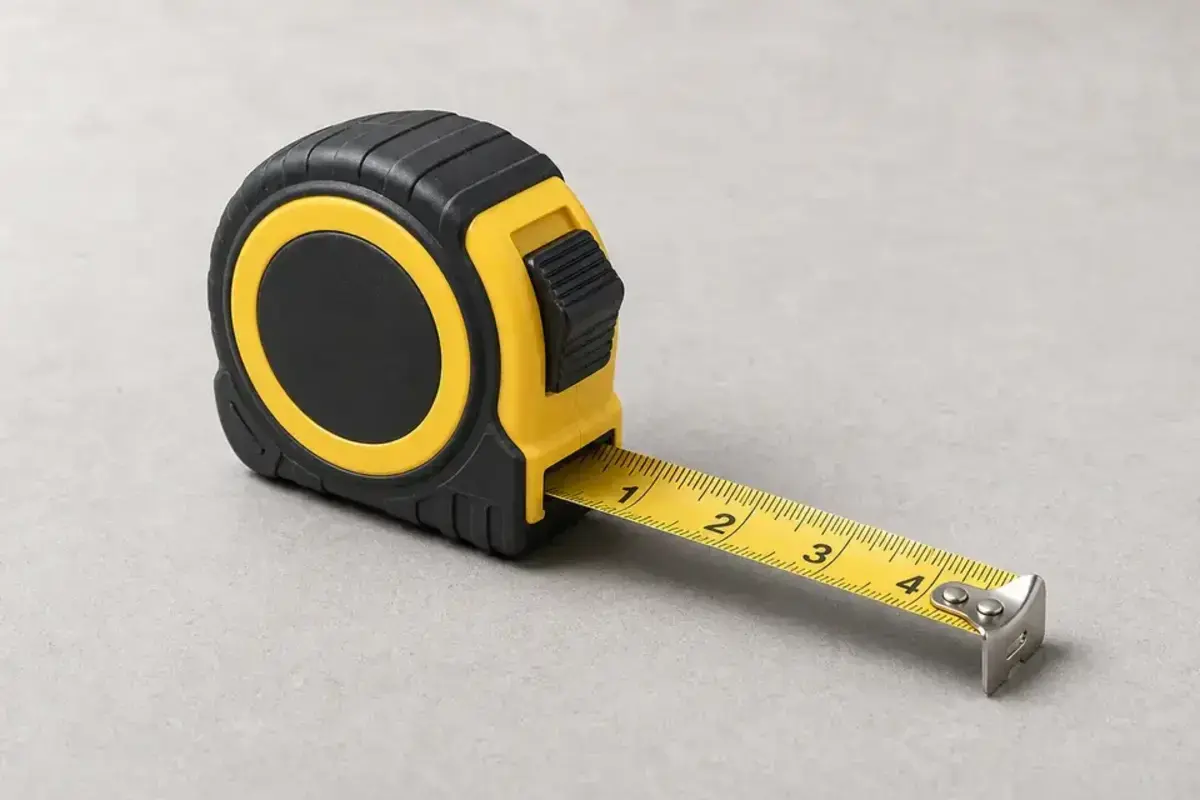
Helps when: Use to record crack width and compare it after a few weeks, storms, or thaw cycles.
Skip it when: Skip guessing from memory; document width, date, moisture, and any offset.
Compare tape measures on AmazonAs an Amazon Associate I earn from qualifying purchases. Repair Riot may earn a commission at no extra cost to you.
Some flat hairline slab cracks are common. The concern rises when the crack is wide, offset, wet, spreading, or tied to wall movement.
A narrow stable dry crack can often be filled cosmetically. Do not fill a wet, moving, offset, or structural-looking crack as a first step.
Offset means one side of the crack sits higher than the other. That can point to heave, settlement, or movement that filler will not fix.
Water at a slab crack points to drainage, groundwater, or pressure under the slab. Fixing the water path matters before cosmetic patching.
Use crack filler for narrow stable cracks and patch material for shallow chips or spalls. Neither belongs over active movement or seepage.
Call for widening cracks, vertical offset, heave, settlement, wall cracks, bowing walls, repeated water, or doors and posts shifting nearby.
Only after the crack stays dry and stable through the conditions that used to change it. Covering it too soon hides useful clues.
The filler should stay bonded, the crack should not widen, and no moisture should return after rain or seasonal changes.
Repair Riot built this page around basement slab clues: crack width, straightedge offset, moisture timing, nearby wall movement, safe dust limits, and when cosmetic repair is premature.