Even beads on the cold wall?
Measure humidity and test drying before buying coatings.
Basement cold wall condensation is usually indoor moisture meeting a cold foundation surface, but it can look like a leak. Check humidity, weather timing, and whether moisture beads evenly before buying coatings.
Even beads on the coldest part of the wall point to condensation. Water tracks, cove-joint wetness, or rain timing point to a leak path.
Good clue: condensation wipes away evenly and returns with high humidity. A leak usually follows a line, crack, cove joint, or rain pattern.
Don’t start with: Do not start with waterproof paint, wall panels, or crack filler. First prove whether the wall is sweating or water is entering from outside.
Measure humidity and test drying before buying coatings.
Trace the crack, window, pipe, or cove joint before drying supplies.
Check gutters, downspouts, grading, and outside splash first.
Move storage away and recheck after air can circulate.
Stop cosmetic work and confirm the moisture source first.
Humidity, wipe pattern, and weather timing prevent the wrong repair.
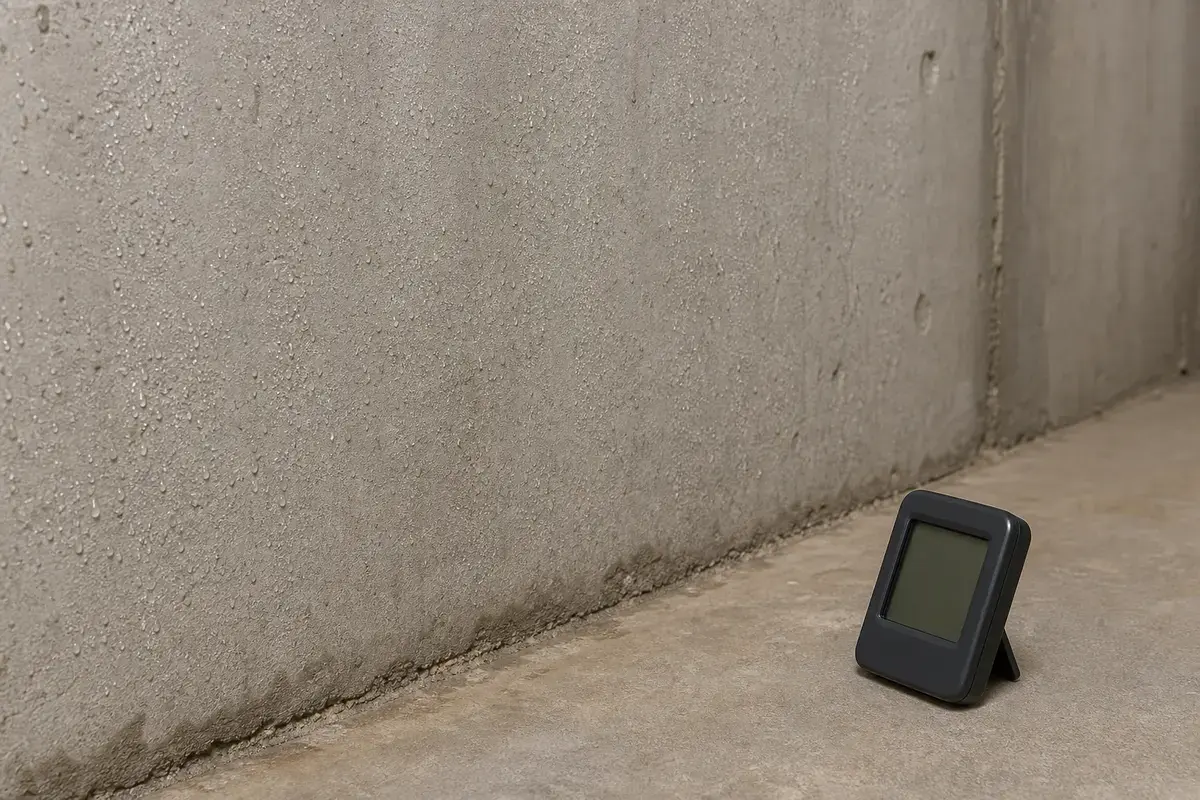
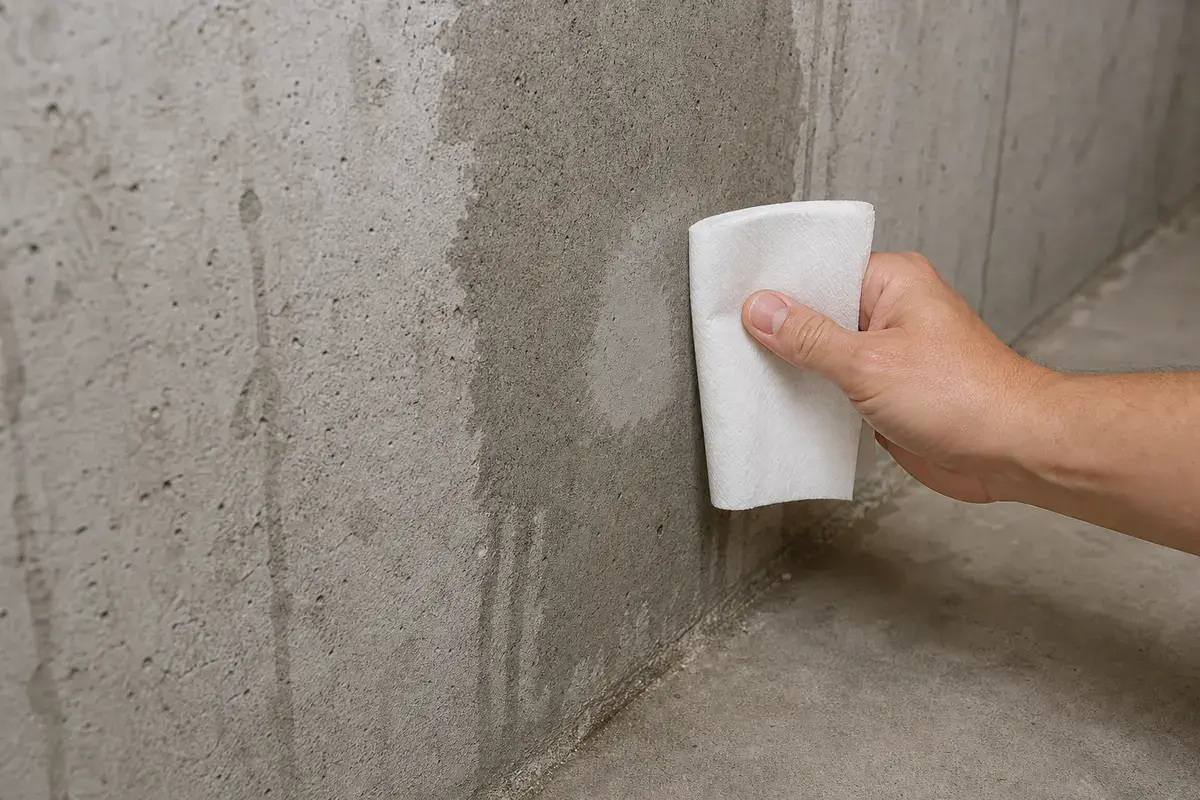
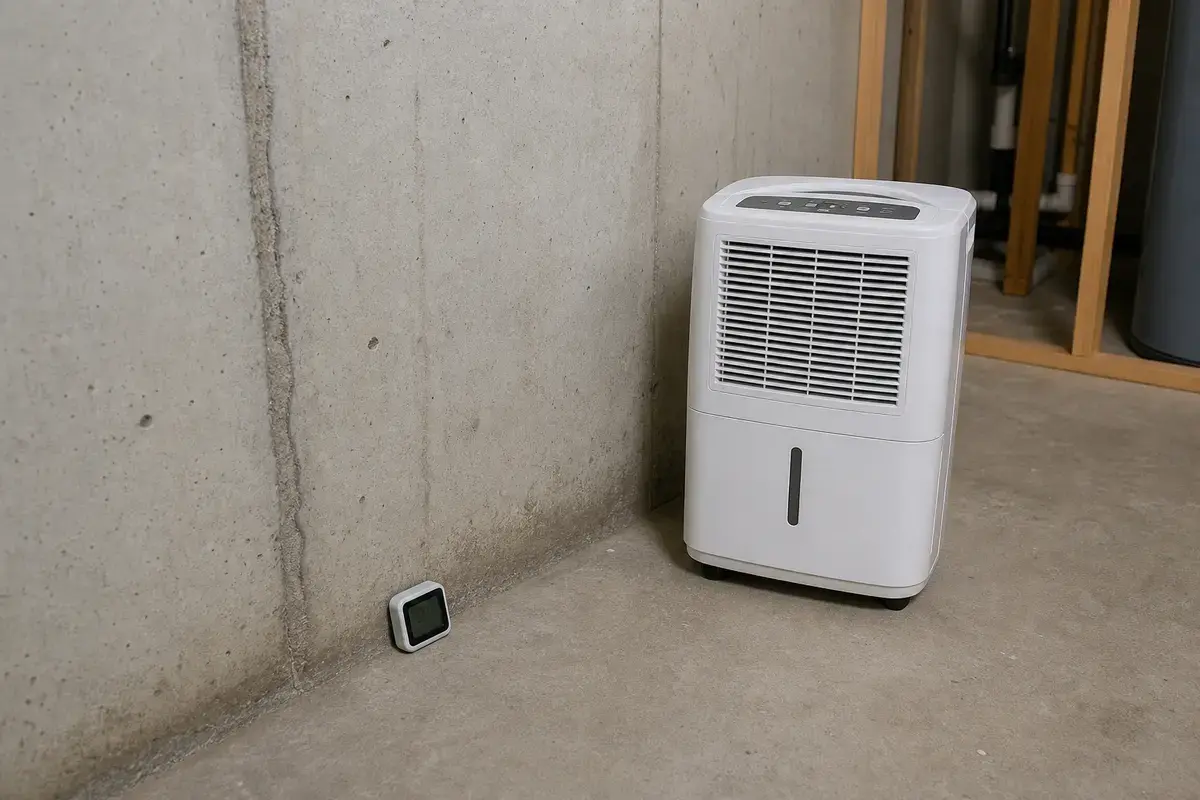
Match the exact diagnosis before shopping. Confirm humidity, weather timing, cove-joint wetness, crack paths, and whether water is clean. Do not buy coatings until the moisture source is known.
The pattern is usually more reliable than the amount of water.
Coatings hide clues and can fail when moisture pressure remains.
Use simple comparisons before spending money.
The first result tells you whether drying tools are enough.
Use these only after the pattern points to humidity or small clean-water cleanup.
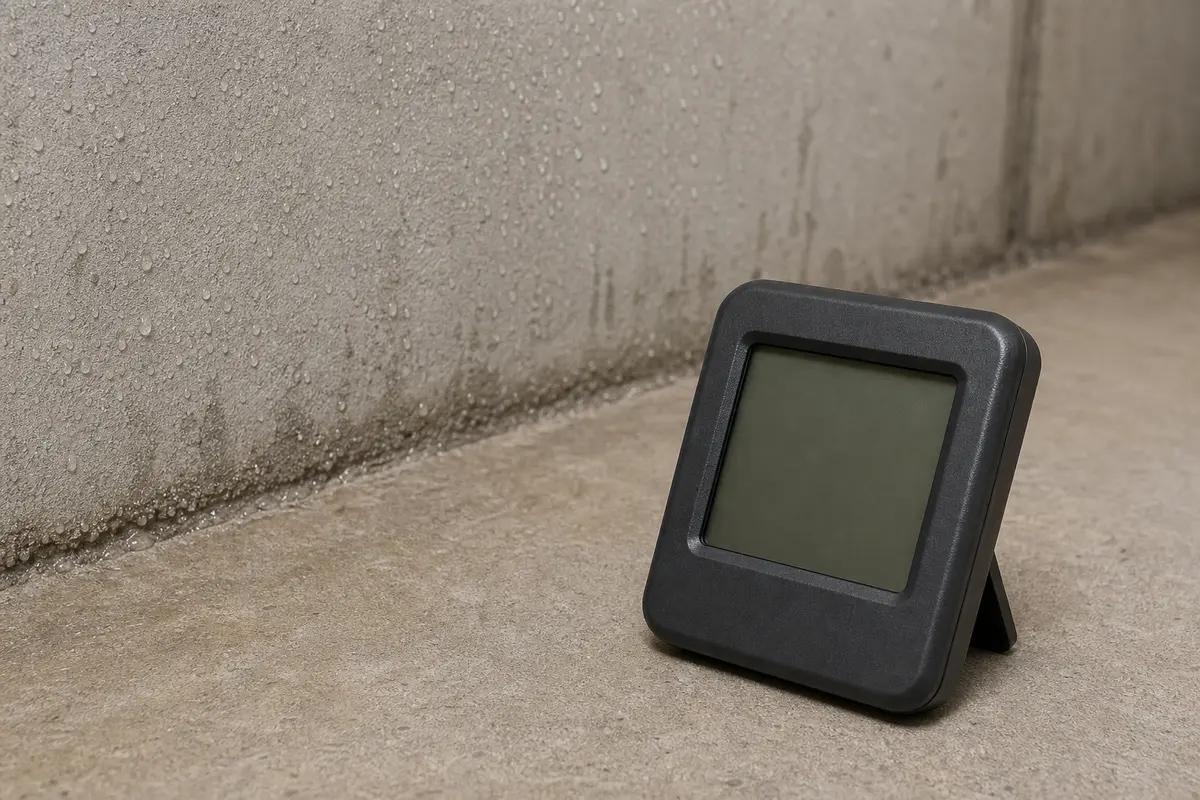
Helps when: Use to compare basement humidity before and after drying, ventilation, or dehumidifier changes.
Skip it when: Skip using one reading alone; compare timing, surface temperature, and visible wet patterns.
Compare hygrometers on Amazon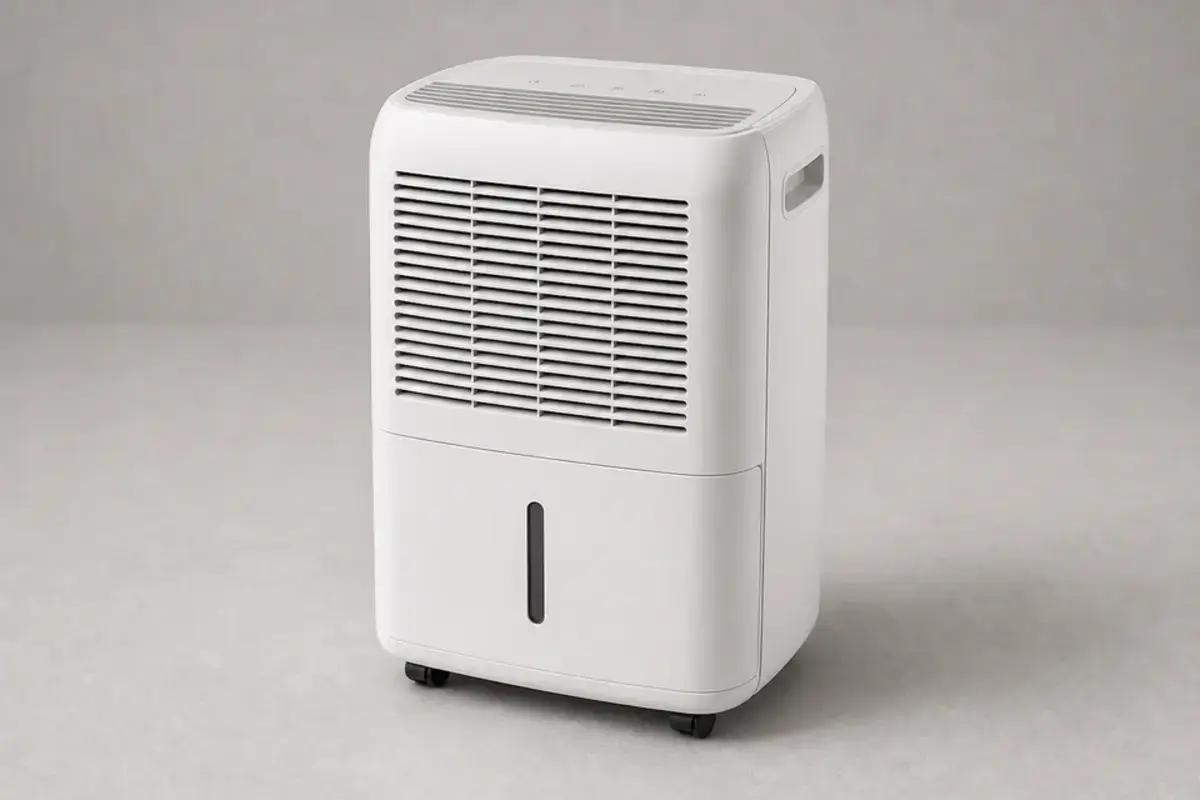
Helps when: Use when basement humidity stays high after obvious water sources and drainage problems are addressed.
Skip it when: Skip if water is actively leaking, runoff still reaches the foundation, or the room lacks safe drainage/power.
Compare basement dehumidifiers on Amazon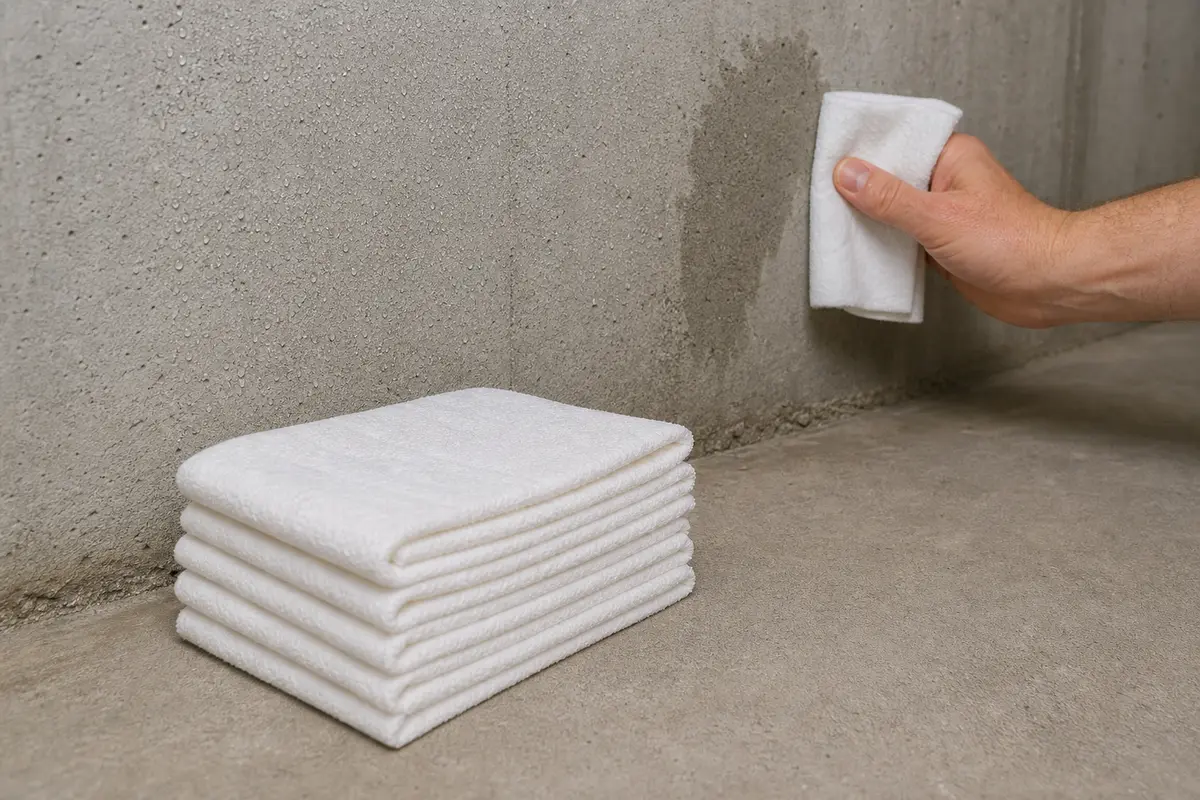
Helps when: Use to dry a small sweating wall or floor area and see whether moisture returns evenly.
Skip it when: Skip for sewage, muddy water, soaked materials, or any water source that is still active.
Compare absorbent towels on AmazonAs an Amazon Associate I earn from qualifying purchases. Repair Riot may earn a commission at no extra cost to you.
These help prove whether moisture is surface condensation or a leak branch.

Helps when: Use to compare the wet area with nearby dry wall, floor, cove joint, or control area before patching.
Skip it when: Skip treating meter readings as proof by themselves; pair them with rain, thaw, humidity, and visible clues.
Compare pinless moisture meters on Amazon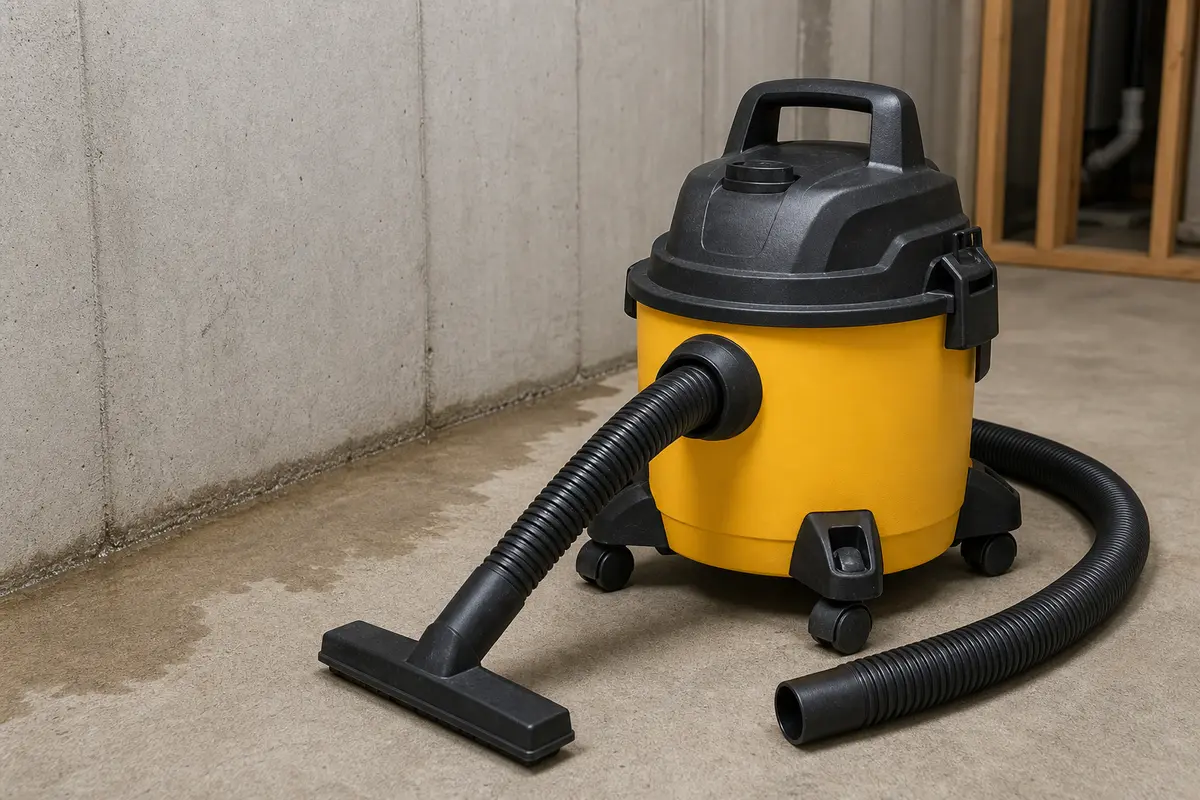
Helps when: Use for small clean-water pickup after the source slows, is contained, or has stopped.
Skip it when: Skip for sewage, unknown contaminated water, active electrical hazards, or water that keeps entering.
Compare wet/dry vacuums on Amazon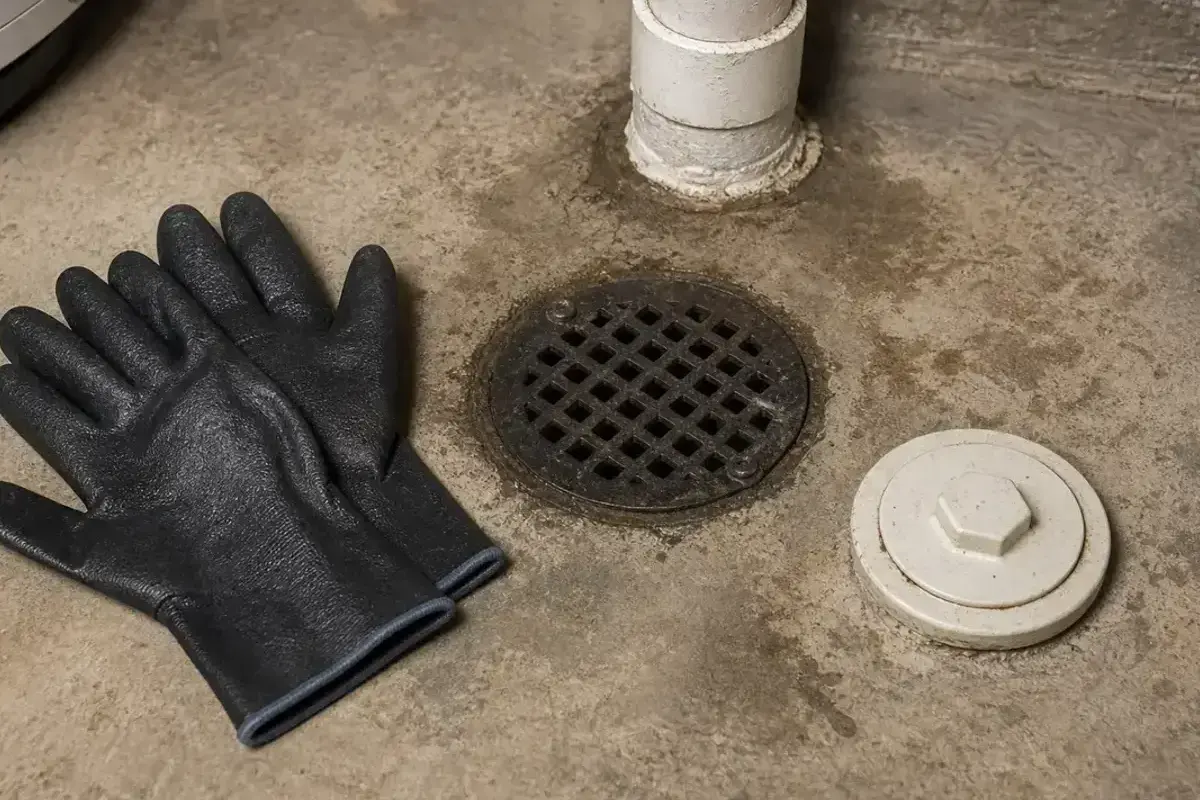
Helps when: Use when moving damp storage, wiping masonry, handling cleanup towels, or brushing dirty repair areas.
Skip it when: Skip hands-on cleanup for sewage, mold growth, sharp debris, or wet electrical components.
Compare waterproof work gloves on AmazonAs an Amazon Associate I earn from qualifying purchases. Repair Riot may earn a commission at no extra cost to you.
Condensation usually appears as even beads or a damp film on the coldest surface. A leak usually follows a crack, window, cove joint, or rain timing.
A dehumidifier helps high humidity and condensation. It will not fix liquid water entering through a crack, wall-floor joint, or outside drainage problem.
Not first. Paint can hide the clue and fail if water pressure or trapped moisture remains behind it.
If basement humidity stays high enough for surfaces to sweat, focus on drying, air movement, and source control before cosmetic repairs.
That pattern points away from simple condensation. Check gutters, downspouts, grading, cracks, and the cove joint.
Yes. Boxes against a cold wall trap air, absorb moisture, and hide recurring dampness.
Call for repeated seepage, bowing walls, active cracks, moldy finishes, water near electrical equipment, or moisture that returns after drainage corrections.
The wall should stay dry through a normal humidity swing and after rain, and hygrometer readings should improve without new water paths.
Repair Riot built this page around basement moisture clues: surface beads, wipe tests, humidity readings, storm timing, cove-joint wetness, and stop points before coatings or wall finishes.