Dust packed in vents?
Dust overheating path; clean only with power off after cooling.
If a ceiling fan smells hot, turn it off and leave it off until the heat source is identified. First check where the odor is strongest and which speed or control triggered it.
Usual split: dust-choked vents versus electrical heat. Good clues are dust in motor vents, smell after several minutes on high, heat after a new control, canopy smell, hum, slow speed, or a breaker trip.
Hot smell is a stop-and-sort symptom, not normal fan noise. Watch for a warm wall control, hot canopy, dusty vents, slowing blades, or repeat odor.
Don’t start with: Do not keep running the fan to see if the smell clears, and do not open live wiring.
Dust overheating path; clean only with power off after cooling.
Wrong dimmer, speed control, receiver, or load path.
Capacitor, drag, receiver, or motor overload path.
Leave power off and call an electrician.
Stop resetting and treat as electrical fault.
Dust-choked motor vents, canopy heat staining, and a dirty fan body are visible clues that the fan should stay off until checked.
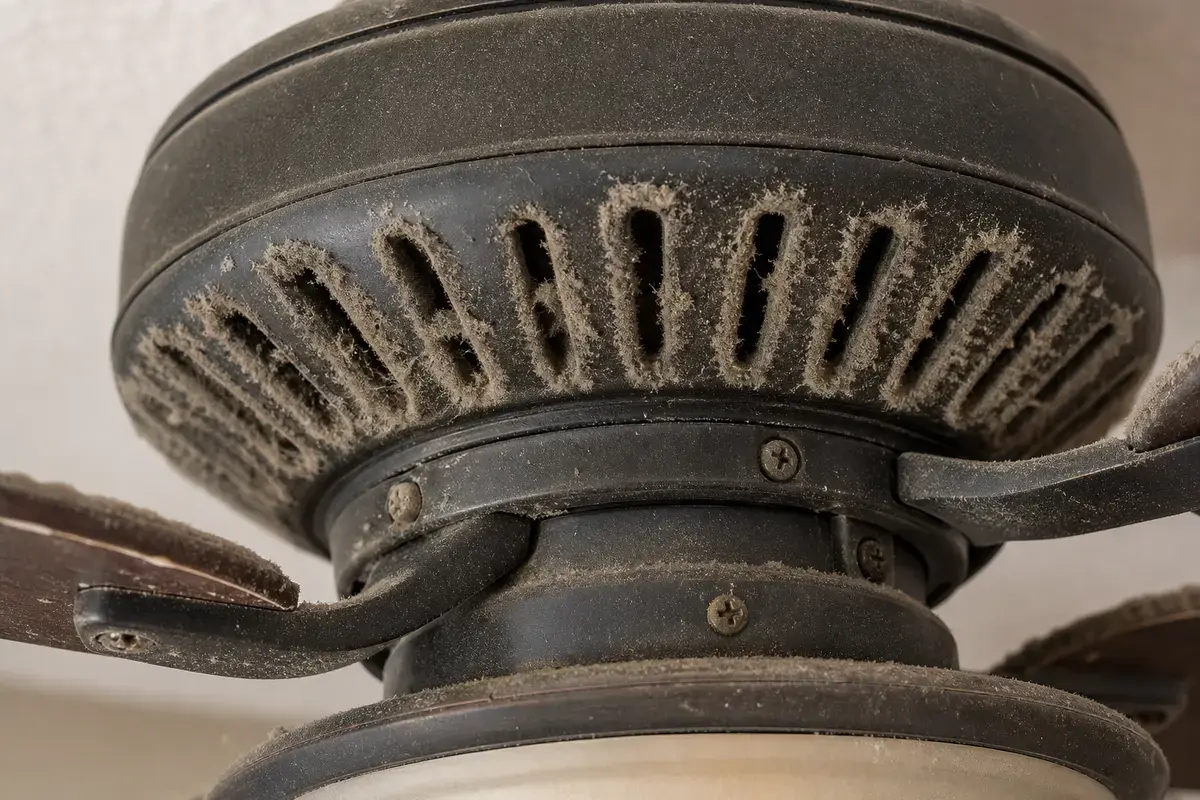
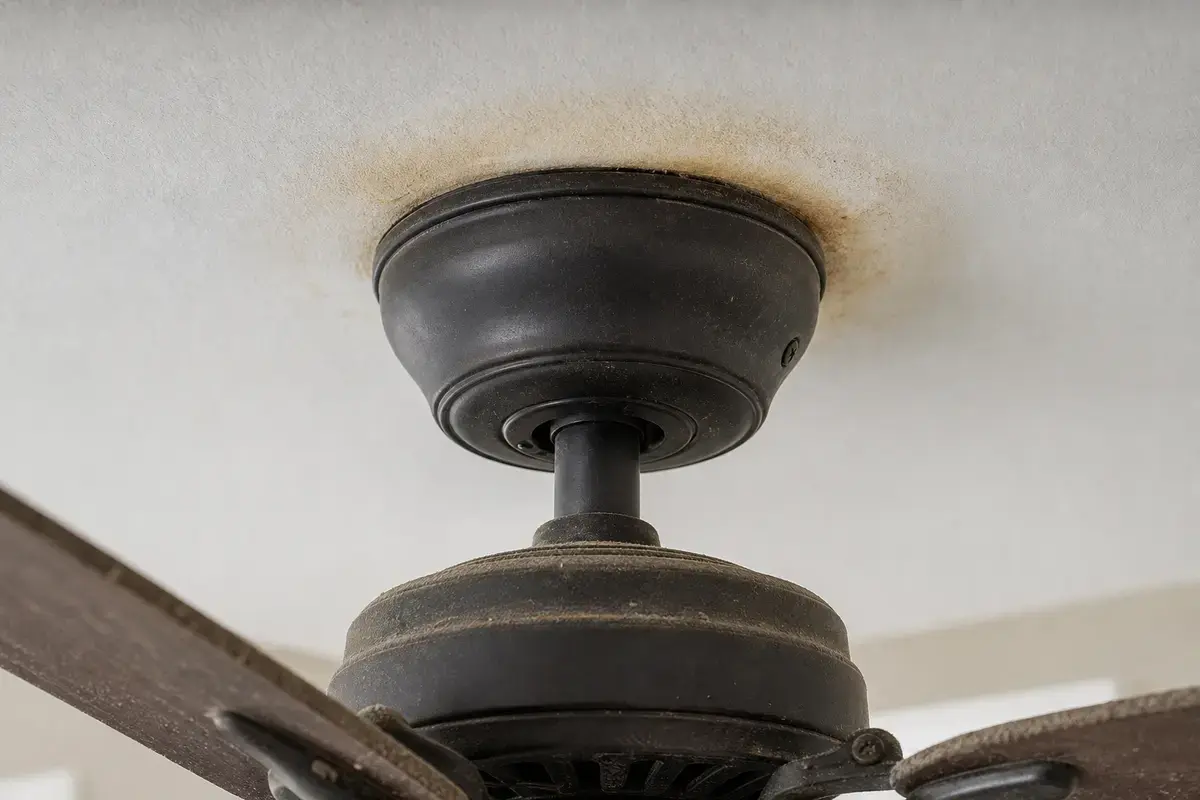
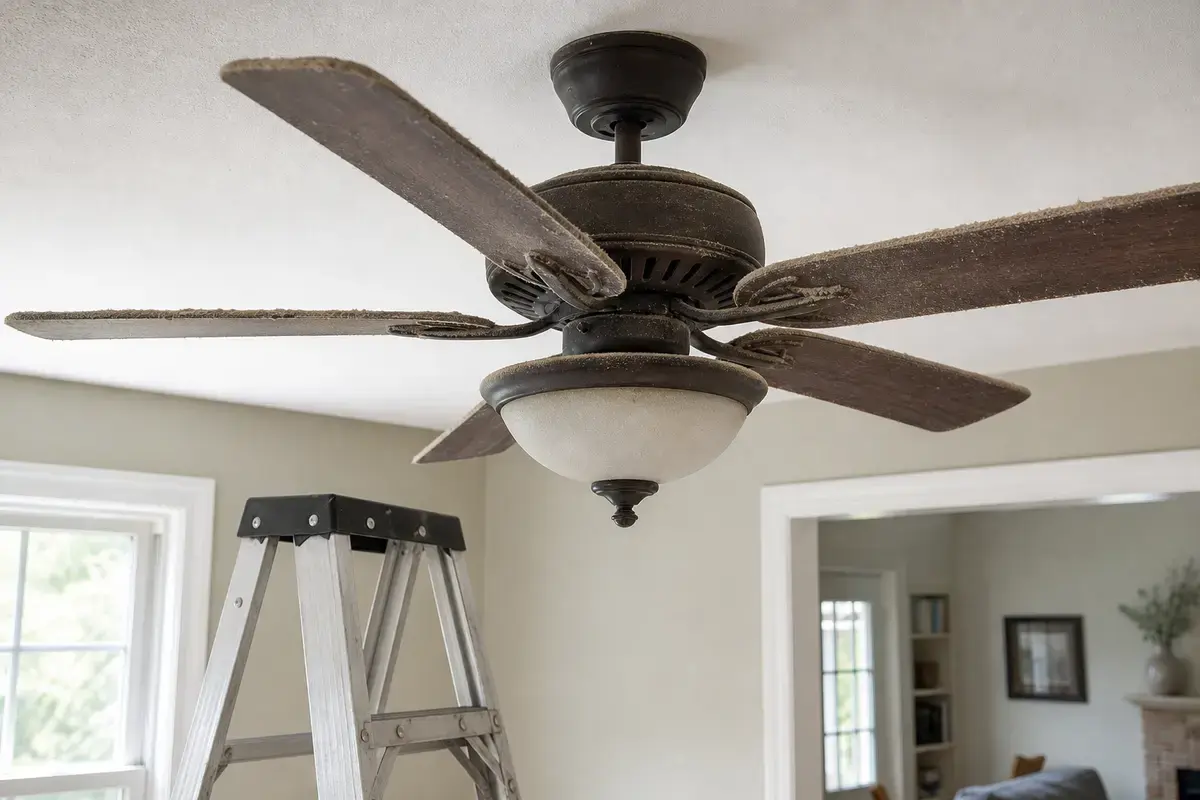
Confirm whether hot smell is dust buildup, blade drag, wrong wall control, receiver heat, capacitor weakness, motor overload, canopy wiring, or breaker trouble. Match the exact fan model, control setup, symptom pattern, measurements, ratings, and confirmed diagnosis before ordering anything.
A hot smell is not the same as ordinary motor warmth. In practice, smell plus heat, buzz, trip, or discoloration means the fan should stay off until the cause is found.
The usual mistake is running the fan longer to see whether the smell burns off. Good clue: a smell that returns after cooling is a confirmed problem, not a break-in smell.
Use the smell location and trigger. Dust, control mismatch, receiver heat, motor hum, and breaker trips point to different boundaries.
| Pattern | Likely path | Next move |
|---|---|---|
| Dusty vents | Heat trapped by debris | Clean only power off. |
| After new control | Control mismatch | Use fan-rated control. |
| Motor hums hot | Stalled/overloaded motor | Leave it off. |
| Canopy smell | Receiver/wiring path | Call for service. |
| Breaker trip | Electrical fault | Stop resetting. |
Some hot-smell calls start with maintenance, but only after the fan is off, cool, and safe to inspect. Good clue: dust packed at motor vents makes heat worse even when wiring is sound.
A ceiling fan motor is not a light bulb load. Good clue: if the smell started after a new wall control, new receiver, speed change, hum, or slow start, compare that trigger before touching internal parts.
These tools help you inspect visible heat clues and verify power-off status; they do not make hot wiring a homeowner job.
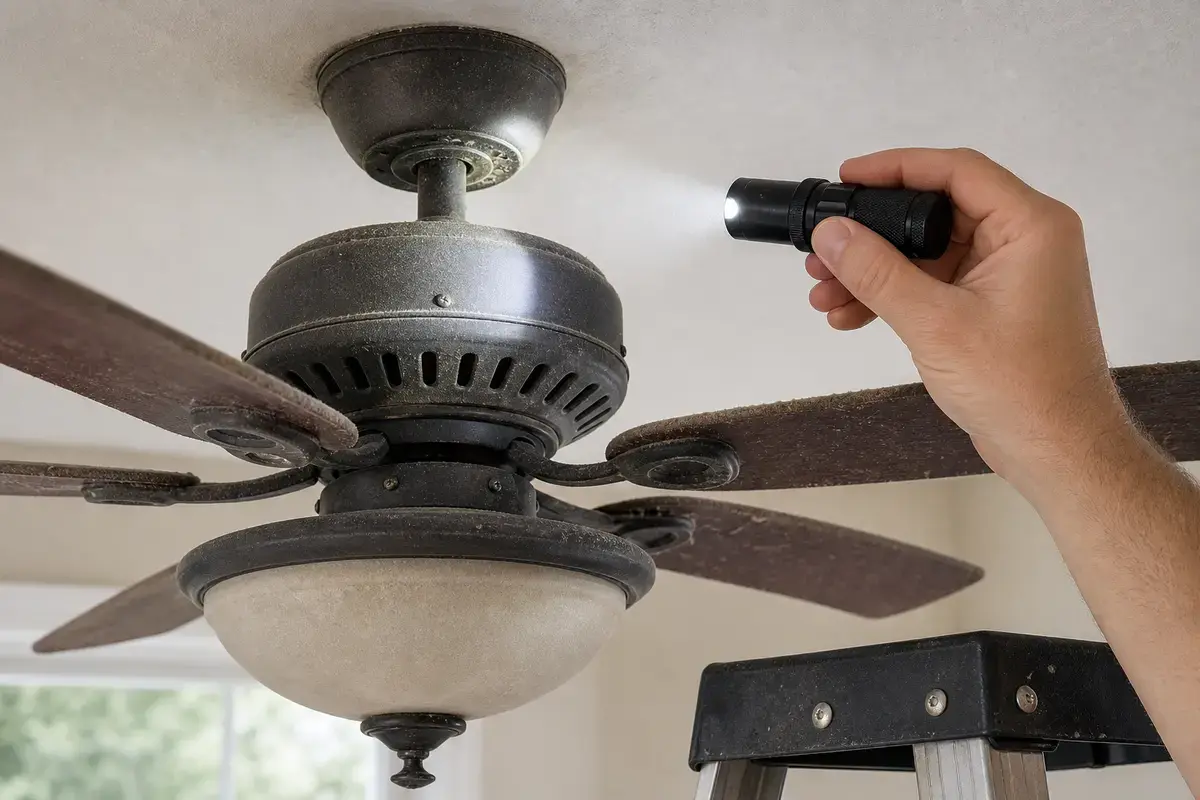
Helps when: Helps see dust-choked vents, heat staining, loose hardware, receiver labels, capacitor markings, and model labels with power off.
Skip it when: Skip overhead inspection if better light still leaves you unsure about support, wiring, heat, or power-off status.
Compare inspection flashlights on Amazon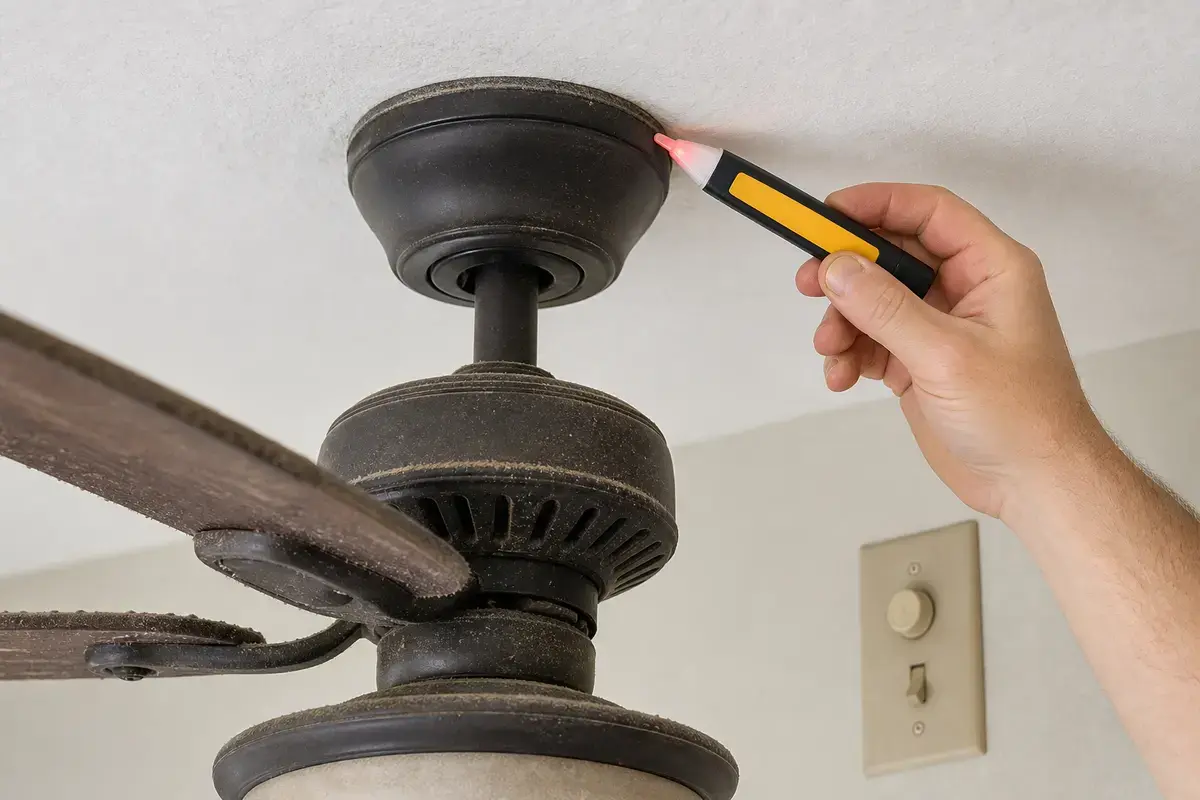
Helps when: Screens for power after the breaker is off before opening a canopy, receiver area, switch housing, wall control, or capacitor compartment.
Skip it when: Skip DIY electrical checks if readings are confusing, the breaker trips again, or the fan wiring is unfamiliar.
Compare voltage testers on Amazon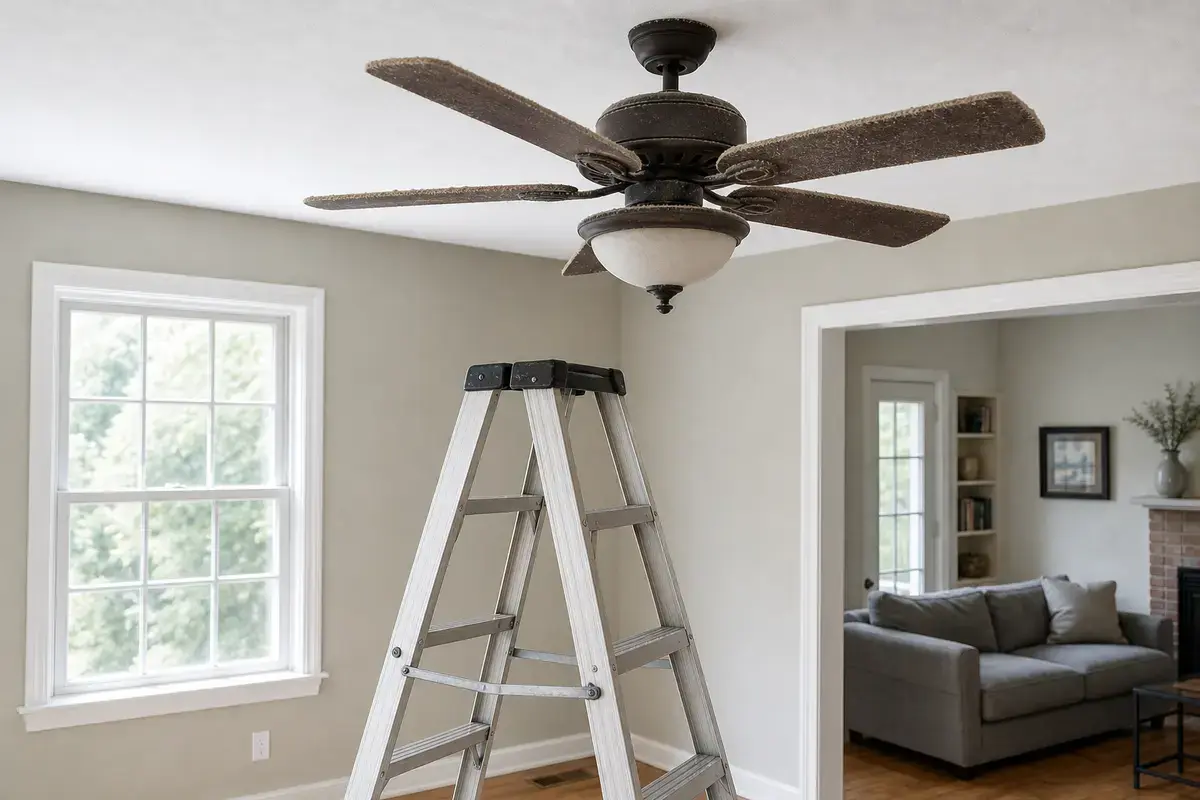
Helps when: Lets you reach the fan housing while standing flat-footed instead of leaning from furniture or the top cap.
Skip it when: Skip DIY overhead work if the fan is over stairs, furniture, a bed, or any spot where you cannot stay balanced.
Compare step ladders on AmazonAs an Amazon Associate I earn from qualifying purchases. Repair Riot may earn a commission at no extra cost to you.
Common causes are dust in motor vents, wrong controls, receiver heat, capacitor trouble, motor drag, stalled starts, wiring faults, or an aging motor.
No. Turn it off. A hot or electrical smell should not be treated as normal break-in behavior unless a qualified person confirms it.
Yes, heavy dust can trap heat and add drag. Clean only with power off and after the fan cools.
Yes. A regular light dimmer or mismatched control can make a fan motor or receiver run hot.
Leave the switch off and call an electrician. Wall-control heat or smell is not a fan cleaning issue.
A failing capacitor can contribute to weak starts, hum, and motor heat. Replacement requires exact ratings and safe power-off access.
Replacement is reasonable when an older fan repeatedly smells hot, hums, runs slow, has bearing drag, or has parts that cannot be matched safely.
Photograph motor vents, canopy, wall control, receiver label, capacitor label, dust buildup, and any discoloration or scorch marks.
Repair Riot reviewed this page around ceiling fan hot smell, dust-choked motor vents, control mismatch, receiver heat, motor overload, breaker trips, and electrician stop points. The source links support home electrical safety and general fan context; the diagnostic sequence is original guidance.