Gas smell or alarm?
Leave and call the utility or emergency service from outside.
If a boiler pilot light is out, treat gas smell and carbon monoxide safety first. Only relight by the boiler label instructions, and stop if the pilot will not stay lit or the burner behaves oddly.
Common branches are a draft or outage, dirty pilot, weak thermocouple, gas supply interruption, or a safety control doing its job.
The key split is one safe relight after a simple outage versus a pilot that keeps going out or will not prove flame.
Don’t start with: Do not hold controls down repeatedly, bypass a thermocouple, or open burner compartments beyond the labeled user relight access.
Leave and call the utility or emergency service from outside.
One labeled relight may be reasonable if there are no unsafe clues.
Thermocouple, pilot flame, draft, or safety-control service branch.
Combustion and cleaning branch; stop homeowner work.
Shut down and call for service.
The sight opening, flame shape, and carbon-monoxide safety context matter more than buying a thermocouple from a guess.
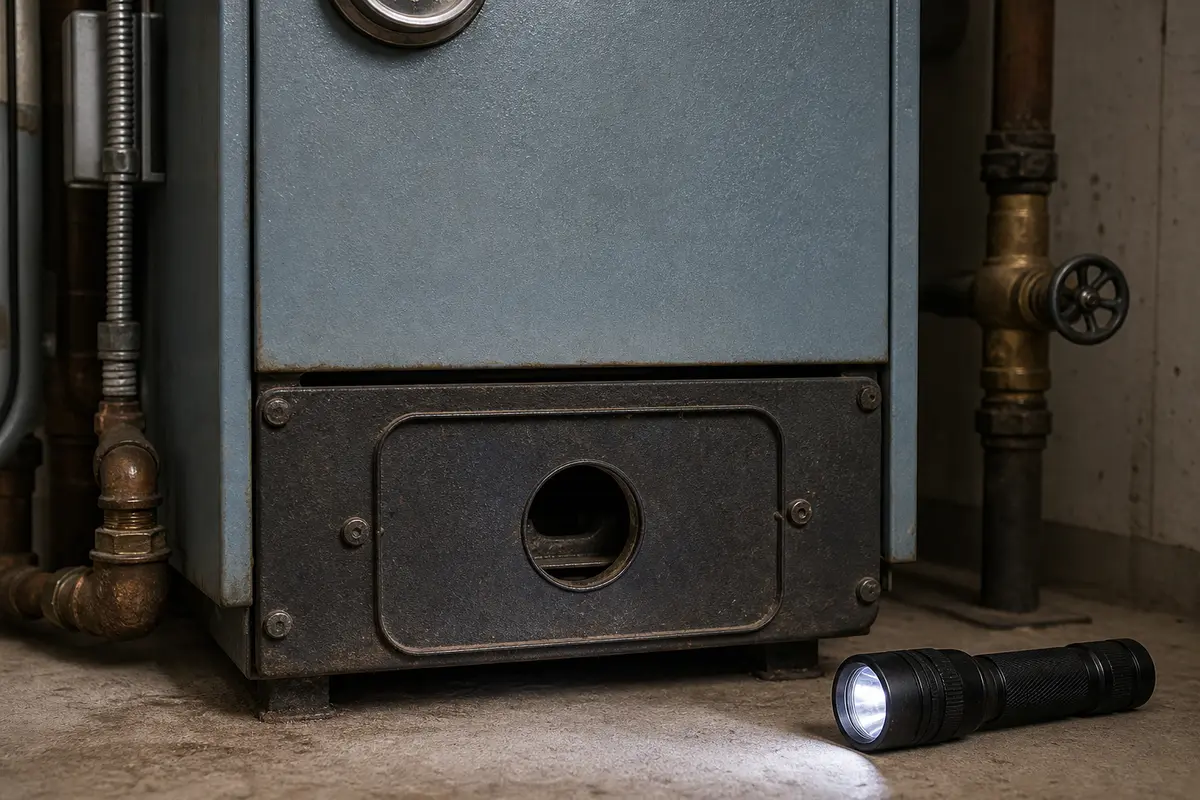
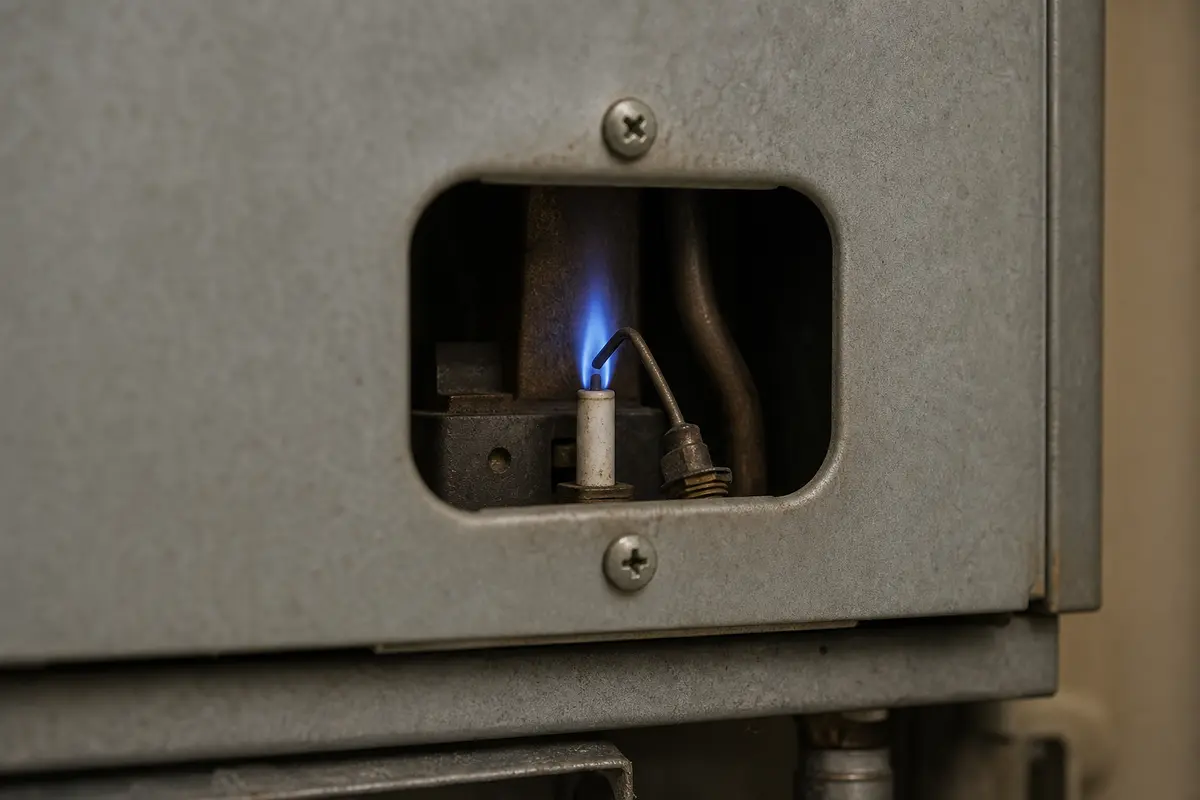
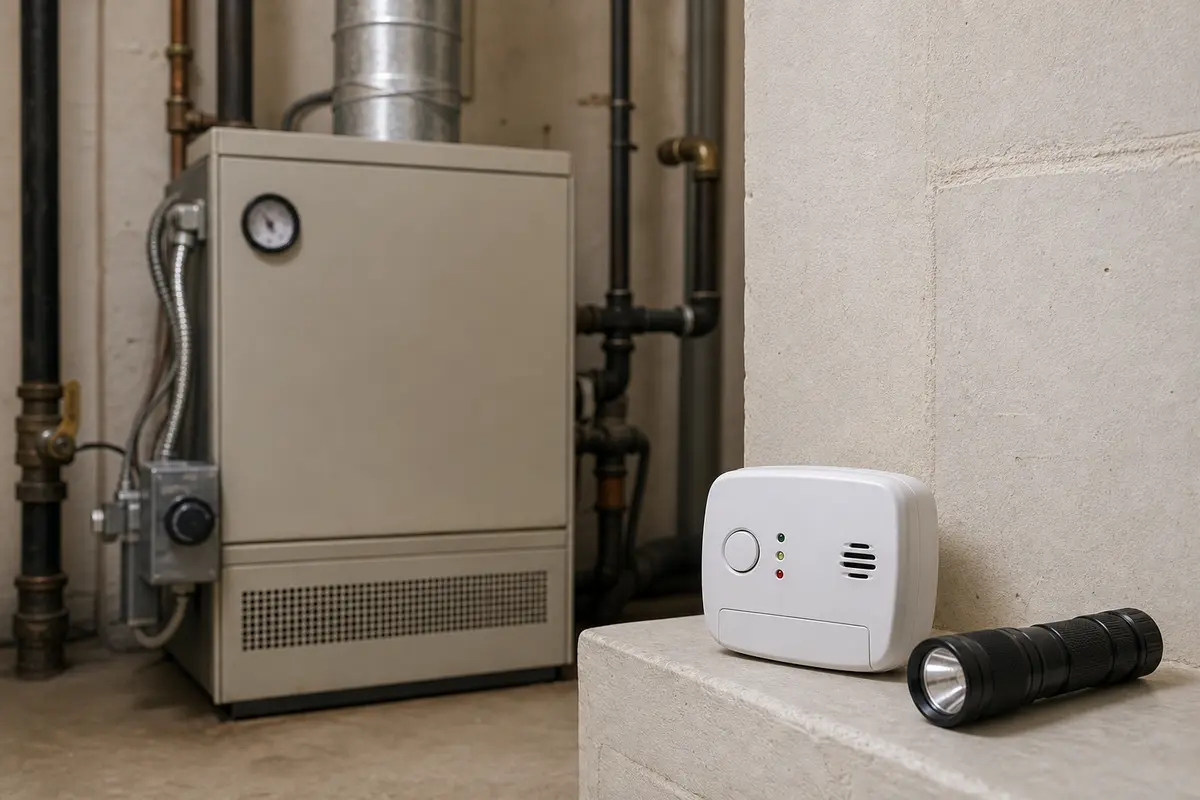
Confirm whether the pilot went out once, will not stay lit, has an unstable flame, or is tied to burner behavior before matching any exact part.
A pilot outage can be routine after an interruption, but it can also be a combustion, draft, or gas-control problem. The unsafe clues decide whether troubleshooting stops immediately.
Older standing-pilot boilers can have different lighting steps. The label on the boiler controls the wait time, knob position, and sequence.
The result after one safe attempt is the diagnosis path. Timing matters: goes out immediately, holds then fails later, or lights but flame looks wrong.
| Pattern | Likely branch | Next move |
|---|---|---|
| Out after power or gas interruption | Simple restart possible | Use one labeled relight if safe. |
| Lights, dies when button released | Thermocouple or flame-proving path | Stop repeated attempts. |
| Holds briefly, later goes out | Draft, pilot, thermocouple, or safety path | Record timing and book service. |
| Yellow or unstable flame | Combustion or pilot cleaning path | Shut down and call service. |
| Burner booms or rolls out | Unsafe ignition/combustion | Shut down and call urgently. |
The usual expensive miss is treating every pilot outage like a thermocouple. In practice, watch for the exact field clue: whether the flame lights, how long it holds after you release the control, and whether the main burner lights smoothly.
A weak thermocouple is possible, but the thermocouple only proves the flame it is given. A dirty pilot, draft issue, gas-pressure issue, or misaligned flame can mimic the same symptom.
Pilot and burner problems sit at the boundary between comfort troubleshooting and combustion safety. The homeowner job is to stop safely and preserve the clue.
These tools help you see and document outside clues while keeping combustion and carbon-monoxide safety first.
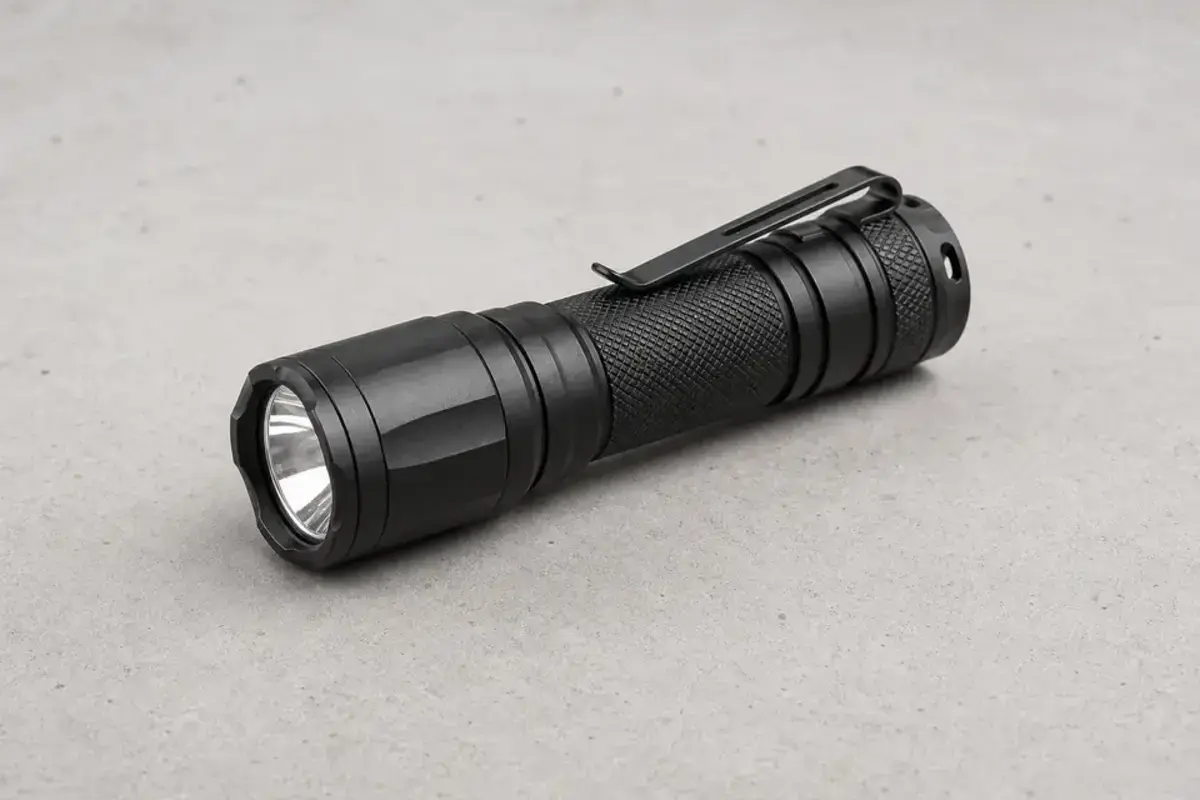
Helps when: Helps read the pressure gauge, pilot area, relief outlet, valve positions, and fault display without opening covers.
Skip it when: Skip close inspection if the boiler is leaking near electrical parts, smells like gas, or has locked out again.
Compare flashlights on Amazon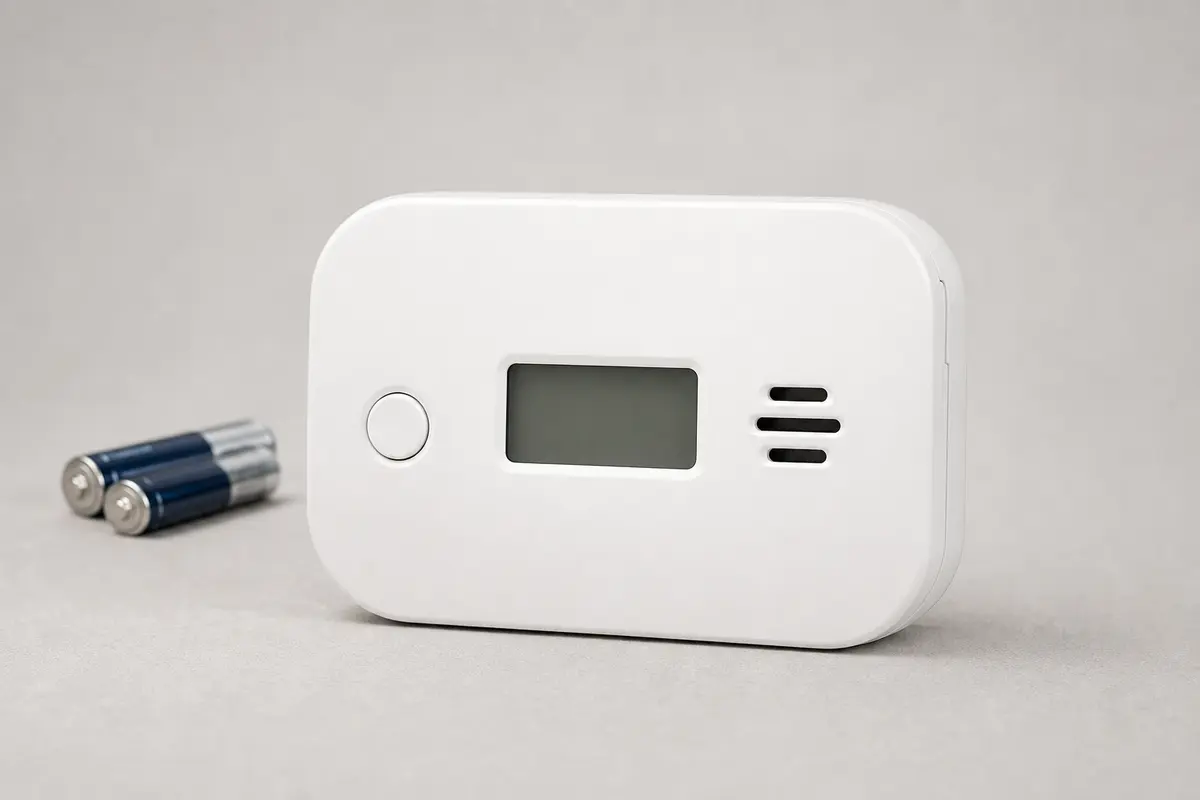
Helps when: Adds a safety check around any combustion appliance when pilot, burner, venting, or flame problems are suspected.
Skip it when: Skip troubleshooting and leave immediately if an alarm sounds, you feel symptoms, or the boiler flame behaves abnormally.
Compare carbon monoxide alarms on Amazon
Helps when: Records pressure readings, reset timing, fault lights, leak timing, pilot behavior, and what changed first.
Skip it when: Skip buying one if clear photos and a written symptom timeline are already ready for the technician.
Compare notebooks on AmazonAs an Amazon Associate I earn from qualifying purchases. Repair Riot may earn a commission at no extra cost to you.
Only if the boiler has standing-pilot relight instructions, there is no gas smell or carbon monoxide alarm, and you follow the label exactly. Stop after one failed attempt.
That often points to flame proving, such as a thermocouple that is not being heated properly or a pilot flame problem. Repeated attempts are not the fix.
A healthy pilot is typically small, stable, and mostly blue. Yellow, lazy, lifting, or unstable flame behavior needs service.
No. Draft, dirt, pilot alignment, gas supply, and safety controls can create the same symptom.
Tell them when the pilot went out, whether it relights, how long it stays lit, flame color, recent outage history, and any burner noise or odor.
Only if there is no gas smell, carbon monoxide alarm, leak near wiring, relief-valve discharge, breaker trip, overheating, or repeat lockout. Stop and call for service when any safety clue appears.
Photograph the pressure gauge, display or fault light, first wet point if water is involved, thermostat call, pilot or burner clue from outside the cover, and the timing of the symptom.
Recurring pressure loss, relief discharge, boiler-body leakage, repeat lockout, pilot or burner trouble, electrical symptoms, or any check that requires opening a boiler compartment belongs with a qualified boiler technician.
Repair Riot reviewed this page around standing-pilot outage checks, relight boundaries, thermocouple and pilot-flame clues, combustion safety, and carbon monoxide stop points. The source links support boiler maintenance and carbon monoxide safety context; the diagnostic sequence is original guidance.