High-risk heating system troubleshooting

Boiler Not Working

Direct answer: If your boiler is not working, the most common homeowner-level causes are no power to the boiler, thermostat settings that are not calling for heat, low system pressure, or a safety lockout. Start with those visible checks before assuming a failed boiler part.

Most likely: A simple control issue, low pressure condition, or resettable lockout is more common than a major internal boiler failure.

First identify what “not working” means on your system: completely dead, powered on but no heat, trying to start then stopping, or showing a fault or low-pressure condition. That split matters because boilers can fail for very different reasons, and several branches become unsafe quickly.

Don’t start with: Do not open combustion compartments, adjust gas valves, bypass safeties, or replace boiler parts based on guesswork.

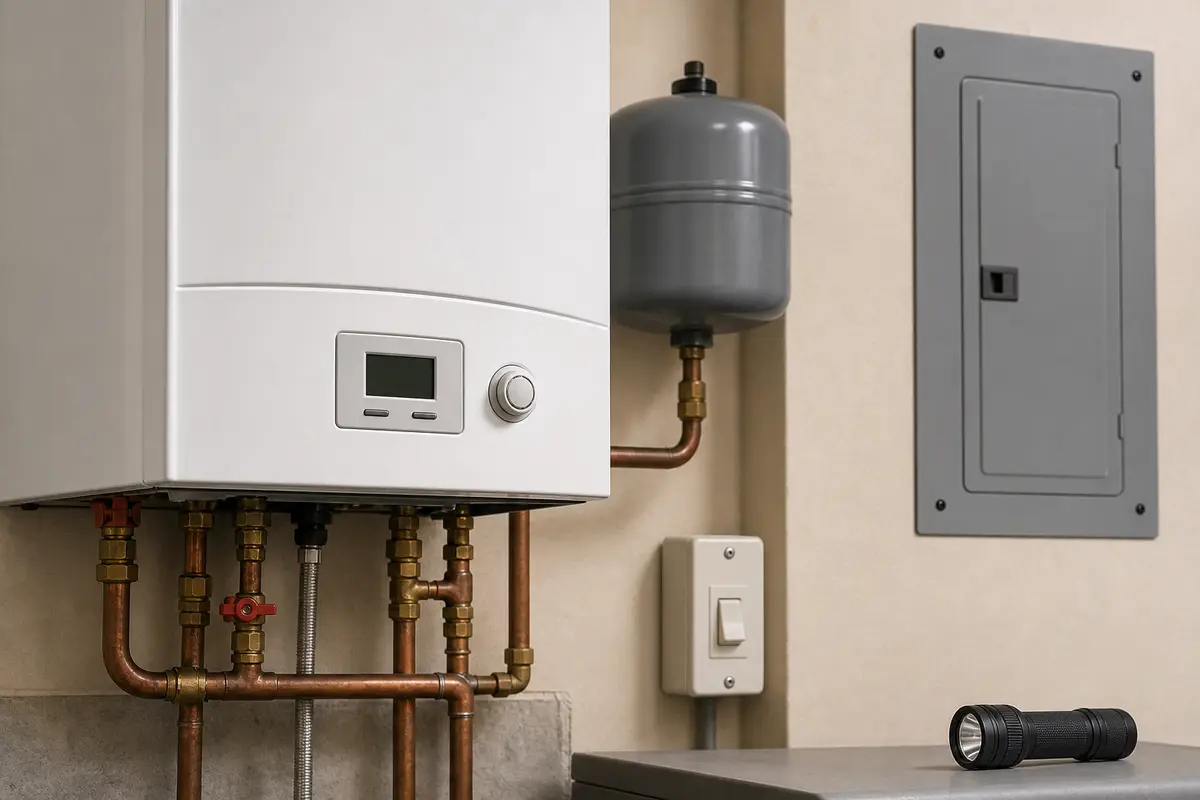
Boiler completely dead?Check the service switch, breaker, emergency shutoff, and whether the display or indicator lights are off.
Boiler has power but no heat?Check thermostat demand, system pressure, and any fault or lockout message before touching anything else.
Last reviewed: 2026-03-17

What kind of boiler failure are you seeing?

No lights or display at all

The boiler looks completely dead, with no screen, no status light, and no obvious sound from the unit.

Start here: Start with power and switch checks before assuming the boiler itself failed.

Boiler has power but heat never starts

The display is on or the unit seems awake, but the home is cold and the boiler does not begin a normal heating cycle.

Start here: Check whether the thermostat is actually calling for heat and whether the boiler shows a standby, fault, or low-pressure condition.

Boiler tries to start then shuts down

You may hear brief startup sounds, then the boiler stops, retries, or goes into lockout.

Start here: Look for a fault code, reset indicator, or repeated shutdown pattern and stop early if you smell gas or notice scorching.

Some heat works but the system is not heating properly

The boiler may run, but radiators or baseboards stay cool, heat is uneven, or the system does not keep up.

Start here: Separate a boiler problem from a circulation or hydronic loop problem by checking pressure, zone response, and whether any heat reaches part of the house.

Most likely causes

1. Power to the boiler is off

A tripped breaker, switched-off service disconnect, emergency shutoff, or dead outlet can make the boiler appear completely failed.

Quick check: See whether the boiler display is dark, then check the service switch and the correct breaker without opening panels.

2. Thermostat or control demand is not reaching the boiler

If the boiler has power but never starts, the thermostat may be off, set too low, in the wrong mode, or not calling for heat from the boiler controls.

Quick check: Raise the thermostat several degrees above room temperature and listen for a click or watch for any change at the boiler display.

3. Low boiler system pressure or safety lockout

Many boilers will not fire normally when pressure is too low or when a safety condition has triggered a lockout.

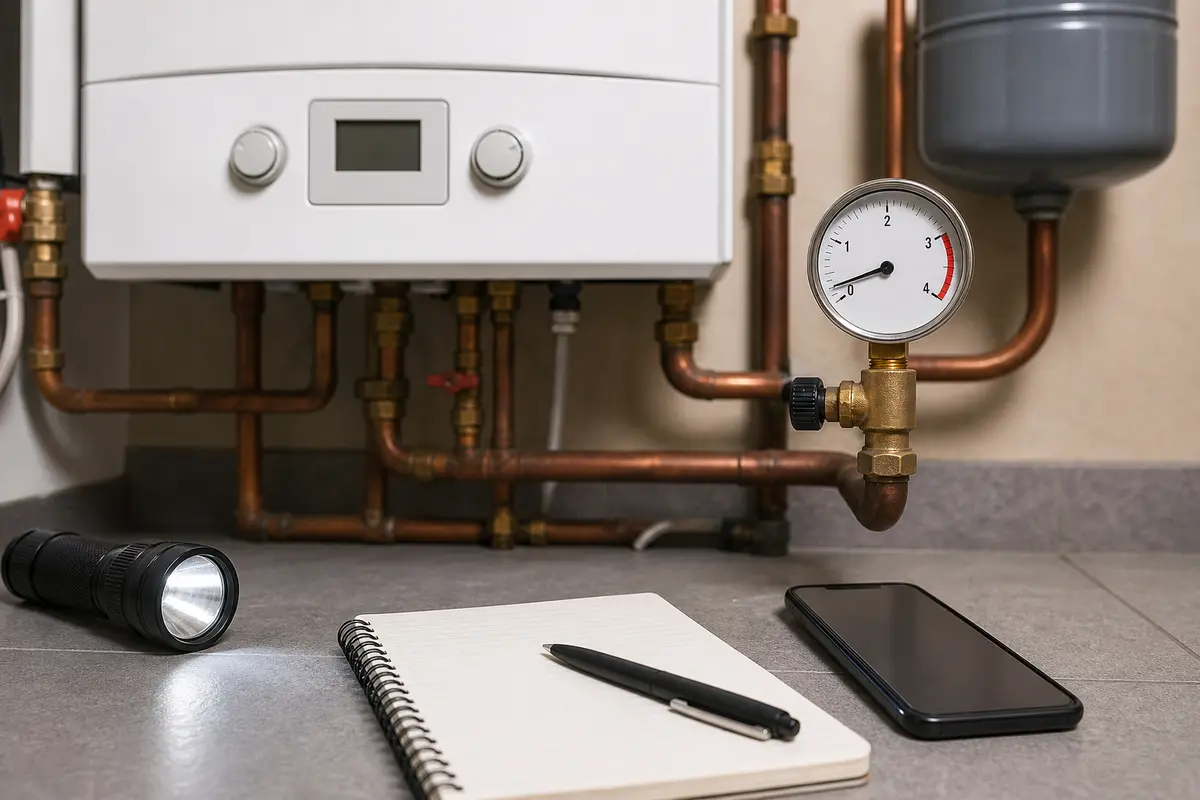
Quick check: Look at the pressure gauge or display and note any fault light, reset prompt, or low-pressure message.

4. Ignition, combustion, venting, or internal control failure

If the boiler has power and demand but repeatedly fails to light or stay running, the problem may be beyond safe homeowner diagnosis.

Quick check: Notice whether it attempts to start and then stops, but do not open combustion sections or try to force operation.

Step-by-step fix

Step 1: Confirm the exact failure pattern first

A dead boiler, a no-heat boiler, and a lockout boiler point to different branches. Sorting that out first prevents random resets or part swapping.

  1. Set the thermostat to heat and raise the set temperature several degrees above room temperature.
  2. Go to the boiler and note whether the display, indicator lights, or status screen are on.
  3. Listen for any response over the next few minutes: nothing at all, a brief startup attempt, or normal operation with poor heat delivery.
  4. Check whether the problem affects the whole home or only one zone or area.

Next move: If the boiler starts and heat begins returning, the issue may have been a thermostat setting or temporary control state. Keep watching for repeat failures. If the boiler stays dead, never responds to a heat call, or repeatedly locks out, continue to the matching branch below.

What to conclude: This tells you whether to focus first on power, thermostat demand, pressure and lockout, or a likely pro-only combustion or control issue.

Stop if:
  • You smell gas anywhere near the boiler or gas piping.
  • You see smoke, scorching, melted wire insulation, or signs of overheating.
  • Water is leaking onto electrical parts or pooling around the boiler.

Step 2: Check power and obvious shutoffs

A boiler that looks dead often has a simple power interruption rather than a failed internal component.

  1. Look for the boiler service switch and make sure it is on.
  2. Check for an emergency shutoff switch nearby that may have been bumped off.
  3. At the electrical panel, look for a tripped breaker serving the boiler and reset it once only if it is clearly tripped.
  4. If the boiler plugs into an outlet, confirm the plug is fully seated and the outlet has power if that can be checked safely without disassembly.

Next move: If the display comes back on and the boiler starts normally, monitor it through a full heating cycle. If power is present but the boiler remains dead, or the breaker trips again, stop DIY and arrange service.

What to conclude: A restored display after a switch or breaker correction points to an interrupted power supply. A repeatedly tripping breaker or dead boiler with confirmed power suggests an internal electrical fault that is not a safe homeowner repair.

Stop if:
  • The breaker trips again after one reset.
  • You find burned smells, buzzing, or visible wire damage.
  • You are not certain which switch or breaker serves the boiler.

Step 3: Make sure the thermostat is actually calling for heat

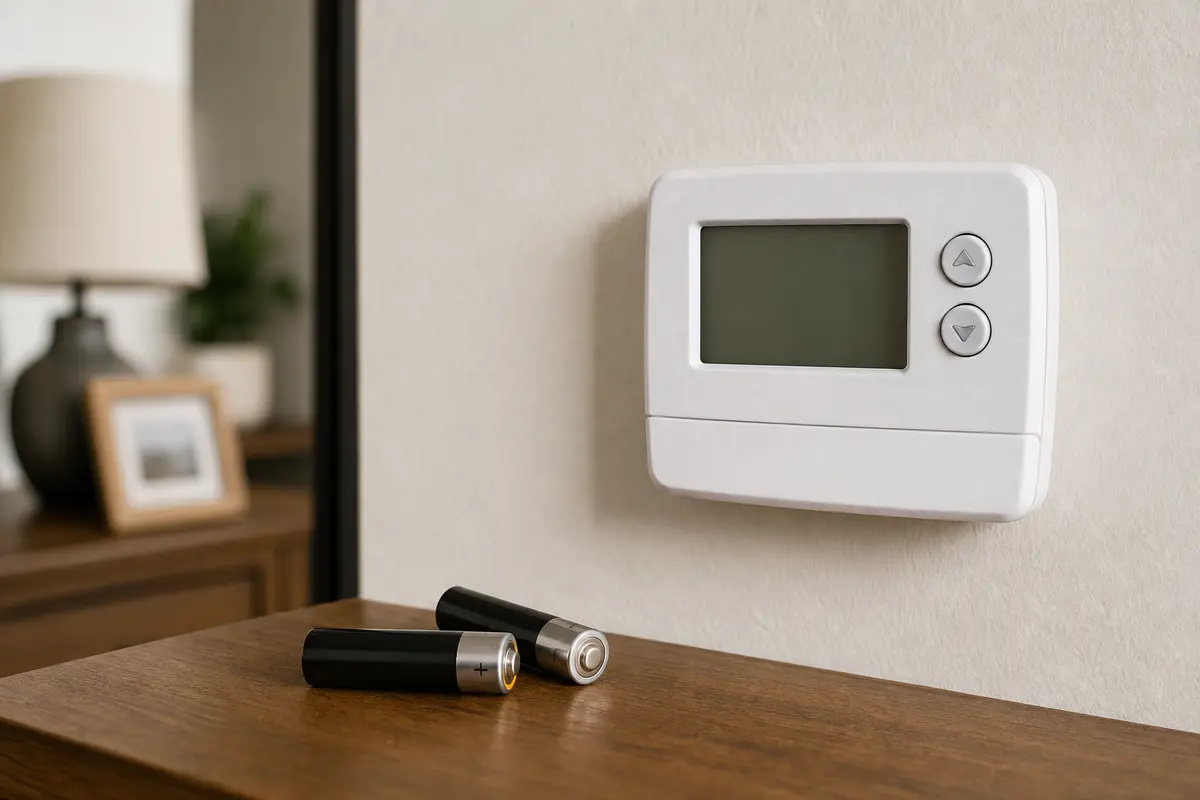
Boilers often appear failed when the thermostat is off, mis-set, has weak batteries, or is not sending a heat demand.

  1. Confirm the thermostat is set to heat, not cool or off.
  2. Raise the setpoint several degrees above room temperature.
  3. If the thermostat uses replaceable batteries and the screen is weak or blank, replace the batteries.
  4. If you have multiple zones, check whether only one zone is affected or the whole system is not responding.
  5. Wait a few minutes to see whether the boiler display changes to show a call for heat or active heating.

Related repair guide: How to Reset A Thermostat

Stop if:
  • The thermostat wiring is exposed, loose, or damaged and you are considering handling it live.
  • You would need to remove boiler control covers to continue.
  • The system behavior is inconsistent and you cannot tell whether the thermostat or boiler is in control.

Step 4: Check for low pressure, fault lights, or a resettable lockout

Many boilers will refuse to fire when system pressure is too low or when a safety condition has triggered a lockout.

  1. Read the boiler pressure gauge or display if accessible from the outside of the unit.
  2. Look for any fault code, warning light, or reset message on the display.
  3. If the manufacturer-provided user controls include a normal reset button, use it once only after noting the fault indication.
  4. Watch what happens next: normal startup, immediate fault return, or brief ignition attempt followed by shutdown.
  5. If pressure is clearly low, do not guess at valves or filling procedures unless you already know the correct homeowner procedure for your exact system.

Next move: If one normal reset clears a temporary lockout and the boiler runs normally, keep monitoring for repeat faults. If the fault returns, pressure remains low, or the boiler starts and stops again, stop at homeowner-level checks and call for service.

Step 5: Separate a boiler problem from a circulation or system-side problem

Sometimes the boiler is working, but heat is not moving through the home because of a zone, circulator, air-in-system, or hydronic loop issue. That changes the next step and keeps you from blaming the boiler itself.

  1. Feel whether the boiler and near piping become warm when there is a call for heat, using caution around hot surfaces.
  2. Check whether any zone heats normally while others stay cold.
  3. Notice whether radiators or baseboards are all cold, only one branch is cold, or heat is weak everywhere.
  4. Look for obvious water leaks, recently bled radiators, or pressure changes that might point to air or water-loss issues.
  5. If the boiler fires but heat distribution is poor or uneven, document what zones work and call for hydronic service rather than replacing boiler parts blindly.

A good result: If heat returns after the system catches up or a zone begins responding, continue monitoring for uneven heating or pressure loss.

If not: If the boiler runs but the home still does not heat properly, the problem may be in circulation or the hydronic loop and usually needs service diagnosis.

What to conclude: A warm boiler with poor heat delivery suggests the boiler may not be the main failure point. The issue may be downstream in circulation, zoning, trapped air, or water loss.

FAQ

Why is my boiler completely dead?

Start with the simplest branch: a switched-off service disconnect, emergency shutoff, tripped breaker, unplugged cord if your unit uses one, or no power to the controls. If power is confirmed and the boiler still has no display or lights, stop and call for service because internal electrical diagnosis is not a safe basic DIY task.

Can I press the reset button on my boiler?

If your boiler has a normal user reset described in the manual, one reset is reasonable after you note any fault light or code. If the boiler locks out again, do not keep resetting it. Repeated resets can hide a combustion, ignition, venting, or control problem that needs proper diagnosis.

What pressure should my boiler show?

The correct pressure varies by system, so use the gauge markings and your manual rather than a guess. If the display or gauge clearly indicates low pressure, that can stop the boiler from firing. Do not start opening fill valves unless you already know the correct homeowner procedure for your exact setup.

My boiler runs, but the radiators or baseboards stay cold. Is the boiler bad?

Not necessarily. If the boiler gets hot but heat does not move through the house, the problem may be in circulation, zoning, trapped air, or water loss in the hydronic loop. That is different from a dead boiler and usually points to a system-side service call rather than blind boiler part replacement.

When should I call a professional right away?

Call right away if you smell gas, suspect carbon monoxide, see water leaking from the boiler, have a repeatedly tripping breaker, notice scorching or smoke, or the boiler repeatedly locks out after one normal reset. Those branches move beyond safe homeowner troubleshooting quickly.