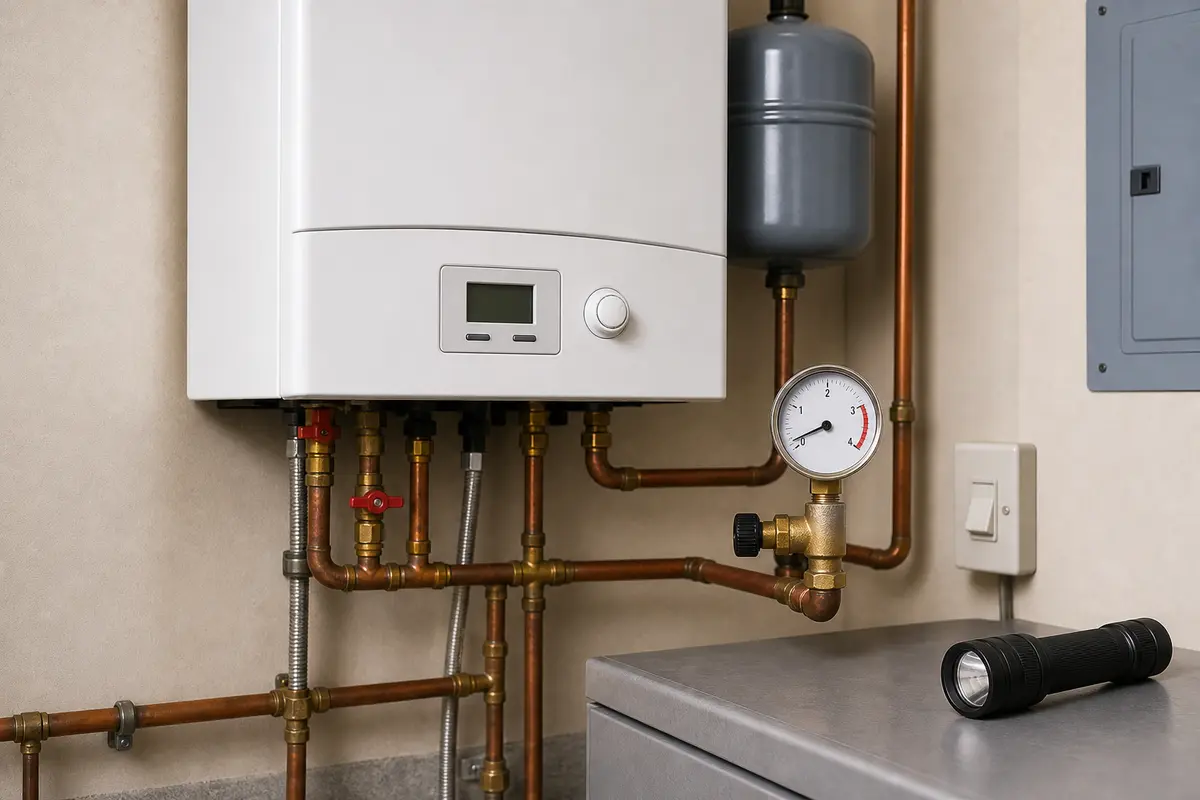
Boiler heating problem

Boiler Not Heating

Direct answer: When a boiler is not heating, the most common homeowner-level causes are thermostat settings, lost power, low boiler pressure, or a simple lockout that clears with one reset. If the boiler has fuel, power, and normal pressure but still will not heat, stop short of opening combustion or gas components and move to service.

Most likely: Start by separating two lookalikes: the boiler is not firing at all, or the boiler is making heat but it is not moving through the house. That split saves time fast.

A boiler can fail in a few very different ways. Sometimes the thermostat is not actually calling for heat. Sometimes the boiler is locked out on low pressure or a fault. Other times the boiler fires, gets hot, and the house still stays cold because circulation is not happening. Reality check: a lot of 'dead boiler' calls turn out to be a setting, pressure, or reset issue. Common wrong move: hitting the reset button over and over instead of checking why it locked out.

Don’t start with: Do not start by replacing boiler parts or opening gas, burner, or sealed electrical sections. On boilers, guesswork gets expensive and can get unsafe.

No heat anywhere?Check thermostat call, power, pressure gauge, and whether the boiler is trying to fire.
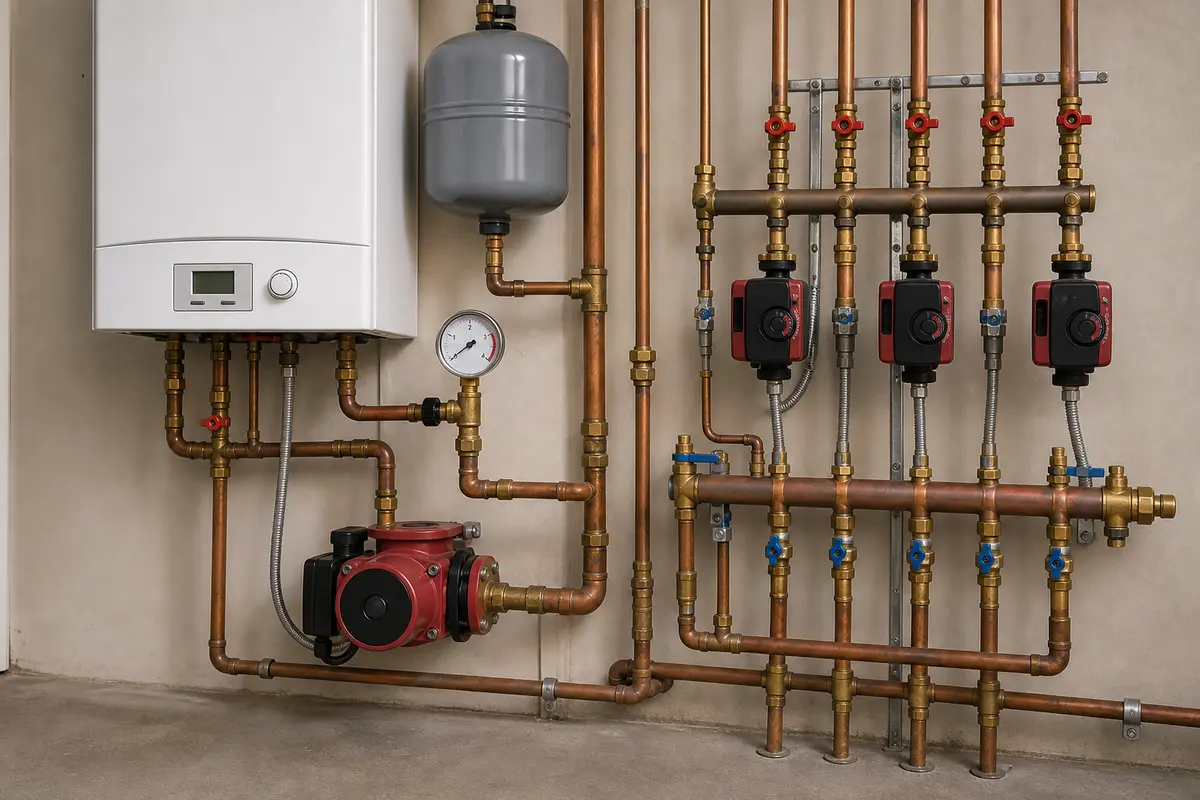
Boiler hot but rooms cold?Think circulation first: zone controls, circulator operation, trapped air, or a closed valve.
Last reviewed: 2026-04-01

What kind of no-heat problem you actually have

No heat anywhere and boiler seems quiet

Thermostat is calling for heat, but the boiler is silent or only shows lights with no obvious firing sounds.

Start here: Start with thermostat mode, power switches, breaker status, and the boiler pressure gauge.

Boiler runs but radiators or baseboards stay cool

You hear the boiler operating or the boiler jacket feels warm, but the heat is not reaching the rooms.

Start here: Start with circulation clues: zone valves, circulator sound, air in the loop, and any closed isolation valves you can see.

Heat comes and goes after a reset

The boiler may fire once after pressing reset, then lock out again later.

Start here: Use one reset only. If it trips again, stop DIY and schedule service because the fault is not solved.

One zone heats and another does not

Part of the house warms up, but another loop stays cold or much cooler.

Start here: Check whether the thermostat for that zone is calling and whether that zone valve or circulator branch is actually opening or moving water.

Most likely causes

1. Thermostat or control setting issue

This is still the cleanest first check, especially after a power outage, battery change, or seasonal switch-over.

Quick check: Set the thermostat to heat and raise it several degrees above room temperature. Listen for a click and watch for a heat call at the boiler if visible.

2. Boiler power loss or service switch off

Boilers often have a nearby service switch that gets bumped off, and a tripped breaker can leave the unit dead or partly powered.

Quick check: Check the breaker, emergency or service switch near the boiler, and any visible display or indicator lights.

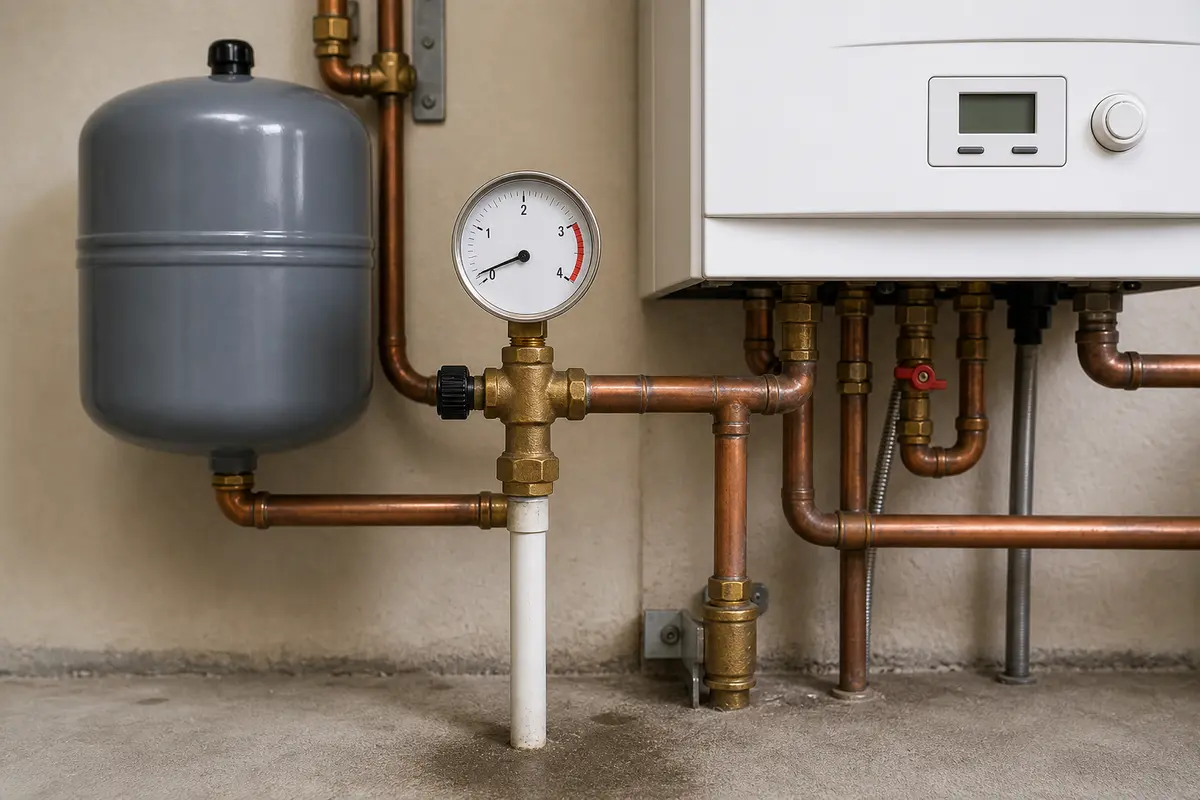
3. Low boiler pressure or lockout

Many boilers will not heat properly when system pressure drops too low, and some will lock out until pressure is corrected and the fault is cleared.

Quick check: Look at the pressure gauge when the system is cool. If it is very low or near zero, that is a strong clue.

4. Circulation problem in the hydronic loop

If the boiler gets hot but the house does not, the issue is often water movement, trapped air, a stuck zone valve, or a circulator problem rather than heat production.

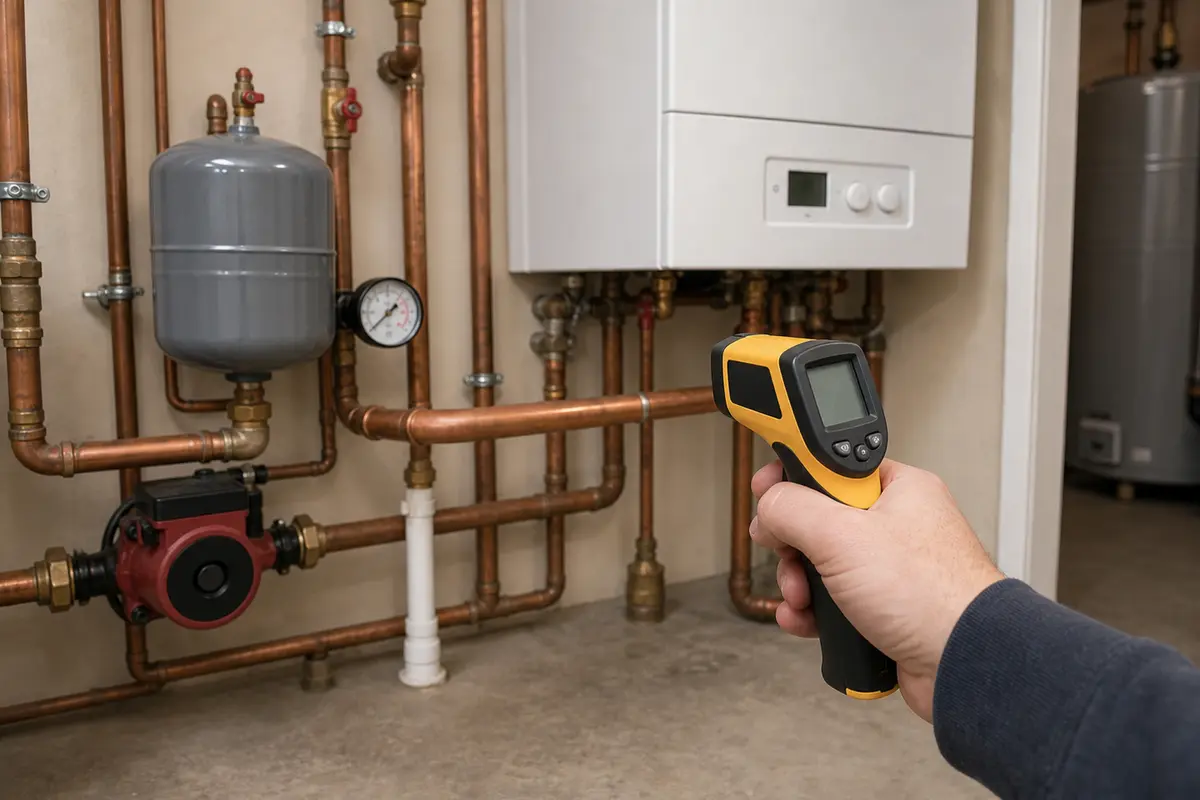
Quick check: Feel the supply piping near the boiler carefully. If it gets hot but downstream piping stays cool, circulation is the better lead.

Step-by-step fix

Step 1: Confirm there is a real call for heat

A boiler cannot respond if the thermostat or zone control is not actually asking for heat.

  1. Set each affected thermostat to heat mode, not auto-off or cool.
  2. Raise the set temperature at least 3 to 5 degrees above room temperature.
  3. If the thermostat uses batteries and the screen is dim or blank, replace the batteries.
  4. If only one zone is cold, test that zone thermostat first instead of assuming the whole boiler failed.
  5. Wait a minute and listen near the boiler for any click, hum, or startup attempt.

Next move: If the boiler starts after correcting the thermostat setting, the problem was control-side, not a failed boiler part. If there is still no response, move to power and pressure checks before touching anything deeper.

What to conclude: No heat call means no boiler action.

Stop if:
  • You smell gas anywhere near the boiler or meter.
  • The thermostat wiring is exposed, damaged, or sparking.
  • The boiler starts making loud banging, popping, or metal stress noises as soon as heat is called.

Step 2: Check boiler power and obvious lockout clues

A dead service switch, tripped breaker, or visible fault code can explain a no-heat call without opening the boiler.

  1. Make sure the boiler service switch is on. It is often mounted on or near the unit like a light switch.
  2. Check the home's electrical panel for a tripped breaker and reset it once if needed.
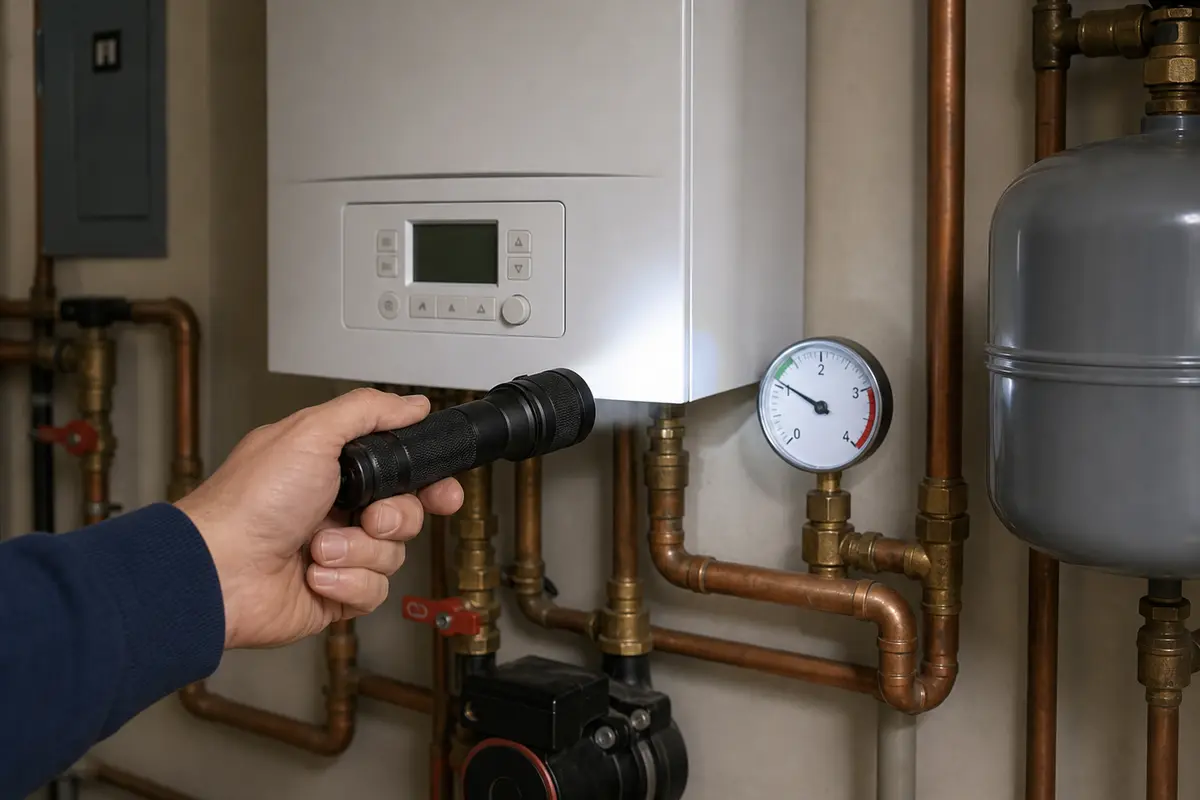
  3. Look for a display, status light, or fault light on the boiler front panel.
  4. If the boiler has a clearly labeled reset button, use it one time only after checking for low pressure and obvious unsafe conditions.
  5. Watch what happens for the next few minutes: normal startup, immediate lockout, or no change at all.

Next move: If the boiler starts and keeps running normally after restoring power or a single reset, you likely had a temporary interruption. If the breaker trips again, the reset fails again, or the boiler stays dead, stop there and arrange service.

What to conclude: Repeat trips point to a real fault, not a nuisance.

Stop if:
  • The breaker trips more than once.
  • You see scorch marks, melted insulation, or smell burning electrical odor.
  • The reset button trips the boiler into fault again after one attempt.

Step 3: Read the boiler pressure gauge before chasing parts

Low system pressure is one of the most common reasons a boiler will not heat or will lock out, and it changes the next move completely.

  1. Find the boiler pressure gauge and read it when the system is cool if possible.
  2. If the gauge is near zero or clearly below the normal operating range shown on the boiler label, do not keep resetting the unit.
  3. Look around the boiler, relief discharge pipe, nearby valves, and visible piping for fresh drips, staining, or crusty mineral tracks.
  4. If your system has a clearly labeled homeowner fill lever and the boiler manual instructions are posted on the unit, you may restore pressure slowly only to the normal range shown there.
  5. After pressure is restored, watch the gauge for several minutes and then try one heat call.

Next move: If normal pressure returns and the boiler heats without dropping again, low pressure was the immediate cause. If pressure will not rise, rises too high, or drops back down, stop DIY and call for service because there is a leak, feed problem, or expansion issue to sort out.

Stop if:
  • Water is leaking from the boiler, relief pipe, or nearby piping.
  • The pressure climbs rapidly toward the high end of the gauge.
  • You are not sure which valve is the fill valve or which range is normal for your boiler.

Step 4: Separate no-fire from no-circulation

This is the key split on boilers: either the boiler is not making heat, or it is making heat and not moving it.

  1. Call for heat and stand near the boiler long enough to tell whether it is trying to run.
  2. If the boiler jacket or supply pipe gets hot but the rooms stay cold, suspect circulation before combustion.
  3. Check whether one zone works while another does not. That points more toward a zone valve, circulator branch, or air in one loop.
  4. Feel accessible supply and return pipes carefully. A hot supply with a much cooler return can be normal during startup, but a hot boiler with no heat leaving the near-boiler piping points to poor circulation.
  5. Listen for a circulator hum or vibration if your system has an accessible pump housing, but do not disassemble anything.

Next move: If you confirm the boiler is hot but heat is not moving, you have narrowed it to the distribution side and can give a tech a much better symptom report. If the boiler never gets hot and never really starts, the fault is in ignition, safeties, controls, or fuel supply and that is pro territory.

Stop if:
  • You hear grinding, screaming, or hard knocking from a circulator or piping.
  • Any pipe, valve, or pump body is leaking.
  • You would need to open a burner compartment, gas train, or sealed control area to continue.

Step 5: Take the safe next action based on what you found

At this point you should know whether this is a simple setup issue, a pressure problem, or a boiler fault that needs service.

  1. If the thermostat setting, power switch, breaker, or one-time reset solved it, monitor the next few heating cycles and note any repeat fault.
  2. If low pressure was the issue and it stays stable after a careful refill, keep checking for small leaks around the boiler and visible piping.
  3. If the boiler heats but one zone stays cold, tell the service company which zone is affected and whether another zone still works.
  4. If the boiler will not fire, locks out again, trips the breaker, leaks, or smells like gas or burning, shut it down at the service switch and call for boiler service.
  5. If you cannot tell whether the problem is no-fire or no-circulation, use the broader next page for full-system failure symptoms.

A good result: If heat returns and stays steady through several cycles, you likely solved a control or pressure issue.

If not: If the problem repeats or the boiler still will not heat, stop troubleshooting and hand it off with the exact clues you gathered.

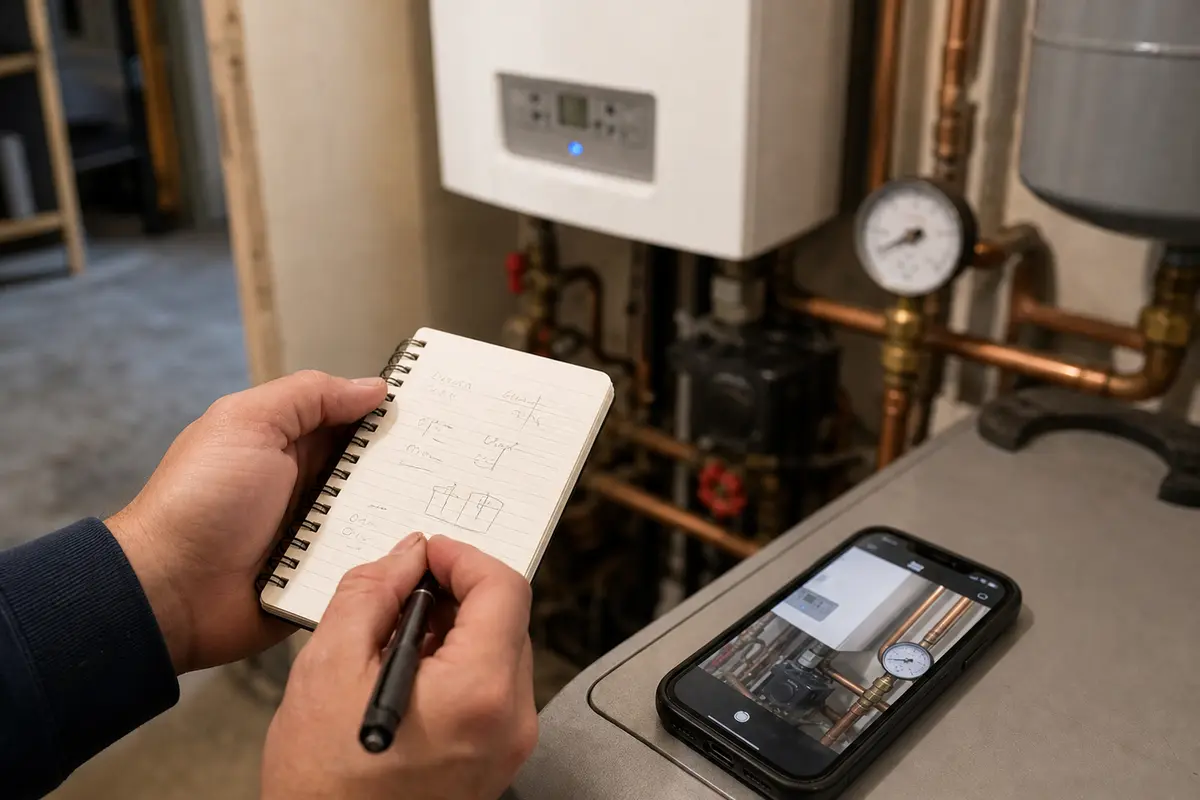
What to conclude: Good symptom notes save time on a boiler call.

Stop if:
  • You smell gas at any point.
  • The boiler leaks, hisses at the relief discharge, or shows unstable pressure.
  • You are considering opening combustion, gas, or line-voltage electrical components.

FAQ

Why is my boiler running but the house is still cold?

That usually points to circulation, not heat production. The boiler may be getting hot, but water is not moving through the loop the way it should because of a zone issue, trapped air, a closed valve, or a circulator problem.

Can low pressure make a boiler stop heating?

Yes. Many boilers will not run properly with very low system pressure, and some will lock out completely. If pressure is low, look for leaks or pressure loss instead of just resetting the boiler.

Is it safe to press the boiler reset button?

One reset after basic checks is reasonable if there is no gas smell, leak, or burning odor. If it locks out again, stop there. Repeated resets do not fix the cause and can make a bad situation worse.

What pressure should my boiler be at?

That depends on the system, but a cold residential boiler is commonly somewhere around the low-to-mid normal range marked on the gauge or label. Use the boiler's own markings and posted instructions, not a guess.

Should I replace a circulator pump or zone valve myself?

Not until you know that is truly the failed part. On boilers, those parts sit inside a bigger pressure, air, and control picture. If the diagnosis is not obvious, it is better to stop at symptom confirmation and have the system tested.