Wet relief discharge pipe?
Check pressure and stop repeated running.
When a boiler is leaking water, the puddle is usually not the source. First dry the area, trace upward to the first fresh wet point, and decide whether water is coming from a fitting, relief discharge pipe, condensate tube, pump, or boiler jacket.
The usual clue is the highest wet point: a fitting bead, relief discharge, condensate drip, circulator gasket, or lower jacket drip. A wet relief outlet also means pressure must be checked.
The right first move is source tracing, not part guessing.
Don’t start with: Do not keep mopping, tighten hot fittings, or add water until you know where the leak starts.
Check pressure and stop repeated running.
Localized fitting or valve service.
Condensate path may be clogged or cracked.
Stop and call for service.
Dry and trace upward before deciding.
A puddle only tells you where water ended up. The first wet point tells you which branch to follow.
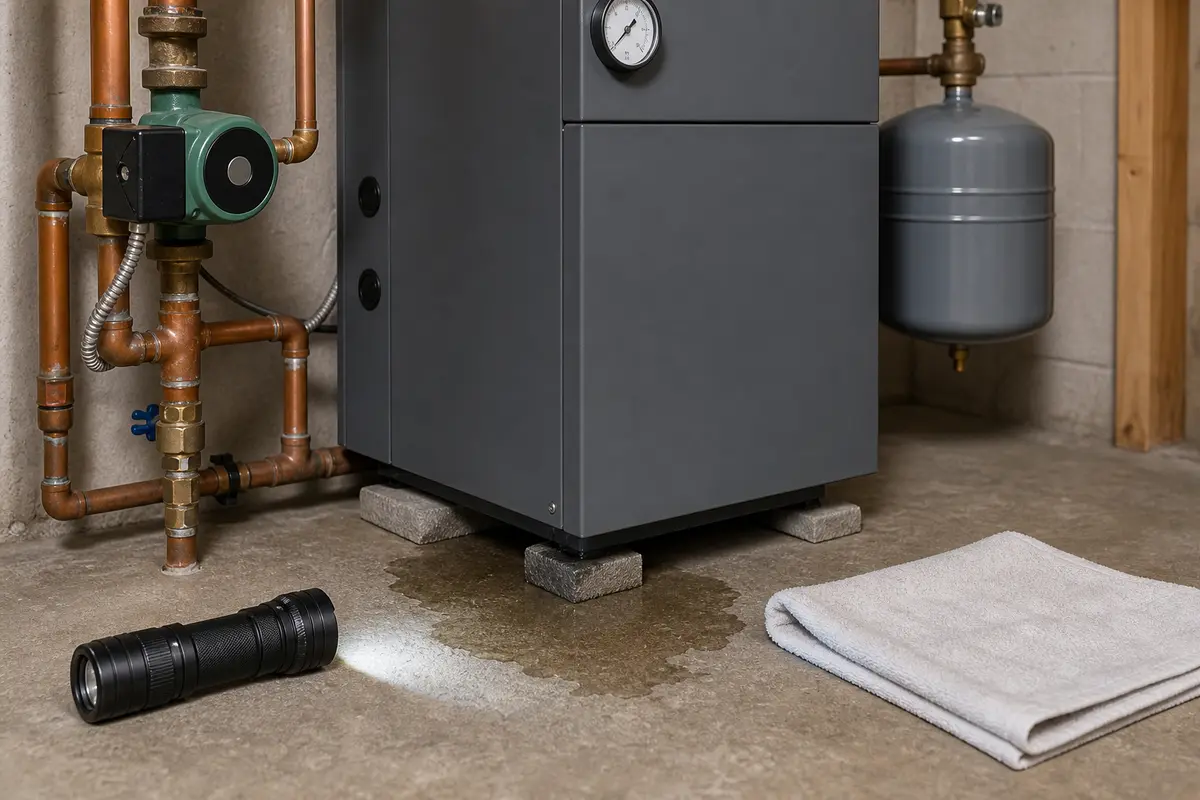
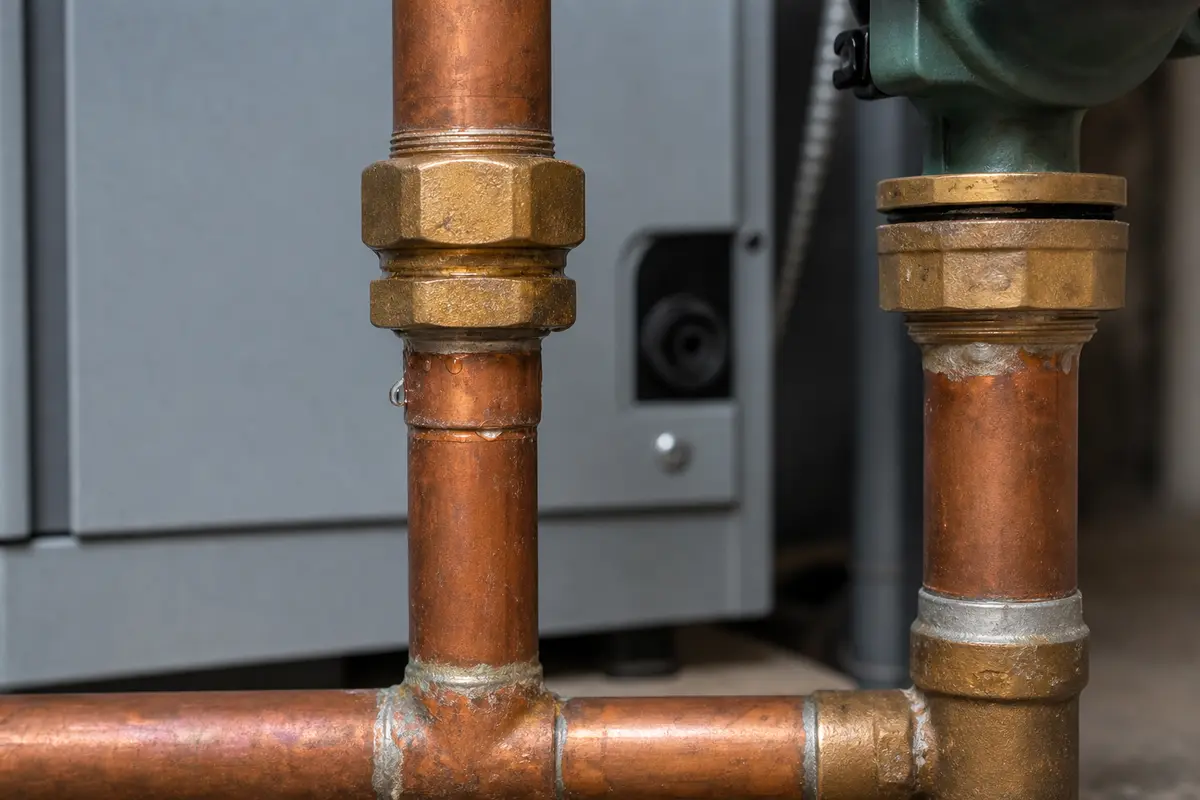
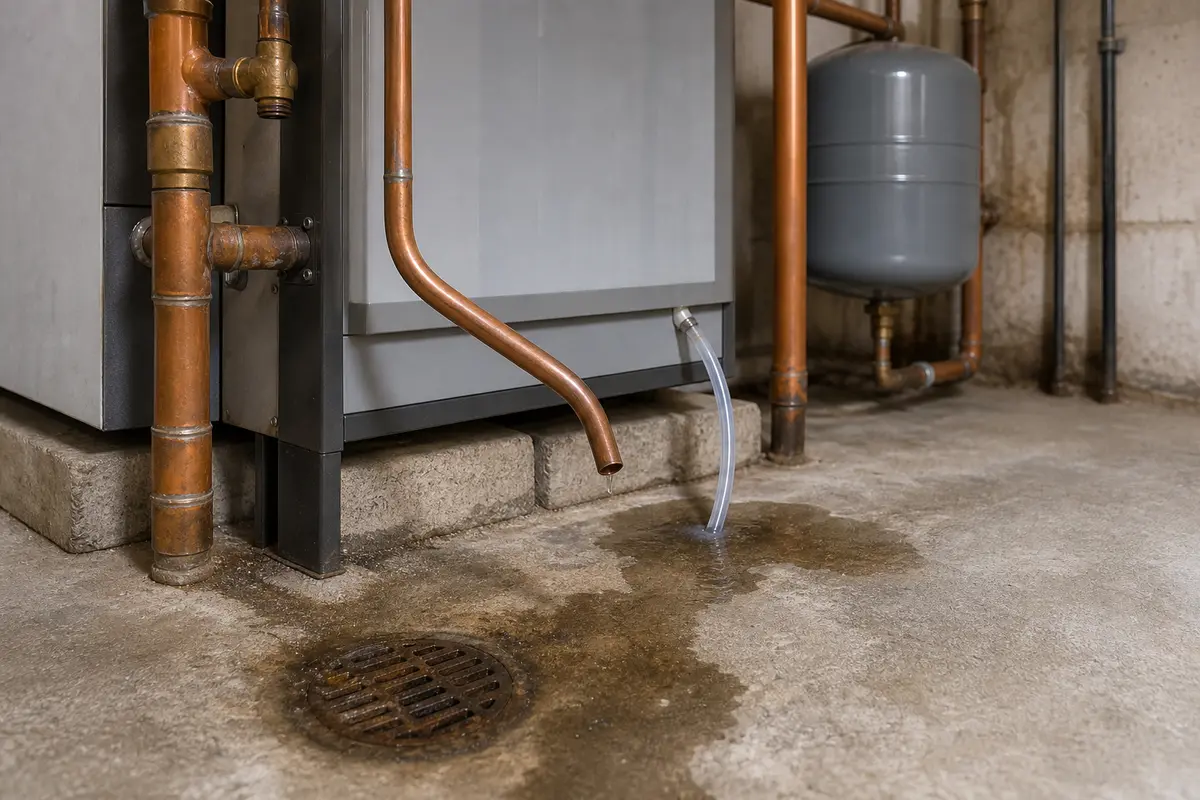
Find the first wet point and pressure pattern before choosing parts or supplies. Match the exact symptom, boiler type, gauge behavior, and service boundary before ordering anything.
Boiler leaks usually look bigger on the floor than they are at the source.
Water near heat and electrical parts is not a cleanup-only problem; the wrong move can erase the source clue or create a safety issue.
Use the highest fresh wet point to avoid chasing the floor puddle.
| First wet point | Likely branch | Next move |
|---|---|---|
| Relief discharge pipe | Pressure or relief-valve issue | Check pressure and call if repeated. |
| Pipe fitting or valve | Localized hydronic leak | Photograph and schedule service. |
| Condensate tube | Drain/trap issue | Check safe visible tubing. |
| Boiler jacket/base | Boiler body leak | Shut down and call promptly. |
A small-looking drip from the relief discharge pipe can signal high pressure. A small fitting weep may be less urgent, but still needs repair before corrosion spreads.
High-efficiency boilers may produce condensate, but condensate should stay in its drain path. A clogged trap or cracked tube can look like a boiler leak.
These tools help identify and document the leak source. They do not make hot pressurized boiler leaks DIY repairs.
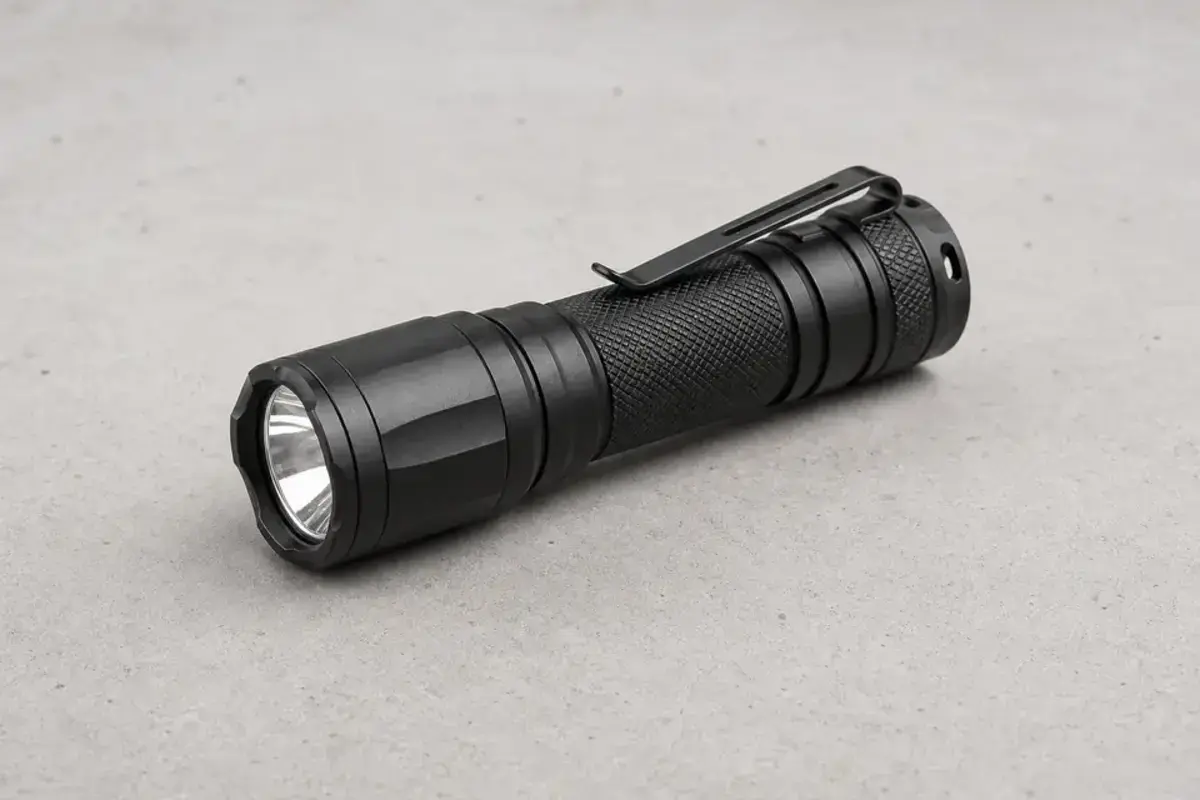
Helps when: Helps read gauges, displays, valve positions, leak tracks, and piping clues without touching hot parts.
Skip it when: Skip close inspection when the boiler is leaking near electrical parts, locked out, overheating, or giving combustion warnings.
Compare boiler-room flashlight on Amazon
Helps when: Dry the floor, fitting, or discharge area so fresh water shows exactly where the leak starts.
Skip it when: Skip towel-only cleanup when water keeps dripping, the relief pipe is active, or hot water is present.
Compare absorbent towels on Amazon
Helps when: Records gauge readings, lockout timing, leak timing, noise timing, and what changed after an outage or heat call.
Skip it when: Skip buying one if clear photos and a written symptom timeline are already ready for the technician.
Compare notebook or phone notes on AmazonAs an Amazon Associate I earn from qualifying purchases. Repair Riot may earn a commission at no extra cost to you.
Common sources are pipe fittings, relief discharge, condensate tubing, circulator gaskets, or the boiler body itself.
Not if water is near electrical parts, the relief pipe is discharging, pressure is abnormal, or the source is unclear.
It can be. Small leaks can signal pressure trouble or worsen corrosion.
Do not add water by guess. First check pressure and leak source.
Tell them the first wet point, pressure reading, whether the leak changes when hot, and whether the relief outlet is wet.
Only if there is no leak, relief-valve discharge, lockout, gas smell, carbon monoxide alarm, overheating, or electrical concern. Stop and call for service when any safety clue appears.
Photograph the pressure gauge, display or fault light, the first wet point or affected zone, and the timing of the symptom during a heat call.
Pressure swings, relief discharge, leaks, recurring lockouts, burner trouble, electrical symptoms, or a symptom that returns after basic observation belongs with a qualified boiler technician.
Repair Riot reviewed this page around boiler leak source tracing, relief discharge, condensate lookalikes, pressure clues, and safe shutoff boundaries. The source links support boiler maintenance and safety context; the diagnostic sequence is original guidance.