Brief hiss at radiator vent?
Air release may be the branch.
A boiler hiss during heating can come from an automatic air vent, radiator vent, relief-valve discharge, steam or hot-water leakage, or combustion-related trouble. Start by locating the hiss, checking pressure, and looking for water at the relief outlet before deciding it is normal air release.
A brief air-vent hiss can be normal. A hiss with wet discharge, rising pressure, steam, odor, lockout, or carbon monoxide alarm is not normal and needs immediate caution.
The important clue is source: radiator vent, boiler air vent, relief outlet, pipe contact, or combustion area.
Don’t start with: Do not tighten hot vents, plug a relief pipe, open boiler covers, or keep running a boiler that hisses with pressure or leak symptoms.
Air release may be the branch.
Watch pressure and recurring air clues.
Treat as pressure safety.
Shut down and call service.
Leave and call emergency help.
The same sound can mean harmless air release or a pressure safety problem. Source and wetness decide the next move.
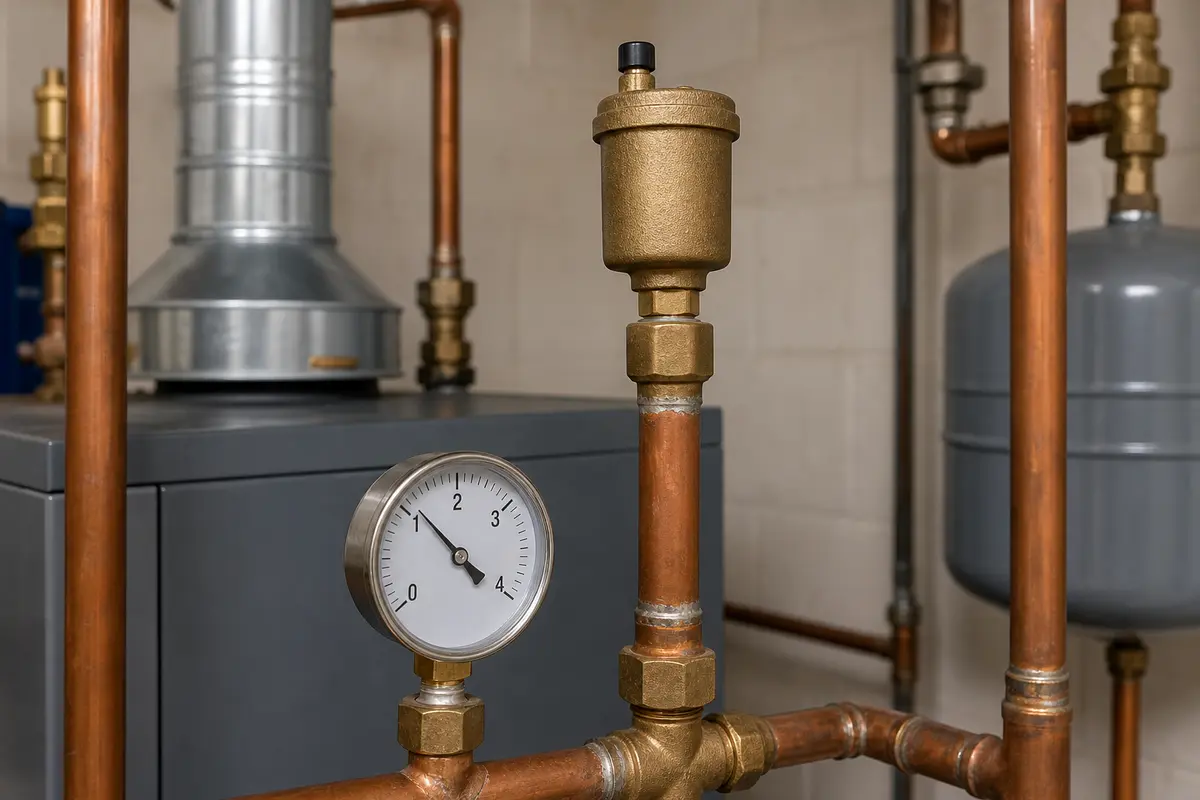
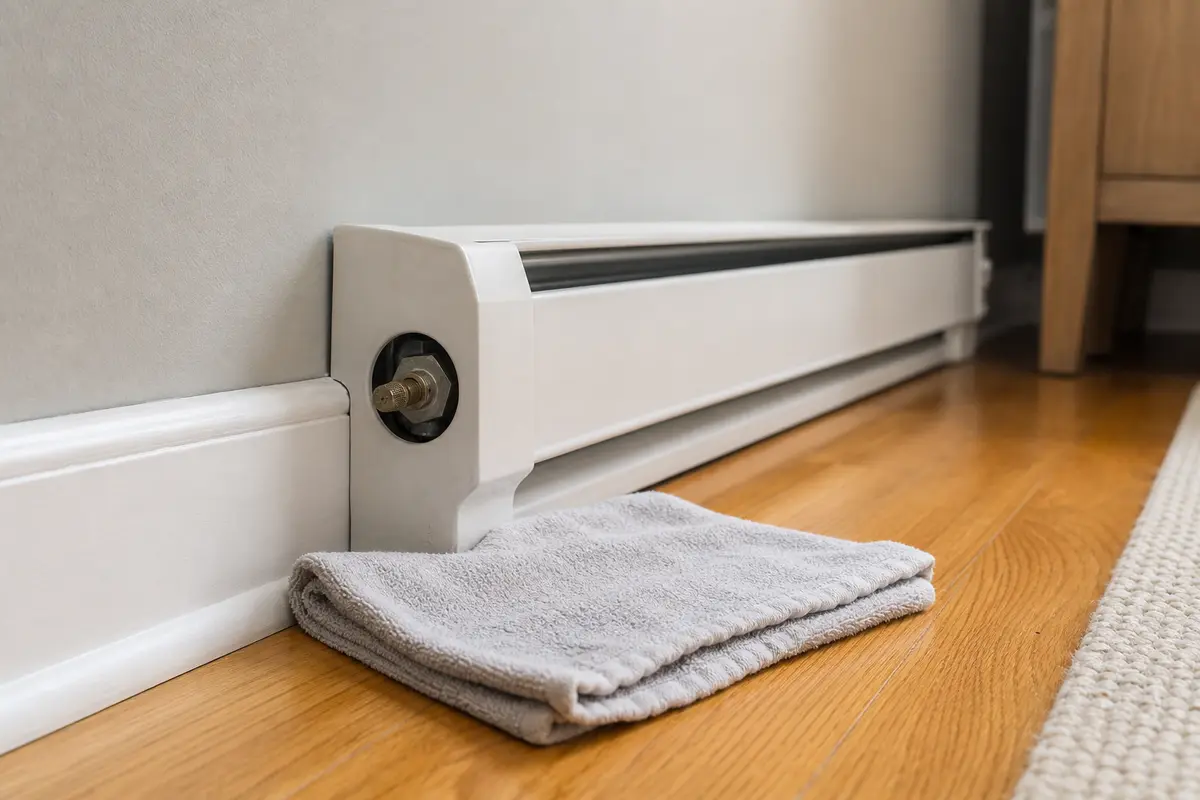
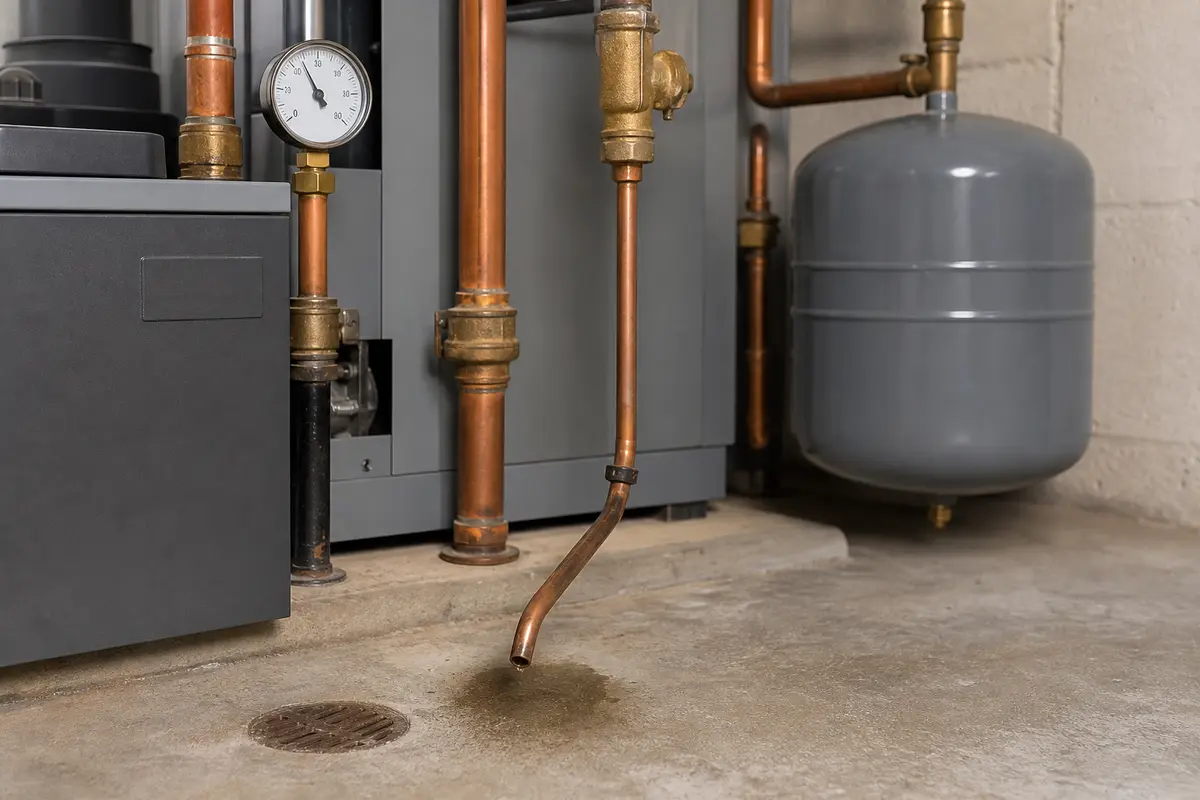
Locate the hiss and decide whether it is air release, relief discharge, or a safety stop. Match the exact symptom, boiler type, gauge behavior, and service boundary before ordering anything.
Hissing is a source-location symptom. It can be normal air release, trapped-air movement, pressure relief, or an unsafe leak.
Hot vents and relief valves are not noise-control hardware.
Locate the hiss and pair it with pressure and wetness clues.
| Source | Likely branch | Next move |
|---|---|---|
| Radiator vent, brief and dry | Air release | Monitor and check pressure. |
| Boiler air vent, recurring | Air or pressure problem | Look for leaks and call if repeated. |
| Relief outlet wet or hissing | Pressure safety issue | Shut down and call service. |
| Combustion area with odor/alarm | Emergency safety issue | Leave and call for help. |
Air vents release trapped air. Relief valves release water or steam when pressure is unsafe or the valve cannot reseat. Confusing the two can lead to the wrong repair.
Stop observation when hissing comes with pressure rise, hot-water discharge, steam, gas smell, burner lockout, or a carbon monoxide alarm.
These tools support safe observation and emergency readiness. They do not make vent, relief-valve, or combustion issues DIY repairs.
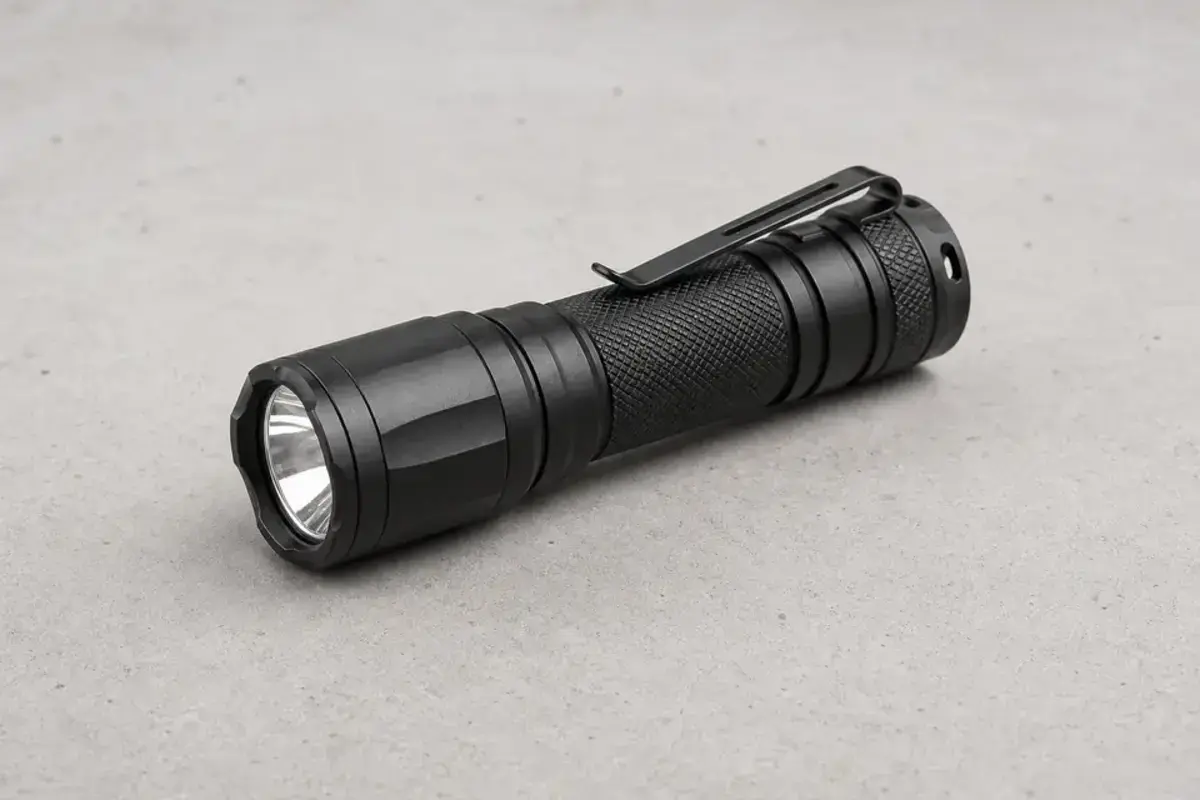
Helps when: Helps read gauges, trace drip paths, see valve positions, and inspect zone piping without touching hot parts.
Skip it when: Skip close inspection when the boiler is leaking near electrical parts, locked out, overheating, or giving combustion warnings.
Compare boiler-room flashlight on Amazon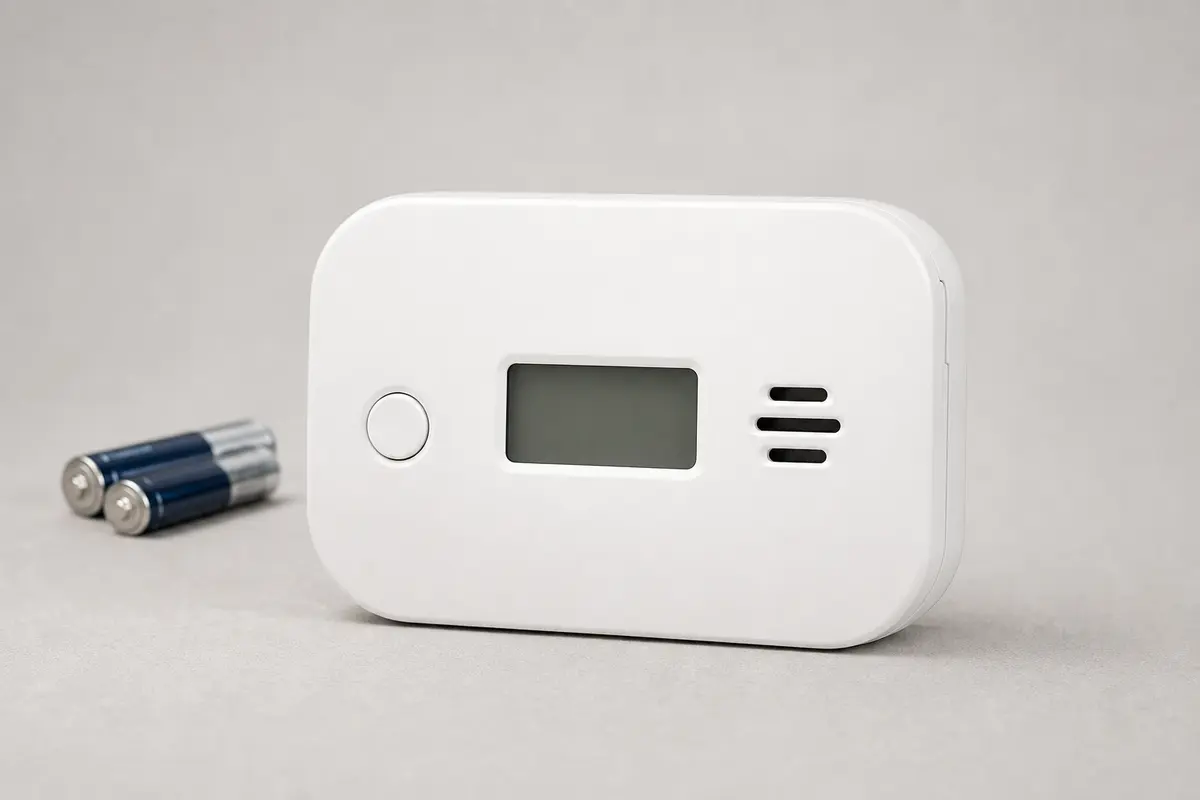
Helps when: Confirms a working alarm is present before continued observation around a gas or oil boiler.
Skip it when: Skip using an alarm as a repair test; leave the home and call for help if it sounds or anyone has symptoms.
Compare carbon monoxide alarm on Amazon
Helps when: Records pressure, timing, which zone heats, what floor is affected, and what changes between cold and hot operation.
Skip it when: Skip buying one if clear photos and a written symptom timeline are already ready for the technician.
Compare notebook or phone notes on AmazonAs an Amazon Associate I earn from qualifying purchases. Repair Riot may earn a commission at no extra cost to you.
The hiss may come from air venting, trapped air, a relief valve, steam or hot-water leakage, or combustion-related trouble.
A brief dry air-vent hiss can be normal, but recurring hissing, wetness, pressure rise, odor, or alarms are not normal.
Treat that as a pressure-safety clue. Do not cap it; shut down if it keeps discharging and call for service.
Yes. Radiator vents can hiss as air escapes, especially when air has collected in the system.
Carbon monoxide alarms, gas smell, steam, hot-water discharge, or combustion lockout are emergency or urgent service clues.
Only if there is no leak, relief-valve discharge, lockout, gas smell, carbon monoxide alarm, overheating, or electrical concern. Stop and call for service when any safety clue appears.
Photograph the pressure gauge, boiler display or fault light, the affected zone or radiator, any damp area, and the timing of the symptom during a heat call.
Pressure changes, relief discharge, leaks, repeated lockouts, stuck zone controls, combustion clues, or symptoms that return after basic observation belong with a qualified boiler technician.
Repair Riot reviewed this page around boiler hissing sources, air venting, relief-valve discharge, pressure clues, and carbon monoxide safety. The source links support boiler safety and combustion-appliance boundaries; the diagnostic sequence is original guidance.