Boiler dark or silent?
Power, service switch, breaker, and display path first.
When a boiler has no hot water, first decide whether the whole boiler is down or only domestic hot water is missing. Check power, pressure, demand settings, and one safe reset before parts.
Good clues are a blank display, low pressure, a lockout light, a timer or hot-water setting that is off, or radiators heating while taps stay cold.
The main split is no heat and no hot water versus heat works but taps stay cold.
Don’t start with: Do not open combustion covers, press reset repeatedly, or replace hot-water parts by guess.
Power, service switch, breaker, and display path first.
Low pressure can stop operation or make hot water unreliable.
Hot-water demand or internal control path becomes likely.
Watch for short firing, lockout, flow recognition, or pressure trouble.
Stop repeated resets and record the code or light pattern.
The strongest clues are outside the boiler: display, pressure, faucet temperature, and whether the controls are asking for hot water.
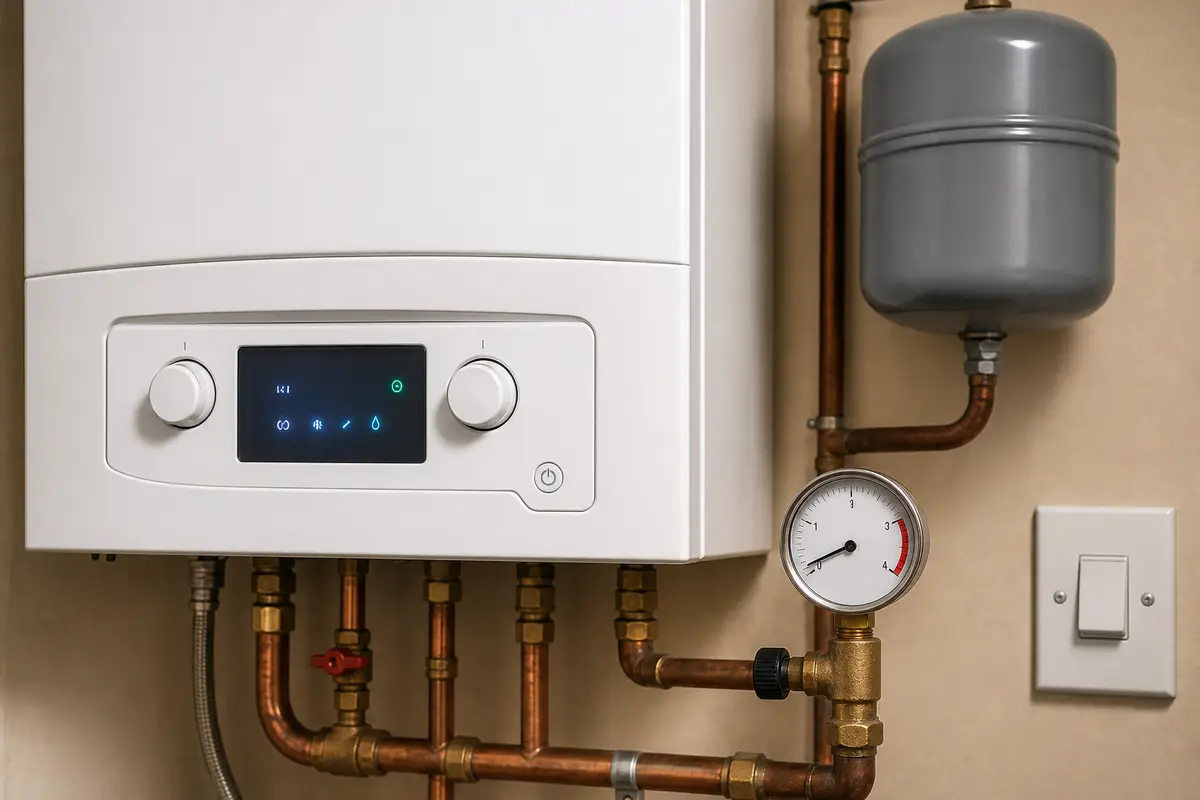
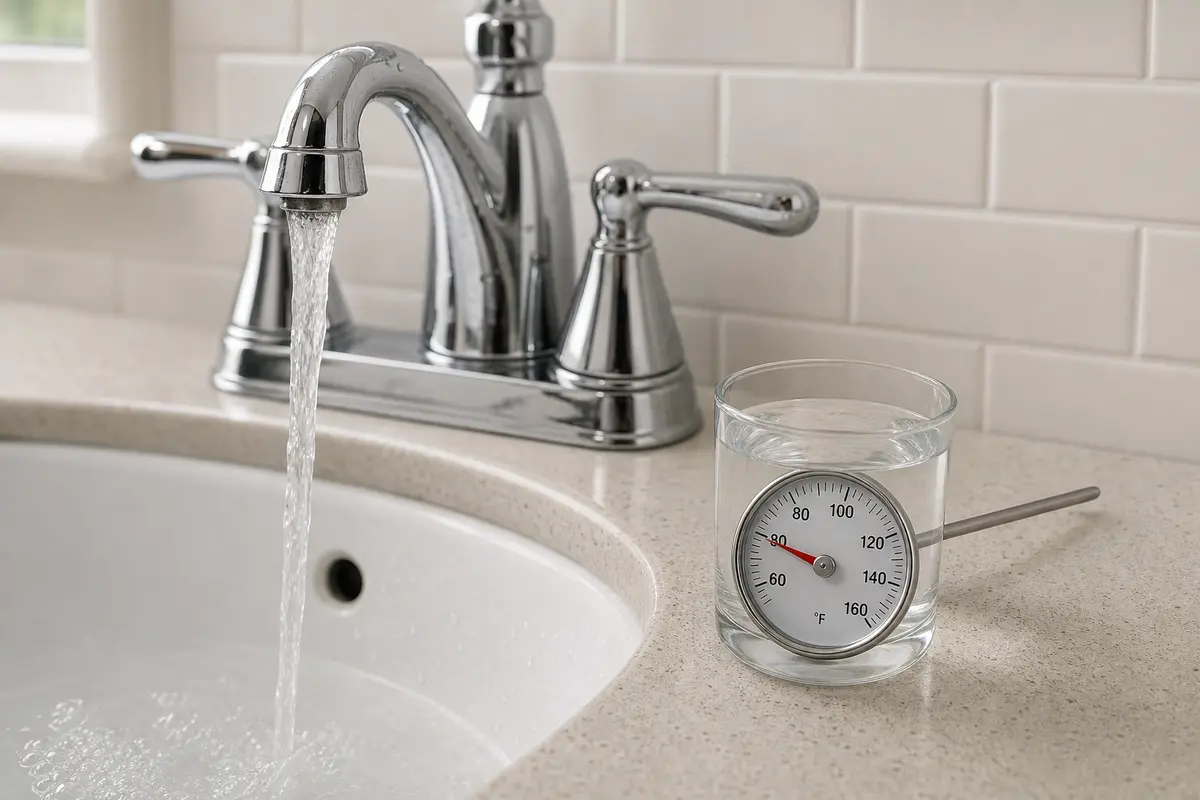
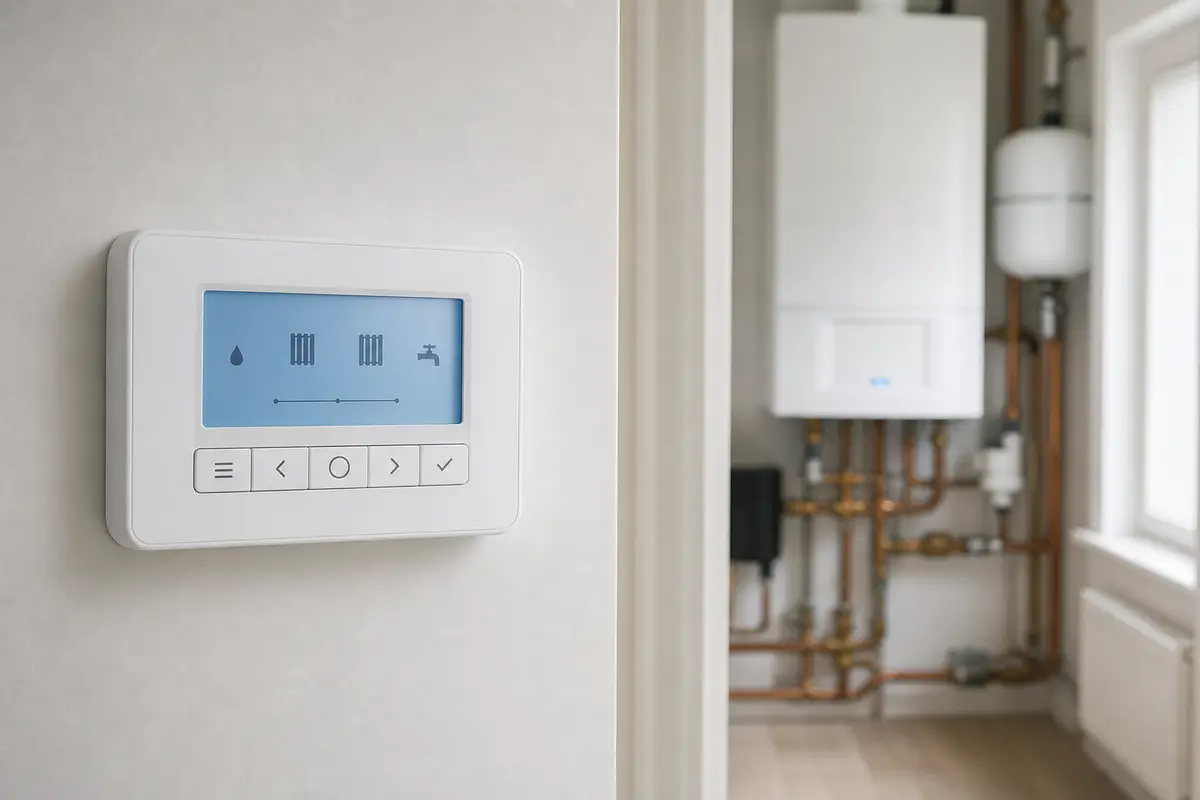
Confirm whether this is whole-boiler shutdown, low pressure, setting trouble, or a hot-water demand fault. Match the exact symptom, boiler type, pressure reading, and safe diagnosis before ordering anything.
The first decision is whether the boiler is fully down or only the domestic hot water side failed. That split prevents chasing the wrong system.
A single user reset can clear a nuisance interruption on some boilers. In practice, a repeat lockout is the boiler preserving the fault clue.
Use the boiler response to a hot tap as the result map. The faucet, boiler display, and pressure gauge together usually point to the right branch.
| Pattern | Likely branch | Next move |
|---|---|---|
| No display, no response | Power path | Check service switch and breaker once. |
| Low pressure | Pressure or water-loss path | Look for leaks before filling. |
| Heat works, taps cold | Domestic hot-water demand path | Check settings and call service if ignored. |
| Brief heat then lockout | Ignition, flow, or safety path | Record timing and stop resets. |
Programmers, thermostats, seasonal modes, and hot-water settings can leave a healthy boiler waiting for a call. Good clue: the boiler display changes when a hot tap runs.
Low pressure can make a boiler stop firing or protect itself before it can heat water. If pressure is low, find out why before treating no hot water as an isolated control issue.
These tools help confirm the symptom, read the outside clues, and give a technician a clean sequence without opening the boiler.
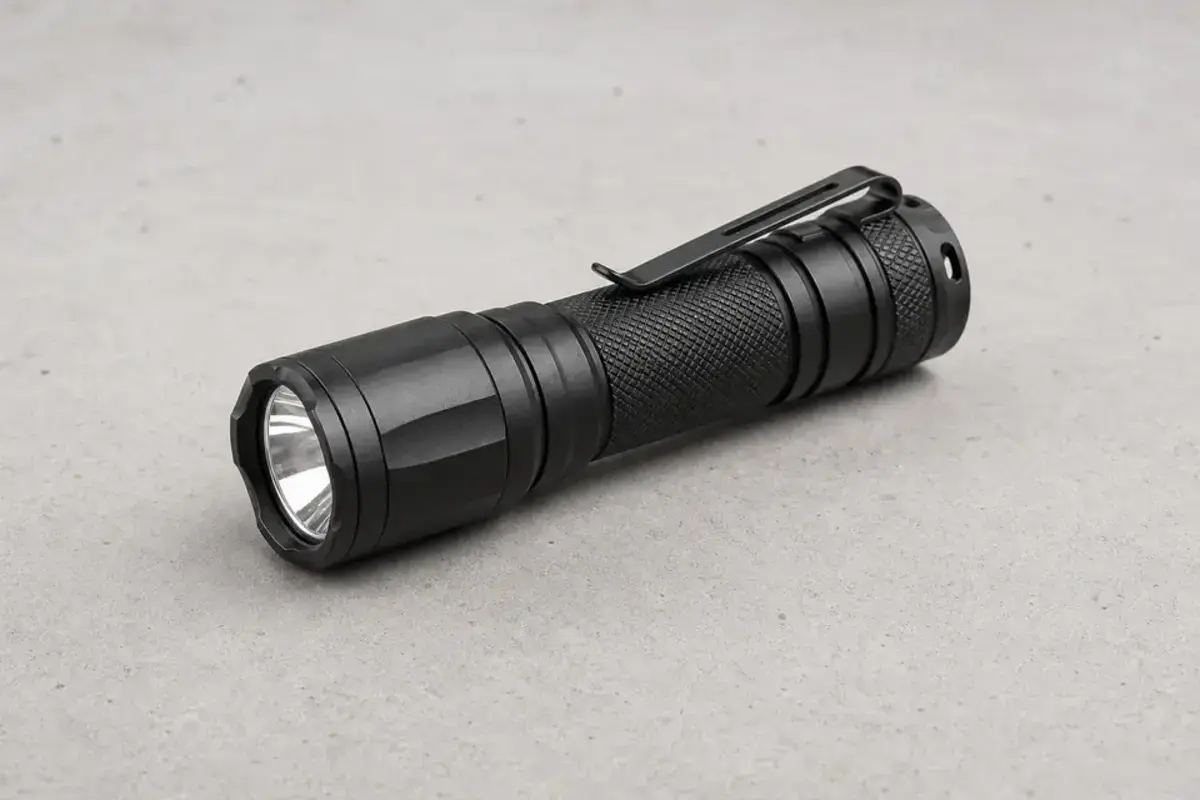
Helps when: Helps read the pressure gauge, display, valve positions, leak tracks, and switch area without opening covers.
Skip it when: Skip close inspection if the boiler is leaking near electrical parts, smells like gas, or has locked out again.
Compare flashlights on Amazon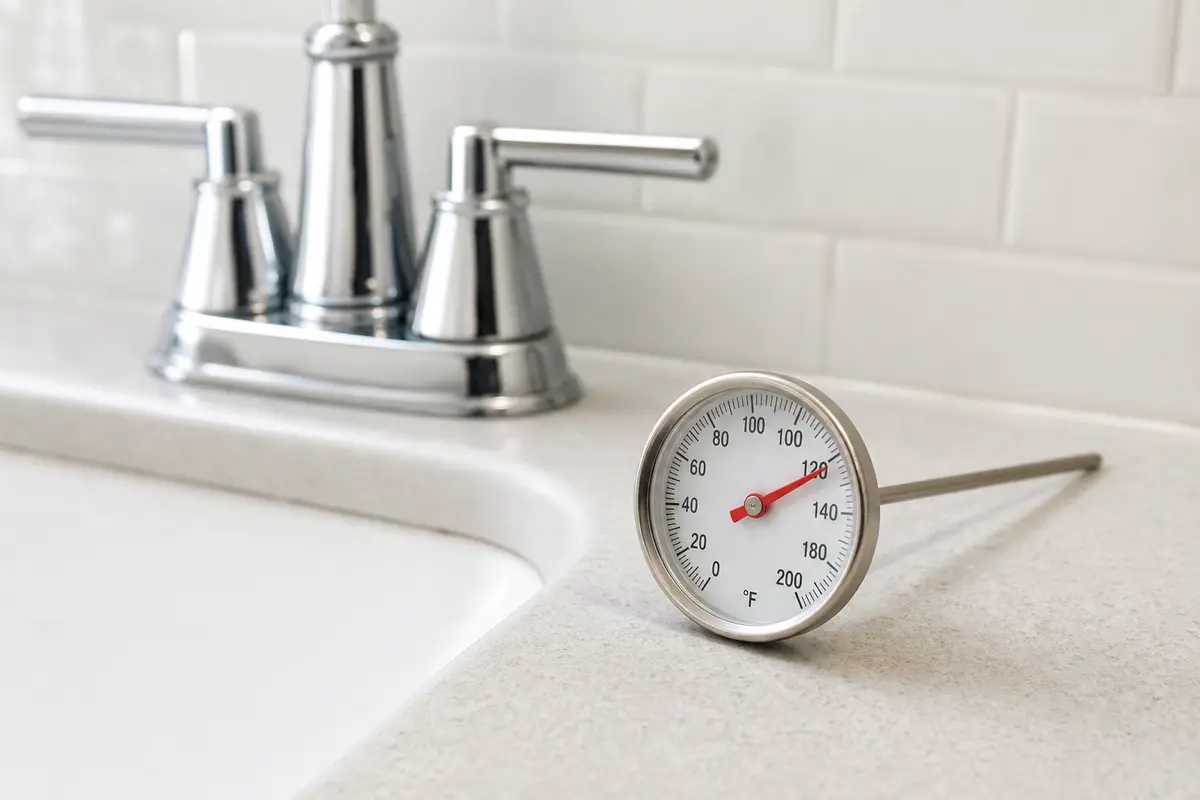
Helps when: Confirms whether hot water is truly cold, lukewarm, or recovering before blaming the boiler.
Skip it when: Skip temperature testing when the boiler is locked out, leaking, or showing a combustion safety warning.
Compare faucet thermometers on Amazon
Helps when: Records pressure readings, fault lights, reset timing, leak timing, zones that heat, and what changed first.
Skip it when: Skip buying one if clear photos and a written symptom timeline are already ready for the technician.
Compare notebooks on AmazonAs an Amazon Associate I earn from qualifying purchases. Repair Riot may earn a commission at no extra cost to you.
That usually points to the domestic hot-water demand side, such as settings, flow recognition, diverter/control behavior, or an internal boiler fault.
Yes. Many boilers will stop or behave poorly when pressure is below the normal range.
Use one normal user reset only if there is no unsafe symptom. If the same fault returns, stop and record it.
Lukewarm water can come from weak firing, short cycling, low pressure, flow recognition trouble, or a control setting that limits domestic hot water.
Tell them whether space heat works, the pressure reading, whether the boiler reacts to a hot tap, and any fault code or light pattern.
Only if there is no gas smell, carbon monoxide alarm, leak near wiring, relief-valve discharge, breaker trip, overheating, or repeat lockout. Stop and call for service when any safety clue appears.
Photograph the pressure gauge, display or fault light, the first wet point if water is involved, the thermostat call, and any zone or fixture that proves the pattern.
Recurring pressure loss, relief discharge, boiler-body leakage, repeat lockout, burner trouble, electrical symptoms, or any check that requires opening a boiler compartment belongs with a qualified boiler technician.
Repair Riot reviewed this page around whole-boiler versus domestic-hot-water failure, pressure checks, reset boundaries, hot-water demand clues, and combustion safety. The source links support boiler maintenance and carbon monoxide safety context; the diagnostic sequence is original guidance.