Boxes damp at wall side?
Condensation pocket is likely.
Behind-shelf moisture is usually trapped condensation when the open wall stays mostly dry. First open an air gap, check humidity and wall temperature, then rule out a crack or cove-joint wet line before sealing.
The usual source is humid basement air trapped against a cold foundation wall by shelving, boxes, or bins.
Good clue: damp cardboard, beads on cold concrete, and a tight shelf point to airflow before crack repair.
Don’t start with: Do not start with waterproof paint, caulk, or scented odor products. They hide the damp pocket without improving airflow or humidity.
Condensation pocket is likely.
Check humidity and wall temperature.
Trace seepage instead of airflow.
Remove damp cardboard and dry the gap.
Stop normal cleanup and escalate.
The shelf needs to move before the wall can tell you what is happening.
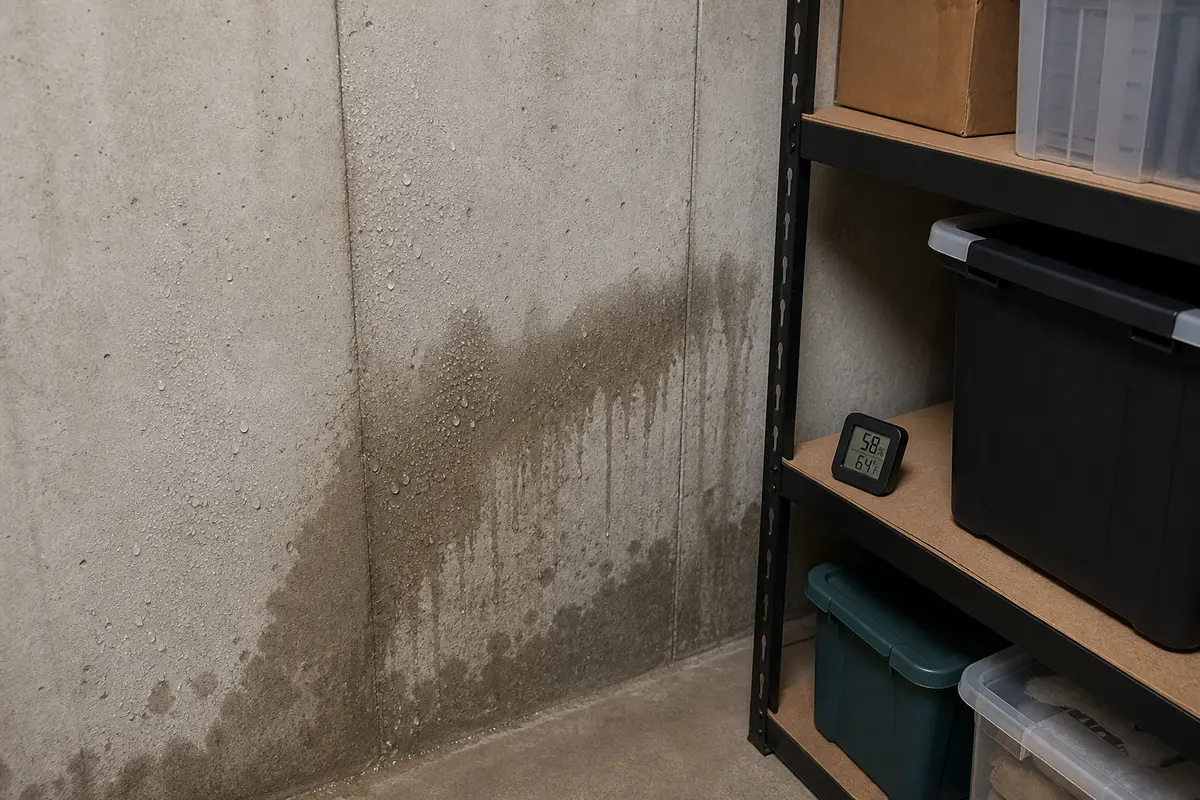
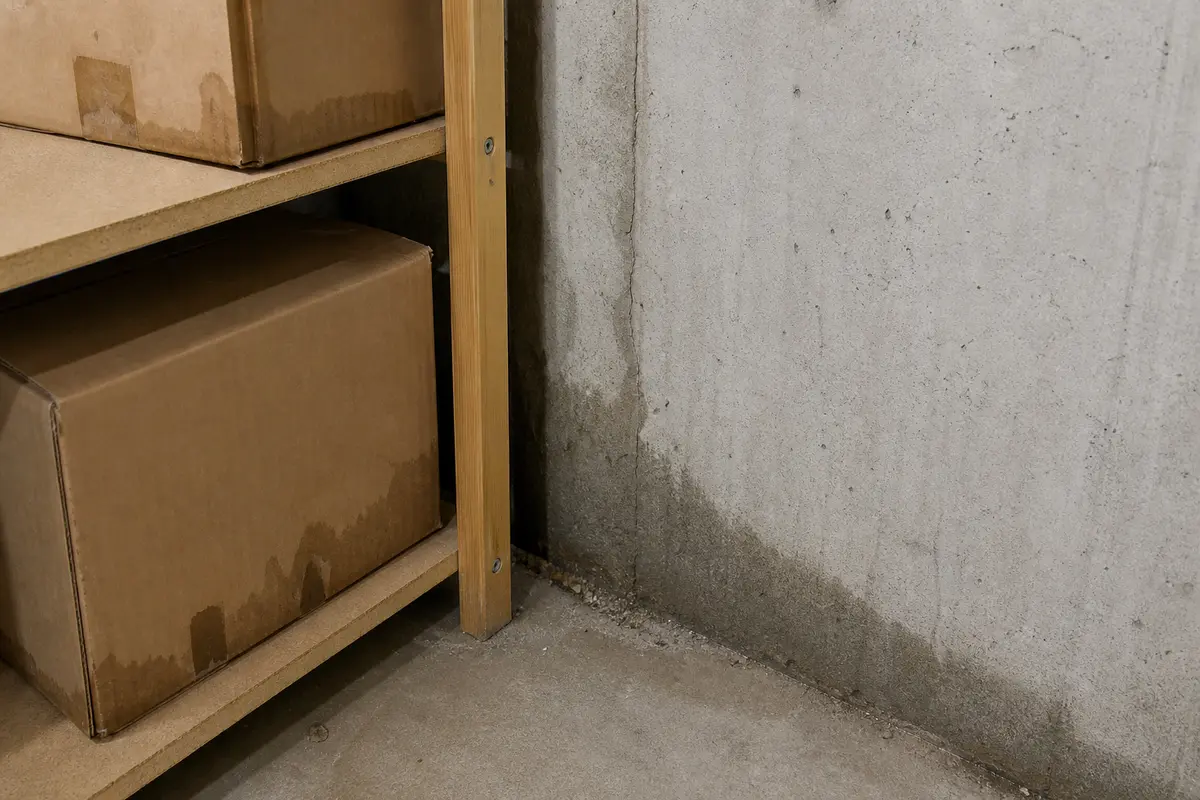
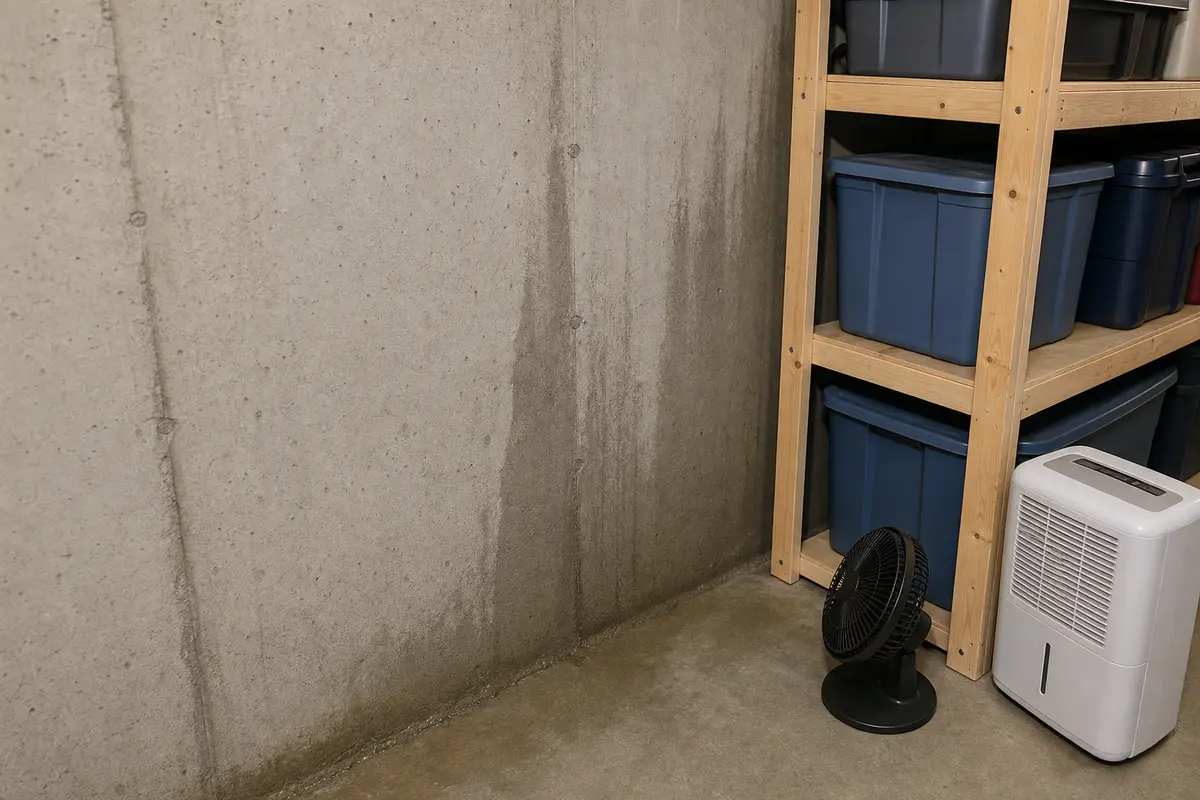
Match the exact diagnosis before shopping: trapped condensation, damp storage, or a real wall leak. Check the air gap, humidity, wall temperature, storage material, and first wet point.
Behind-shelf moisture usually starts where air cannot move.
Do not seal or cover the hidden wet spot until the line of moisture is proven.
A small gap can change the whole pattern.
Do not miss a real wall path just because a shelf was present.
Fix the air pocket before buying coatings.
Use these only after the hidden wet spot points to humidity and poor airflow rather than active seepage.
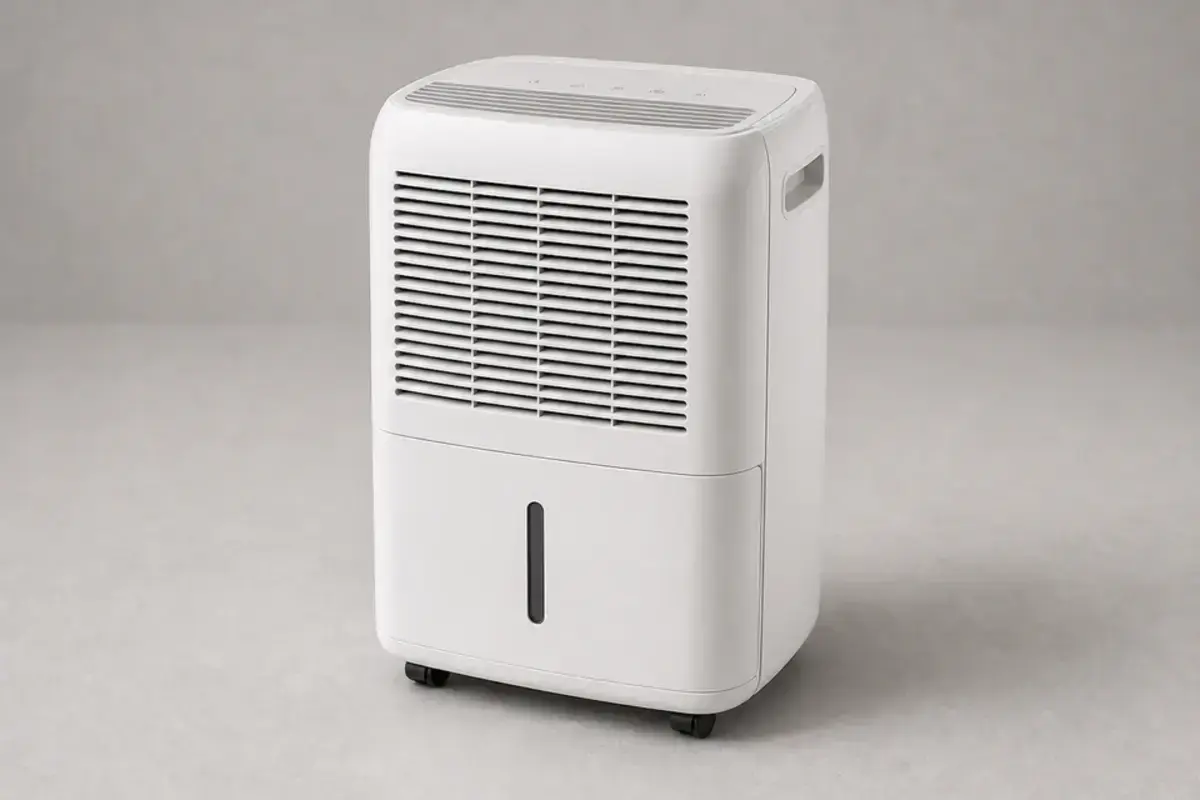
Helps when: Use a basement dehumidifier when high humidity and a cold wall explain condensation behind shelving.
Skip it when: Skip relying on a dehumidifier if water starts at a crack, seam, or cove joint.
Compare basement dehumidifiers on Amazon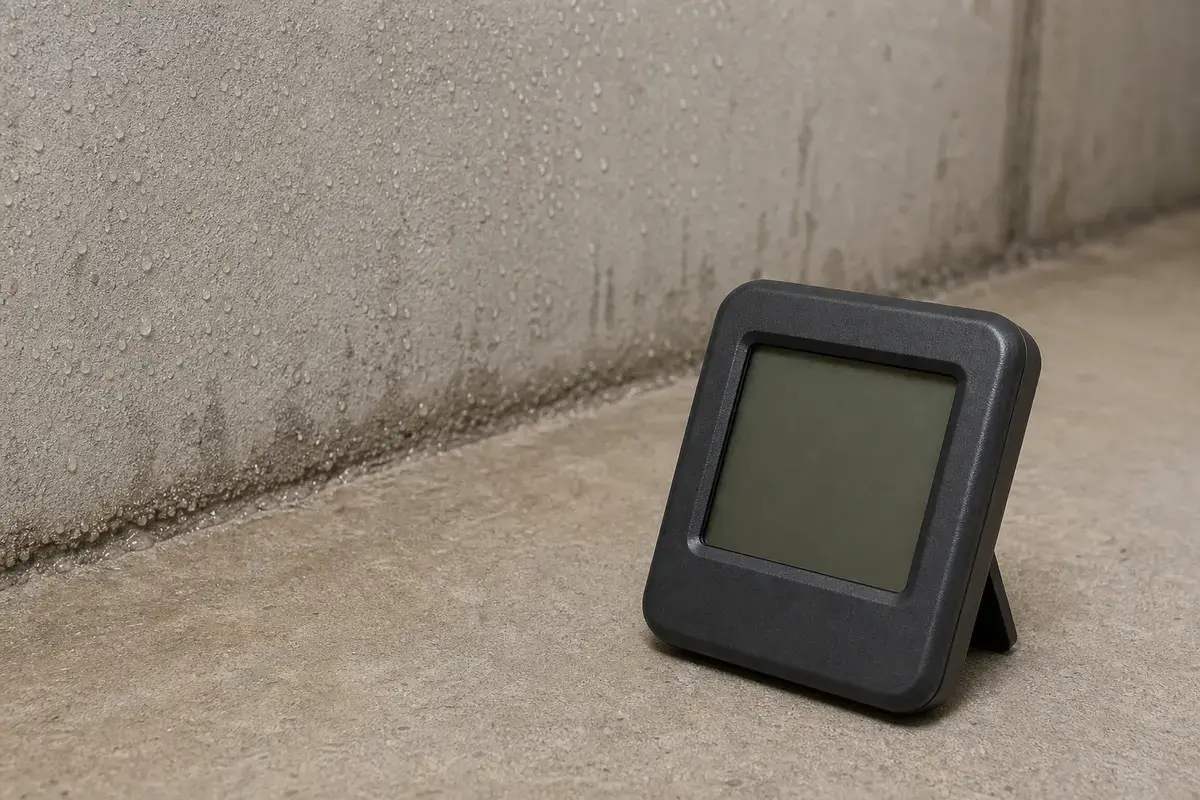
Helps when: Use a digital hygrometer to document humidity inside the shelf pocket and in the open room.
Skip it when: Skip guessing by feel; hidden shelf areas can run wetter than the rest of the basement.
Compare digital hygrometers on Amazon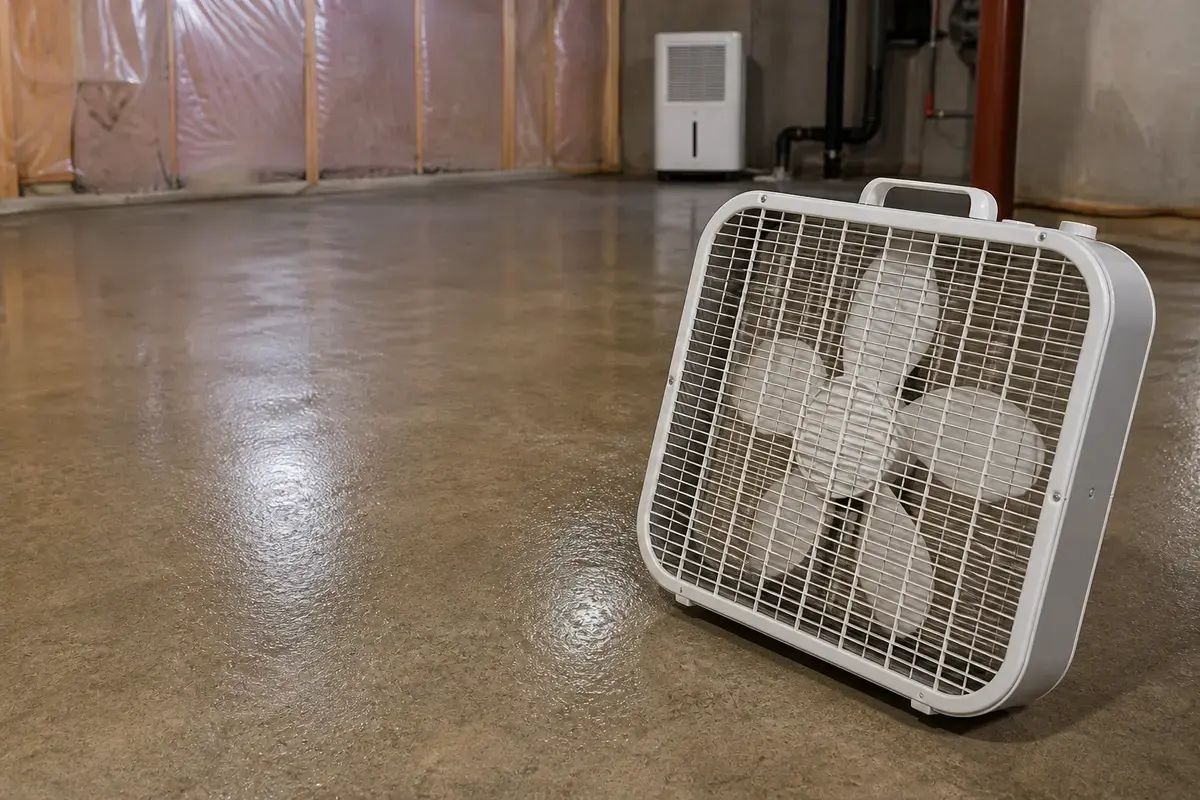
Helps when: Use an air mover or box fan with dehumidification after the shelf is pulled forward to restore airflow.
Skip it when: Skip blowing humid outdoor air onto cold concrete because it can worsen condensation.
Compare air movers and box fans on AmazonAs an Amazon Associate I earn from qualifying purchases. Repair Riot may earn a commission at no extra cost to you.
Use these tools to separate trapped condensation from a crack, seam, or wall-floor leak.
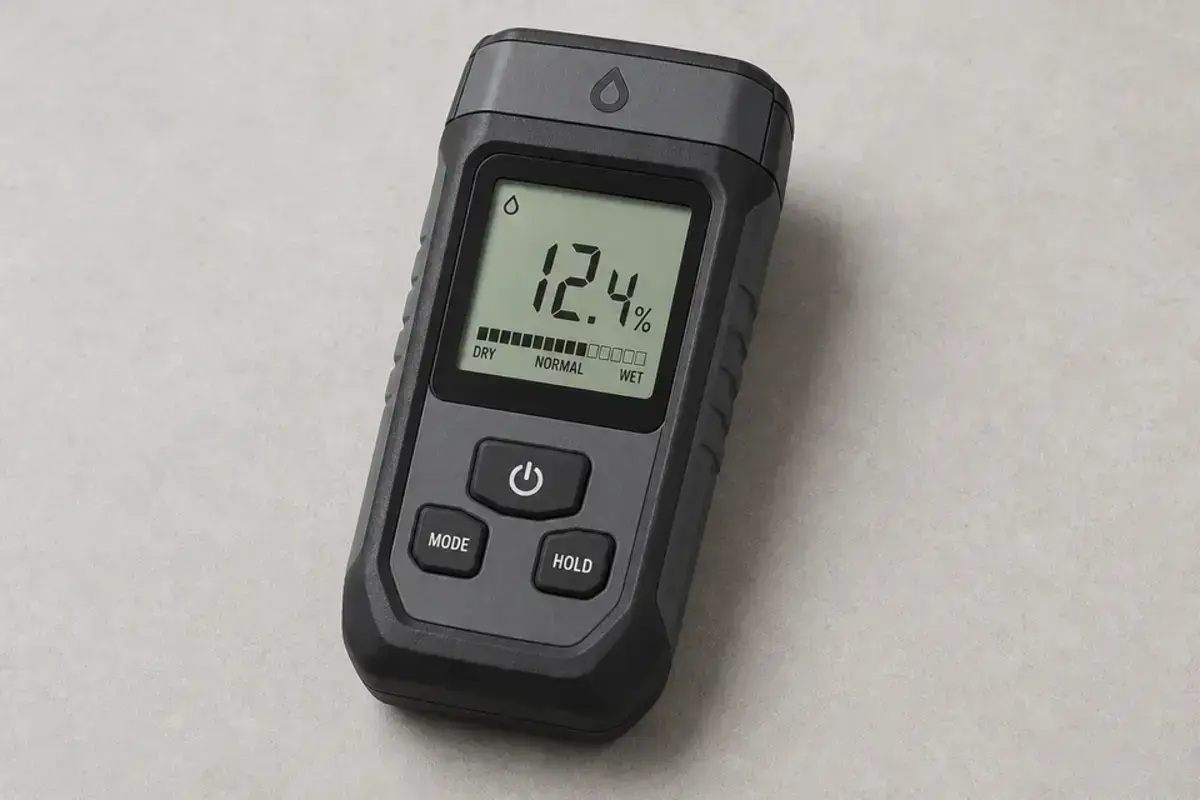
Helps when: Use a pinless moisture meter to compare the hidden wet spot with the open wall and a dry control area.
Skip it when: Skip one reading; compare behind-shelf and open-wall readings before deciding.
Compare pinless moisture meters on Amazon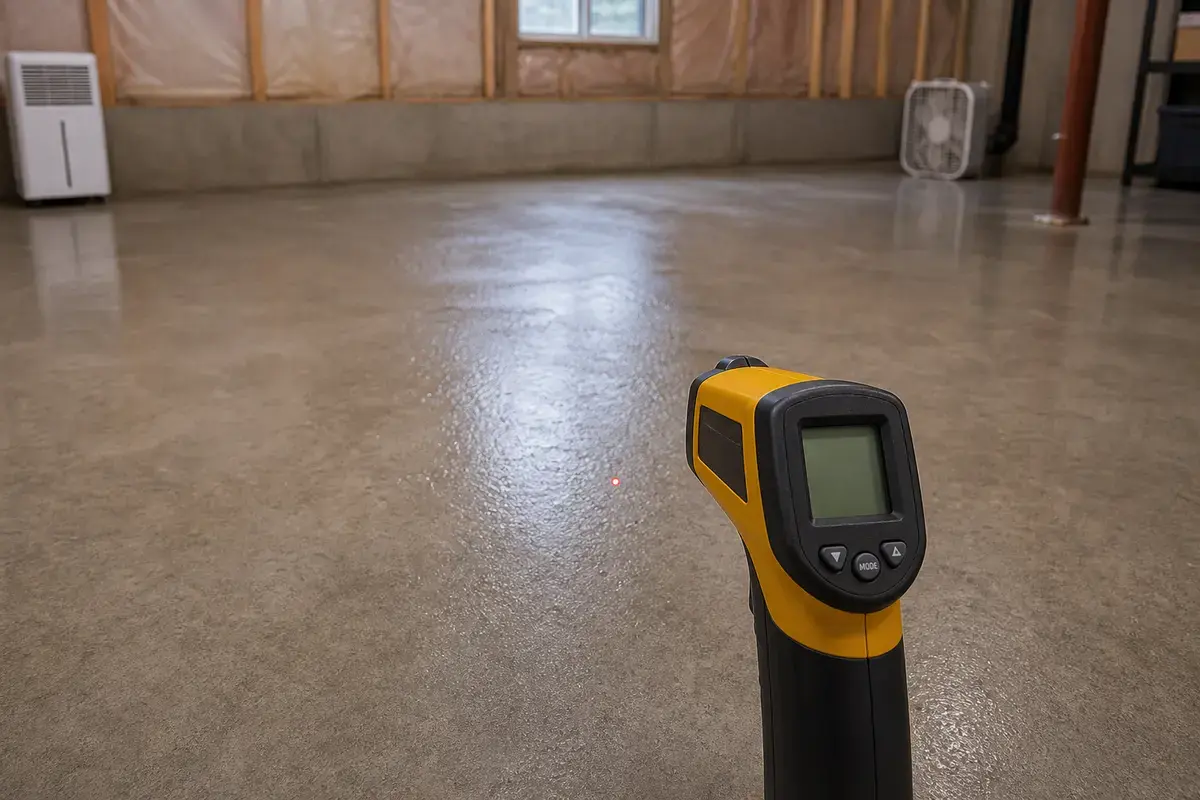
Helps when: Use an infrared thermometer to compare the shelf-pocket wall temperature with basement air conditions.
Skip it when: Skip sealer decisions if the wall is simply below dew point.
Compare infrared thermometers on Amazon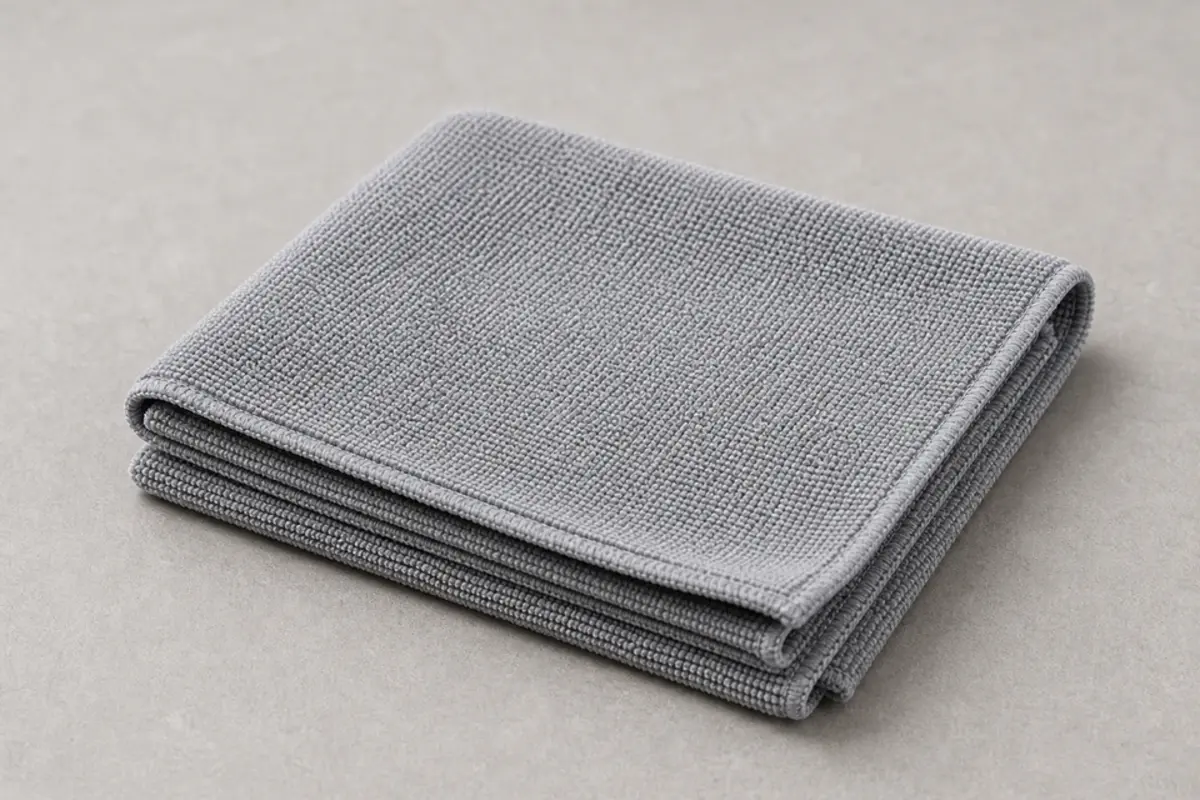
Helps when: Use a microfiber cloth to wipe a test patch and watch whether beads return evenly.
Skip it when: Skip chemical cleaners during diagnosis because they can hide the return pattern.
Compare microfiber cloths on AmazonAs an Amazon Associate I earn from qualifying purchases. Repair Riot may earn a commission at no extra cost to you.
Most of the time, the shelf traps humid air against a cold wall so condensation forms where air cannot move.
No. Good clue for seepage is one wet line from a crack, seam, window edge, or wall-floor joint.
Leave a visible air gap so the wall can dry and so you can inspect it after humid weather or rain.
Yes, if it stays damp or smells musty. Cardboard can hold moisture and odor after the wall dries.
It helps when humidity is the source, but it will not fix a real crack leak or outside drainage pressure.
Not until the test area stays dry through the same trigger.
Look for downspouts, low grade, window wells, and saturated soil aligned with the shelf wall.
Call for visible growth you cannot handle safely, contaminated water, wall movement, or a wet crack under pressure.
Repair Riot built this page around the behind-shelf moisture pattern: trapped air, cold wall temperature, damp storage, first wet point, and seepage lookalikes.