Wet after weather?
Trace downspouts, grade, snowmelt, and window wells.
Standing water on a basement slab is a safety sort before it is a repair. First identify the starting point; good clue: perimeter water suggests seepage, drain-centered water suggests backup, and utility-area water suggests plumbing.
The usual branches are cove-joint seepage, floor drain backup, nearby appliance or plumbing leaks, and condensation that has spread across a cold slab.
Watch for electrical hazards, sewage clues, fuel smell, or unknown contamination before using cleanup tools.
Don’t start with: Do not start with waterproof paint, random caulk, or floor coating. Those hide the first wet point without reducing the water source.
Trace downspouts, grade, snowmelt, and window wells.
Reduce outside pressure before patching inside.
Check movement and moisture before filler.
Rule out backup and plumbing first.
Measure humidity and slab temperature.
The source path controls whether you clean up, patch, call a plumber, or fix drainage.
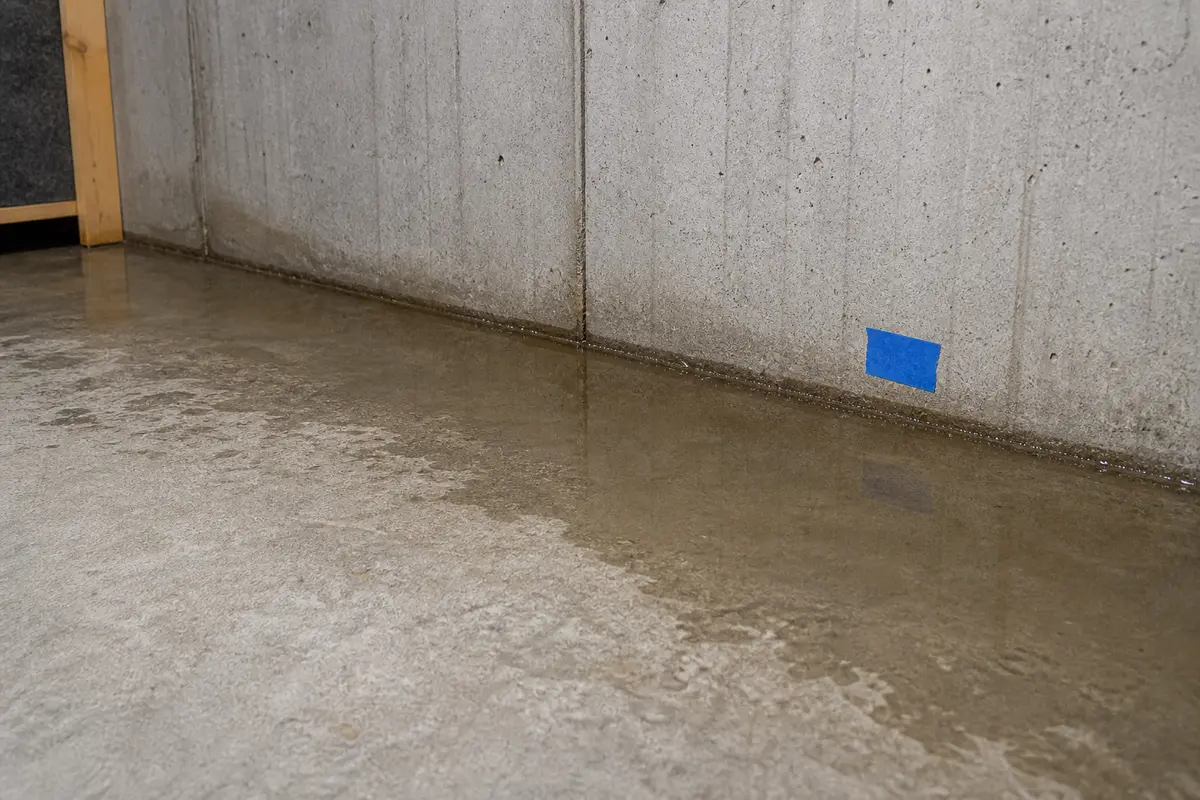
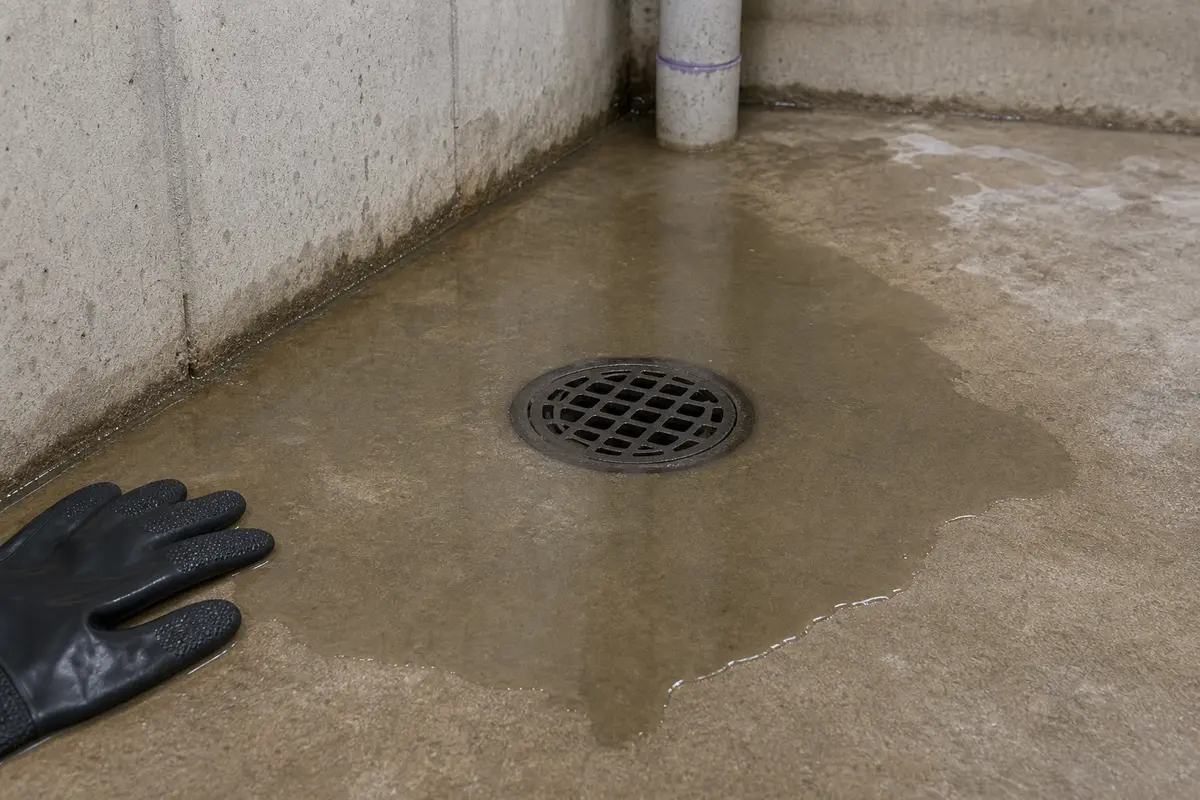
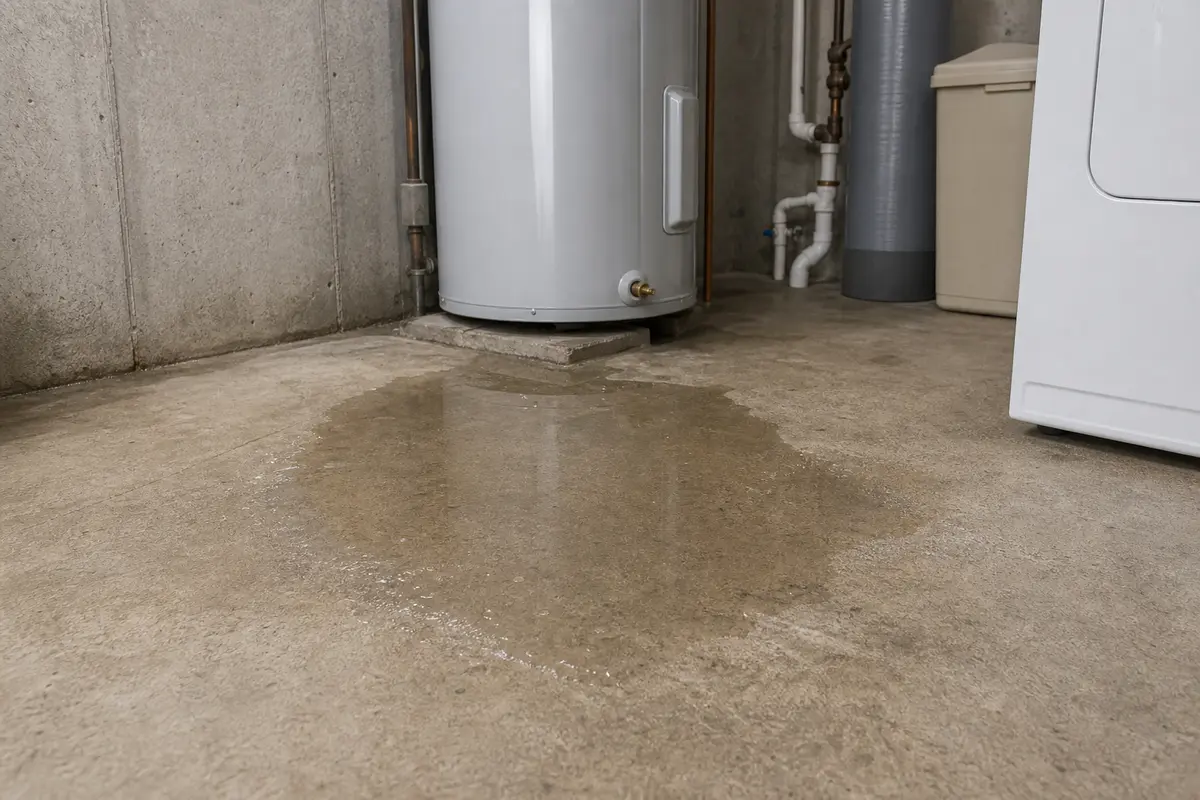
Match the exact diagnosis before shopping. Confirm first wet point, timing, drainage, crack movement, drain/plumbing branch, electrical safety, and whether the water is clean.
Standing water spreads fast, so the first wet area matters more than the deepest spot.
Standing water changes the risk level immediately.
A clean-water pickup is useful only after you know what you are picking up.
Treat the source path before the slab surface.
Use these only after the standing-water source is clear and exterior water pressure has been reduced.
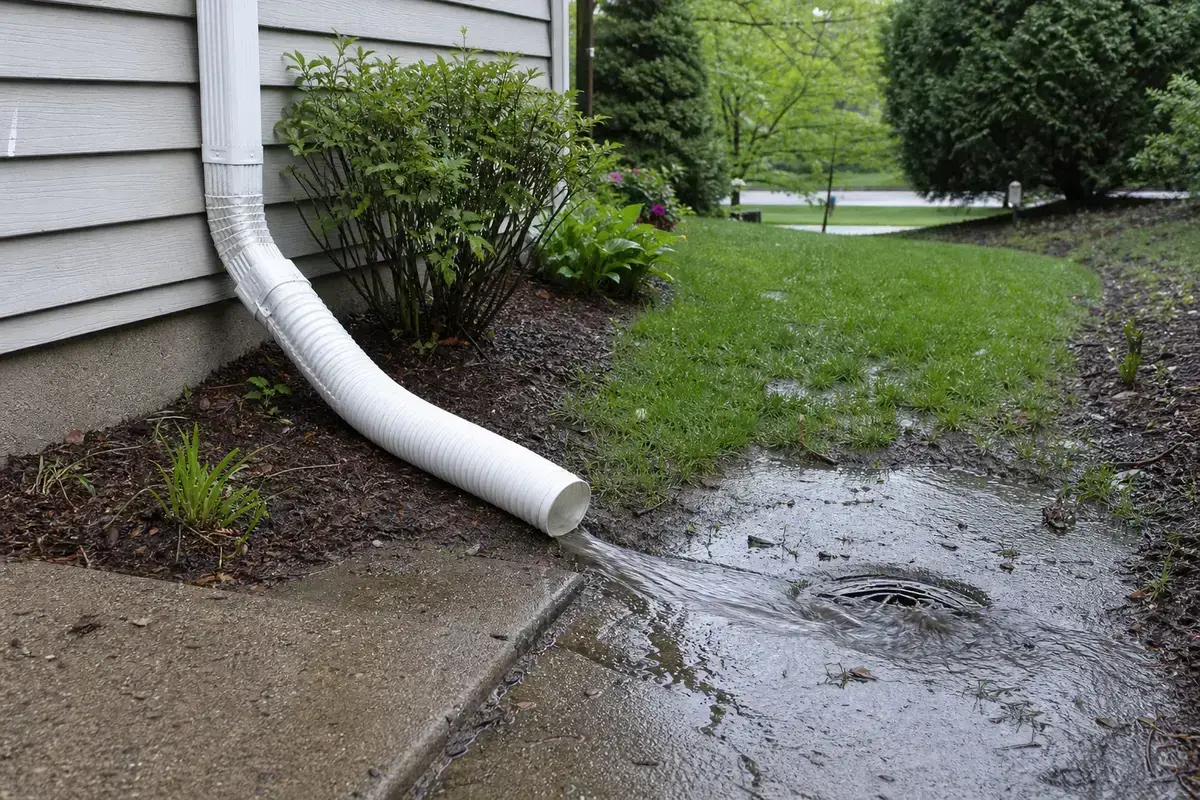
Helps when: Use a downspout extension when slab water starts near a wall aligned with roof runoff outside.
Skip it when: Skip interior patching first if runoff still lands beside that foundation wall.
Compare downspout extensions on Amazon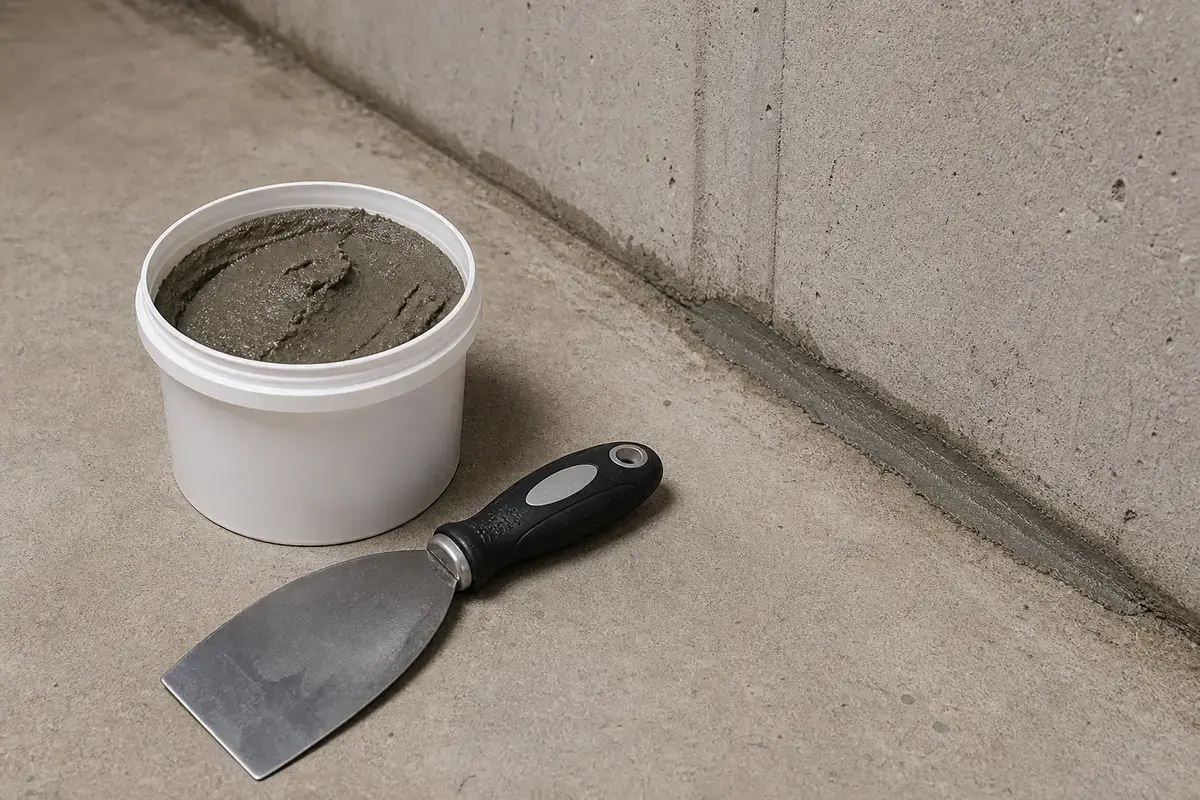
Helps when: Use hydraulic cement only for a small confirmed masonry seep point after pressure is reduced.
Skip it when: Skip patching broad seepage, drain backup, plumbing leaks, moving cracks, or unknown water sources.
Compare hydraulic cement water-stop products on AmazonAs an Amazon Associate I earn from qualifying purchases. Repair Riot may earn a commission at no extra cost to you.
Use these tools for small clean-water pickup and monitoring after hazards and source are sorted.
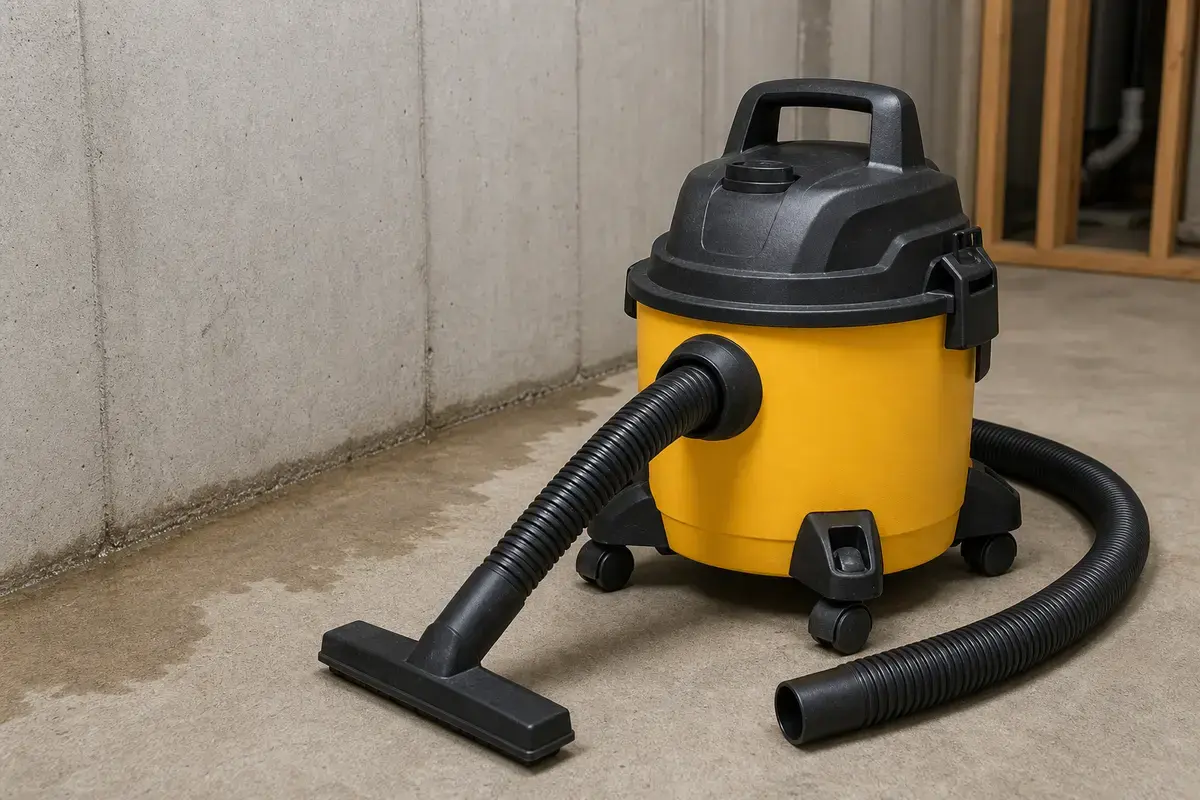
Helps when: Use a wet/dry vacuum for small confirmed clean-water pickup after the source slows or is contained.
Skip it when: Skip vacuuming sewage, fuel, electrical hazards, or unknown contamination.
Compare wet/dry vacuums on Amazon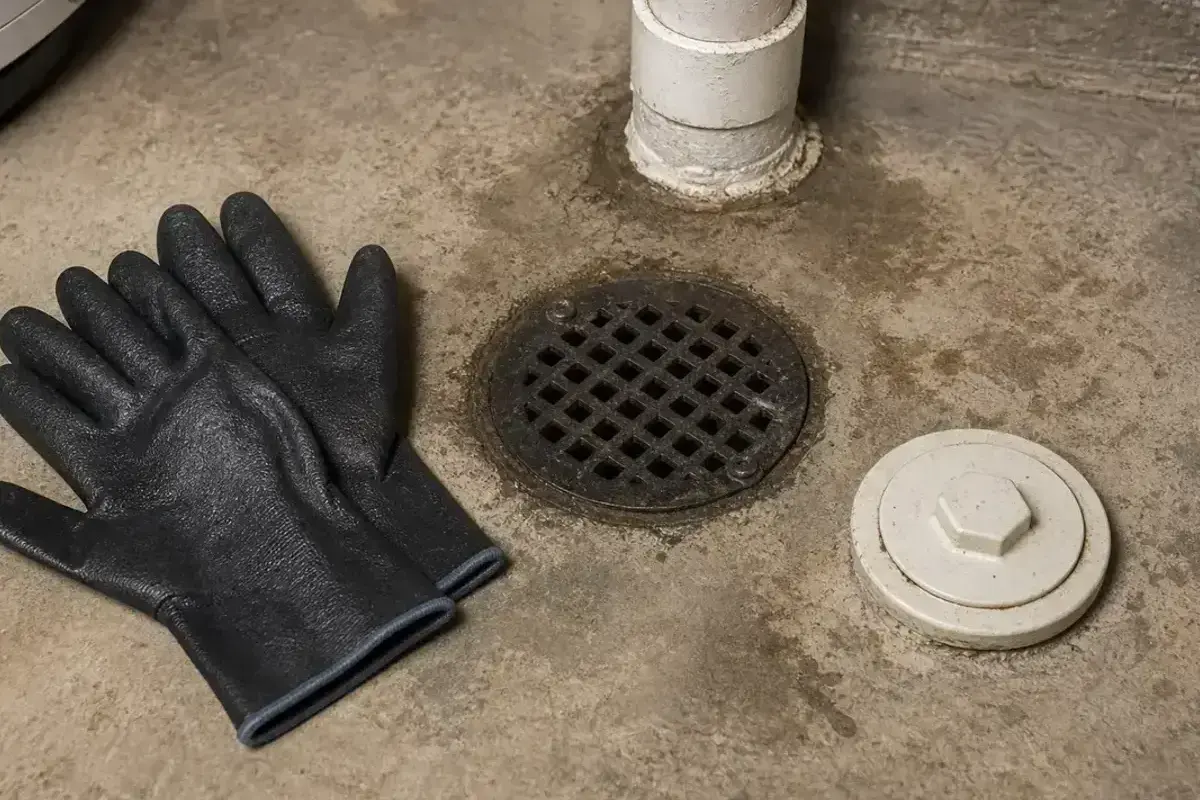
Helps when: Use waterproof work gloves when moving damp storage, wet mats, or cleanup towels.
Skip it when: Skip bare-handed cleanup around standing water, sharp debris, or suspect contamination.
Compare waterproof work gloves on Amazon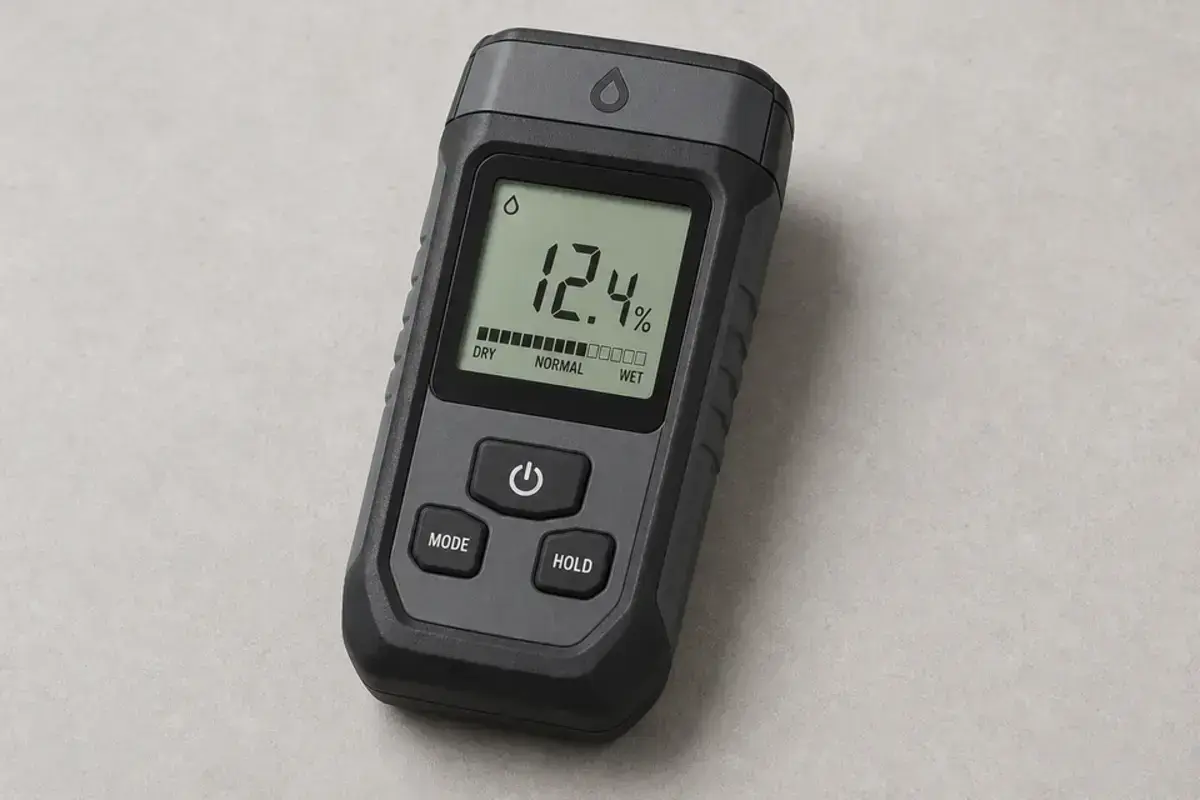
Helps when: Use a pinless moisture meter to map dampness after standing water is removed and the first wet point is visible.
Skip it when: Skip meter checks before cleanup if the water level hides the starting point.
Compare pinless moisture meters on Amazon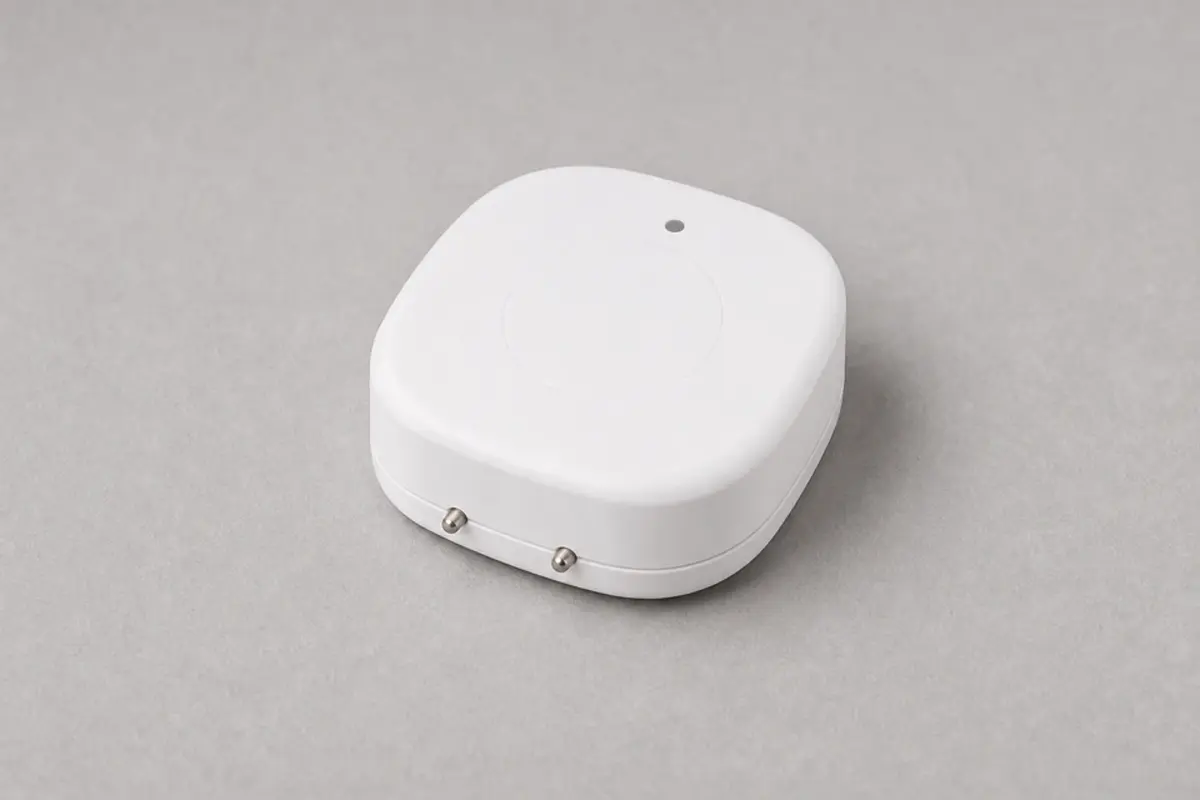
Helps when: Use a water leak alarm to monitor the slab area after cleanup when the trigger may return.
Skip it when: Skip relying on an alarm as a fix; it only warns you that water has returned.
Compare water leak alarms on AmazonAs an Amazon Associate I earn from qualifying purchases. Repair Riot may earn a commission at no extra cost to you.
Common sources are cove-joint seepage, floor drain backup, plumbing or appliance leaks, and heavy condensation.
It can be. Avoid water near electrical equipment and do not handle sewer, oily, or unknown water as normal cleanup.
Only for small confirmed clean water after the source slows and electrical hazards are controlled.
Treat that as a backup or drain branch first. Do not assume foundation seepage.
Check the appliance, valves, drain pan, hoses, and nearby plumbing before patching the floor.
Not first. Sealers do not fix drain backups, plumbing leaks, or outside pressure at the perimeter.
A water alarm helps after cleanup so you know where water returns first, but it is not a source repair.
Call for sewer water, fast inflow, electrical risk, repeated perimeter seepage, wall movement, or plumbing you cannot isolate safely.
Repair Riot built this page around basement standing water on slab? sort source before sealing clues: first wet point, timing, drainage, crack movement, drain and utility lookalikes, and source-first repair sequencing.