No first wet point?
Condensation is more likely; check humidity and slab temperature.
A basement floor that feels slick is often condensation forming on a cool concrete slab. Prove it with humidity, temperature, and pattern checks before using sealers or crack repair products.
The likely cause is warm humid air meeting a colder slab, especially during muggy weather, after opening basement windows, or when the basement stays cooler than upstairs.
Good clue: condensation usually spreads as a thin film with no starting point. A true leak follows a crack, edge, drain, or weather path.
Don’t start with: Do not start with floor paint, waterproof sealer, or random crack filler. If the moisture is forming on top of the slab, coatings do not remove the humidity source.
Condensation is more likely; check humidity and slab temperature.
Close humid air sources and dehumidify before coating.
Check seepage and crack movement before calling it condensation.
Inspect the cove joint and outside drainage path.
Dry the walking path safely while preserving one diagnostic test area.
Condensation is broad, repeatable with humidity, and usually has no entry line.
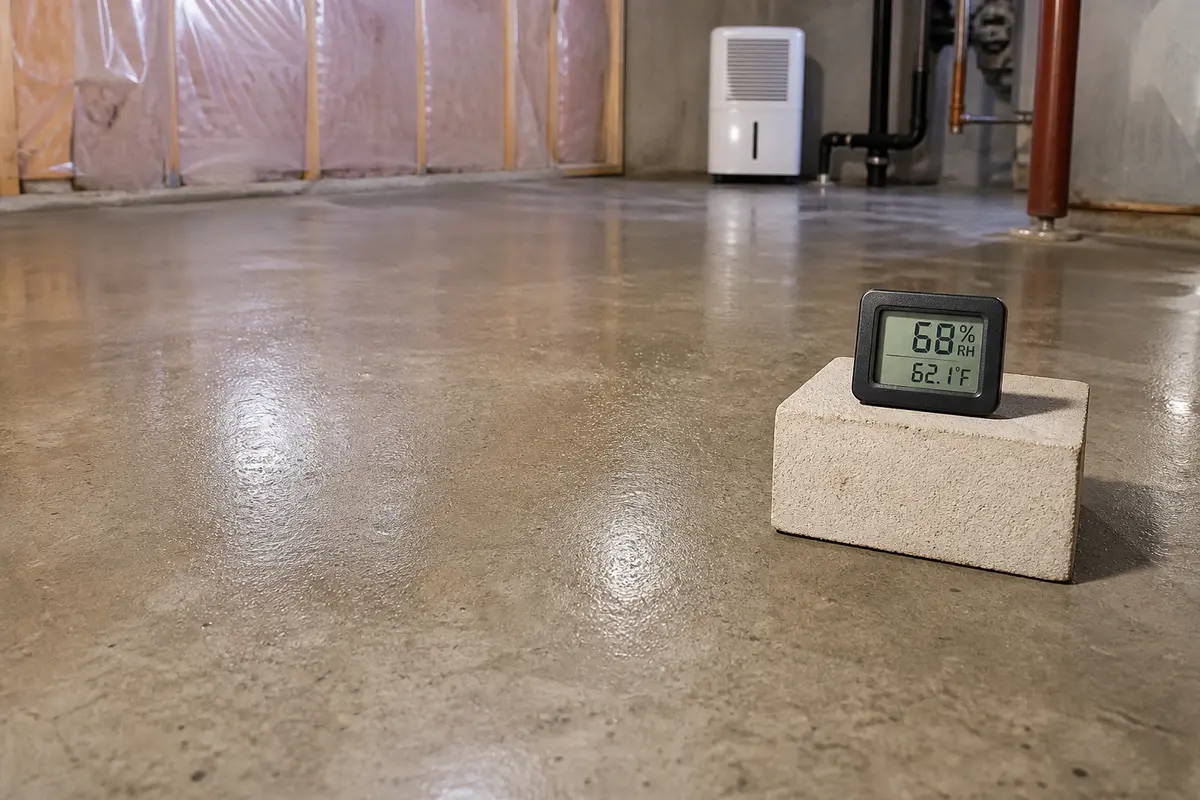
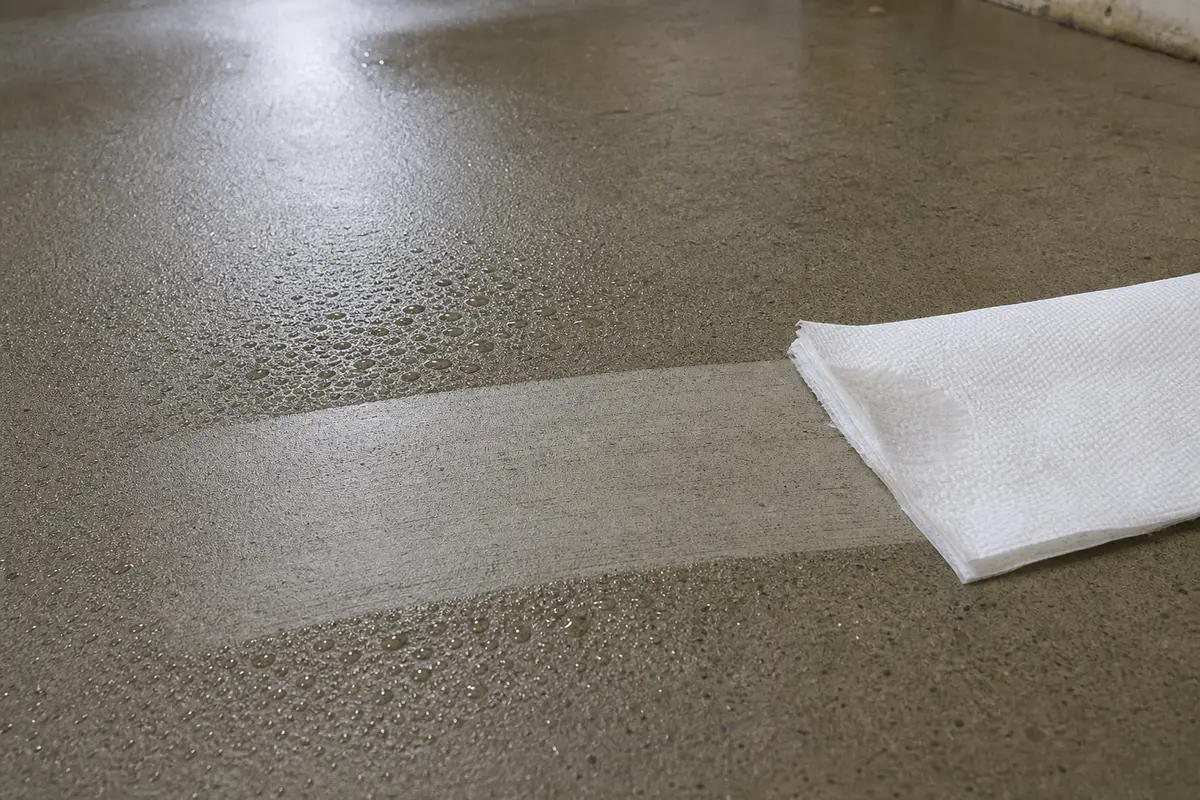
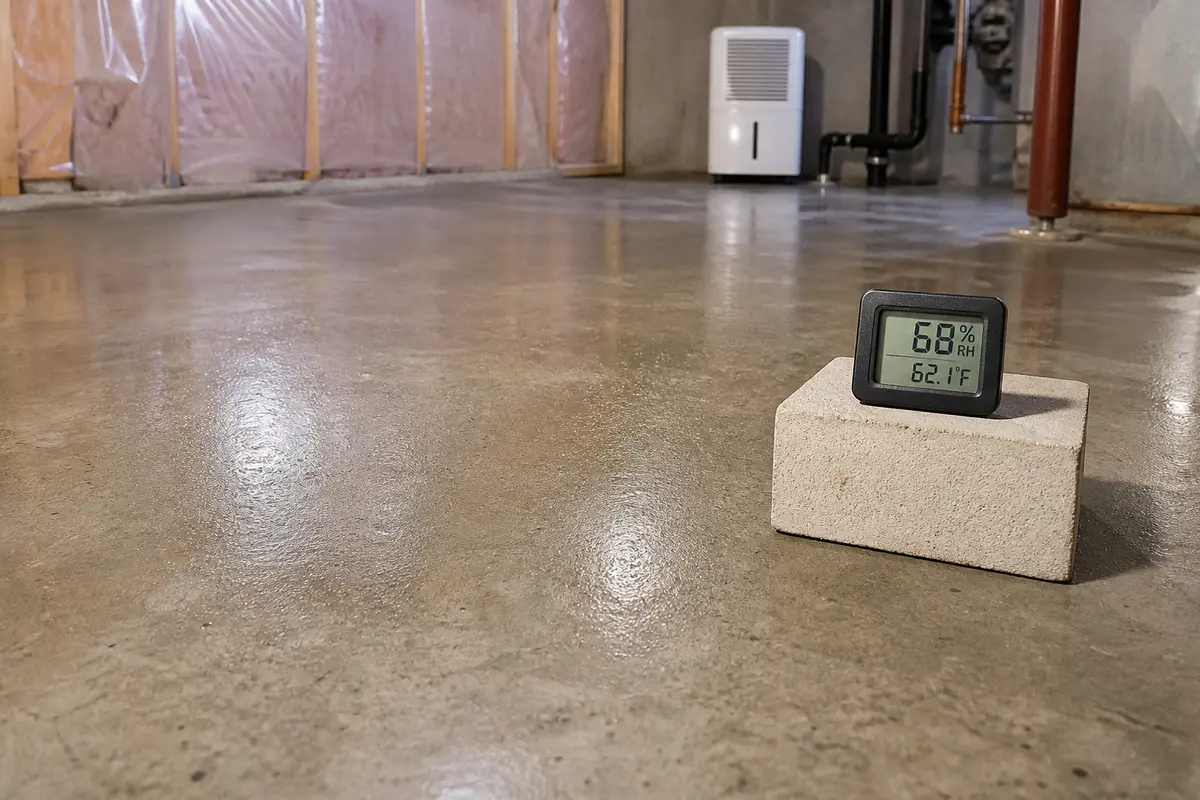
Match the exact diagnosis before shopping. Confirm humidity, the absence of a first wet point, weather timing, open-window effects, and whether cracks or the cove joint stay dry.
A slippery slab can be a surface condition, not water entering from below.
The wrong airflow or coating can make the slab wetter.
Use a small test area before treating the whole basement.
| Result | What it usually means | Next move |
|---|---|---|
| Moisture returns evenly | Surface condensation | Control humidity before using any coating |
| Water starts at one crack | Seepage or slab movement | Check crack width, offset, and weather timing |
| Water starts at wall edge | Cove joint or outside drainage | Inspect downspouts, grading, and the matching wall |
| Worse after windows open | Humid air over a cool slab | Close humid air sources and dehumidify |
Condensation fixes start with moisture in the air, not coatings on the slab.
Use these when the pattern proves condensation on a cold slab rather than seepage through concrete.
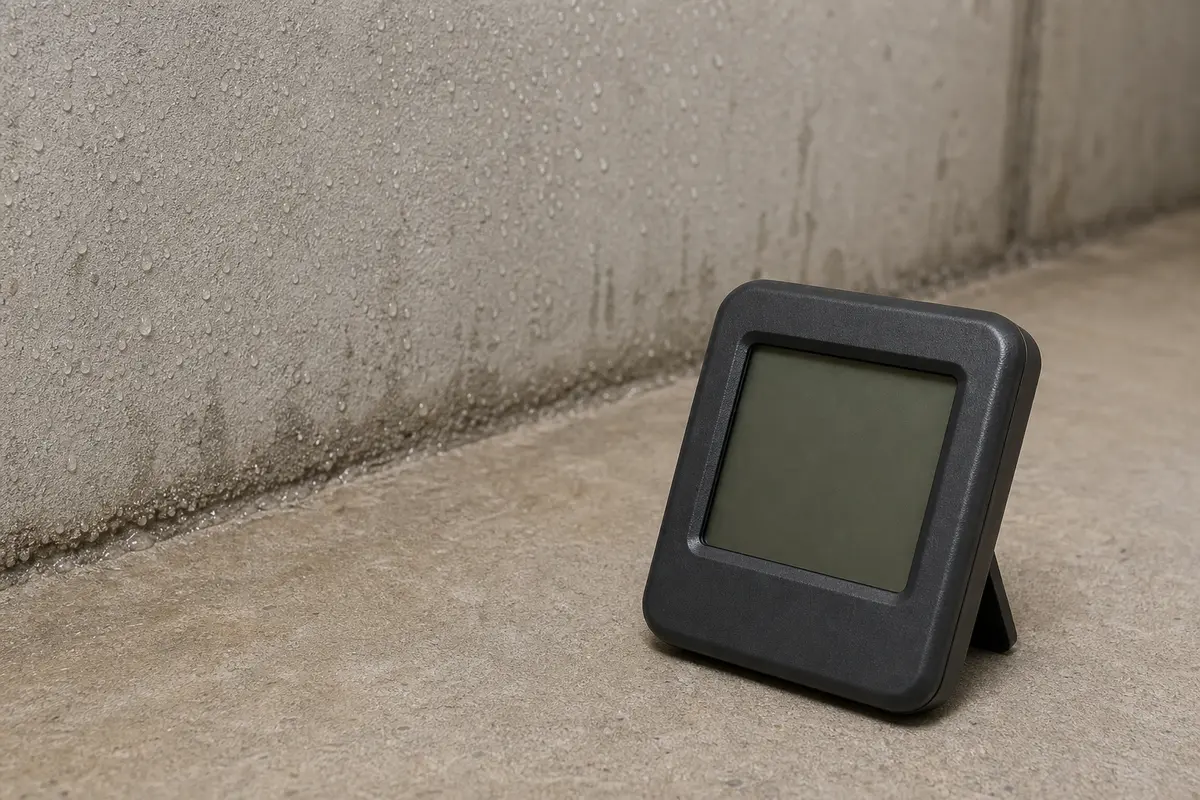
Helps when: Use a digital hygrometer to confirm whether basement humidity is high when the slick floor appears.
Skip it when: Skip treating the slab until humidity, surface temperature, and weather timing point to condensation.
Compare digital hygrometers on Amazon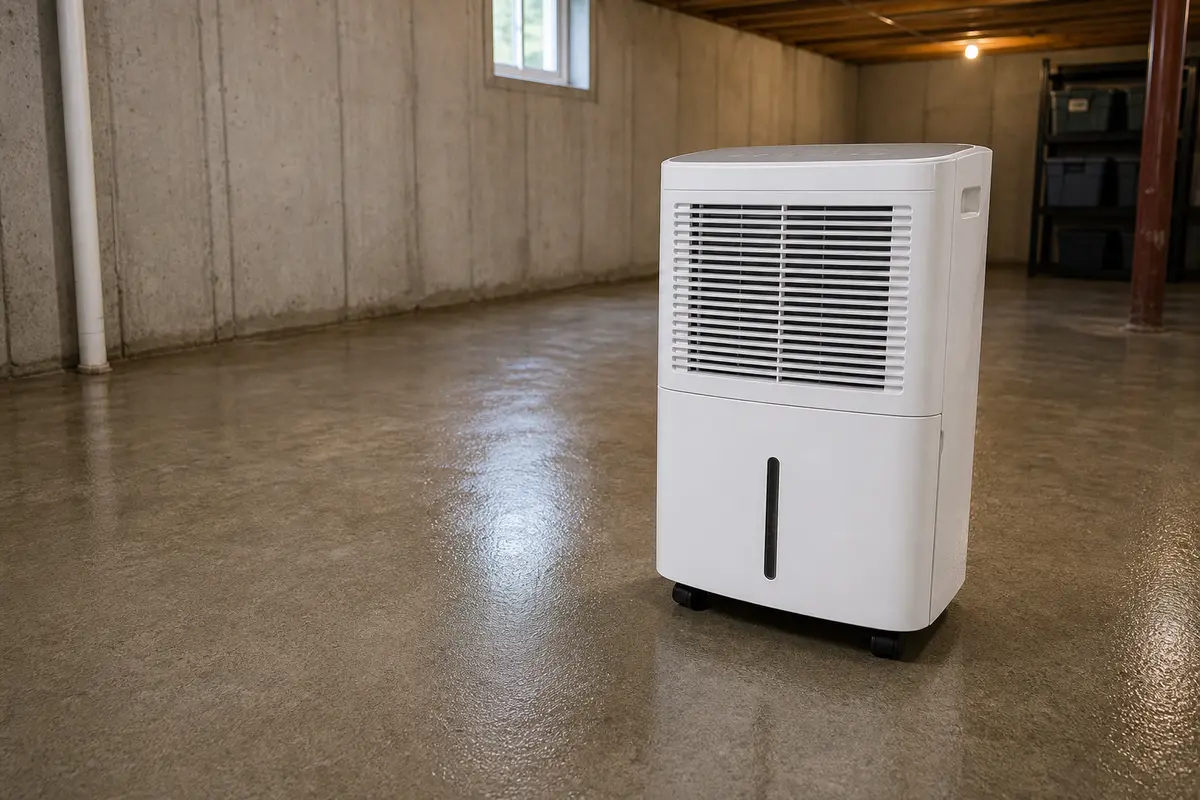
Helps when: Use a basement dehumidifier when humidity stays high after seepage paths and outdoor drainage issues are ruled out.
Skip it when: Skip using a dehumidifier as the only fix if water starts at a crack, drain, or slab-wall joint.
Compare basement dehumidifiers on Amazon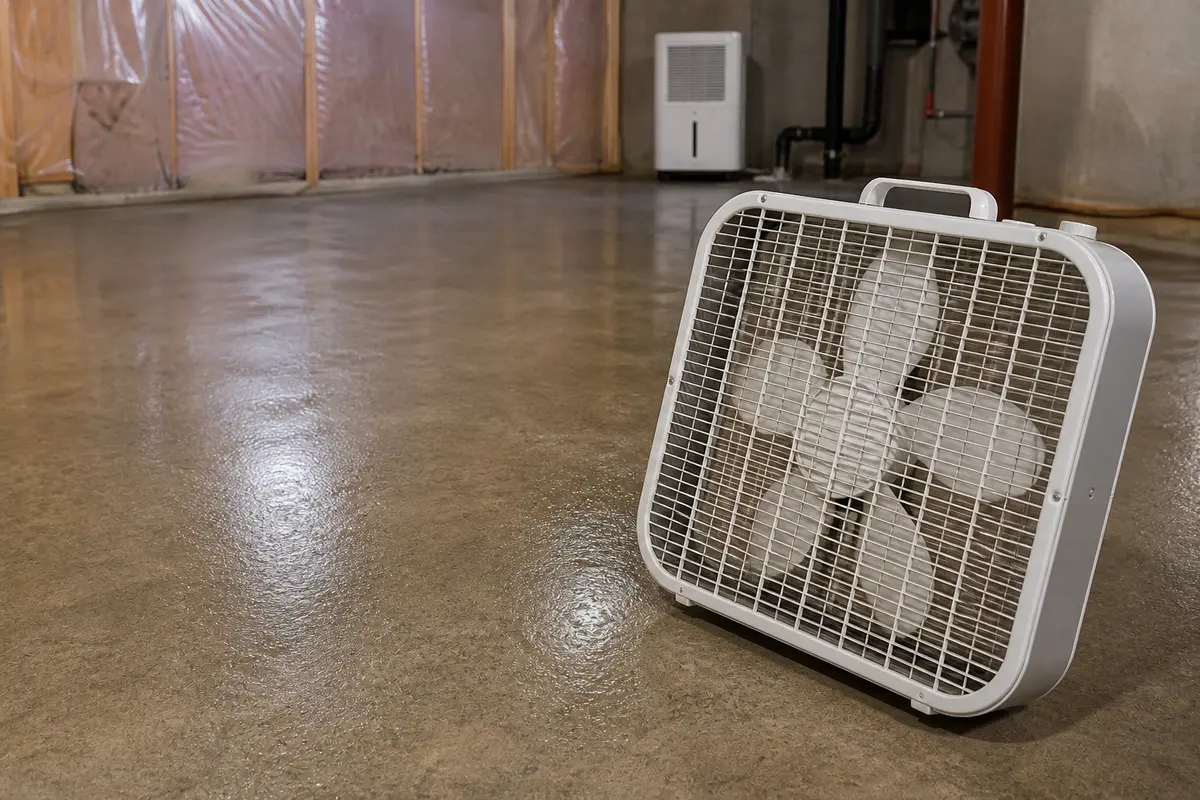
Helps when: Use an air mover or box fan with dehumidification to move dry indoor air across the slick slab.
Skip it when: Skip blowing humid outdoor air across a cold basement floor because it can make condensation worse.
Compare air movers and box fans on AmazonAs an Amazon Associate I earn from qualifying purchases. Repair Riot may earn a commission at no extra cost to you.
Use these tools to verify the moisture pattern before choosing sealer, ventilation, or drainage work.
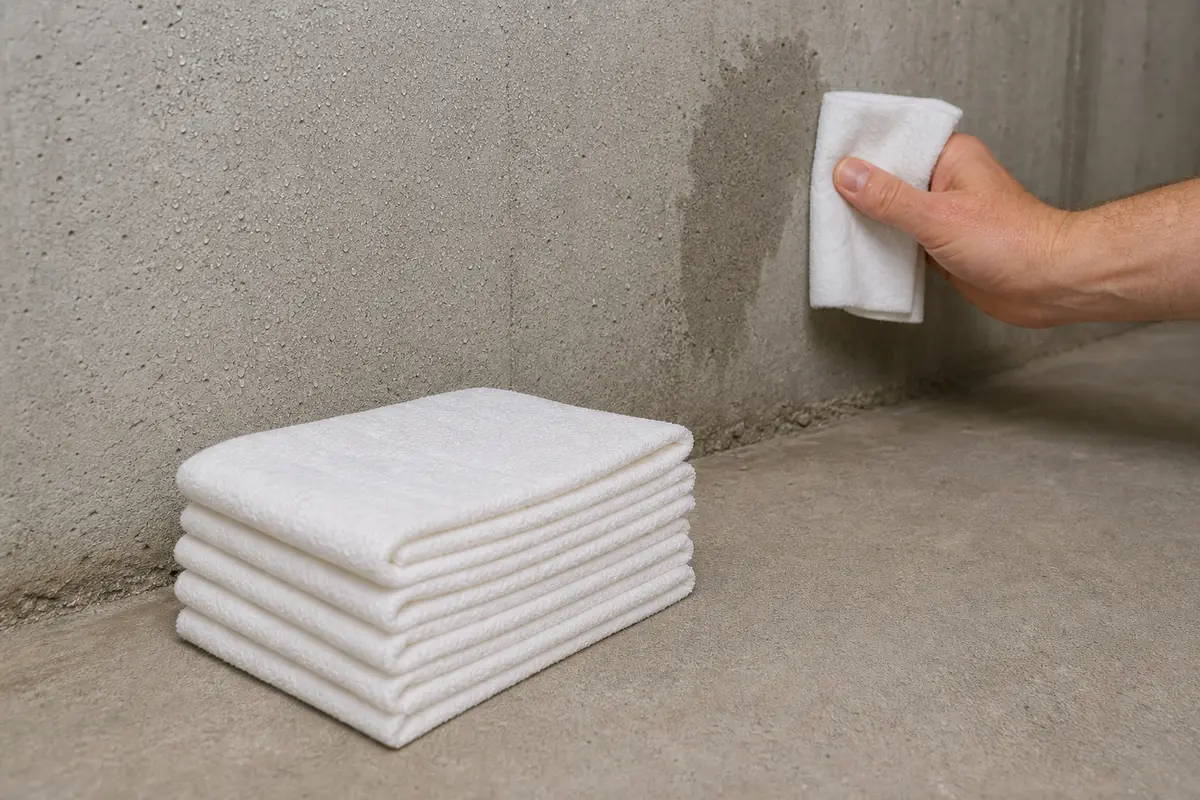
Helps when: Use absorbent towels to wipe a test patch and see whether the slick film returns evenly across the slab.
Skip it when: Skip assuming condensation if water reappears from one crack, joint, or drain after the wipe test.
Compare absorbent shop towels on Amazon
Helps when: Use a pinless moisture meter to compare damp readings across the floor and along nearby foundation walls.
Skip it when: Skip relying on one reading; compare several dry-looking and slick-looking spots before deciding.
Compare pinless moisture meters on Amazon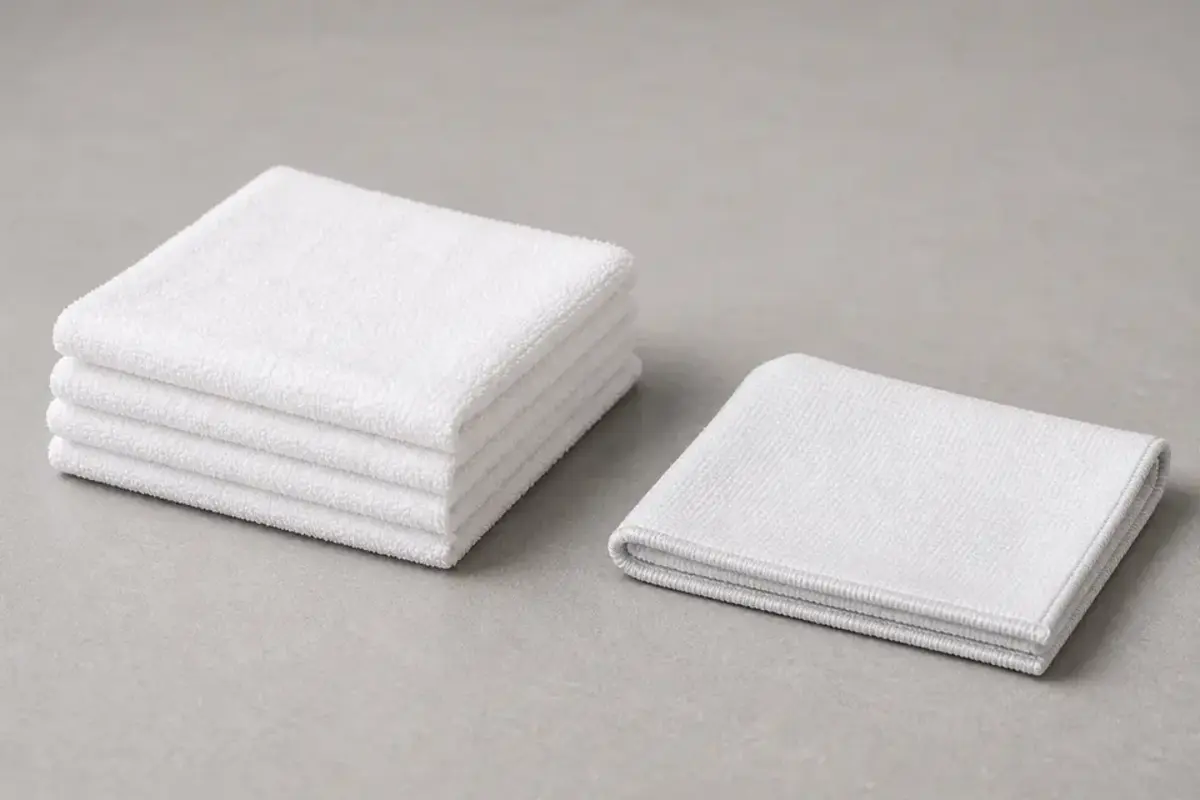
Helps when: Use a microfiber mop or towel to dry the surface without leaving puddles that hide the return pattern.
Skip it when: Skip heavy scrubbing or chemical cleaners during diagnosis because they can mask where moisture returns.
Compare microfiber mops and towels on AmazonAs an Amazon Associate I earn from qualifying purchases. Repair Riot may earn a commission at no extra cost to you.
A broad slick film is often condensation from humid air hitting a cool slab. A single wet path, crack, or edge points more toward seepage.
Yes. A thin surface film can be enough to make concrete slick even when there is no foundation leak.
Not during humid weather. Warm moist air can condense on the cooler slab and make the floor wetter.
Not by itself. Condensation forms from air moisture on the surface, so humidity control and air management matter first.
Good clue: condensation returns evenly over a broad area. Watch for seepage that follows a crack, wall edge, drain, or weather path.
Use the hygrometer trend more than one number. If humidity stays high when the floor is slick, the problem is usually caused by air moisture and dehumidification is part of the fix.
Stop for standing water near electricity, recurring water from a crack or wall edge, sewer odor, moldy finishes, or slab movement.
The marked floor area should stay dry and less slippery when humidity is controlled under the same weather conditions.
Repair Riot built this page around slick slab clues: surface film, humidity timing, wipe comparisons, open-window effects, seepage lookalikes, and safe drying sequence.