HVAC odor troubleshooting

HVAC Smells Bad

Direct answer: If your HVAC smells bad, the most common safe-to-check causes are a dirty filter, standing water at the indoor unit, a clogged condensate drain, or damp dust and debris in the air path. A burning, fishy, exhaust, or gas-like smell is a different branch and is not a routine cleaning issue.

Most likely: For a musty smell that gets stronger when the system starts, moisture around the evaporator coil or condensate drain is often the best first suspect.

Start by identifying the smell type and when it appears. A musty odor points you toward moisture and microbial growth around the indoor unit or ductwork. A dirty-sock smell often shows up at startup and can come from the coil area. A burning or sharp chemical smell needs a much faster stop-and-escalate response. The goal is to find the source safely, not just cover it up.

Don’t start with: Do not start by spraying fragrances into vents, using ozone devices, or buying parts before you know whether the smell is from moisture, dust, electrical overheating, or combustion.

Musty or damp smellCheck the filter, indoor drain pan area, and condensate drain first.
Burning, fishy, exhaust, or gas-like smellTurn the system off and move to the stop DIY section before doing more.
Last reviewed: 2026-03-17

What kind of bad HVAC smell do you notice?

Musty or mildew smell

The air smells damp, stale, or like a basement, especially when cooling runs.

Start here: Start with the filter, condensate drain, drain pan area, and any visible moisture around the indoor unit.

Dirty sock smell at startup

A sour, stale odor hits for a few minutes when the system first turns on, then fades.

Start here: Focus on the evaporator coil area, recent humidity, and whether the system has been cycling on and off frequently.

Burning or hot electrical smell

The smell is sharp, hot, fishy, or like overheated plastic or wiring.

Start here: Shut the system off at the thermostat and breaker if safe, then stop DIY and arrange service.

Exhaust, fuel, or chemical-like smell

The odor resembles combustion fumes, gas, or strong solvent-like air.

Start here: Treat this as a safety branch first. Leave the area if the smell is strong, ventilate if safe, and call for professional help.

Most likely causes

1. Dirty HVAC air filter holding dust and moisture

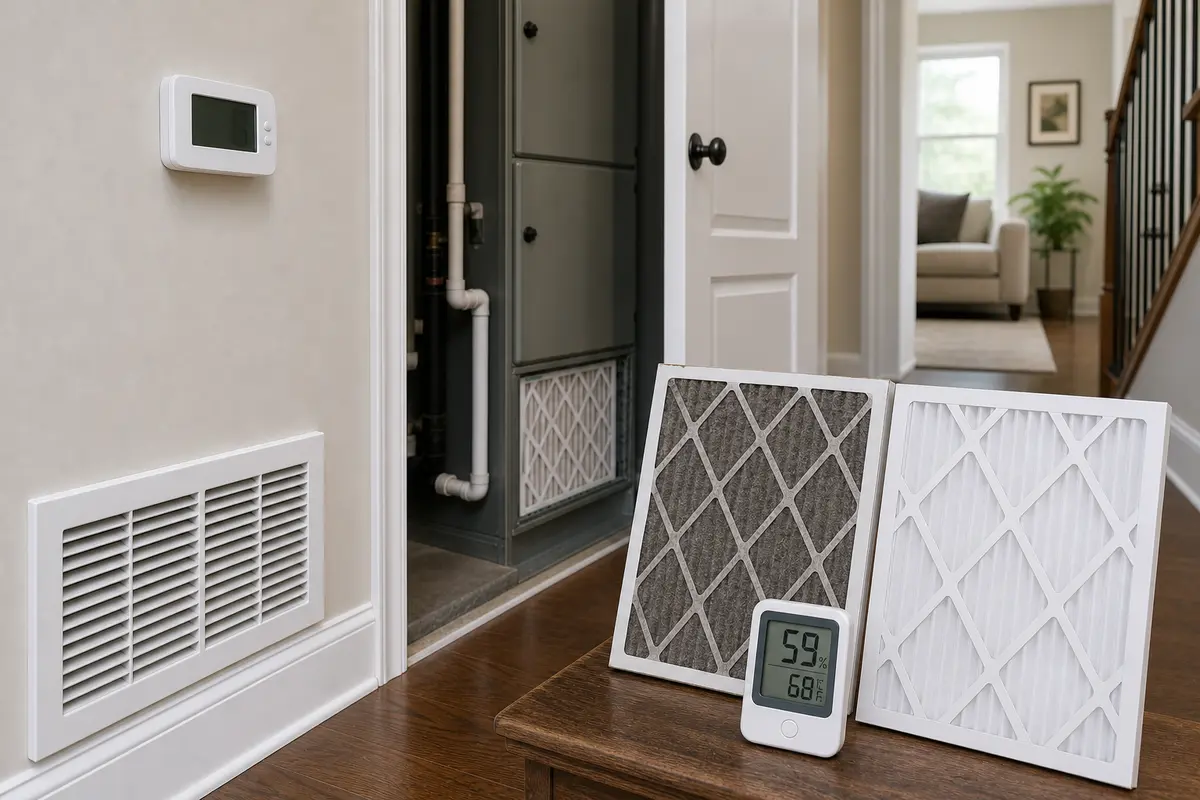
A loaded filter can trap odors, reduce airflow, and keep the coil area damp longer, which makes musty smells worse when the blower starts.

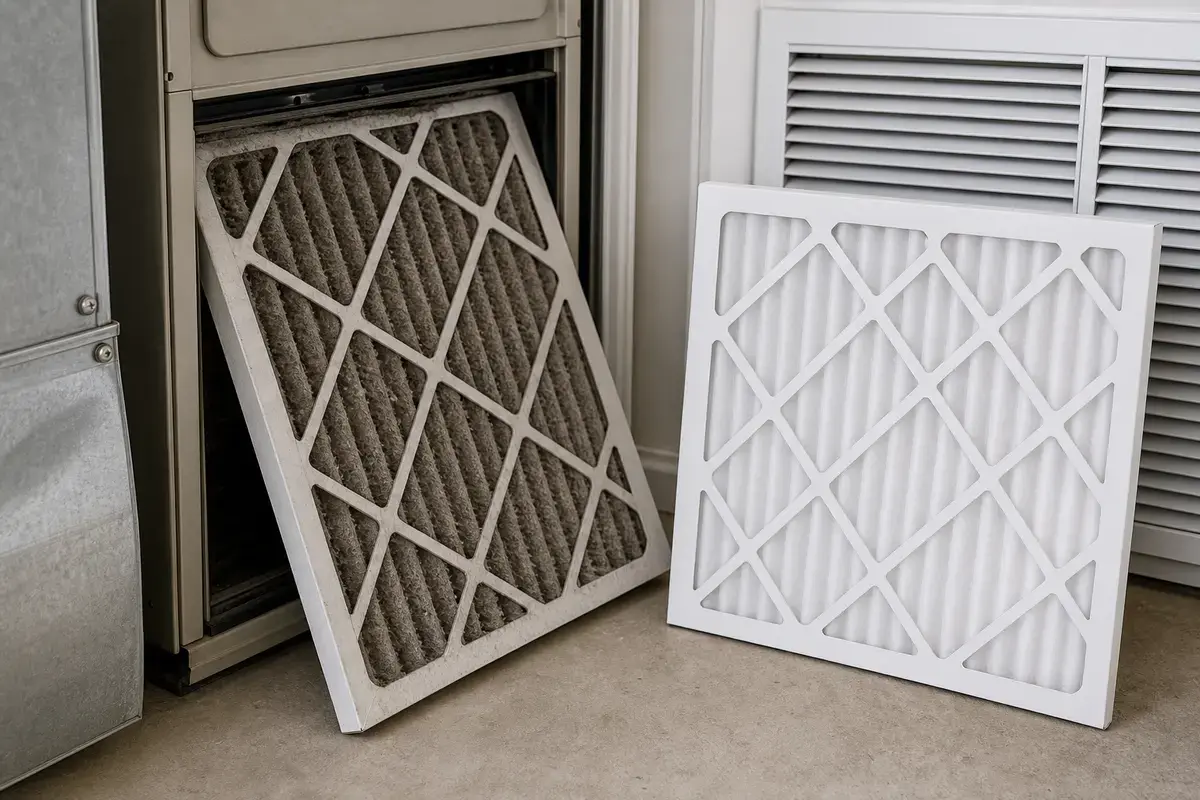
Quick check: Remove the filter and look for heavy dust, discoloration, or a damp smell. Check whether airflow improves with a clean replacement filter installed.

2. Clogged condensate drain or wet drain pan near the indoor unit

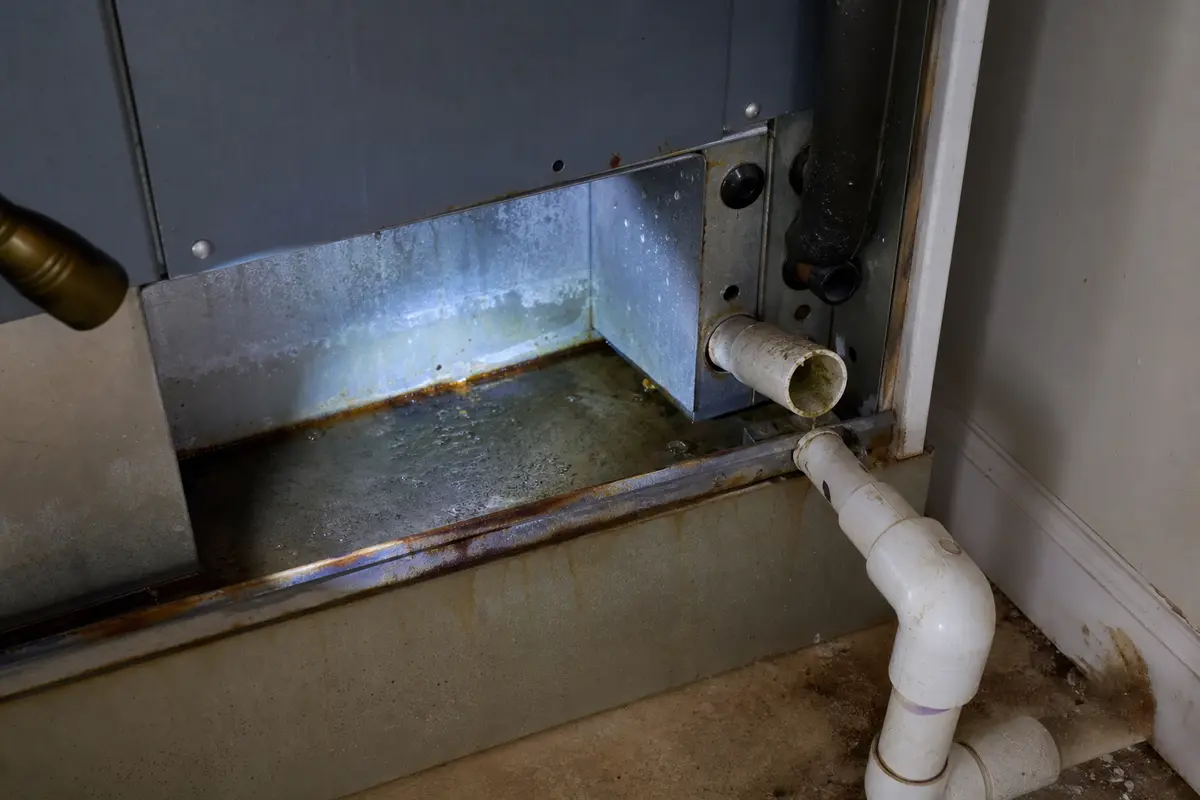
Standing water around the evaporator section is one of the most common reasons for mildew or musty air from vents during cooling season.

Quick check: Look for water in or around the drain pan, wet insulation, slime at the drain opening, or recent overflow shutoffs.

3. Moisture and buildup on the evaporator coil or nearby insulation

A dirty, damp coil can create a dirty-sock odor, especially at startup or in humid weather.

Quick check: If there is a safe access panel you normally open for filter service, look for visible dirt, damp insulation, or persistent moisture near the coil compartment without touching the coil.

4. Non-routine electrical or combustion problem

Burning, fishy, exhaust, or fuel-like odors do not behave like normal dust or mildew and can signal overheating components, flue issues, or unsafe combustion.

Quick check: If the smell is sharp, hot, smoky, or fume-like, stop using the system rather than trying to clean it away.

Step-by-step fix

Step 1: Identify the smell branch before you do anything else

Different odor types point to very different risks. Separating musty from burning or combustion smells keeps you from treating a dangerous problem like a cleaning issue.

  1. Notice when the smell appears: only at startup, only during cooling, only during heating, or whenever the fan runs.
  2. Stand near a supply vent and then near the indoor unit if accessible to see where the smell is strongest.
  3. Classify the odor as musty/mildew, dirty-sock/stale, burning/electrical, or exhaust/fuel-like.
  4. If anyone in the home has headaches, dizziness, eye irritation, or nausea when the system runs, treat that as a safety warning rather than a comfort issue.

Next move: You can move into the right branch instead of guessing. If you cannot clearly identify the smell type, treat anything sharp, smoky, or fume-like as unsafe and stop.

What to conclude: Musty and dirty-sock odors usually support a moisture or buildup branch. Burning or combustion-like odors support a service-first branch.

Stop if:
  • You smell gas, exhaust, smoke, or hot plastic.
  • Anyone feels sick when the HVAC runs.
  • You see soot, scorch marks, or active water leaking onto electrical parts.

Step 2: Check the HVAC air filter and basic airflow first

A dirty filter is common, safe to inspect, and can worsen both odor and moisture problems by restricting airflow across the indoor coil.

  1. Turn the system off at the thermostat.
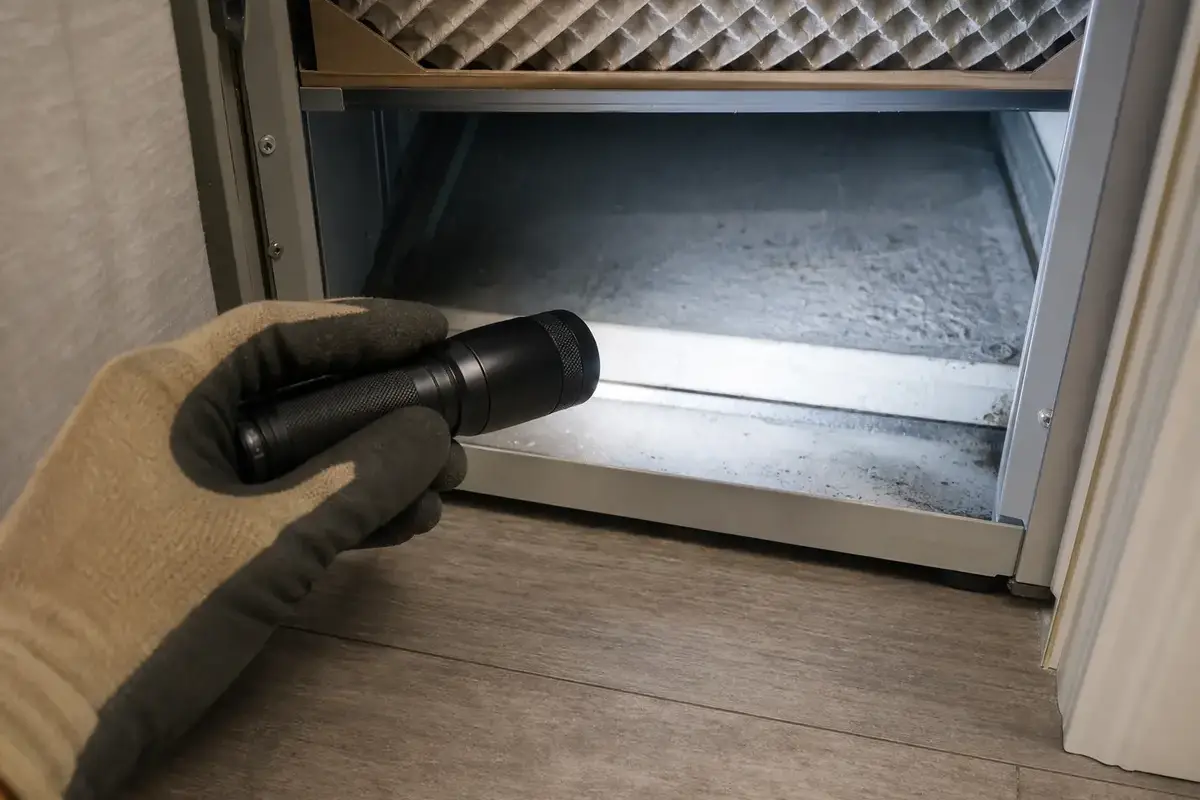
  2. Remove the HVAC air filter and inspect it in good light.
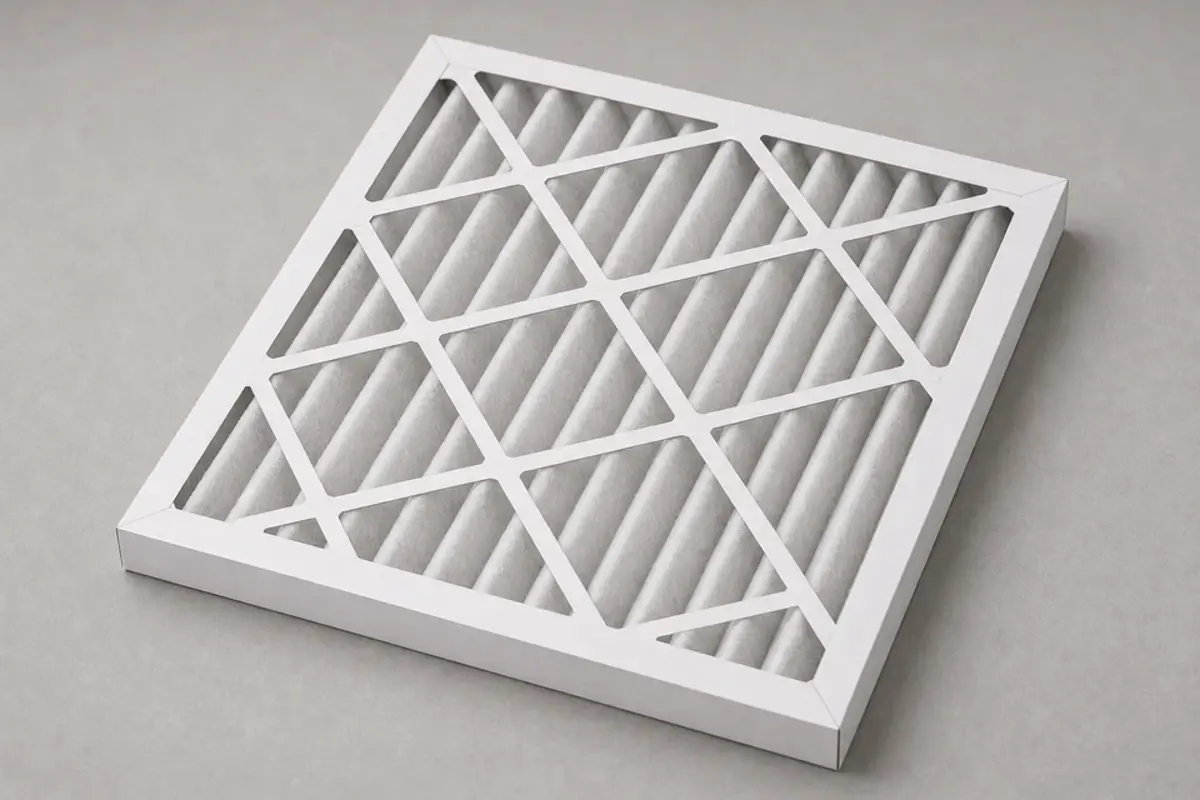
  3. If the filter is heavily loaded, damp, or has a strong odor, replace it with the same size and airflow rating style the system uses.
  4. Make sure return grilles and nearby supply vents are not blocked by furniture, rugs, or heavy dust buildup.
  5. Run the system again for one full cycle and note whether the smell is reduced, unchanged, or stronger.

Next move: If the smell drops noticeably after a clean filter and better airflow, the issue may have been trapped dust and moisture rather than a failed component. If the smell stays musty, move to the condensate and moisture checks.

What to conclude: Improvement points to airflow restriction and odor buildup. No change makes a wet drain area, coil contamination, or duct moisture more likely.

Stop if:
  • The filter slot or surrounding cabinet is wet.
  • You find signs of rodent activity or heavy contamination in the return path.
  • Opening the access area exposes wiring or panels you are not comfortable around.

Step 3: Inspect for standing water and a clogged condensate drain

Musty HVAC smells often come from water that is not draining away from the indoor cooling section.

  1. With power off, look around the indoor unit or air handler for water stains, wet insulation, or a full drain pan.
  2. Check the visible condensate drain line and drain outlet for slime, blockage, or slow dripping during cooling season.
  3. If the drain opening is accessible and you are only clearing a simple visible clog, gently remove loose debris without forcing tools deep into the line.
  4. Wipe up accessible standing water around the exterior of the unit with a dry cloth and let the area dry.
  5. If your system has a condensate safety switch and cooling recently stopped, note that as a strong clue that the drain branch needs attention.
Stop if:
  • Water is reaching wiring, controls, or the furnace section.
  • The drain line is glued, hidden, or not safely accessible.
  • You see mold growth beyond a small localized area or inside finished building cavities.

Step 4: Check the indoor coil area and nearby insulation for damp buildup

A dirty-sock or sour startup smell often comes from the evaporator area, especially when dust and humidity collect on cold surfaces.

  1. Only open panels you normally access for routine service, and only with power off.
  2. Look for visible dirt mats, dark residue, or damp insulation near the evaporator section without touching delicate fins or wiring.
  3. Smell near the indoor unit cabinet. If the odor is much stronger there than at the vents, the source is likely at the air handler or furnace coil area.
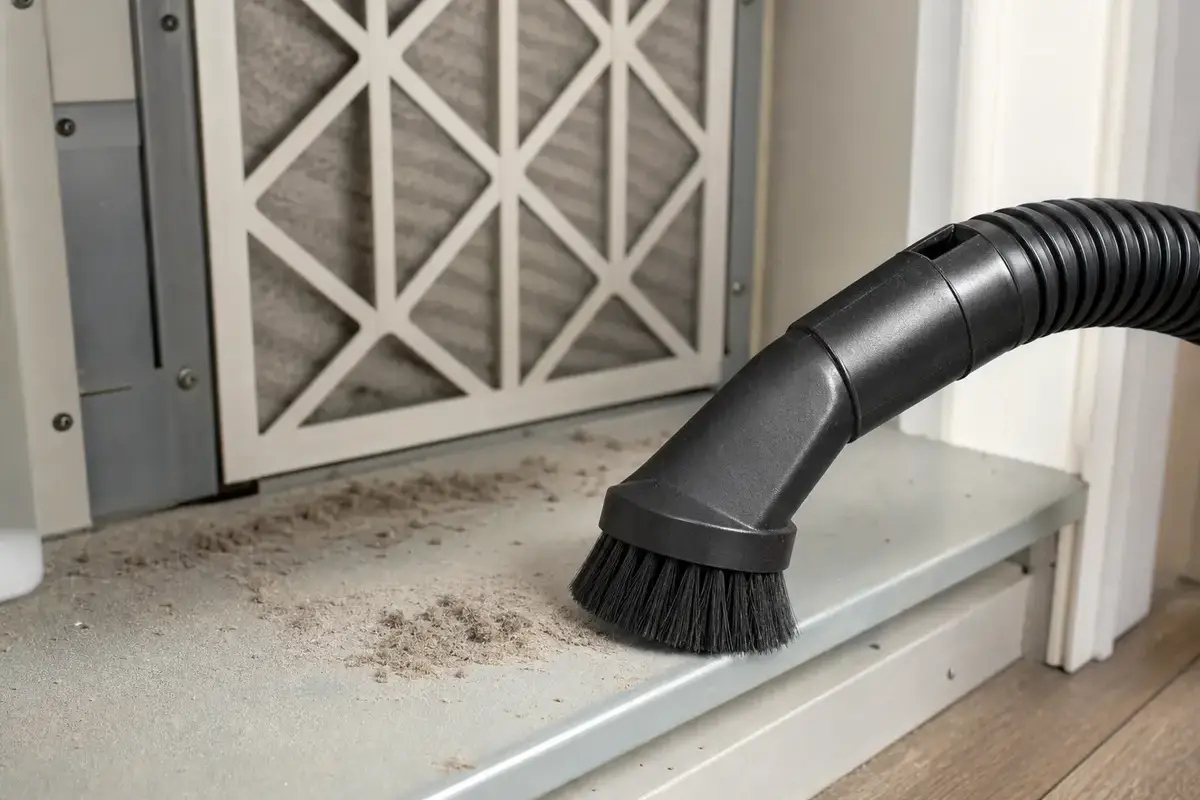
  4. If the exterior cabinet and accessible surfaces are dusty, clean only the outer surfaces with a dry cloth or a cloth lightly dampened with mild soap and water, keeping moisture away from electrical parts.
  5. If the smell is clearly tied to the coil compartment or internal insulation, plan for professional cleaning and inspection rather than spraying chemicals into the system.

Next move: If light exterior cleaning and drying reduce the smell, you may have caught a mild buildup issue early. If the odor remains concentrated at the indoor unit, internal coil cleaning or insulation evaluation is the next likely branch and usually a service call.

Stop if:
  • You would need to remove sealed panels beyond normal homeowner access.
  • You see damaged insulation, heavy contamination, or corrosion inside the cabinet.
  • The system is a gas furnace and you are near the burner or flue area without training.

Step 5: Rule out dangerous heating, electrical, and non-HVAC odor sources

Some smells seem like HVAC problems only because the blower is moving air through the house. You need to separate a true HVAC source from a house, electrical, or combustion issue.

  1. If the smell happens only in heat mode, shut the system off and do not assume it is just dust unless it clears quickly after first seasonal startup.
  2. If the smell is burning, fishy, smoky, or chemical-like, turn the system off and check for obvious signs such as a tripped breaker, scorch marks, or smoke without opening electrical compartments.
  3. Consider whether the odor could be pulled into return air from a crawlspace, basement, attic, wet carpet, plumbing leak, dead pest, paint, or stored chemicals.
  4. If the smell is strongest near one room or one return grille, inspect that area for a non-HVAC source before assuming a system failure.
  5. Arrange professional HVAC service if the odor points to electrical overheating, combustion, hidden duct contamination, or a source you cannot safely access.

A good result: If you find a nearby house source or the smell is limited to one area, you can address that source directly instead of replacing HVAC parts.

If not: If the odor clearly follows system operation and no safe homeowner check explains it, professional diagnosis is the right next step.

What to conclude: This step helps confirm whether the smell is from the HVAC air path, a dangerous system condition, or another household source being circulated by the blower.

Stop if:
  • You suspect combustion fumes or carbon monoxide.
  • A breaker trips, wiring smells hot, or the unit will not run normally.
  • The odor source appears to be inside ductwork, a heat exchanger area, or an electrical compartment.

FAQ

Why does my house smell musty only when the AC turns on?

That pattern usually points to moisture in the cooling side of the system, often around the evaporator coil, condensate drain, or nearby insulation. A dirty filter and high indoor humidity can make it worse.

Is a dirty sock smell from HVAC dangerous?

It is often more of a moisture and buildup problem than an immediate emergency, but it still needs attention because the source can keep returning. If the smell is actually burning, smoky, or chemical-like, treat it as a safety issue instead.

Can I pour vinegar or cleaner into the condensate drain?

Only use simple, safe methods you know are appropriate for your system and only where the drain access is clearly intended for maintenance. If the line is hidden, glued, overflowing, or near electrical parts, stop and have it serviced rather than experimenting.

Should I clean my HVAC coil myself if it smells bad?

Light exterior dust cleanup around accessible areas is reasonable, but internal coil cleaning is easy to do poorly and can damage fins, insulation, or electrical parts. If the odor is clearly coming from the coil compartment, professional cleaning is usually the safer next step.

Why does the smell seem stronger in one room?

That can mean the source is local to that room, such as damp carpet, a plumbing leak, a dead pest, or a nearby return path pulling odors into the system. It can also point to one duct branch or vent area rather than the whole HVAC system.

Will an air freshener or odor gadget fix the problem?

Usually no. Covering the smell can delay finding moisture, contamination, or an electrical or combustion problem. It is better to identify the source first and fix that branch directly.