Is water near wiring, a ceiling, or finished surfaces?
Turn cooling off, protect the area, and stop. The first job is water control and safe access, not forcing the drain open.
Turn cooling off, protect the wet area, and confirm the water is coming from the condensate pan or drain. A full pan, slow outlet, or float-switch shutdown points to the drain path; water near wiring, a ceiling leak, or ice history means stop and call service.
The usual clog is slime or debris at the cleanout, trap, outlet, or first bend near the air handler.
First sort overflow from lookalikes: full pan, no outlet flow, float-switch shutdown, frozen-coil thaw, or another leak.
Don’t start with: Do not disable the float switch, open sealed panels, or replace controls before the drain path is proven clear.
Turn cooling off, protect the area, and stop. The first job is water control and safe access, not forcing the drain open.
With cooling off, mark the pan level with tape and clear only the accessible cleanout, outlet, or trap. If the level rises again, leave it off.
A dry outlet plus a wet pan points to a blockage. A dry outlet with a dry pan may simply mean little condensate is being made.
A frozen coil thaw can mimic a clogged drain. Do not keep running cooling until airflow and ice clues are sorted.
Stop flushing. The blockage may be deeper, the trap may be packed, or the line may be damaged.
Leave the system off and call service with the pan level, outlet behavior, and any float-switch shutdown notes.
A clogged condensate drain is visible when you know where to look: the cleanout, trap, outlet, safety switch, pump reservoir, and the path water should take.
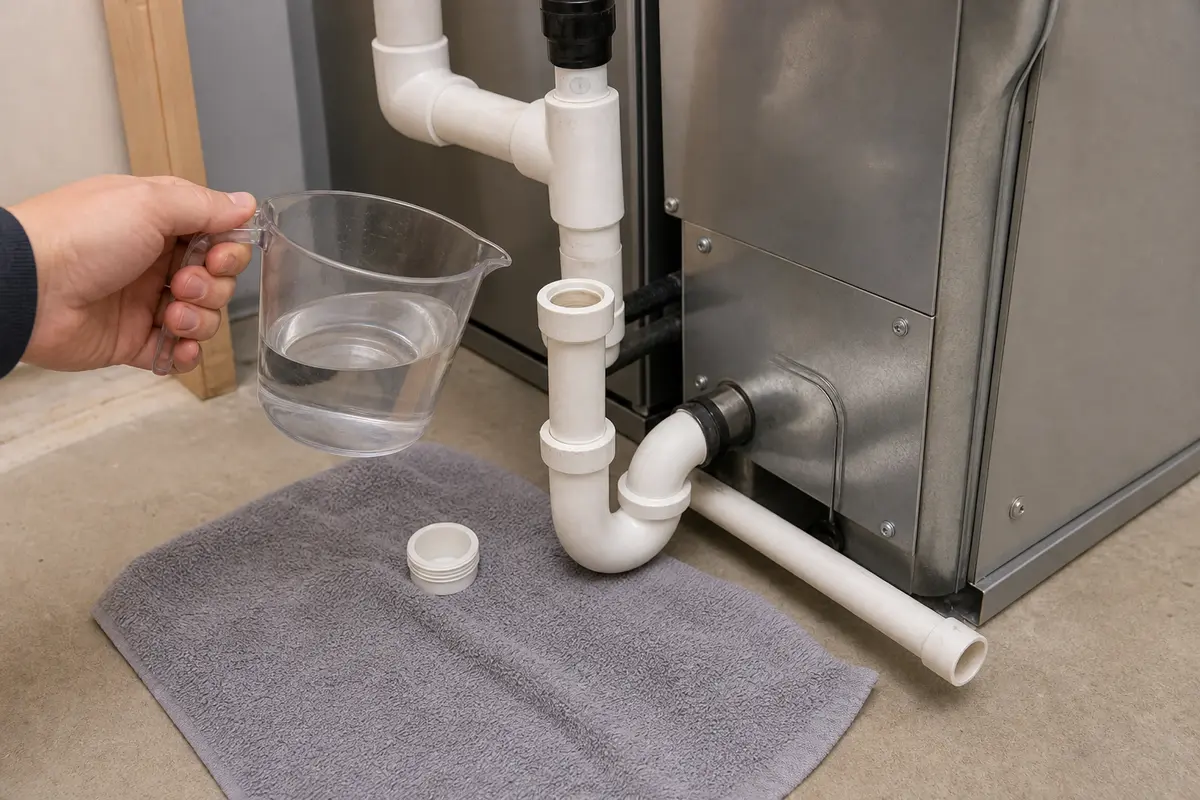
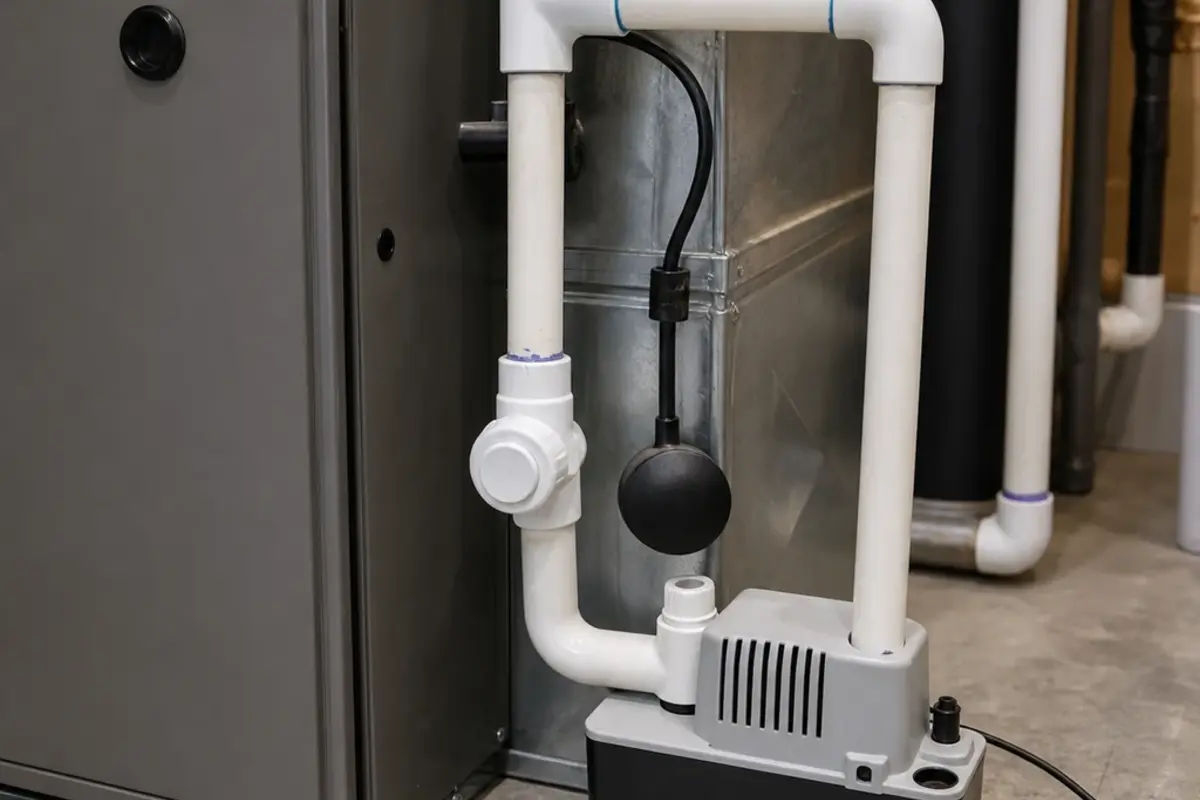
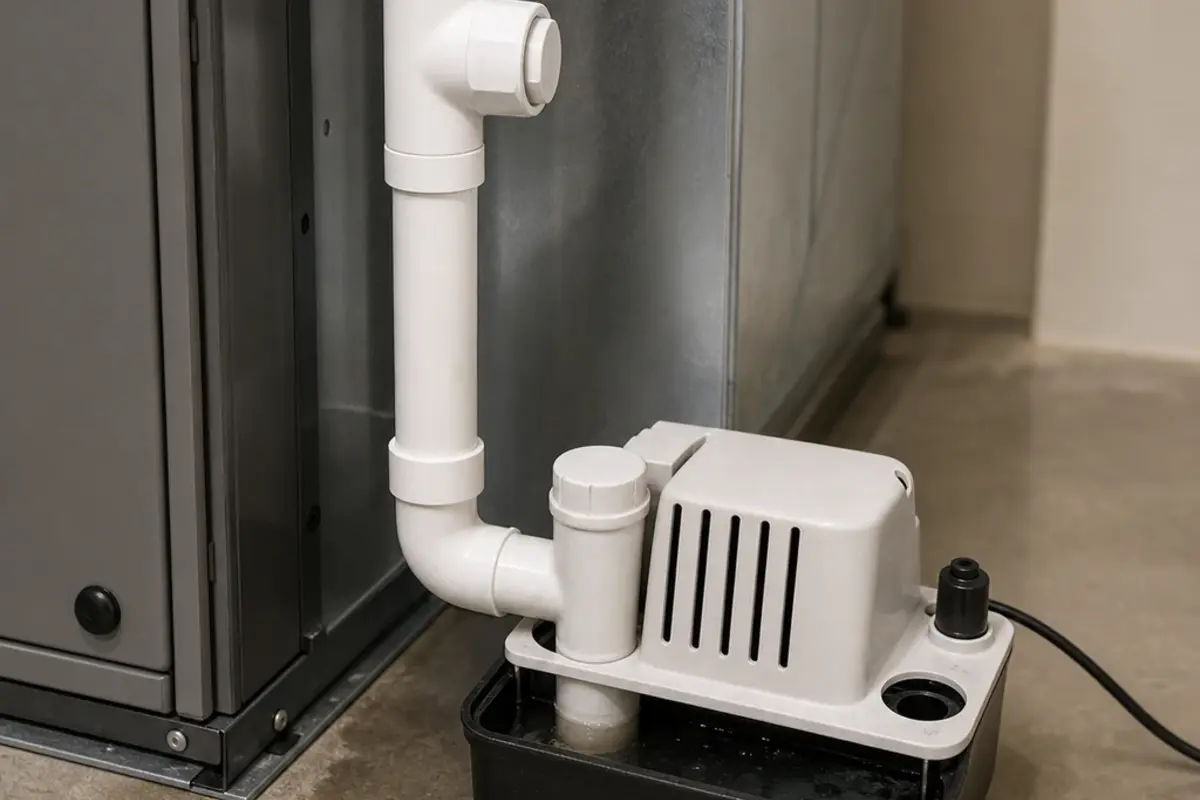
Do not buy a float switch, pump, trap, or tubing because the AC stopped. First confirm the water starts at the pan or drain, whether the outlet flows, and whether the existing part is cracked, stuck, disconnected, or the exact replacement match.
A clogged condensate drain is usually a water-path problem, not an air-conditioner parts problem.
The expensive wrong move is treating every wet air handler as a failed switch, control board, or pump.
Use this map after cooling is off and the wet area is protected. The goal is to identify the safest next check.
| What you see | Likely meaning | Next move |
|---|---|---|
| Full pan or raised float switch | Drain path is backed up or pump reservoir is not emptying | Clear only the accessible cleanout, outlet, trap, or pump reservoir area. |
| Outlet is dry but pan is wet | Water is not reaching the normal discharge point | Check for slime at the cleanout or outlet, then stop if water backs up immediately. |
| Outlet is dry and pan is dry | The system may not be making much condensate right now | Look for ice history, intermittent overflow, or a different leak source before assuming a clog. |
| Water appears above or away from the drain | Frozen-coil thaw, roof leak, plumbing leak, or cabinet leak is possible | Stop the drain cleaning path and trace the actual source. |
| Pan refills after a short restart | The blockage remains, the line is damaged, or the pump/switch needs service diagnosis | Leave cooling off and call service with pan, outlet, and restart notes. |
A condensate clog should trace back to the indoor coil pan, drain fitting, cleanout, outlet, or pump reservoir.
Most homeowner-level clearing happens at the cleanout, outlet, trap, or pump reservoir. Keep the work outside sealed HVAC compartments.
A short restart proves whether the drain is carrying water again or only looked clear while the system was off.
Buy a replacement only when the part itself is cracked, missing, stuck, or confirmed to match the exact drain layout. Most clogged drains need cleaning first.
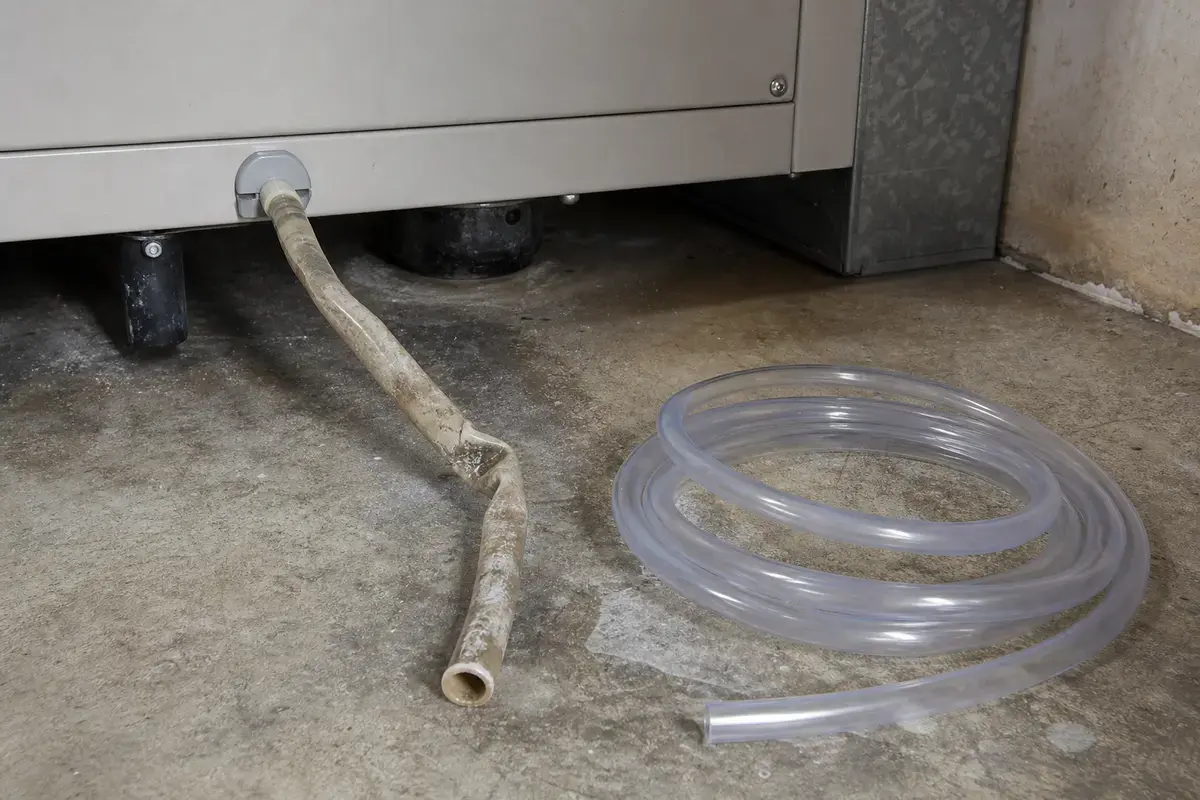
Helps when: The visible tubing is split, hardened, kinked, disconnected, or cannot be reattached without leaking.
Skip it when: The existing line is intact and water flows after clearing the clog.
Compare condensate drain tubing on Amazon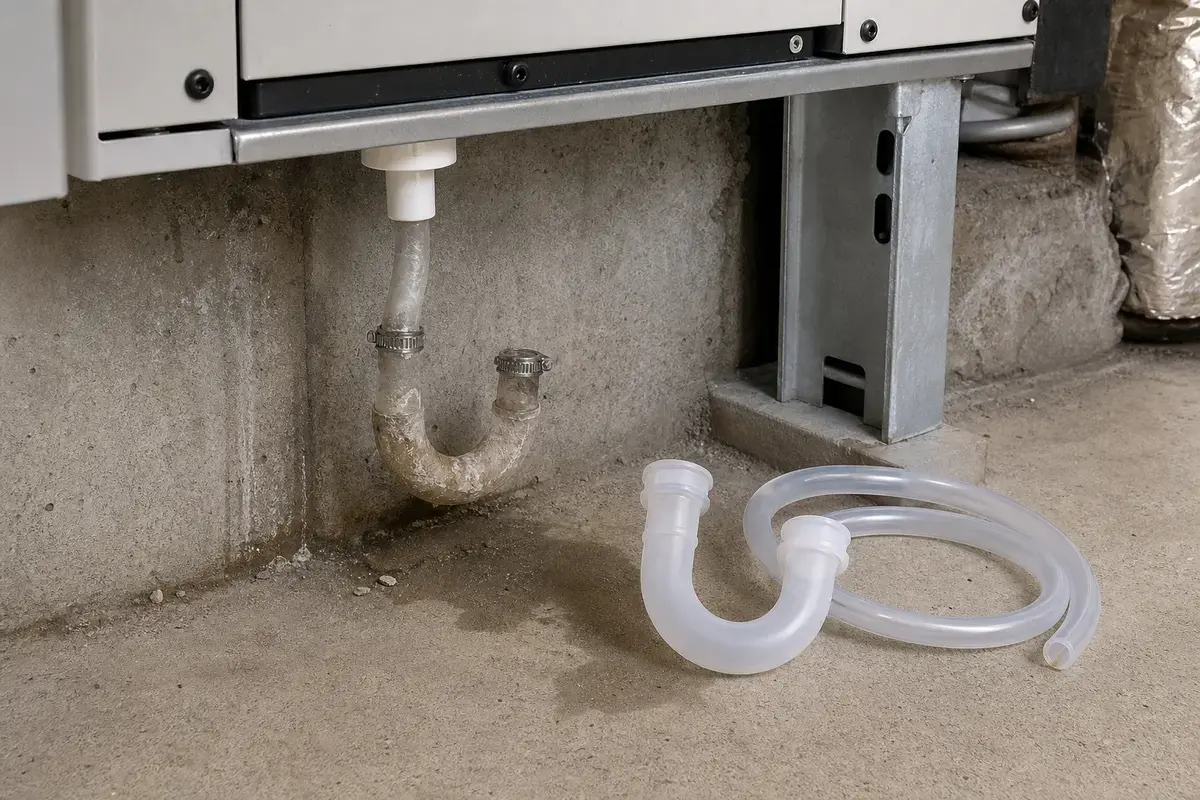
Helps when: Your setup uses a removable trap and the old trap is cracked, deformed, missing, or still plugged after cleaning.
Skip it when: Your drain has no trap, the trap is glued into hidden piping, or the only evidence is a normal clog.
Compare condensate trap kits on AmazonAs an Amazon Associate I earn from qualifying purchases. Repair Riot may earn a commission at no extra cost to you.
These tools support the safe outside checks on this page. Skip tool work if water is near wiring, the line is hidden, or access is unsafe.
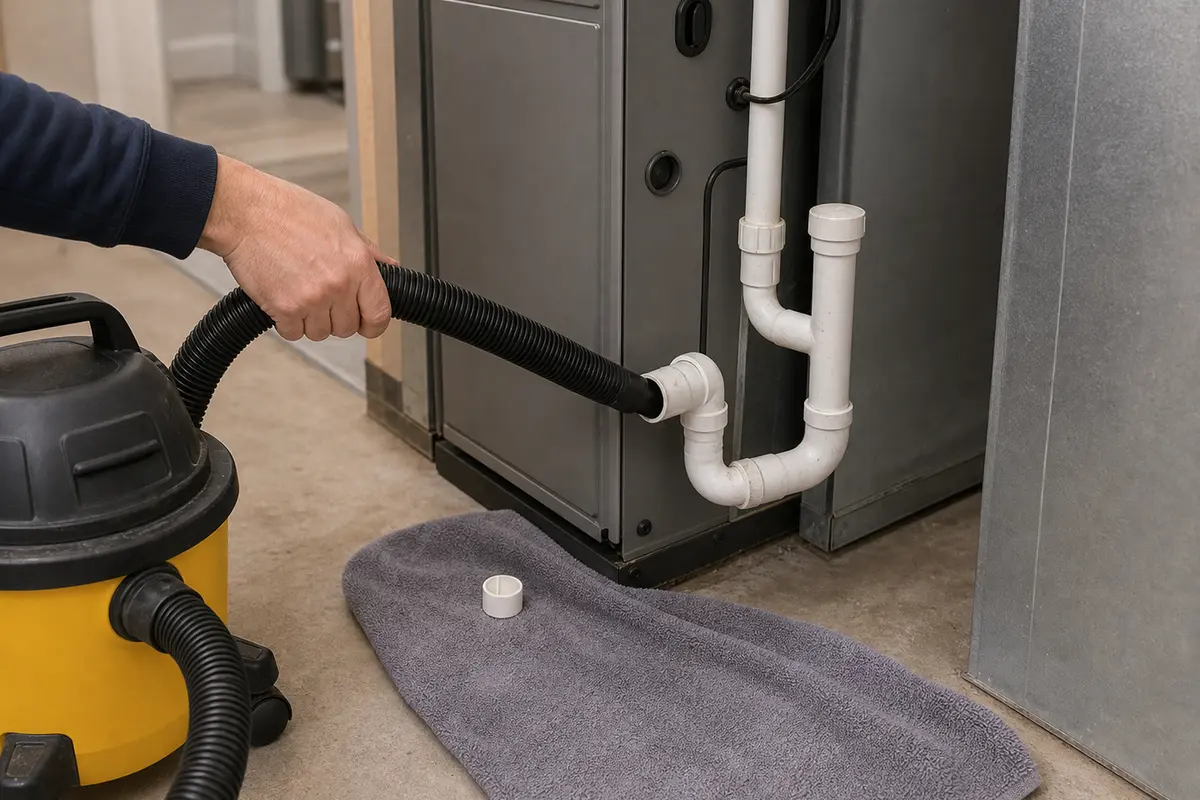
Helps when: Pulling slime from an accessible drain outlet after cooling is off and the area is protected.
Skip it when: The outlet is hidden, the line is routed through finished areas, or suction causes water to spill into the cabinet.
Compare wet/dry vacuums on Amazon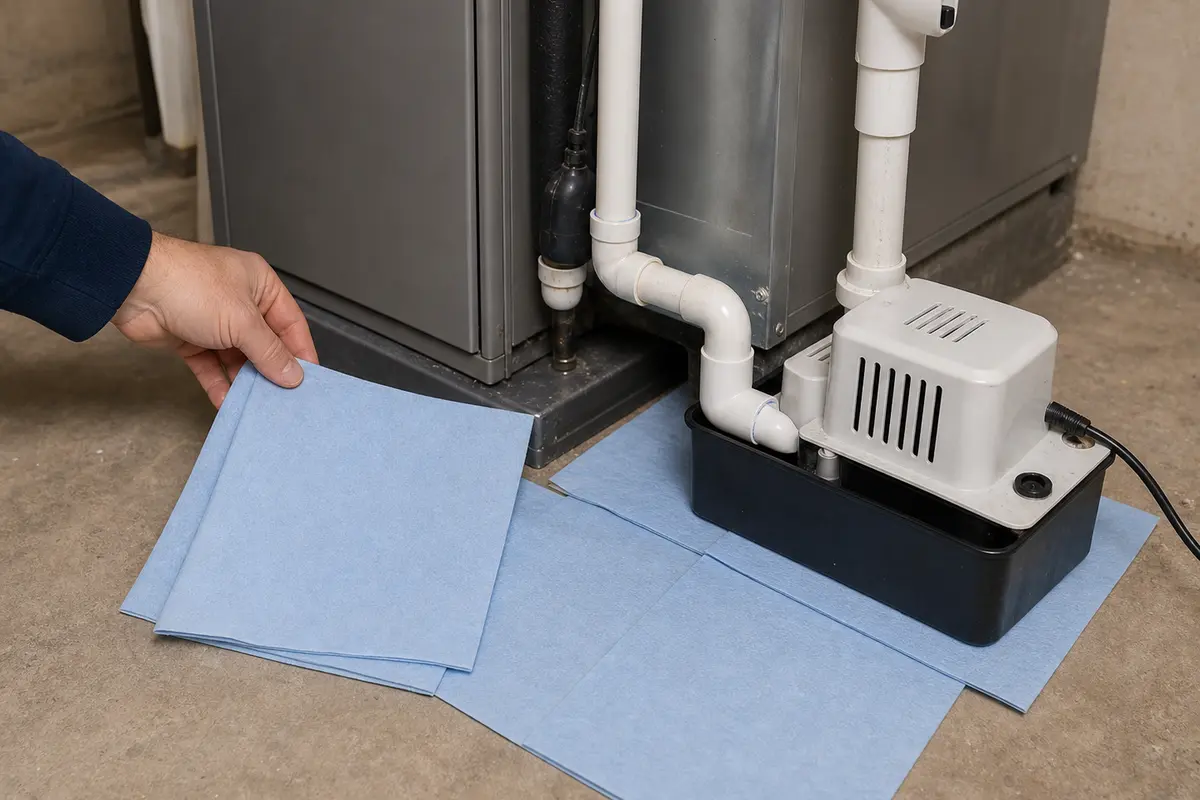
Helps when: Protecting flooring and catching small spills while you inspect the pan, outlet, or pump reservoir.
Skip it when: Water is actively entering a ceiling, insulation, or electrical area where towels are not enough.
Compare shop towels on AmazonAs an Amazon Associate I earn from qualifying purchases. Repair Riot may earn a commission at no extra cost to you.
Yes. Many systems use a condensate float switch that stops cooling when water rises in the pan or pump reservoir. If the pan is wet and cooling stopped, treat the drain path as the first clue.
No. On mild or dry days the system may make little condensate. A dry outlet matters more when the air conditioner has been running in humid weather and the pan is wet or the float switch has opened.
Avoid bleach and mixed cleaners. Use a small amount of warm water only at an accessible cleanout, and stop if it backs up. Outlet suction with a wet/dry vacuum is often safer than pushing chemicals deeper.
A raised float switch is usually a result of water backup. Clear the drain path first. Suspect the switch only when the pan is dry, the drain flows, and the system still will not reset normally.
Call if water is near wiring or the source is unclear. Also stop when the line is hidden or damaged, the pan refills after cleaning, or freeze and airflow clues appear. Save photos of the pan and outlet.
Leave cooling off and note how fast the pan rises. A quick refill means the blockage remains, the line is damaged, the pump is not emptying, or the water source is not the drain you cleared.
Yes. Ice on the coil or refrigerant lines can thaw into the pan and create a sudden water event. If you saw ice, weak airflow, or a very dirty filter, stop the drain-only path and address the freeze clue.
Avoid forcing pressure into hidden or glued drain lines. It can split joints or push water into finished areas. Use outlet suction or an accessible cleanout, then stop if water backs up.
Only when the reservoir has water, the outlet tubing is clear, power is present, and the float still fails to empty the reservoir. A one-time full pan points first to the drain path.
Repair Riot built this page around homeowner-visible drain clues: pan level, outlet flow, cleanout behavior, float-switch shutdown, pump reservoir water, and lookalike leaks from frozen coils or building sources. The source links support air-conditioner maintenance context; the repair sequence is original guidance.