What the musty smell is telling you
Musty smell only when cooling starts
The first few minutes of a cooling cycle smell damp or earthy, then it fades some as the system keeps running.
Start here: Start at the indoor coil and condensate drain area. That pattern usually points to moisture and film on or around the evaporator section.
Musty smell whenever the blower runs
You smell it in cooling mode and also in fan-only mode, sometimes strongest at the return grille.
Start here: Check the air filter, return duct path, and the space around the indoor unit for stale or damp air being pulled in.
One room or one vent smells worse
The odor is much stronger at one supply register or in one part of the house.
Start here: Look for a nearby damp room, wet insulation, disconnected duct, or a supply run passing through a musty attic, crawlspace, or wall cavity.
Smell is strongest near the indoor unit
The closet, basement corner, attic platform, or utility room where the air handler sits smells musty even before air comes from the vents.
Start here: Inspect the drain pan, drain line outlet, surrounding insulation, and any signs of standing water or past overflow around the air handler.
Most likely causes
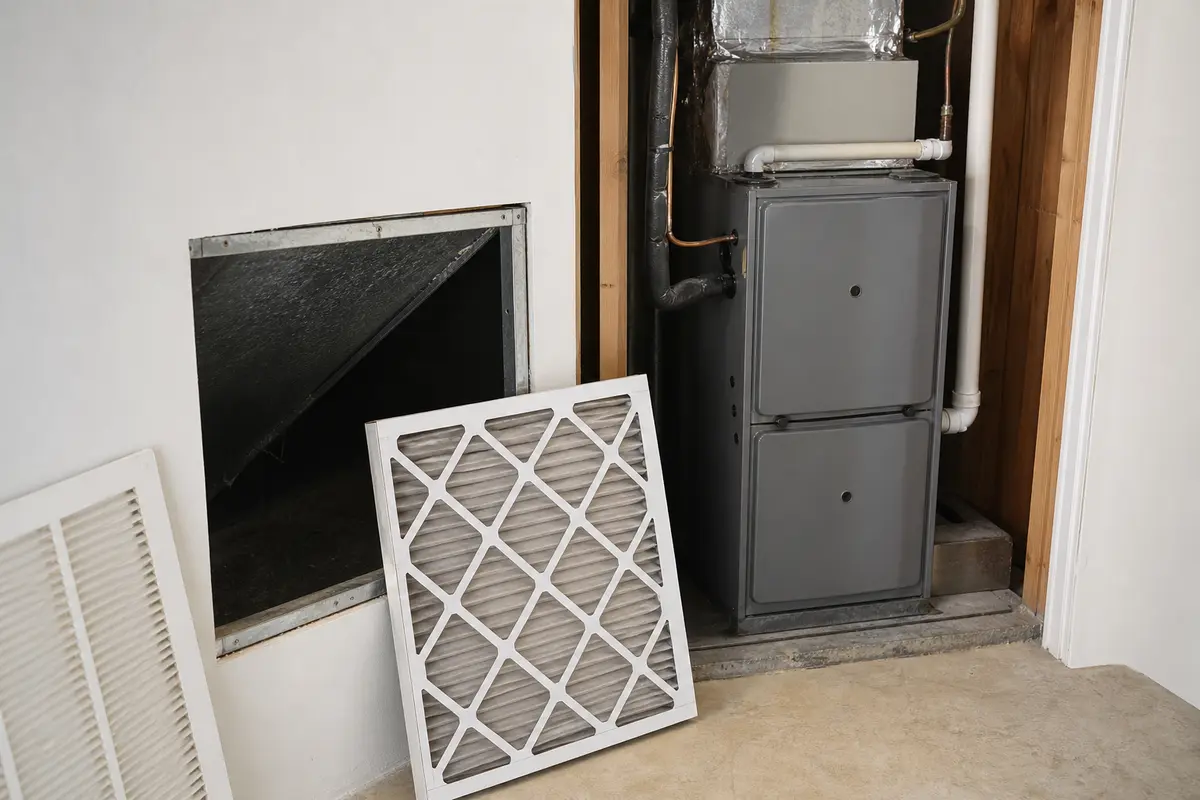
1. Wet or dirty AC air filter
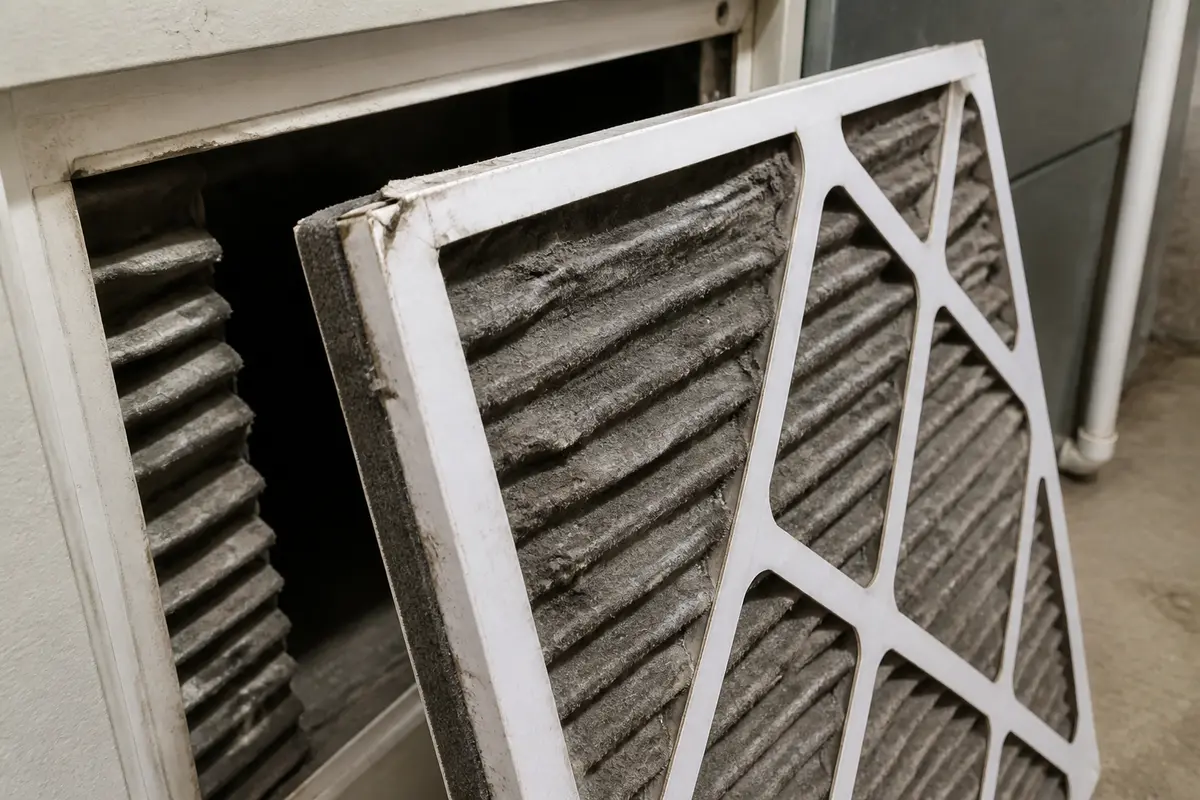
A loaded filter can hold moisture and dust together, especially if airflow is weak or the system has been running hard in humid weather. That gives you a stale, damp smell right at startup.
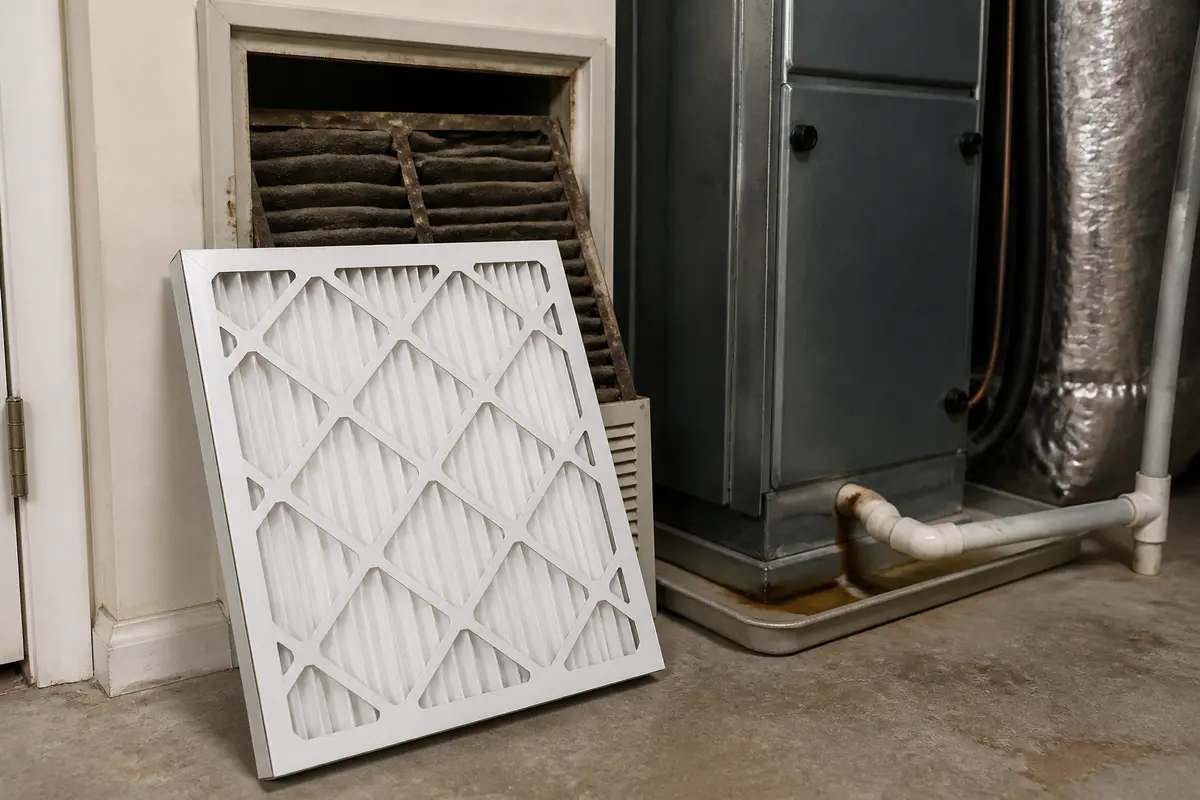
Quick check: Pull the filter and look for gray matting, damp spots, sagging media, or a sour smell on the filter itself.
2. Slime or blockage in the AC condensate drain
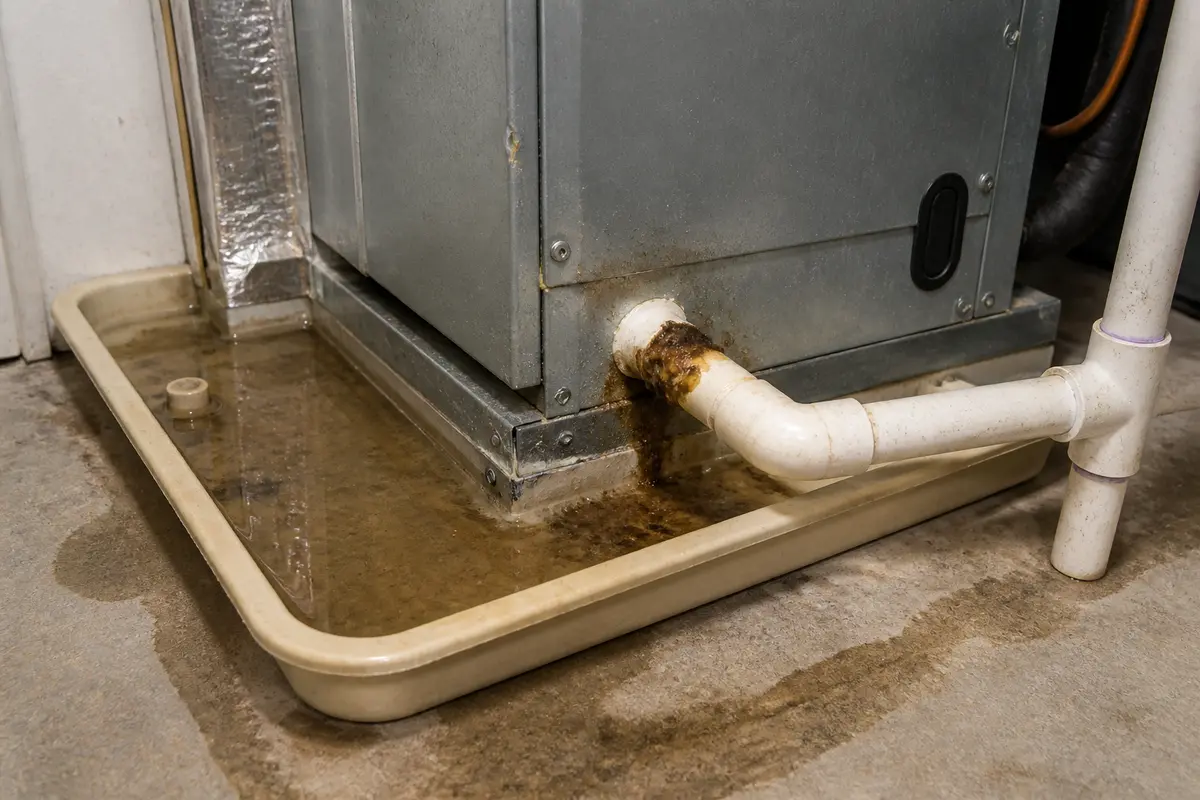
When the drain line or pan stays slimy, condensate sits too long and the blower keeps passing air over that damp area. This is one of the most common real-world causes.
Quick check: Look for water in the pan, a slow-dripping drain outlet, algae-like slime, or staining around the air handler base.
3. Damp buildup on the indoor evaporator coil area
Dust and biofilm on the coil or nearby insulation can smell musty every time the coil gets wet. The smell often hits hardest when cooling first starts.
Quick check: With power off and only if access is simple, inspect the visible coil compartment for matted dust, wet insulation, or dark film near the coil face and pan.
4. Return air pulling from a musty space
If the return side leaks or the unit sits in a damp closet, basement, crawlspace, or attic, the system can spread that stale smell through the whole house even when the equipment itself is mostly clean.
Quick check: Smell around the return grille, duct joints, and the room around the air handler. If the same odor is stronger there than at the vents, the source may be the space, not the coil.
Step-by-step fix
Step 1: Pin down when and where the smell shows up
You want to separate a wet cooling-side problem from a house-air or duct problem before you open anything up.
- Set the thermostat to Off for a minute, then run Fan Only if your thermostat allows it.
- Walk to the main return grille, a few supply vents, and the indoor unit location if accessible.
- Notice whether the smell is strongest at startup, only during cooling, or even with fan only.
- Check whether one room, one vent, or the air handler closet smells worse than the rest of the house.
Next move: You have a clear pattern to follow. Cooling-only odors usually point to the coil or drain area. Fan-only odors push you toward the filter, return side, or a damp surrounding space. If the smell is hard to pin down, continue with the basic moisture checks anyway. The filter and drain area still deserve first look.
What to conclude: Timing matters here. A musty smell that appears with cooling is usually tied to wet components. A smell that stays with fan-only operation often means stale return air, a wet filter, or damp material around the air handler.
Stop if:- You smell burning, electrical, or rotten-egg odor instead of musty air.
- You see heavy water leakage around the air handler or ceiling damage below it.
- Access to the indoor unit requires removing sealed panels or reaching near live wiring.
Step 2: Check the AC air filter and basic airflow first
A wet or overloaded filter is common, safe to inspect, and easy to correct without guessing at parts.
- Turn the system off at the thermostat before removing the filter.
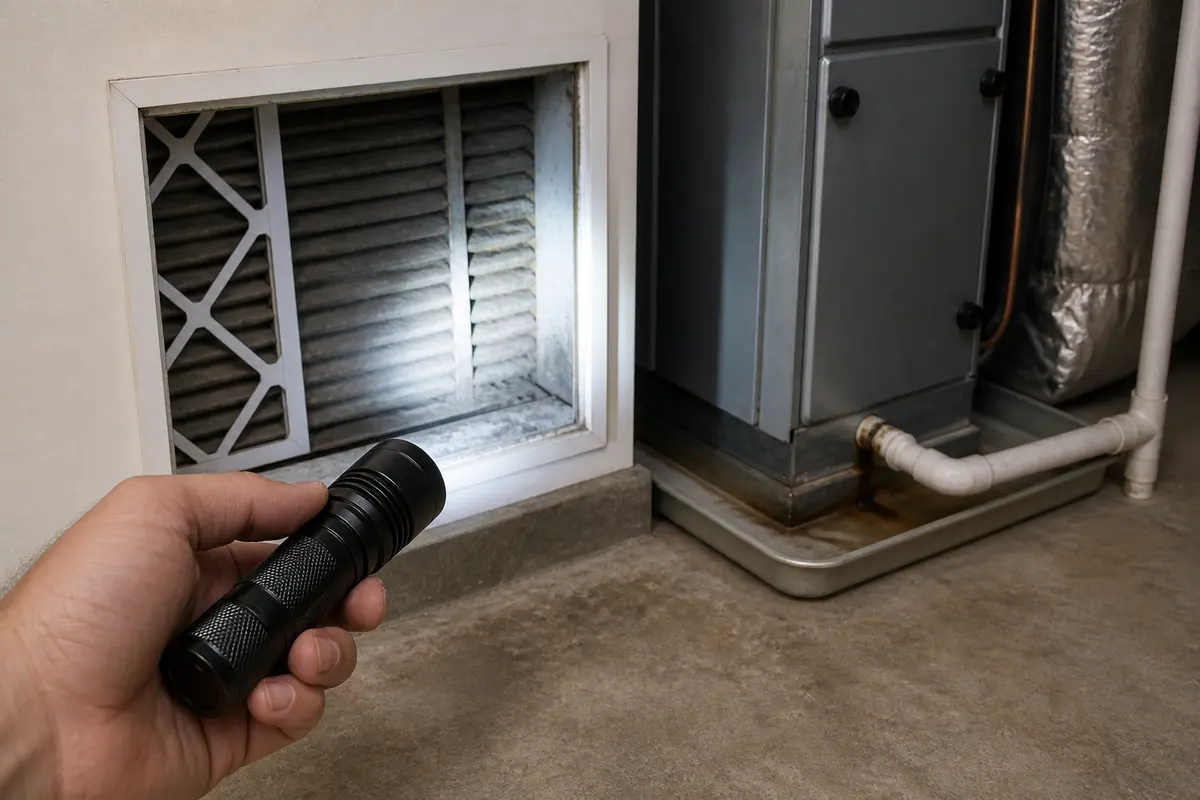
- Slide out the AC air filter and inspect both sides in good light.
- Replace it if it is dirty, damp, sagging, or smells musty on its own.
- Make sure furniture, rugs, or closed registers are not choking airflow in the house.
- If the filter slot is loose or unsealed, note that unfiltered air may be bypassing the filter and dirtying the coil faster.
Next move: If the smell drops noticeably after a fresh dry filter and better airflow, keep running the system and monitor it over the next day. You likely removed one of the main odor sources. If a new filter helps little or not at all, move straight to the drain and pan check. That is the next most common source.
What to conclude: A dirty dry filter can smell stale. A dirty wet filter tells you moisture is hanging around too long, which usually means airflow is low, humidity is high, or the drain and coil area need attention too.
Stop if:- The filter is soaked, not just dirty.
- You find ice on refrigerant lines or the indoor coil area.
- The blower compartment is wet or there is visible mold growth beyond the filter slot.
Step 3: Inspect the condensate drain and drain pan area
Slimy drain lines and standing water in the pan are classic musty-smell causes on air conditioning systems.
- Shut power off to the indoor unit if there is a nearby service switch or breaker you can safely use.
- Look at the drain pan and the area under the evaporator section for standing water, slime, rust marks, or overflow staining.
- Find the condensate drain outlet if accessible and check whether it is dripping normally during cooling or appears slow and backed up.
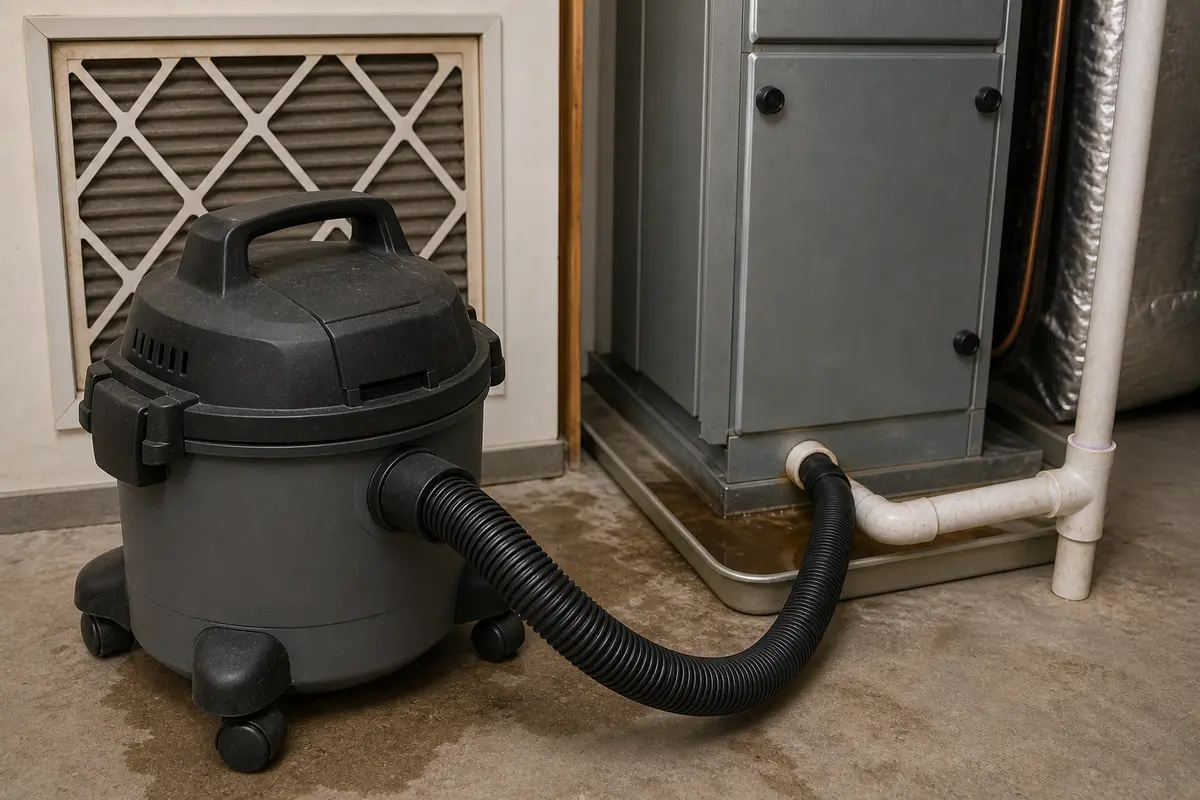
- If the drain line has an accessible cleanout, clear it using a wet/dry vacuum at the outside drain end or flush gently with warm water at the cleanout if the setup is simple and safe.
- Wipe reachable pan edges and nearby non-electrical surfaces with warm water and mild soap, then dry what you can reach.
Next move: If water starts moving freely and the smell improves over the next few cooling cycles, the drain was likely the main source. If the pan keeps refilling, the line will not clear, or the smell stays strong, the coil area or surrounding insulation may still be contaminated and needs deeper service.
Stop if:- The drain pan is cracked, badly rusted through, or overflowing into the house.
- You cannot access the drain without opening electrical compartments.
- Water has reached insulation, drywall, or flooring around the unit.
Step 4: Look for damp buildup at the indoor coil area and nearby insulation
If the filter and drain are not the whole story, the smell is often coming off the wet coil face, the pan below it, or insulation inside the cabinet or plenum.
- With power still off, open only the simple access panel you can remove without disturbing sealed refrigerant lines or wiring covers.
- Use a flashlight to inspect the visible coil face, pan area, and nearby insulation for matted dust, dark film, wet insulation, or signs of past overflow.
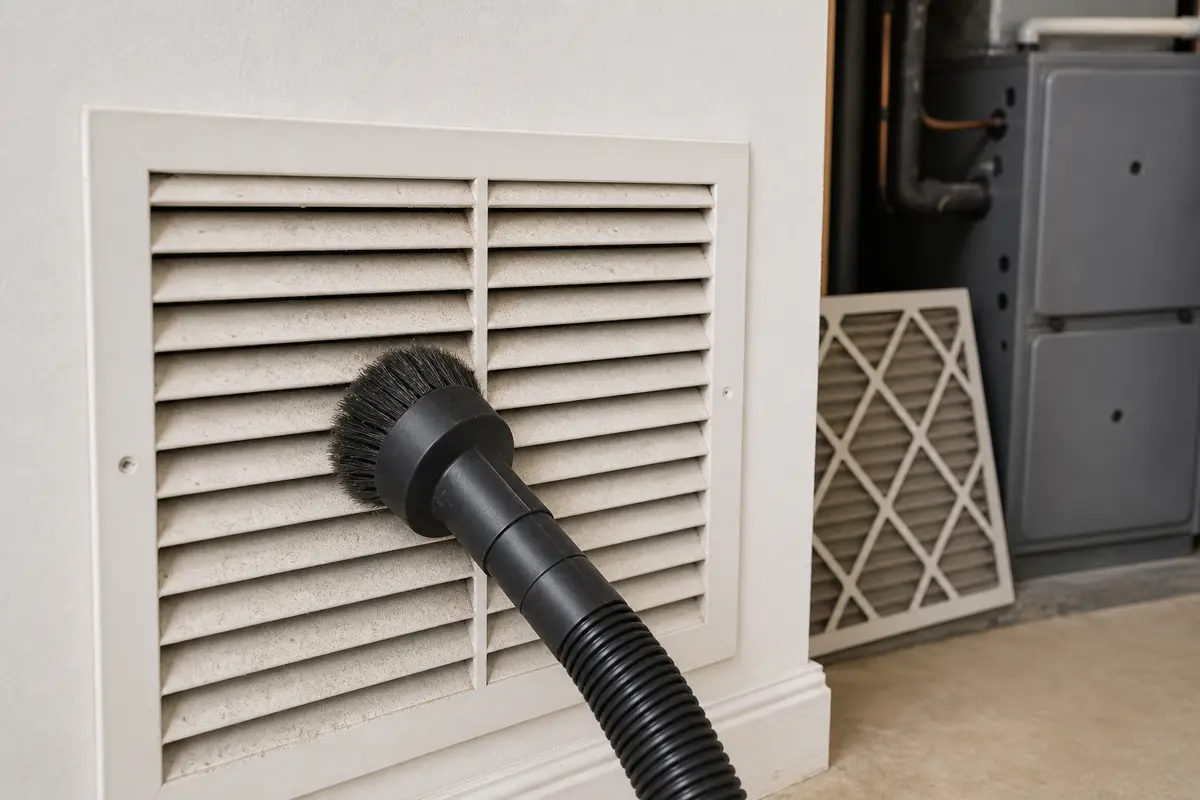
- If the coil face is lightly dusty and easy to reach, clean only the accessible surface gently with a soft brush or vacuum brush attachment without bending fins.
- Do not soak the coil with random cleaners and do not spray anything into the duct system.
- If insulation inside the compartment is wet, falling apart, or smells strongly musty, stop and schedule HVAC service.
Next move: If you found light surface buildup and cleaned only the accessible dust, the smell may improve after a few cycles once the area dries out. If the smell remains strong or the coil area is visibly fouled, this is the point for a proper coil and cabinet cleaning by an HVAC tech.
Stop if:- The coil is iced over.
- You see heavy biological growth, damaged insulation, or corrosion inside the cabinet.
- Cleaning would require reaching deep into the air handler or working near wiring or refrigerant tubing.
Step 5: Rule out return-air and house-side odor sources, then decide on service
When the equipment checks are only partly convincing, the smell may be getting pulled in from the space around the system or from leaky return ducting.
- Run the blower and smell near the return grille, return duct joints, and the room where the air handler sits.
- Check for damp carpet, wet framing, crawlspace odor, basement moisture, attic condensation, or a musty closet feeding the return side.
- If one room or one vent is much worse, inspect that area for a disconnected duct, wet insulation, or a nearby moisture problem.
- If the smell started after poor cooling, icing, or long run times, use the related cooling problem as your next troubleshooting target.
- If the source still is not obvious, book HVAC service for coil cleaning, drain service, and return-side leak inspection rather than guessing.
A good result: If you find a damp surrounding space or return leak source, fixing that moisture problem usually does more than anything you can spray into the system.
If not: If you still cannot isolate it, stop at diagnosis and get a pro to inspect the evaporator section, blower housing, drain setup, and return duct leakage.
What to conclude: At this point the smell is either coming from hidden wet material, a return-side air pickup problem, or a coil/cabinet cleaning issue that needs deeper access than a safe DIY check.
Stop if:- You find widespread mold, soaked insulation, or structural moisture damage.
- The system is also not cooling properly or is freezing up.
- Any next step would require opening sealed HVAC sections or doing live electrical work.
FAQ
Why does my AC smell musty when it first turns on?
That startup smell usually means the indoor coil or drain area stayed damp between cycles. Dust and moisture together make the odor strongest right when air first moves across the wet area.
Can a dirty filter really make the AC smell musty?
Yes. A loaded filter can hold dust and moisture, especially in humid weather or when airflow is weak. If the filter smells bad by itself or feels damp, replace it first and keep checking for the moisture source.
Is it safe to pour vinegar into the AC drain line?
Sometimes, but only if the drain has an easy cleanout and you know where the liquid is going. Warm water is the safer first try for a simple homeowner flush. Do not pour anything into the system if the setup is unclear or if water is already backing up.
Should I spray disinfectant or fragrance into the vents?
No. That usually masks the smell without fixing the wet source, and some products can damage HVAC materials or leave residue. Find the damp filter, drain, coil area, or return-air source instead.
When should I call an HVAC pro for a musty smell?
Call when the drain will not clear, the pan keeps filling, the coil is iced, the system is not cooling right, internal insulation is wet, or the smell stays strong after you replace the filter and check the drain area.
Can the smell come from the house and not the AC itself?
Absolutely. A leaky return duct or an air handler sitting in a damp basement, crawlspace, attic, or closet can pull musty air into the system and spread it through the vents.