Thermostat not clearly calling for cooling?
Set COOL, fan AUTO, and a set point a few degrees below room temperature. Wait several minutes before judging the equipment.
If your air conditioner is not cooling, start with thermostat mode, a clean exact-size filter, open airflow, visible ice, and whether the outdoor unit runs.
Good clue: weak airflow. A loaded filter or blocked return can make the system run hard, cool poorly, and freeze the indoor coil.
Sort the symptom in this order: controls, airflow, ice, outdoor unit, then service-level electrical or refrigerant clues.
Don’t start with: Do not start by opening electrical covers, replacing capacitors or contactors, adding refrigerant, or taking apart sealed cooling components.
Set COOL, fan AUTO, and a set point a few degrees below room temperature. Wait several minutes before judging the equipment.
Switch the system off, inspect the filter, open main supply registers, and clear blocked returns before running it again.
Switch cooling off and use fan-only if available. Let the ice thaw fully, then look for a dirty filter or blocked return.
Reset a clearly tripped AC breaker once if you can do that safely. Stop if it trips again or the disconnect looks damaged.
After filter, airflow, ice, and condenser-airflow checks, stop before refrigerant or electrical parts and schedule HVAC service.
Use one normal cooling call to sort controls, airflow, ice, condenser airflow, and stop points before touching sealed or energized parts.
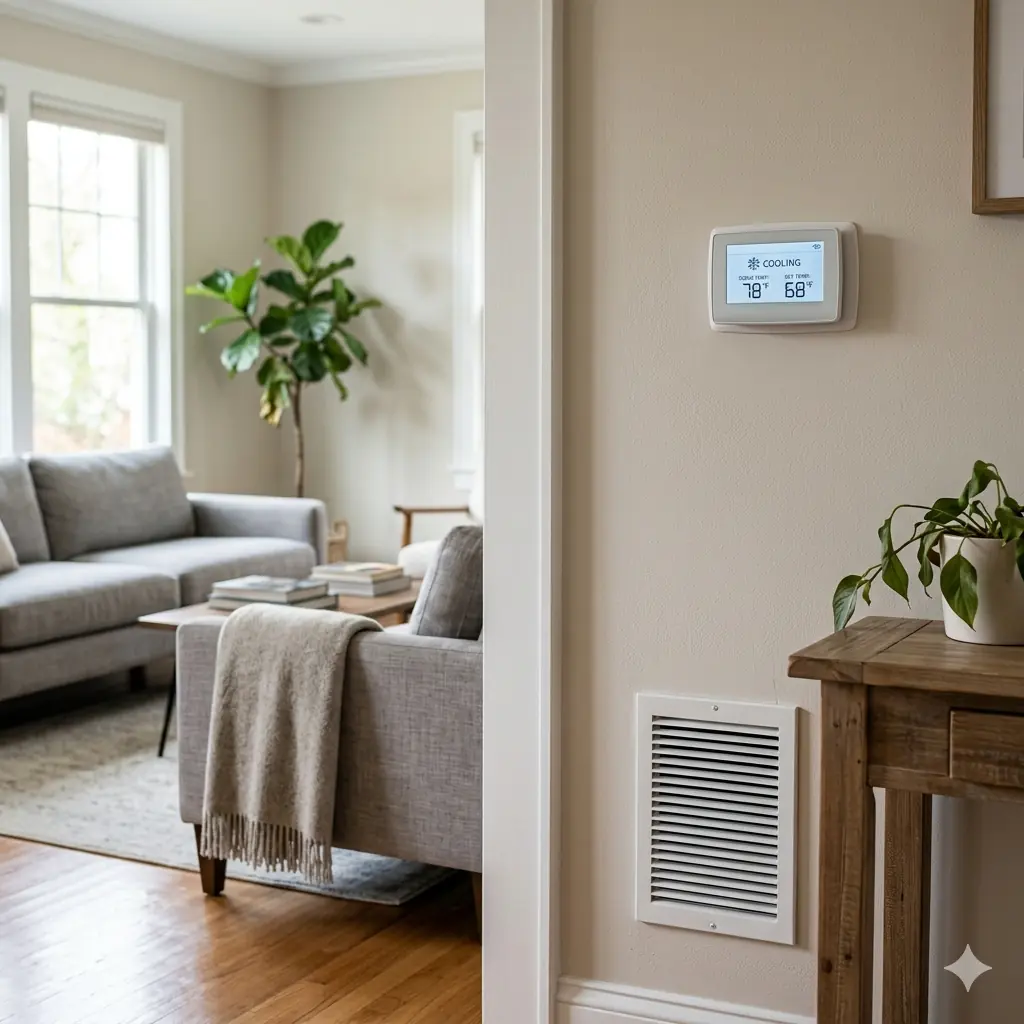
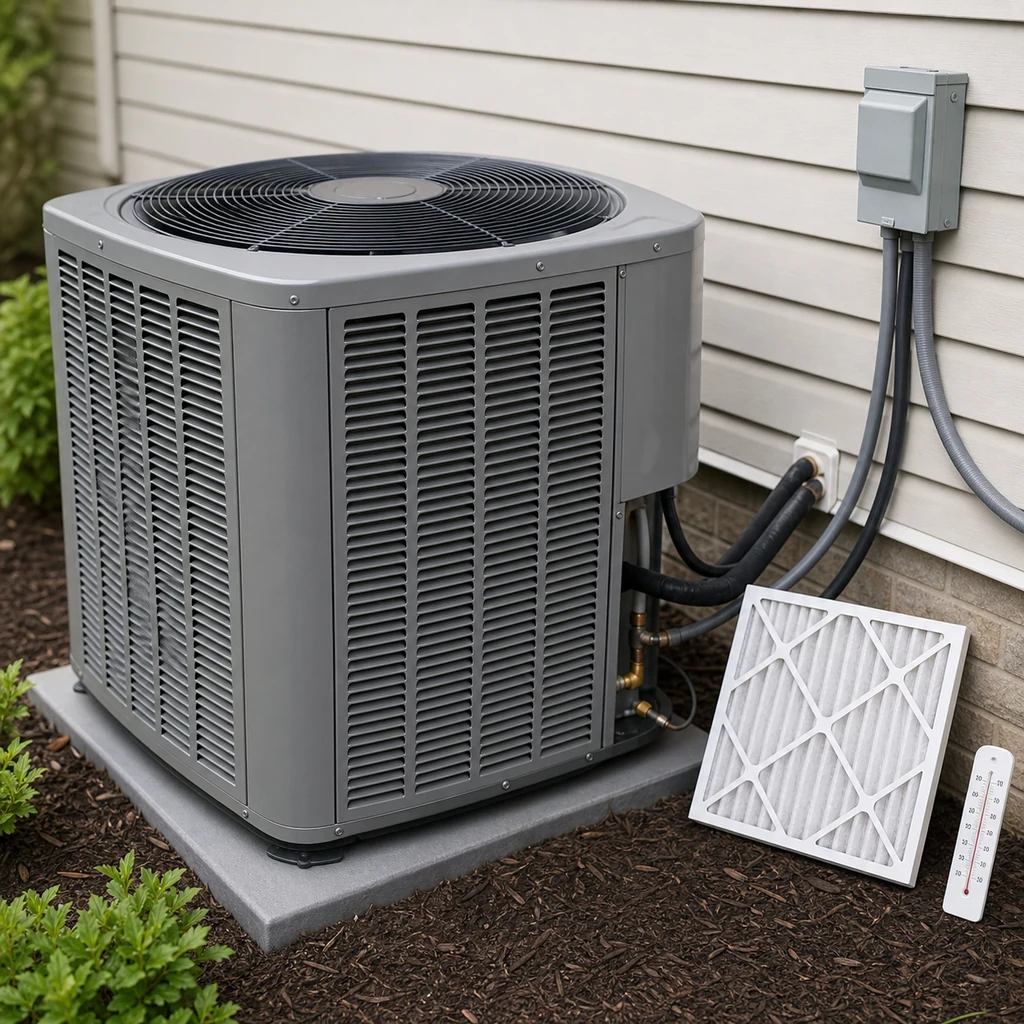
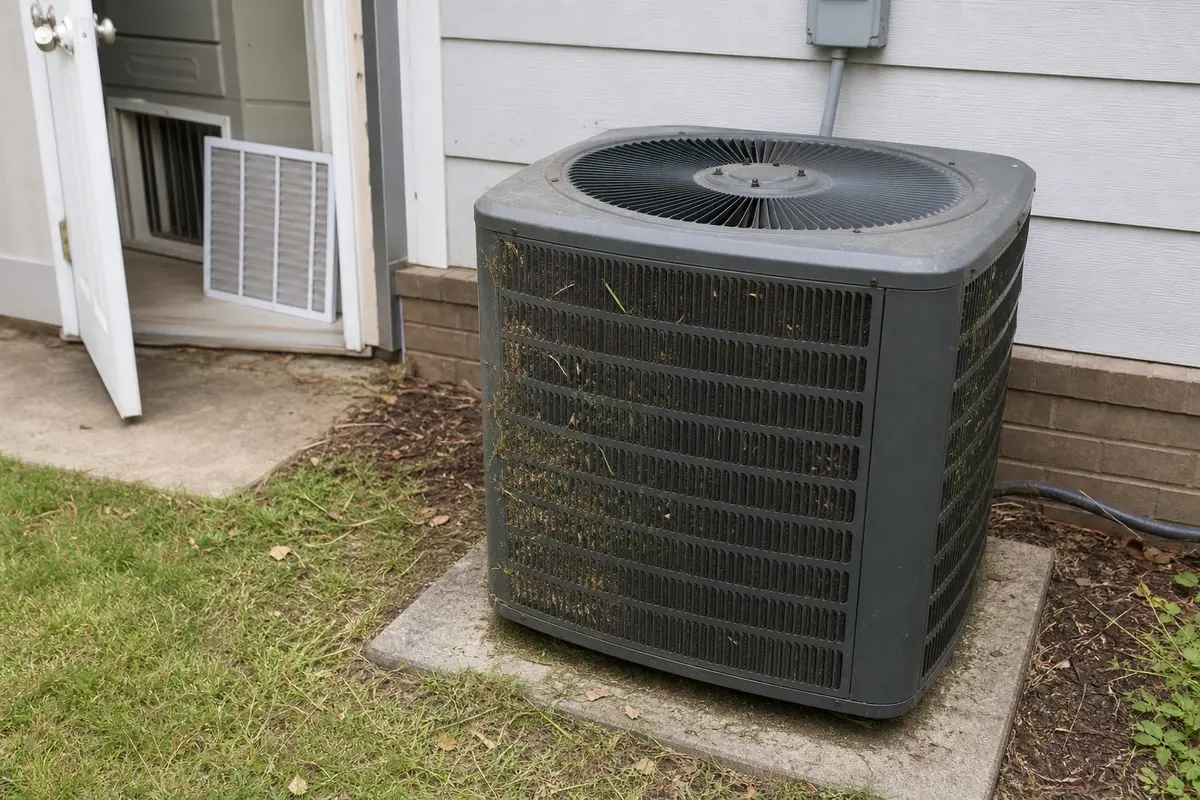
A warm vent is only the starting clue. First confirm COOL mode, fan AUTO, a clean exact-size filter, open returns, no visible ice, outdoor fan operation, breaker behavior, and drain status before matching any part to the diagnosis.
Usually the clue sits in one of five places: thermostat call, airflow, ice, outdoor operation, or the sealed refrigerant side. Check the thermostat, filter, vents, and outdoor unit before anything sealed.
Warm air does not prove one bad part. Keep covers on and let the visible clues narrow the path.
Use one normal cooling call to decide whether the safe checks are enough. You are not proving the exact failed part; you are deciding which clue deserves another homeowner check or a service call.
| What you find | What it usually means | Next move |
|---|---|---|
| Thermostat is on COOL, fan AUTO, and set below room temperature | The system should call for cooling after a short delay. | Wait several minutes, then listen for the indoor blower and outdoor condenser. |
| Airflow is weak at several vents | The indoor side may be starved for air. | Shut cooling down, replace the filter only if it is visibly dirty, then open returns and main supplies. |
| The larger insulated line has frost or ice | The coil may be frozen and blocking heat transfer. | Set cooling to OFF, run fan-only if available, thaw fully, then inspect the filter and returns. |
| Indoor blower runs but the outdoor unit stays silent | The system is moving air without the condenser. | Reset a clearly tripped AC breaker once; call service if it trips again or the unit stays off. |
| Outdoor unit runs and supply air is barely cooler | Airflow is not the whole story. | Stop before refrigerant or electrical parts; schedule service with the clues you found. |
| Breaker trip, burning odor, harsh buzz, or stalled outdoor fan | This is a stop point. | Leave the unit off and call an HVAC tech or licensed electrician as appropriate. |
A packed filter or blocked return can make a good air conditioner look broken. This is the first hands-on work because it is safe, common, and easy to prove.
Ice means the system is no longer moving heat normally. Thaw it before you judge parts or cooling output.
The outdoor condenser has useful clues you can gather without opening the service compartment.
These tools support safe observation, filter work, supply-air comparison, and exterior condenser cleanup. Skip tool work if the unit buzzes, trips power, has ice, or needs a cover removed.
Paid links. As an Amazon Associate I earn from qualifying purchases. Repair Riot may earn a commission at no extra cost to you.
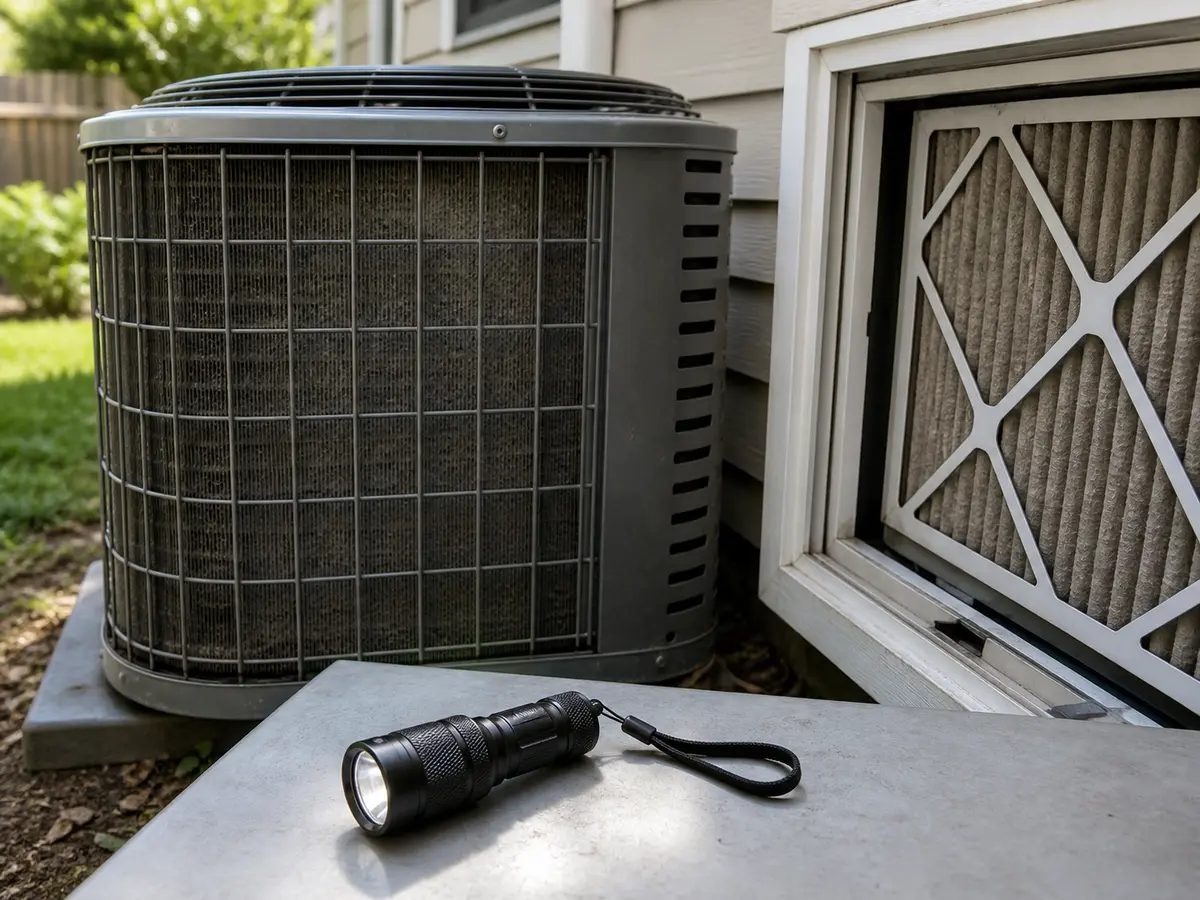
Helps when: Use it to inspect the filter slot, return grille, ice clues, condensate area, and outdoor cabinet exterior without opening electrical covers.
Skip it when: The check would require reaching through the fan guard, removing equipment covers, or touching wiring; leave covers closed and call for service.
Compare inspection flashlights on Amazon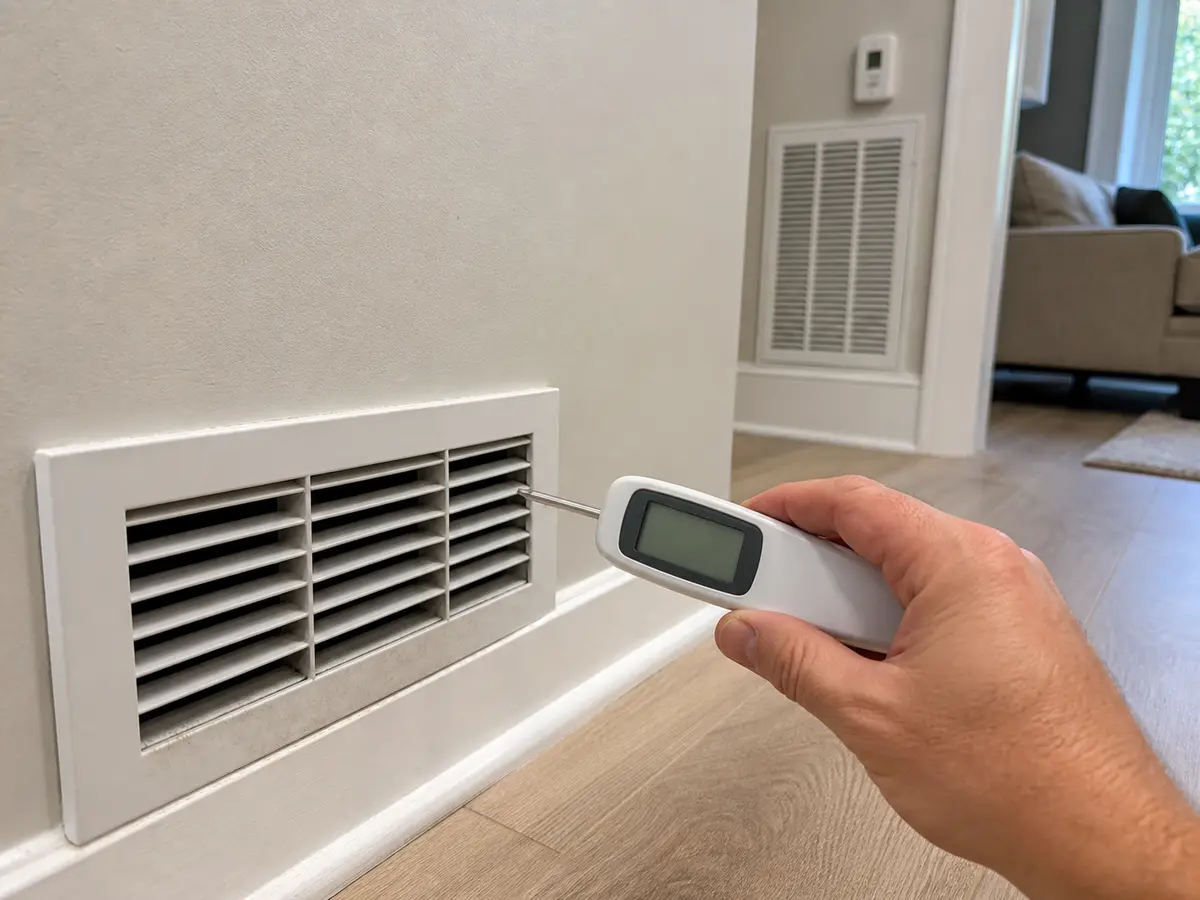
Helps when: Use it to compare room temperature with supply-air change after the system has run normally for 10 to 15 minutes.
Skip it when: Skip temperature testing when ice, breaker trips, hot odor, or a stalled outdoor fan is present.
Compare digital room thermometers on Amazon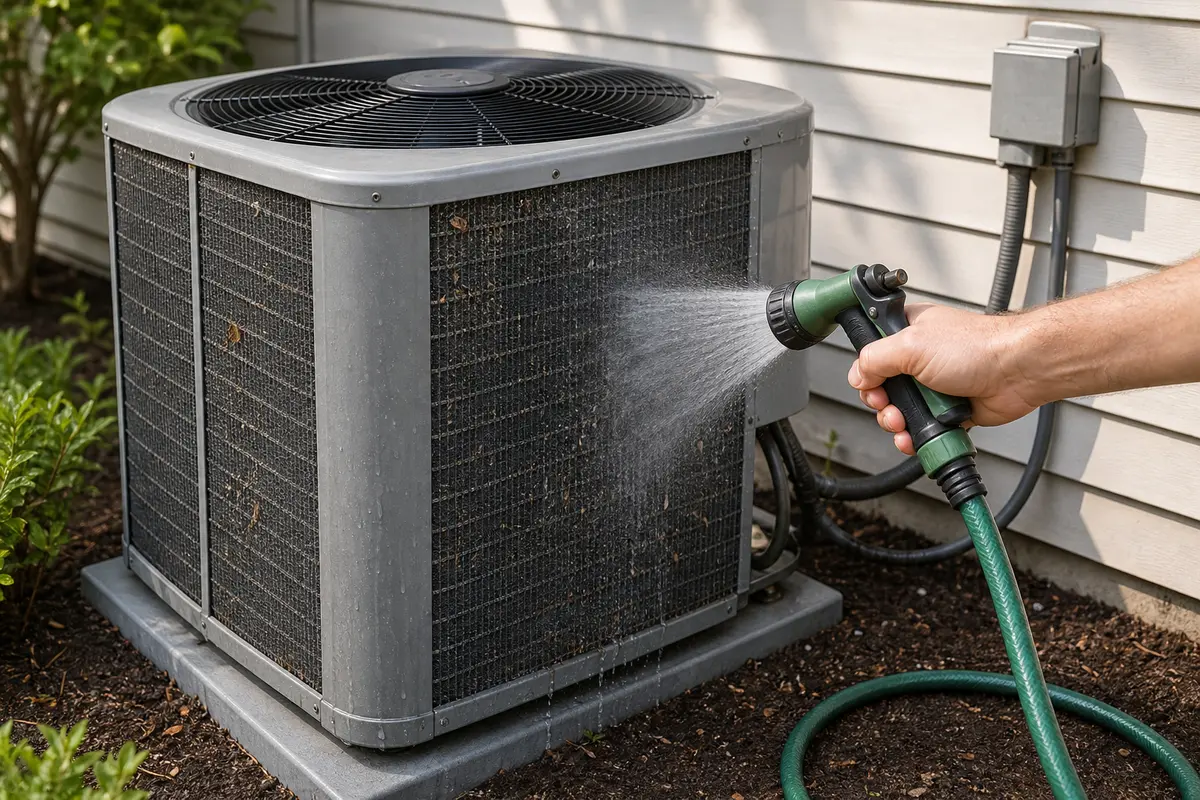
Helps when: Use it when loose cottonwood, dust, or grass is blocking the condenser coil and power can be shut off safely first.
Skip it when: Skip high pressure, electrical areas, and any condenser cleaning that requires opening a cabinet.
Compare gentle hose nozzles on AmazonThe filter is the only reasonable buy-first part for this symptom. Everything inside electrical covers or refrigerant tubing needs diagnosis before it belongs in a cart.
Paid links. As an Amazon Associate I earn from qualifying purchases. Repair Riot may earn a commission at no extra cost to you.
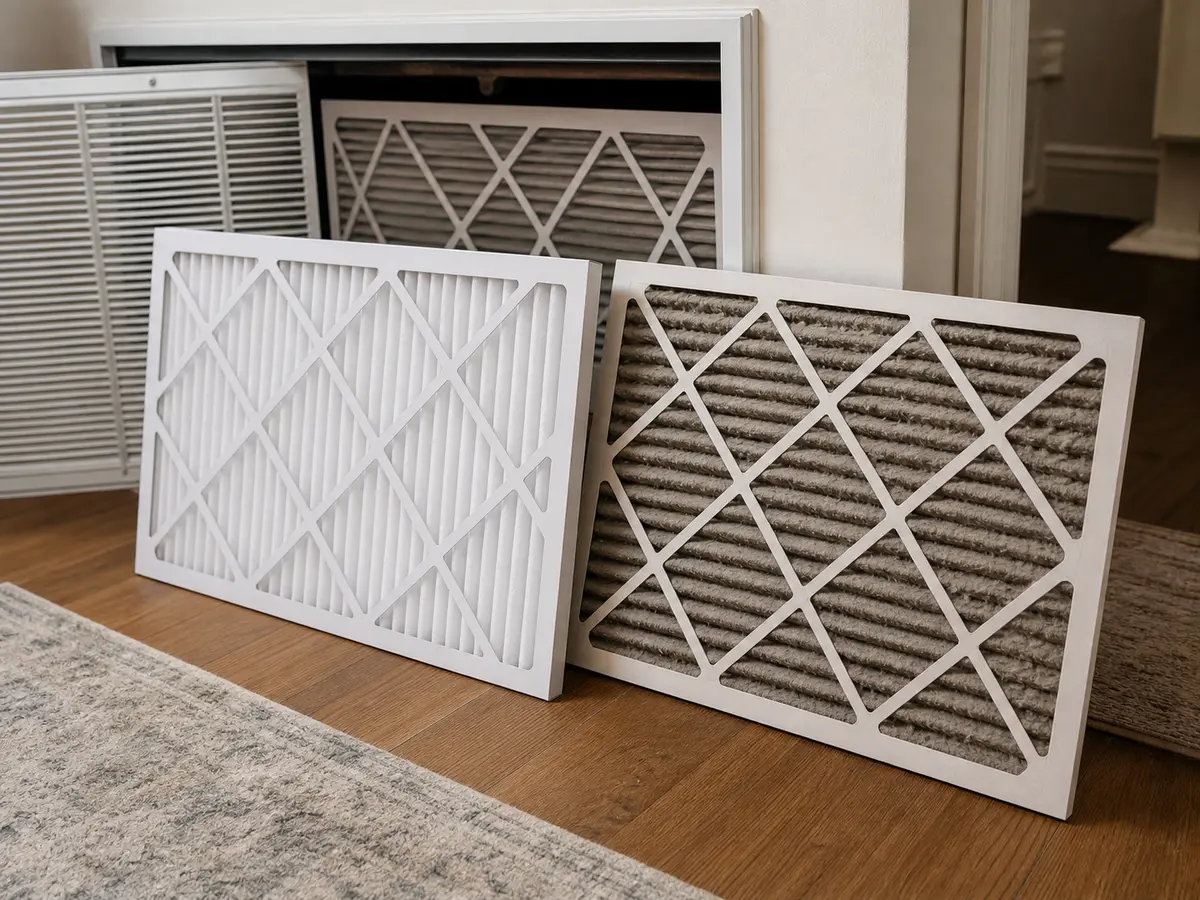
Helps when: The old filter is dirty, wet, collapsed, loose, overdue, or clearly restricting airflow.
Skip it when: Skip it when the filter is clean and seated flat, or the real clue is ice, warm supply air, breaker trips, or a stalled outdoor fan.
Compare AC filters on AmazonStart with the parts of the system you can check safely: thermostat mode, fan setting, filter condition, return airflow, ice on the larger insulated line, and whether the outdoor unit is running. If those checks do not explain it, the remaining causes often need HVAC service.
Yes. A clogged filter can cut airflow enough that the indoor coil gets too cold and starts icing. The system may still run, but the house gets weak air or room-temperature air instead of useful cooling.
You can reset a clearly tripped AC breaker once. If it trips again, leave it off and call for service. A breaker that will not hold is a stop point, not a reason to keep trying the same reset.
Switch cooling off and run the fan only if the thermostat allows it. Let the ice thaw fully, protect nearby floors or ceilings from water, then look at the filter and airflow. If ice returns, schedule HVAC service.
No. Refrigerant work belongs with an HVAC tech. If airflow is clean, the outdoor unit runs, and supply air is still barely cooler than room air, stop before refrigerant kits or sealed-system parts.
That usually means the system is moving air but not removing enough heat. Check the filter, return airflow, condenser airflow, and ice first. If those are clean and the air is still warm, the next diagnosis is usually service-level.
Give the system 15 to 30 minutes after the filter change if there is no ice, no breaker trip, and the outdoor unit sounds normal. If the coil was frozen, wait until the ice is fully gone before judging cooling.
No. First look at the filter, ice on the larger insulated line, outdoor fan movement, and whether the breaker holds. If those clues do not explain it, leave electrical covers closed and have an HVAC tech test the capacitor or motor.
Only after the drain problem is corrected and the switch itself is stuck, damaged, or will not reset properly. A float switch is a safety device; replacing it without fixing drainage can leave the real shutdown cause in place.
Call when a breaker trips more than once, ice returns, the outdoor fan will not run, the unit buzzes hard, you smell burning, or warm air continues after the safe checks.
Repair Riot built this page around homeowner-visible cooling clues: thermostat call, filter condition, return airflow, ice, condenser airflow, breaker behavior, and clear stop points before electrical or refrigerant work.