Relief pipe gets wet?
Pressure-rise branch.
A boiler that leaks after heating is usually reacting to heat: pressure rises, a relief valve opens, or a fitting expands enough to weep. Watch the gauge from cold to hot, confirm the first wet point, and stop if the relief discharge pipe keeps dripping.
Pressure-rise relief discharge and heat-opened fitting leaks are the big branches. A leak that appears only after a long heat call is a strong clue.
The timing matters as much as the water source.
Don’t start with: Do not replace the relief valve or tighten hot fittings before proving where the water starts.
Pressure-rise branch.
Expansion-opened fitting leak.
Overfeed may be involved.
Thermal expansion is a key clue.
Stop and call promptly.
Use cold pressure, hot pressure, and first wet point together before deciding what failed.
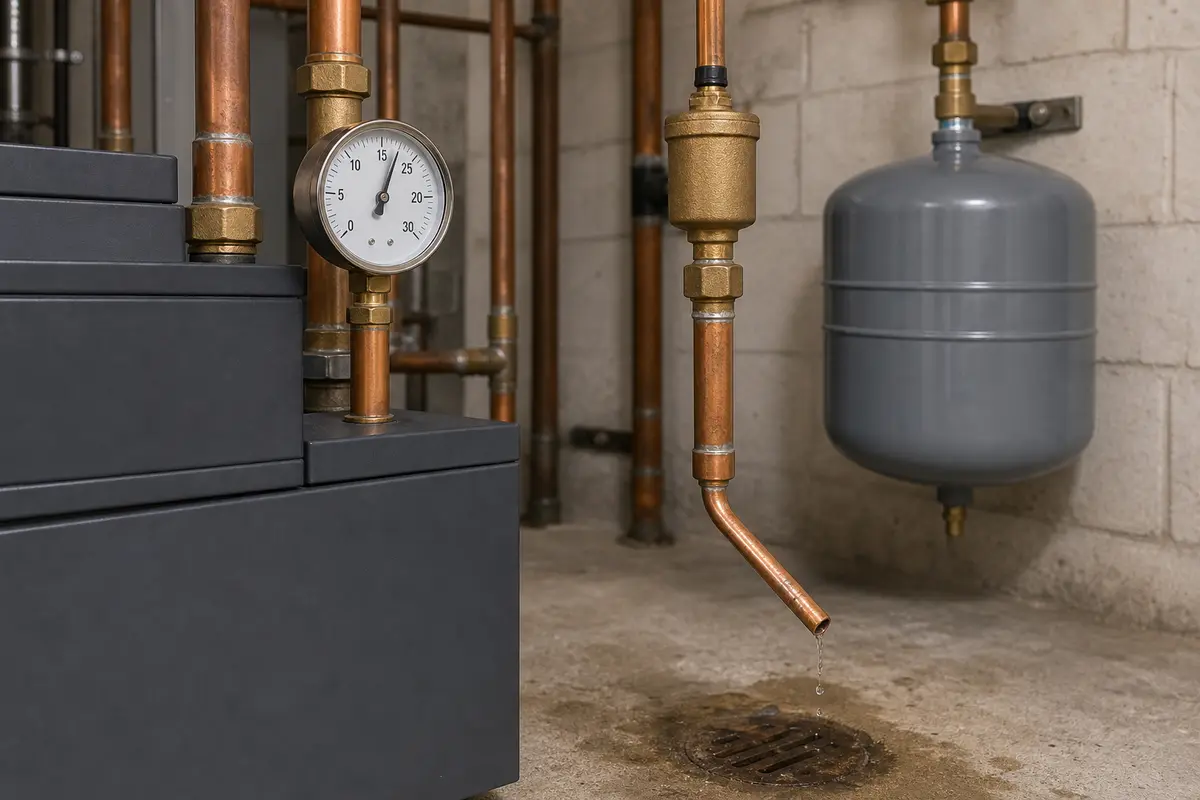
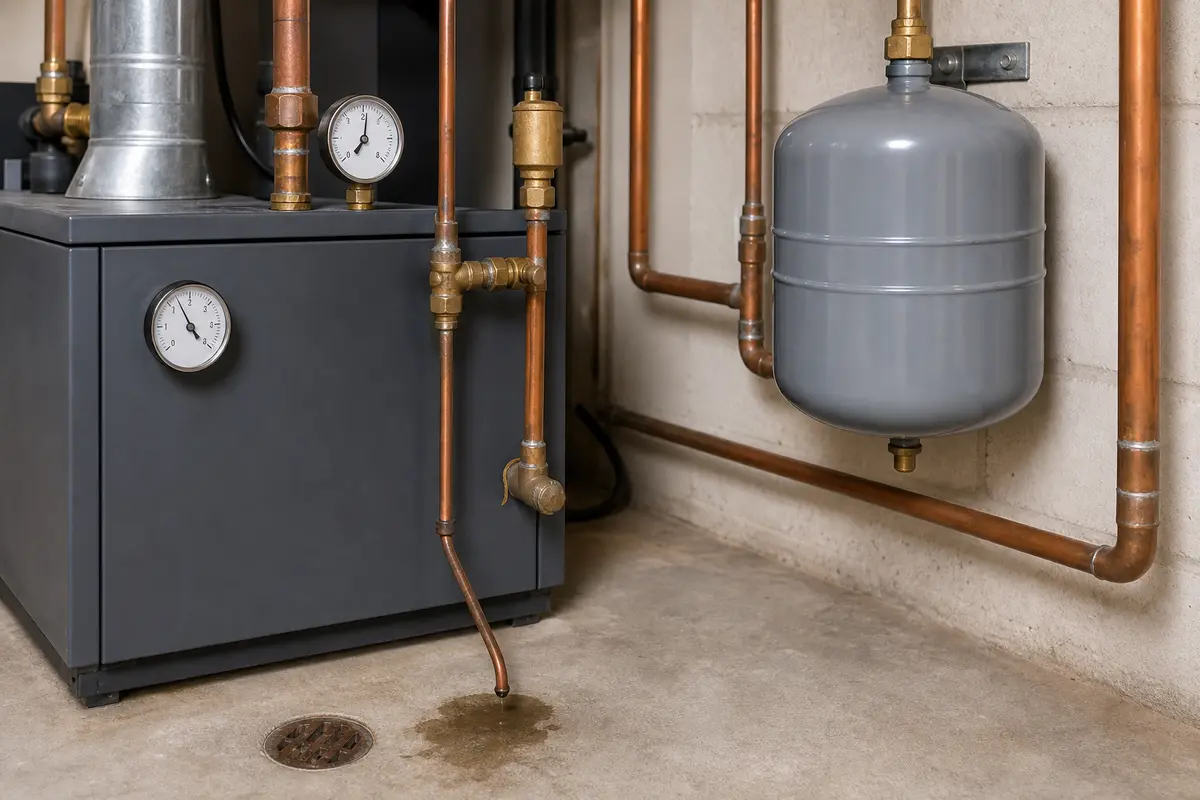
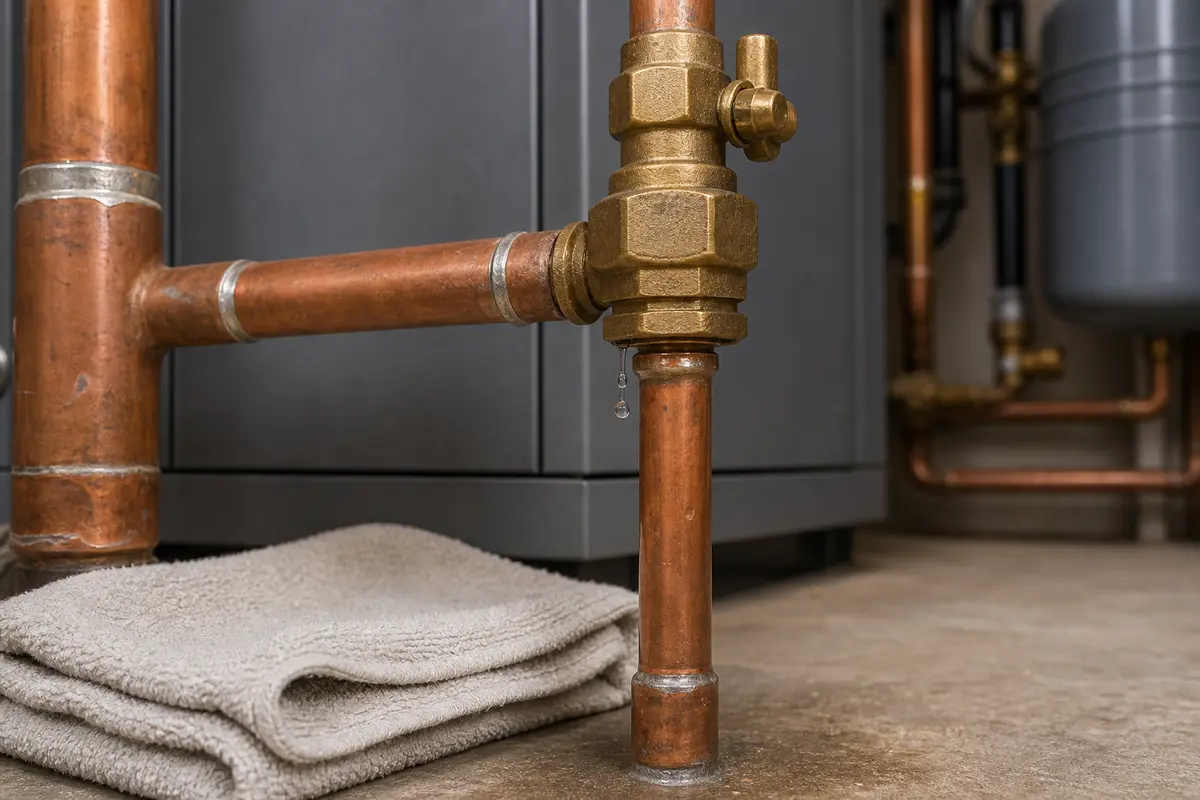
Confirm whether the hot-cycle leak is pressure-related or a fitting that opens when hot. Match the exact symptom, boiler type, gauge behavior, and service boundary before ordering anything.
Heat changes pressure and metal fit. That is why a boiler can look dry cold and leak after a heat call.
Hot-cycle leaks get worse when the symptom is treated as a loose fitting only; the pressure pattern has to be preserved.
Match timing, pressure, and source.
| Pattern | Likely branch | Next move |
|---|---|---|
| Pressure rises, relief drips | Expansion/fill/relief issue | Stop repeated running and call. |
| Fitting beads only hot | Thermal fitting leak | Photograph and schedule repair. |
| Water from boiler base | Boiler body leak | Shut down and call promptly. |
| Cold pressure high | Overfeed issue | Do not add water. |
A working expansion tank absorbs heated water expansion. If it cannot, pressure rises until the relief valve opens or a weak point leaks.
Some leaks are small enough to close when cold and open when metal expands. That does not make them harmless; repeated fresh water and heat can accelerate corrosion.
These tools help confirm timing and source without touching hot piping.
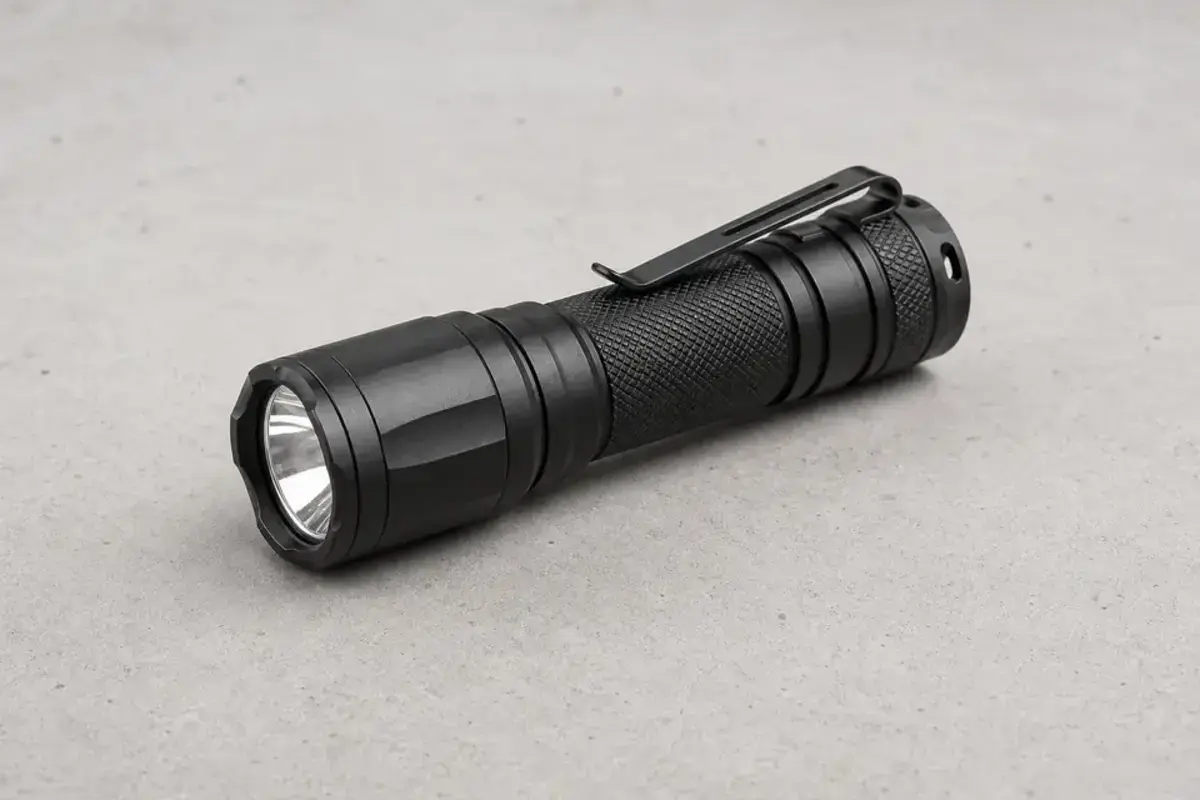
Helps when: Helps read gauges, displays, valve positions, leak tracks, and piping clues without touching hot parts.
Skip it when: Skip close inspection when the boiler is leaking near electrical parts, locked out, overheating, or giving combustion warnings.
Compare boiler-room flashlight on Amazon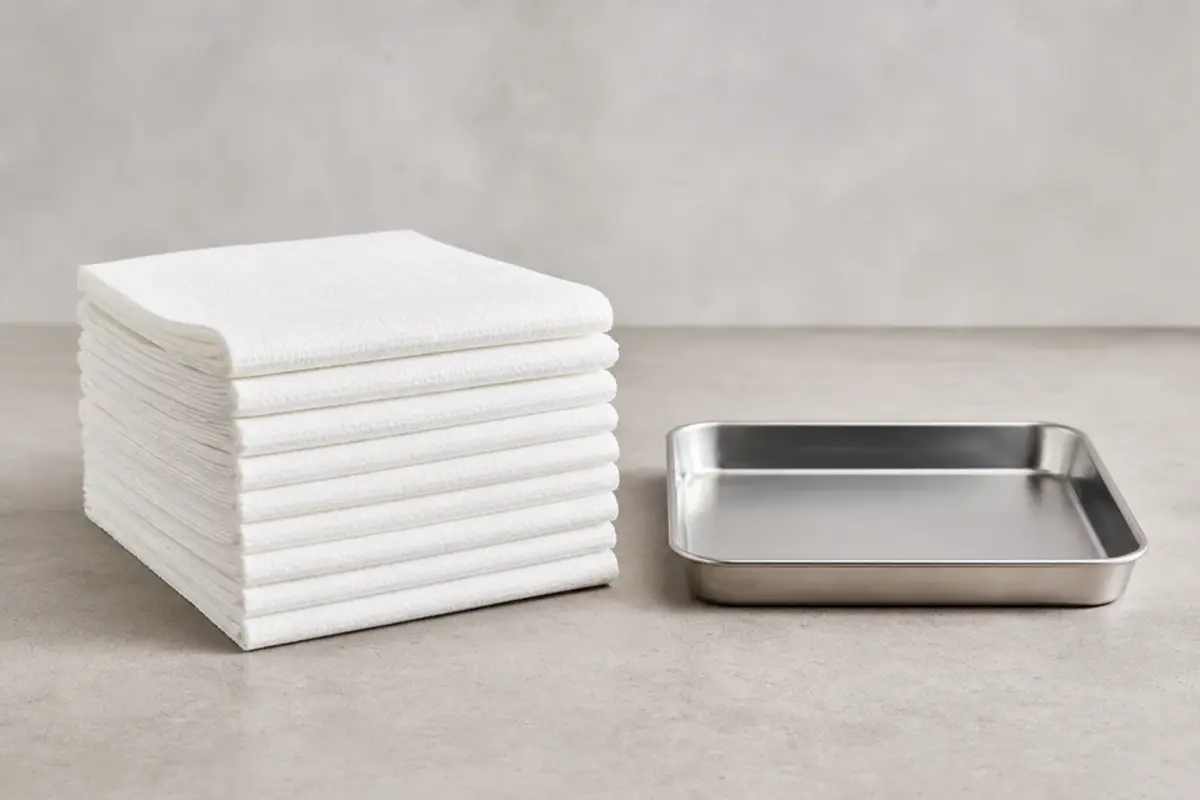
Helps when: Dry the floor, fitting, or discharge area so fresh water shows exactly where the leak starts.
Skip it when: Skip towel-only cleanup when water keeps dripping, the relief pipe is active, or hot water is present.
Compare absorbent towels on Amazon
Helps when: Records gauge readings, lockout timing, leak timing, noise timing, and what changed after an outage or heat call.
Skip it when: Skip buying one if clear photos and a written symptom timeline are already ready for the technician.
Compare notebook or phone notes on AmazonAs an Amazon Associate I earn from qualifying purchases. Repair Riot may earn a commission at no extra cost to you.
Heat raises pressure and expands metal. Either pressure opens the relief valve or a fitting leaks once hot.
It can be if pressure rises during the heat call and the relief pipe drips.
Not before finding why it opened. Pressure-rise causes should be checked first.
Do not tighten hot fittings. Photograph the source and schedule repair.
Shut it off if the relief pipe keeps discharging, pressure rises abnormally, or water reaches electrical parts.
Only if there is no leak, relief-valve discharge, lockout, gas smell, carbon monoxide alarm, overheating, or electrical concern. Stop and call for service when any safety clue appears.
Photograph the pressure gauge, display or fault light, the first wet point or affected zone, and the timing of the symptom during a heat call.
Pressure swings, relief discharge, leaks, recurring lockouts, burner trouble, electrical symptoms, or a symptom that returns after basic observation belongs with a qualified boiler technician.
Repair Riot reviewed this page around hot-cycle leak timing, pressure rise, relief discharge, fitting expansion, and boiler service boundaries. The source links support boiler maintenance and pressure safety context; the diagnostic sequence is original guidance.