Does flow improve with the aerator removed?
Clean or replace the aerator before opening the cabinet.
Low cold pressure at one bathroom sink is usually local to that sink. First check the aerator, cold shutoff, supply line, and faucet inlet before replacing the faucet.
Start by comparing cold and the opposite side at the same faucet, then check whether the symptom is limited to this sink.
Good clue: hot flow is normal but cold flow is weak, so start on the cold-side path.
Don’t start with: Do not start by replacing the whole faucet. A clogged aerator or half-open stop valve is more common and cheaper.
Clean or replace the aerator before opening the cabinet.
Open it gently, retest flow, and watch the valve for leaks.
Replace and reroute the line in a smooth bend before blaming the faucet.
The faucet inlet or cartridge is now the better suspect.
Move beyond this bathroom sink and diagnose the house supply side.
The weak stream, aerator debris, and cold stop check show the three highest-value checks before faucet replacement.
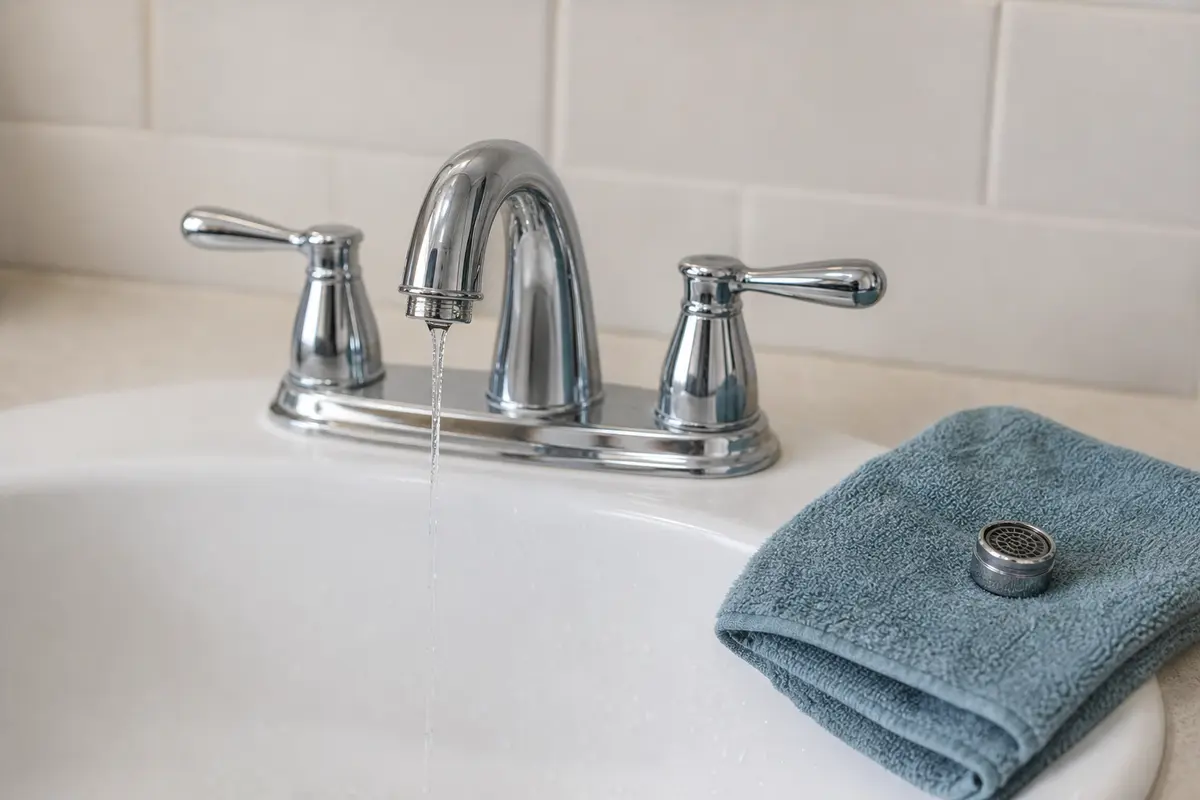
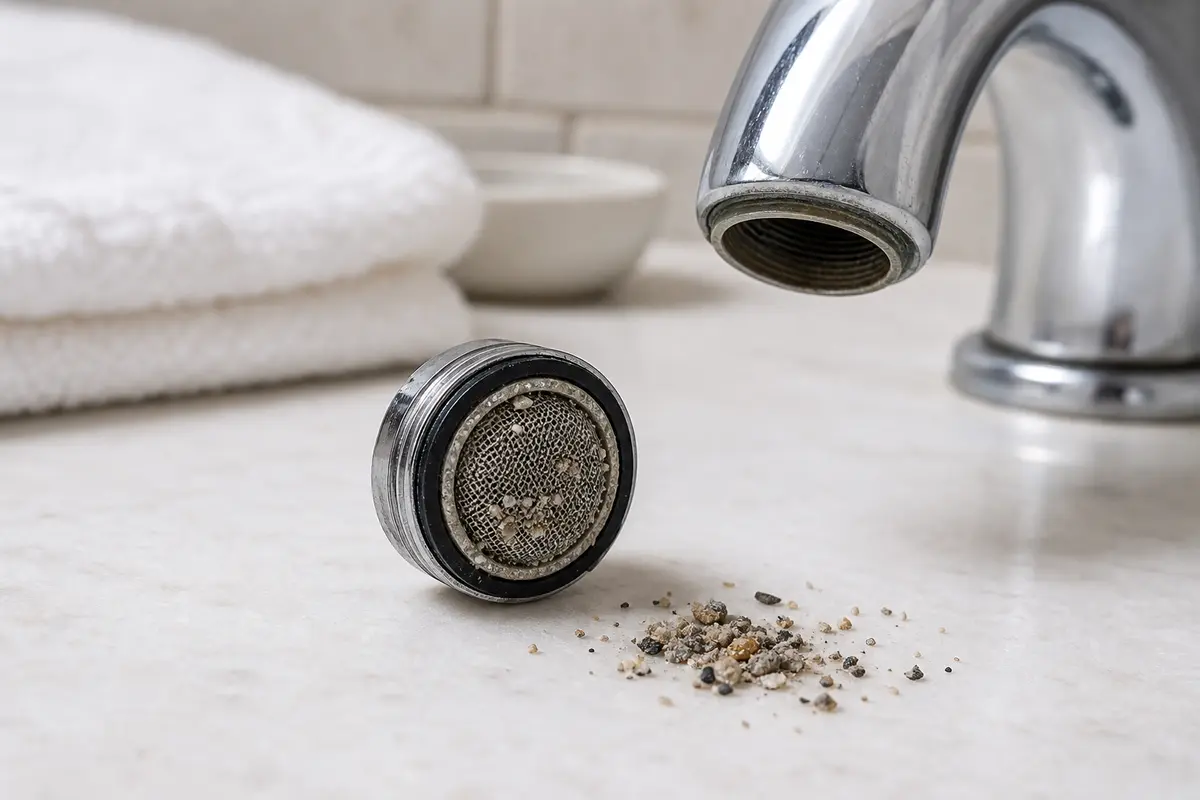
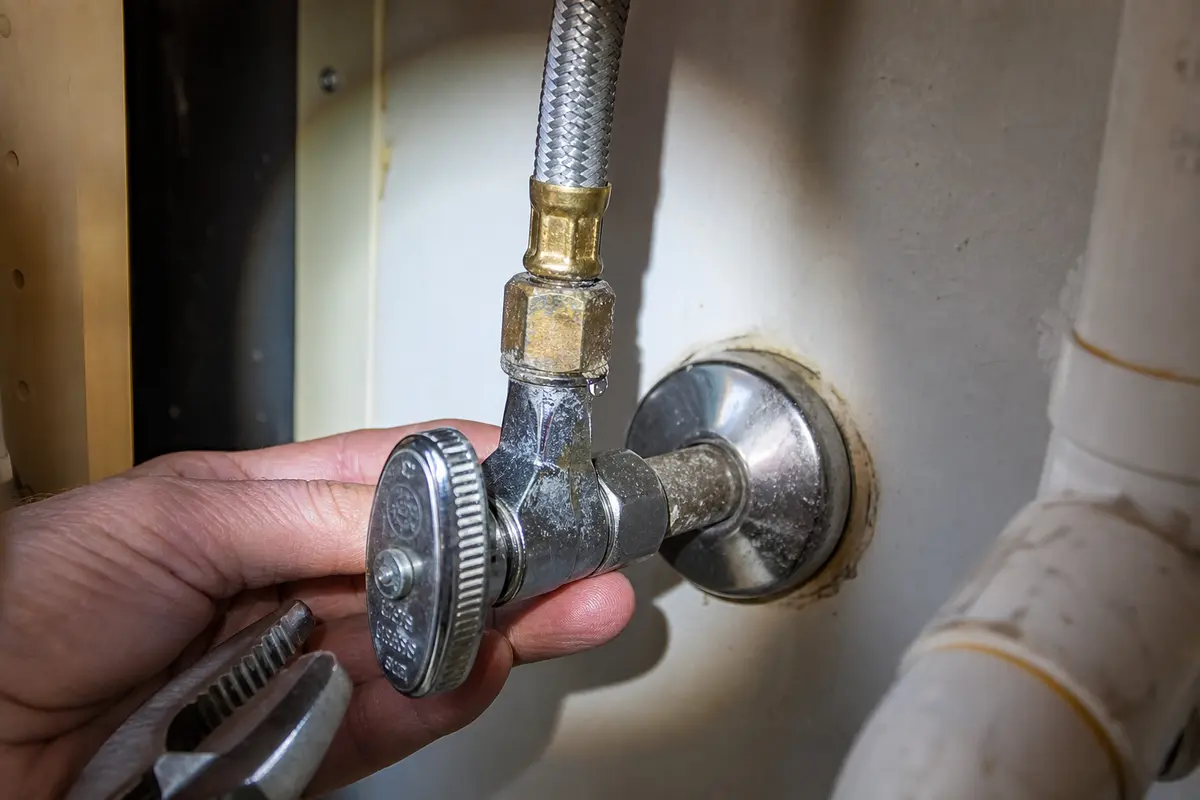
Do not buy a faucet, cartridge, supply line, shutoff valve, or aerator until the cold-pressure source map proves where the restriction is. Match the exact faucet model, aerator thread, valve type, supply-line length, and diagnosis before ordering.
If only the cold side is weak at one bathroom sink, the restriction is usually local: the aerator, cold shutoff valve, supply line, or faucet inlet.
Do not buy a faucet because one side is weak. The cheapest checks also prove whether a faucet replacement is actually justified.
Run these checks in order so the aerator, cold valve, supply line, and faucet inlet are separated.
| Check result | What it usually means | Next move |
|---|---|---|
| Flow improves with aerator removed | Aerator is clogged or damaged. | Clean or replace the aerator. |
| Cold stop was partly closed | Valve position was restricting flow. | Open gently, retest, and watch for leaks. |
| Supply line is kinked or flattened | Line is restricting flow before the faucet. | Replace the line and route it in a smooth bend. |
| Weak flow still exists before faucet at the cold valve | Valve is restricted or failing. | Replace the shutoff valve or call a plumber. |
| Valve output is strong but faucet remains weak | Restriction is inside faucet inlet or cartridge. | Service the faucet or replace the cartridge/faucet if not serviceable. |
The faucet tip catches grit from old valves and recent plumbing work. This is the cleanest first test.
Once the aerator is ruled out, work from the wall valve toward the faucet. The cold side has only a few common restrictions at one sink.
These tools support a controlled flow test without damaging the faucet finish or vanity.
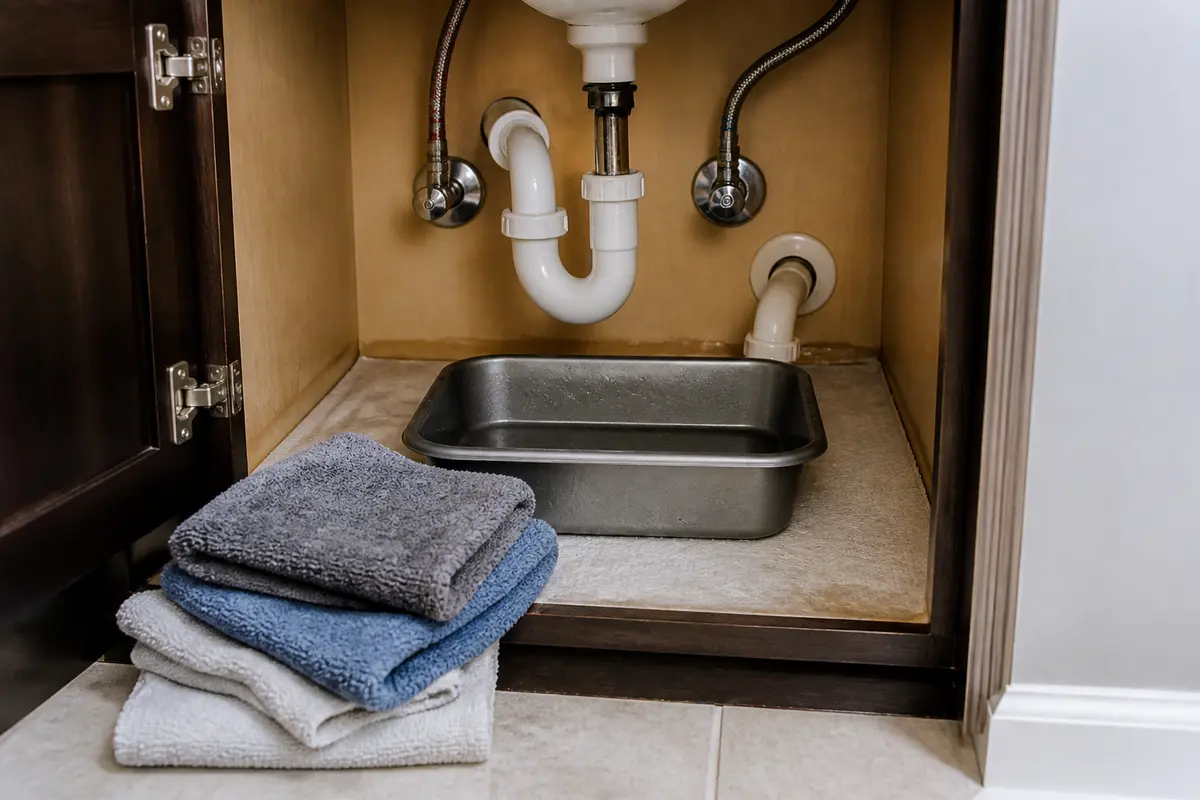
Helps when: Use a shallow pan and towels to catch water while checking supply lines, stops, or drain joints.
Skip it when: Skip disassembly if water is active and you cannot shut it off or keep the cabinet safe.
Compare shallow pans and towels on Amazon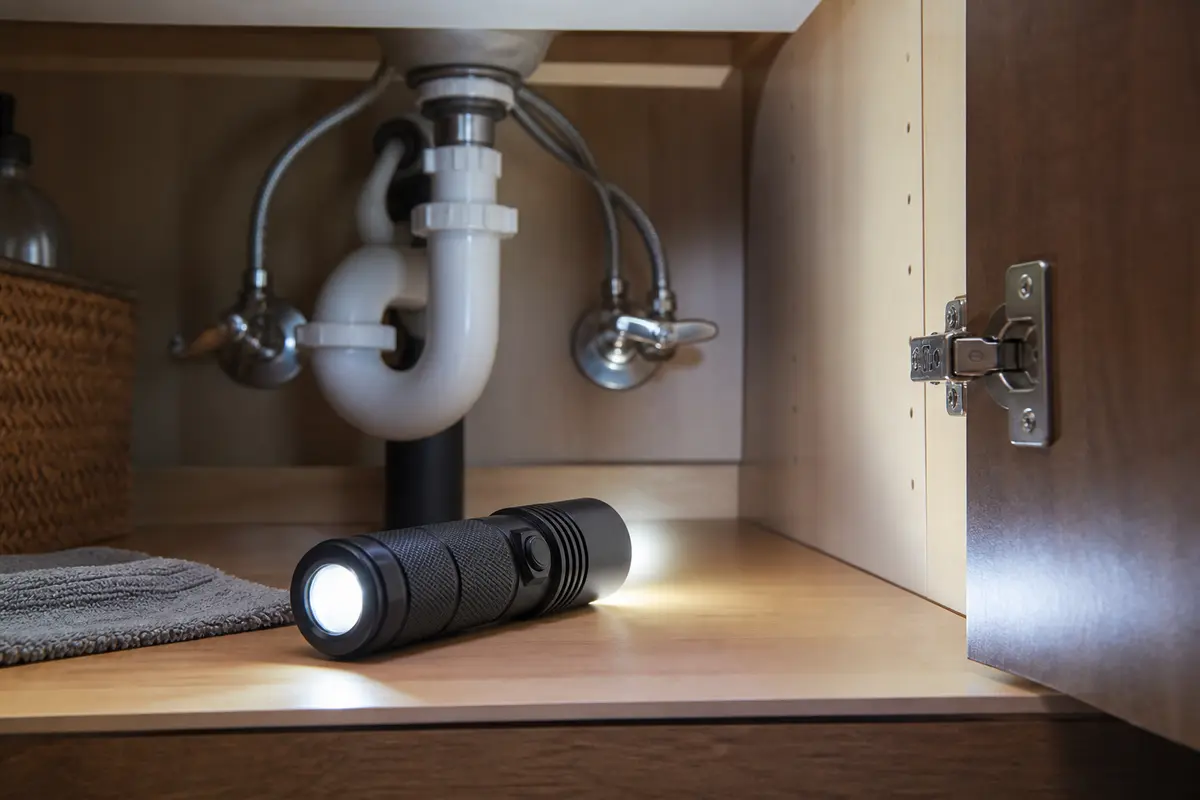
Helps when: Use an inspection flashlight to find the first wet point, trap condition, and wall-drain clues under the sink.
Skip it when: Skip working under the sink until stored items are removed and the cabinet floor is dry enough to inspect safely.
Compare inspection flashlights on Amazon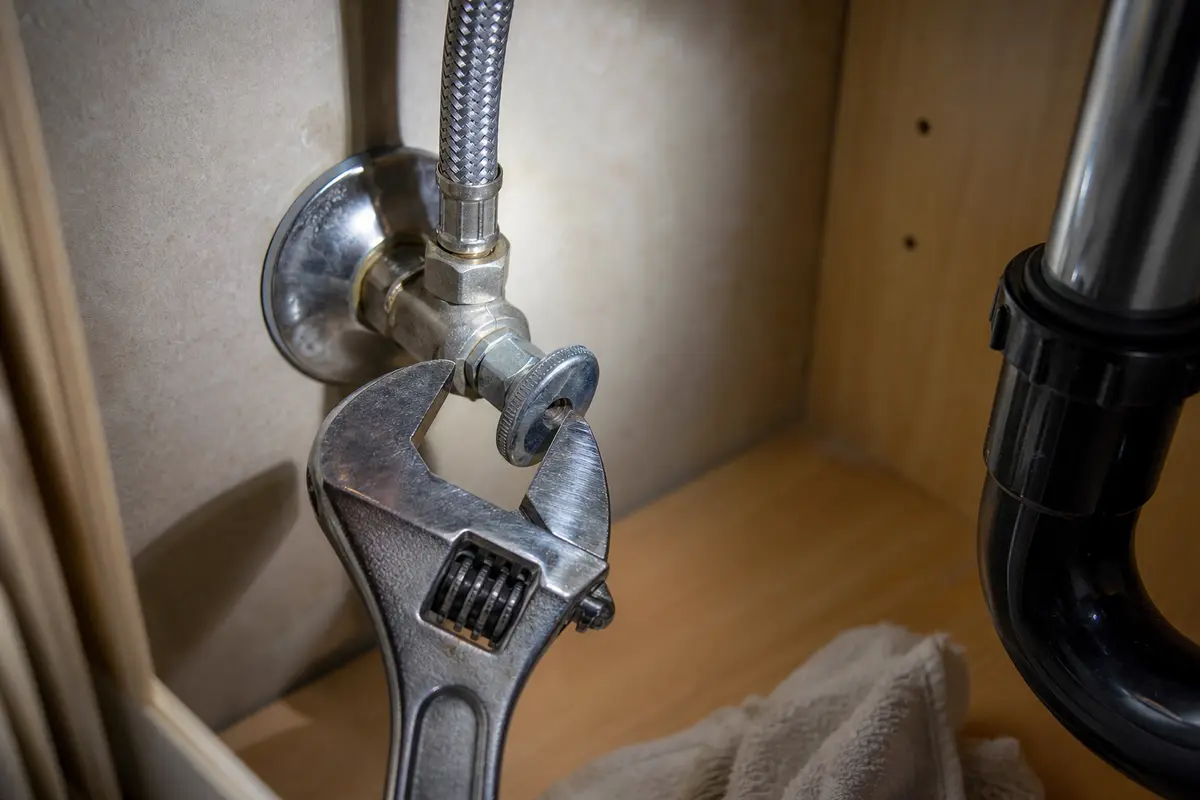
Helps when: Use a small adjustable wrench on metal supply nuts or faucet hardware that fits squarely.
Skip it when: Skip using it on plastic slip nuts where pliers or hand tightening is safer.
Compare small adjustable wrenches on Amazon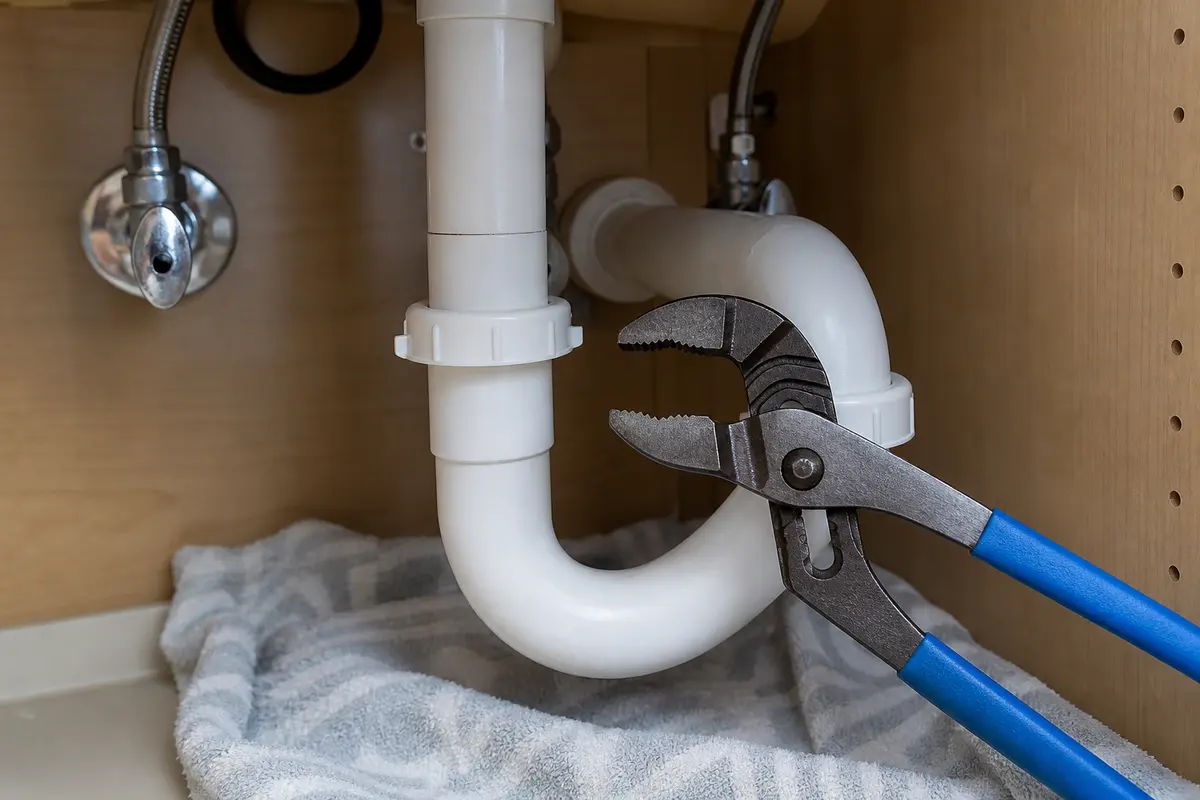
Helps when: Use tongue-and-groove pliers to loosen accessible slip nuts while supporting plastic fittings by hand.
Skip it when: Skip overtightening plastic drain parts because it can deform washers and cause leaks.
Compare tongue-and-groove pliers on AmazonAs an Amazon Associate I earn from qualifying purchases. Repair Riot may earn a commission at no extra cost to you.
Replace only the part that fails the source map.
Helps when: Use a bathroom sink faucet aerator when cleaning confirms debris or damage at the aerator.
Skip it when: Skip replacing the faucet if the aerator is the only restricted part.
Compare bathroom sink faucet aerators on Amazon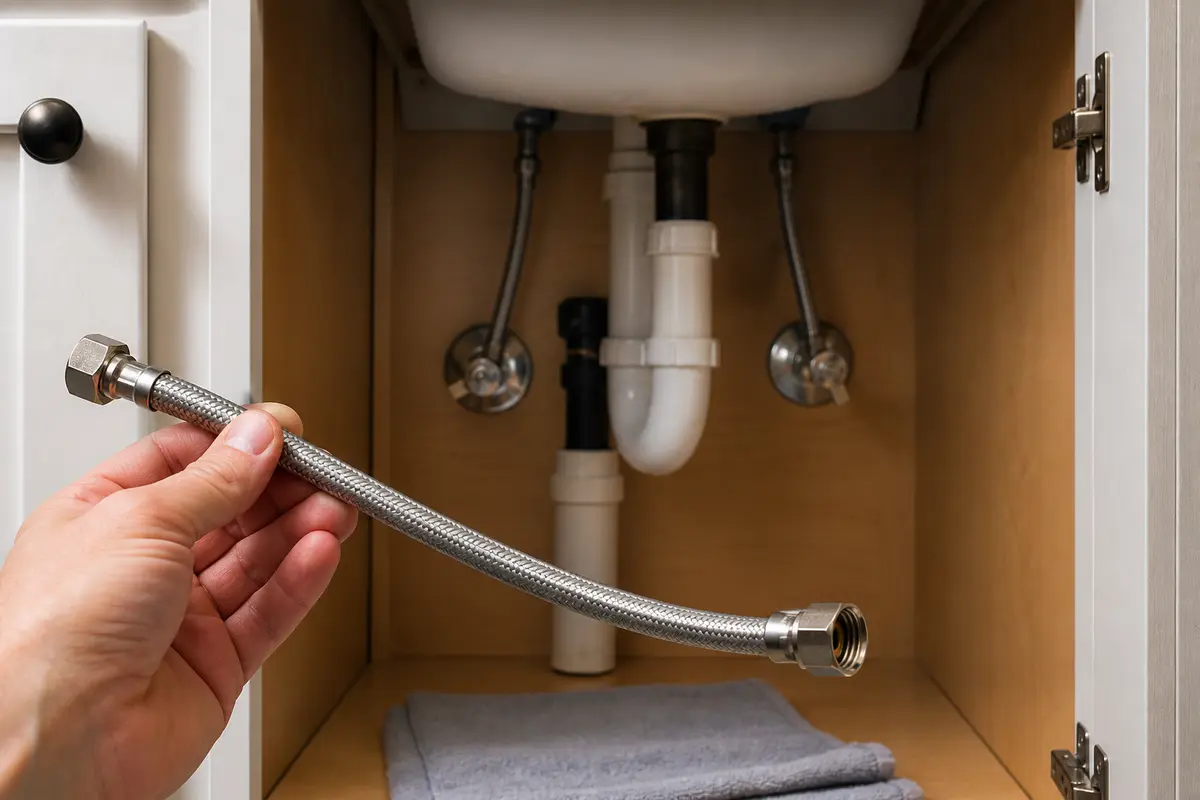
Helps when: Use a bathroom sink supply line when the cold line is kinked, clogged, corroded, or leaking at the connector.
Skip it when: Skip replacing the line until the cold stop is off and the old connector size is verified.
Compare bathroom sink supply lines on Amazon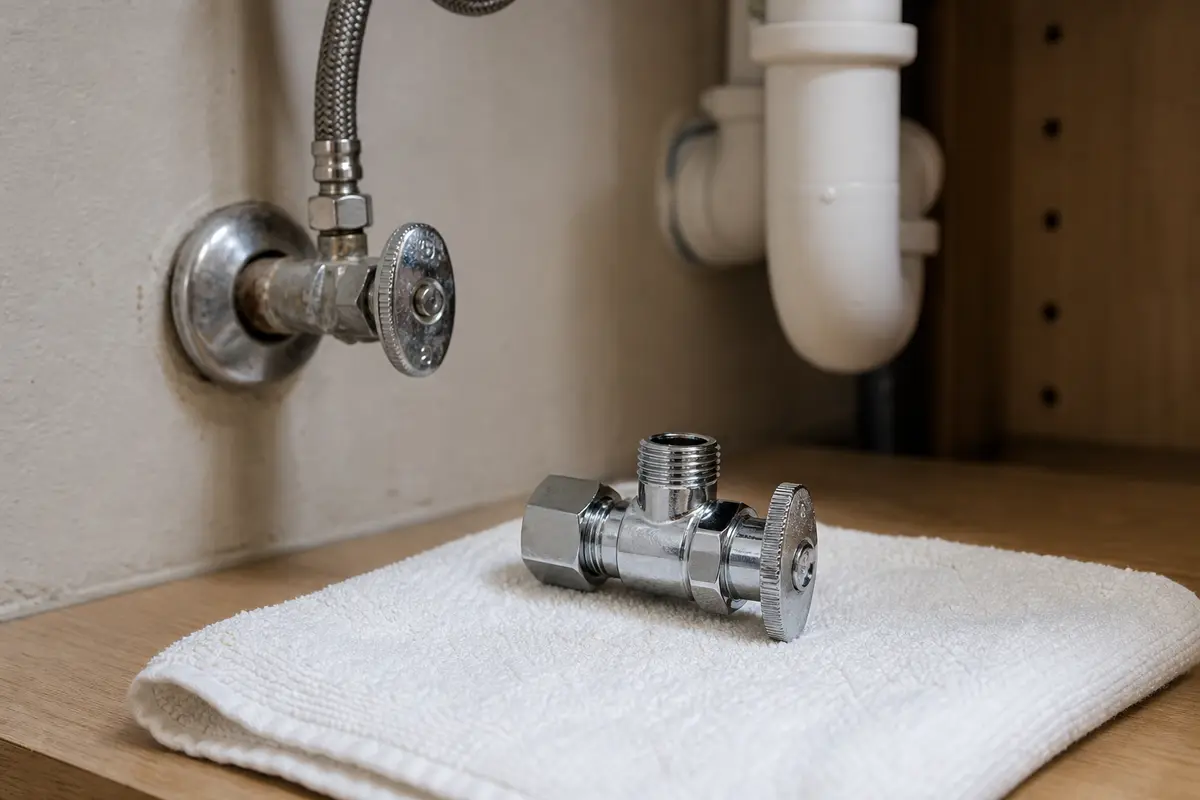
Helps when: Use a bathroom sink shutoff valve when the cold stop is seized, leaking, or not passing water after safe shutoff.
Skip it when: Skip valve replacement without a working upstream shutoff and the right fitting type.
Compare bathroom sink shutoff valves on Amazon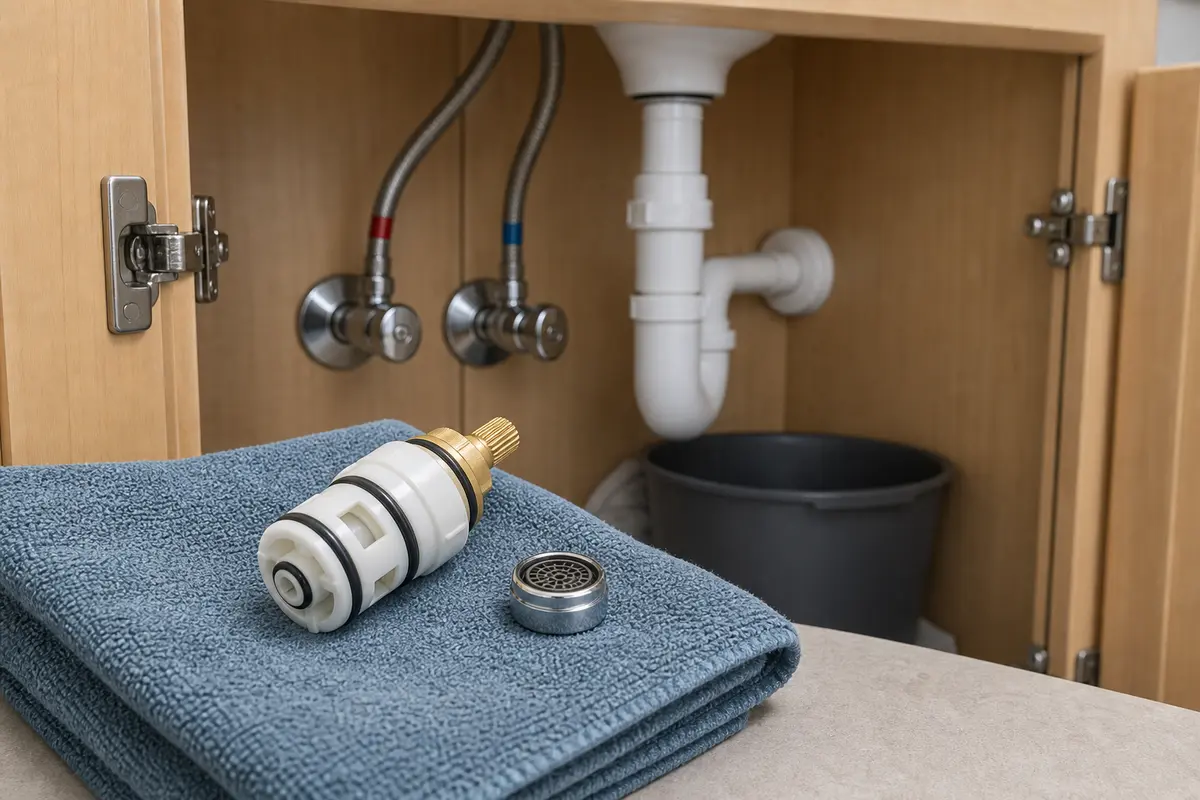
Helps when: Use a bathroom faucet cartridge only after aerator, stop, and supply-line checks point to debris inside the faucet.
Skip it when: Skip cartridge replacement if both hot and cold pressure problems suggest a broader supply issue.
Compare bathroom faucet cartridges on AmazonAs an Amazon Associate I earn from qualifying purchases. Repair Riot may earn a commission at no extra cost to you.
At one sink, low cold pressure usually means a local restriction at the aerator, cold shutoff valve, supply line, faucet inlet, or cartridge.
Yes. Debris can settle at the faucet outlet and make one temperature side look worse, especially after shutoffs were used or plumbing work disturbed grit.
Not first. Remove the aerator, check the shutoff position, inspect the supply line, and confirm valve output before replacing the faucet.
Then the problem is not limited to this sink. Look for a house supply, valve, pressure, or water-heater-side issue instead.
If the valve is fully open but gives weak controlled output into a container before the faucet, the valve or upstream line is the suspect.
Match the faucet brand or spout thread, aerator diameter, male or female thread direction, flow style, and finish so the replacement seals correctly.
Yes. A braided line can kink, flatten, corrode at the ends, or catch debris internally. Replace it only after the aerator and valve position are ruled out.
Yes. Debris can lodge in one inlet or cartridge passage, so one side can be weak even though the handle and spout look normal.
This guide treats low cold flow as a source-map problem: outlet, valve, supply line, then faucet internals. That order avoids replacing a working faucet because one cheap restriction was missed.