Smoke, gas odor, or CO alarm?
Leave the area and call emergency help.
Turn heat off for smoke, electrical odor, gas odor, carbon-monoxide alarm, buzzing, or breaker trip. Watch duration: a brief dusty smell on first heat usually points to dust; sharp, plastic-like, smoky, gas-like, or recurring odor needs service before another cycle.
A good clue is duration plus filter condition. Dusty odor that fades after a clean filter is different from persistent heat smell, buzzing, trips, or gas-like odor.
A burning smell on heat startup must be separated from dust, electrical heat, and combustion clues before any parts decision.
Don’t start with: If smoke, gas odor, electrical smell, breaker trips, or buzzing are present, call service before buying heat strips, igniters, blower motors, gas parts, boards, relays, capacitors, or wiring parts.
Leave the area and call emergency help.
Keep heat off and call service.
Replace dirty filter and clean reachable grilles.
Install exact supported filter.
Stop before internal heating parts.
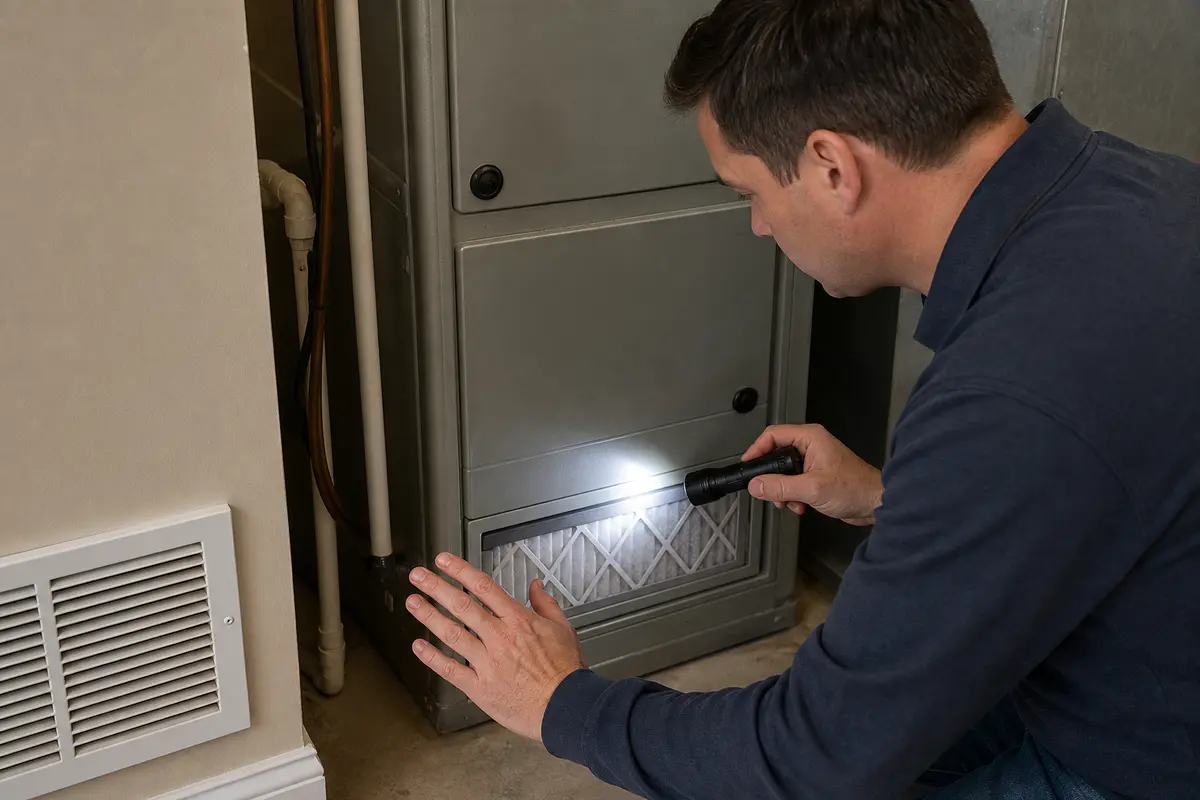
Safe checks stay at the filter, grille faces, and cabinet exterior unless the odor has a service stop sign.
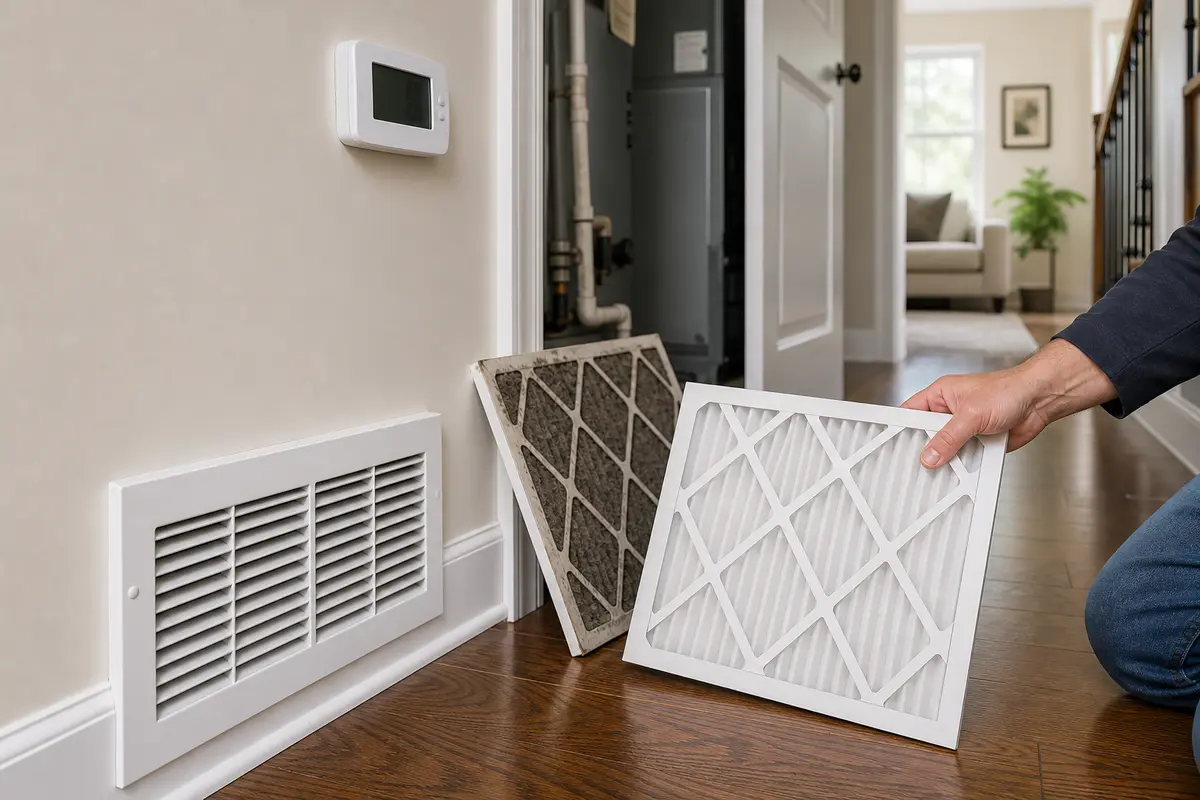
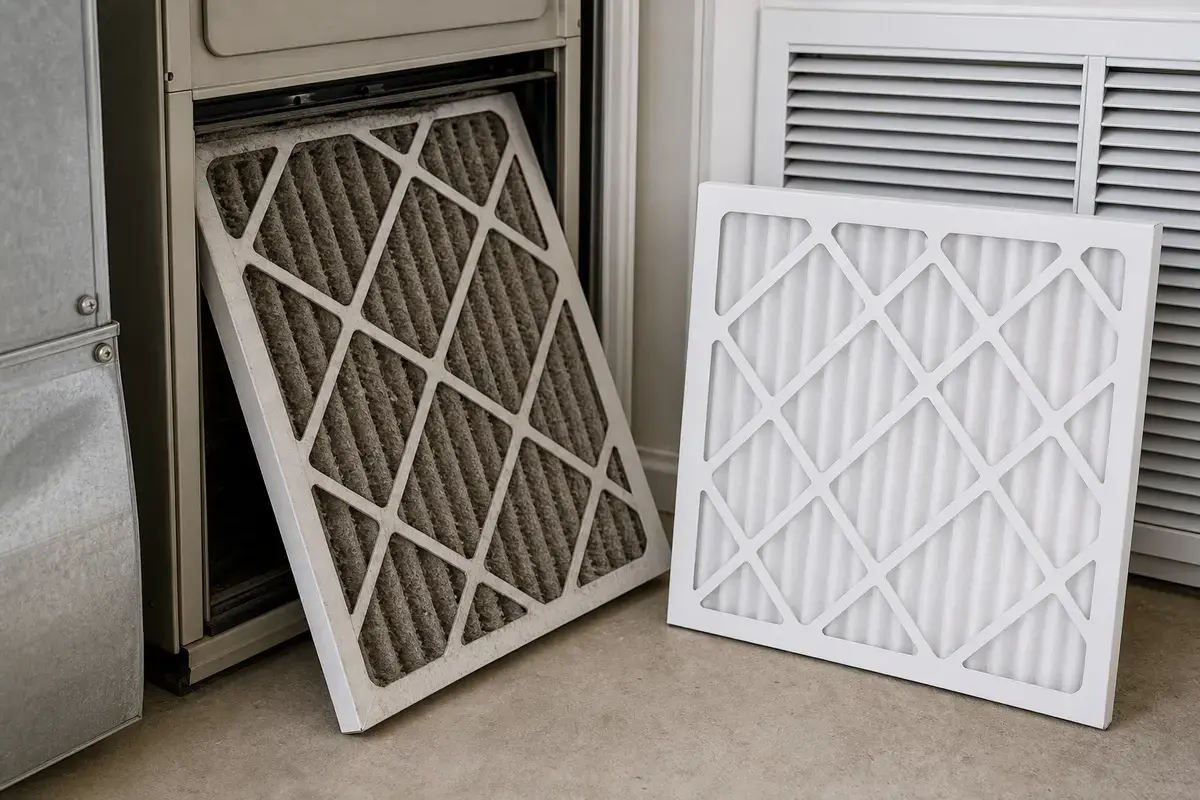
Buy only after the smell is clearly a dust or filter clue. Turn heat off and call service or emergency help for smoke, gas odor, alarms, breaker trips, buzzing, plastic odor, or electrical odor. A filter is reasonable when the installed filter is dirty, scorched, damp, collapsed, missing, or wrong size. Match the exact filter size, airflow arrow, supported rating, model when applicable, and odor diagnosis before ordering.
Start by deciding whether the odor is brief dust or a stop sign.
Avoid buying odor products or hidden parts until the visible clues support them.
Use this table after the system is off and any urgent odor clue is handled.
| Clue | Most likely cause | Next move |
|---|---|---|
| Smoke, fire, gas odor, or CO alarm | Emergency condition | Leave area and call emergency help. |
| Electrical or plastic smell | Internal overheating or wiring risk | Keep heat off and call service. |
| Brief dusty first-heat smell | Dust on heat surfaces or grilles | Replace dirty filter and clean reachable grilles. |
| Dirty, scorched, or wrong filter | Airflow restriction or odor source | Install exact supported filter. |
| Breaker trips or buzzing | Electrical or motor fault | Do not reset repeatedly; call service. |
These checks keep the diagnosis tied to what you can see, smell safely, or measure without opening risky compartments.
Keep the cart narrow and buy only when the evidence points to that exact item.
These support visible checks, cleanup, measurement, and documentation before service work.

Helps when: Use this only when the installed filter is dirty, scorched, damp, collapsed, missing, or wrong size and there are no emergency stop signs.
Skip it when: Skip filters that do not match the printed size, thickness, airflow arrow, and supported restriction range.
Compare HVAC filters on Amazon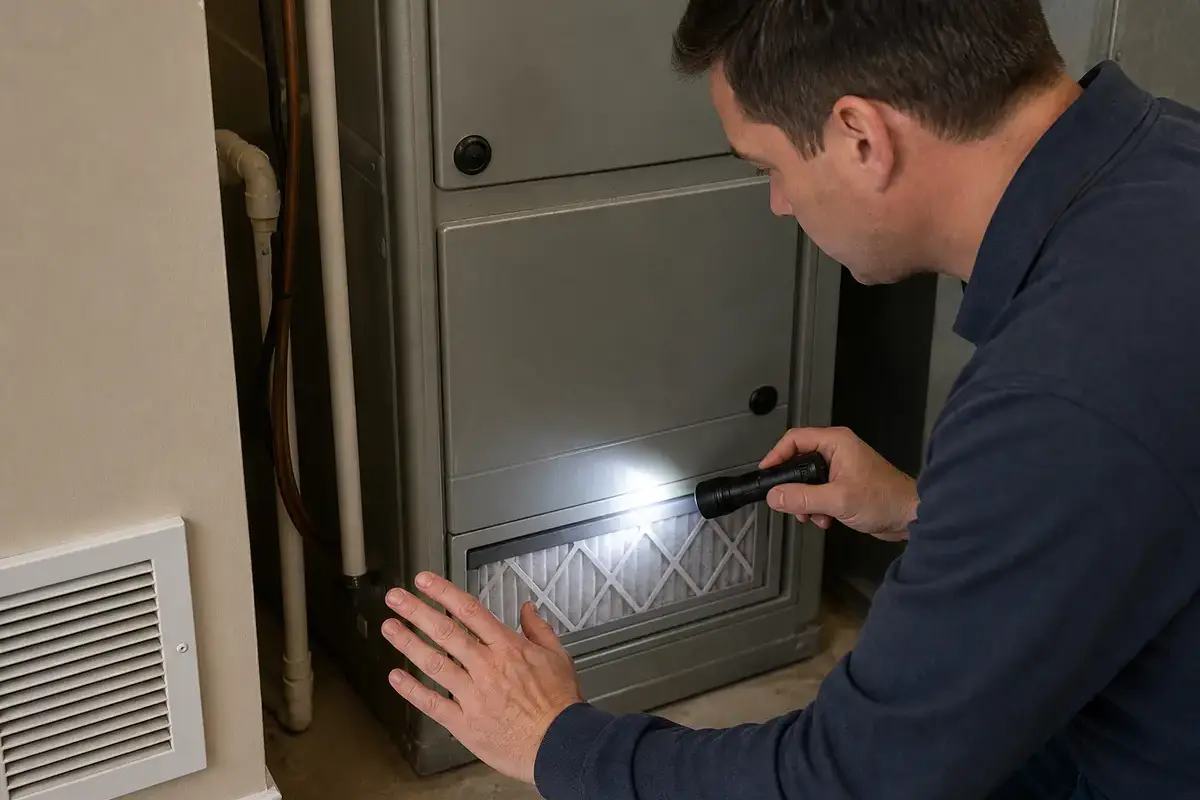
Helps when: Use it after shutdown to inspect the filter slot, grille dust, and outside cabinet area without opening service compartments.
Skip it when: Skip checks that require removing electrical covers, reaching into the cabinet, or working near water and controls.
Compare inspection flashlights on Amazon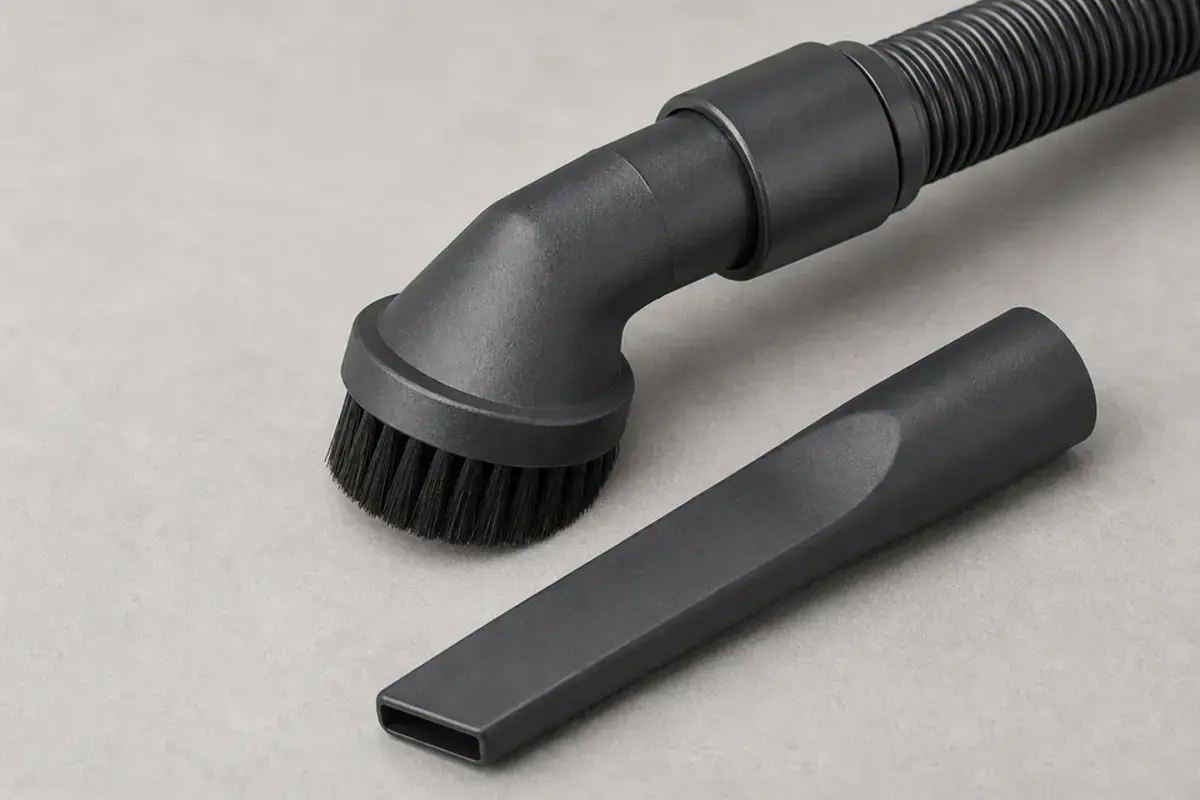
Helps when: Use it to remove loose dry dust from reachable return and supply grille faces after the system is off.
Skip it when: Skip pushing debris into ductwork or cleaning anything past a reachable grille face, return cover, or filter slot.
Compare vacuum brush attachments on AmazonAs an Amazon Associate I earn from qualifying purchases. Repair Riot may earn a commission at no extra cost to you.
It may be brief dust odor, a dirty filter, restricted airflow, overheated equipment, electrical trouble, or a combustion issue.
Yes for smoke, gas odor, electrical smell, plastic smell, alarms, breaker trips, buzzing, or any persistent burning odor.
A brief dusty odor can happen at first heat, but it should clear quickly and should not smell smoky, gas-like, plastic, or electrical.
A dirty or wrong-size filter can restrict airflow and hold dust. Replace it only after shutdown and only if there are no emergency signs.
Do not reset repeatedly. A breaker trip with burning odor needs service.
Smoke, fire, gas odor, carbon-monoxide alarm, or symptoms of exposure mean leave the area and call emergency help.
Keep heat off and schedule service because persistent odor is no longer a simple dust or filter clue.
Yes, only loose dry dust from reachable grille faces after the system is off; do not push tools into ductwork.
Repair Riot built this page around visible odor clues: source location, filter condition, moisture, airflow, weather, and stop points before hidden work.