Smoke, gas odor, electrical, or illness?
Keep fan off and call emergency help or service.
The fan is carrying an odor from the air path. With the system off, check the filter, return grille, filter slot, condensate area, and nearby rooms. Stop and call service for smoke, gas odor, electrical odor, decay odor, illness, or water near controls.
A good clue is smell type. If it is musty, inspect the drain area; if it is dusty, pull the filter; if it smells like decay, keep the fan off and call service.
Fan-only odor means airflow is picking up a source; the first job is finding where it enters the air stream.
Don’t start with: If smell type, filter condition, return path, and drain area are not checked, do not buy sprays, foggers, duct treatments, air purifiers, or hidden HVAC parts.
Keep fan off and call emergency help or service.
Install exact supported filter.
Inspect that room and return path first.
Clear accessible drain clue or call service.
Keep fan off and call service for duct or cabinet source.
Use filter, return, drain, and room-source clues before buying odor products.
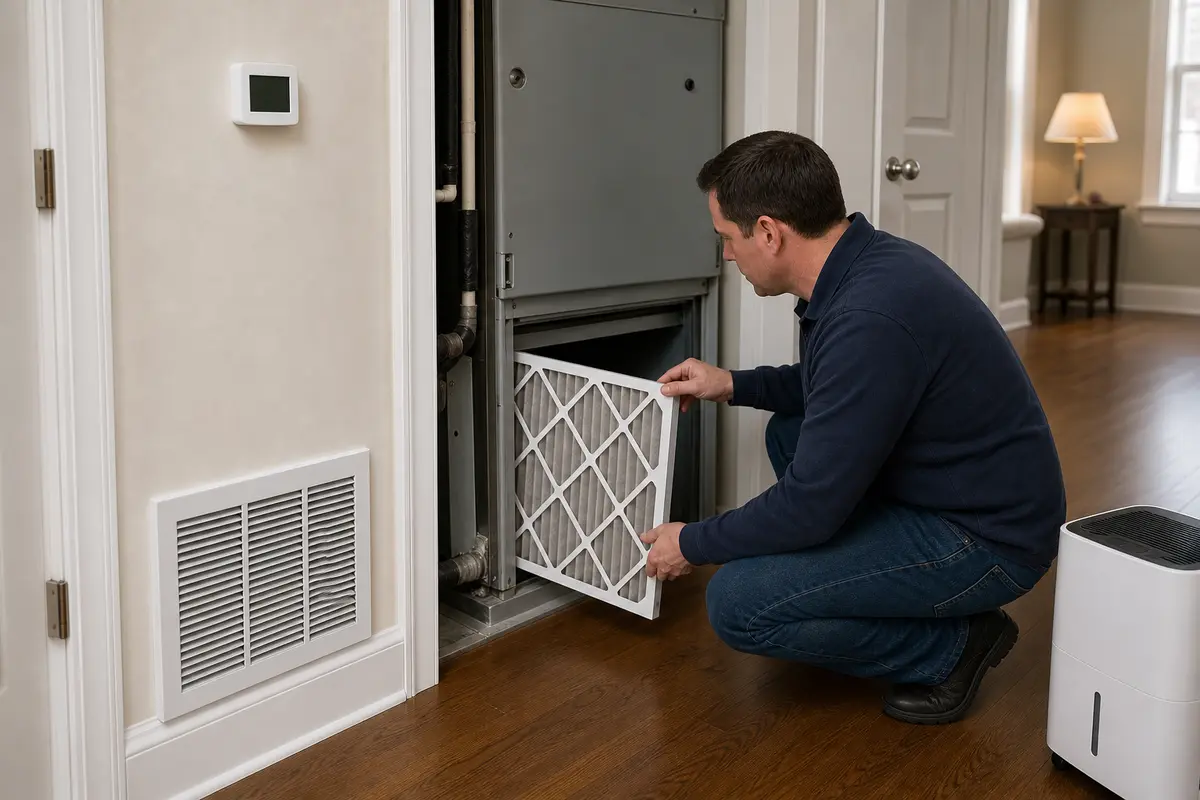
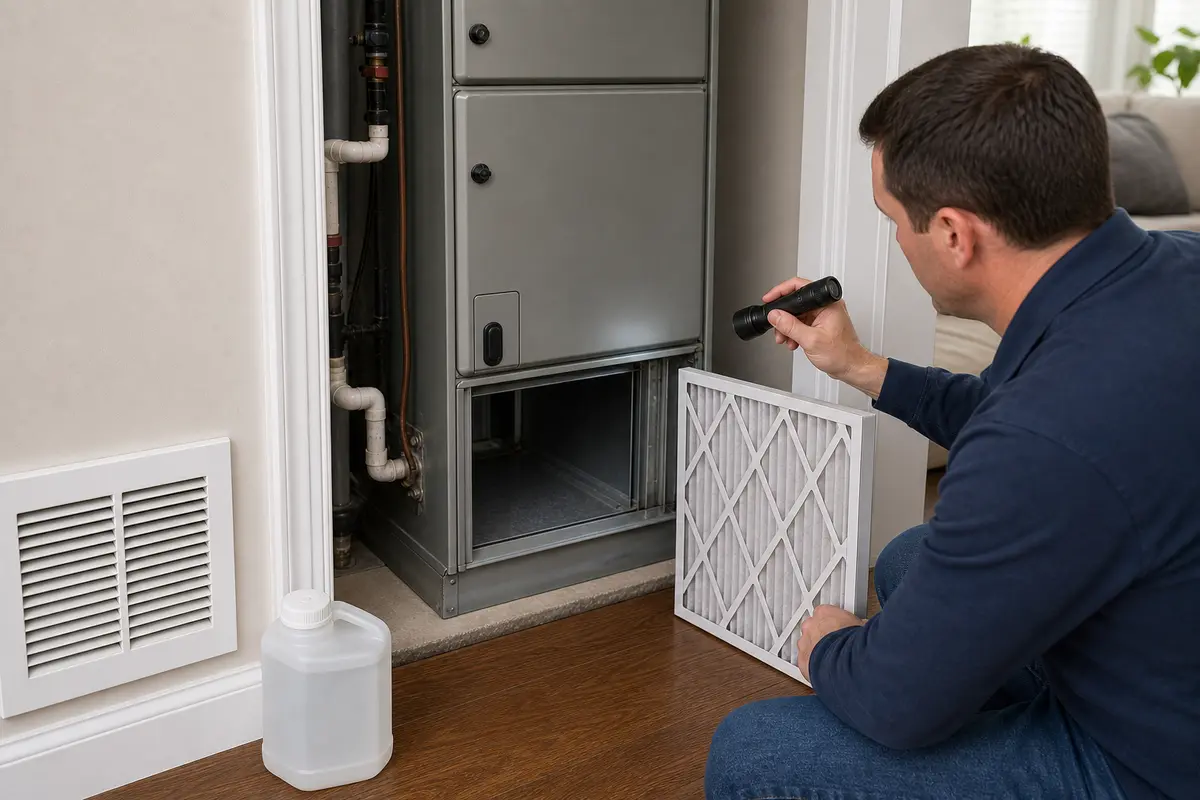
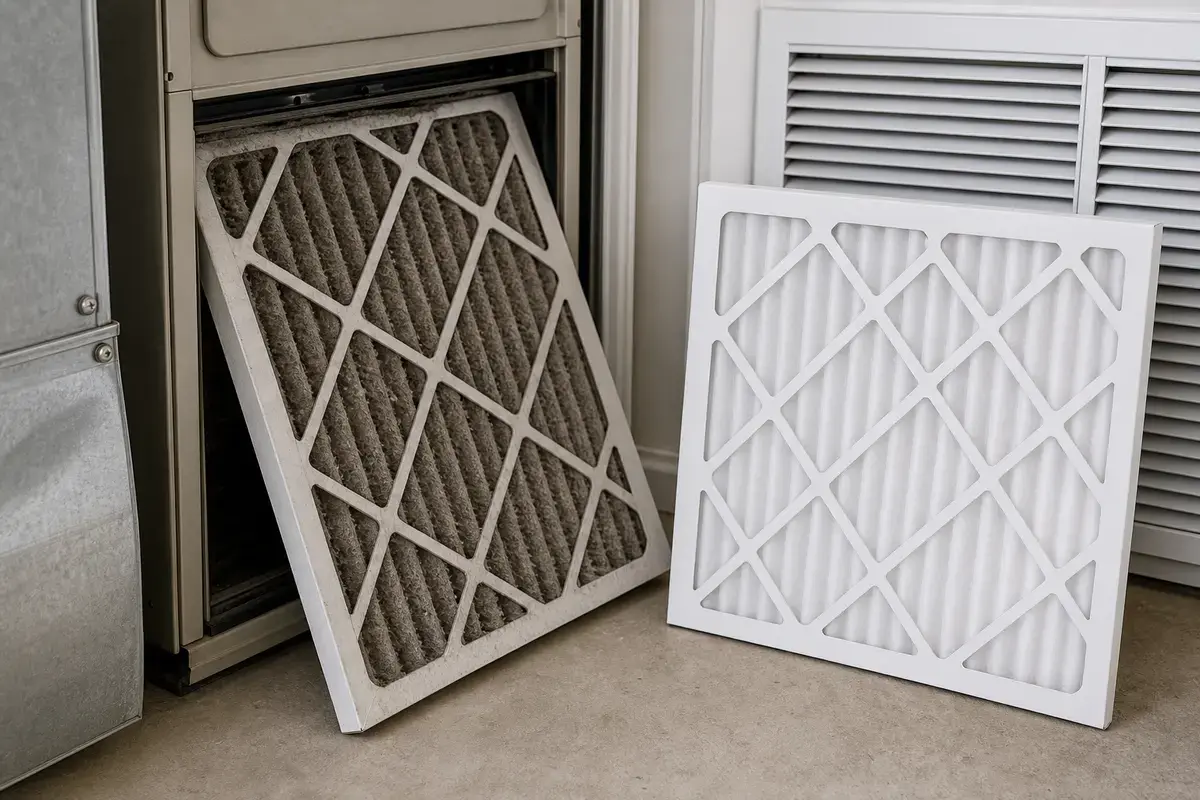
Buy only after the fan-only source is visible. A filter is reasonable when the old filter is packed, wet, collapsed, missing, or wrong size. A wet-dry vacuum is useful only at a known condensate outlet. Match exact filter size, airflow arrow, drain access, tool purpose, model when applicable, and diagnosis before ordering. If odor persists after visible checks, schedule service before duct sprays, foggers, air purifiers, or hidden parts.
Fan-only odor means airflow is carrying a source from the filter, return path, drain area, duct, or nearby room.
Avoid buying odor products or hidden parts until the visible clues support them.
Use this table after the system is off and any urgent odor clue is handled.
| Clue | Most likely cause | Next move |
|---|---|---|
| Smoke, gas odor, electrical odor, or illness | Safety problem | Keep fan off and call help. |
| Packed or wet filter | Odor reservoir | Install exact supported filter. |
| Odor strongest at one return | Room or return-path source | Inspect that room and return cavity. |
| Water in pan or drain slime | Condensate source | Clear accessible drain clue or call service. |
| Decay odor follows airflow | Duct, cabinet, or nearby source | Keep fan off and call service. |
These checks keep the diagnosis tied to what you can see, smell safely, or measure without opening risky compartments.
Keep the cart narrow and buy only when the evidence points to that exact item.
These support visible checks, cleanup, measurement, and documentation before service work.

Helps when: Use this when the installed filter is packed, wet, collapsed, missing, or wrong size and odor appears with fan airflow.
Skip it when: Skip filters that do not match the printed size, thickness, airflow arrow, and supported restriction range.
Compare HVAC filters on Amazon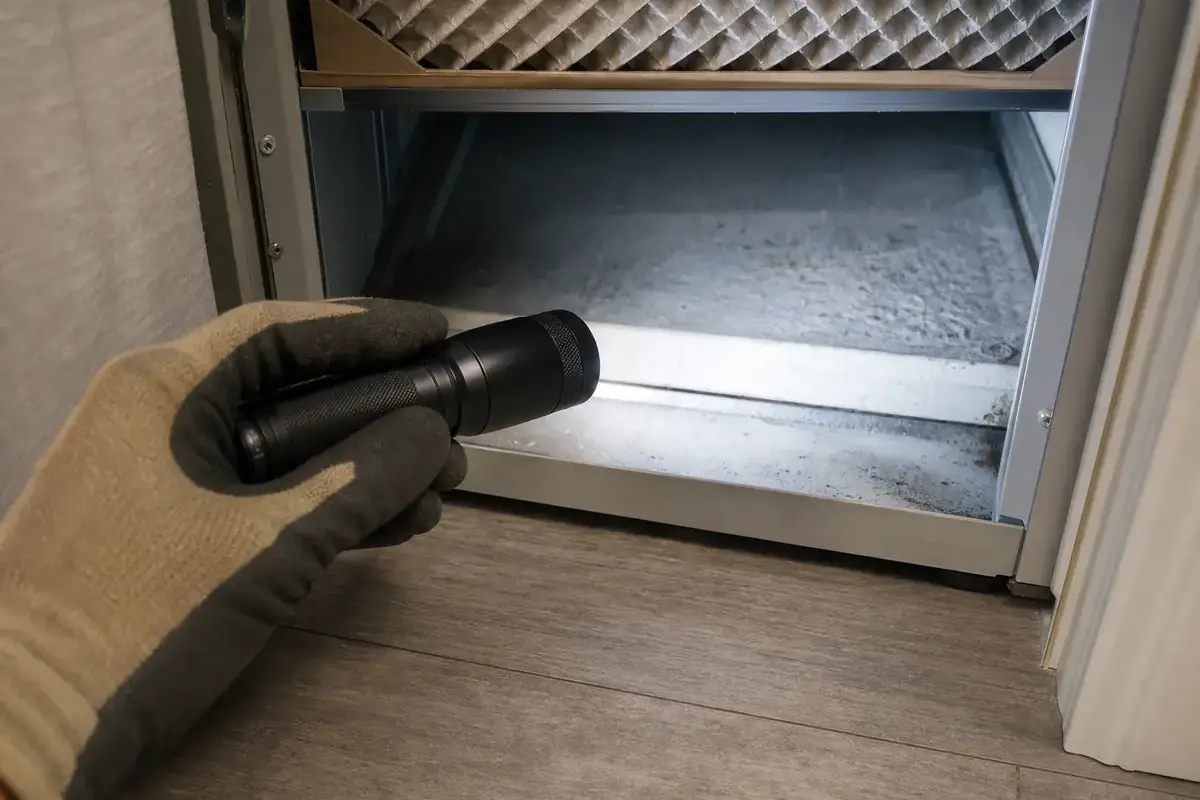
Helps when: Use it to inspect the filter slot, return grille, condensate area, cabinet base, and nearby room-source clues.
Skip it when: Skip checks that require removing electrical covers, reaching into the cabinet, or working near water and controls.
Compare inspection flashlights on Amazon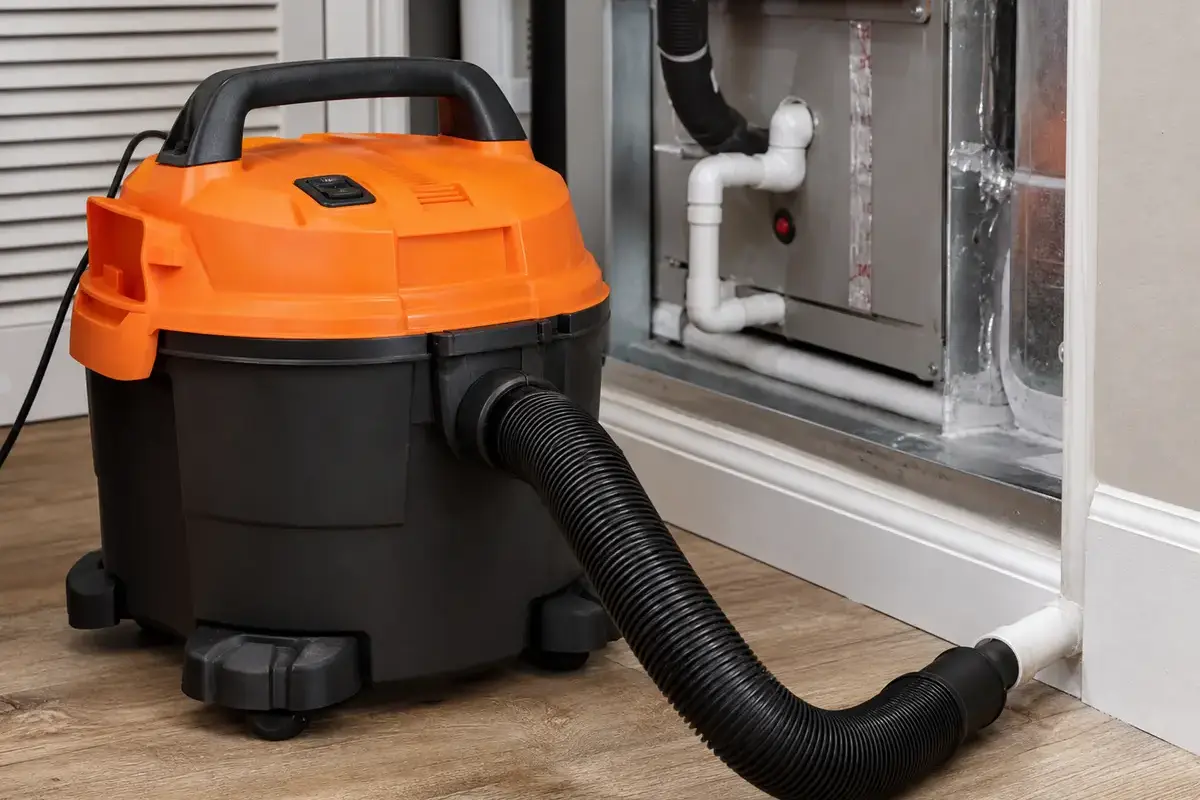
Helps when: Use it only at a known condensate outlet when standing water or drain backup is visible.
Skip it when: Skip it when the drain outlet is hidden, water is near electrical controls, or you cannot identify the condensate line.
Compare wet-dry vacuums on Amazon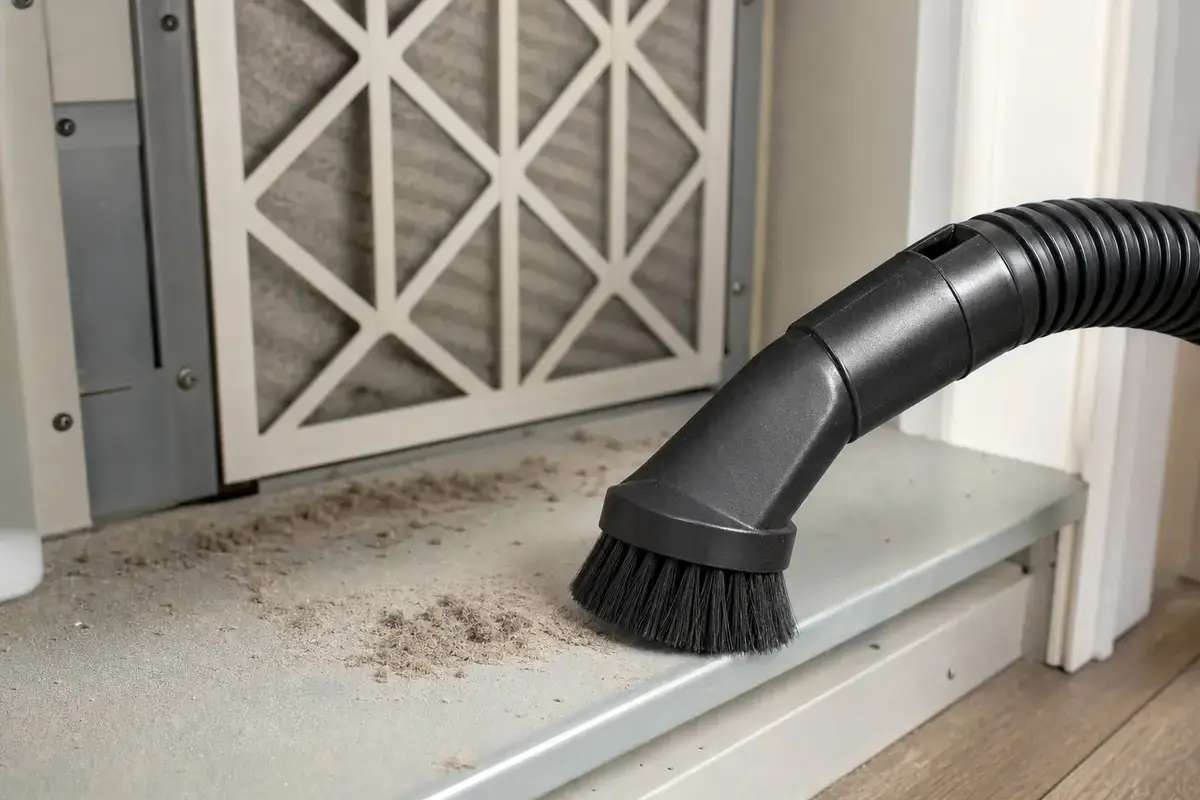
Helps when: Use it to clean loose dry dust from reachable grille faces after the system is off.
Skip it when: Skip brushing wet growth, coil fins, lined duct interiors, or anything beyond a reachable grille face.
Compare soft brush attachments on Amazon
Helps when: Use it to compare damp rooms, return-air zones, basement entries, and closed-up rooms.
Skip it when: Skip treating one reading as proof of duct contamination; compare rooms and use it with visible moisture clues.
Compare indoor humidity meters on AmazonAs an Amazon Associate I earn from qualifying purchases. Repair Riot may earn a commission at no extra cost to you.
The blower is carrying odor from the filter, return path, drain area, ductwork, or a nearby room source.
Yes. A packed or wet filter can hold odor that releases whenever air moves through it.
Inspect that room, return grille, return cavity, and nearby damp or drain sources first.
Yes. Water sitting in the pan or drain slime can smell whenever the blower pulls air through the indoor unit area.
No for smoke, gas odor, electrical odor, decay odor, illness, or strong irritation.
Not first. Find whether the odor is filter, return, drain, room, duct, or hidden equipment before paying for duct work.
A correct-size filter, flashlight, humidity meter, wet-dry vacuum, or soft brush is reasonable only when the visible clue fits.
Call if odor persists after visible checks, follows airflow from a hidden source, smells like decay, or appears with smoke, gas odor, electrical odor, or water near controls.
Repair Riot built this page around visible odor clues: source location, filter condition, moisture, airflow, weather, and stop points before hidden work.