Pressure climbs hot?
Expansion, fill, relief, or circulation path before any control adjustment.
A boiler overheating is usually a safety or flow problem, not a part to guess at. Your first check is the pressure gauge: if hot pressure climbs, the relief outlet gets wet, the boiler locks out, or banging starts, shut it down and call for service.
Good clues are a fast-rising gauge, relief discharge, a thermostat or control calling too long, poor circulation, air in the loop, or a boiler that heats water faster than the system can move it.
Use the outside clues first: pressure, relief outlet, flow, thermostat call, and whether heat is actually leaving the boiler.
Don’t start with: Do not raise controls, bypass limits, cap a relief pipe, or keep resetting an overheated boiler.
Expansion, fill, relief, or circulation path before any control adjustment.
Document discharge and stop repeated firing until pressure controls are checked.
Flow, air, zone valve, or circulator branch.
Control demand or wiring/service diagnosis may be involved.
Record timing and fault display; do not reset repeatedly.
The pressure gauge, thermostat/control context, and visible circulation path show whether the boiler is overheating because heat cannot leave safely.
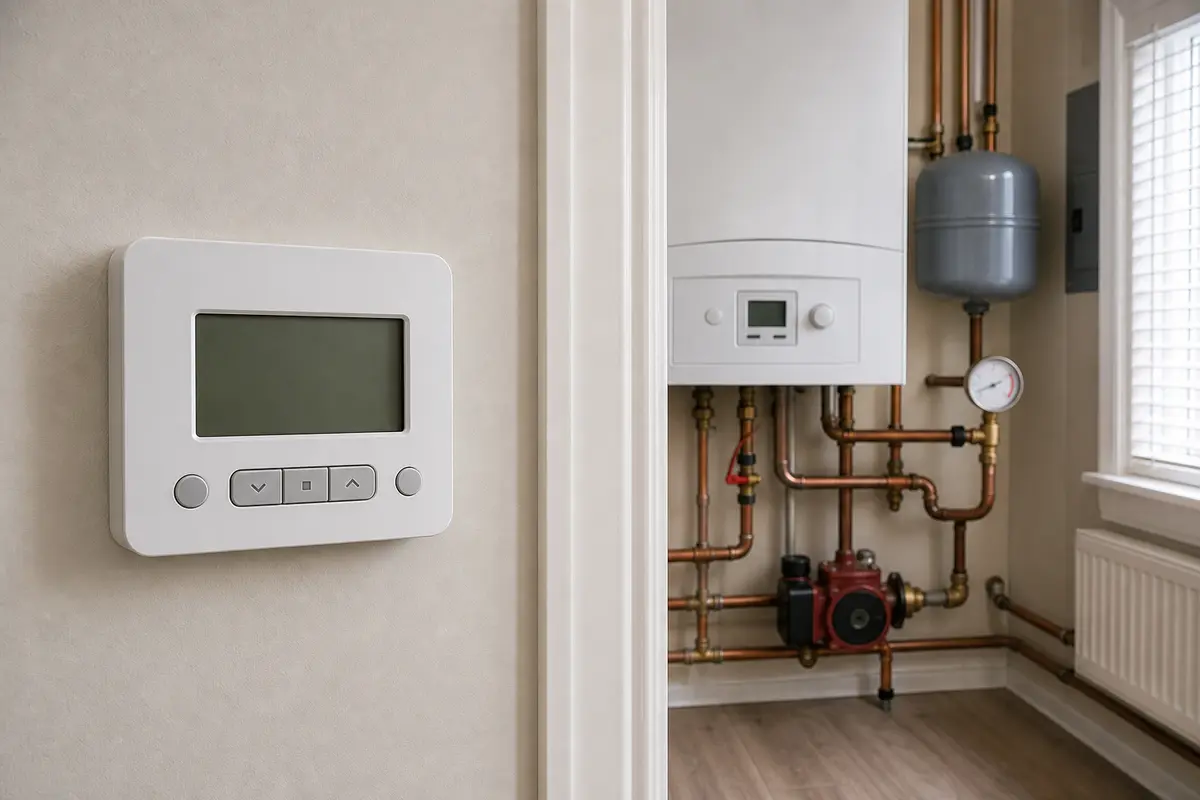
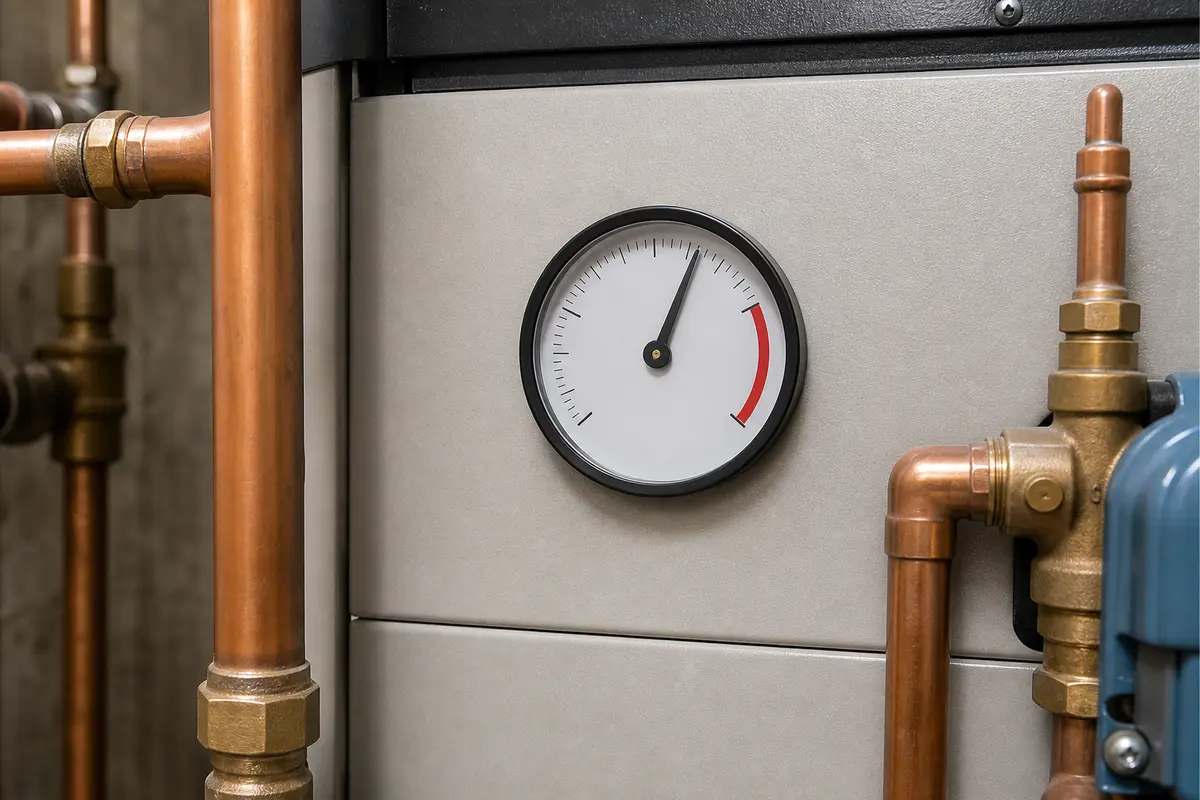
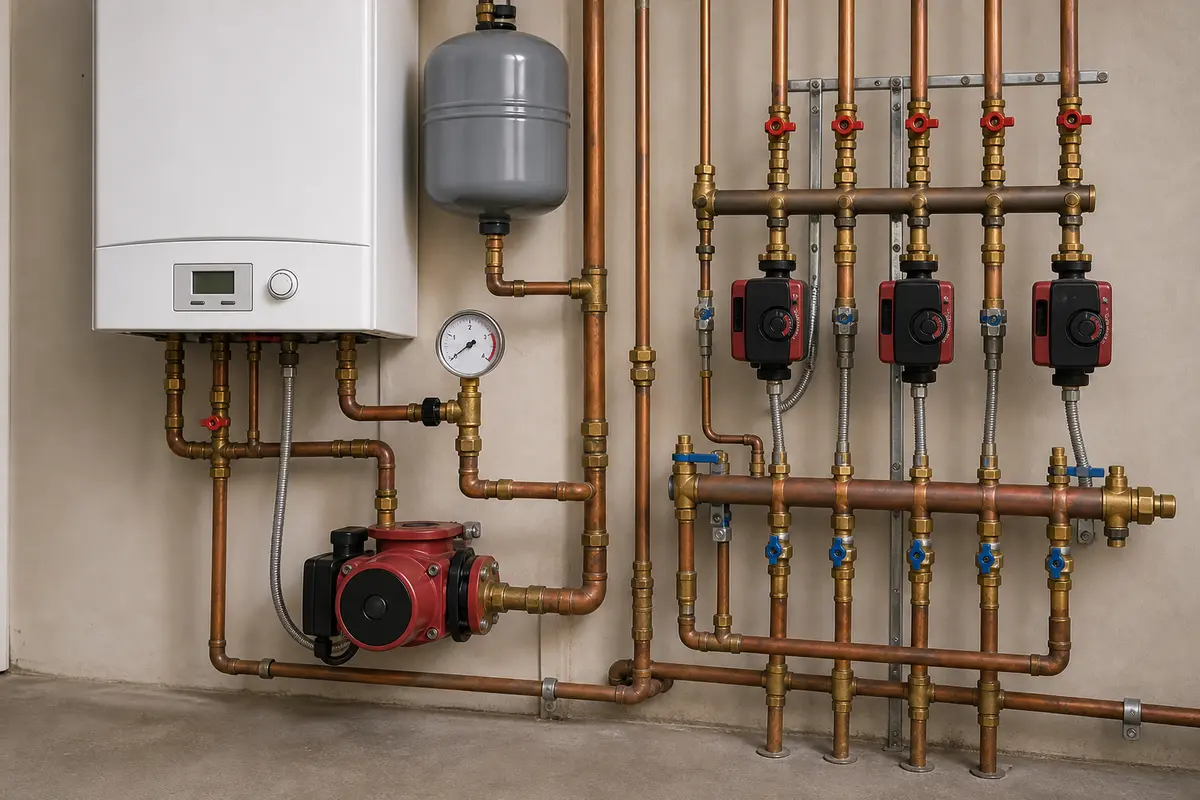
Confirm whether overheating is driven by pressure rise, relief discharge, poor circulation, trapped air, or a control call before matching any part. Match the exact appliance model, control setup, measurements, and confirmed diagnosis before ordering anything.
A boiler can overheat when heat is produced faster than the system can absorb it. Because the same pattern can involve pressure, relief discharge, or combustion safety, the first job is deciding whether to stop.
Limit settings, gas valves, aquastats, outdoor reset controls, and internal boiler settings are not diagnosis shortcuts. Changing them can hide the fault or create a worse one.
Use pressure, relief discharge, and heat delivery together. The same high-temperature symptom means different things depending on whether water is moving and pressure is stable.
| Pattern | Likely branch | Next move |
|---|---|---|
| Pressure rises sharply hot | Expansion/fill/relief path | Stop repeated operation and book service. |
| Relief outlet drips | Overpressure or failed relief reseat | Document discharge; do not cap it. |
| Boiler hot, rooms cold | Flow, air, zone, circulator path | Compare zones and call service if heat will not move. |
| Banging or steaming | Unsafe boiling or flow failure | Shut down and call urgently. |
| Overheat after reset | Recurring limit or control fault | Stop resetting and preserve the code. |
When pressure rises as the boiler heats, the expansion side deserves attention. A waterlogged tank, fill-valve issue, or relief valve that has opened before can make the boiler look like it is simply running hot.
Heat must leave the boiler through the hydronic loop. If it does not, the boiler can satisfy its own limit while rooms stay cold.
These tools help document pressure, temperature, and timing without opening the boiler or touching hot piping.
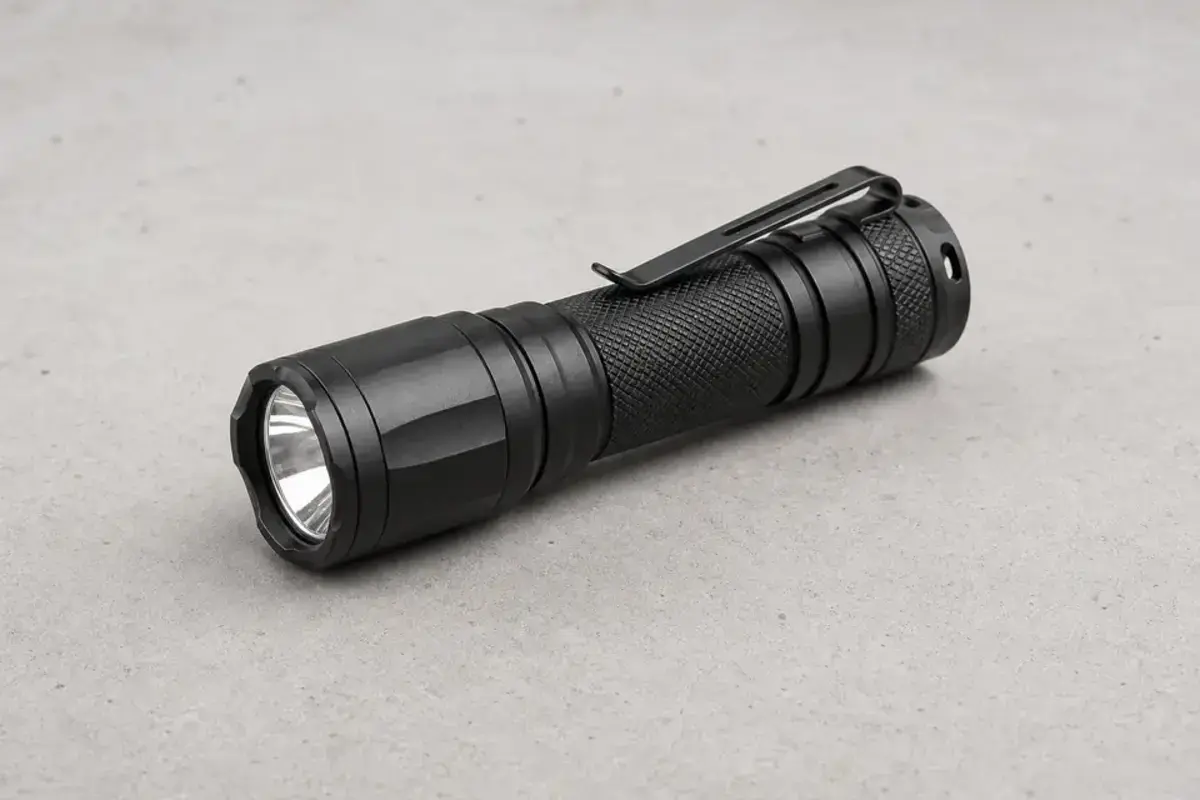
Helps when: Helps read the pressure gauge, pilot area, relief outlet, valve positions, and fault display without opening covers.
Skip it when: Skip close inspection if the boiler is leaking near electrical parts, smells like gas, or has locked out again.
Compare flashlights on Amazon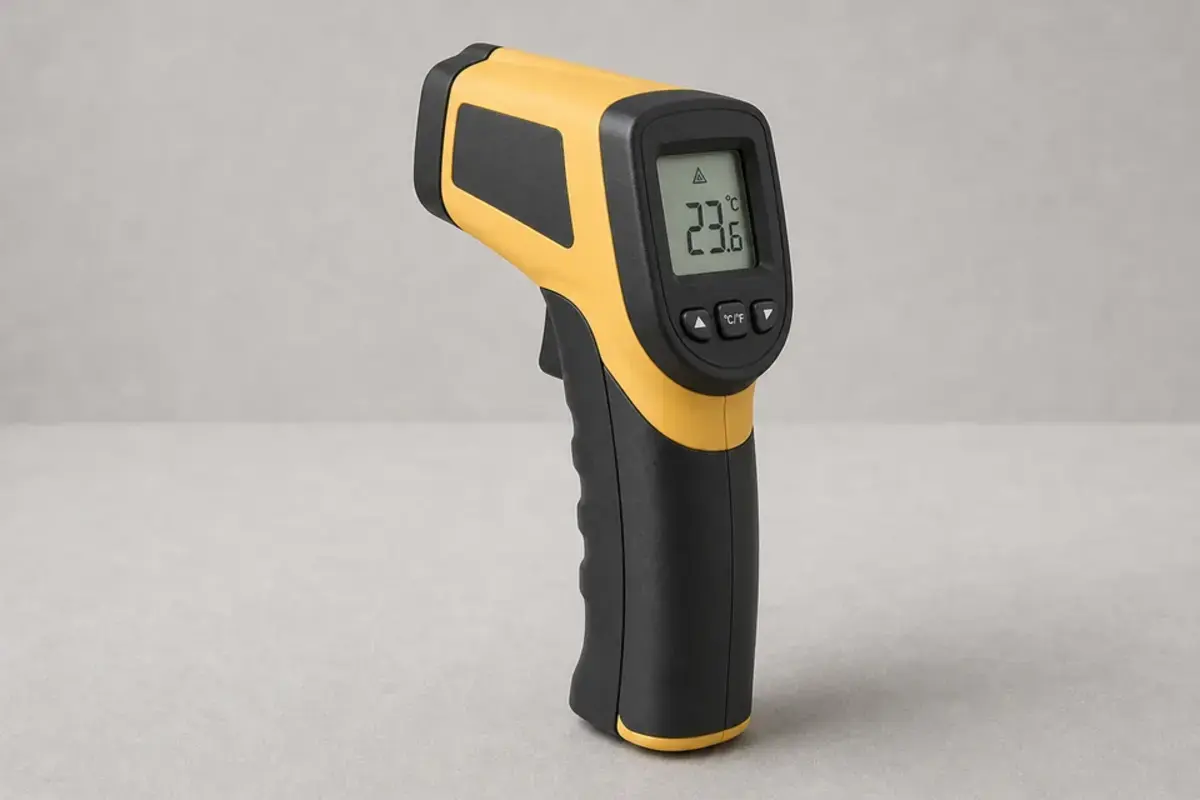
Helps when: Compares accessible pipe, radiator, and baseboard temperatures without touching hot metal.
Skip it when: Skip temperature checks when piping is not safely reachable or the boiler is leaking, locked out, or overheating.
Compare infrared thermometers on Amazon
Helps when: Records pressure readings, reset timing, fault lights, leak timing, pilot behavior, and what changed first.
Skip it when: Skip buying one if clear photos and a written symptom timeline are already ready for the technician.
Compare notebooks on AmazonAs an Amazon Associate I earn from qualifying purchases. Repair Riot may earn a commission at no extra cost to you.
Common branches are poor circulation, trapped air, pressure or expansion trouble, control demand that does not stop, or a safety limit fault. The pressure and relief-valve clues decide how urgent it is.
Use one normal reset only if the manual allows it and there is no gas smell, leak, relief discharge, pressure problem, or banging. A second overheat needs service.
Yes. A wet relief outlet can mean pressure rose too high or the valve no longer reseats cleanly after opening. Do not cap or ignore it.
That points toward air, poor circulation, a closed valve, zone trouble, or a circulator issue rather than a simple thermostat setting.
Not as a first fix. Document the symptom and call for service if pressure or relief clues appear; changing settings can hide the real cause.
Only if there is no gas smell, carbon monoxide alarm, leak near wiring, relief-valve discharge, breaker trip, overheating, or repeat lockout. Stop and call for service when any safety clue appears.
Photograph the pressure gauge, display or fault light, first wet point if water is involved, thermostat call, pilot or burner clue from outside the cover, and the timing of the symptom.
Recurring pressure loss, relief discharge, boiler-body leakage, repeat lockout, pilot or burner trouble, electrical symptoms, or any check that requires opening a boiler compartment belongs with a qualified boiler technician.
Repair Riot reviewed this page around boiler overheating, pressure rise, relief discharge, hydronic flow, thermostat/control clues, and combustion safety stop points. The source links support boiler maintenance and carbon monoxide safety context; the diagnostic sequence is original guidance.