Does the shower run while the spout still streams?
That is split flow and often points to a diverter spout.
A bathtub shower diverter leak usually shows as split flow: the shower runs while water still escapes from the tub spout. First identify whether the diverter is in the spout, behind a wall handle, or part of the main valve, then buy only that matching part.
The usual cause is a worn diverter gate in the tub spout or a worn diverter cartridge/stem behind the trim.
Watch both water paths at once: showerhead flow, tub spout flow, and any wet trace at the valve trim.
Don’t start with: Do not buy a plain spout or valve cartridge until the first leaking path is clear.
That is split flow and often points to a diverter spout.
The wall-valve path is more likely than the spout path.
Match the replacement to a diverter tub spout if that knob fails.
Inspect the diverter stem or cartridge behind that handle.
A pressure-balance or main valve cartridge may be involved.
A diverter leak is easiest to see when both water paths are visible. The first wet point near trim decides whether the repair stays at the spout or moves behind the wall.
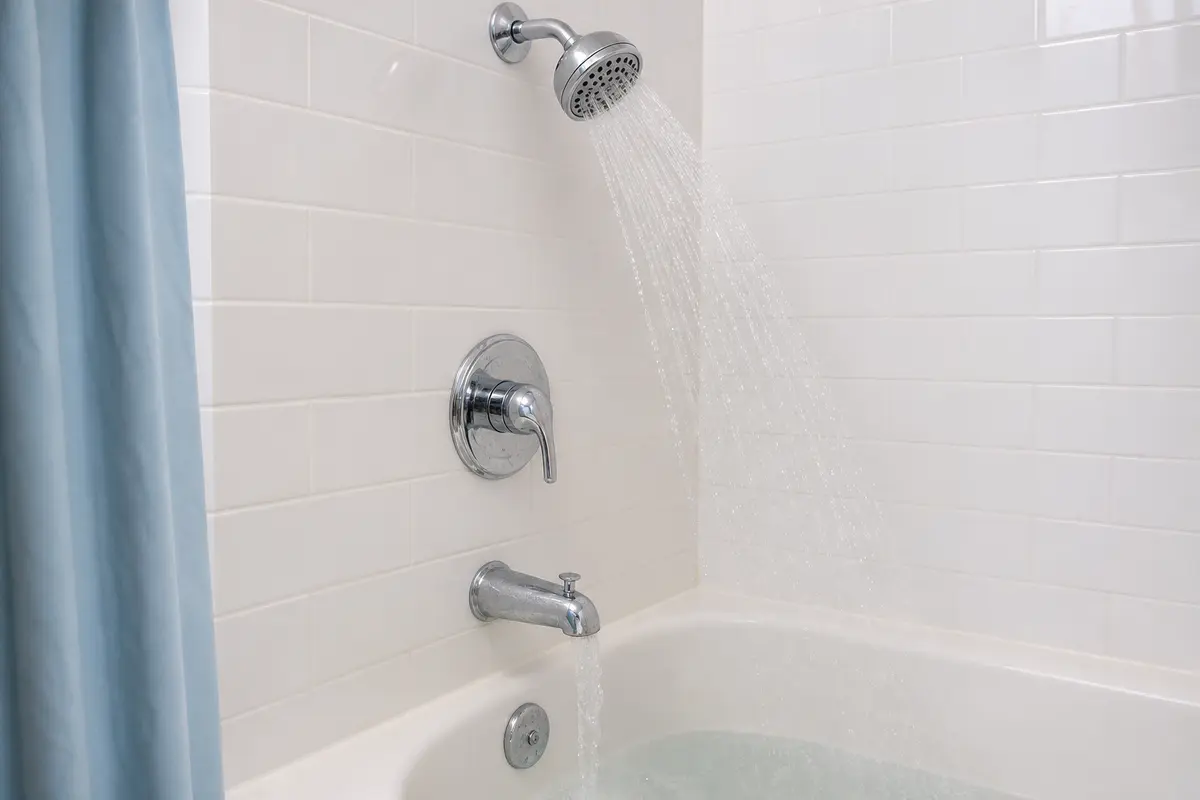
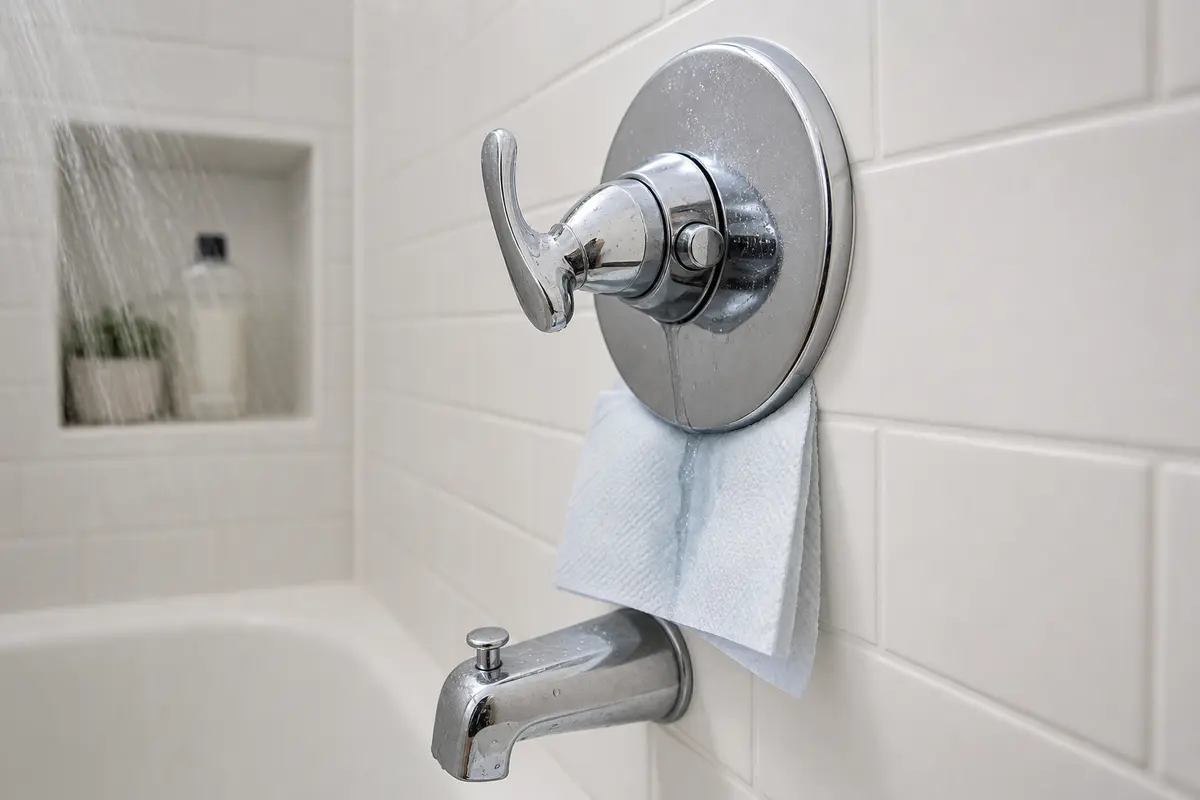
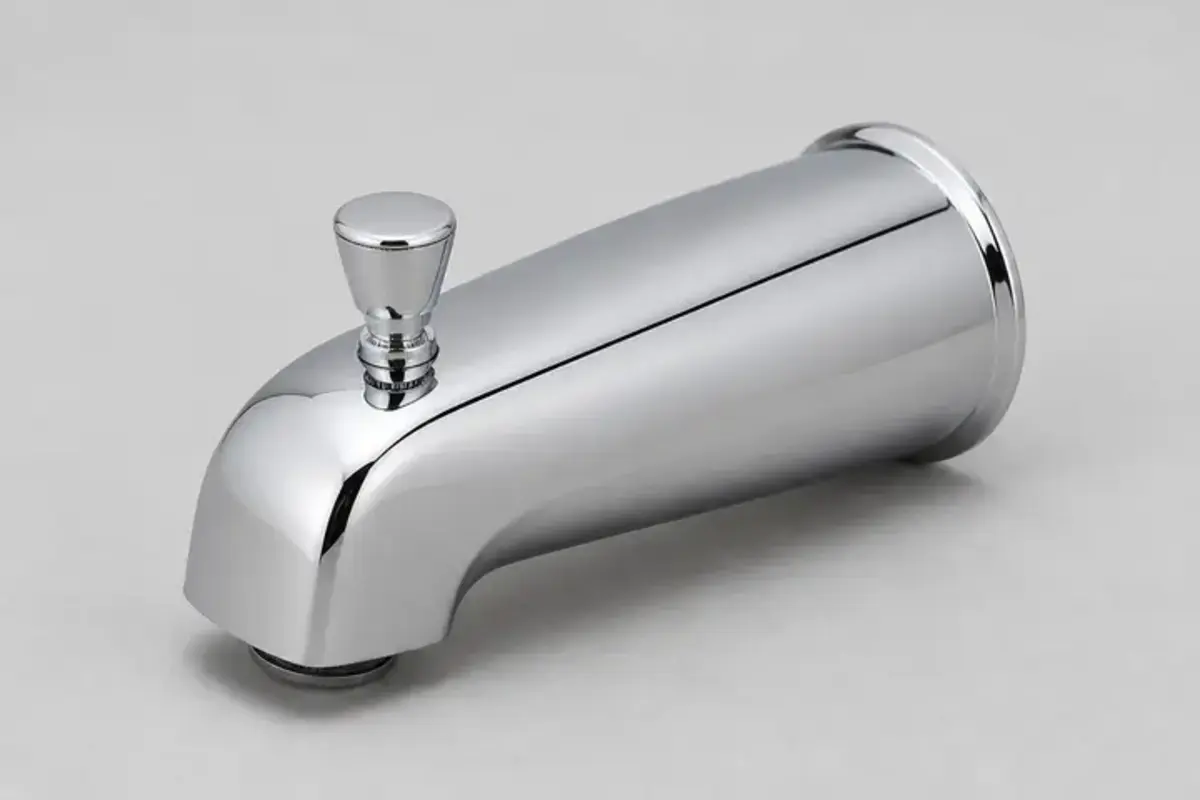
Confirm whether the leak is split flow through a spout diverter or a wet wall-valve trim leak. The first path decides the part. Match the exact diagnosis, fixture style, and model or valve family before ordering.
The diverter should close one water path and open the other. When it leaks, water splits between the showerhead and tub spout or escapes around trim.
Parts look similar online, but the diverter location matters more than the symptom name.
Run a short shower test and watch the spout, showerhead, and trim. The first leak path decides the cart.
| What you see | Likely source | Next move |
|---|---|---|
| Shower runs and spout streams | Diverter gate not sealing | Match the diverter spout or wall diverter. |
| Pull-up knob on spout fails | Spout-mounted diverter | Use the diverter spout replacement path. |
| Separate diverter handle leaks | Wall diverter stem or cartridge | Inspect trim and valve parts. |
| Trim wet plus odd temperature | Main valve or pressure-balance cartridge | Confirm valve model before parts. |
The same split-flow symptom can come from two different places. Look for the control that actually changes water direction.
Split flow wastes water, but trim wetness is the bigger damage clue. Water behind tile can travel before it appears below.
These tools help identify the diverter location and watch for trim wetness. Skip trim removal when shutoffs and valve parts are not identified.
These parts are split by diverter location: spout-mounted diverter, plain spout, wall valve cartridge, or pressure-balance cartridge.
The diverter is not closing one path. In many tubs, that means the pull-up diverter inside the spout is worn.
Not always. A spout diverter leak is one possible source; wet valve trim or a separate wall handle points behind the wall trim.
Only if the failed diverter is built into the spout or the spout itself leaks at the body or wall connection.
Then inspect the wall diverter stem, cartridge, or trim instead of buying a diverter spout.
Avoid it if water reaches trim, the wall, or the floor. Even simple split flow wastes water until repaired.
The showerhead does not close the tub path. The diverter must seal the unused path.
It can, especially when split flow appears with temperature or pressure changes in a single-handle valve.
Call if water enters the wall, the diverter valve is seized, or you cannot identify the valve brand and shutoffs.
Repair Riot reviewed this page around split-flow clues: showerhead flow, tub spout flow, pull-up diverter position, wall-diverter trim wetness, and temperature or pressure changes. The source links support shower-flow and leak context; the diagnostic sequence is original guidance.