Does a nearby sink stay hot?
Yes means the tub valve is the lead.
If the bathtub starts hot then turns cold while the nearby sink stays hot, the trouble is usually at the tub/shower valve: a limit stop, sticky cartridge, or pressure-balance cartridge. If the sink fades too, check water-heater recovery before opening trim.
A good clue is a tub that cools at the spout while the sink keeps running hot.
Measure both fixtures, watch for a pressure change, and leave trim alone until the tub is isolated.
Don’t start with: Do not replace the water heater or cartridge until the sink comparison proves which system is actually failing.
Yes means the tub valve is the lead.
Check the limit stop before replacing the cartridge.
A pressure-balance cartridge may be restricting hot water.
Check water-heater recovery, not tub trim.
Recheck handle stop position and cartridge orientation.
Compare the tub with a nearby sink. A tub-only hot-then-cold symptom belongs at the valve, not the water heater.
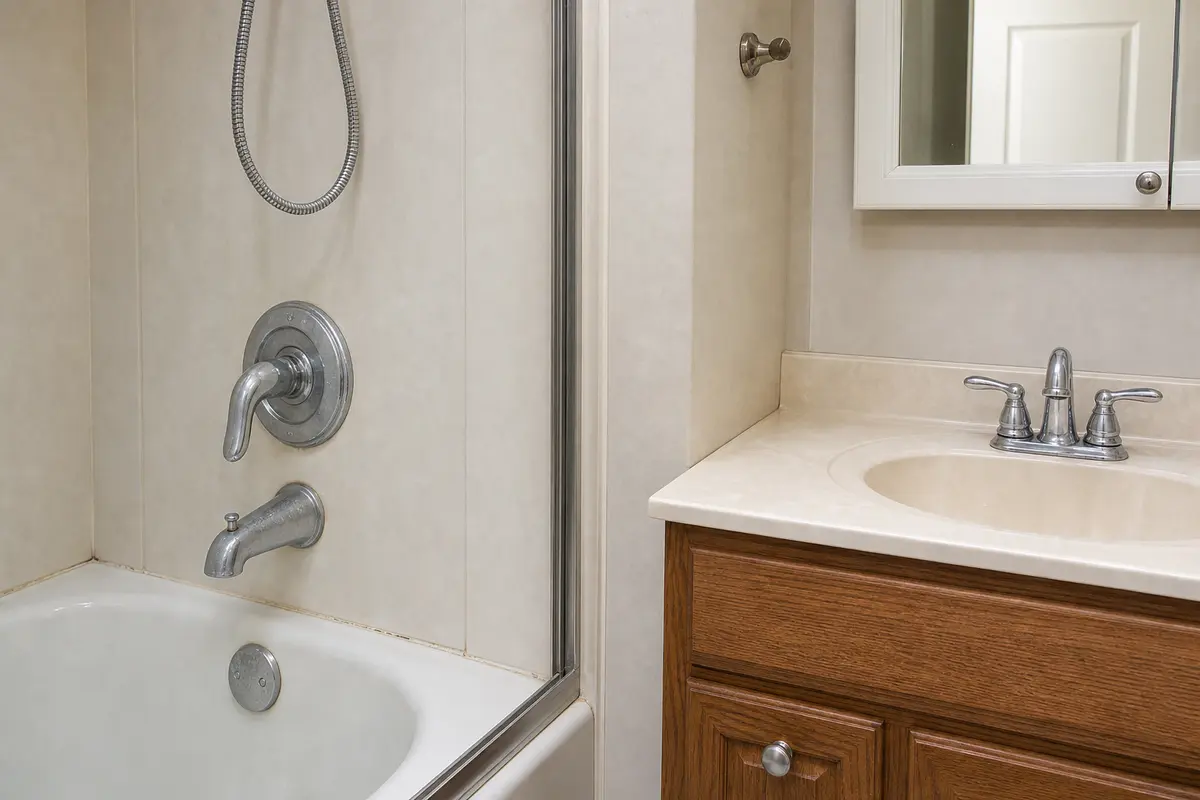
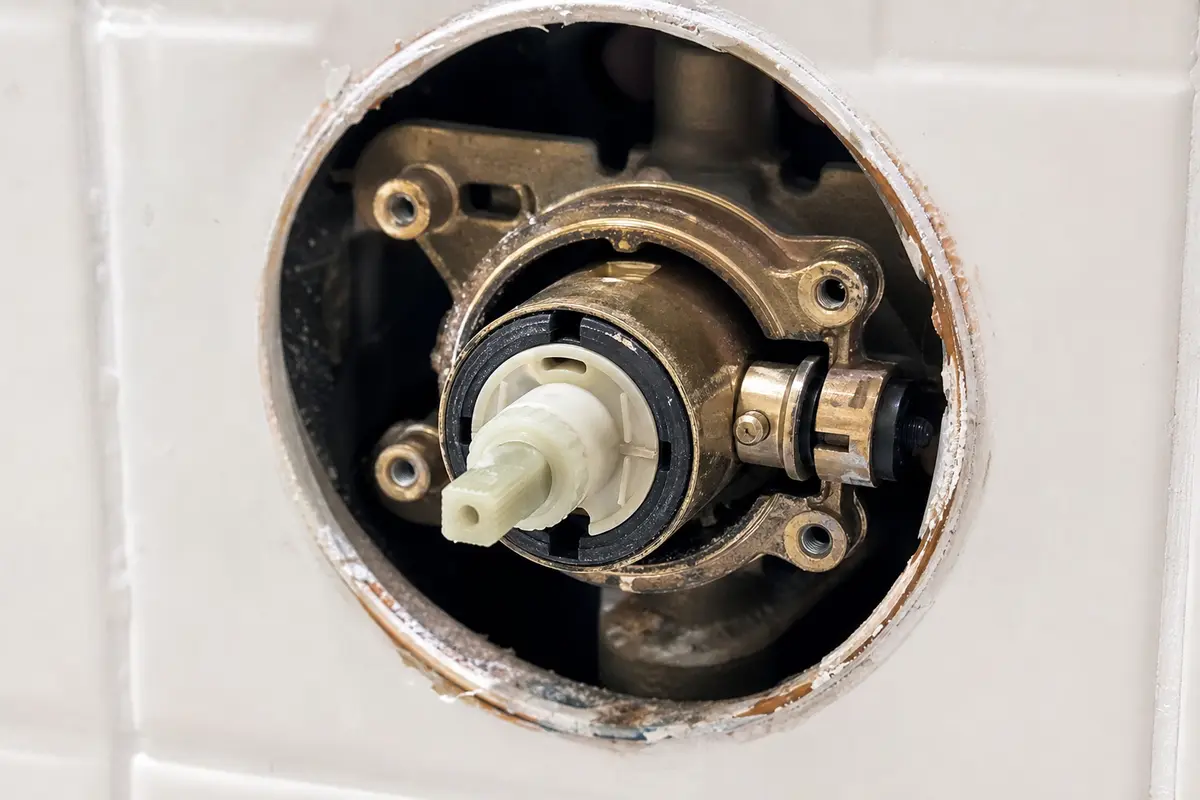
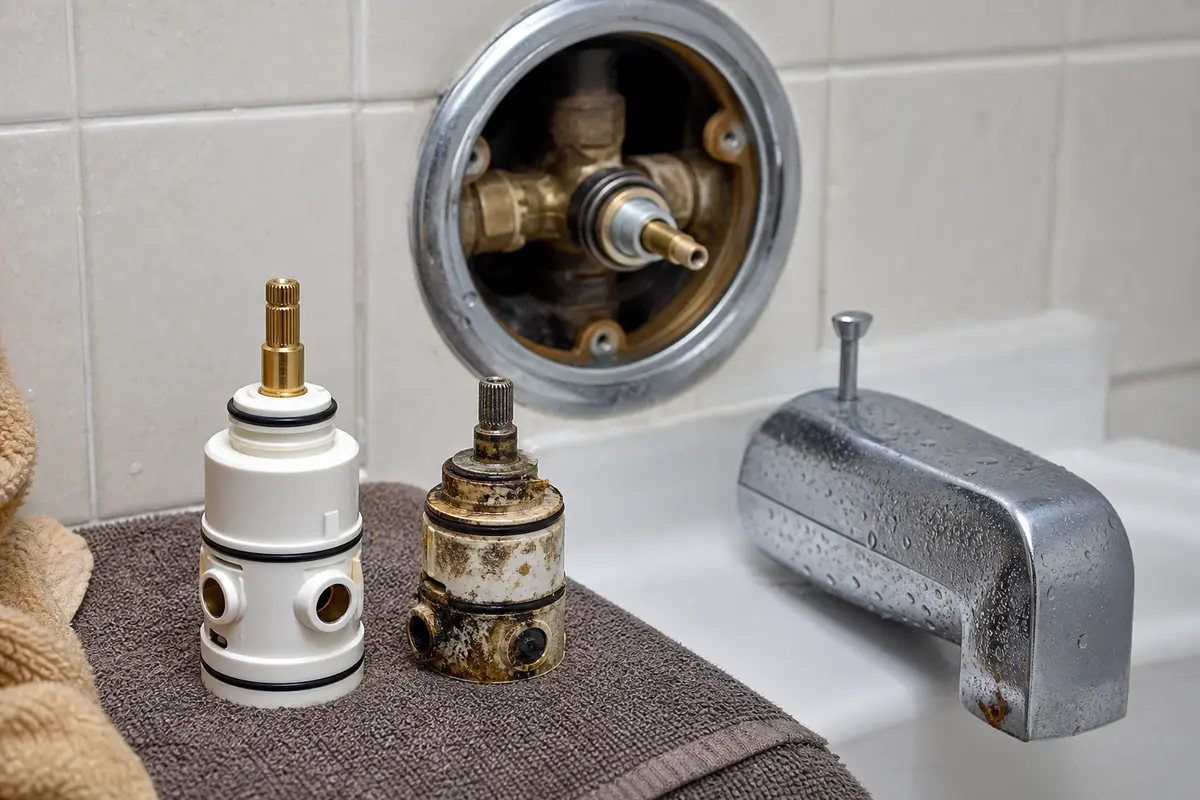
Confirm sink-versus-tub behavior before buying a limit stop or cartridge. Match the exact diagnosis, fixture style, and model or material before ordering.
Start with the split you can see while the tub is fading: does the tub spout cool while the nearby sink stays hot, or do both fixtures cool during the same run? Open the sink during the fade before you remove handle trim; a sink that stays hot keeps the check at the tub valve, while a sink that cools points back to water-heater recovery.
The wrong first move is opening trim or replacing water-heater parts before comparing fixtures.
Run the tub long enough to catch the fade, then check the nearby sink during the same window. A good clue is which outlet changes first. Watch both temperature and flow before you decide whether the valve is worth opening.
| What you see | What it usually means | Next move |
|---|---|---|
| Sink stays hot, tub cools after startup | Tub/shower valve is the better lead | Check limit stop position, then cartridge clues. |
| Sink and tub both cool during the same run | Hot-water supply or heater recovery | Leave tub trim alone and move upstream. |
| Tub never gets past lukewarm | Limit stop may be set too low | Mark the stop, adjust only in small steps, and measure again. |
| Tub flow or pressure changes as it cools | Cartridge or pressure-balance behavior | Match the valve model before ordering a cartridge. |
A limit stop can make the handle start hot and then settle into a cooler range if the stop is damaged or mis-set.
A good clue for cartridge trouble is tub-only cooling paired with rough handle movement, weak hot-side flow, or pressure changes.
These tools support measured comparison and careful valve-trim inspection. Skip trim work if multiple fixtures cool down.
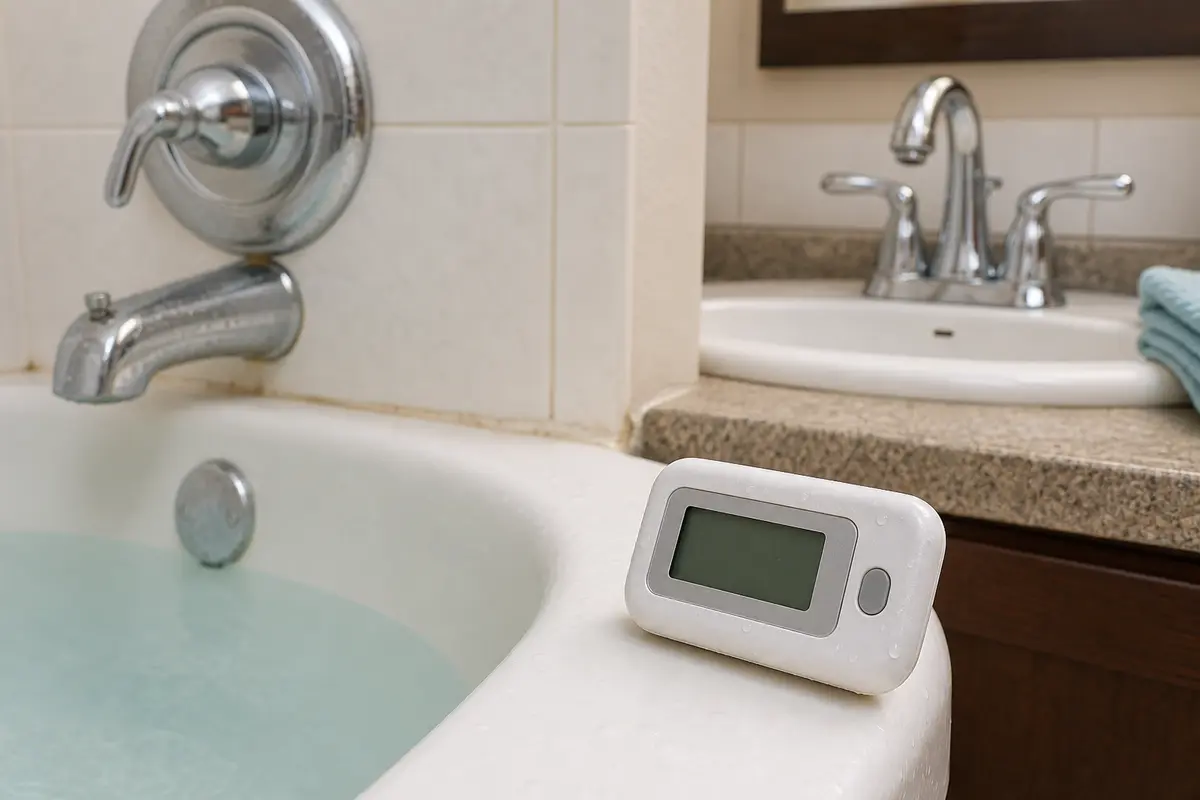
Helps when: Use a measured tub and sink comparison when hot water starts hot and fades cold.
Skip it when: Skip guessing by hand feel when the difference is small or inconsistent.
Compare bath thermometer on Amazon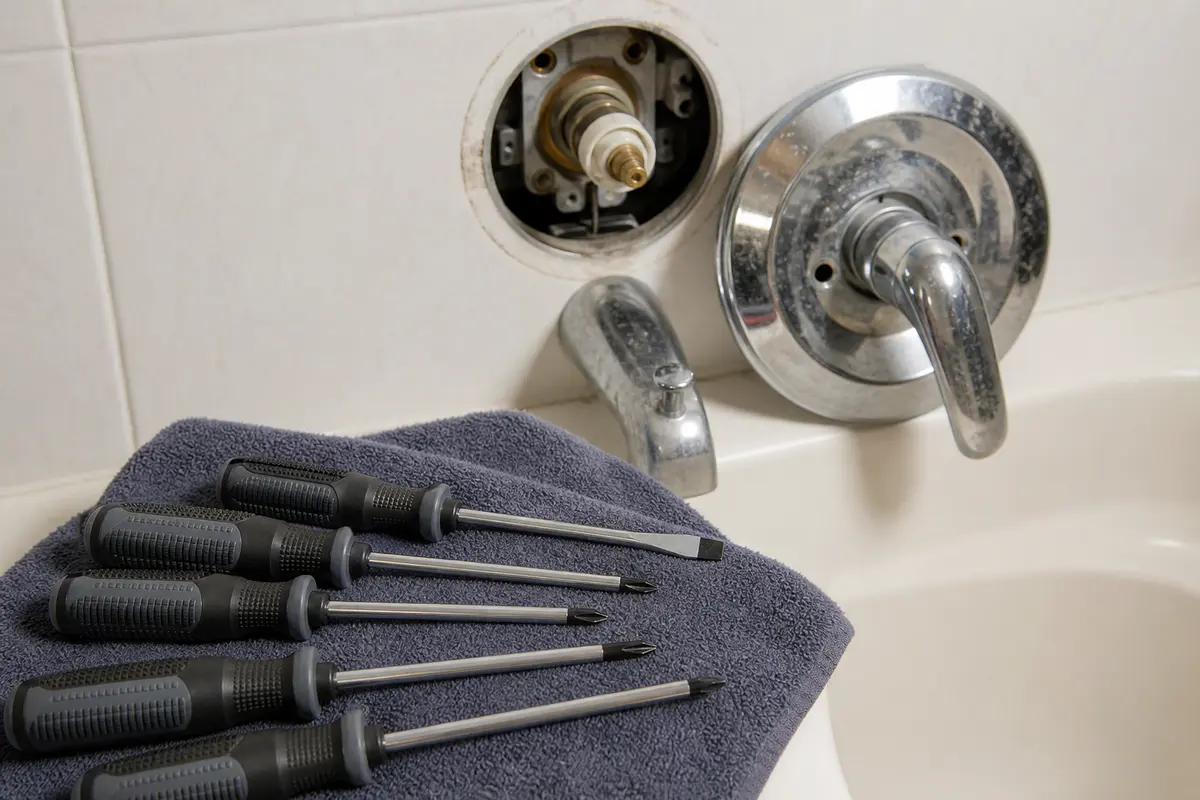
Helps when: Useful after the tub-only pattern points behind the handle trim.
Skip it when: Skip trim removal when every fixture in the home also loses hot water.
Compare screwdriver set on Amazon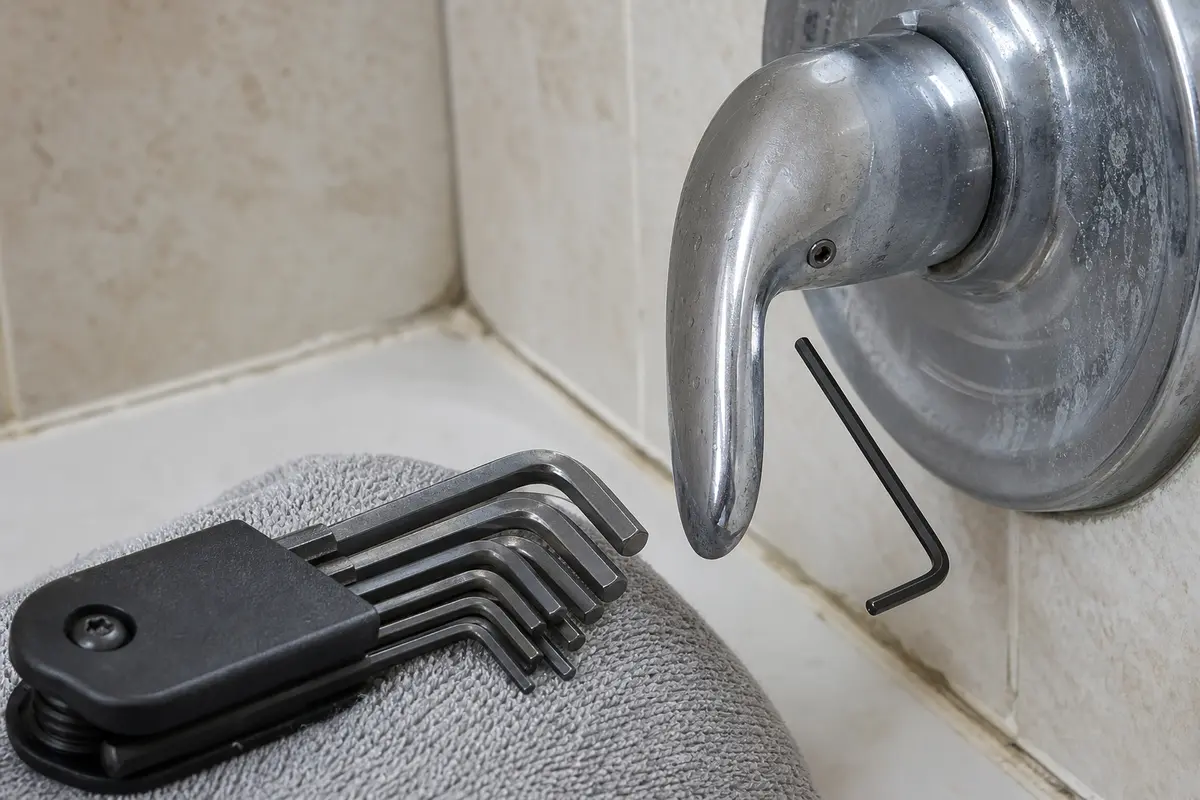
Helps when: Choose this when the handle uses a small set screw before the limit stop is visible.
Skip it when: Skip forcing the handle if a hidden set screw still holds it.
Compare allen key set on Amazon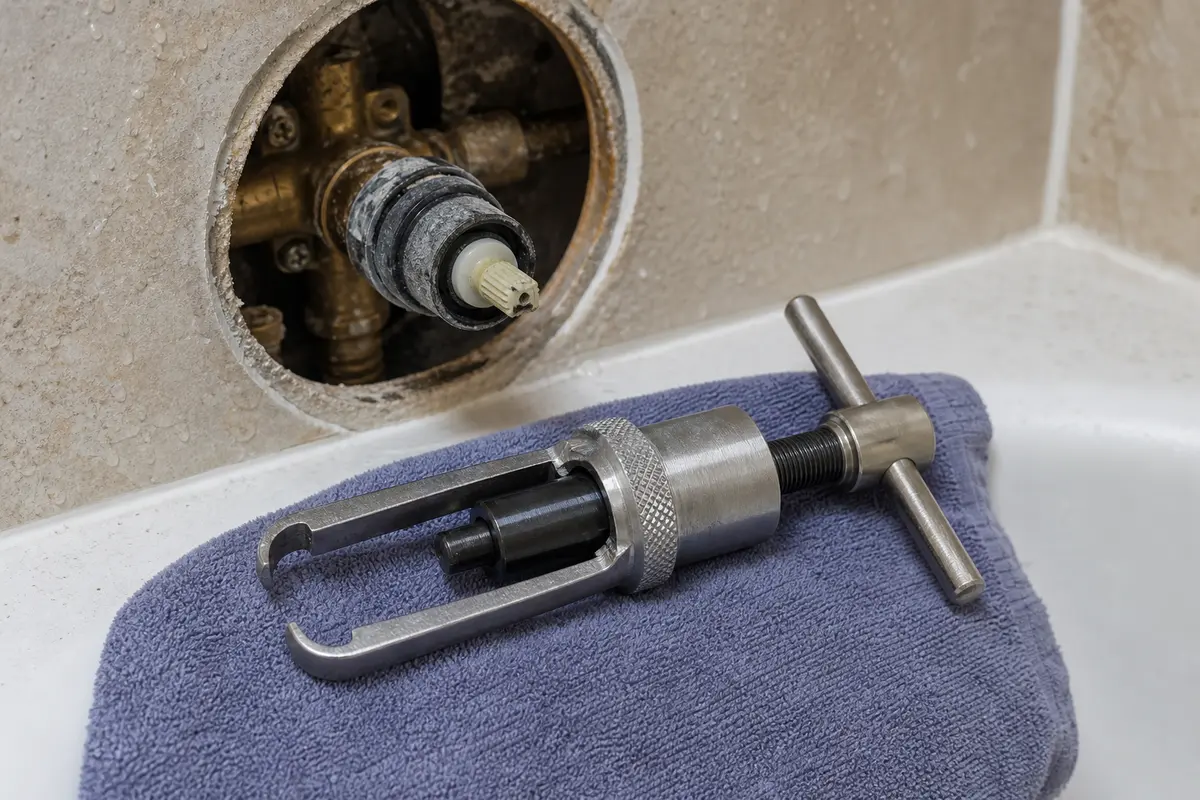
Helps when: Keep this for a confirmed stuck cartridge after the valve model and water shutoff are clear.
Skip it when: Skip a puller for a simple anti-scald limit stop adjustment.
Compare cartridge puller on Amazon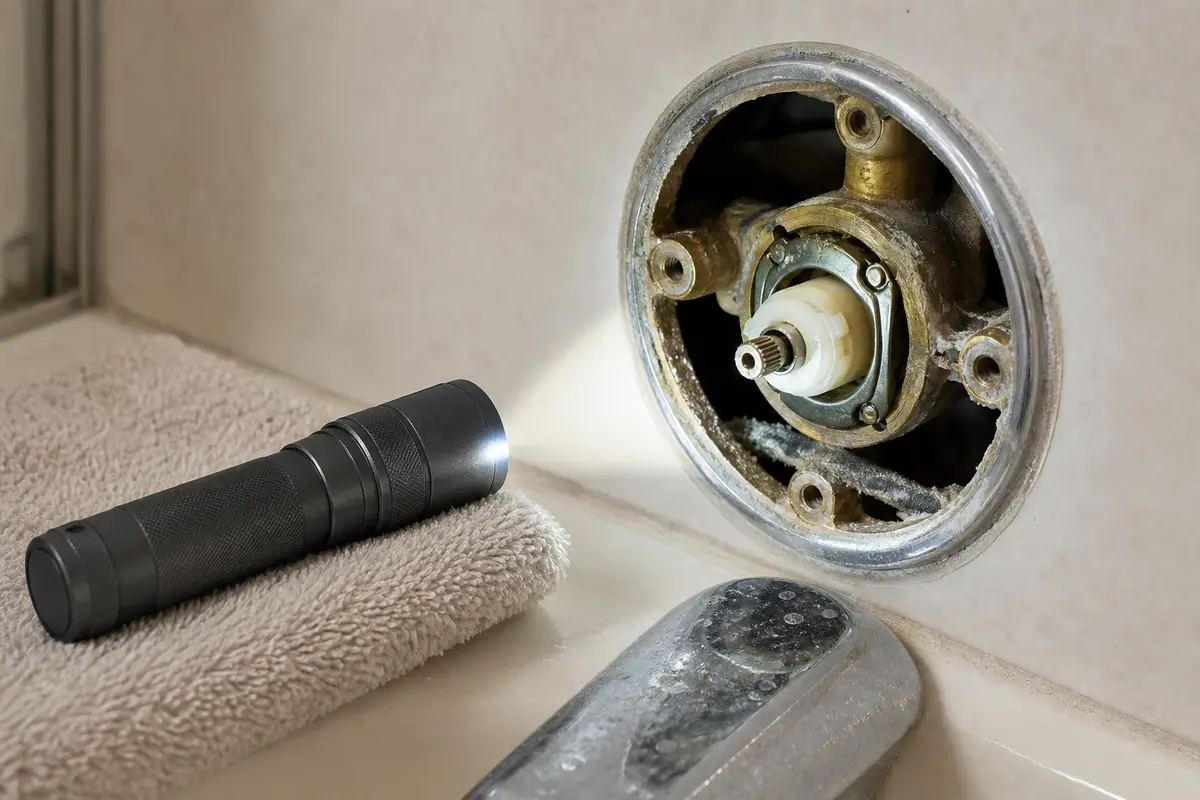
Helps when: Use light to inspect the limit stop, retaining clip, brand marks, and mineral buildup.
Skip it when: Skip working inside a dark valve opening where the retaining parts are unclear.
Compare inspection flashlight on AmazonAs an Amazon Associate I earn from qualifying purchases. Repair Riot may earn a commission at no extra cost to you.
These parts match tub-only valve symptoms. They are not water-heater repair parts.
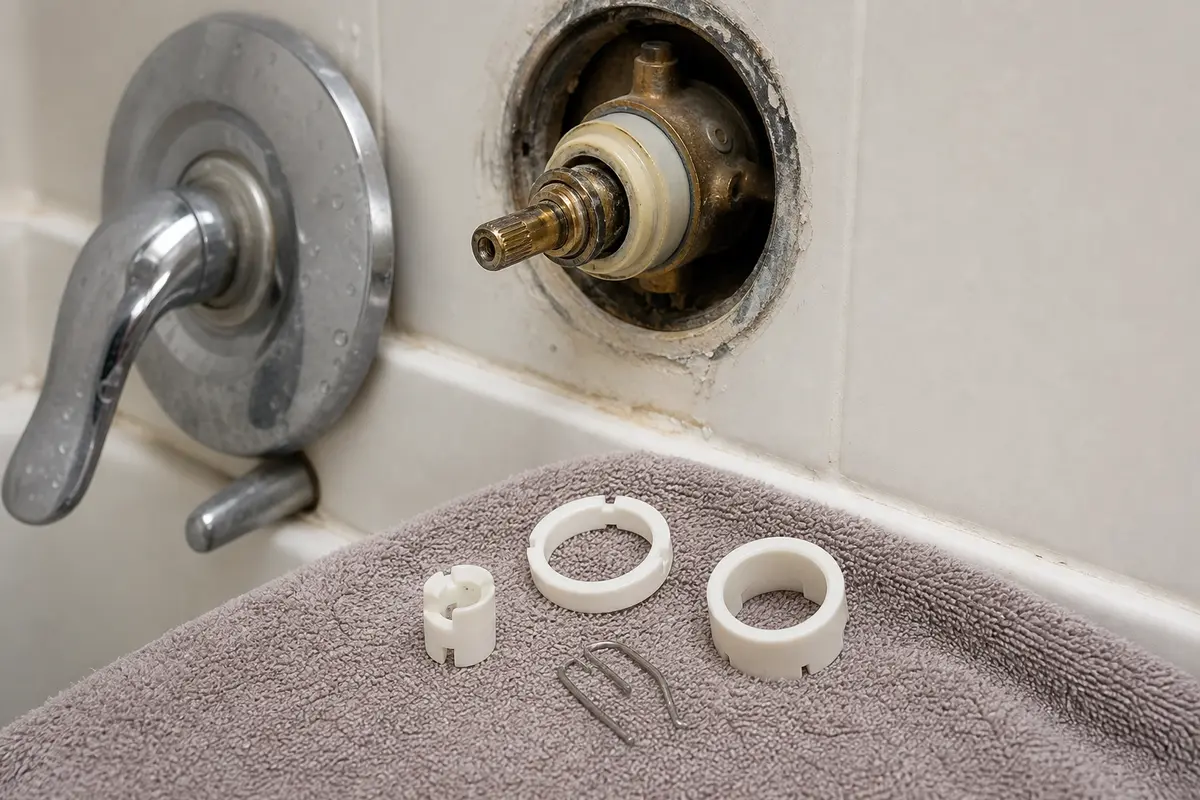
Helps when: Buy this when the tub starts hot then turns cold because a damaged stop will not hold the corrected range.
Skip it when: Skip it if the sink also fades cold; that points away from the tub handle.
Compare anti-scald limit stop kit on Amazon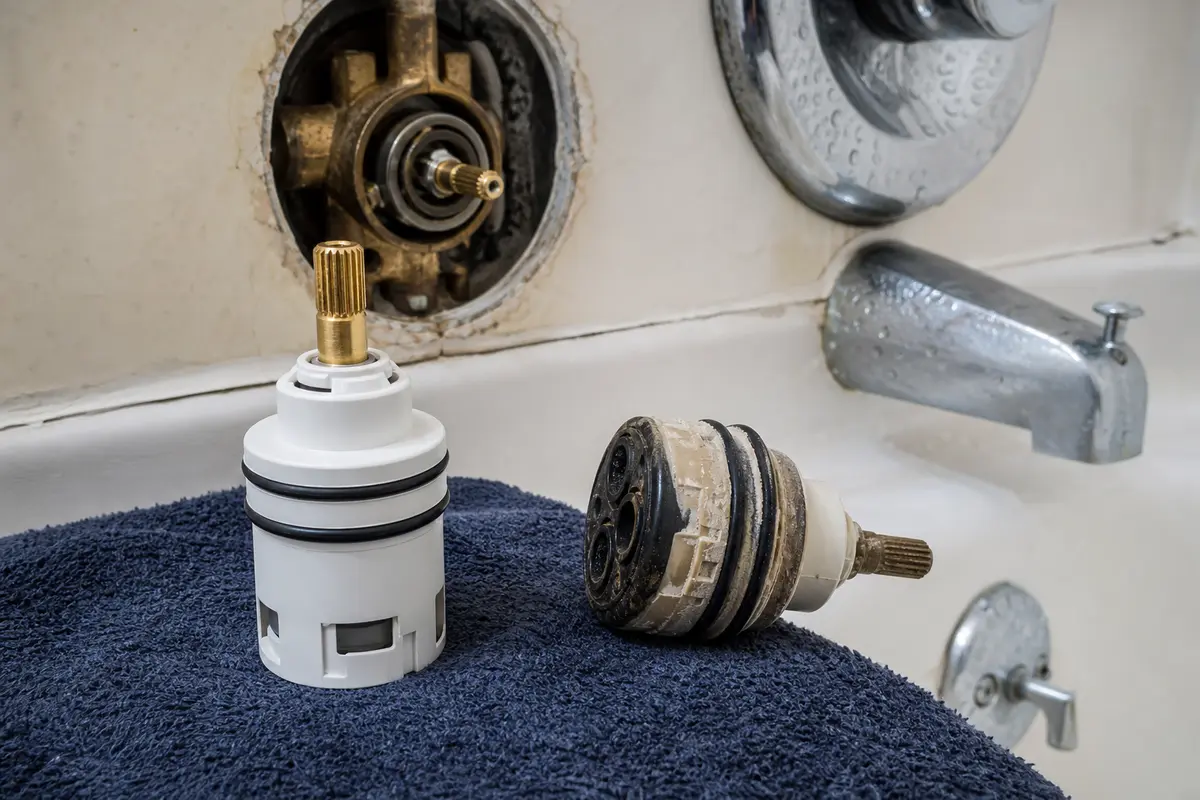
Helps when: Choose this when the tub-only temperature change follows a sticky handle, weak hot side, or cartridge movement clue.
Skip it when: Skip cartridge replacement until the valve brand and cartridge shape match exactly.
Compare tub/shower valve cartridge on AmazonHelps when: Use this for compatible single-handle valves when pressure balance behavior cuts the hot side after startup.
Skip it when: Skip it for a whole-home water-heater recovery problem.
Compare pressure-balance cartridge on AmazonAs an Amazon Associate I earn from qualifying purchases. Repair Riot may earn a commission at no extra cost to you.
If nearby fixtures stay hot, the tub valve, limit stop, or cartridge is usually the lead.
Yes, but usually more than one fixture fades cold when the water heater is the problem.
Only after measuring temperature and marking the original position.
Yes. A sticky cartridge can cut or restrict hot-side flow after startup.
A tub/shower valve can fail locally while the sink still gets normal hot water.
Call if the cartridge is stuck, the valve leaks, or shutoff is uncertain.
Avoid use if temperature swings could scald or if valve trim leaks.
The tub holds a stable safe temperature while a nearby sink still behaves normally.
Repair Riot built this page around a two-fixture test: run the tub, run a nearby sink, and compare which outlet cools first. The cited sources explain water-heater recovery and water-waste context. The stop, cartridge, and pressure-balance checks are original Repair Riot guidance.