Is the diverter knob on top of the tub spout?
Start at the spout, not behind the valve trim.
A stuck bathtub spout diverter is usually a worn or mineral-bound pull-up diverter inside the tub spout. Confirm that the diverter is actually in the spout, then check whether the knob moves, whether water still pours from the spout, and whether the wall valve has its own diverter.
The usual cause is a jammed diverter gate or worn diverter seal inside the spout.
The checks are simple: pull-up spout diverter, wall diverter valve, or a separate valve problem.
Don’t start with: Do not remove valve trim or buy a wall cartridge until you know the tub uses a spout diverter.
Start at the spout, not behind the valve trim.
The stuck part may be the wall diverter valve, not the spout.
The diverter gate or seal inside the spout is likely worn.
Mineral buildup or broken diverter hardware is likely.
Stop removal and protect the wall piping.
The strongest visual clue is the diverter knob position compared with where water actually flows.
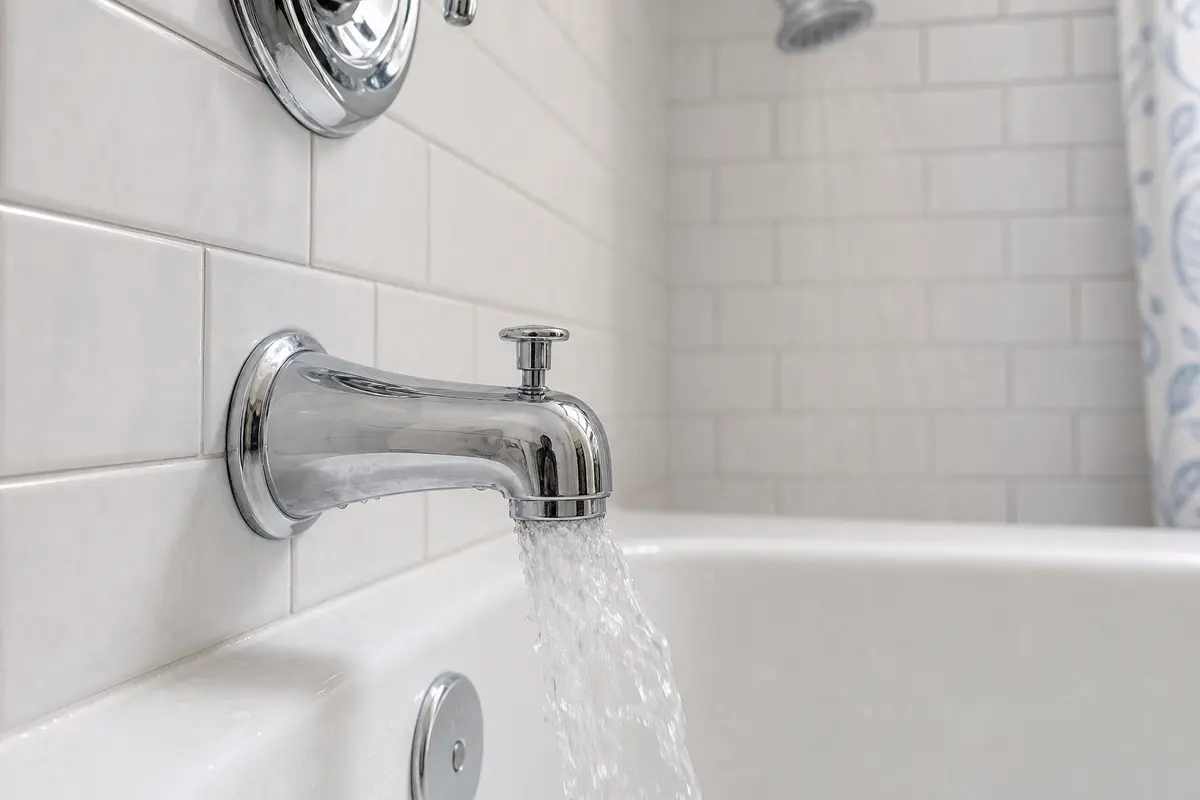
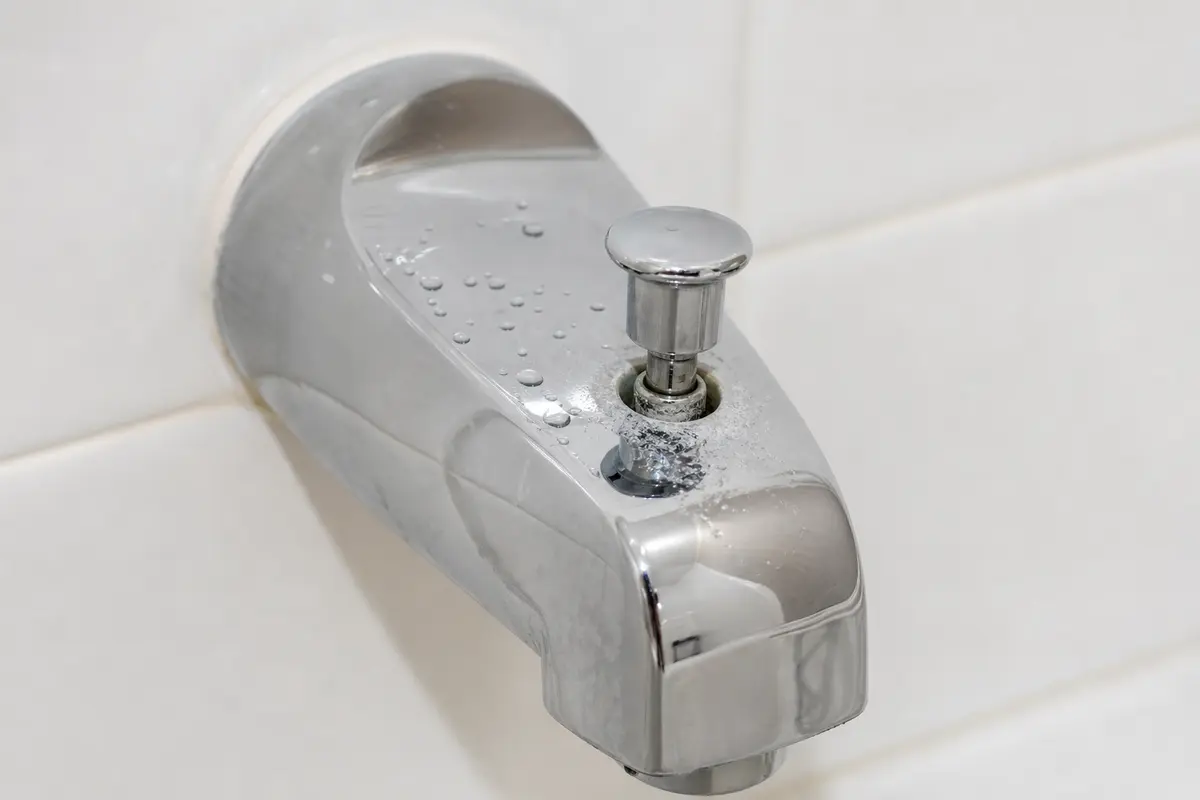
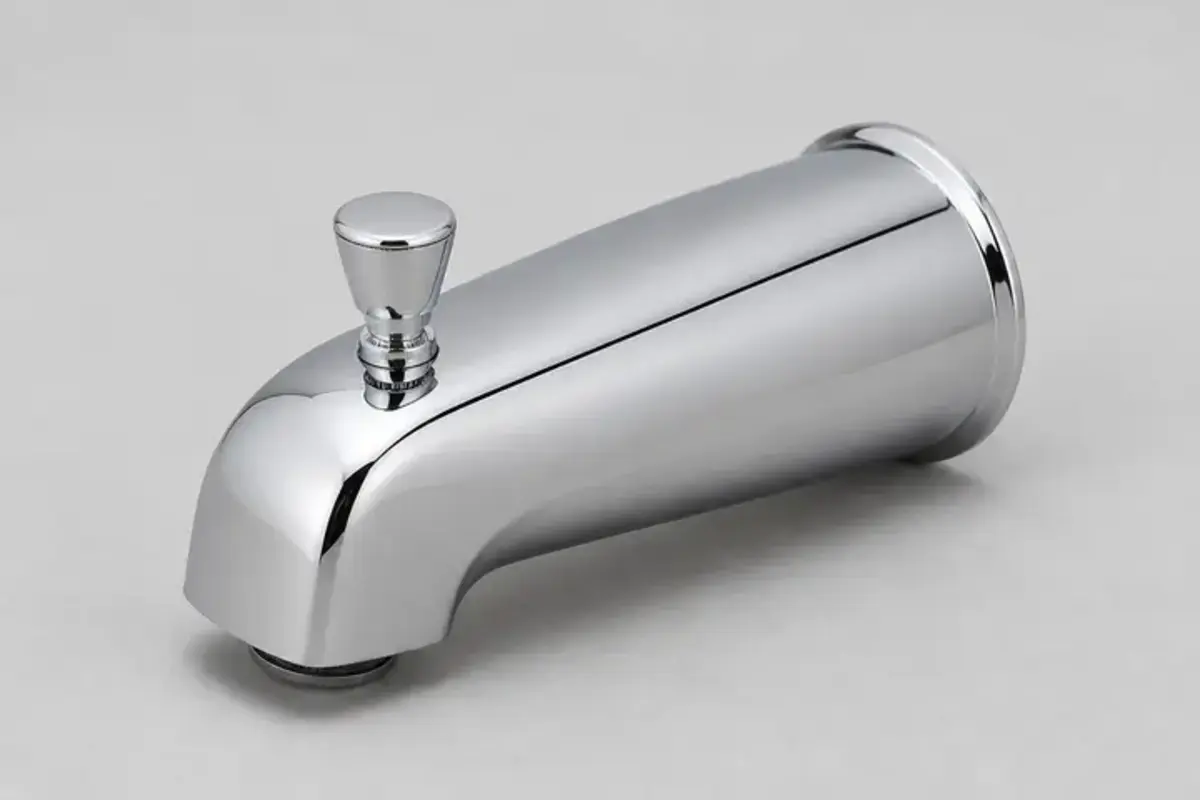
Confirm that the diverter is built into the tub spout, then match slip-on versus threaded attachment. A wall diverter problem will not be fixed by a spout. Match the exact diagnosis, fixture style, and model or valve family before ordering.
The pull-up diverter in a tub spout moves a small gate that sends water to the shower riser. When that gate jams or the seal wears out, the knob position no longer matches the water path.
The wrong first move is attacking the wall valve when the stuck part is in the spout. Confirm the diverter style before opening anything.
Watch the knob, water path, and spout attachment style. The combination tells you whether to clean, replace the spout, or inspect the valve.
| What you see | What it usually means | Next move |
|---|---|---|
| Knob stuck and no shower switch | Spout diverter hardware is jammed | Match and replace the diverter spout if cleaning does not free it. |
| Knob moves but spout still flows | Diverter seal is worn | Replace the diverter spout after confirming style. |
| Separate wall diverter handle | Spout may not be the diverter | Inspect the wall diverter branch. |
| Pipe stub twists during removal | Hidden piping is moving | Stop and call a plumber. |
Replacement depends on how the spout attaches. A slip-on diverter spout and threaded diverter spout are not interchangeable without matching the pipe stub.
Some tub-shower setups use a separate wall diverter or valve cartridge. A center handle, wet trim, or poor shower flow with a plain spout is the observable clue. Dry the trim, run a short test, and watch whether water starts at the handle area before removing the spout.
These tools match cautious spout-style confirmation. Skip removal work if the diverter is a wall-handle valve or the pipe stub moves.
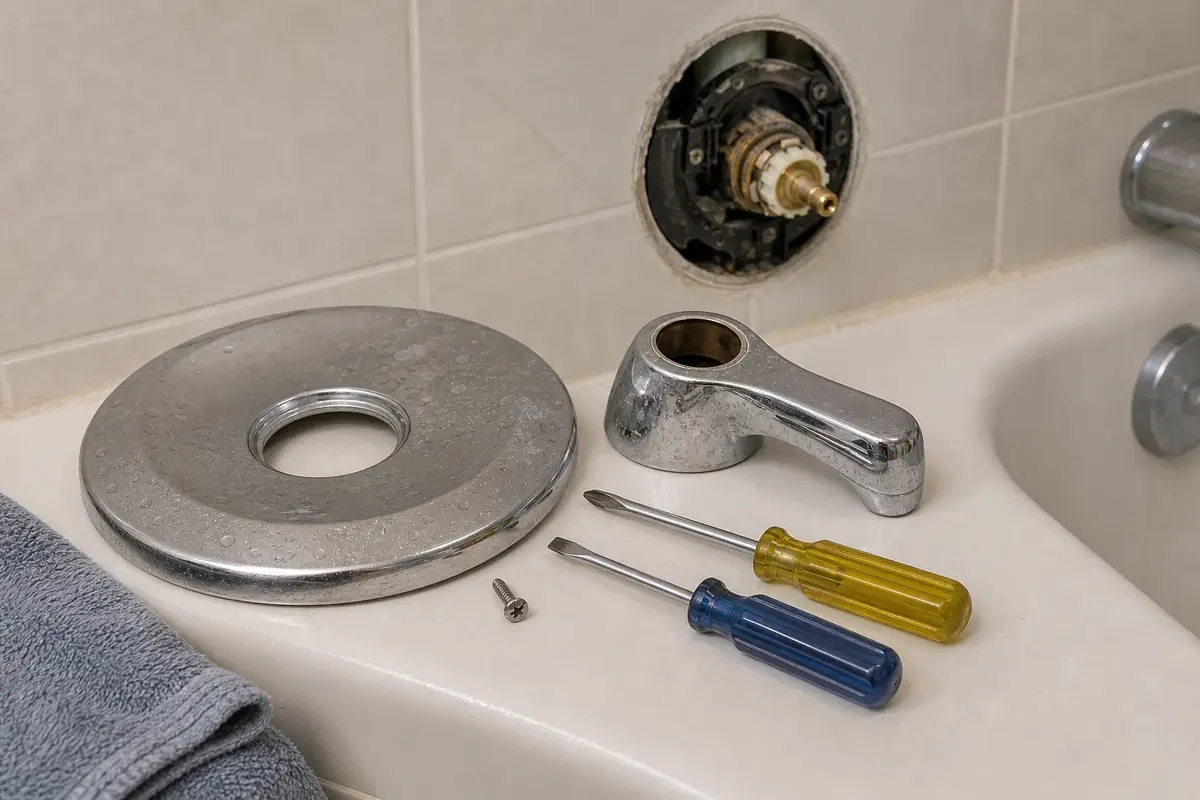
Helps when: Useful when trim or an access plate needs to come off after the stuck diverter is proven.
Skip it when: Skip removing valve trim before confirming whether the tub spout diverter is the stuck part.
Compare screwdriver set on Amazon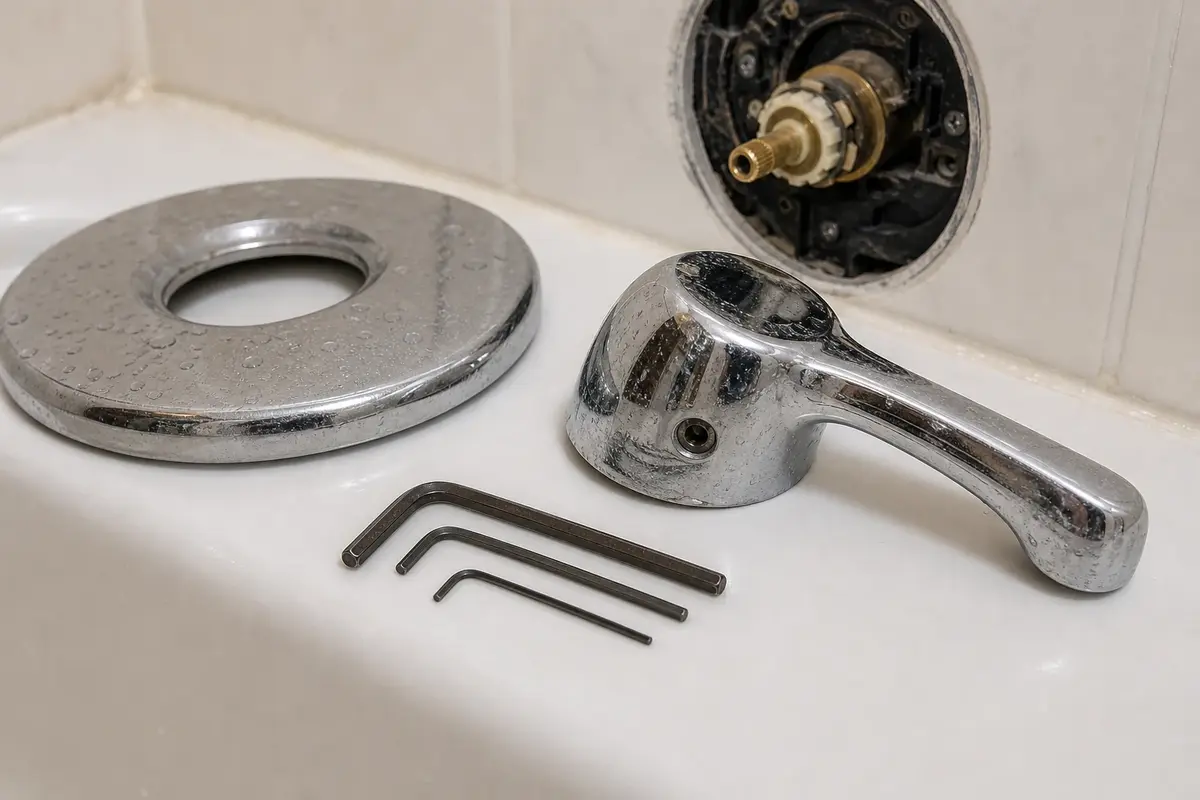
Helps when: Choose this for a slip-on diverter spout with a set screw under the body.
Skip it when: Skip twisting the spout if a set screw is still tight against the pipe stub.
Compare allen key set on Amazon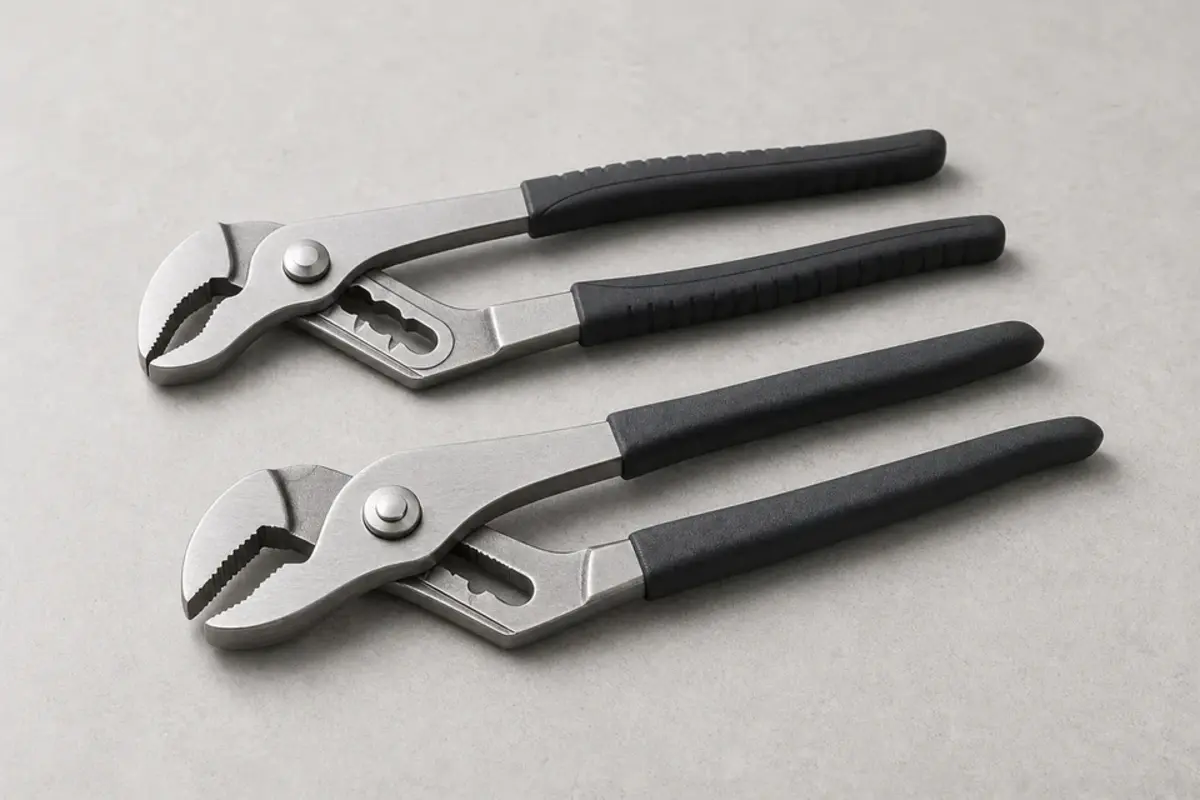
Helps when: Use padded pliers only for a confirmed threaded spout that loosens with gentle pressure.
Skip it when: Skip force if the pipe stub twists or the wall opening moves.
Compare adjustable pliers on Amazon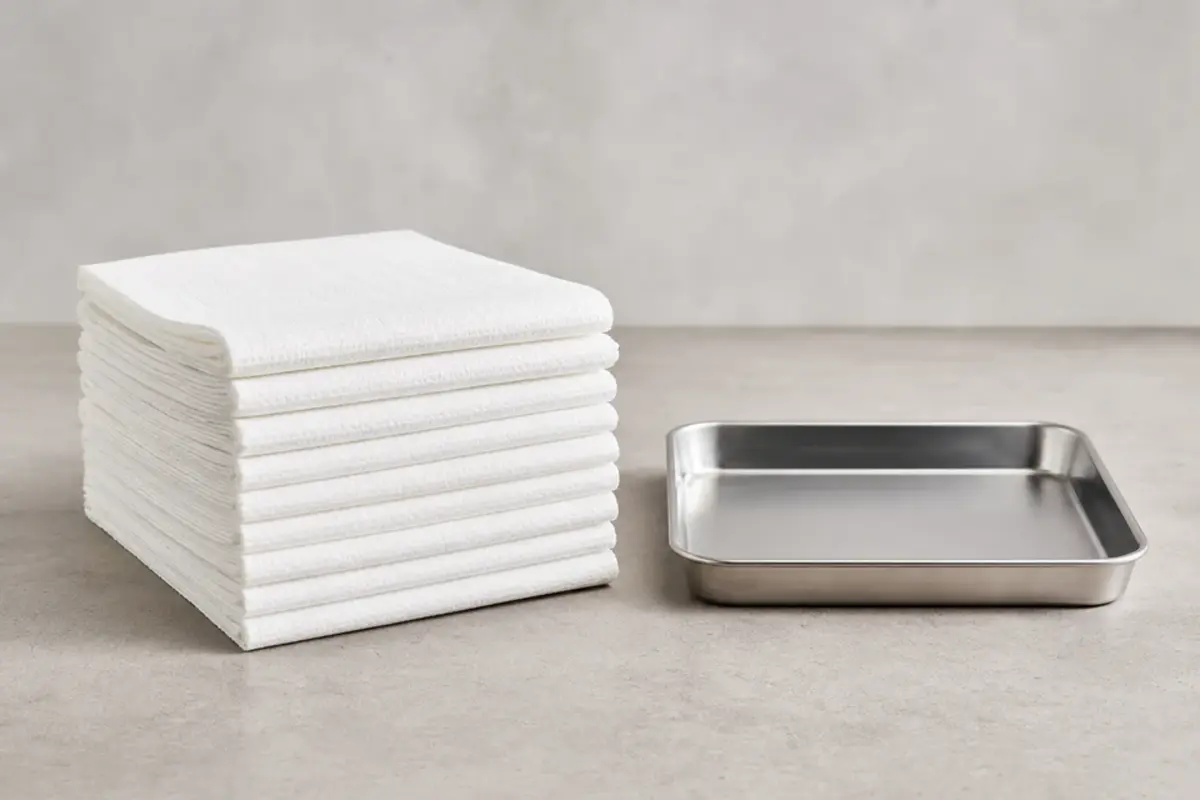
Helps when: Place towels in the tub while testing the diverter so splashed water does not hide a trim leak.
Skip it when: Skip repeated shower tests if water is entering the wall.
Compare absorbent towels on AmazonAs an Amazon Associate I earn from qualifying purchases. Repair Riot may earn a commission at no extra cost to you.
These parts are intentionally narrow. A stuck pull-up knob points to a diverter spout; a separate wall diverter points behind the trim.
Helps when: Buy this when the pull-up knob is seized, broken, or cannot redirect water after cleaning.
Skip it when: Skip it when your tub uses a three-handle or wall-valve diverter instead of a spout diverter.
Compare diverter tub spout on Amazon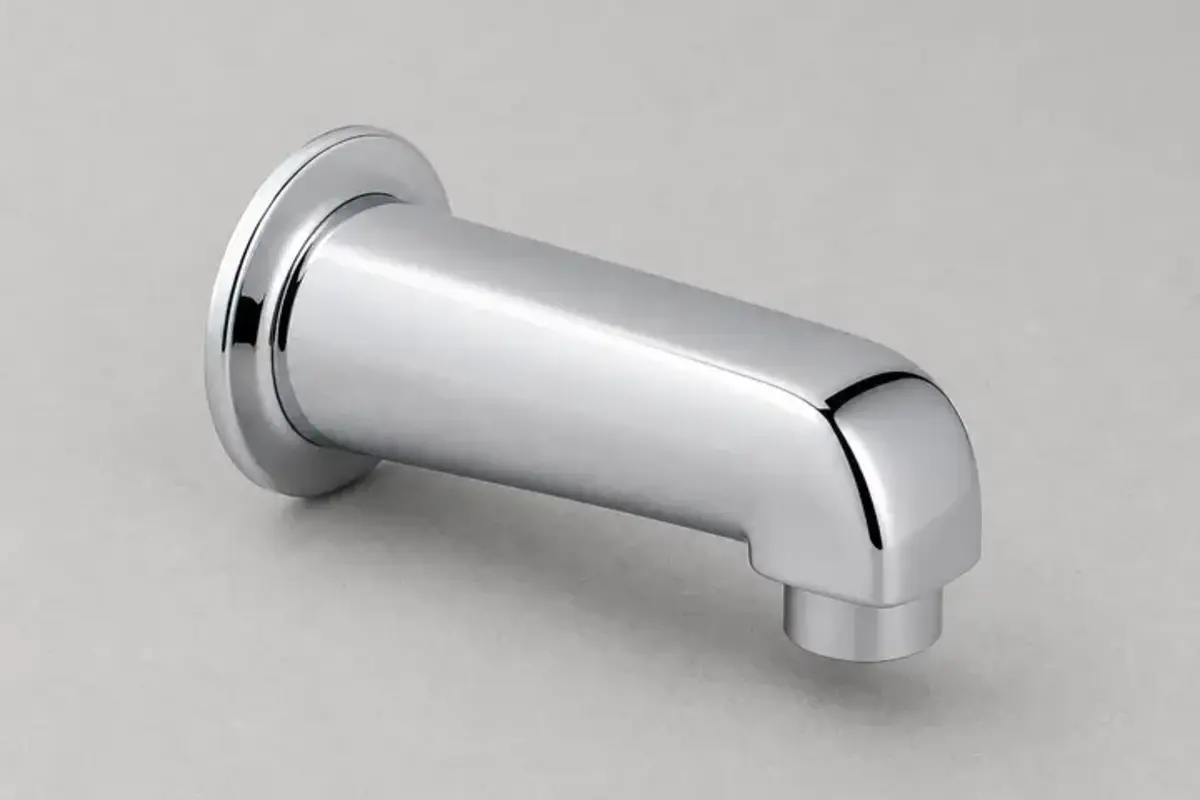
Helps when: Choose a non-diverter spout only if the existing setup has a separate wall diverter and the spout itself is damaged.
Skip it when: Skip generic spouts until you match slip-on versus threaded attachment and pipe length.
Compare bathtub spout on Amazon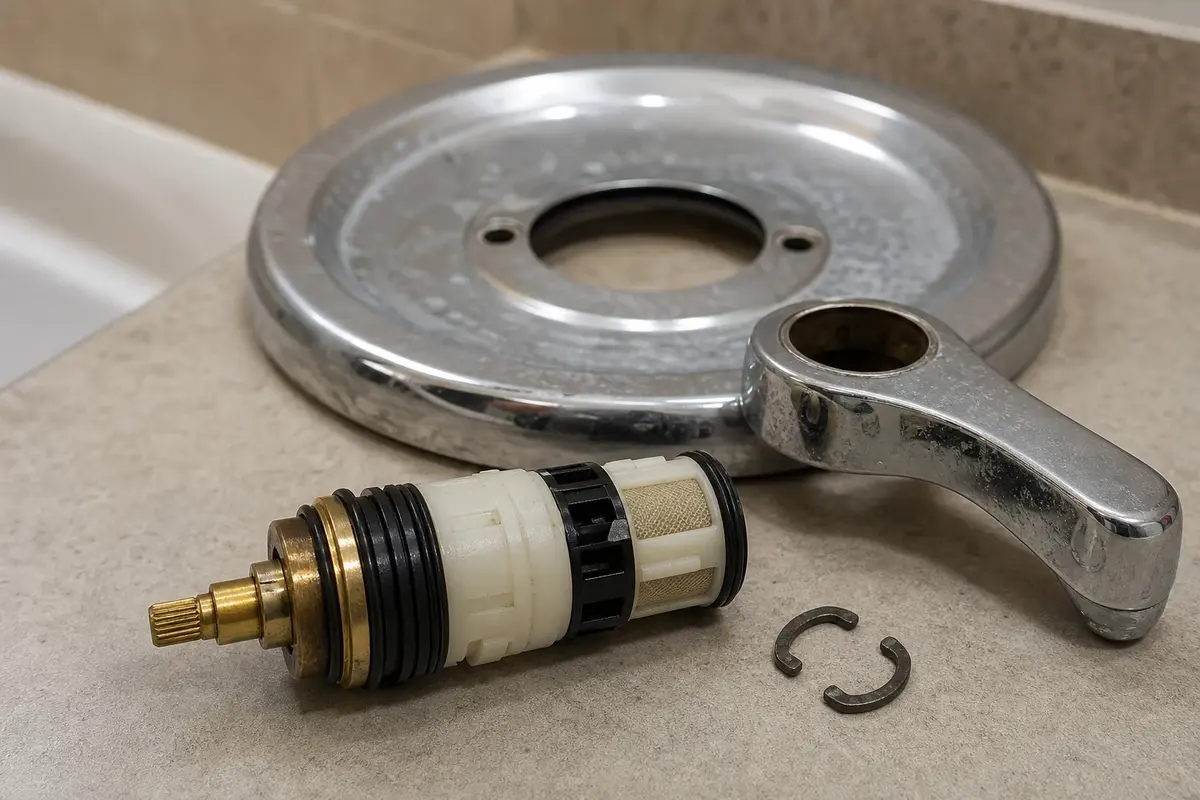
Helps when: Consider this branch when a wall diverter or valve cartridge, not the spout knob, is the part that sticks.
Skip it when: Skip cartridge shopping until the handle style and valve brand are known.
Compare tub/shower valve cartridge on AmazonAs an Amazon Associate I earn from qualifying purchases. Repair Riot may earn a commission at no extra cost to you.
Mineral buildup, a broken gate, or a worn internal seal can keep the pull-up diverter from moving or sealing.
No. Forcing the knob can break the spout or twist the pipe stub inside the wall.
The diverter gate is not sealing the tub path, or the fixture uses a different diverter branch.
Often yes, if the pull-up diverter is built into the spout and cleaning does not restore movement.
Look for a small set screw underneath or near the back. That style slides over the pipe stub.
Then the stuck part may be behind that handle, not in the tub spout.
Yes. If the tub path stays open, less water reaches the showerhead.
Call if the pipe stub moves, the wall diverter is seized, or you cannot identify shutoffs before valve work.
Repair Riot reviewed this page around pull-up diverter clues: knob movement, spout flow while showering, set-screw style, separate wall diverter handles, and pipe-stub movement. The source links support shower-flow and leak context; the troubleshooting sequence is original guidance.