Does a shallow fill stay dry?
That points away from the drain flange and keeps the overflow test useful.
A bathtub overflow gasket leak usually appears only when water reaches the overflow opening or when water is poured directly into that opening. Start with a shallow drain test, then an overflow-height test, so the first wet point proves whether the gasket is the part to replace.
The usual cause is a flattened, shifted, or unevenly compressed overflow gasket behind the plate.
The good clue is timing. Overflow leaks are level-related; drain leaks are flow-related; spout and wall leaks appear during running-water tests.
Don’t start with: Do not caulk the face of the overflow plate or replace the drain flange before the overflow test proves the leak path.
That points away from the drain flange and keeps the overflow test useful.
The overflow gasket or plate compression is the strongest lead.
Move to the drain flange, shoe gasket, or waste line before buying overflow parts.
Check the spout connection or valve trim instead of the overflow gasket.
Replace or reseat the gasket only if the elbow can be held square to the tub.
A true overflow leak shows up when the water level reaches the overflow opening. The plate face can look normal while the gasket behind it leaks.
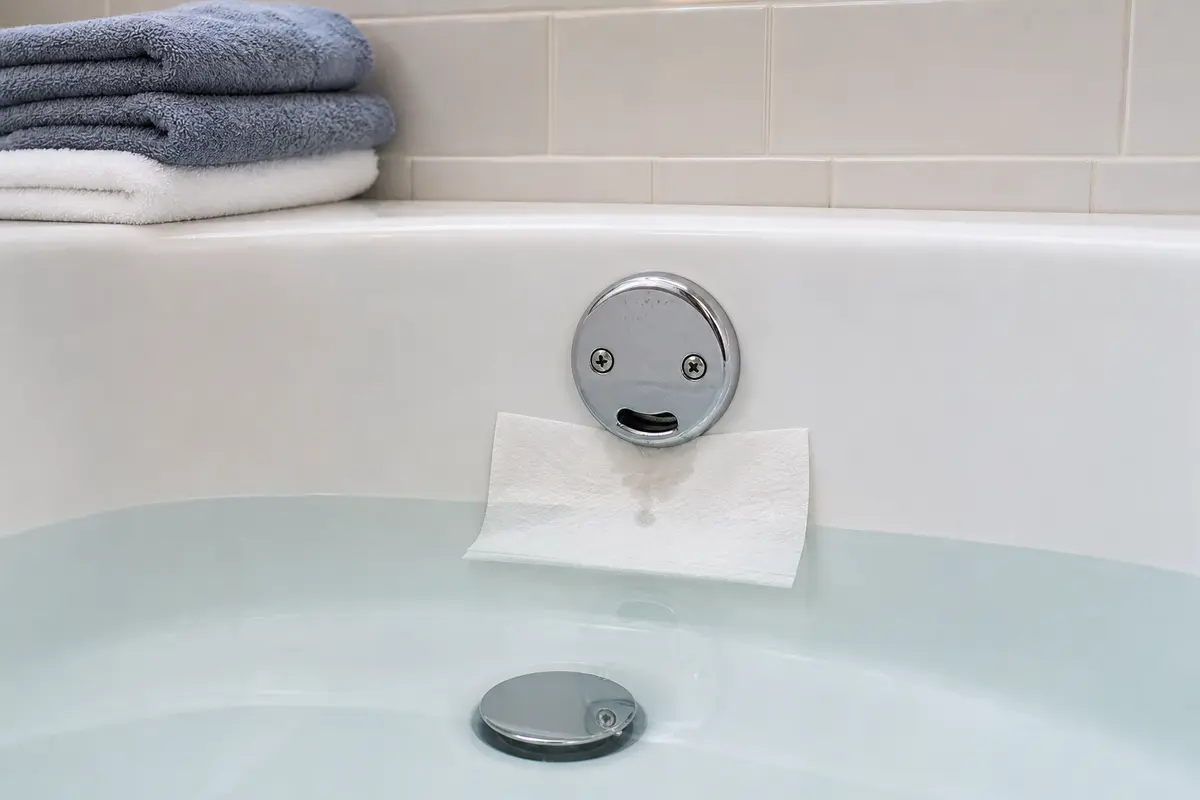
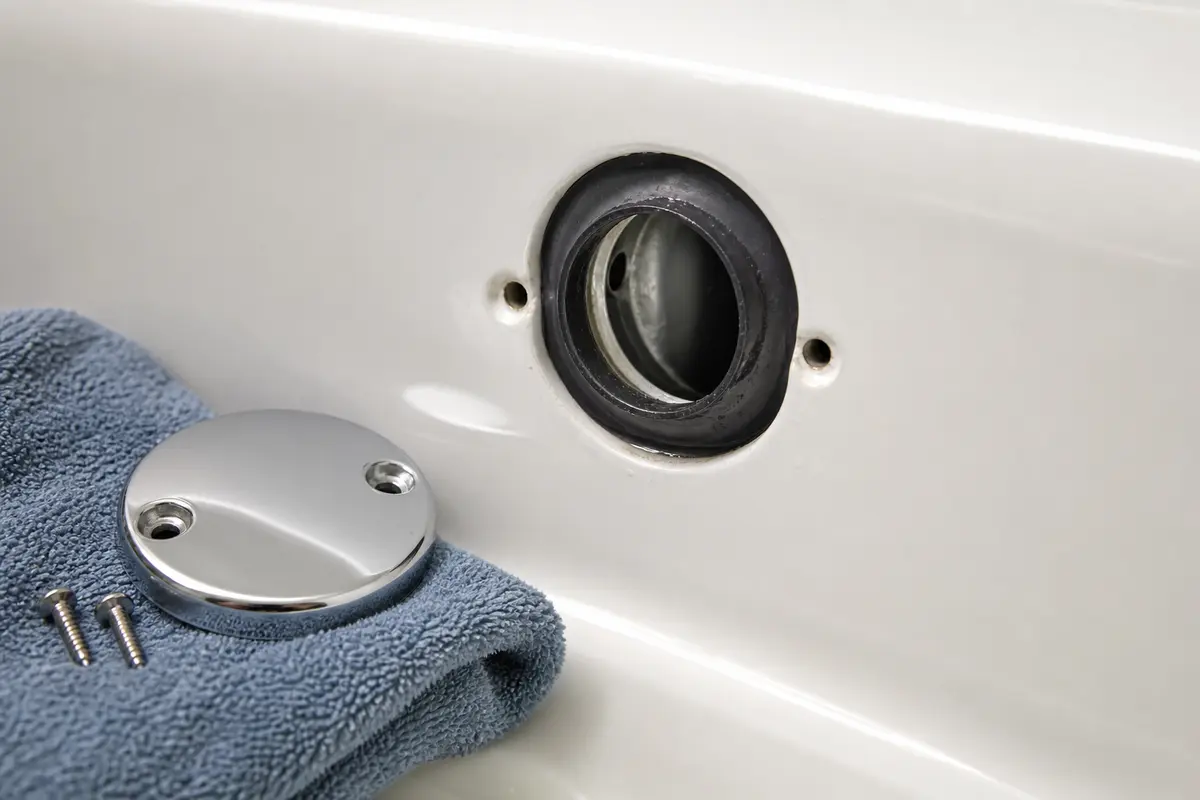
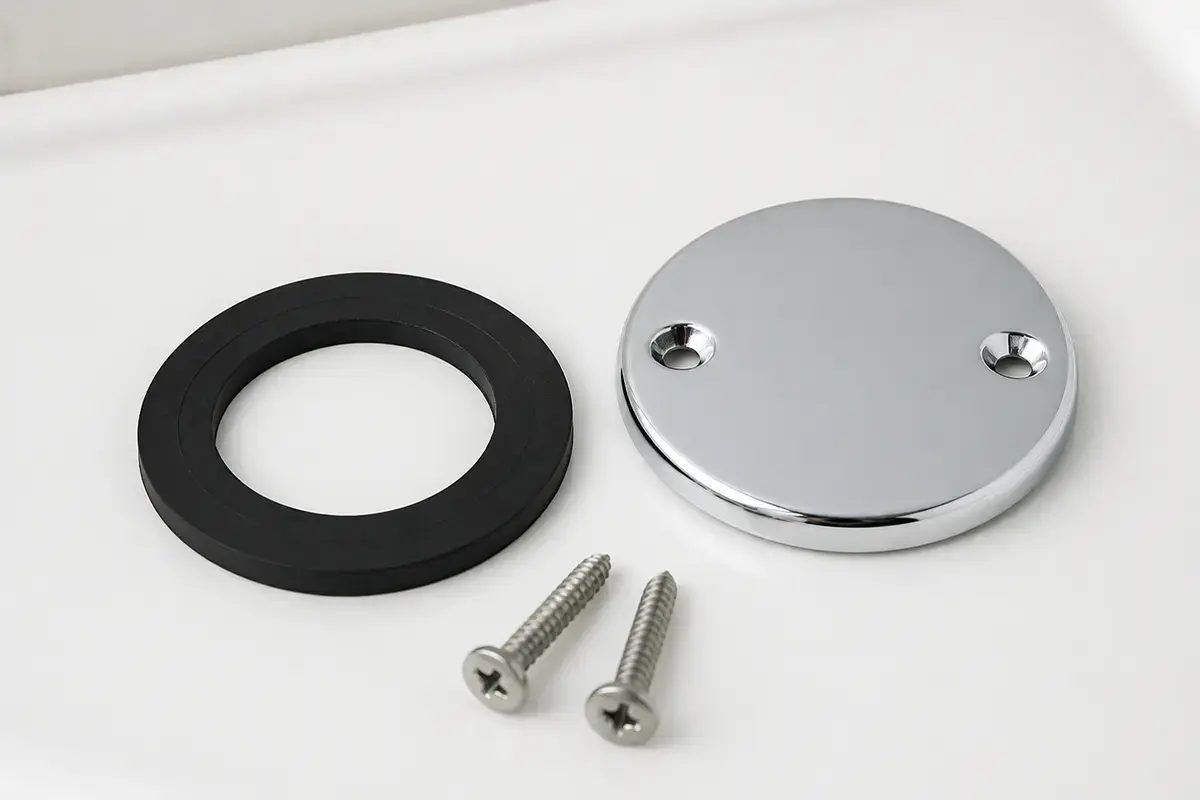
Confirm that the leak starts at overflow height before buying a gasket or plate. If the drain, spout, or wall trim gets wet first, the overflow kit is the wrong cart item. Match the exact diagnosis, fixture style, and model or valve family before ordering.
The overflow gasket seals the overflow elbow to the back of the tub wall. When the gasket flattens, slips, or is pulled unevenly by the plate screws, water can leave the tub only when the bath reaches that opening.
The common wrong move is sealing the visible plate face. That hides the clue and can still let water run behind the tub wall.
Dry the area, test one path, and stop when the first wet point appears. Use a helper if the ceiling or access panel is below the bathroom.
| Test result | What it usually means | Next move |
|---|---|---|
| Shallow fill stays dry | Drain seal is less likely | Move to the overflow-height test. |
| Leak starts at overflow height | Gasket shifted, flattened, or uneven | Inspect the overflow plate and gasket. |
| Leak starts while draining | Drain flange or shoe path | Skip overflow parts and trace the drain. |
| Spout run wets the wall | Spout, valve trim, or wall opening | Test the spout branch before buying gasket parts. |
A good inspection is gentle. The overflow elbow may be loose behind the tub, and forcing it can make alignment worse.
A wet ceiling below a tub does not prove the overflow. Water can travel along piping or framing before it drips.
These tools support a controlled overflow test and gentle plate removal. Skip tool work when water is already spreading into the ceiling or wall below.
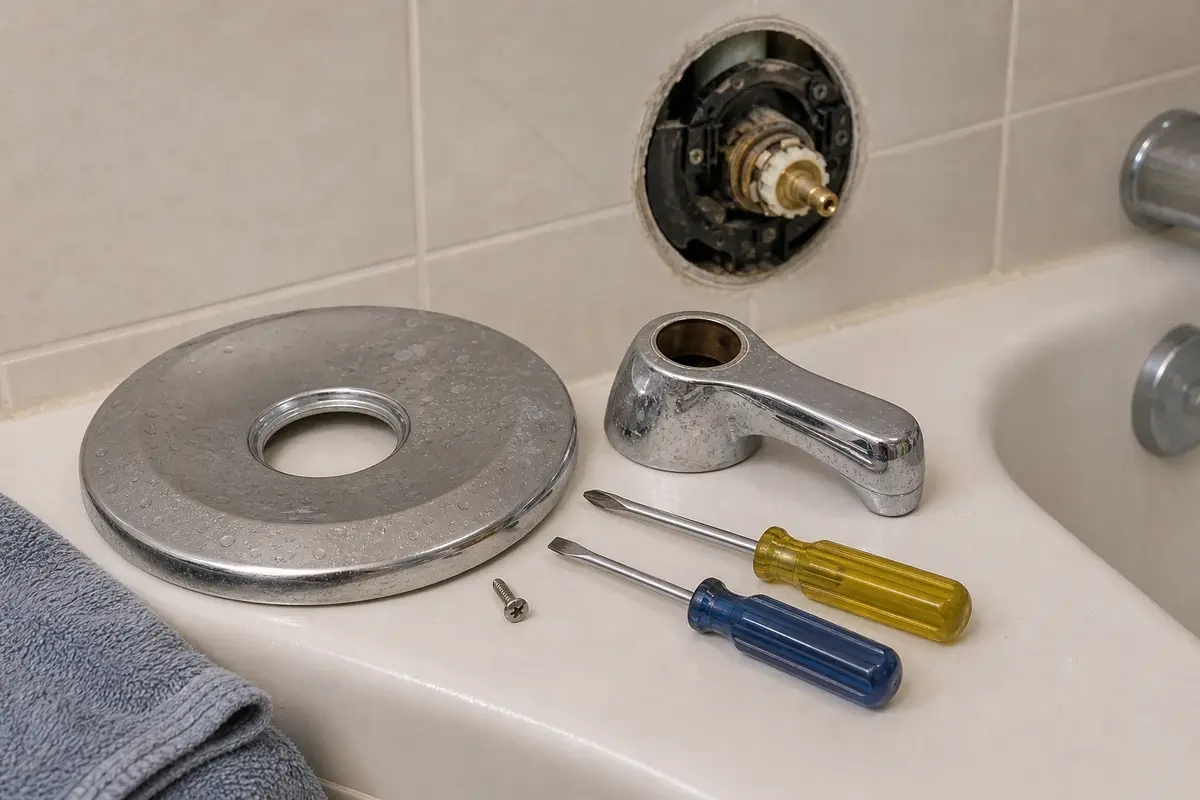
Helps when: Choose this when the overflow plate screws turn normally and the gasket needs a careful inspection.
Skip it when: Skip power drivers on overflow screws; a stripped screw can turn a small gasket check into wall access work.
Compare screwdriver set on Amazon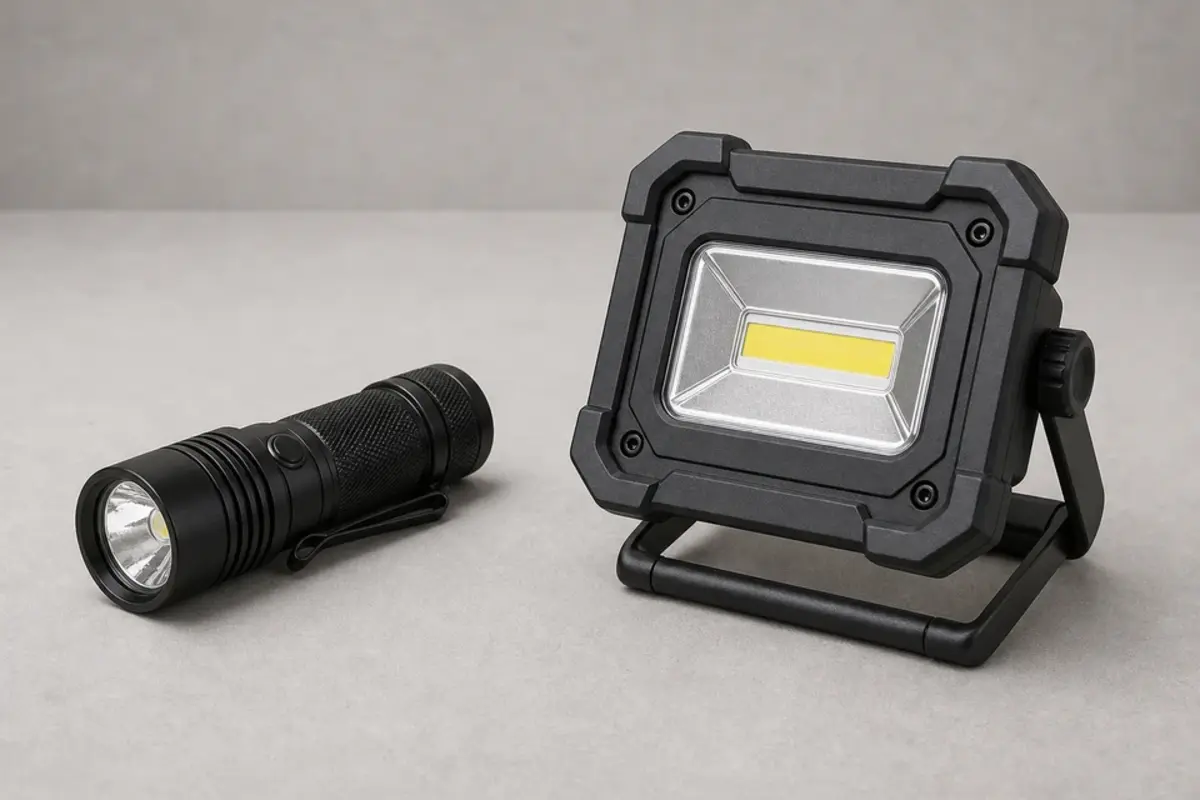
Helps when: Useful when the first wet point is behind the overflow plate or visible only through a tight access opening.
Skip it when: Skip guessing from the ceiling stain alone because water can travel before it drips.
Compare inspection flashlight on Amazon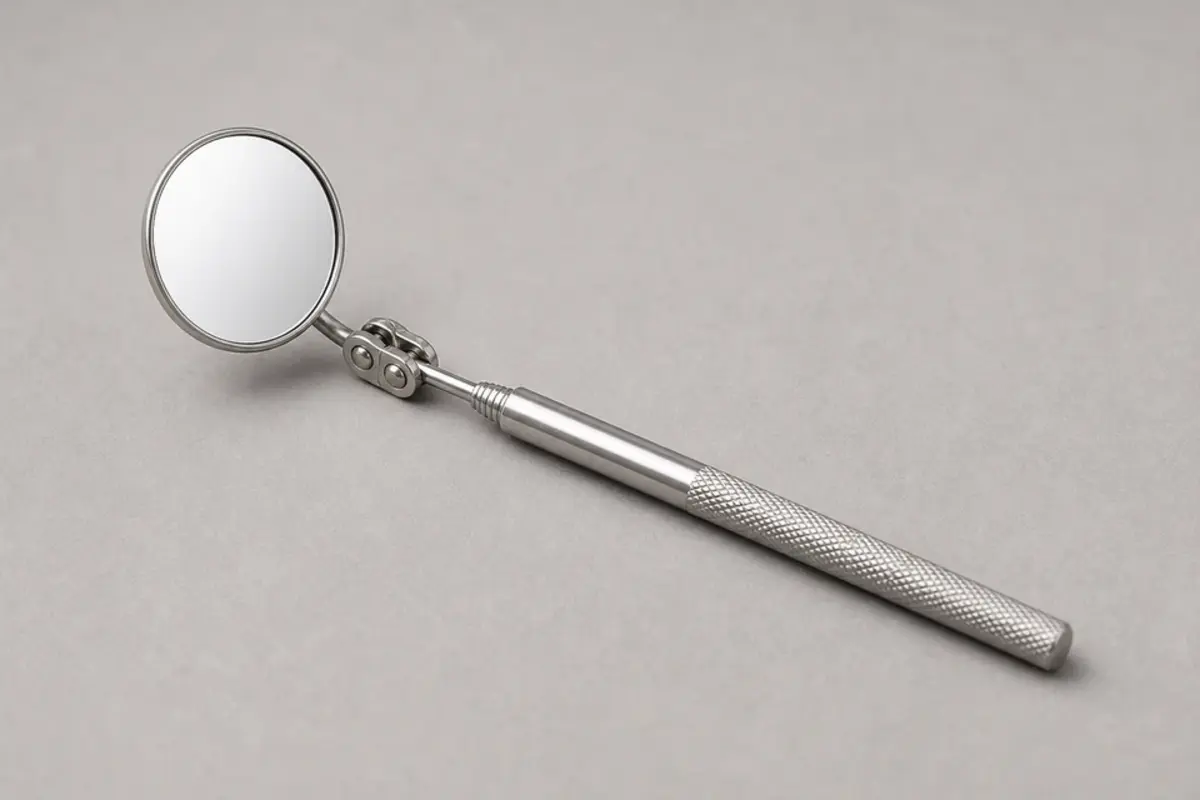
Helps when: Keep one nearby when the overflow elbow is tucked behind the tub wall and cannot be seen straight on.
Skip it when: Skip forcing the mirror into the wall if the gasket or elbow moves away from the opening.
Compare small inspection mirror on Amazon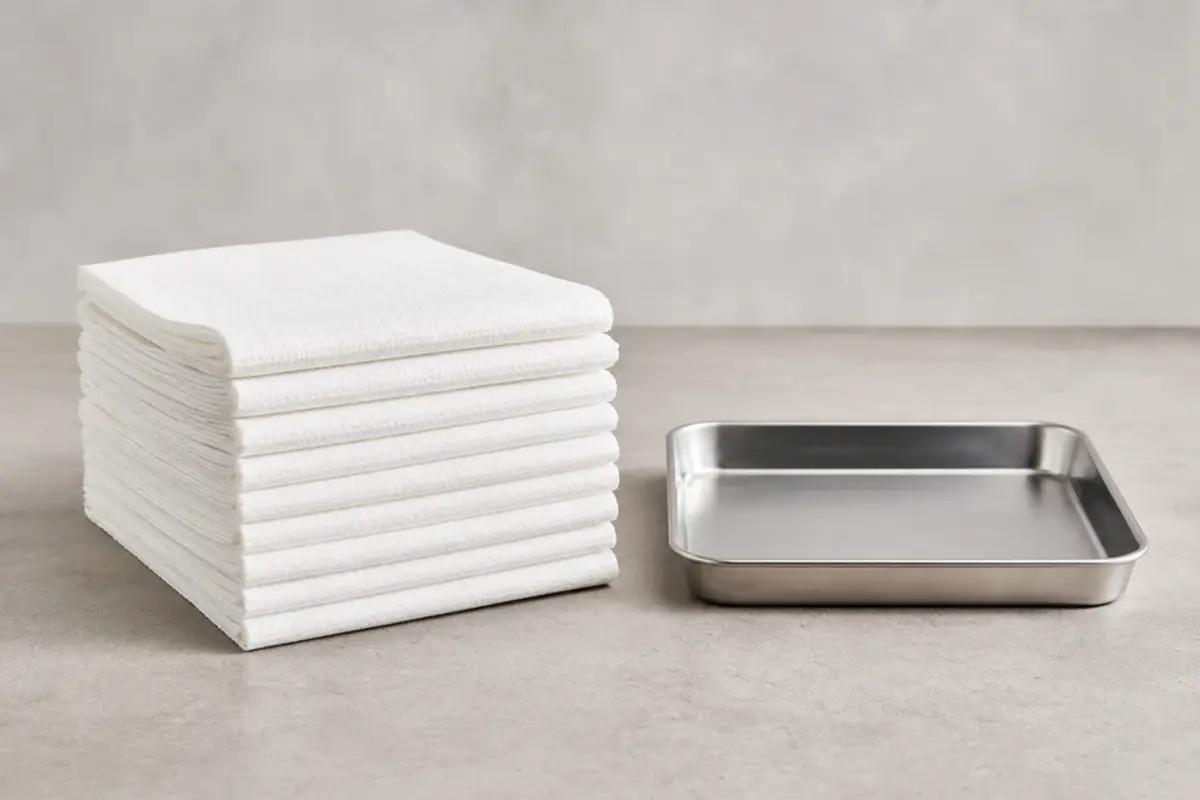
Helps when: Use dry towels or tissue below the overflow plate so the first fresh wet mark is easy to see.
Skip it when: Skip another fill test if the ceiling or wall below is already wet.
Compare absorbent towels on AmazonAs an Amazon Associate I earn from qualifying purchases. Repair Riot may earn a commission at no extra cost to you.
These parts match the branch that actually gets wet. The overflow kit is the primary part only after the overflow-height test proves it.
Helps when: Buy this only when the leak starts at overflow height or when water poured into the overflow wets the gasket edge.
Skip it when: Skip it when the leak starts during draining, at the spout, or at the tub surround.
Compare overflow gasket and plate kit on Amazon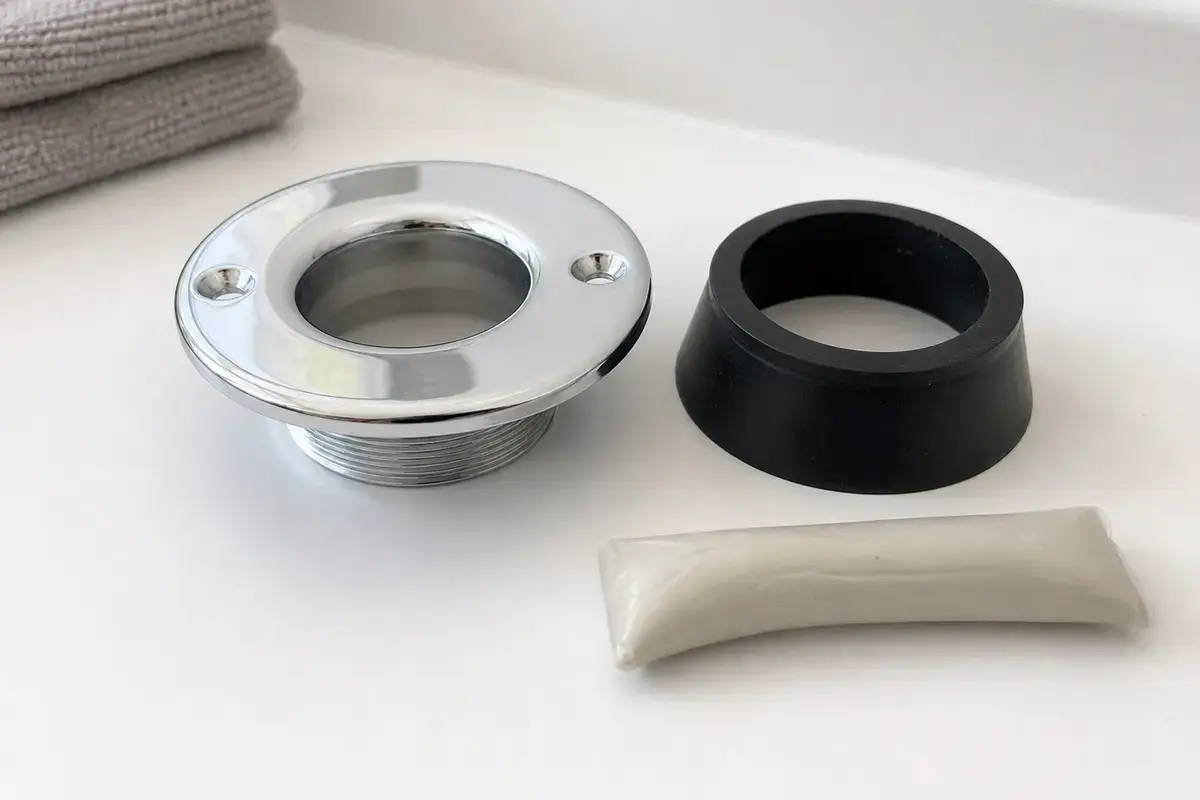
Helps when: Consider this only if a shallow drain test wets the drain shoe before the overflow test does.
Skip it when: Skip drain parts when the first wet point is clearly behind the overflow plate.
Compare drain flange and shoe gasket kit on Amazon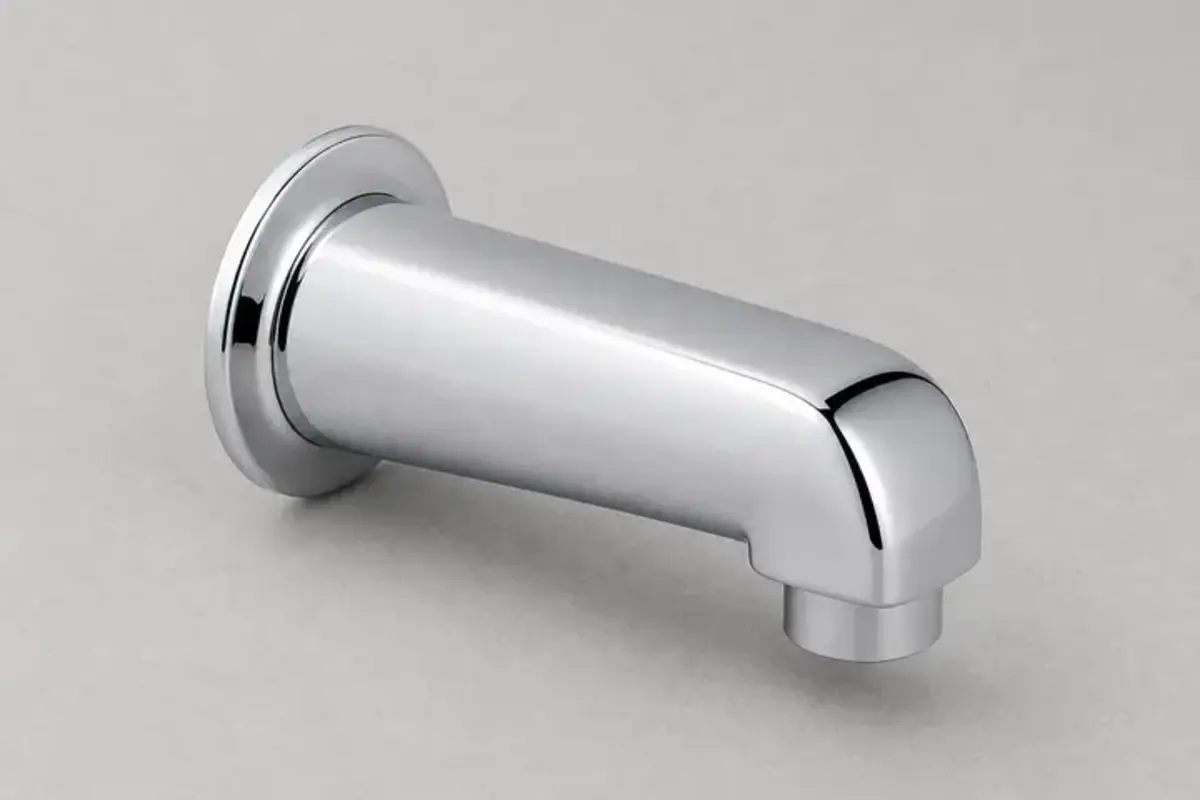
Helps when: Use this branch only when water appears at the spout wall connection while the overflow stays dry.
Skip it when: Skip a spout replacement for a leak that happens only at bath depth.
Compare bathtub spout on AmazonAs an Amazon Associate I earn from qualifying purchases. Repair Riot may earn a commission at no extra cost to you.
The strongest clue is a leak that starts only when water reaches the overflow opening or when water is poured into that opening.
Do not use caulk as the first repair. The gasket behind the plate must seal; caulk on the face can hide the actual leak.
Water may be leaving the overflow, drain shoe, or spout wall and then traveling before it drips. Timing the test matters more than the final drip spot.
Only if a drain-flow test gets wet first. A leak at overflow height does not prove the drain flange is bad.
Yes. Loose or uneven screws can keep the gasket from compressing evenly behind the tub wall.
Reseat it only if it is centered and flexible. If it is flat, cracked, or still leaks after even compression, replace it.
Stop if water reaches electrical fixtures, finished ceilings, framing, or a wall cavity, or if the overflow elbow drops out of position.
Yes. A bent plate or bad screws can cause the same gasket-compression problem and belongs in the overflow branch.
Repair Riot reviewed this page around observable overflow clues: shallow-fill behavior, overflow-height timing, gasket alignment, drain-flow tests, and spout-wall wet points. The source links support leak urgency, shower-flow context, and water-efficiency context; the page sequence is original Repair Riot guidance.