Does the bathroom sink get hot?
Yes: stay with the tub valve, handle travel, limit stop, and cartridge. The water heater is less likely.
If the bathtub only gives cold water but the bathroom sink gets hot, keep the first check at the tub valve. Turn the handle toward hot and feel for full travel; an early stop or a stuck pressure-balance cartridge keeps hot water out of the mix.
Run the bathroom sink hot first. If the sink gets hot and the tub stays cold, check handle travel, the limit stop, and the valve cartridge. If more than one fixture stays cold, leave the trim alone and check the hot-water supply.
Use the first checks to sort supply, limit stop, cartridge, and deeper plumbing.
Don’t start with: Do not buy a spout or open the wall first. The visible spout usually only delivers water; the temperature mix happens behind the handle.
Yes: stay with the tub valve, handle travel, limit stop, and cartridge. The water heater is less likely.
Treat it as a hot-water supply problem first. Do not open the tub trim until another fixture gets normal hot water.
Look behind the handle for an anti-scald limit stop before buying a cartridge.
A sticking pressure-balance cartridge or a plumbing cross-connection moves higher on the list.
Shut water off and inspect carefully. A damaged or scaled cartridge may need replacement.
Stop guessing at parts. A valve-body, crossover, or supply issue needs a plumber.
A cold-only tub is easier to sort once you compare it with the sink and look behind the handle. The spout is visible, but the mixing failure is usually at the valve.
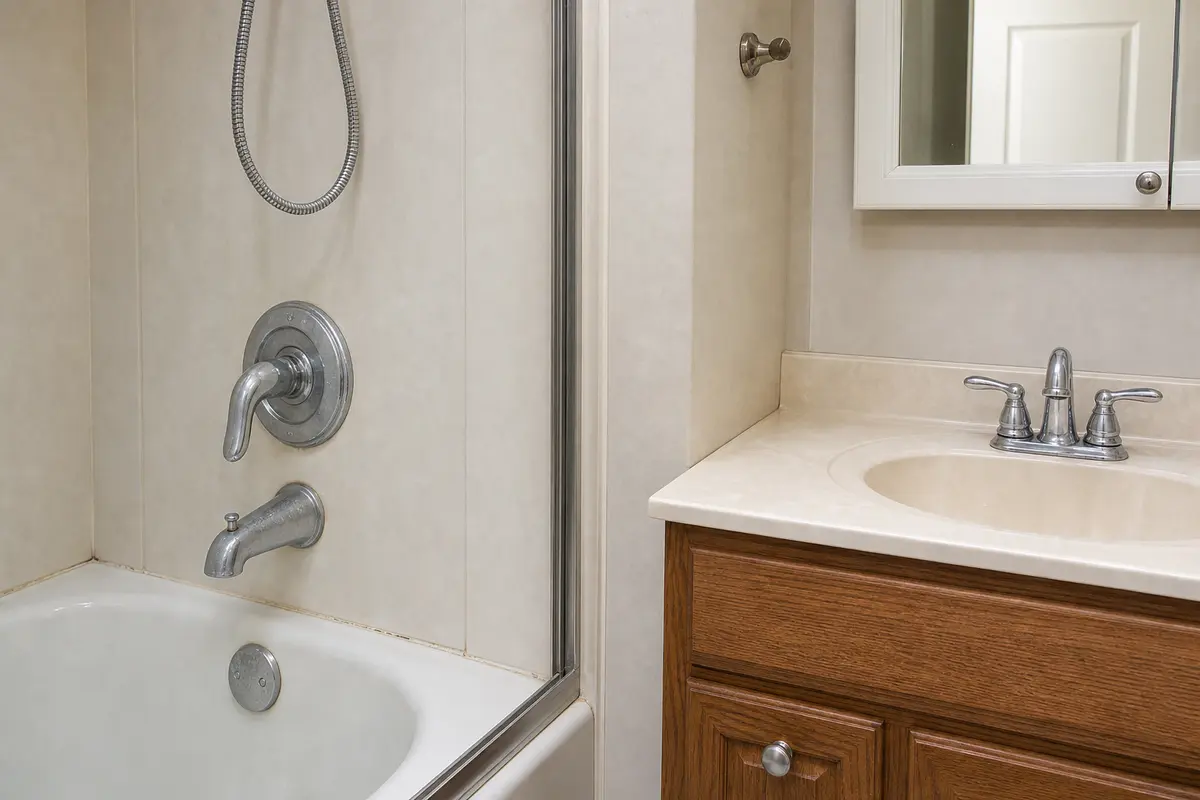
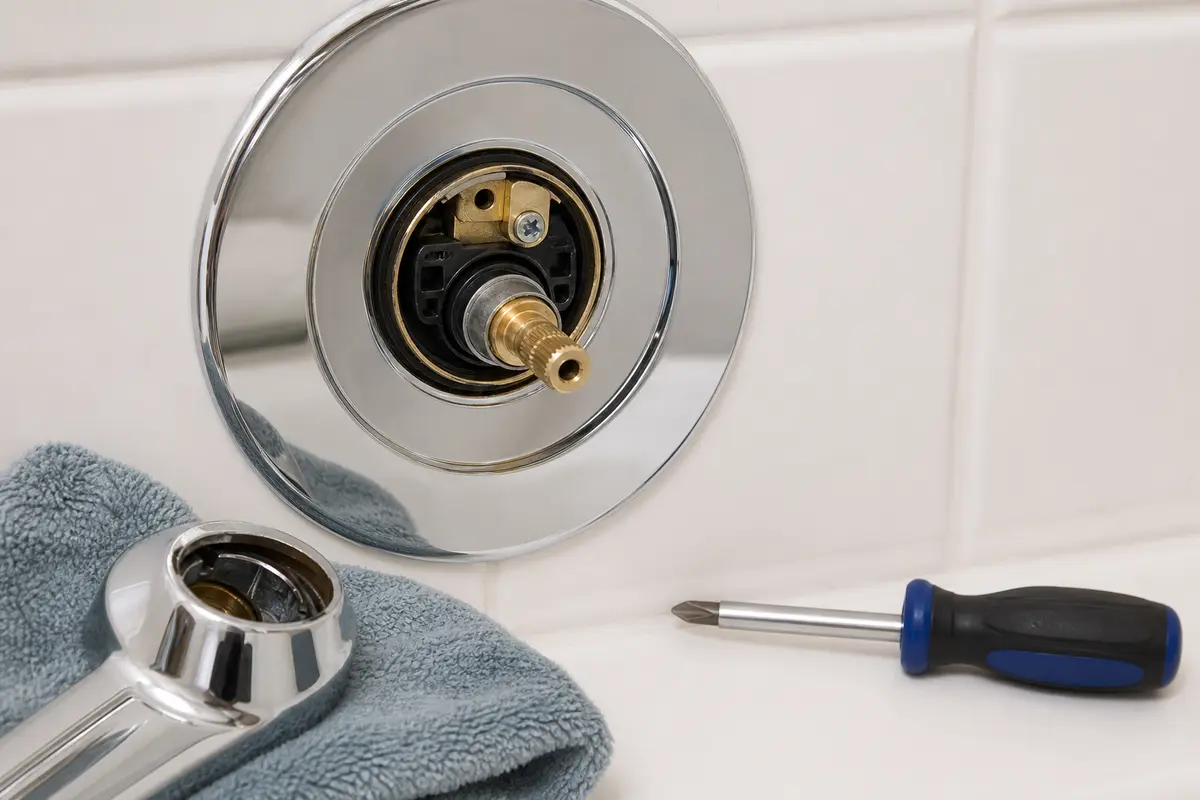
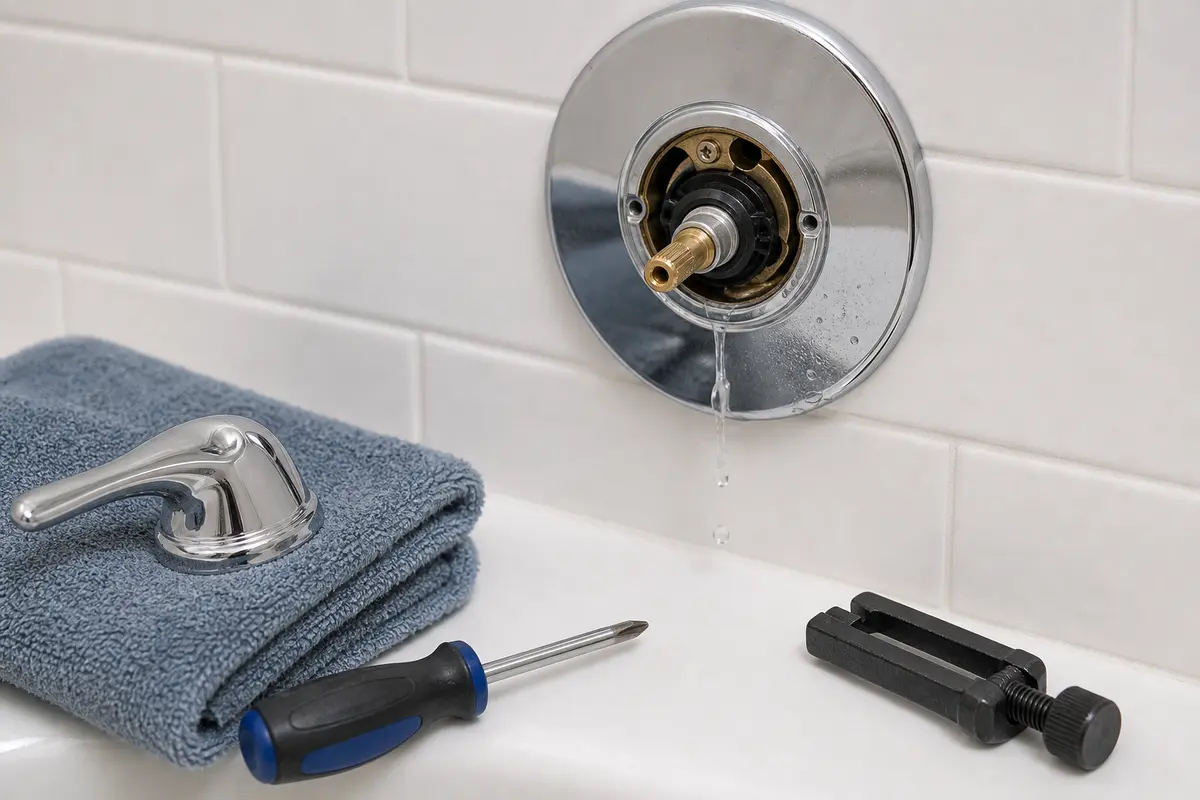
Before buying a cartridge, limit stop, or spout, prove the failure. Compare the sink, handle travel, valve style, and old part shape, then match the exact model or manufacturer part number.
A cold-only bathtub is a mixing problem until another fixture proves otherwise. The first useful split is not the spout; it is whether hot water reaches the bathroom at all.
The costly wrong move is replacing the spout because it is the visible outlet. If the tub is cold but the sink is hot, check behind the handle; that valve is where the hot-cold mix is controlled.
Run the sink on hot, then compare the tub: cold from the start, lukewarm only, or warm then fading. That result tells you whether to check supply, the limit stop, or the cartridge before any part comes off.
| What you see | What it usually means | Next move |
|---|---|---|
| Sink hot, tub cold | Hot water reaches the bathroom; the tub valve is the better target. | Check handle travel, limit stop, and cartridge. |
| Sink cold, tub cold | The bathtub is probably not the source of the failure. | Troubleshoot the water heater or hot-water supply. |
| Handle stops before a full hot turn | The anti-scald limit stop may be set too cool or misindexed. | Inspect the stop behind the handle. |
| Tub warms briefly, then goes cold | The pressure-balance cartridge may be sticking or another fixture may be crossing cold into hot. | Watch other fixtures and inspect the cartridge only after water is shut off. |
| Matched cartridge did not fix it | The trouble may be in the valve body, piping, or a crossover elsewhere. | Stop part-swapping and call a plumber. |
The sink comparison saves the most wasted work. It tells you whether hot water is reaching the room before you disturb trim, old screws, or a cartridge that may be stuck in the wall.
A limit stop is not a failure by itself. It is a small safety adjustment that can also keep the handle from reaching enough hot water when it is set too conservatively.
Make the valve cartridge the lead only after the sink gets hot and the handle reaches its hot range. If the tub still stays cold or fades cold, shut off water and inspect for scale, torn seals, stiff movement, or a stuck balancing spool.
These tools support careful trim access and diagnosis. Skip internal valve work until you know how the water shuts off.
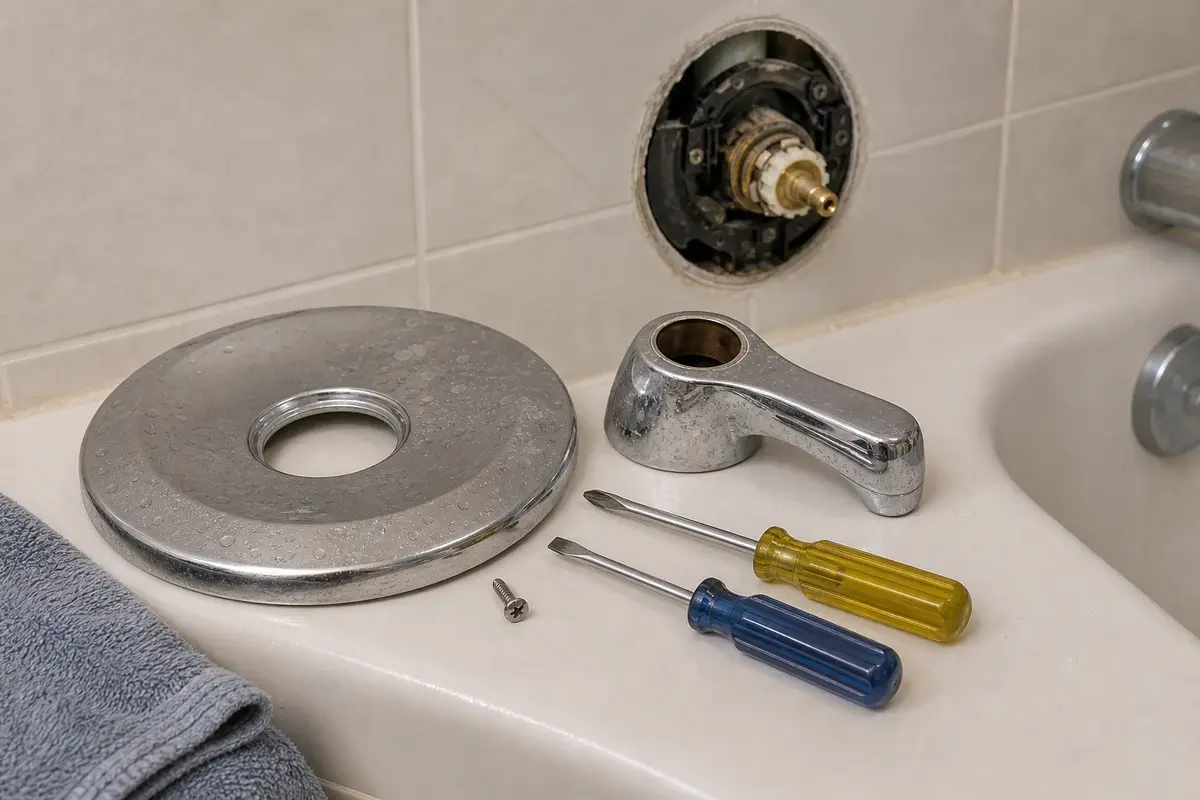
Helps when: Removes handle screws, trim screws, and access-panel fasteners without chewing up the finish.
Skip it when: Skip trim removal if old screws are seized and likely to strip or crack tile.
Compare screwdriver sets on Amazon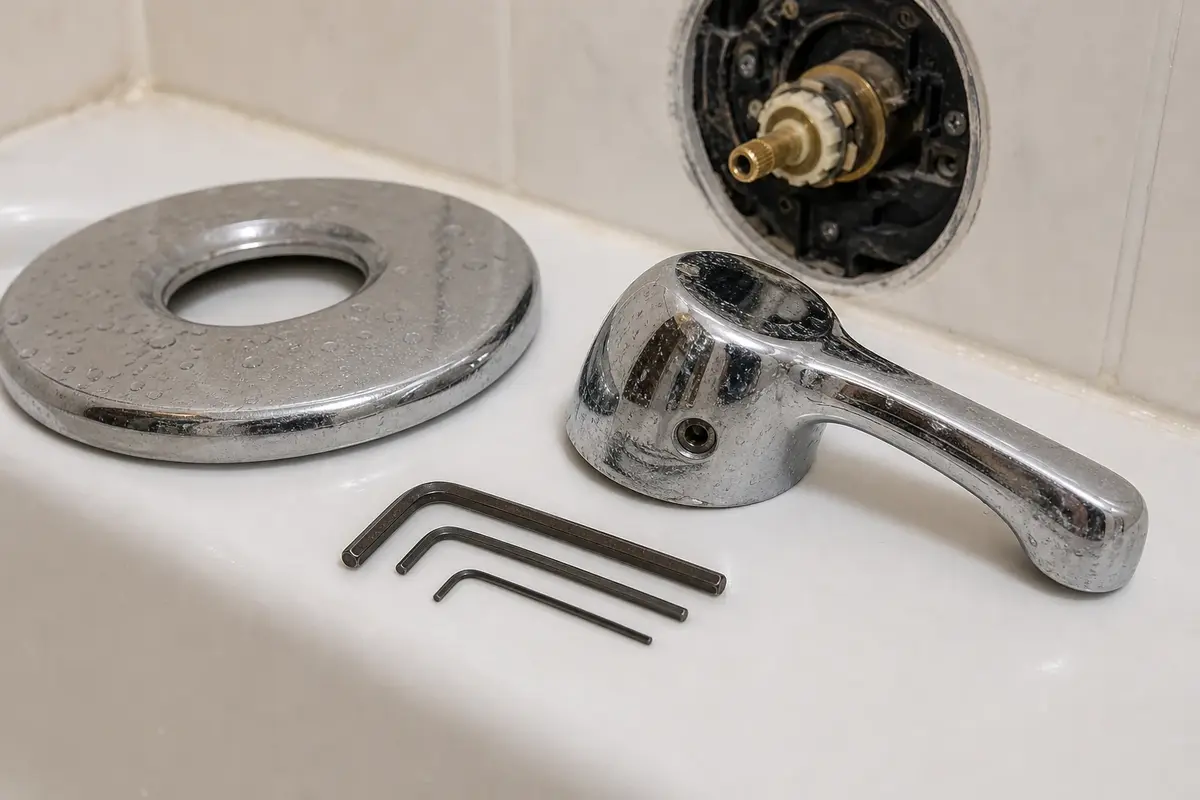
Helps when: Fits small handle set screws that hide under the lever or behind a trim plug.
Skip it when: Skip forcing the handle if the set screw is still engaged or rounded out.
Compare allen key sets on Amazon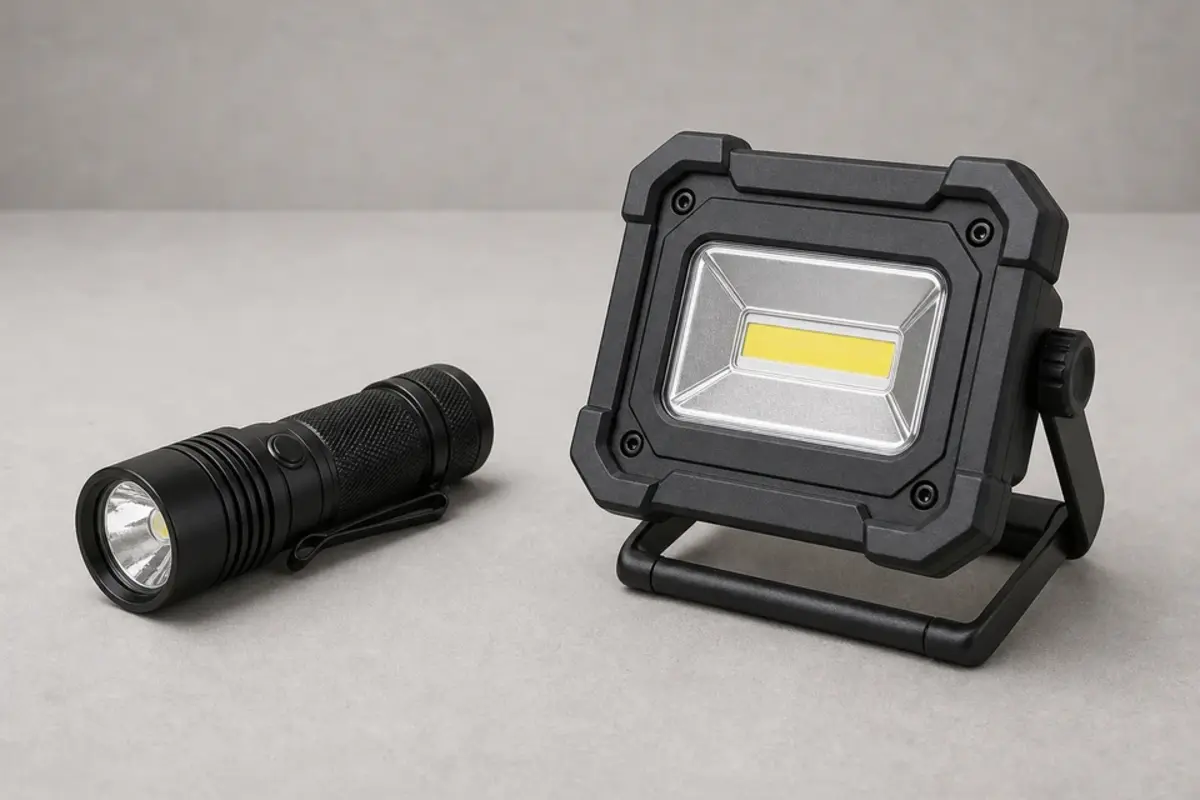
Helps when: Lights the limit stop, retaining clip, mineral buildup, and any moisture around the valve opening.
Skip it when: Skip working inside the trim opening when you cannot see the clip or cartridge clearly.
Compare inspection flashlights on Amazon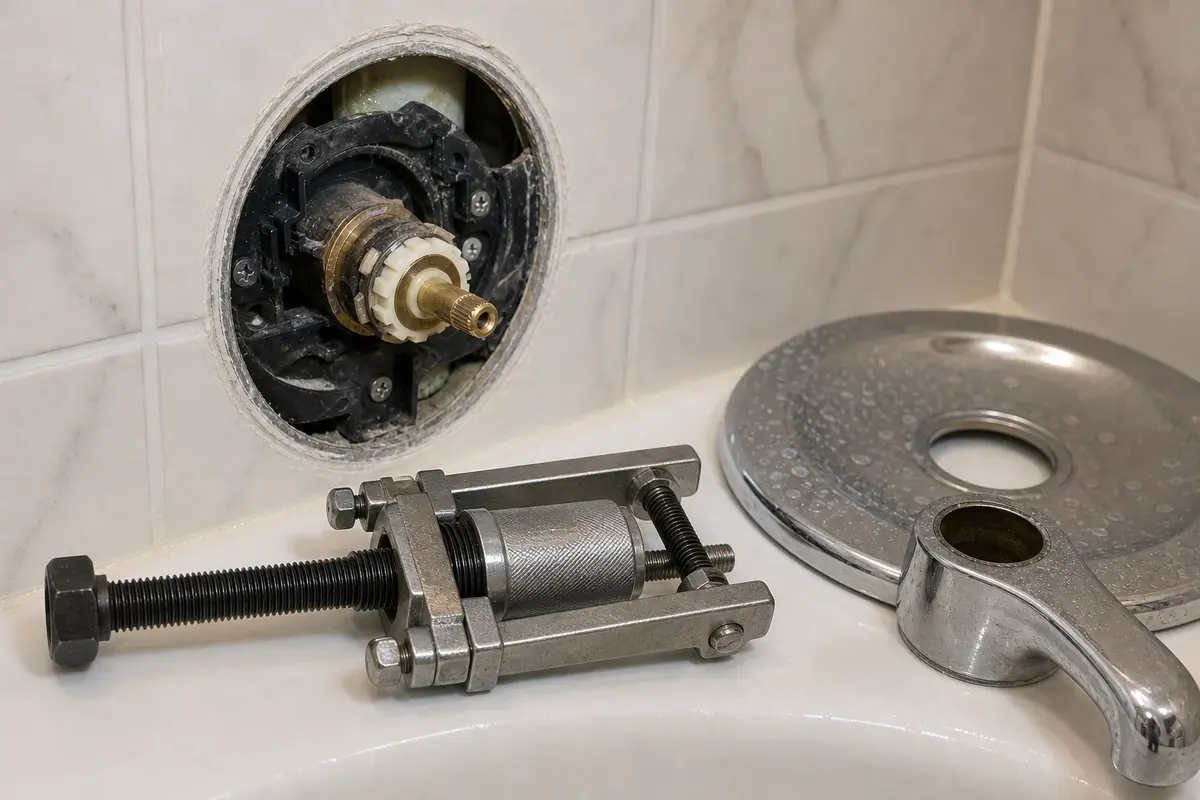
Helps when: Helps remove a confirmed stuck cartridge after water is off and the matching puller style is known.
Skip it when: Skip it for a limit-stop adjustment, loose handle, or valve body that moves in the wall.
Compare cartridge pullers on Amazon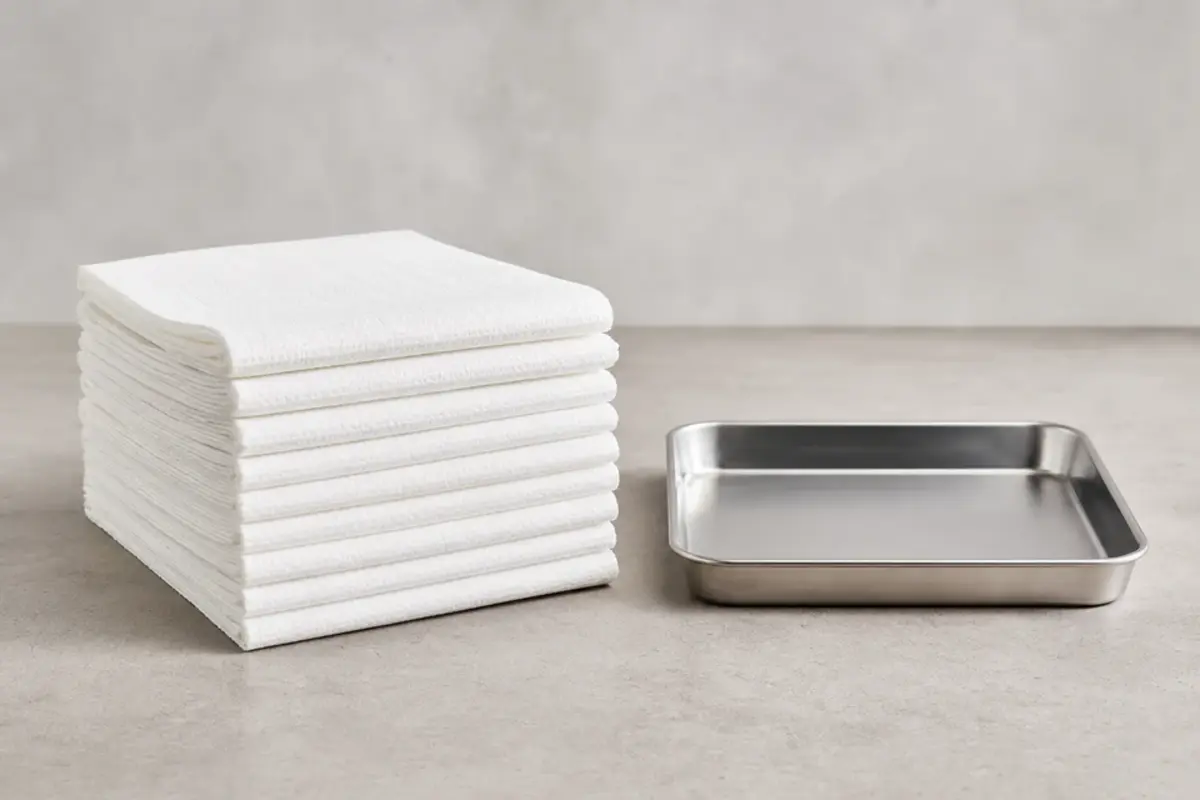
Helps when: Protects the tub finish, catches trim screws, and gives small drips a place to show up quickly.
Skip it when: Skip using towels as leak control when water is running behind the wall or through the ceiling.
Compare absorbent towels on AmazonAs an Amazon Associate I earn from qualifying purchases. Repair Riot may earn a commission at no extra cost to you.
Parts make sense only after the checks point there. Match the old part, valve brand, stem shape, retaining clip, and trim style before ordering.
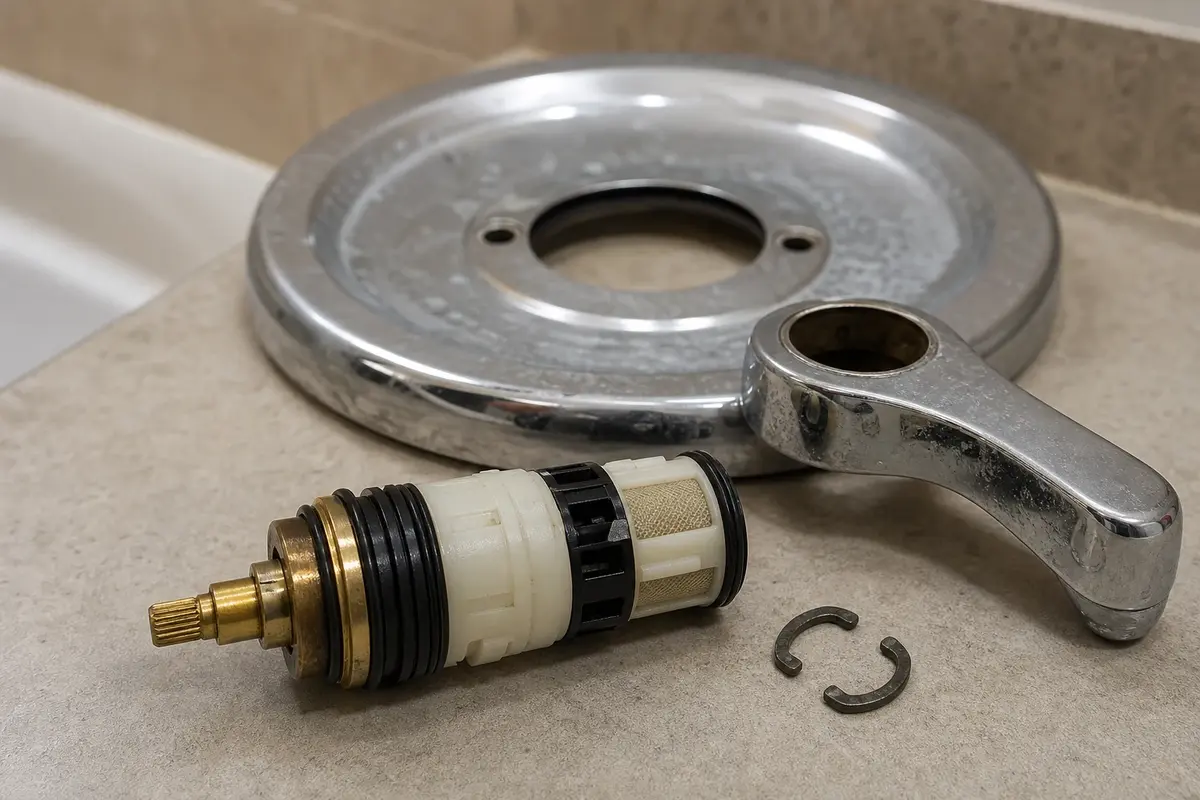
Helps when: Buy this when the sink gets hot, handle travel is normal, and the old cartridge is stiff, scaled, or damaged.
Skip it when: Skip it when hot water is missing at the sink too or the limit stop has not been checked.
Compare tub/shower valve cartridges on Amazon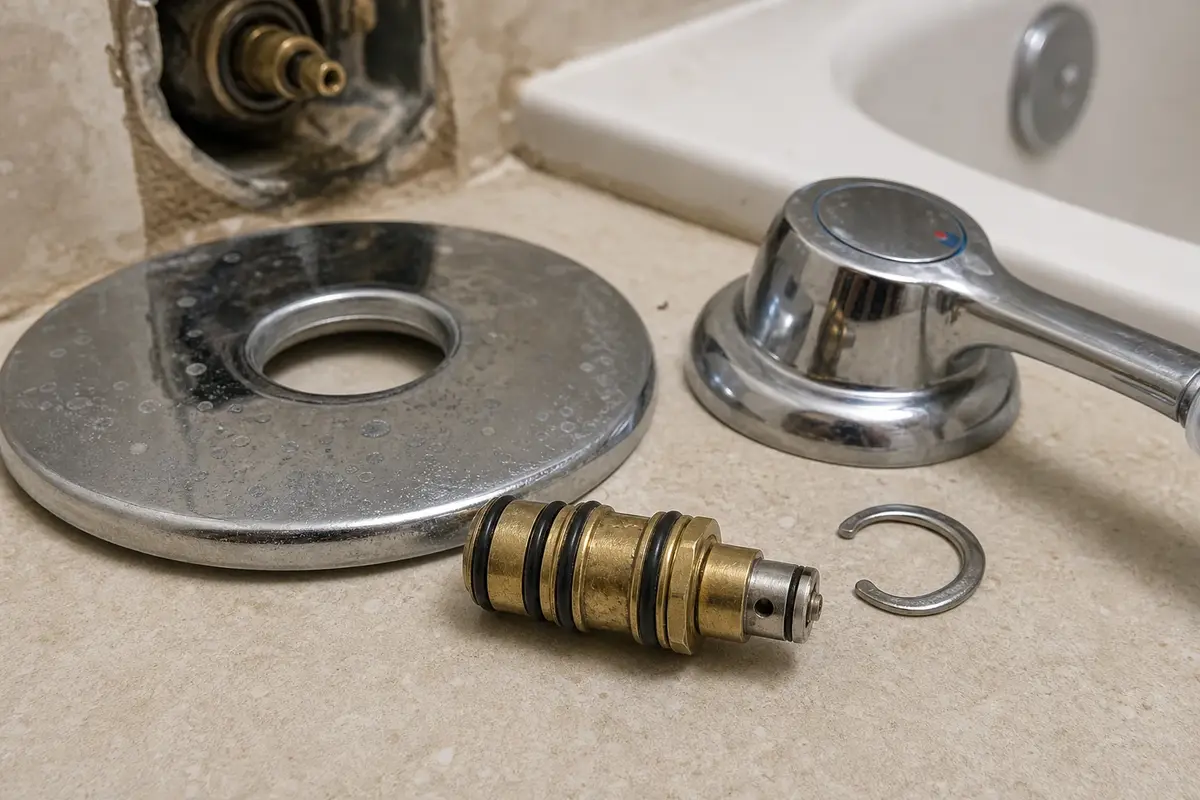
Helps when: Use this for valves where the pressure-balance cartridge is the matching temperature-control part.
Skip it when: Skip it if your valve uses separate hot and cold stems or a different cartridge style.
Compare pressure-balance cartridges on Amazon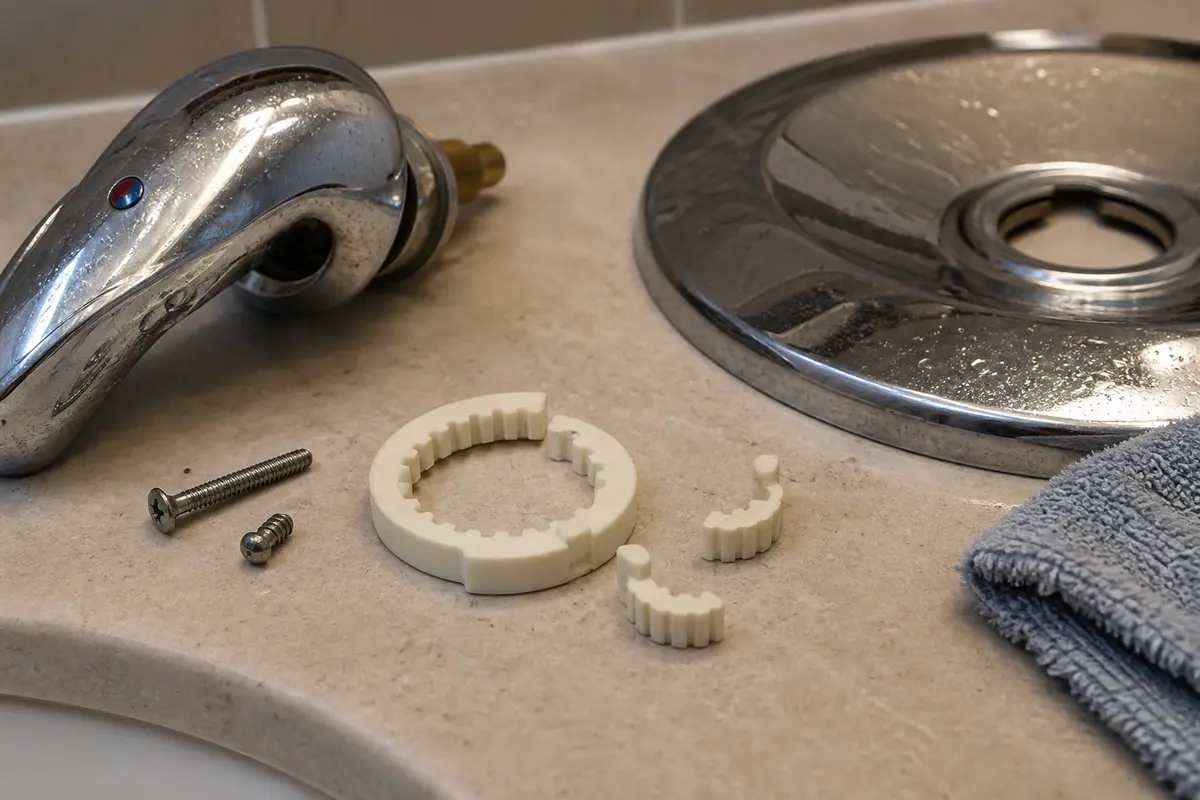
Helps when: Buy this if the stop is cracked, stripped, missing, or will not hold a safe setting after adjustment.
Skip it when: Skip it when the stop simply needed adjustment and still locks securely behind the handle.
Compare anti-scald limit stop kits on Amazon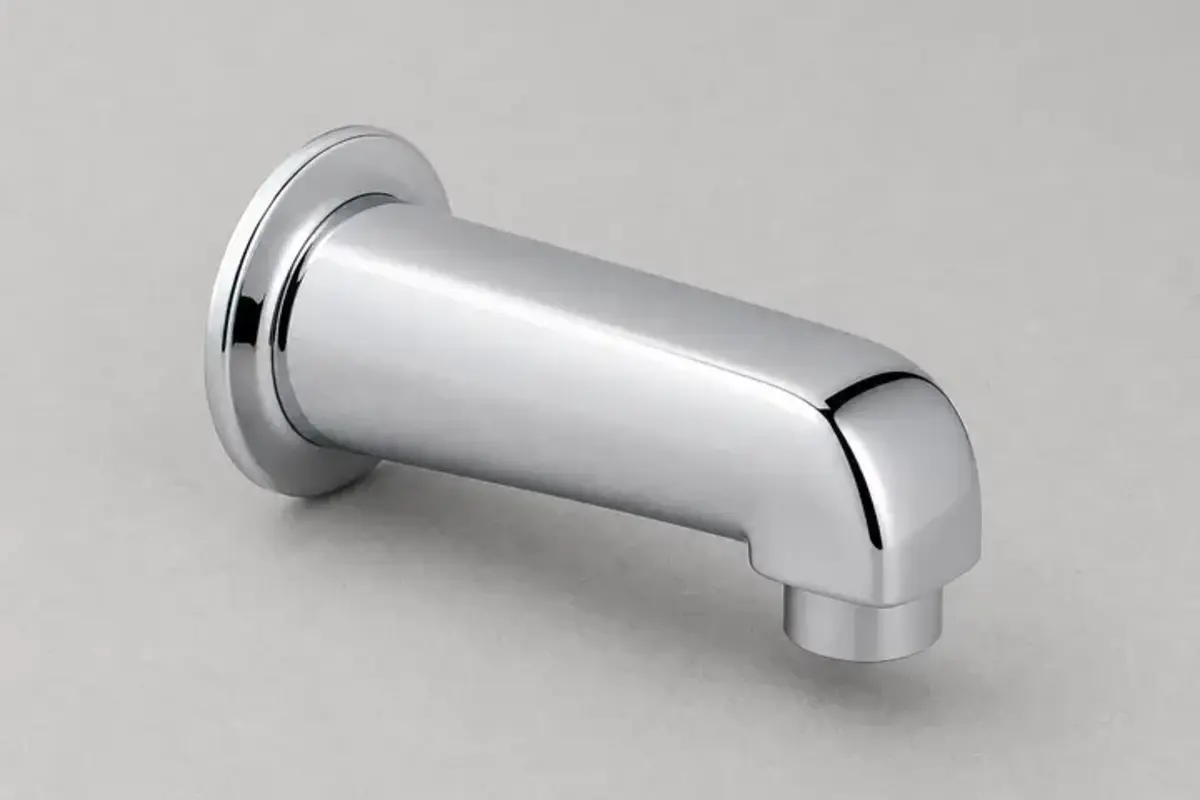
Helps when: Compare this only after the valve makes hot water and the spout still leaks, restricts flow, or the diverter fails.
Skip it when: Skip it for a true cold-only tub before the valve and cartridge checks are done.
Compare bathtub spouts on AmazonAs an Amazon Associate I earn from qualifying purchases. Repair Riot may earn a commission at no extra cost to you.
That points to the bathtub valve, not the water heater. Start with handle travel and the anti-scald limit stop, then inspect the cartridge if the tub still will not mix hot water.
Yes. If the stop is set too cool or indexed wrong, the handle may never reach the hot side far enough. Adjust it in small steps and hand-test the water after each change.
Usually no. If the sink gets hot and the tub stays cold, check behind the handle before buying a spout. Leaks, weak flow, or diverter trouble point at the spout; temperature mix points back to the valve.
The valve cartridge moves up the list after the sink gets hot, the handle turns through its full range, and the tub still stays cold or fades cold. Shut off water, then inspect for stiff stem movement, mineral scale, damaged seals, or a stuck pressure-balance section.
A sticking pressure-balance cartridge can do that. A cross-connection elsewhere can also push cold water into the hot side, especially if other fixtures act strange at the same time.
Not first. Run the sink hot, check the limit stop, and inspect the cartridge. If the handle has full travel and the matched cartridge still leaves the tub cold, then the valve body or piping may need a plumber.
Sometimes. Light debris may rinse out, but a worn, scaled, cracked, or sticking cartridge is better replaced with the exact match for the valve.
Call when you cannot shut off water, the cartridge is seized, the valve body moves, you find leakage behind the wall, or a correctly matched cartridge still does not restore hot water.
Repair Riot rebuilt this page around the sink comparison, bathtub valve behavior, anti-scald limit stops, cartridge fit, and the point where a cold tub becomes a plumber call. Source links support water-heater separation, scald caution, and leak-stop boundaries; the diagnostic sequence is original guidance.