Condensation beads on cabinet face?
Check humidity, filter airflow, return restrictions, and cabinet insulation.
Air handler condensation on the cabinet? Start with the towel test. Dry one panel, run one cooling cycle, and watch where water returns. Beads on metal usually mean humid air on cold sheet metal. Water at the base points to drain backup, thawing ice, or pan overflow.
Good clue: if the same panel beads up again, check filter airflow and room humidity. If water starts low, check the pan and drain first.
Watch the first wet spot, not the biggest puddle. That tells you whether to chase airflow, humidity, insulation, ice, or the drain.
Don’t start with: Do not insulate over wet metal, replace controls, or ignore cabinet condensation that spreads into the structure.
Check humidity, filter airflow, return restrictions, and cabinet insulation.
Check cold seam, duct transition, and insulation gaps.
Check drain backup, float switch, and thawing ice.
Turn cooling off, thaw, replace filter if needed, and call if ice returns.
Use the return location to separate sweat, drain, and ice paths.
The first wet spot separates normal surface condensation from drain, ice, or insulation trouble.
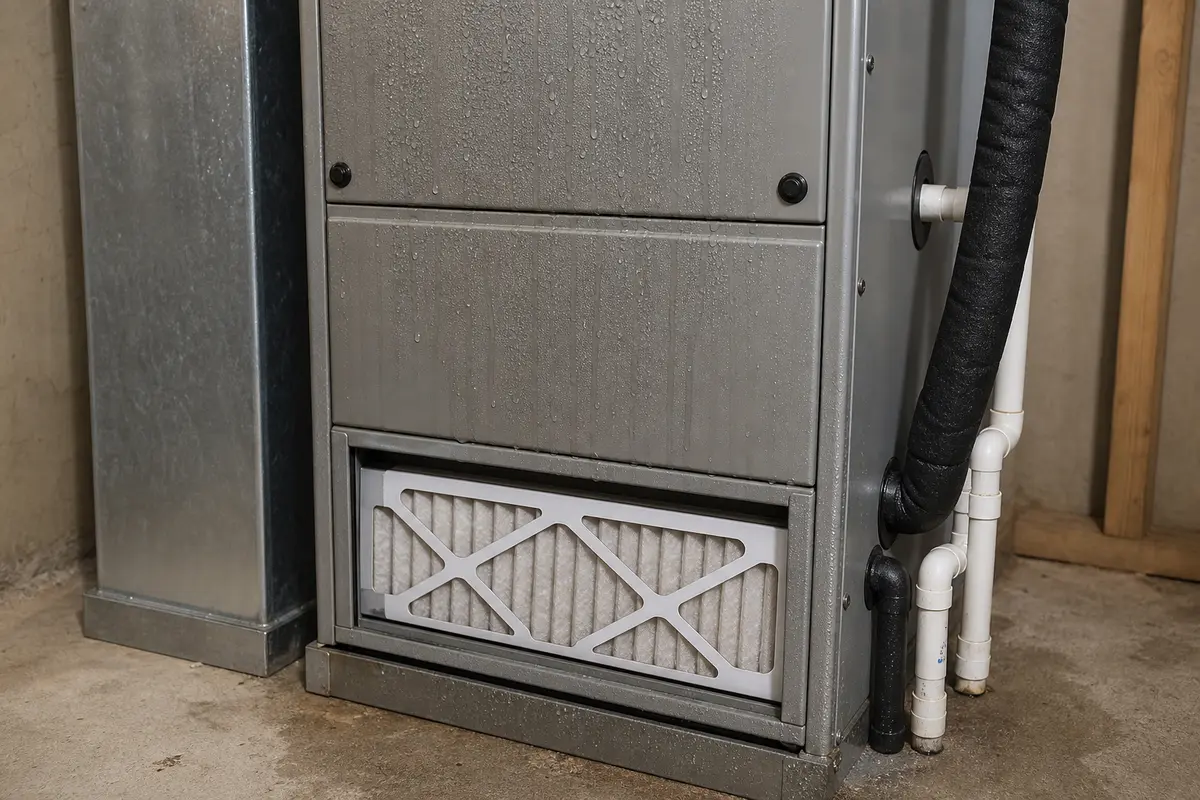
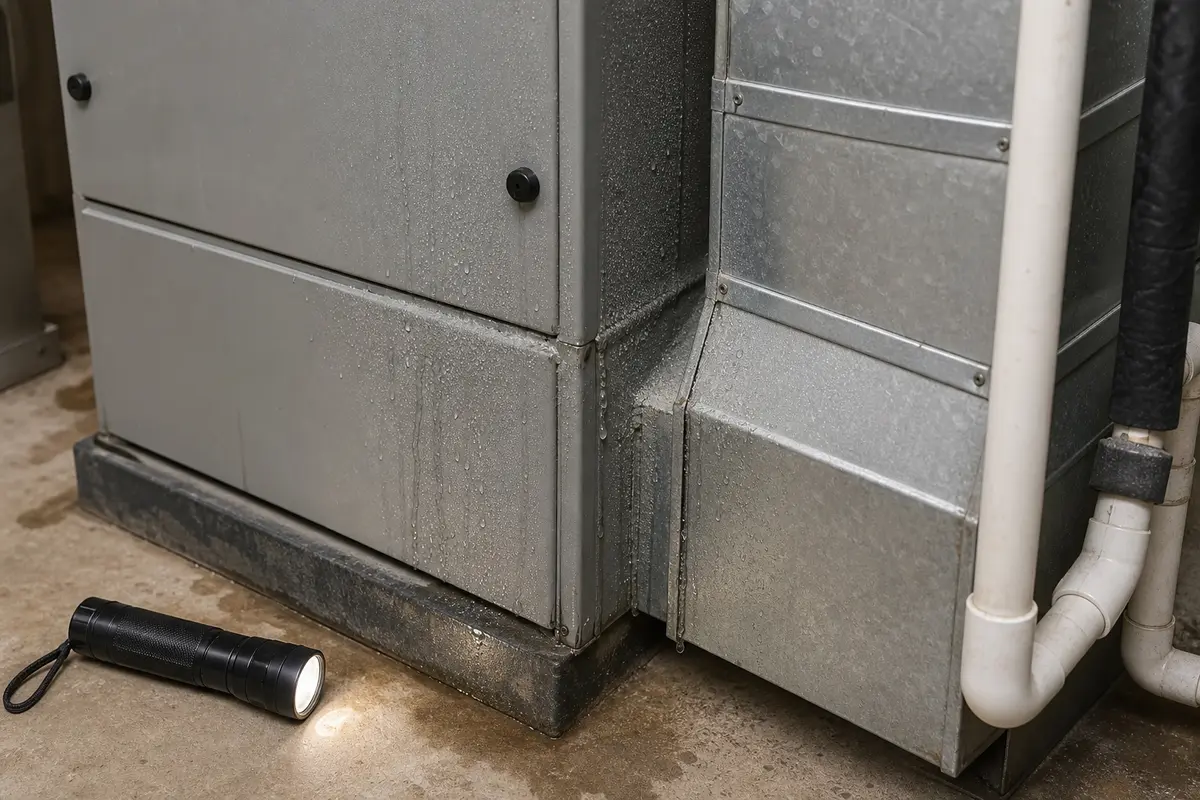
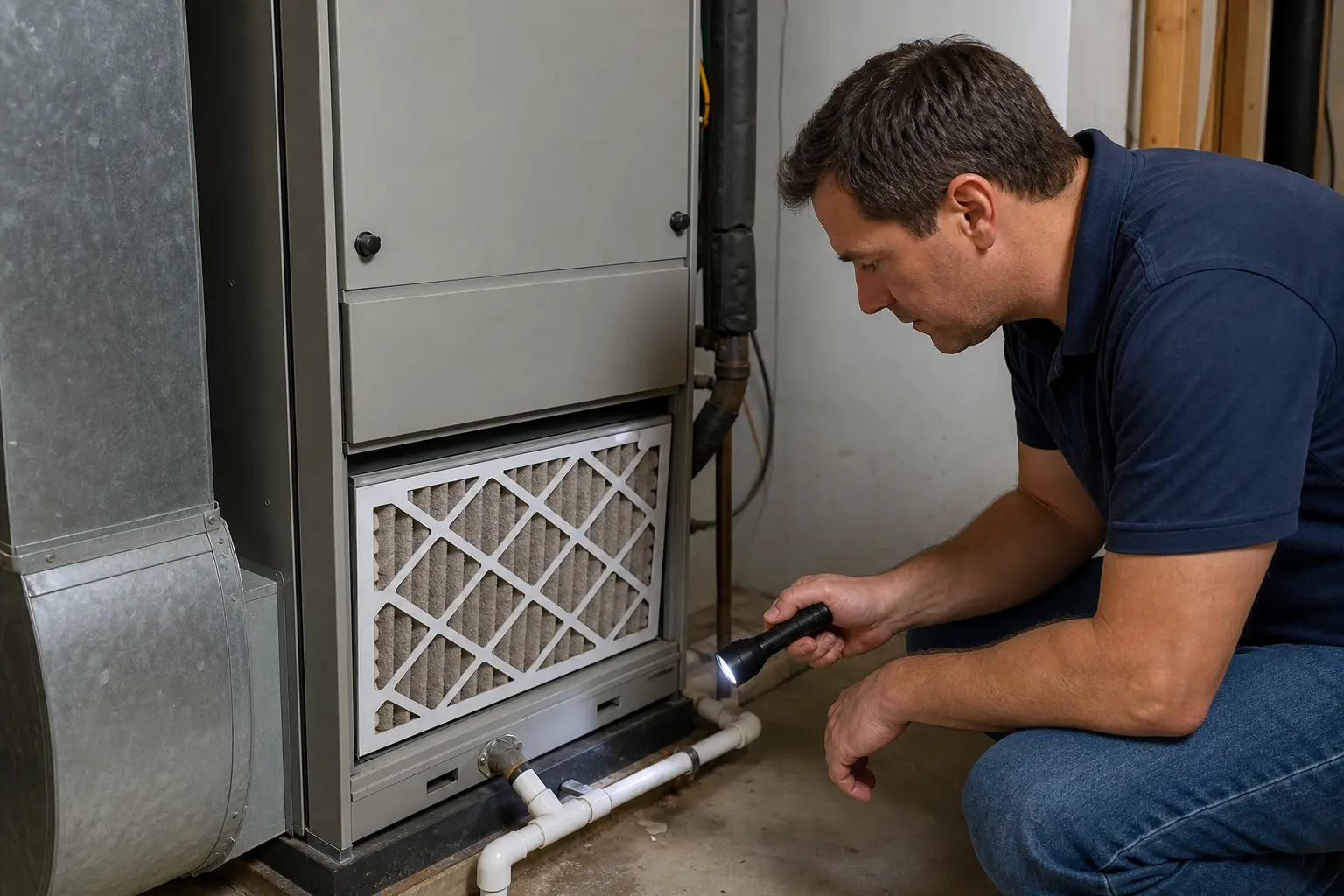
Buy only after the wet path is clear: dirty filter, accessible drain backup, or a visible float switch that stays stuck after the pan and drain are dry. Match the exact model, filter size, drain layout, switch mounting style, and confirmed diagnosis before ordering anything.
Do the towel test first: dry a patch, run one cooling cycle, and see where water returns.
Avoid buying internal parts until the visible clues support it.
Use this table after one controlled check and any normal startup delay.
| Clue | Most likely cause | Next move |
|---|---|---|
| Beads on cabinet face | Surface condensation, humidity, or airflow | Dry the surface and check filter and return air. |
| Wet seam or duct transition | Insulation gap or air leakage clue | Document the seam and avoid sealing wet metal blindly. |
| Water at base | Drain backup, float switch, or thawing ice | Check pan and drain before parts. |
| Ice visible | Airflow or refrigerant-side issue | Turn cooling off and thaw fully. |
| Condensation returns with good airflow | Humidity, insulation, duct, or service issue | Schedule HVAC diagnosis. |
These checks keep the diagnosis tied to what you can see or safely test.
Keep the cart narrow and buy only when the evidence points to that exact item.
These support safe visible checks, cleanup, and documentation.
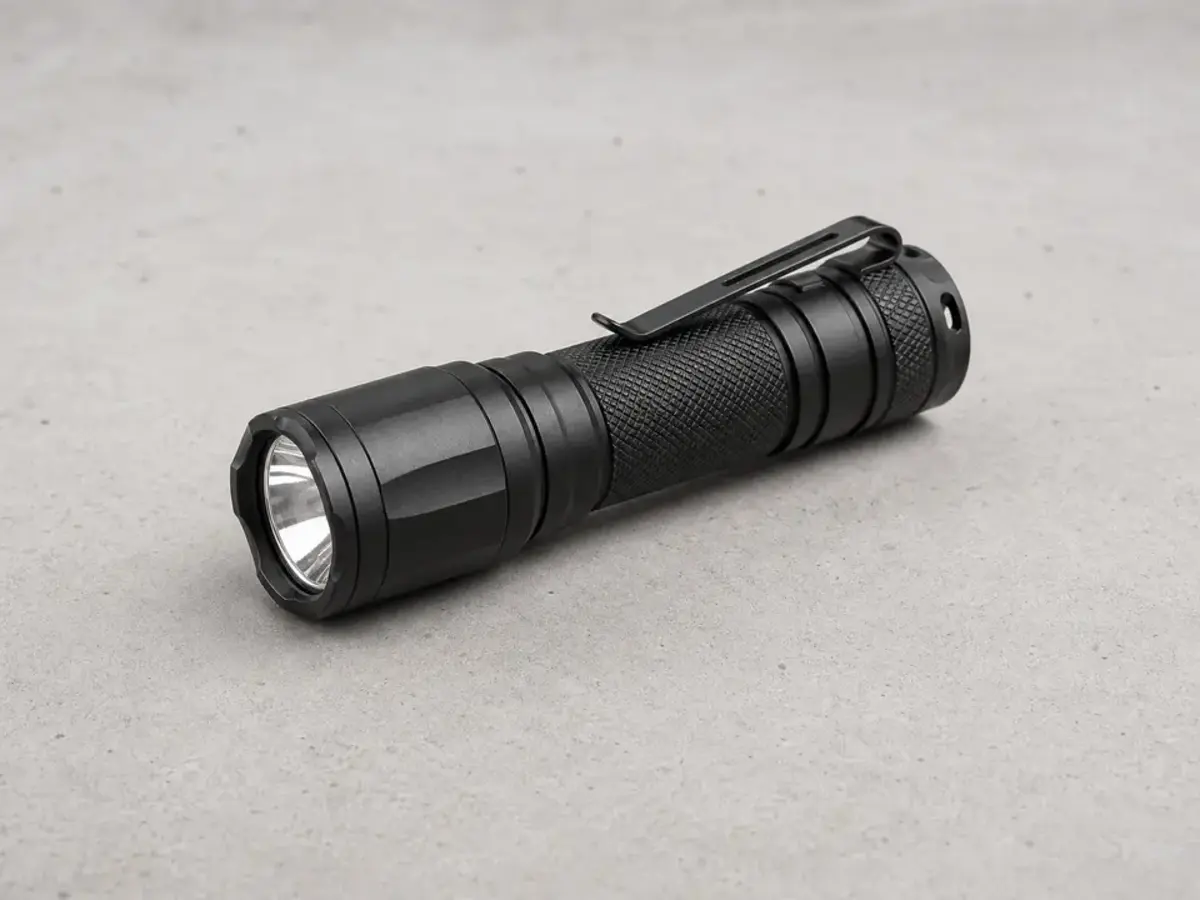
Helps when: Use it to inspect beads, seam moisture, filter fit, pan water, and drain clues.
Skip it when: Skip checks that require opening blower electrical compartments, reaching into the cabinet, or working near water and controls.
Compare inspection flashlights on Amazon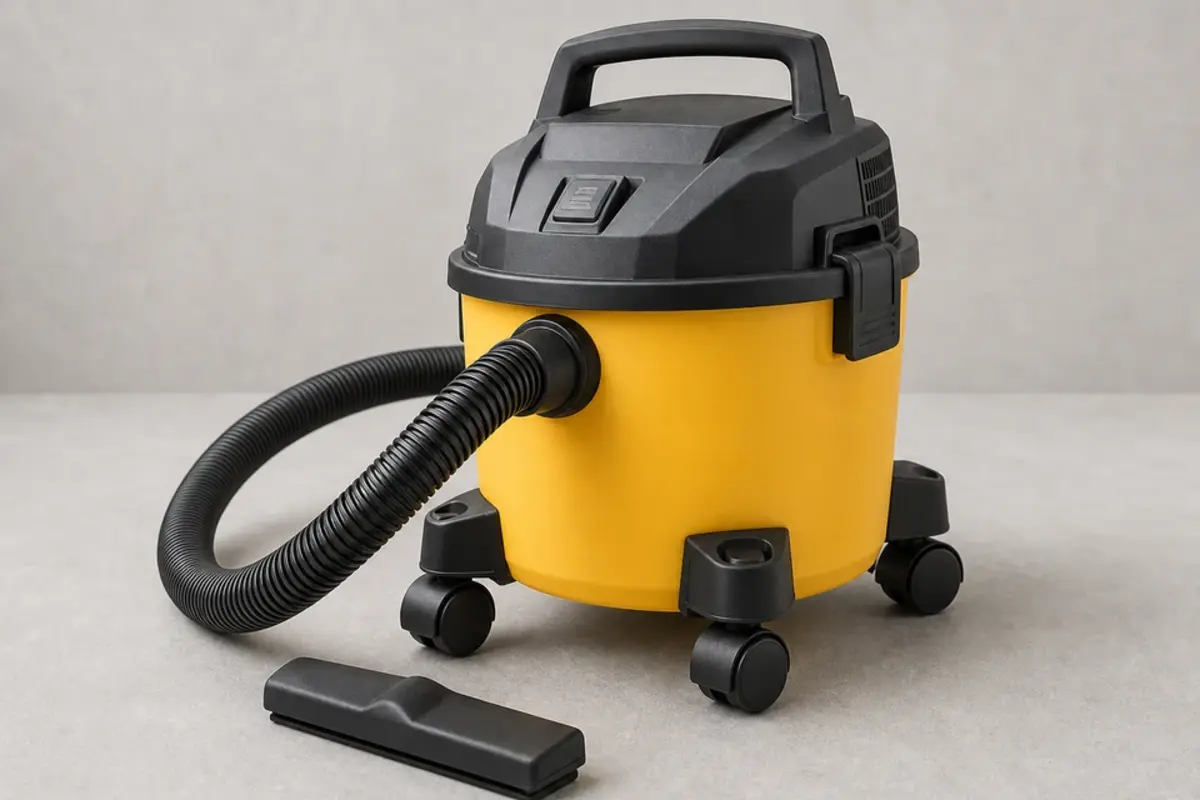
Helps when: Use it only at an accessible condensate outlet when pan water suggests a drain backup.
Skip it when: Skip it when the drain outlet is hidden, water is near electrical controls, or you cannot identify the condensate line.
Compare wet-dry vacuums on Amazon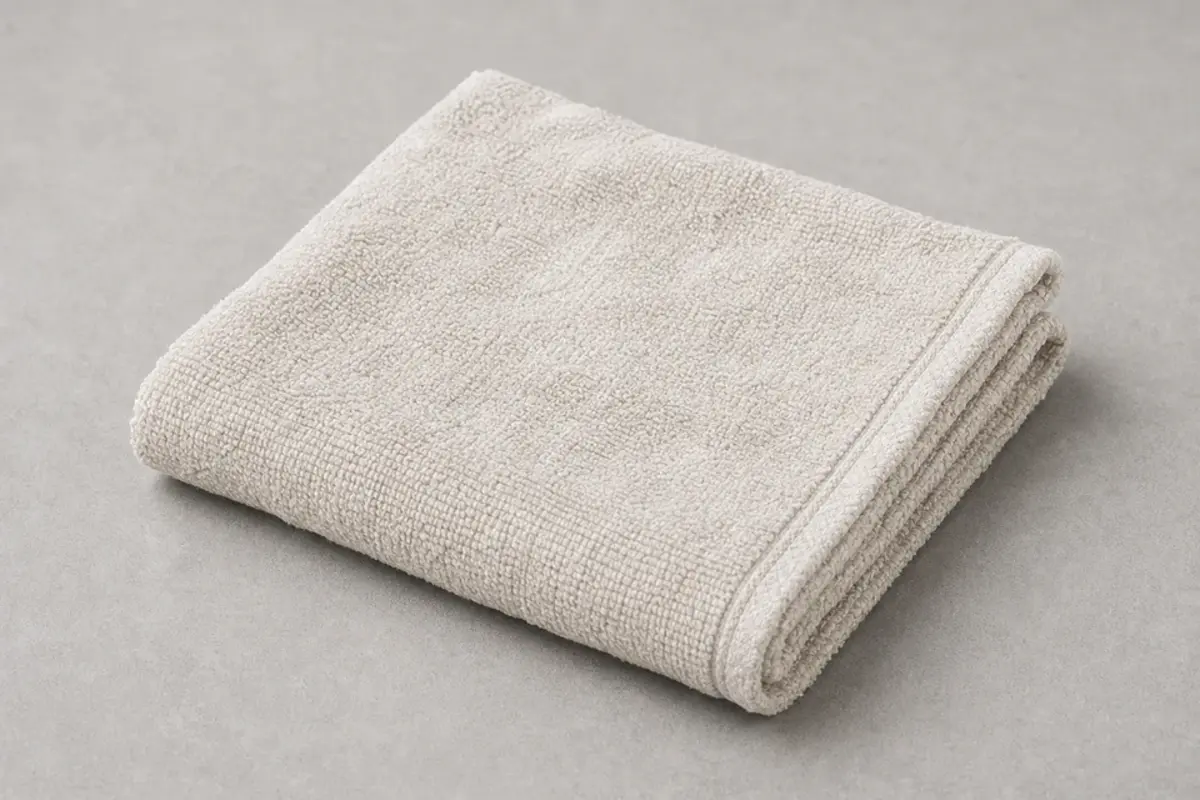
Helps when: Use them to dry the cabinet and prove where fresh condensation returns.
Skip it when: Skip paper towels for active leaks where a pan or wet-dry vacuum is needed.
Compare absorbent towels on AmazonAs an Amazon Associate I earn from qualifying purchases. Repair Riot may earn a commission at no extra cost to you.
These are the only buy-first parts that fit the visible homeowner clues.
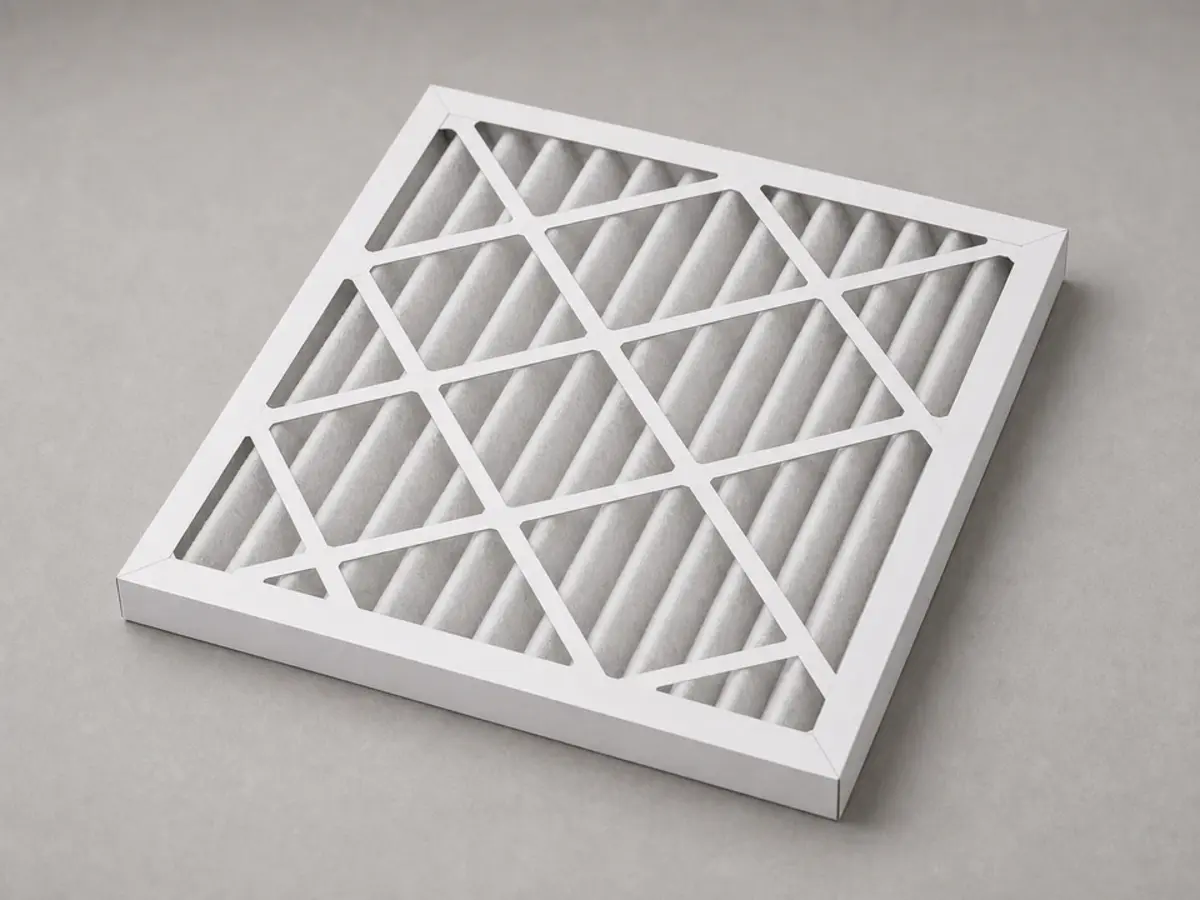
Helps when: Replace it when the current filter is dirty, damp, collapsed, missing, or the wrong size and airflow is weak.
Skip it when: Skip filters that do not match the air-handler rack size, thickness, airflow arrow, and supported restriction range.
Compare air handler filters on Amazon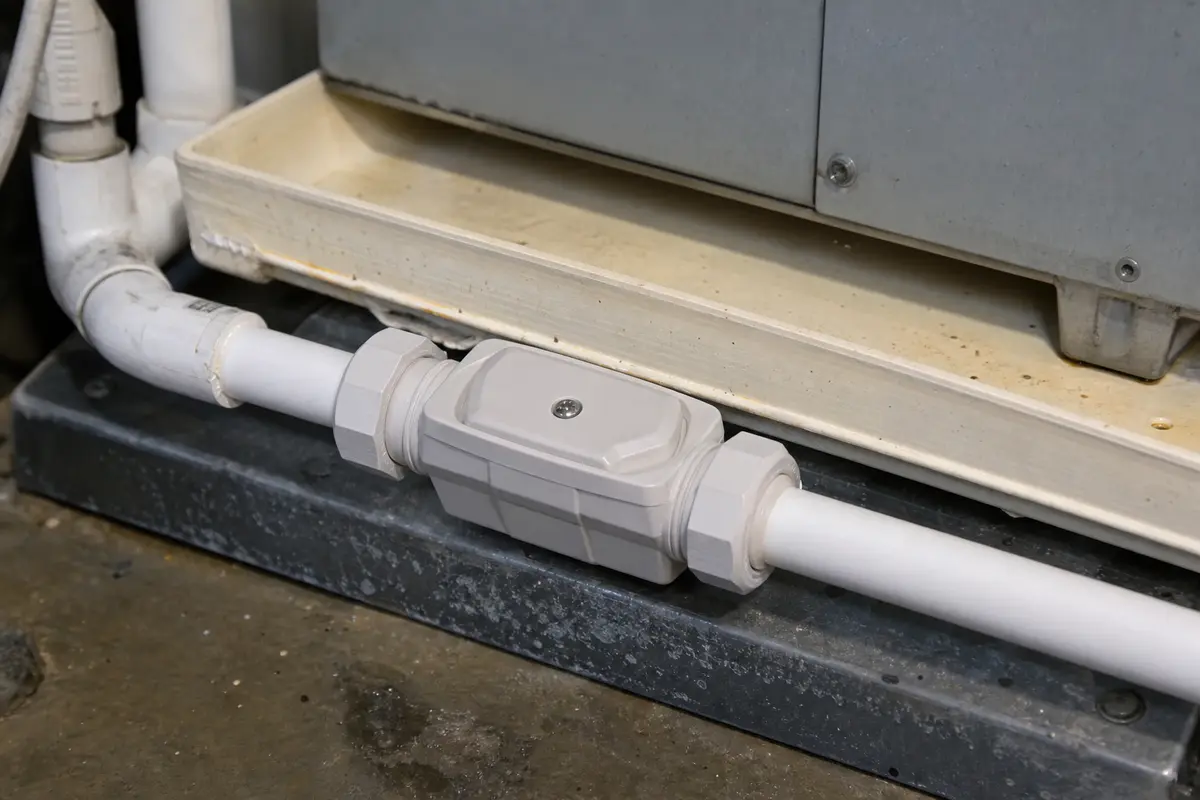
Helps when: Consider one only when the pan and drain are dry but the visible float switch is cracked, stuck, or will not reset.
Skip it when: Skip it when water is still lifting a working switch, the drain is not clear, or the mounting style does not match.
Compare air handler condensate float switches on AmazonAs an Amazon Associate I earn from qualifying purchases. Repair Riot may earn a commission at no extra cost to you.
Humid air may be hitting cold metal, or water may be coming from ice, drain backup, or pan overflow.
A little surface sweat can happen in humid spaces, but dripping or spreading water needs diagnosis.
Yes. Low airflow can make the cabinet colder and can contribute to coil icing.
Check the pan, drain, float switch, and thawing ice. Shut cooling off if water spreads.
Not until the wet path is clear. Insulating wet metal can hide the real issue.
Yes. Thawing ice can look like condensation or drain overflow.
A correct-size filter, flashlight, towels, and wet-dry vacuum are reasonable when the clues fit.
Call if condensation returns with good airflow, ice returns, the drain is hidden, or water reaches controls or finished spaces.
Repair Riot built this page around safe homeowner checks: thermostat demand, airflow, filter condition, visible water, cabinet behavior, condensate safety, and clear stop points before internal electrical or refrigerant work.