Outdoor unit stops after only a few seconds?
Check thermostat call, breaker/disconnect state, and startup sounds. Seconds-long cycling is often control or electrical, not a filter alone.
Start by timing the outdoor run. If the air conditioner outside unit short cycles, check the filter, open vents, thermostat location, ice, and dirty condenser coil before parts.
The fixable clues are restricted airflow, bad thermostat sensing, or an outdoor coil that cannot shed heat.
A seconds-long stop points differently than a five-minute stop. Write down the timing, then work through airflow and heat clues.
Don’t start with: Do not start with a capacitor, contactor, refrigerant, or compressor guess unless a technician has tested that side.
Check thermostat call, breaker/disconnect state, and startup sounds. Seconds-long cycling is often control or electrical, not a filter alone.
Start with the air filter, open vents, return grilles, ice, and condenser coil dirt.
Look hard at outdoor coil debris, blocked condenser clearance, and heat-related shutdown clues.
Check schedule, cycle settings, loose mounting, direct sun, and supply air blowing on the thermostat.
Stop after basic airflow checks. The next tests involve energized electrical or refrigerant-side work.
Short cycling is a pattern problem. The pictures to compare are the run timer, the indoor filter, and the outdoor coil sides.
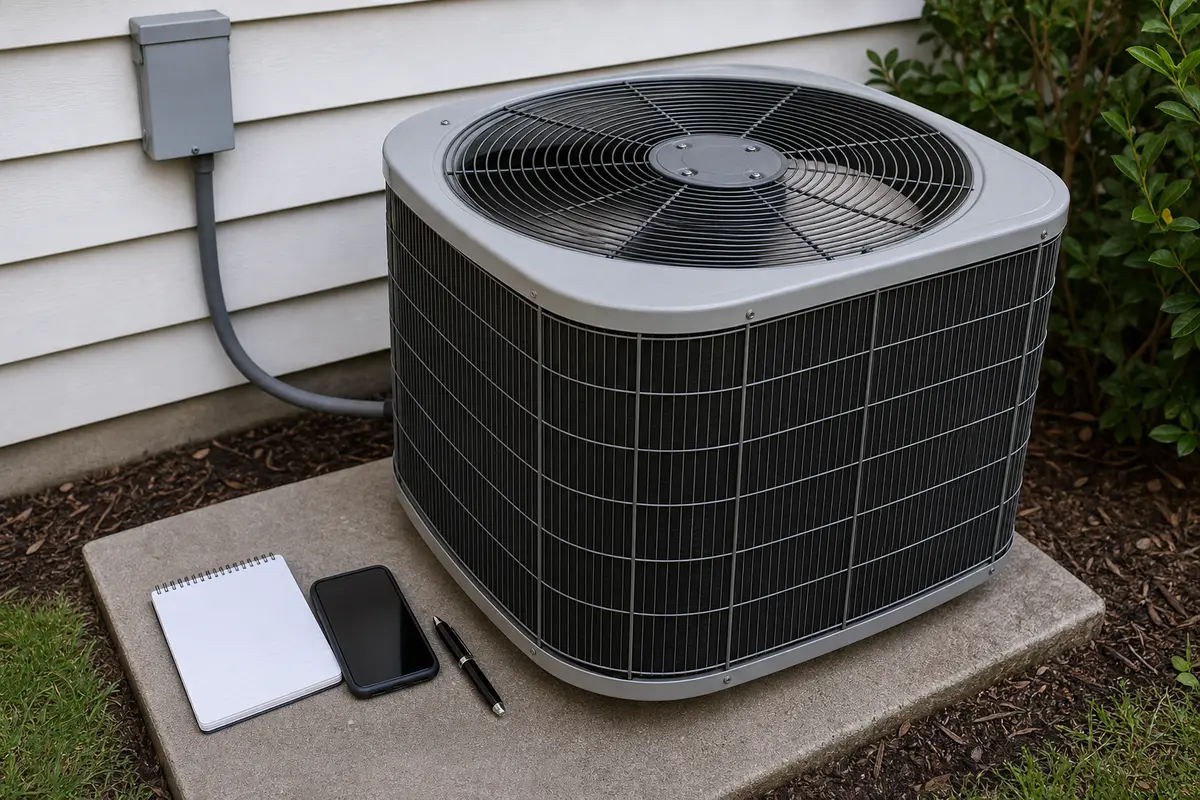
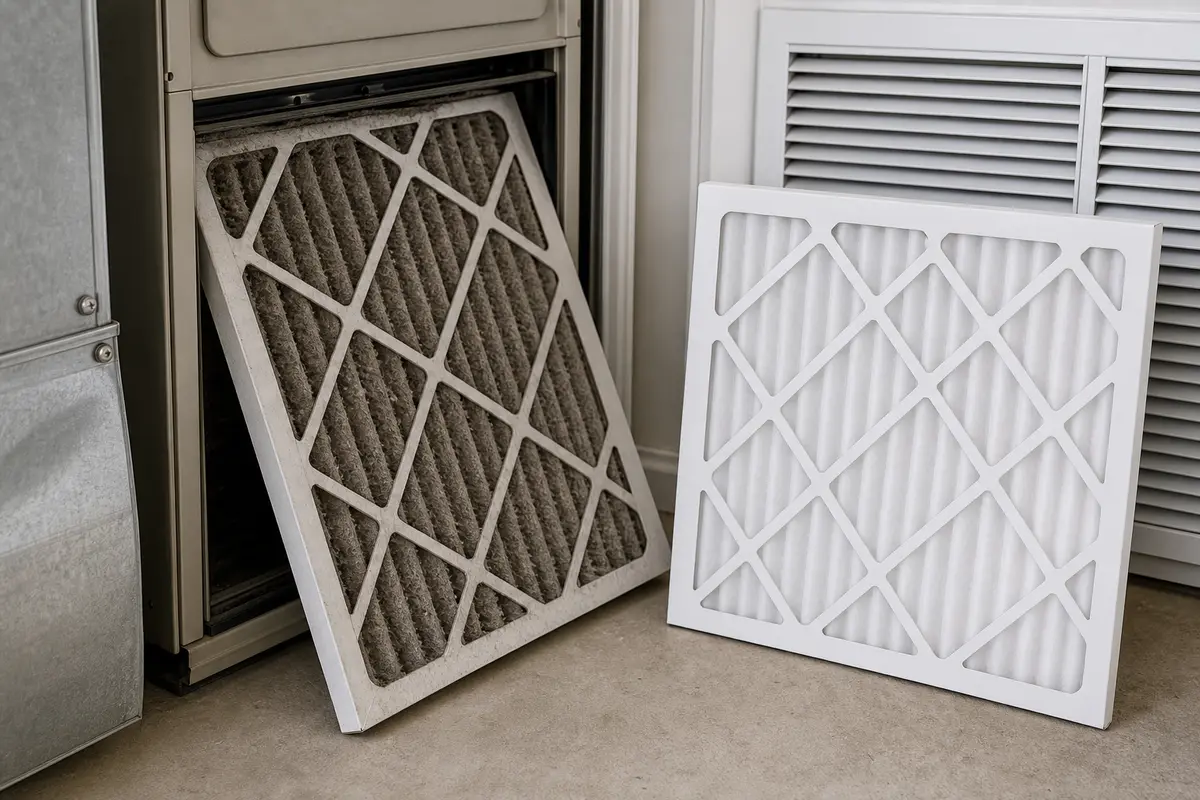
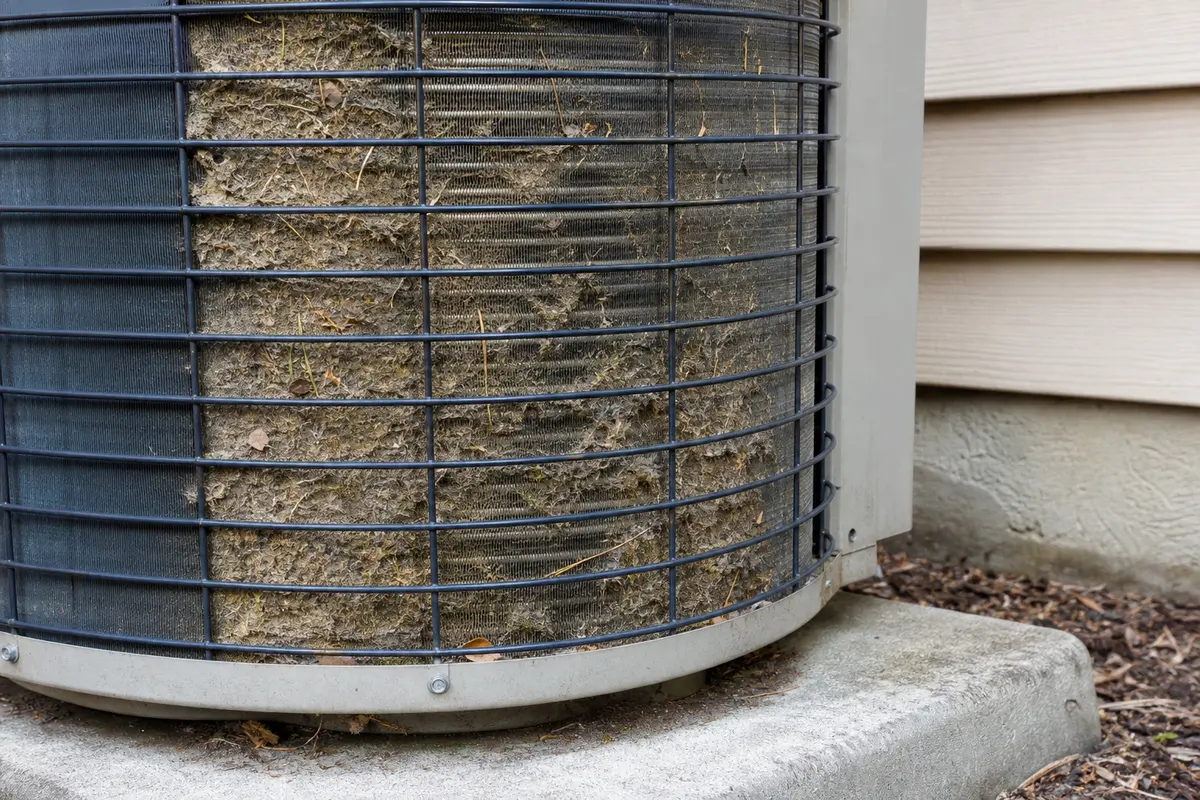
Short cycling is not a shopping symptom by itself. Buy a filter when the old one is dirty or the size is wrong, and match the exact printed filter size. Buy a thermostat only when it misreads, drops the cooling call, sits in a bad location, or cannot be configured correctly for your system wiring. Capacitors, contactors, refrigerant, and compressor parts should match a tested diagnosis, not a guess.
Short cycling means the outdoor unit stops before the cooling call has done useful work, then starts again soon after. A good first clue is whether the indoor blower keeps running while the condenser drops out.
Most bad short-cycle repairs begin with an electrical part guess. Stay with the clues you can confirm.
Use this table after one controlled cooling call. The numbers matter more than the click sound by itself.
| Pattern | What it usually means | Next move |
|---|---|---|
| Runs only a few seconds | Control, startup, breaker, or safety interruption is more likely than a dirty filter alone. | Check thermostat call and stop if there is buzzing, burning smell, or tripping. |
| Runs two to ten minutes, then restarts soon | Airflow, ice, dirty condenser, or thermostat sensing can shut the unit down early. | Start with filter, vents, ice, and outdoor coil cleaning. |
| Cycles worse in direct sun or peak heat | The condenser may be struggling to reject heat. | Clear condenser sides, gently clean the coil, and check whether run time improves. |
| Thermostat stops calling while room is still warm | The thermostat may be fooled by location, settings, battery, or wiring. | Correct thermostat setup before condemning the outdoor unit. |
| Short cycles after clean airflow and coil checks | Remaining causes usually need electrical or refrigerant testing. | Call HVAC service with your timing notes. |
Airflow fixes are boring, but they are the right first move because they change the system load immediately.
Ice and water safety switches can make the outdoor unit look unreliable even when the condenser is only responding to a protection signal.
Once indoor airflow is reasonable, the next homeowner clues are condenser heat rejection and thermostat sensing.
These items support timing, inspection, filter replacement, and exterior coil cleaning. Stop before live electrical or refrigerant work.
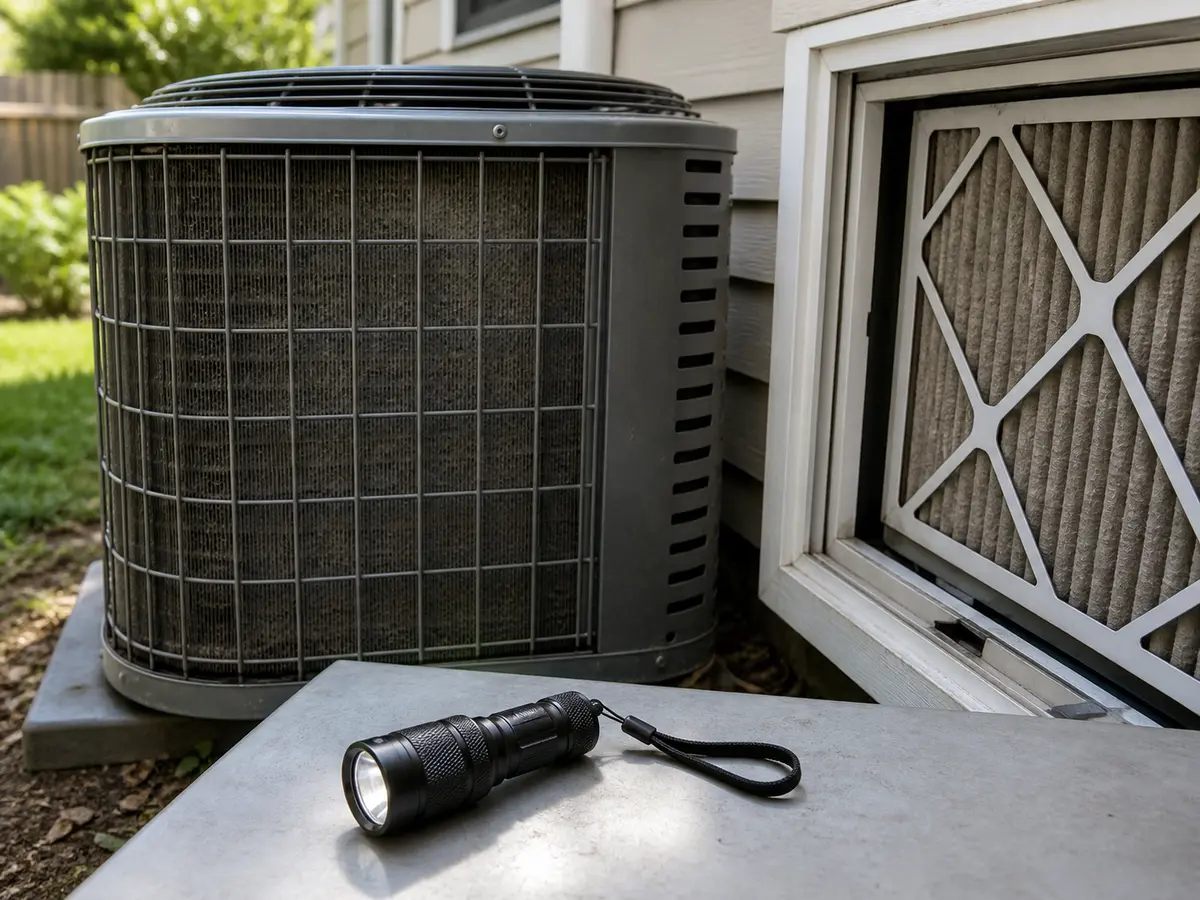
Helps when: Use it to inspect the filter slot, drain pan, refrigerant line ice, outdoor coil dirt, and the model label.
Skip it when: Skip deeper checks when the next step would expose wiring, capacitor terminals, refrigerant lines, or a running fan.
Compare inspection flashlights on Amazon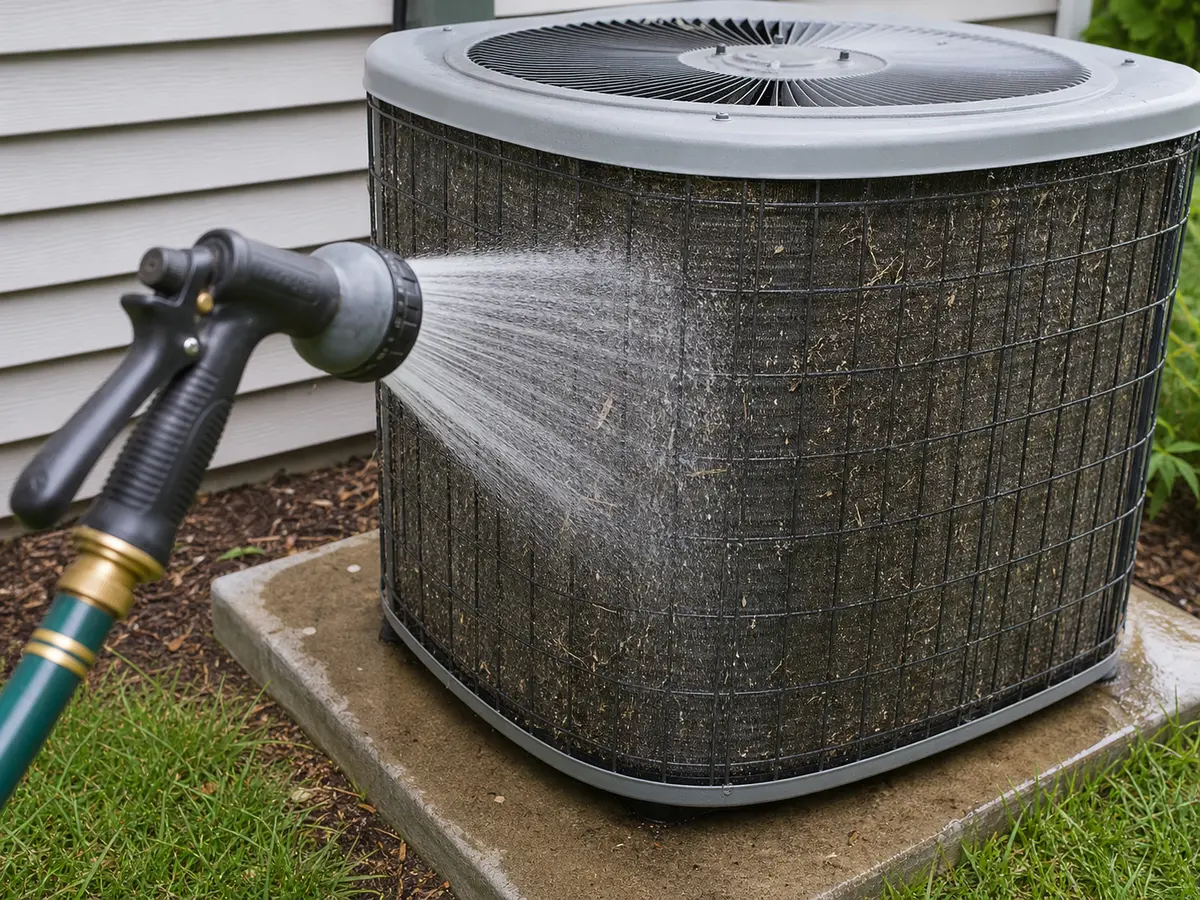
Helps when: Use light water pressure to rinse condenser coil dirt after the outdoor disconnect and breaker are off.
Skip it when: Skip water when the service compartment is open, wiring is damaged, the ground is unsafe, or only high pressure is available.
Compare hose spray nozzles on Amazon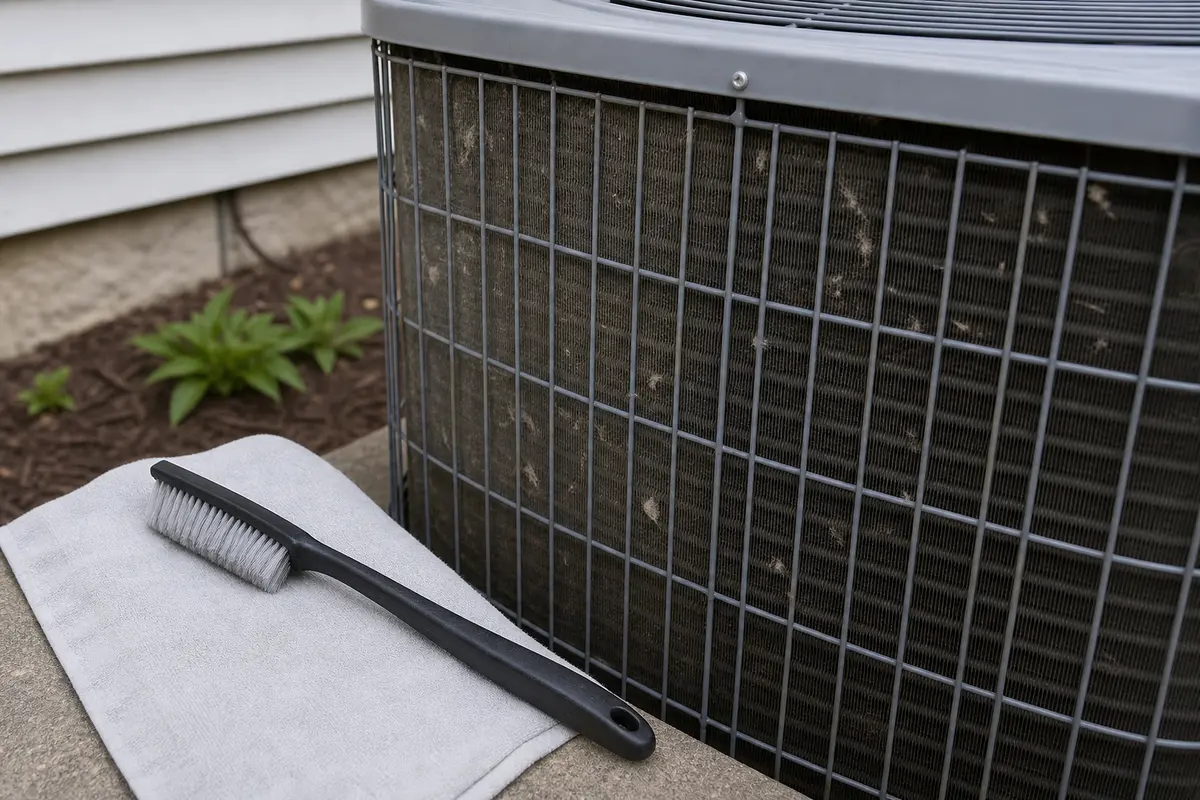
Helps when: Use it to lift cottonwood and loose surface debris from exterior fins before rinsing.
Skip it when: Skip it when fins are crushed badly, the coil is oily, or panel removal would expose wiring.
Compare condenser coil brushes on AmazonAs an Amazon Associate I earn from qualifying purchases. Repair Riot may earn a commission at no extra cost to you.
Only two homeowner purchases belong near the top of this problem: the right filter and, less often, a compatible thermostat. Everything else needs testing.

Helps when: Replace it when the installed filter is dirty, bowed, damp, missing, or the wrong size and airflow improves afterward.
Skip it when: Skip random filter upgrades when the filter rating, airflow arrow, thickness, or rack size could reduce airflow further.
Compare AC filters on Amazon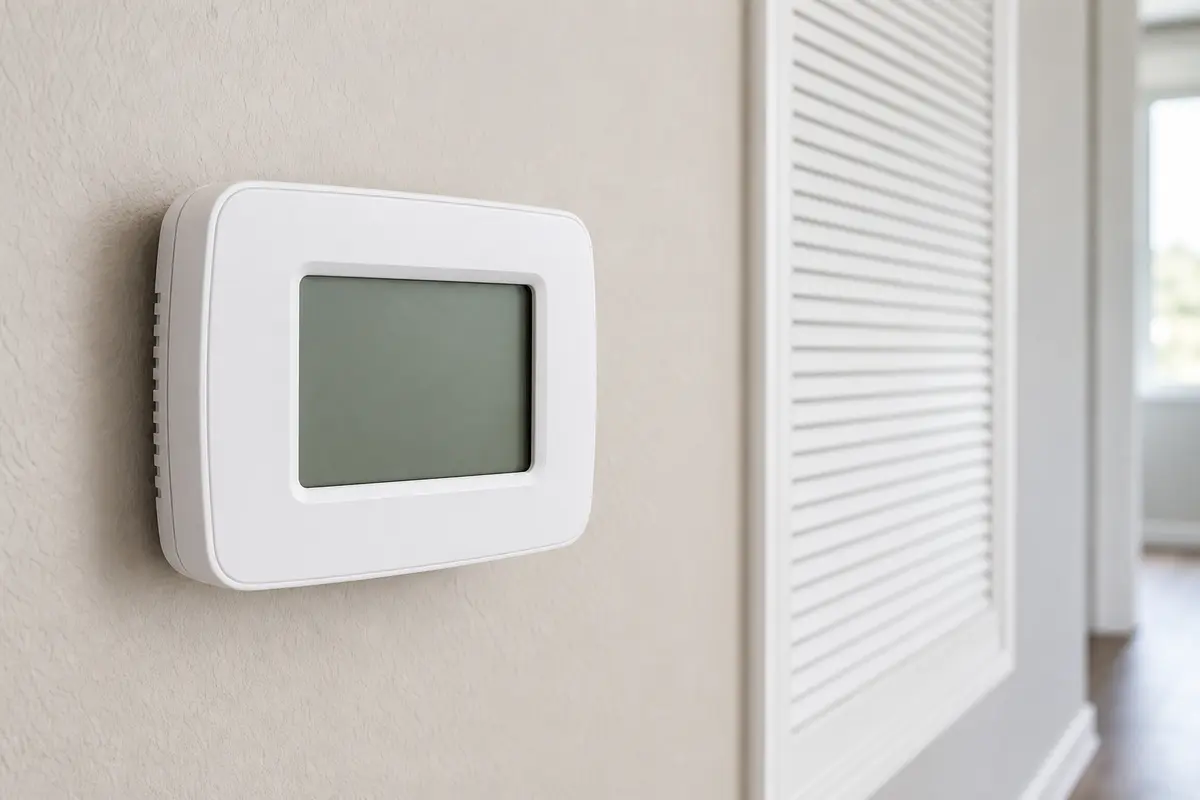
Helps when: Consider one when the thermostat misreads room temperature, loses the cooling call, sits in a bad location, or cannot be configured for the system.
Skip it when: Skip it when filter airflow, vents, ice, condenser coil, or electrical start symptoms have not been sorted first.
Compare compatible thermostats on AmazonAs an Amazon Associate I earn from qualifying purchases. Repair Riot may earn a commission at no extra cost to you.
Common causes are restricted airflow, a dirty outdoor coil, thermostat sensing trouble, icing, or a safety shutdown from overheating. Time the run pattern, then check the filter, vents, thermostat, ice, and condenser coil.
Yes. A clogged filter can reduce airflow enough to ice the indoor coil or trigger shutdown behavior. Replace the filter with the exact size before assuming the condenser has failed.
Yes. Short cycles are hard on the compressor and electrical components, and the house usually cools poorly. Treat repeated rapid cycling as a problem to fix quickly.
Not as a first move. A weak capacitor can cause startup trouble, but short cycling is often airflow, thermostat, ice, or condenser heat trouble. Capacitors should be tested before replacement.
There is no single correct number, but repeated runs of only a few seconds or one to two minutes while the house is still warm are not normal. Record the pattern for the diagnosis.
Yes. Direct sun, supply air blowing on the thermostat, a loose wall plate, bad batteries, or aggressive cycle settings can make the thermostat start and stop cooling too often.
Ice can form when airflow is poor or refrigerant-side conditions are wrong. The system may stop cooling early or cycle oddly until the ice thaws and the cause is corrected.
Call if the breaker trips, the outdoor unit hums hard, ice returns, cleaning and filter replacement do not change the cycle, or the next check would involve capacitor, wiring, compressor, or refrigerant testing.
Repair Riot built this page around safe homeowner observations: cycle timing, indoor airflow, filter fit, ice, condenser coil heat rejection, thermostat sensing, and clear stop points before electrical or refrigerant work.