Does one side panel buzz or chatter?
Loose cabinet screws or a panel seam are likely first checks.
An outside AC rattle often points to a loose panel, top grille, fan-guard debris, or fan blade issue. With cooling off, compare sheet-metal chatter with a top-grille tick, then check exterior screws and debris. Shut it off for deep rattling, worsening noise, or weak cooling.
Start with sheet-metal screws, top grille hardware, debris, fan blade clearance, and whether the noise follows fan speed.
The sound location matters. Light sheet-metal chatter and deep internal knocking lead to different decisions.
Don’t start with: Do not open the electrical compartment or poke through the grille to stop the rattle.
Loose cabinet screws or a panel seam are likely first checks.
Power off and clear only reachable exterior debris. Do not push through the guard.
Fan blade, grille, or motor bearing clues move higher.
A quick cabinet tick is different from a hard compressor knock.
Stop using the system and schedule service.
Run one watched cycle. If the noise returns, inspect fan and pad clues.
Most homeowner-safe rattle clues are outside the electrical compartment: panel seams, grille screws, debris, and fan clearance.
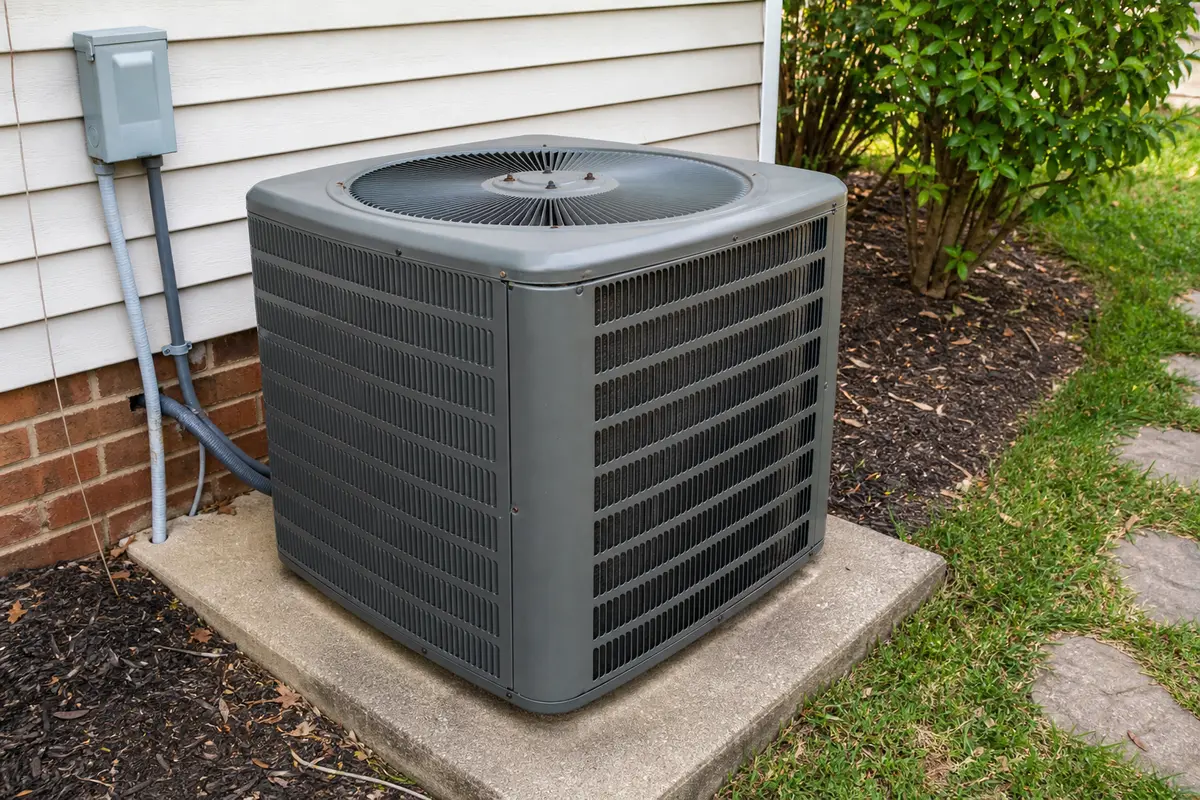
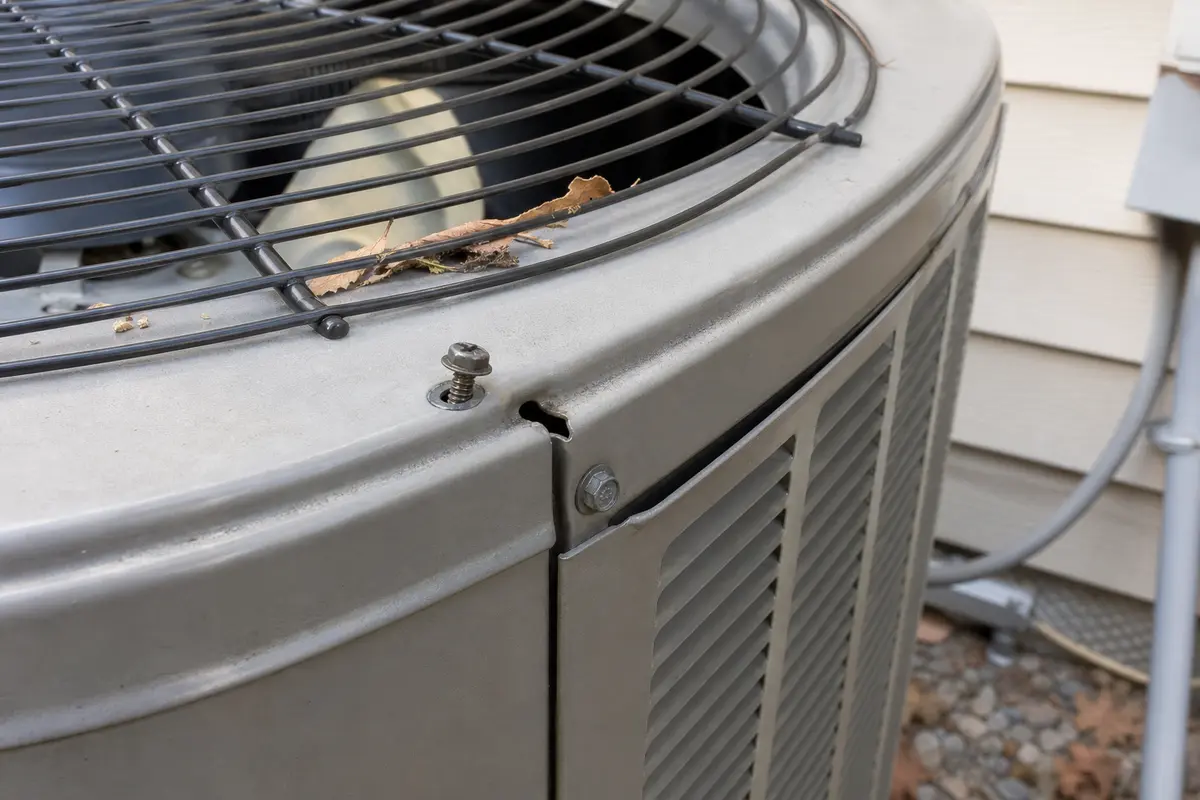
Do not buy a capacitor, fan motor, or blade until the exact diagnosis is clear: exterior screws, grille debris, panel contact, and fan clearance have been sorted. Match the unit model and part specs before ordering.
Rattling usually starts with something loose or touching the fan path before it becomes a motor or compressor call.
A rattle is tempting to silence by hand, but the fan area is not a place for shortcuts.
Use the sound and location before touching the condenser.
| Sound or clue | Most likely area | Next move |
|---|---|---|
| Tinny panel chatter | Loose cabinet or service panel | Power off, snug exterior screws. |
| Top grille buzz | Loose grille screw or debris | Inspect grille and clear reachable debris. |
| Rhythmic tick with fan | Blade clearance or debris | Leave off if blade rubs or looks bent. |
| Growl from fan area | Fan motor bearing | Schedule service or compare motor specs. |
| Deep knock low in cabinet | Compressor or internal mount | Stop using the system. |
Only work on exterior hardware with the system off. Most light rattles show up here.
Fan clues usually repeat each time the blade moves, not just when the compressor starts.
These tools support exterior checks only. They do not make fan or electrical work safe.
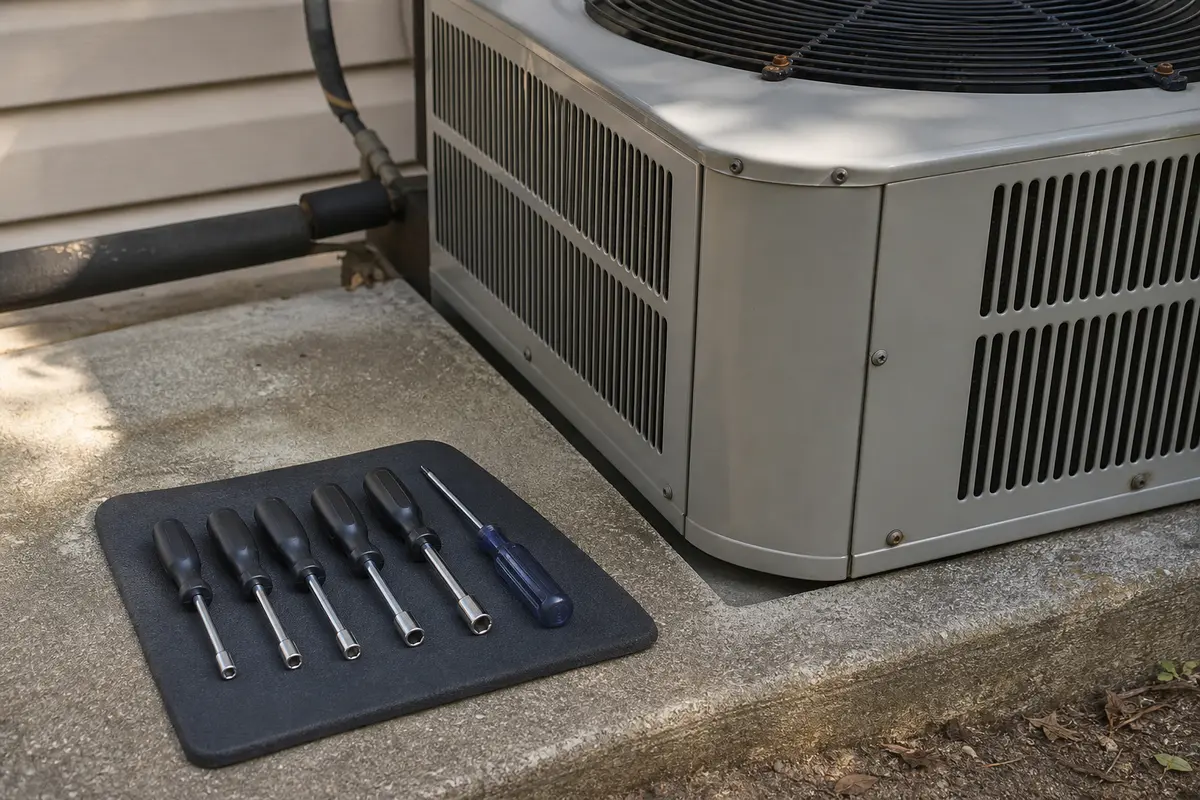
Helps when: Use it to snug exterior grille and panel screws with the unit off.
Skip it when: The screw is in an electrical cover or the panel is damaged.
Compare nut driver sets on Amazon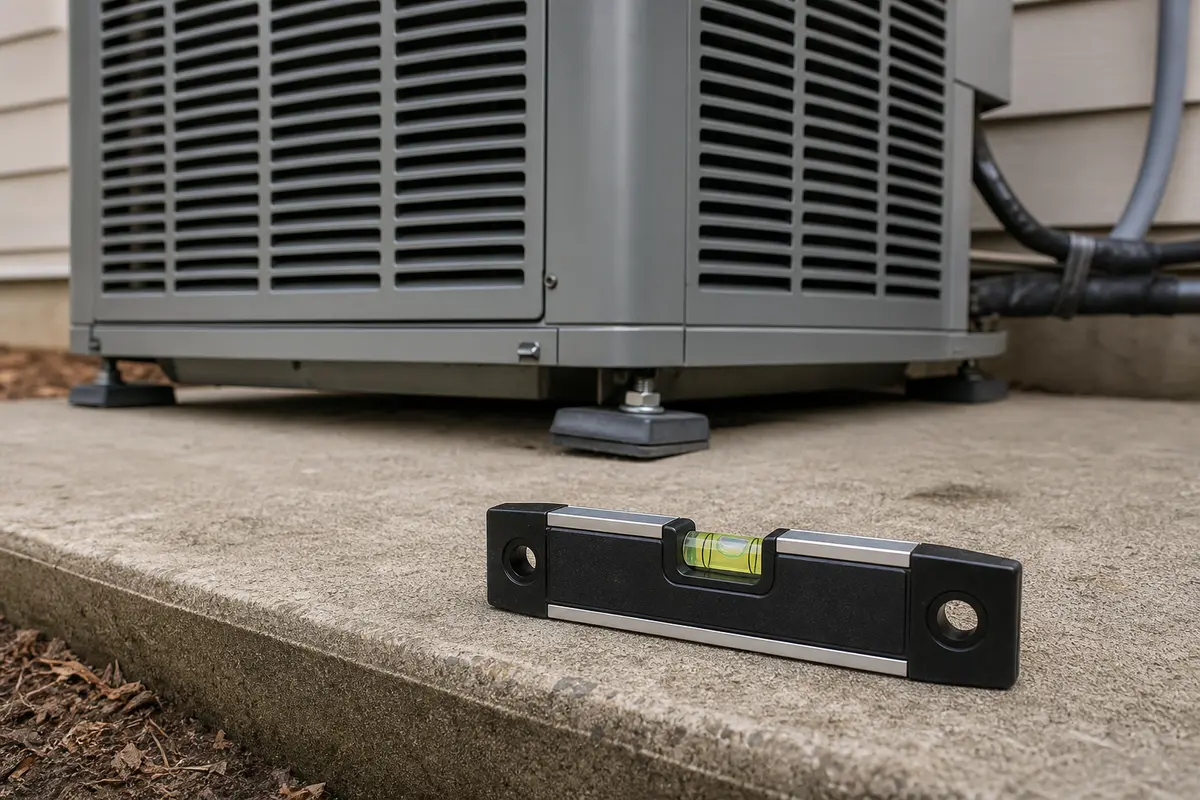
Helps when: Use it when rattling comes with visible cabinet rocking.
Skip it when: The condenser must be lifted or refrigerant lines would be strained.
Compare small levels on AmazonAs an Amazon Associate I earn from qualifying purchases. Repair Riot may earn a commission at no extra cost to you.
Parts come after the sound follows a confirmed fan or motor clue.
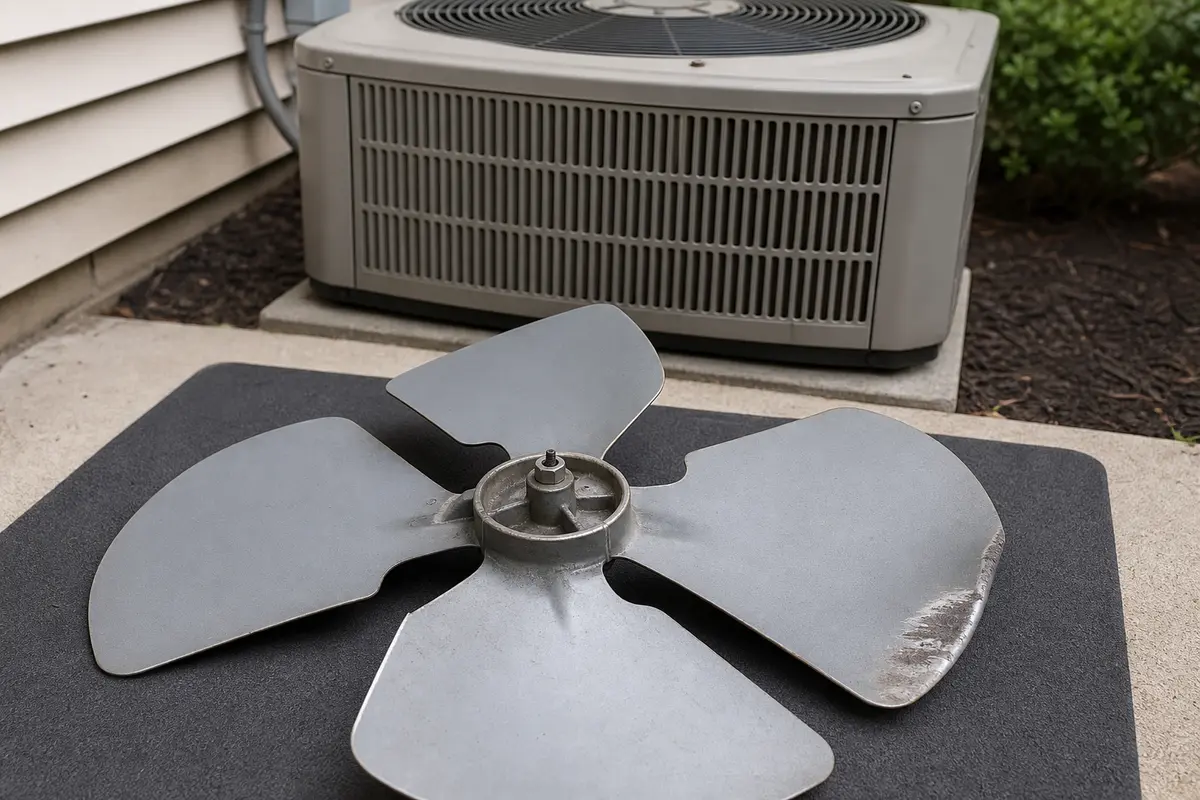
Helps when: Compare after visible blade damage, rub marks, or wobble.
Skip it when: Loose panel screws or debris have not been ruled out.
Compare condenser fan blades on Amazon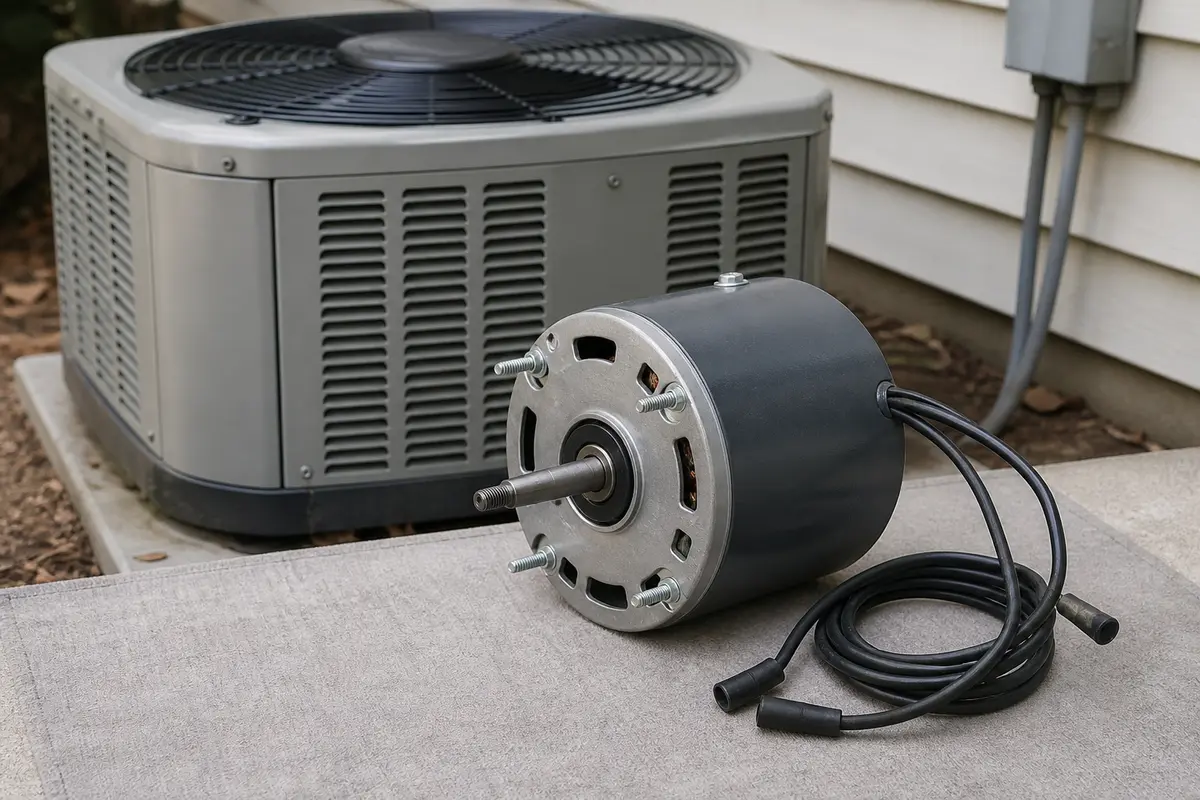
Helps when: Compare after bearing growl or shaft play points to the motor.
Skip it when: The rattle is only a loose grille, panel, or pad issue.
Compare condenser fan motors on AmazonAs an Amazon Associate I earn from qualifying purchases. Repair Riot may earn a commission at no extra cost to you.
Common causes are loose panels, top grille hardware, debris near the fan guard, blade rub, fan motor bearing noise, or a deeper compressor issue.
Only after a mild exterior rattle is corrected. Shut it off for scraping, banging, weak cooling, hot smell, or breaker trips.
Yes. Dry leaves, twigs, and small debris near the grille can chatter or touch the fan guard.
If the rattle starts and stops with the outdoor fan, look first at the top grille, fan guard, loose debris, blade clearance, and fan motor bearing. Shut the system off, then look through the grille for visible debris or rub marks where the blade has been touching. Leave it off if the blade looks bent or is touching the guard.
Listen from a safe distance for where the sound sits. Fan noise usually comes from the top and changes with fan speed. Compressor noise is lower, heavier, and often tied to startup or weak cooling. If the sound is low in the cabinet or cooling is weak, shut the system off and schedule service.
Not for rattling alone. Capacitors can cause starting problems, but they sit in the electrical compartment and are not a homeowner rattle check. Start with loose panels, visible debris, fan parts, and whether the noise sounds like a lower compressor knock.
Compare it only when the blade is cracked, bent, rubbing, or visibly wobbling.
Motor trouble becomes likely when bearing noise, shaft play, or rough fan movement remains after grille and blade checks.
Call when the noise is deep, the fan rubs, cooling is weak, the breaker trips, or any repair would open electrical or refrigerant components.
Repair Riot built this page around safe exterior sorting: panel chatter, grille debris, fan-speed clues, and stop points before electrical or refrigerant work.