Does the whole unit rock on the pad?
Check pad support and cabinet feet before suspecting a motor or compressor.
An air conditioner outside unit vibrating is usually a loose panel, uneven pad, line-set contact, or fan imbalance. With cooling off, check whether the cabinet rocks, one panel buzzes, or the line set touches the house. Shut it off if it bangs, trips the breaker, or shakes harder.
Start with the condenser pad, cabinet screws, top grille, debris, and whether the fan blade looks balanced.
The vibration pattern tells you whether this is a simple exterior fix or a stop-now service call.
Don’t start with: Do not open the electrical compartment or guess at the compressor because the cabinet shakes.
Check pad support and cabinet feet before suspecting a motor or compressor.
Loose side panels, top grille screws, or a rattling service panel are likely. Turn cooling off before touching the cabinet, and do not remove any cover that exposes wiring or capacitors.
Look for debris, a bent blade, loose grille hardware, or fan motor bearing play.
A copper line or insulation sleeve can transmit vibration into the wall.
Stop using the system. That is no longer a normal exterior vibration check.
Run one cooling cycle and watch the unit. If the vibration returns, move to fan and pad clues.
The pad, cabinet seams, fan grille, and line-set contact points are the safe exterior clues.
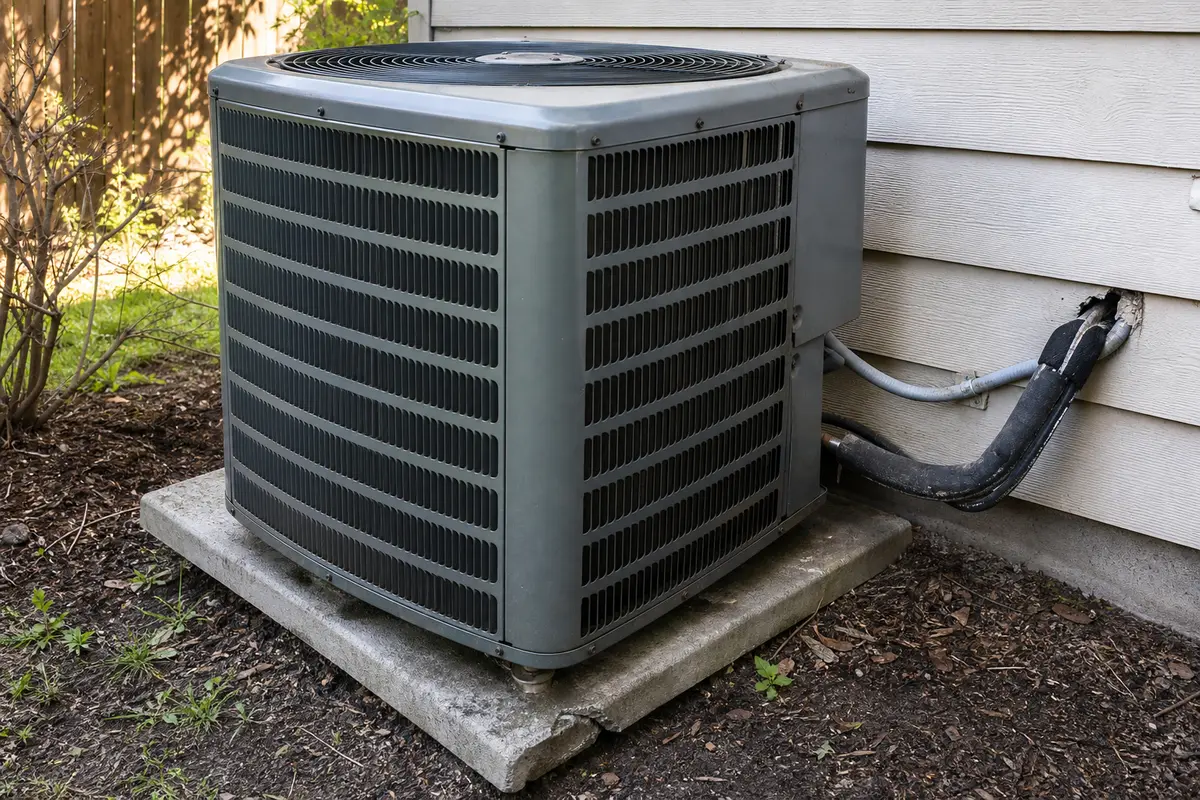
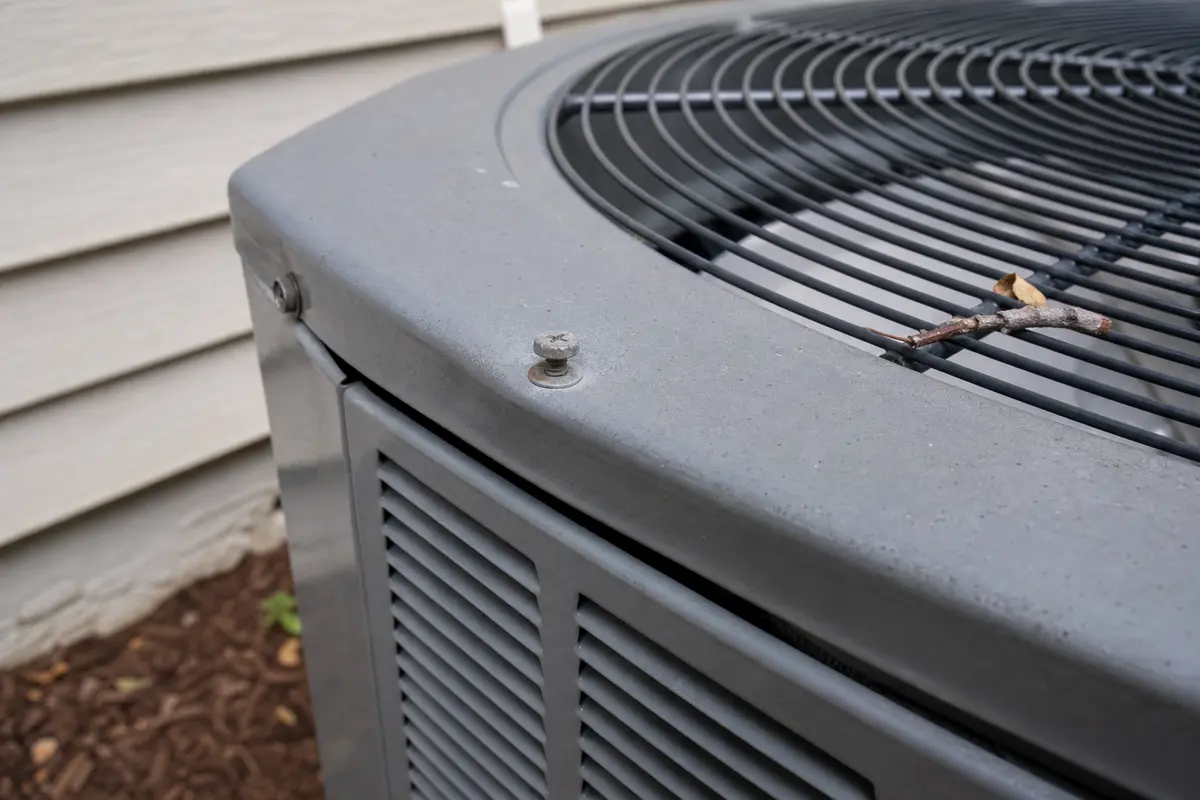
Do not buy a fan blade or motor until the exact diagnosis is clear: cabinet stable, panels snug, debris cleared, and vibration following the fan. Match model, blade size, rotation, and motor specs before ordering.
Most outdoor condenser vibration is physical and visible before it is electrical.
Outdoor units are easy to misdiagnose because normal compressor hum travels through thin metal panels.
Stand back during a call for cooling and watch the cabinet before touching anything.
| Visible clue | Most likely area | Next move |
|---|---|---|
| Whole cabinet rocks | Pad, feet, or uneven support | Power off, inspect level and contact points. |
| One panel buzzes | Loose screw or side panel | Snug accessible exterior fasteners. |
| Top grille chatters | Loose grille or fan guard | Inspect screws and debris with power off. |
| Vibration follows fan speed | Blade, grille, or motor bearing | Stop if the blade looks bent or rubs. |
| Deep thump from low cabinet | Compressor or internal mount | Stop and schedule service. |
A condenser does not need to look perfect, but it should not rock, twist, or push vibration into the house.
Fan-related vibration usually changes with fan speed and often starts at the top grille.
Use these only for exterior power-off checks. They do not make electrical or refrigerant work safe.
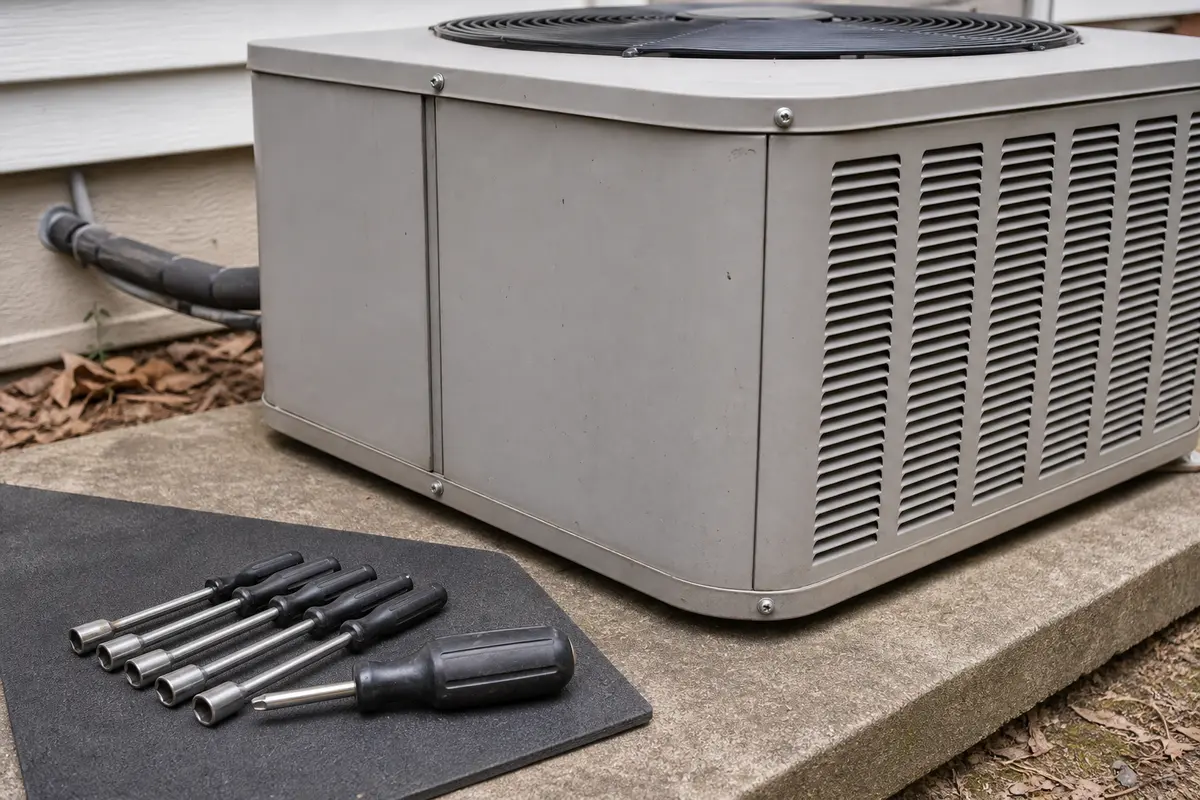
Helps when: Use it to snug accessible exterior screws after the unit is off.
Skip it when: Electrical covers need removal or screws are stripped and corroded.
Compare nut driver sets on Amazon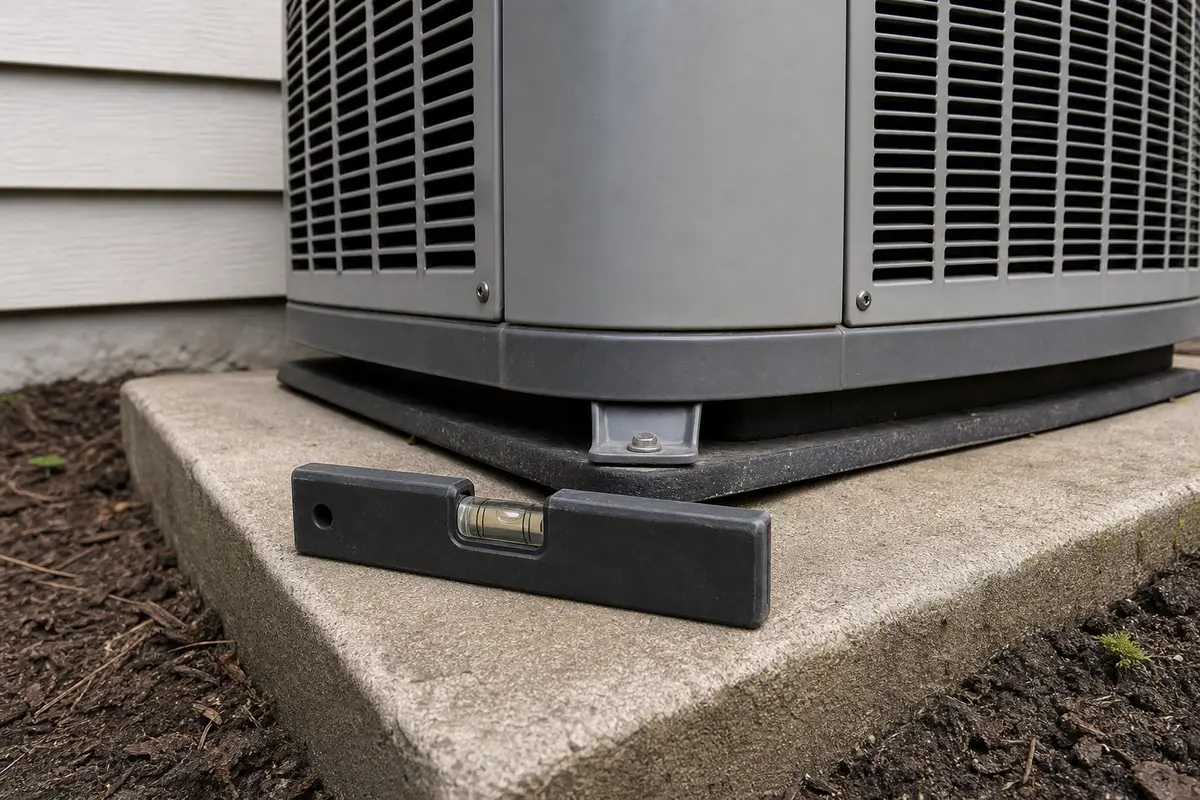
Helps when: Use it to confirm whether the condenser pad or cabinet is obviously rocking.
Skip it when: The fix would require lifting or moving the condenser.
Compare small levels on AmazonAs an Amazon Associate I earn from qualifying purchases. Repair Riot may earn a commission at no extra cost to you.
Parts only make sense after the vibration follows the fan and the exterior cabinet checks are ruled out.
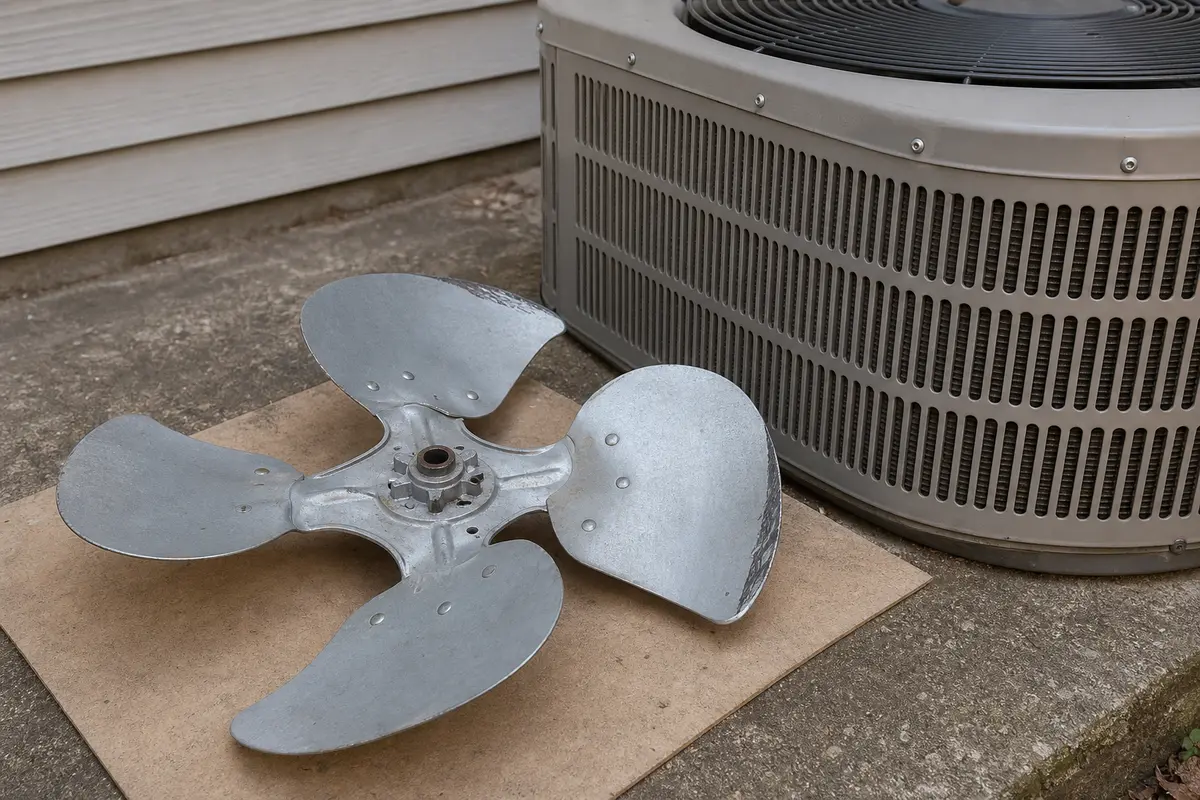
Helps when: Compare after you see blade damage or clear fan imbalance.
Skip it when: The cabinet is simply loose or the pad is rocking.
Compare condenser fan blades on Amazon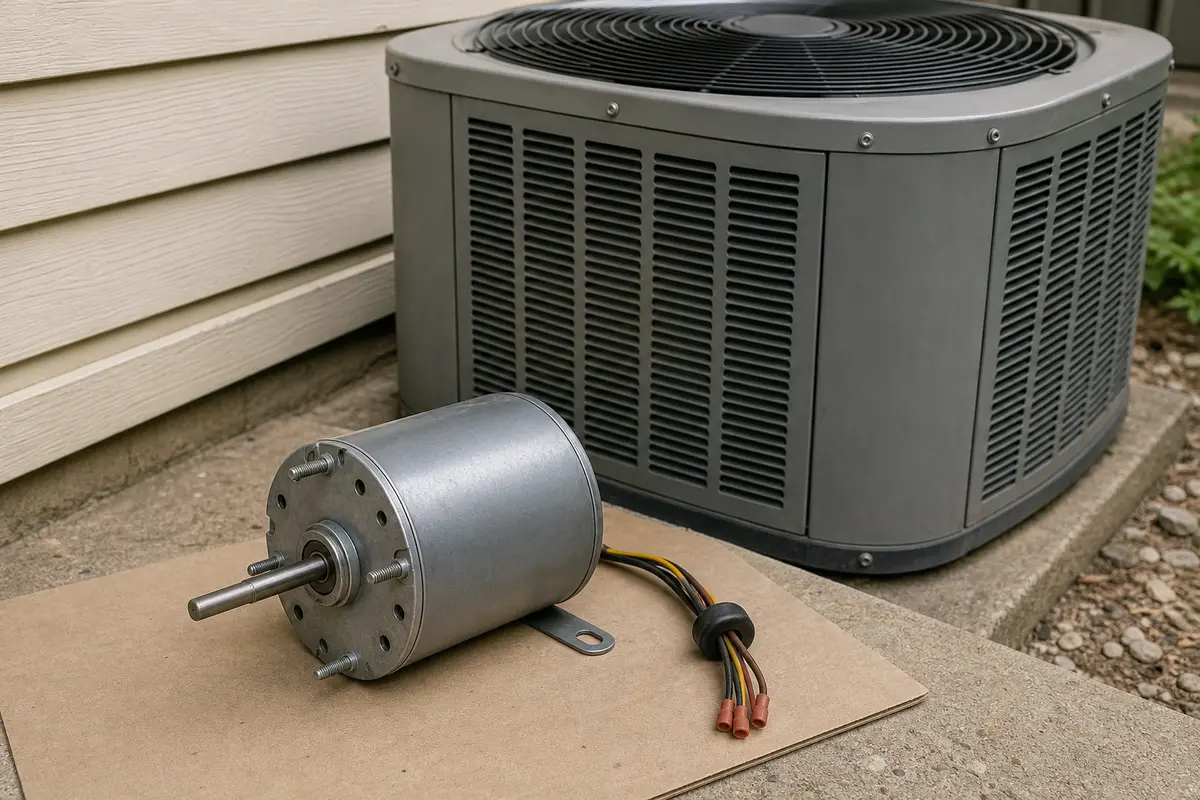
Helps when: Compare after bearing noise or shaft wobble points to the motor.
Skip it when: The blade, grille, pad, or panel is still unconfirmed.
Compare condenser fan motors on AmazonAs an Amazon Associate I earn from qualifying purchases. Repair Riot may earn a commission at no extra cost to you.
Yes. A steady hum and slight cabinet vibration are normal. Rocking, banging, scraping, or vibration that gets worse is not normal.
A small bump can happen when the compressor starts. A hard slam points to loose support, fan trouble, or an internal problem that should be checked.
On startup or shutdown, look for visible clues first. Check whether the condenser rocks on a settled pad, an accessible cabinet panel or screw buzzes, or the line set touches the house or cabinet. Turn cooling off before you touch anything outside the unit. If the kick seems to come from inside the cabinet, treat it as possible compressor movement. A light bump can be normal; a hard shake, slam, scrape, or breaker trip means leave cooling off and get service.
Yes. A settled pad can let the cabinet rock or send vibration into siding and framing.
Yes. Leaves, twigs, and loose grille debris can make the fan area vibrate or chatter.
Only after you correct a mild exterior buzz. Shut it off if the unit shakes hard, scrapes, or trips the breaker.
Not usually. Loose panels, pad movement, and fan imbalance are more common first checks.
Only when the blade is visibly bent, cracked, rubbing, or wobbling while the rest of the unit is stable.
Call when the vibration is deep, the breaker trips, cooling is weak, the fan rubs, or the repair would require opening electrical or refrigerant components.
Repair Riot built this page around safe exterior observations: pad movement, panel buzz, fan-speed clues, and stop points before electrical or refrigerant work.