Did the smell appear during spin?
Rubber odor during spin points toward overload, belt slip, or basket drag.
A washer burning smell is a stop-the-cycle symptom. Stop the load, unplug the washer, then separate hot rubber from sharp electrical odor before looking at overload, belt slip, basket drag, or wiring damage.
The usual safe clues are an overloaded load, a slipping drive belt, a dragging basket, or a motor straining because something is stuck.
Odor type and cycle timing tell you whether this is a simple mechanical clue or a stop-now electrical risk.
Don’t start with: Do not run another full load to see if the smell clears. A small monitored test comes only after the washer cools and the basic power-off checks look normal.
Rubber odor during spin points toward overload, belt slip, or basket drag.
Remove the load and let the washer cool before a small monitored test.
Stop. Do not run another cycle until wiring, motor, and controls are inspected.
That supports belt slip or pulley friction.
Dragging means the belt or motor may be a victim, not the root cause.
Overload may be the cause, but keep watching the next few cycles.
The first useful clues are low on the washer: belt dust, basket drag, heat marks, and whether the smell only appears under load.
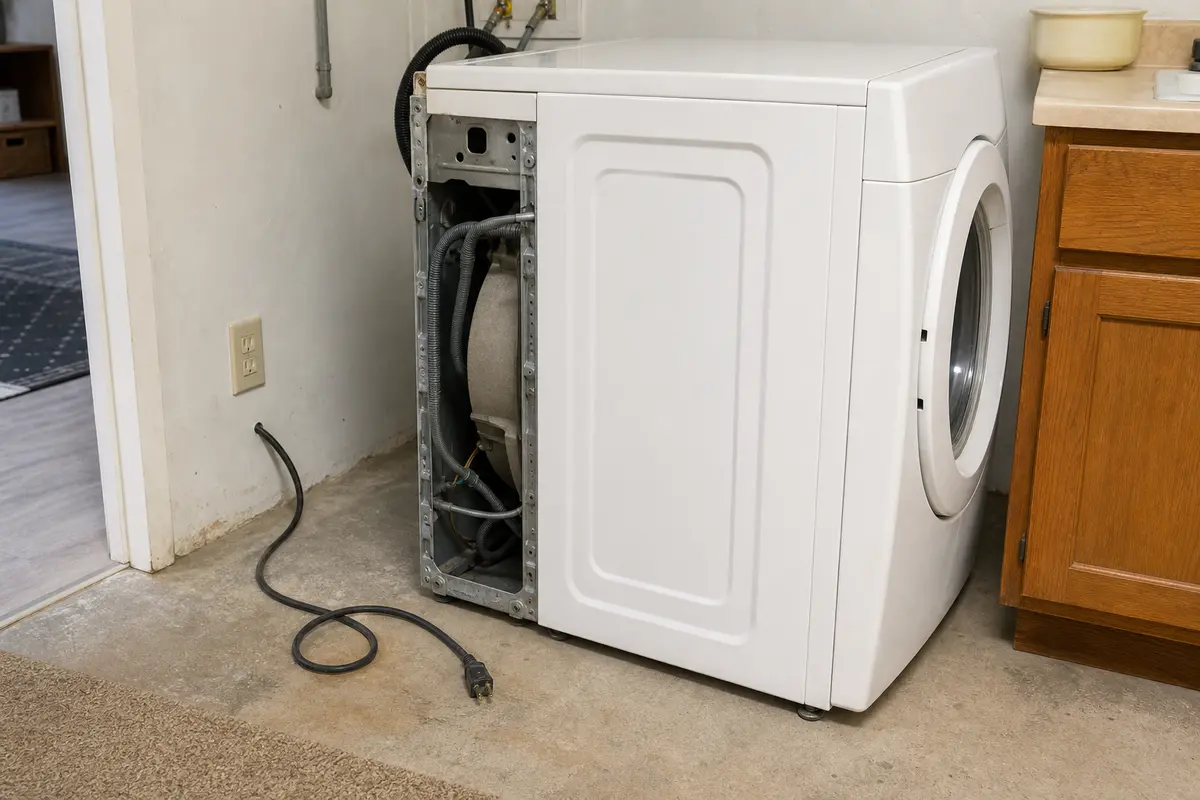
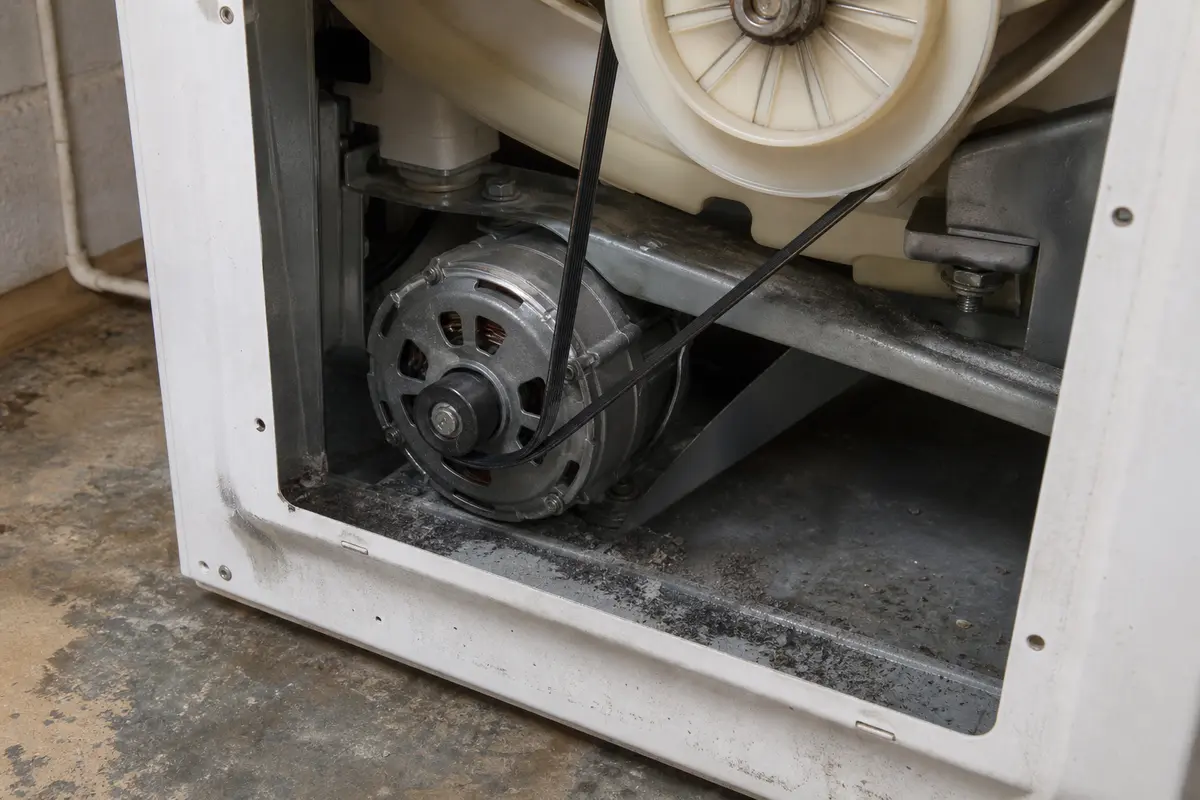
Compare a washer drive belt only when the clues line up: rubber smell during spin, black dust, glazing, looseness, or a basket that drags by hand. If the basket turns freely and the belt shows wear, match the exact washer model and belt profile before ordering.
A burning smell from a washer is often the result of friction or load strain, but electrical odor changes the risk level immediately.
The wrong next step is another full load. That can turn a minor mechanical clue into a failed motor or wiring issue.
The smell type matters as much as the machine part.
| What you notice | Likely direction | Next move |
|---|---|---|
| Rubber smell during spin | Belt slip or basket drag | Unplug, cool, inspect belt clues. |
| Smell after bulky load | Overload strain | Remove load and later try a small monitored cycle. |
| Sharp plastic or electrical odor | Wiring, motor, or control risk | Leave unplugged and stop. |
| Black dust below washer | Belt or pulley friction | Compare belt condition and basket movement. |
| Basket hard to turn by hand | Drag or trapped item | Find the drag before buying a belt. |
On belt-driven washers, the belt is a clue only when the smell and visible wear agree.
Electrical odor is less forgiving than hot rubber. Treat it as a safety stop, not a shopping hint.
These tools support a power-off inspection and basic panel access.
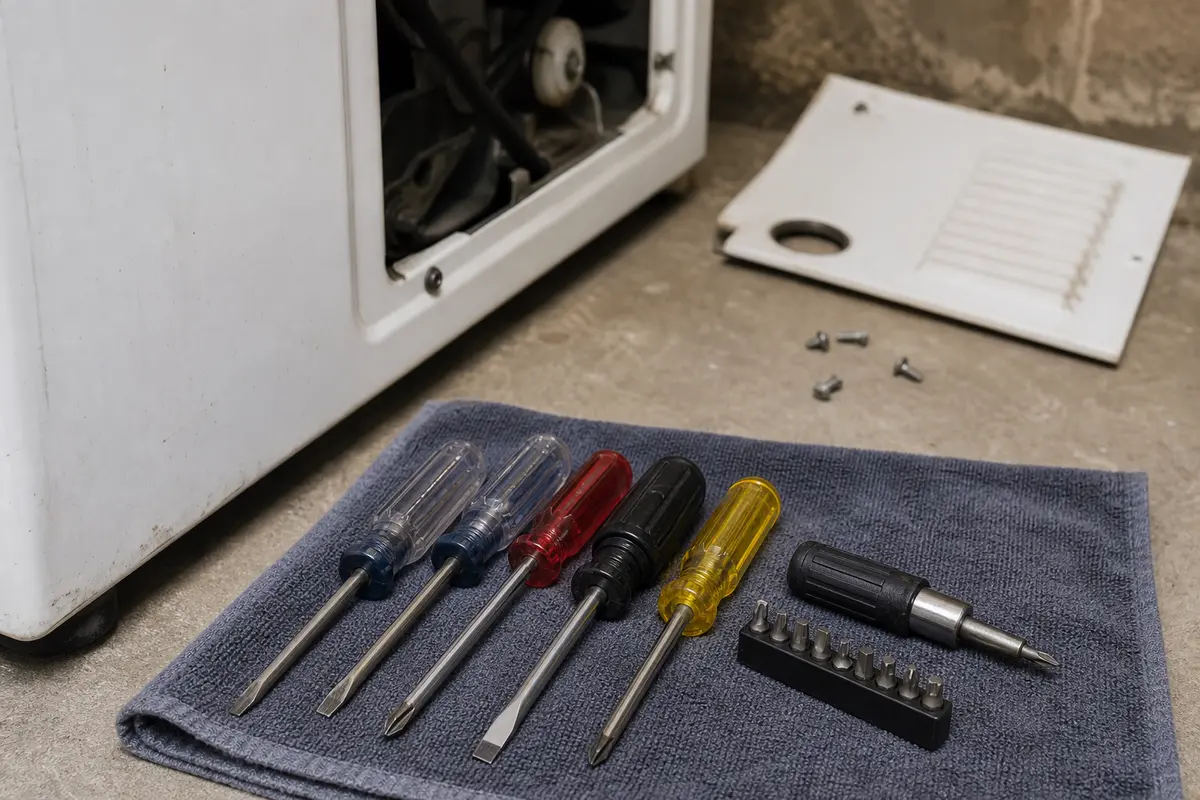
Helps when: Use it for basic access-panel screws after the washer is unplugged.
Skip it when: Panels are stuck, wiring is damaged, or the job needs live testing.
Compare screwdriver sets on Amazon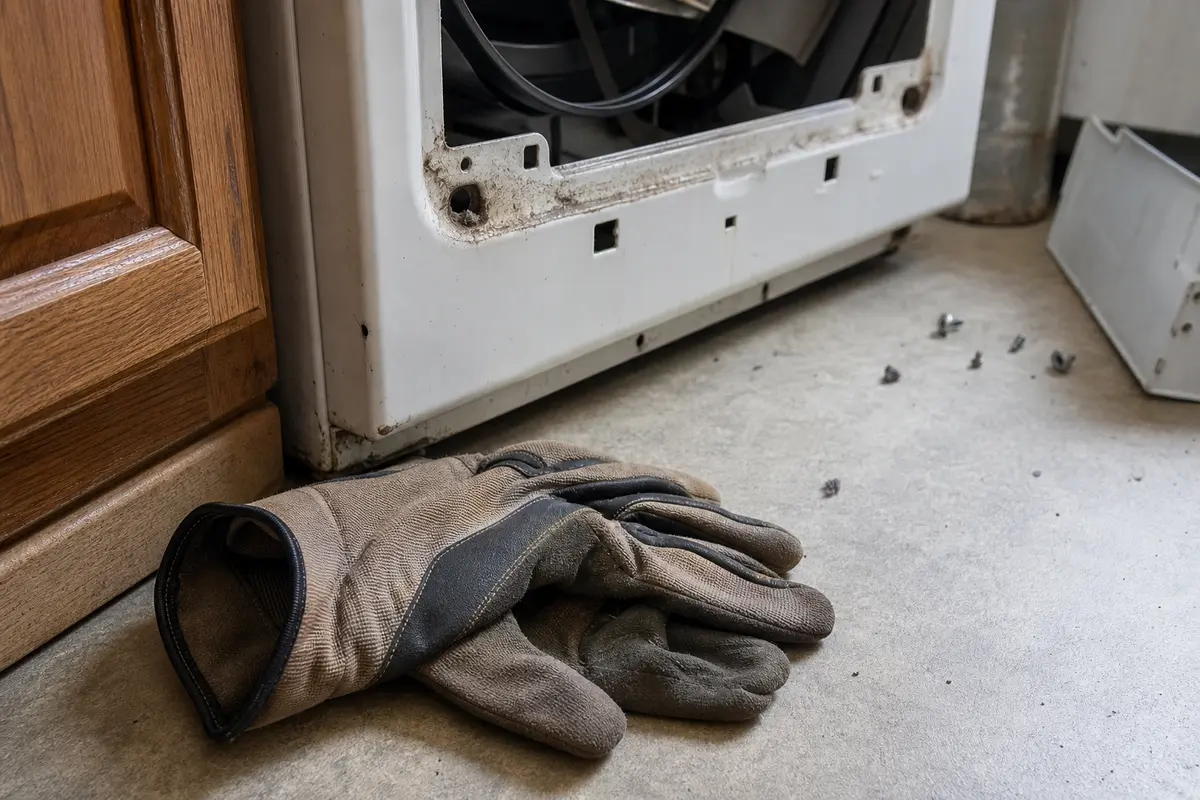
Helps when: Use them around sharp cabinet edges and dusty lower panels.
Skip it when: The washer is still hot, wet near wiring, or plugged in.
Compare work gloves on AmazonAs an Amazon Associate I earn from qualifying purchases. Repair Riot may earn a commission at no extra cost to you.
A belt purchase should follow visible evidence, not the smell alone.
Helps when: Compare after rubber dust, glazing, or looseness lines up with a spin-cycle odor.
Skip it when: The basket drags, electrical odor is present, or the belt looks normal.
Compare washer drive belts on AmazonAs an Amazon Associate I earn from qualifying purchases. Repair Riot may earn a commission at no extra cost to you.
Rubber odor during spin often points to belt slip, overload, or basket drag. Look for black dust, glazing, squeal, or weak spin.
Burning rubber is usually hot, tire-like, and tied to spin, belt slip, or basket drag. Electrical odor is sharper and more acrid, like hot insulation or melted plastic. Electrical odor, smoke, or breaker trips mean leave the washer unplugged and stop.
Yes. A bulky or unbalanced load can make the drive system work too hard and heat the belt or motor.
It can be. Hot rubber during spin usually points to a mechanical clue, so unplug the washer and check for black dust, belt glazing, or basket drag. Sharp electrical odor, smoke, or hot plastic means leave it unplugged and stop.
Skip a full load. After the washer cools and basic checks look normal, use only a small monitored test.
Not first. A motor can smell hot because another issue is forcing it to strain.
Replace it only when model fit is confirmed and the belt shows damage, glazing, looseness, or rubber dust.
Find the drag before buying a belt. A trapped item, bearing problem, or tub issue can overwork the belt and motor.
Call when you smell electrical odor, see smoke, find water near wiring, trip a breaker, or need live testing.
Repair Riot built this page around safe power-off sorting: odor type, spin timing, overload clues, belt evidence, basket drag, and electrical stop points.