Does Drain/Spin start at all?
If nothing starts, confirm the cycle was canceled, the lid or door is firmly shut, and the washer is not paused before opening the cabinet.
If a washer won't drain water, run one Drain/Spin command and listen for water flow, a steady hum, grinding, or silence. If water stays put, check load balance, the drain hose, and the pump filter before you blame the pump or control board.
A good clue is where the water acts up: silence, a steady hum, rough grinding, or water backing up at the standpipe each points to a different next check.
Work from the outside in: cycle command, load balance, drain hose, cleanout filter, pump sound.
Don’t start with: Do not buy a washer drain pump first. Prove the hose, cleanout filter, pump cavity, and house drain can pass water before parts go in the cart.
If nothing starts, confirm the cycle was canceled, the lid or door is firmly shut, and the washer is not paused before opening the cabinet.
Redistribute it or remove a few heavy items. Some washers will not reach a proper spin and drain finish with a badly bunched load.
A steady hum with no water movement usually means the pump is trying against debris, a packed filter, or a blocked hose. Unplug the washer, contain the water, then recheck the filter, pump cavity, and hose before pricing a pump.
A silent pump moves electrical, door/lid sensing, and pump diagnosis higher on the list, but only after the washer is actually commanding drain.
That points outside the washer. Stop the washer and clear the laundry drain path before buying washer parts.
Now pump failure becomes a reasonable parts branch, especially if the pump hums, leaks, grinds, or has a damaged impeller.
Look for the first clue: standing water, cleanout debris, or a hose route that cannot pass water.
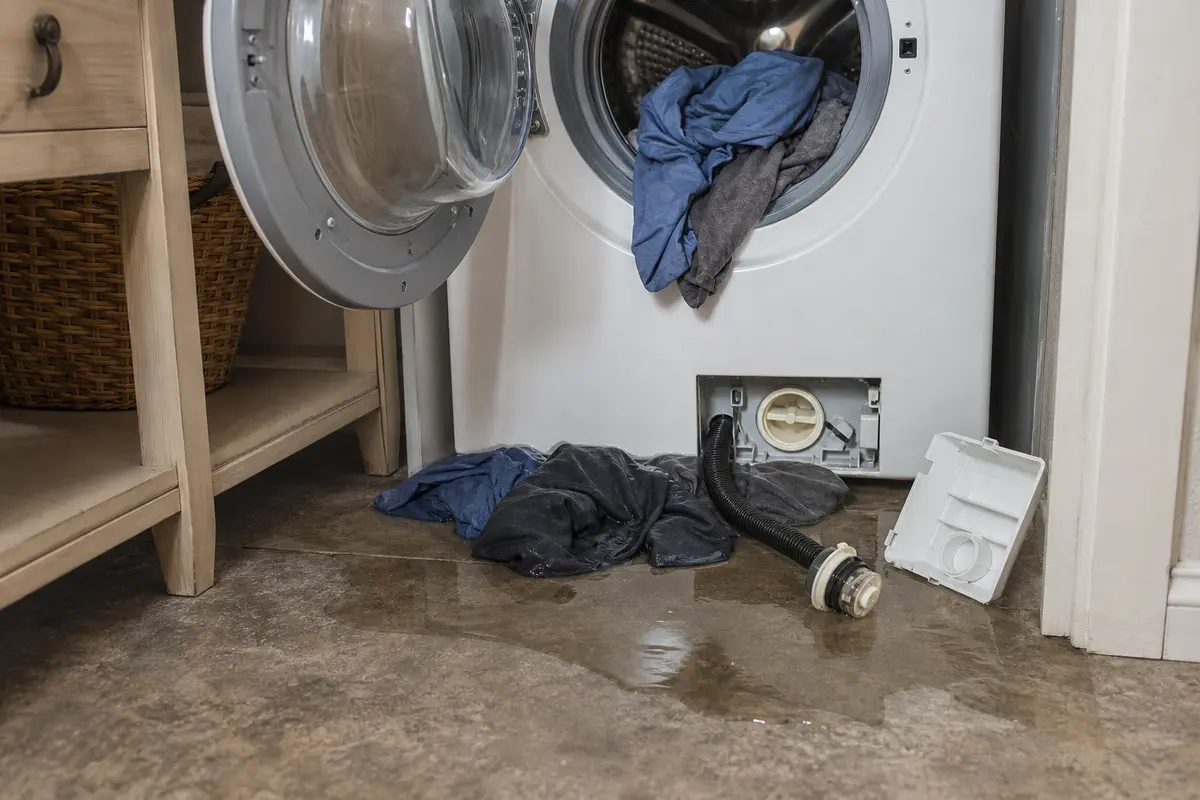
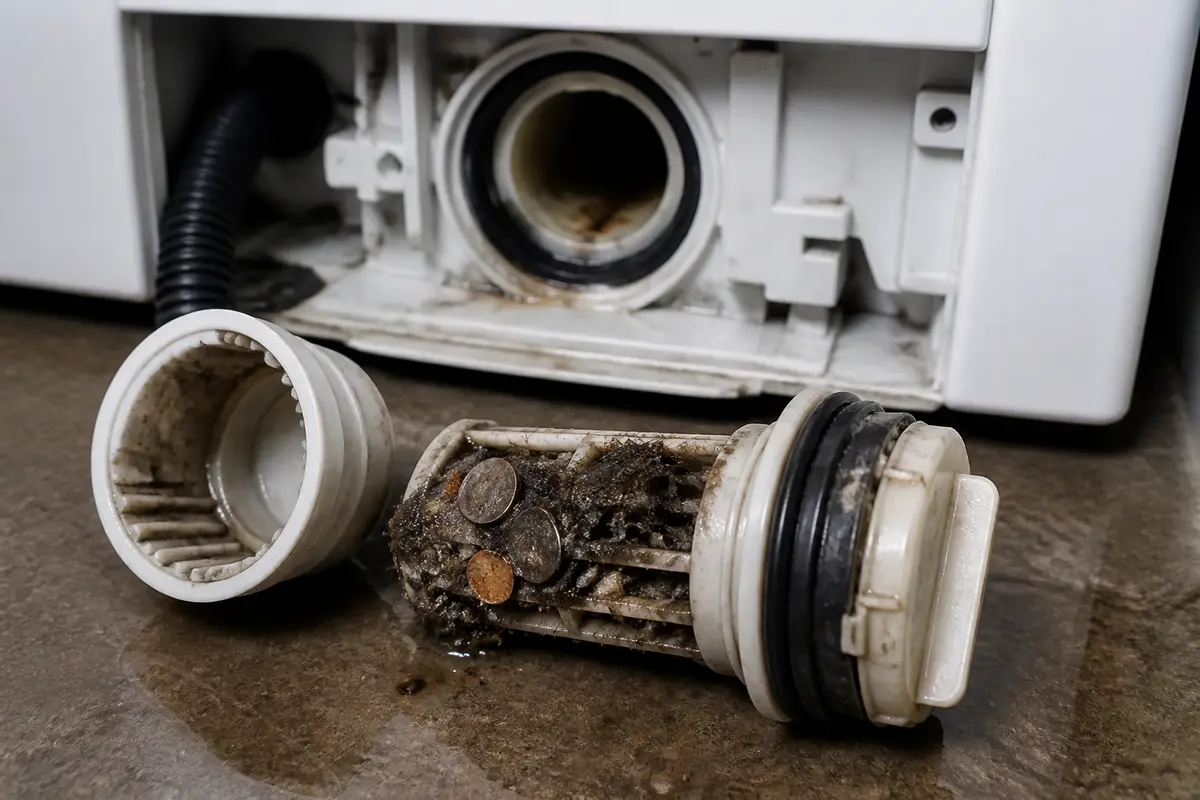
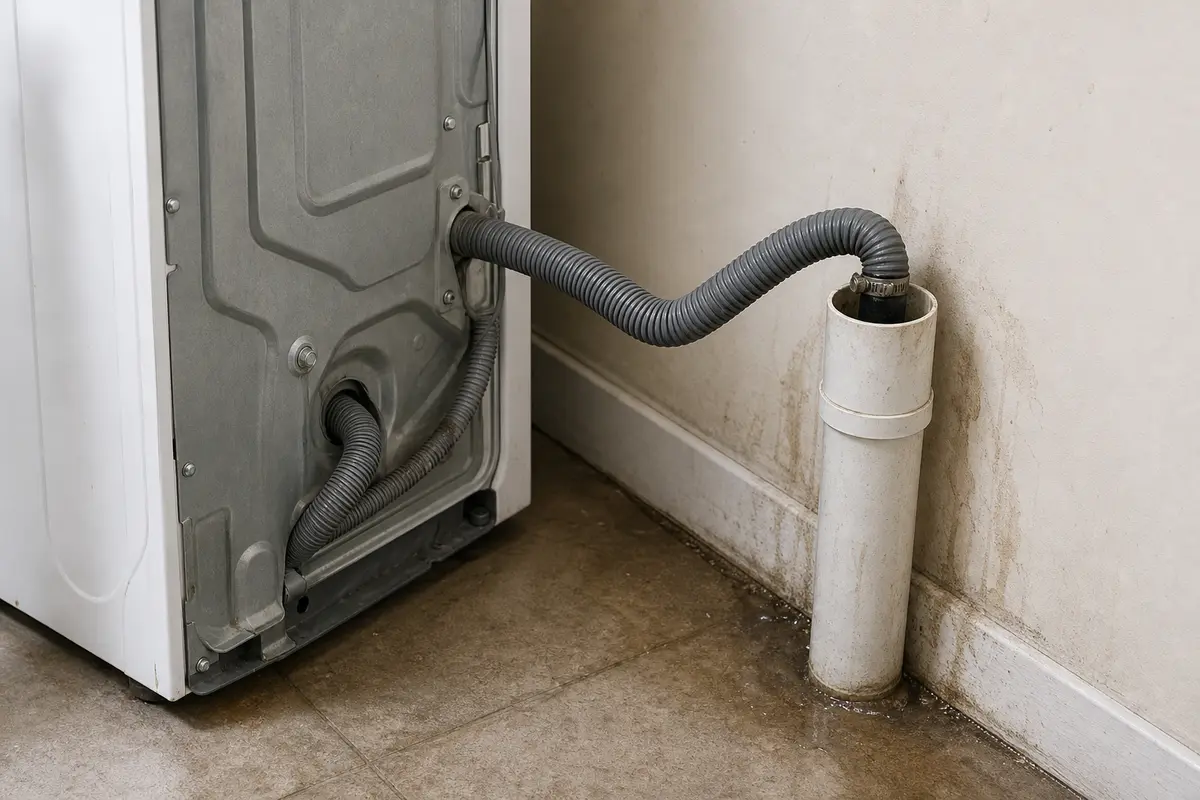
Copy the full model number from the washer tag and prove where the water stops. A drain hose belongs in the cart only if it is split, crushed, permanently kinked, or blocked beyond cleaning. A drain pump comes later, after the hose, filter, pump cavity, and standpipe clues point there.
The washer must finish the cycle, power the pump, pass water through the hose, and discharge into the laundry drain.
A full washer can turn a small repair into a wet electrical problem. Slow down and contain the water first. Order a part only after the clue is specific: a split or crushed hose, a packed cleanout, or a clear drain path with the pump still humming, grinding, leaking, or silent.
Work in the same order water leaves the machine. Stop as soon as the clue points clearly outside the washer or toward a part that can be matched by model number.
One controlled Drain/Spin attempt tells more than the first guess. If water leaves fast, do a leak check. If the pump hums and water barely moves, recheck the filter, pump cavity, and hose. Price a model-matched part only after that path is clear and the pump still hums, grinds, leaks, or stays silent.
| What you see or hear | What it usually means | Next move |
|---|---|---|
| Drain/Spin starts and water leaves fast. | The washer can pump when the command and load are right. | Run a short rinse and drain, then inspect for leaks. |
| Pump hums but water barely moves. | Debris, a jammed impeller, or a blocked hose is still likely. | Unplug it and recheck the filter, pump cavity, and hose. |
| Pump is silent during a real drain command. | The pump may not be powered, or the washer may be held out by a door, lid, wiring, or control issue. | Stop before live electrical work and use model-specific service steps. |
| Water backs up at the standpipe or sink. | The laundry drain cannot accept the discharge. | Stop the washer and clear the plumbing side before replacing washer parts. |
| Filter is packed with lint, coins, or fabric. | The drain restriction was inside the cleanout path. | Clean it, reinstall it fully, and run a leak check. |
| Hose is split, brittle, or crushed flat. | The hose itself is now part of the failure. | Replace the hose with the correct model-fit part. |
A washer can look broken when the laundry drain is actually the restriction. That clue usually shows up outside the machine, not in the pump filter.
These are cleanup and inspection tools. They do not make live electrical diagnosis, heavy washer moving, or plumbing cleanout work safe.
Paid links. As an Amazon Associate I earn from qualifying purchases. Repair Riot may earn a commission at no extra cost to you.
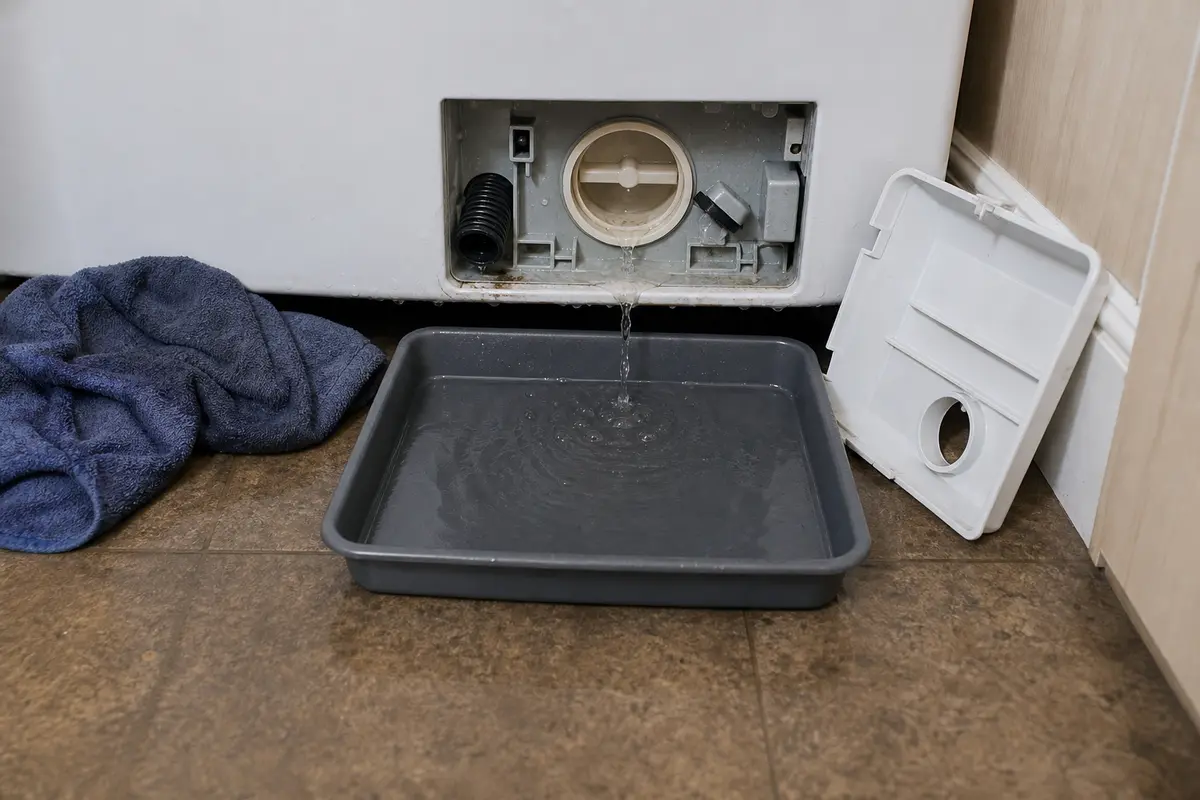
Helps when: You need to open a service drain, pump cleanout, or hose connection without letting water spread across the floor.
Skip it when: The tub is full and you cannot control the flow with the pan you have.
Compare shallow drain pans on Amazon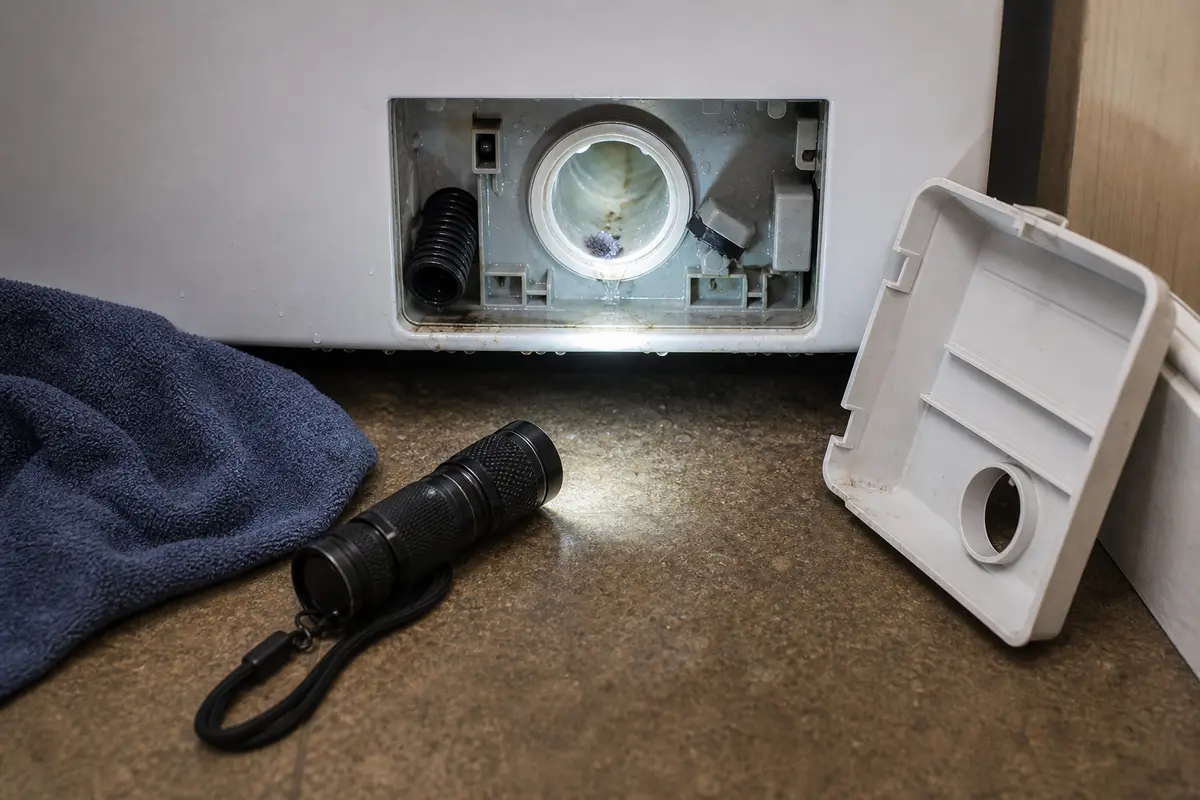
Helps when: You need to see inside the cleanout cavity, behind the washer, or at the standpipe without guessing.
Skip it when: The next step would require reaching near moving parts or exposed wiring.
Compare inspection flashlights on Amazon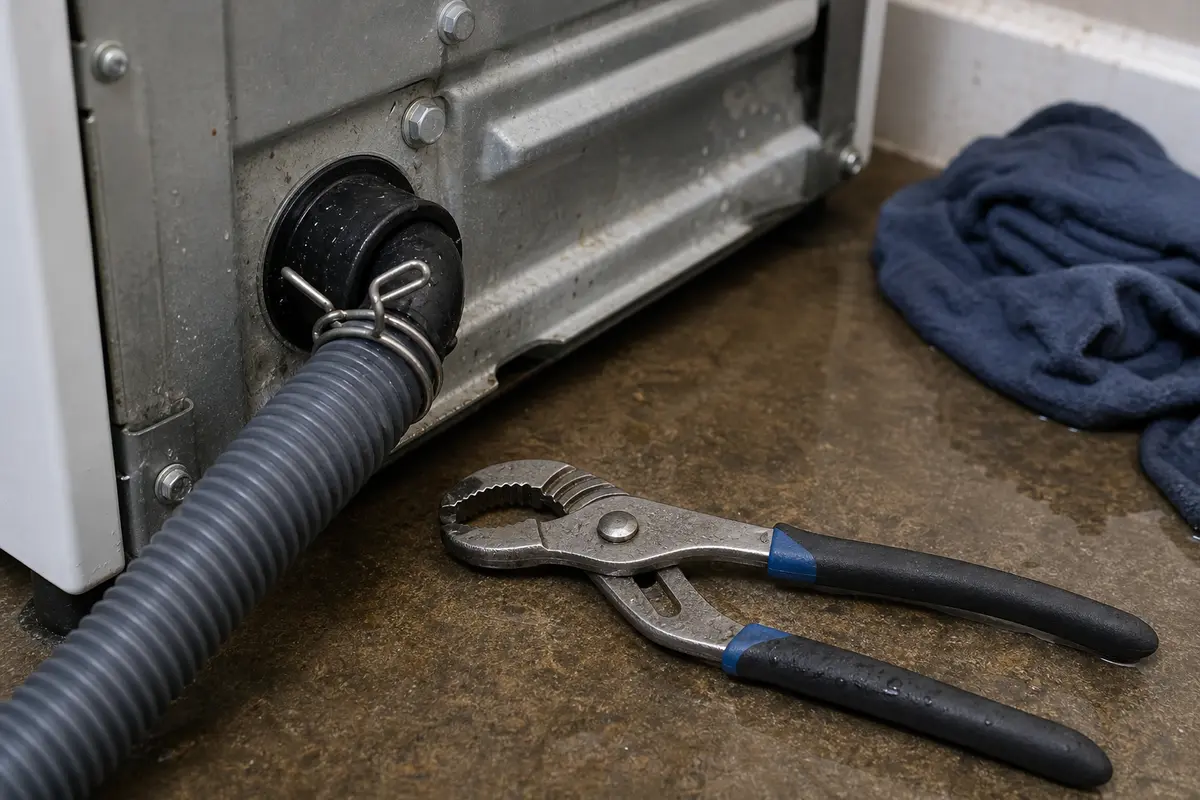
Helps when: A hose clamp needs to be loosened after the washer is unplugged and the water is contained.
Skip it when: The clamp, hose, or plastic fitting is brittle, seized, or likely to crack.
Compare slip-joint pliers on AmazonCompare parts only after the symptom points to one. Match the full model number before ordering. A hose makes sense only if it is split, crushed, brittle, or still blocked after cleaning. A pump comes later, after the drain path is clear and it still hums, grinds, leaks, has a broken impeller, or stays silent.
Paid links. As an Amazon Associate I earn from qualifying purchases. Repair Riot may earn a commission at no extra cost to you.
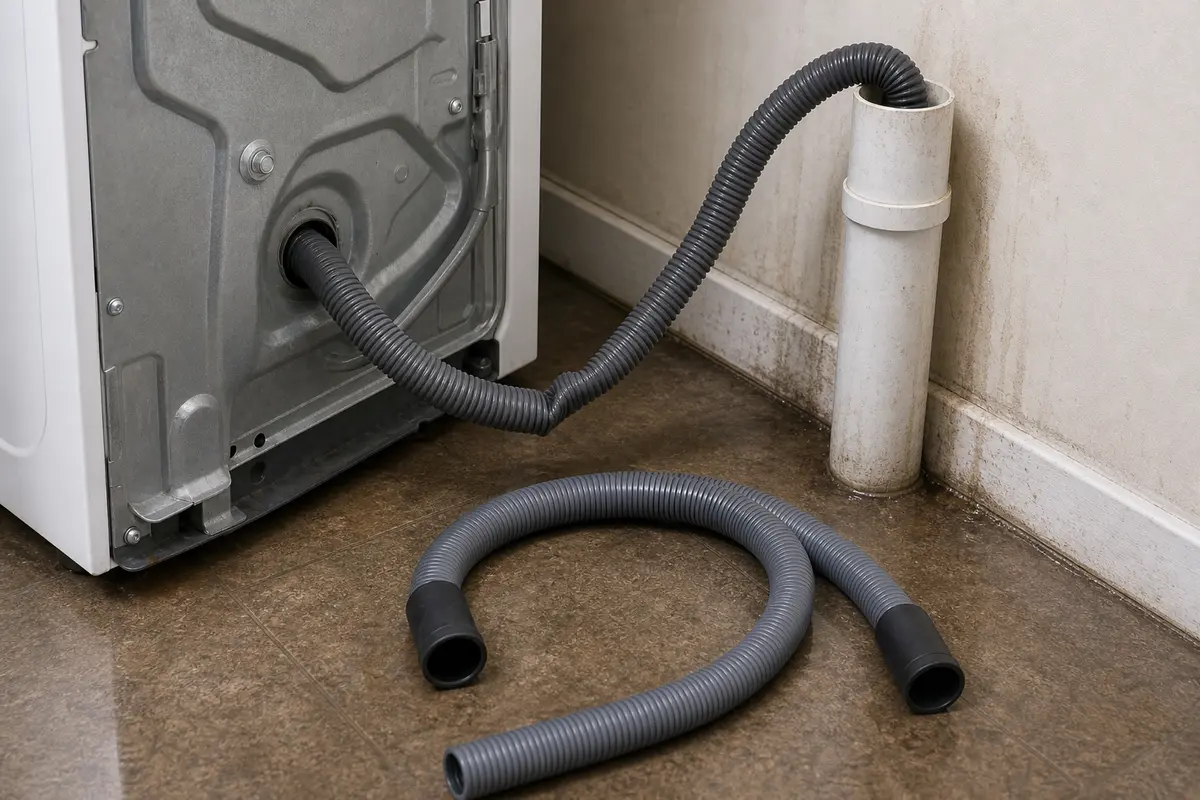
Helps when: The hose is split, crushed, permanently kinked, brittle, too short for safe routing, or blocked beyond cleaning.
Skip it when: The hose only needed to be straightened, reseated loosely in the standpipe, or cleared at the outlet end.
Compare washer drain hoses on Amazon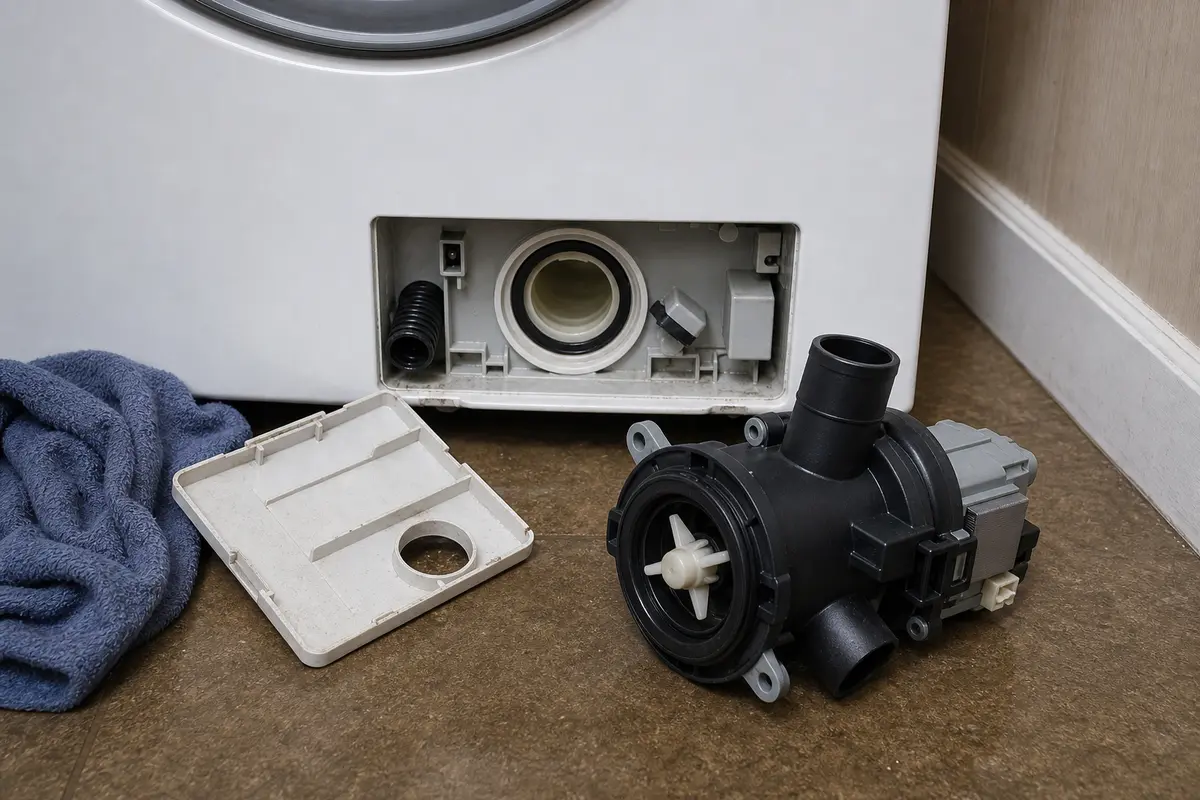
Helps when: The drain path is clear, but the pump still hums, grinds, leaks, has a broken impeller, or stays silent.
Skip it when: You still have a visible clog, a backing-up standpipe, or an unconfirmed cycle, lid, or door-sensing issue.
Compare washer drain pumps on AmazonDo not call it fixed the moment water leaves once. A clean repair drains, spins, and stays dry around every area you opened.
The washer either never reached a real drain command, could not pump through the hose and filter path, or discharged into a blocked laundry drain. Start with Drain/Spin, load balance, hose routing, and the pump filter.
Not by itself. A hum often means the pump is trying to move water against a clog, packed filter, jammed impeller, or blocked hose. The pump becomes a better suspect after those paths are clear.
Only slowly and with the washer unplugged, towels down, and a shallow pan ready. A full tub can release water fast, so stop if you cannot control the flow.
It can keep the washer from finishing the drain and spin behavior correctly. A heavy blanket, rug, or bunched load is worth redistributing before you open a hose or filter.
If water reaches the standpipe or laundry sink and backs up, the plumbing side is the lead clue. If water never leaves the tub, stay with the washer hose, filter, pump cavity, and pump behavior.
No. Chemical drain cleaner can damage washer parts and create a hazardous spill when a hose or cleanout is opened. Clear accessible debris manually or call the right pro for the drain line.
A hose comes first only when it is damaged or blocked beyond cleaning. A pump comes later, after the hose, cleanout filter, pump cavity, and standpipe all point away from a simple restriction.
That may be more of a spin problem than a drain blockage. First make sure the tub empties fully; then look at load balance, spin behavior, and any lid or door sensing issue.
Many front-load washers have a lower front access door, but not every model has a homeowner-removable filter. Use the model manual before prying panels or removing parts.
Call for burning smells, breaker trips, melted wiring, a pump area leak, a washer too heavy to move safely, a backing-up laundry drain, or any diagnosis that requires live electrical testing.
Repair Riot built this page around the drain path a homeowner can observe: cycle command, load balance, drain hose, cleanout filter, pump sound, and standpipe behavior. Model manuals still decide exact access steps and drain-hose dimensions.