Does the handle stay down while the chain is tight?
Free the chain first. Straighten twists, remove snags under the lever arm, and leave slight slack with the flapper closed.
A toilet handle that won't return is usually being held down by the chain or flapper, or binding at the trip lever where the handle passes through the tank.
A good clue is chain tension after the flush. Move to the trip lever only when the chain is free and the handle still drags.
Lift the tank lid and watch one flush. Chain tension points to the chain or flapper; a stiff disconnected handle points to the trip lever, pivot, or nut.
Don’t start with: Do not force the handle, bend the lever arm blindly, or buy a full rebuild kit before you watch the tank parts move.
Free the chain first. Straighten twists, remove snags under the lever arm, and leave slight slack with the flapper closed.
Disconnect the chain and move the handle alone. Gritty or slow movement points to the handle pivot, nut, or trip lever.
Reposition the handle gently and test with the lid back on. Replace the trip lever if it will not clear the tank.
The handle may be innocent. Check whether the flapper is stiff, warped, dragging, or catching on the flush valve.
Hold the outside handle level, snug the mounting nut gently, and watch whether the arm now pulls straight.
Stop the handle repair. Shut off the water if needed and deal with the leak or overflow risk first.
The chain and flapper show whether the handle is really stuck or just being pulled down by the flush linkage.
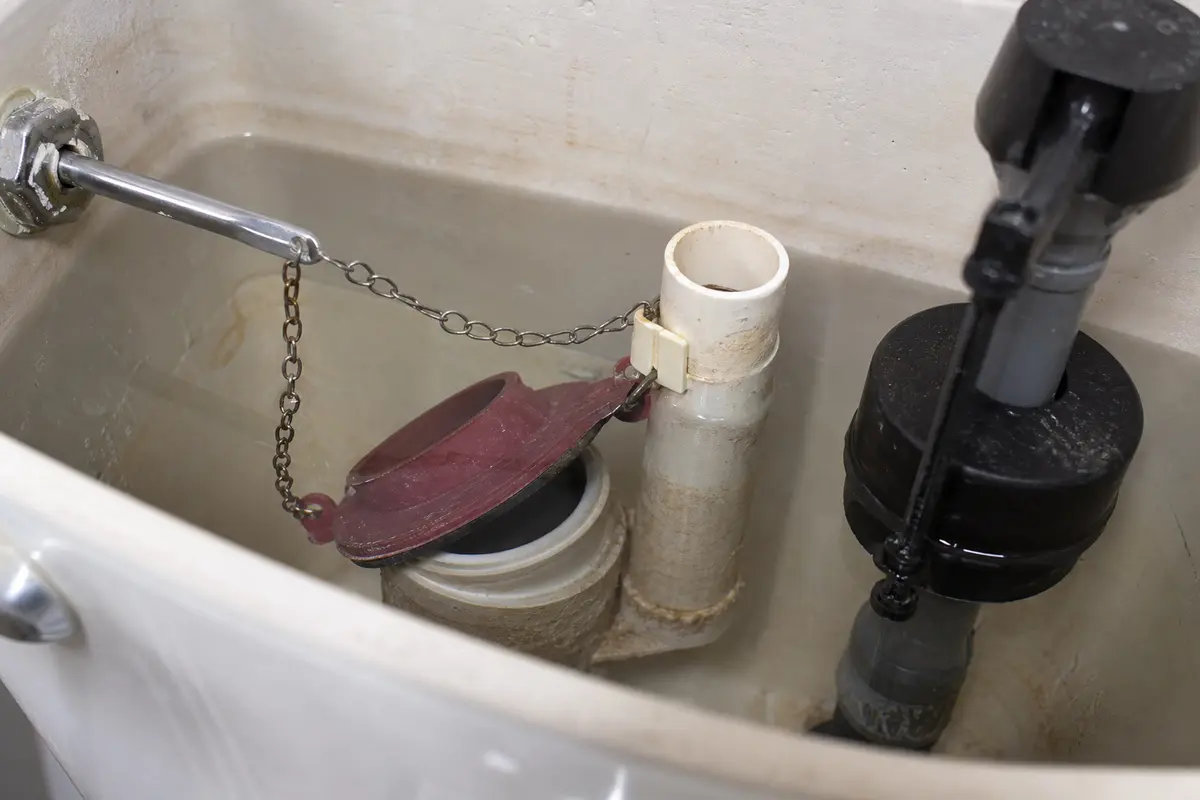
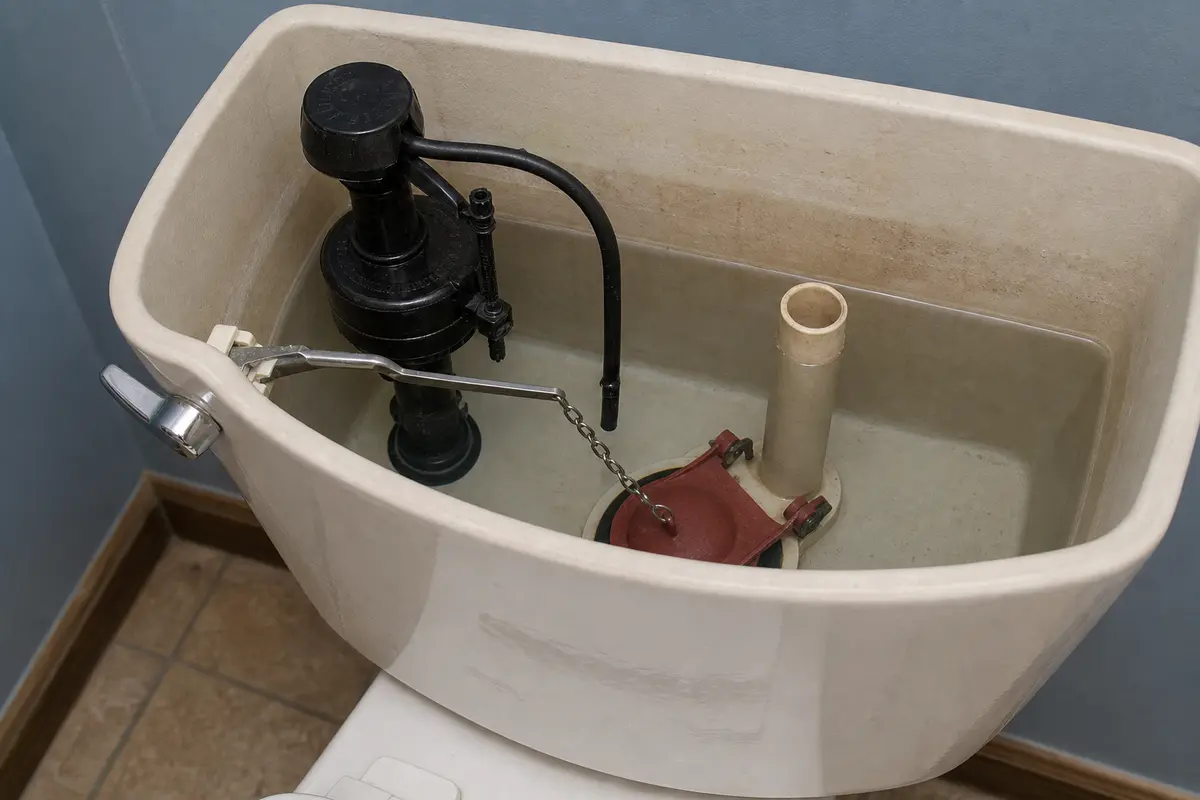
Do not buy a trip lever, flapper, or full tank kit until one tank-side check points there. Prove whether the chain pulls the handle down, the bare handle binds, or the flapper fails to drop, then match any part to the toilet model and tank opening.
A stuck toilet handle is usually a tank-linkage problem, not a whole-toilet problem. The handle either gets pulled down by the chain and flapper, or the handle assembly drags where it passes through the tank.
The handle hole is small, the tank is porcelain, and most of the parts are light-duty plastic or thin metal. Heavy force creates a second repair faster than it finds the real bind.
Remove the tank lid, set it somewhere stable, and watch one normal flush from the handle arm to the flapper. The first visible clue tells you which small part deserves attention.
| What you see | What it usually means | What to check next |
|---|---|---|
| Handle stays down and the chain is tight | The chain path or flapper is holding the lever down. | Free snags, leave slight chain slack, and make sure the flapper drops. |
| Handle feels stiff before water moves | The pivot, mounting nut, or trip lever is dragging. | Disconnect the chain and move the bare handle by itself. |
| Lever arm scrapes the tank or lid | The arm is misaligned, bent, or the wrong style for the tank. | Reposition gently, then replace the trip lever if it still rubs. |
| Flapper hangs open after the chain is free | The flapper is now the stronger clue than the handle. | Replace the flapper only if it is warped, stiff, torn, or dragging. |
| Bowl water rises toward overflow | Overflow control matters more than handle diagnosis. | Close the shutoff valve and stop repeated flushing. |
The cleanest check is to remove the chain from the trip lever for a moment. That separates the moving handle from the flapper and chain below it.
Small corrections are enough for most handle assemblies. The goal is a level handle, a lever arm that clears the tank, and a chain that lifts without sideways pull.
These tools support the tank checks on this page. Skip any step that needs heavy force, cracked porcelain work, or a shutoff valve that will not move with light hand pressure.
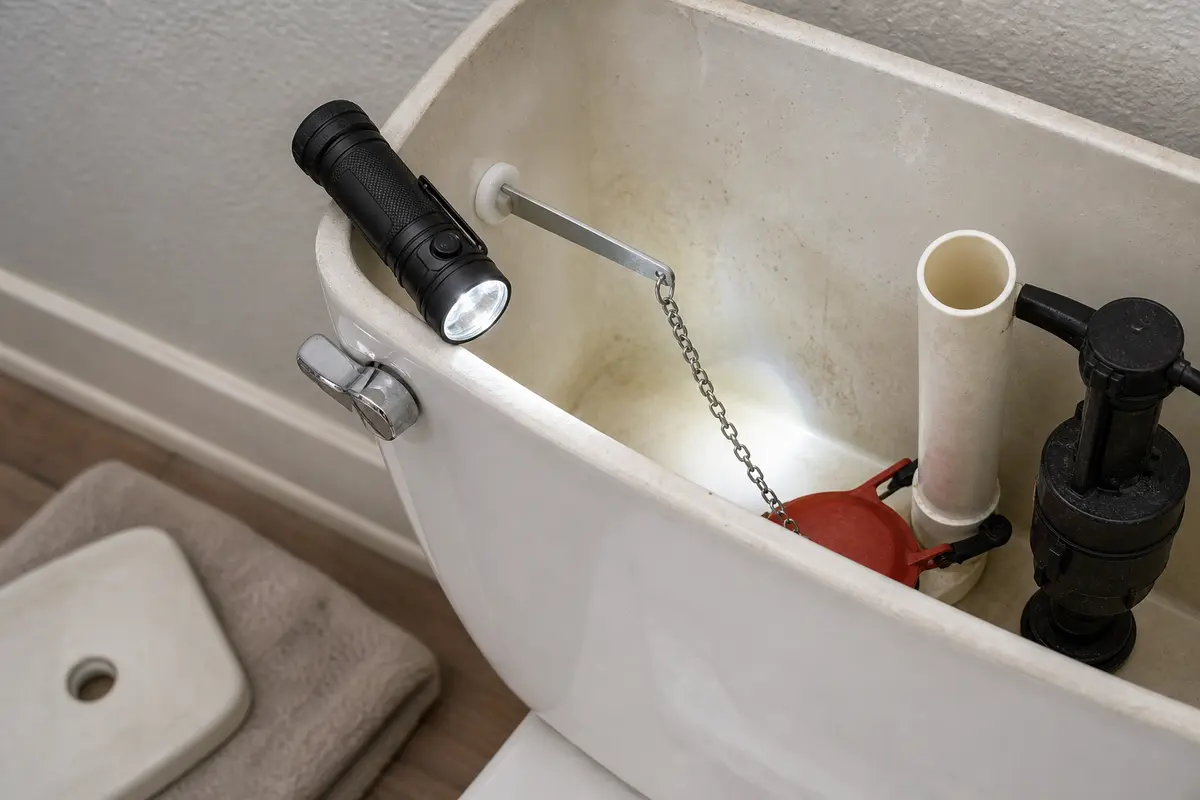
Helps when: Shows the chain path, lever arm clearance, flapper movement, and mineral buildup around the handle shaft.
Skip it when: Room light already shows the handle side of the tank clearly.
Compare inspection flashlights on Amazon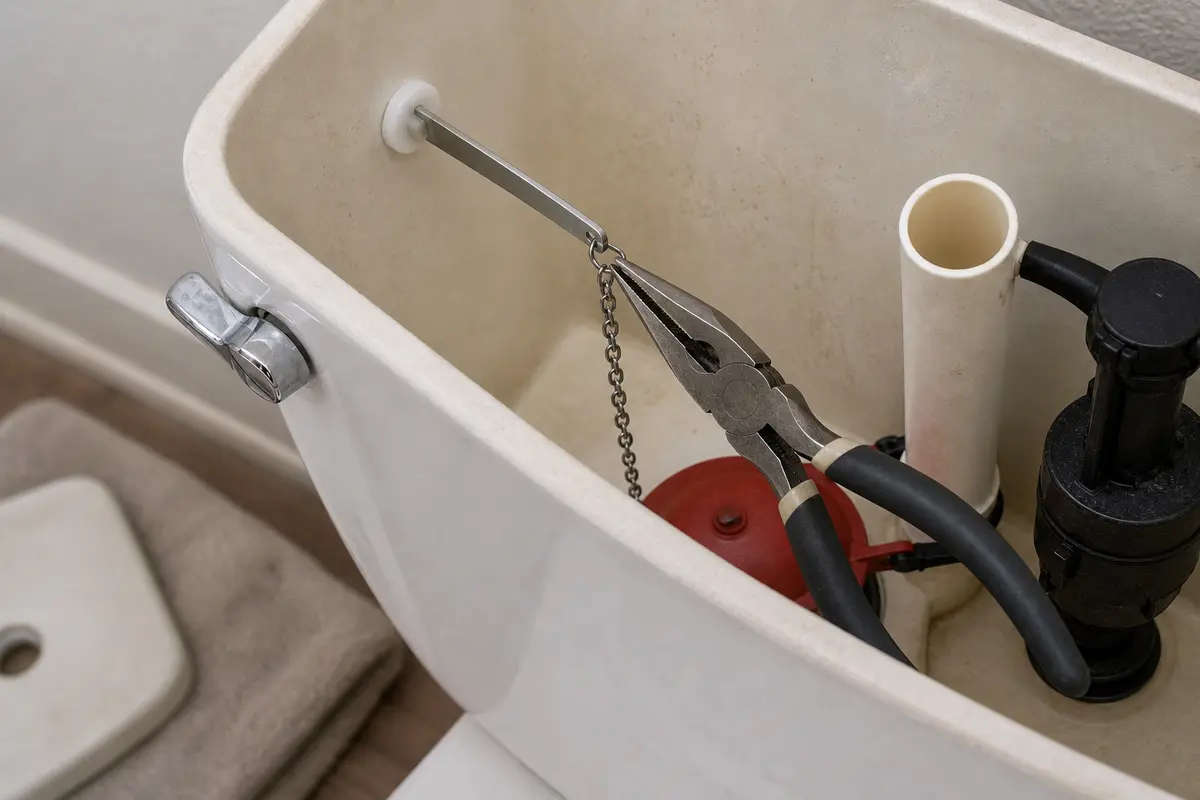
Helps when: Moves a small chain clip or straightens a light hook without pulling the lever arm sideways.
Skip it when: The clip is corroded solid or would need enough force to deform the lever.
Compare needle-nose pliers on Amazon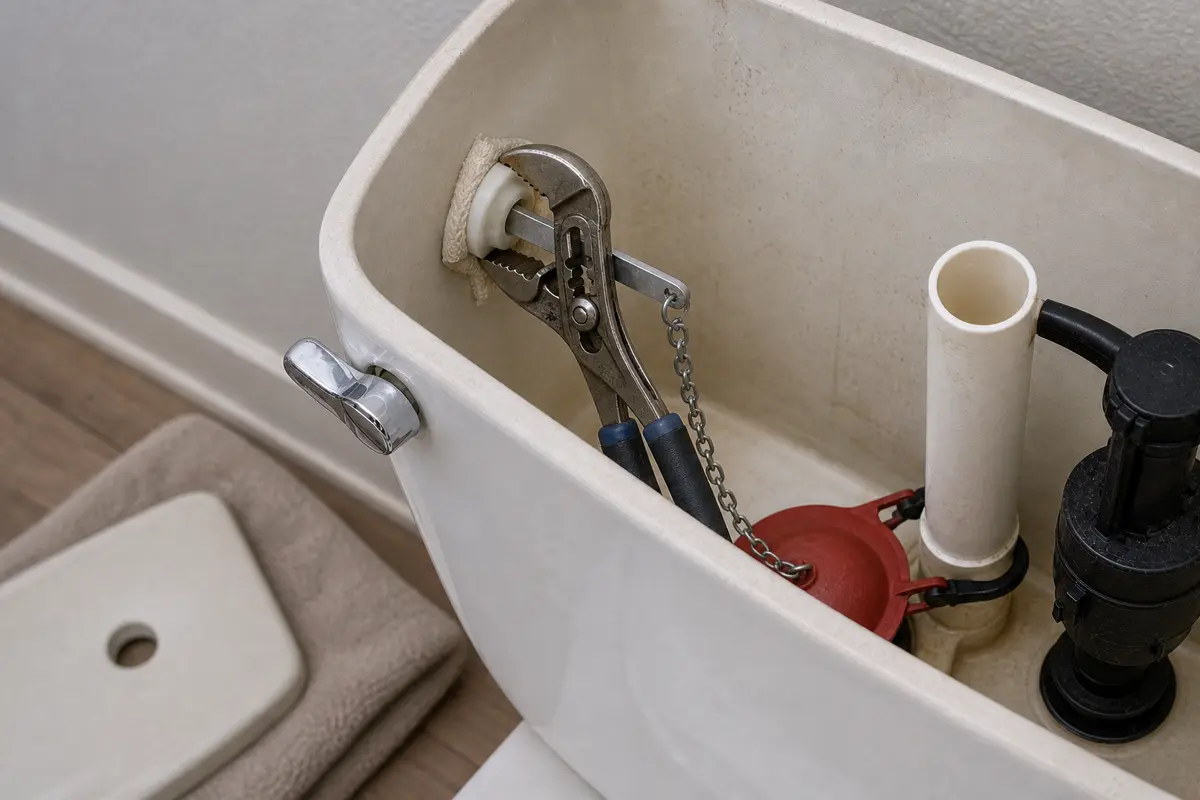
Helps when: Gently snugs a loose handle nut when hand pressure is not enough.
Skip it when: The nut is seized, cross-threaded, cracked, or turning against a damaged tank opening.
Compare adjustable pliers on Amazon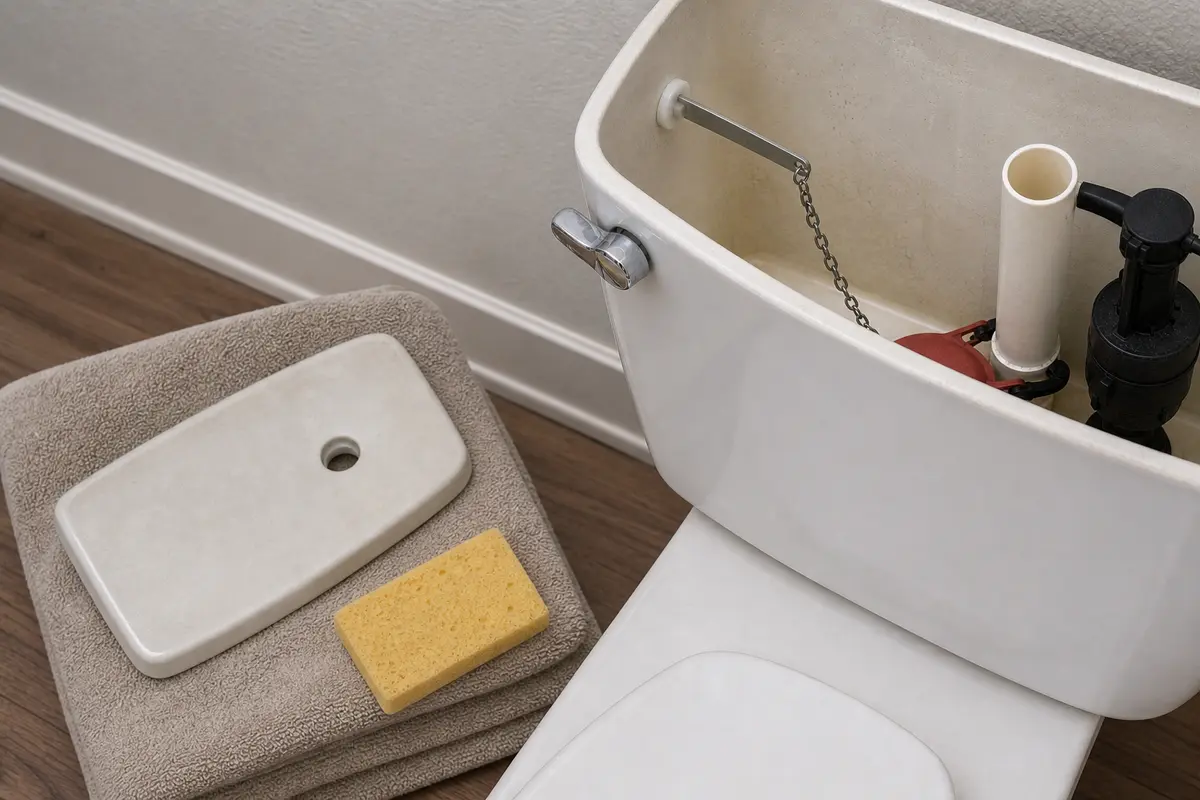
Helps when: Protects the tank lid, catches drips, and gives you a dry place to set parts while you inspect the handle.
Skip it when: The toilet is overflowing or leaking outside the tank; control the water first.
Compare towels and sponges on AmazonAs an Amazon Associate I earn from qualifying purchases. Repair Riot may earn a commission at no extra cost to you.
Parts belong in the cart only after the tank points to them. Match the part to the toilet model, tank opening, lever direction, and flush valve style instead of trusting a similar-looking universal package.
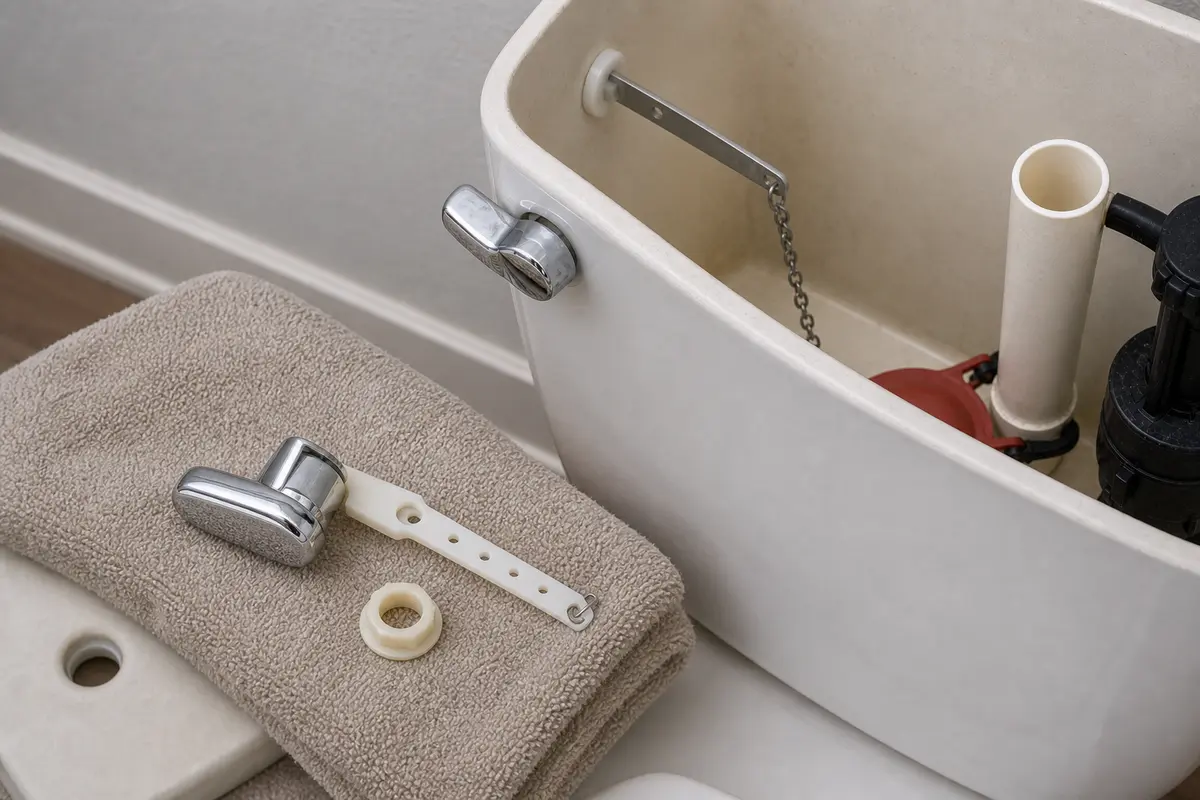
Helps when: The handle binds with the chain disconnected, the arm scrapes the tank, the pivot is worn, or the handle will not stay aligned.
Skip it when: The bare handle moves freely and the chain or flapper is what keeps tension on the lever.
Compare toilet trip levers on Amazon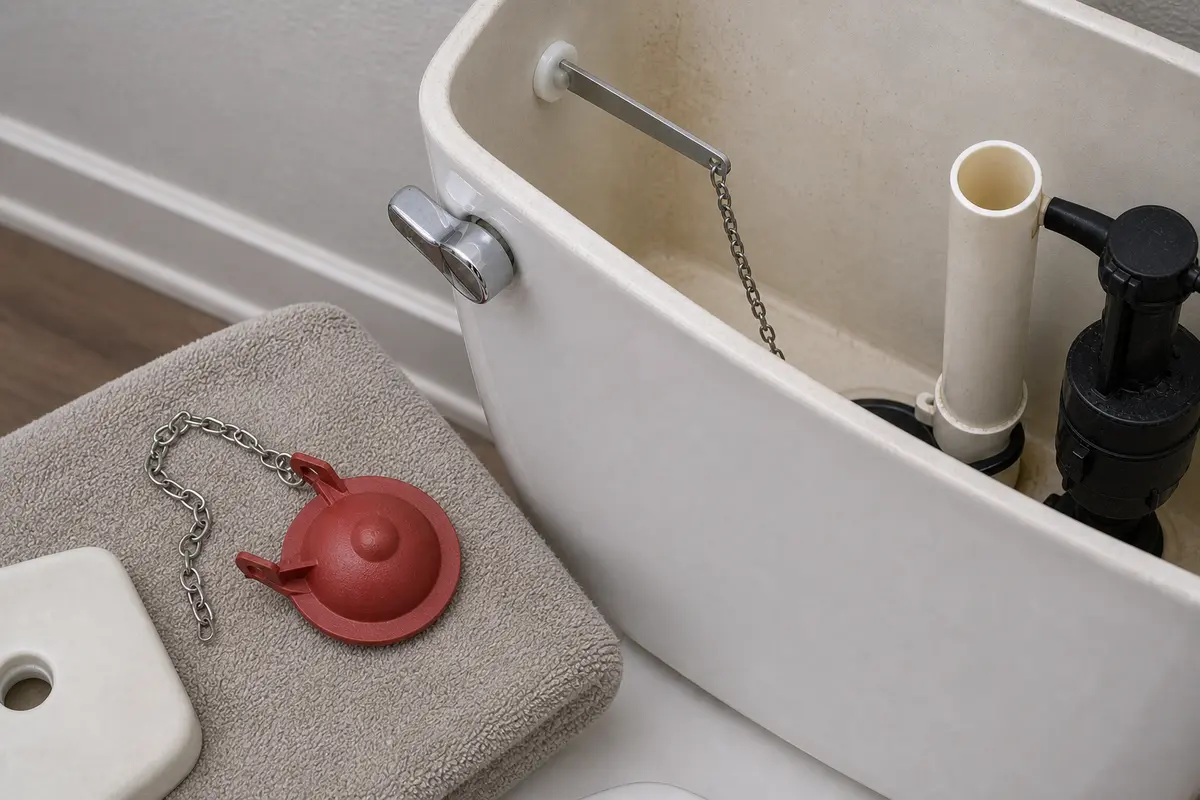
Helps when: The chain has slight slack but the flapper hangs open, drags, curls, stiffens, or will not drop squarely after a flush.
Skip it when: The flapper drops cleanly and the handle still sticks with the chain disconnected.
Compare toilet flappers on AmazonAs an Amazon Associate I earn from qualifying purchases. Repair Riot may earn a commission at no extra cost to you.
Most of the time the toilet flapper chain is too tight, twisted, or caught, so it keeps pulling the handle down. Less often, the toilet trip lever itself is binding in the tank.
Only very lightly if it is obviously rubbing and only after you know where it is hitting. Bending too much is a common way to make the chain pull at the wrong angle or crack older parts.
No. This is usually a small tank-side repair. A toilet trip lever or toilet flapper fixes most cases.
That usually points to mineral buildup, corrosion, or wear at the toilet handle pivot, not the flapper chain. Disconnecting the chain is the quickest way to confirm it.
Then the handle may not be the main problem anymore. The flapper may not be sealing, or the water level may be too high. If the issue is really a leak during flushing, see /leak-only-when-toilet-flushes.html. If the bowl fills too high, see /toilet-bowl-fills-too-high.html.
Do neither first. Watch one flush and then disconnect the chain from the handle arm. A sticky bare handle points to the trip lever; a free handle with a flapper that hangs open points to the chain or flapper.
Leave a small amount of slack when the flapper is closed. The chain should not pull on the flapper at rest, but it also should not sag low enough to slip under the flapper.
Yes. Some lever arms clear the tank with the lid off but rub the underside of the lid during a real flush. Do a final test with the lid back in place before you call the handle fixed.
Usually no, but shut off the toilet water if the bowl is rising, the tank will not stop refilling, or water is leaking outside the tank. The overflow risk comes before the handle repair.
Repair Riot built this page around visible tank-side clues: chain tension, flapper movement, trip lever clearance, handle pivot feel, and overflow stop points. The repair advice stays diagnosis-first because handle, chain, and flapper failures can look the same from outside the tank.