Is the crack hairline and level?
Clean and measure it. A narrow, dry, level crack with solid edges is the best candidate for driveway crack filler.
A cracked driveway is either a stable surface crack or a sign the slab is moving. Check width, vertical offset, firm edges, and runoff before buying filler.
Good clue: a narrow, dry crack with level sides and firm edges is usually repairable. A lip, hollow sound, widening gap, or wet edge points to support, drainage, heave, or settlement instead.
Sweep first, lay a straightedge across the opening, measure the widest point, and look for water at downspouts, edges, low spots, and transitions.
Don’t start with: Do not coat the driveway or force filler into every opening before you know why the crack opened. Sweep the crack, check for a lip with a straightedge, and look for wet edges, hollow sound, or washed-out soil first. Those clues usually mean a surface patch will reopen.
Clean and measure it. A narrow, dry, level crack with solid edges is the best candidate for driveway crack filler.
Pause the repair. Vertical offset points to settlement, heave, root pressure, or base movement.
Treat it as edge damage first. A thin filler will not rebuild broken concrete shoulders.
Correct the water route before patching, especially near downspouts, low spots, and driveway edges.
Do not fill it. Hollow sounds, voids, or rocking sections mean the support below needs attention.
Identify the surface before buying material. Concrete patch and asphalt crack products are not interchangeable.
Use three views: the full crack pattern, a close look at width and edge condition, and the surrounding driveway slope and drainage path.
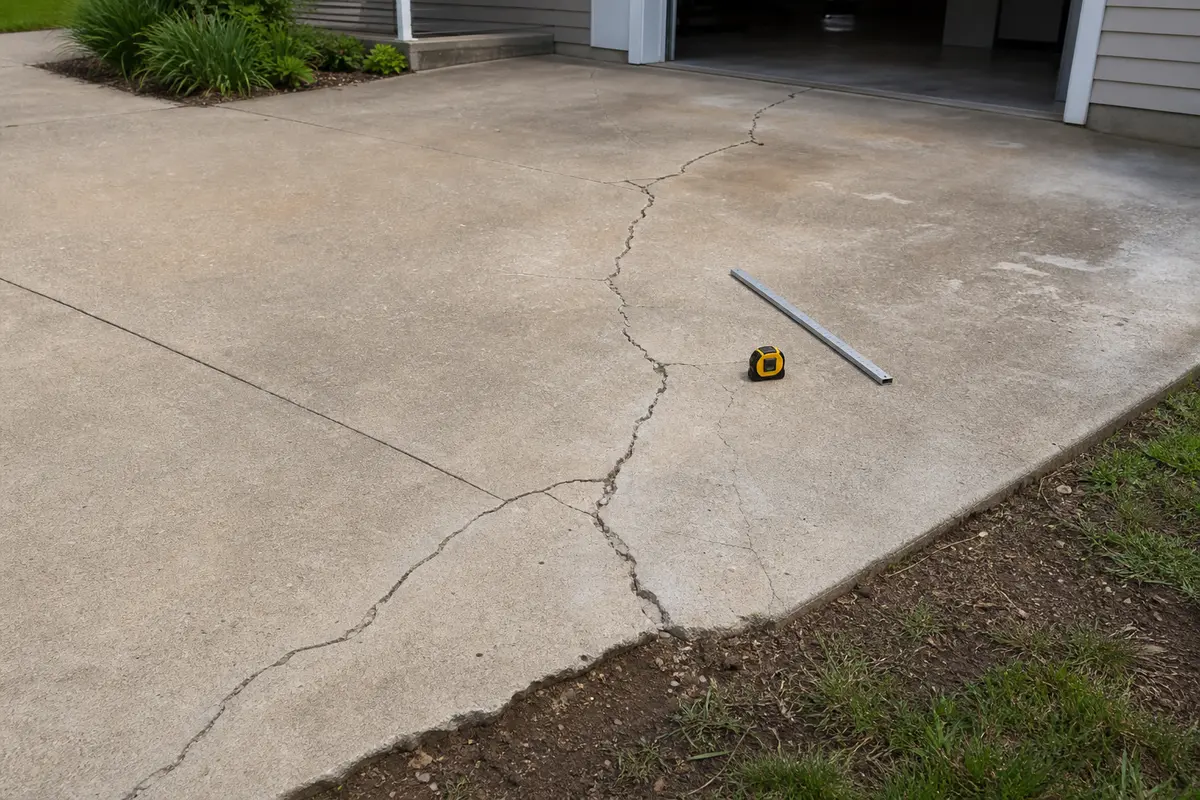
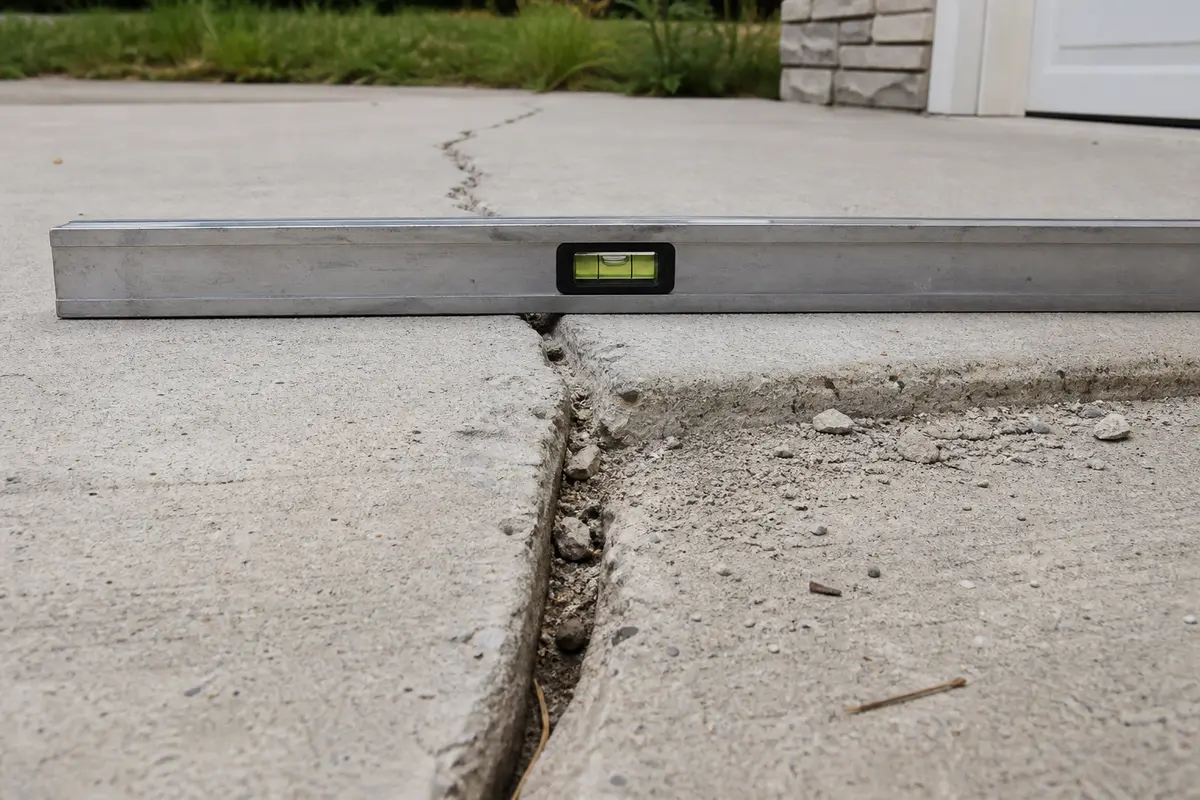
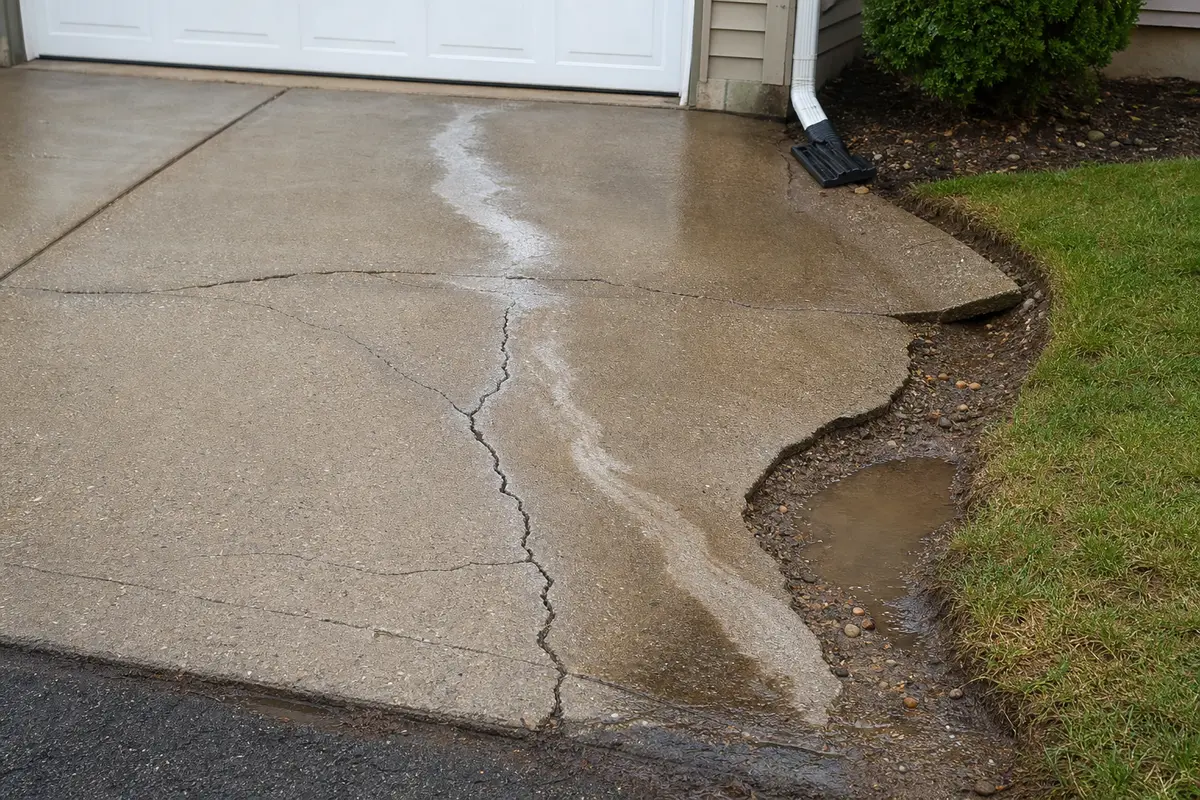
Match the material to the exact diagnosis before you buy anything. Measure the crack, check both sides with a straightedge, confirm the surface type, and make sure the crack is dry and supported. Crack filler belongs on stable narrow openings. Concrete patch belongs on small broken edges in sound concrete. Neither fixes a moving, sinking, hollow, or water-fed section.
The first pass is visual and light-touch. You are looking for the difference between a stable surface crack and a driveway section that is moving.
Let the worst visible clue set the repair path. A level hairline crack can be a maintenance job; offset, hollow, or washed-out concrete needs a support or drainage answer first.
| What you see | Likely meaning | Next move |
|---|---|---|
| Hairline or narrow crack, both sides level | Stable surface crack or shrinkage crack | Clean, dry, measure, and consider driveway crack filler. |
| One side is higher or lower | Settlement, heave, root pressure, or base movement | Stop treating it as a cosmetic crack and inspect support and drainage. |
| Edges are solid but slightly chipped | Localized edge damage around a stable crack | Use a concrete patch path only if the concrete section is still supported. |
| Edges crumble or chunks break free | Surface deterioration or a failing repair area | Remove loose material and reassess whether the repair zone is too large. |
| Crack holds water or lines up with erosion | Runoff or washout is feeding the failure | Fix drainage first, then patch only if the surface is stable. |
| Hollow sound, rocking section, or visible void | Lost support below the driveway | Skip filler and get the support problem evaluated. |
Cleanup is part of diagnosis. It should reveal the real width and edge condition without turning a weak area into a larger break.
A cracked driveway often reopens because the water path was left alone. Check roof runoff, low spots, soil erosion, and the driveway edge before spending money on repair material.
Most short-lived driveway crack repairs fail because the crack was filled before the driveway was diagnosed.
These tools help you inspect and prep a stable crack. They do not make an offset, hollow, or unsupported driveway section patchable.
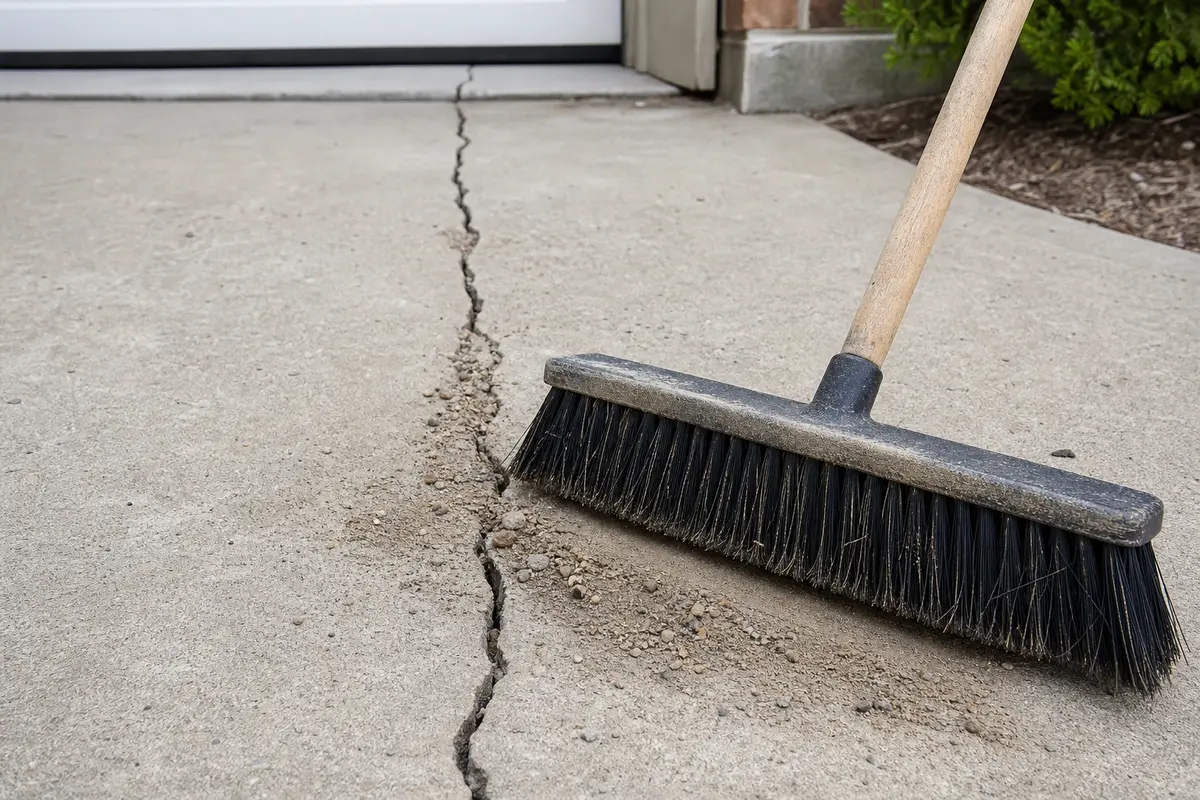
Helps when: Use it to clear loose grit and reveal the full crack pattern before measuring.
Skip it when: Skip repair prep when sweeping exposes loose chunks, soft material, or a void below the edge.
Compare push brooms on Amazon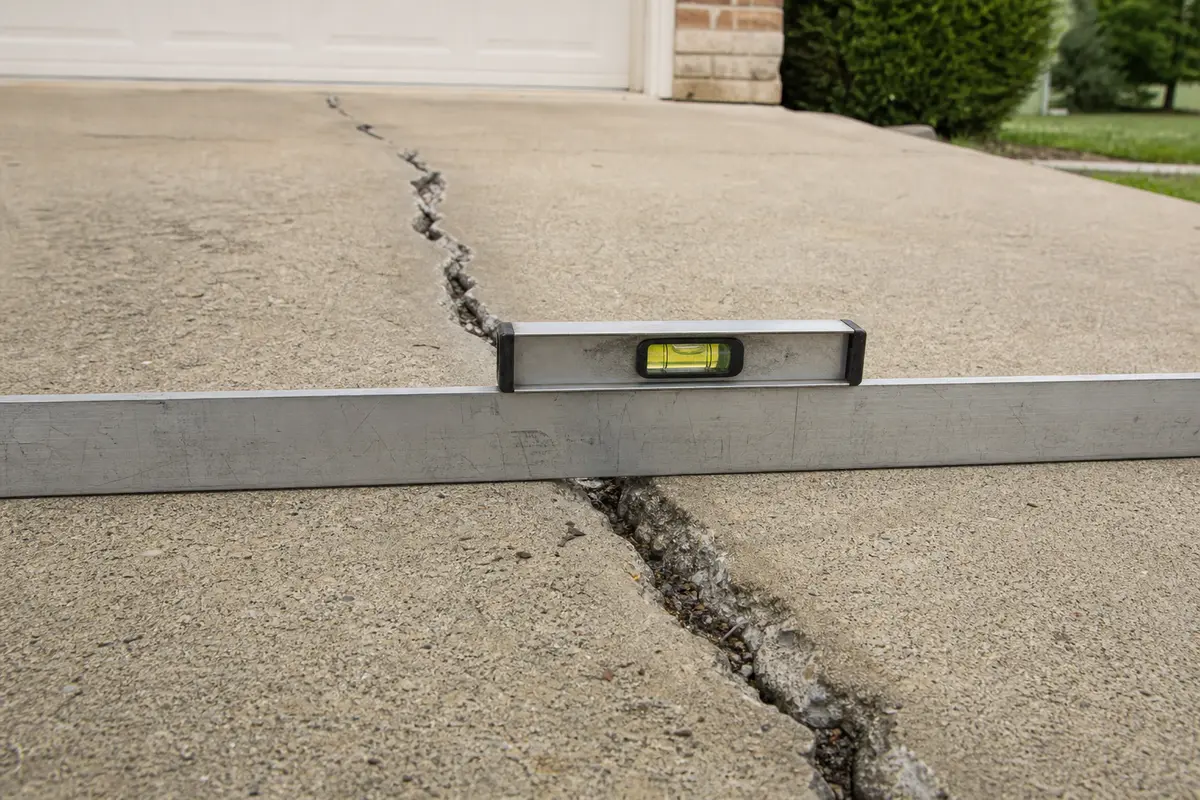
Helps when: Lay it across the crack to find raised or dropped edges that change the repair path.
Skip it when: Skip filler when the straightedge rocks or shows a clear height difference.
Compare levels on Amazon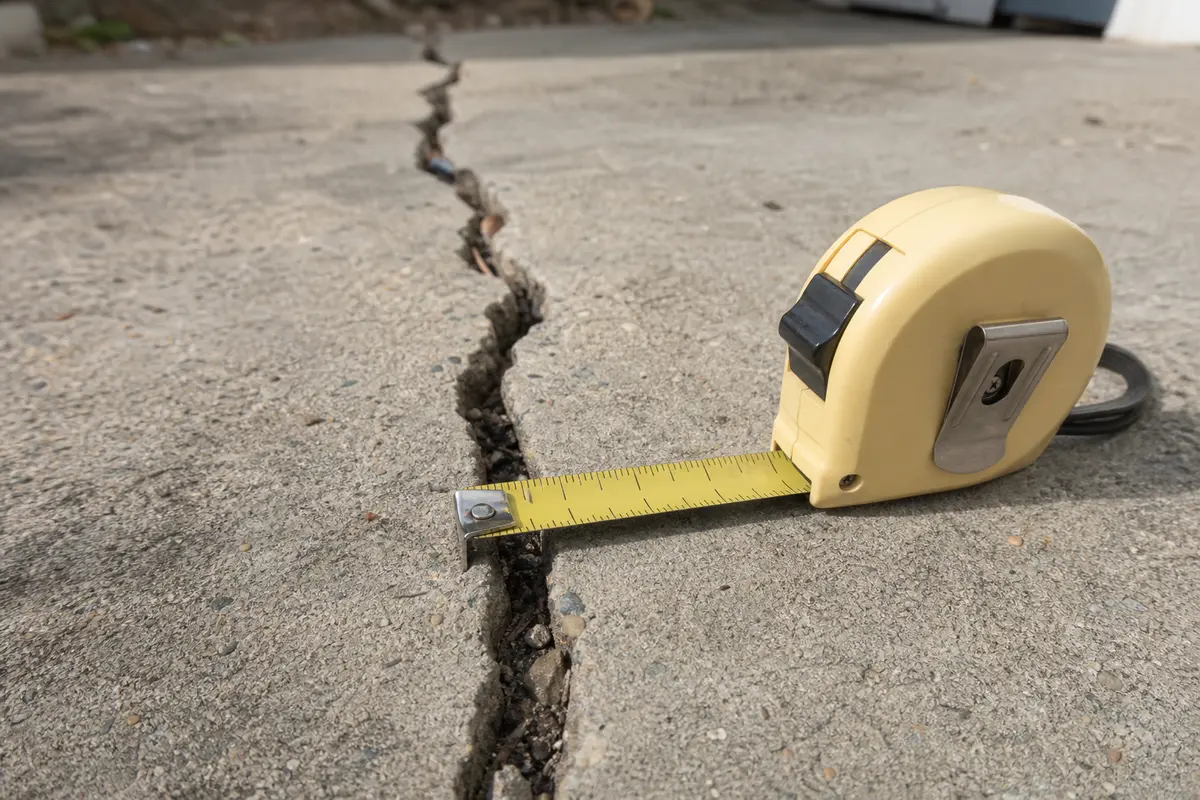
Helps when: Use it to record crack width and track whether the opening is changing.
Skip it when: Skip buying product from width alone if the driveway is also offset, hollow, or wet from below.
Compare tape measures on Amazon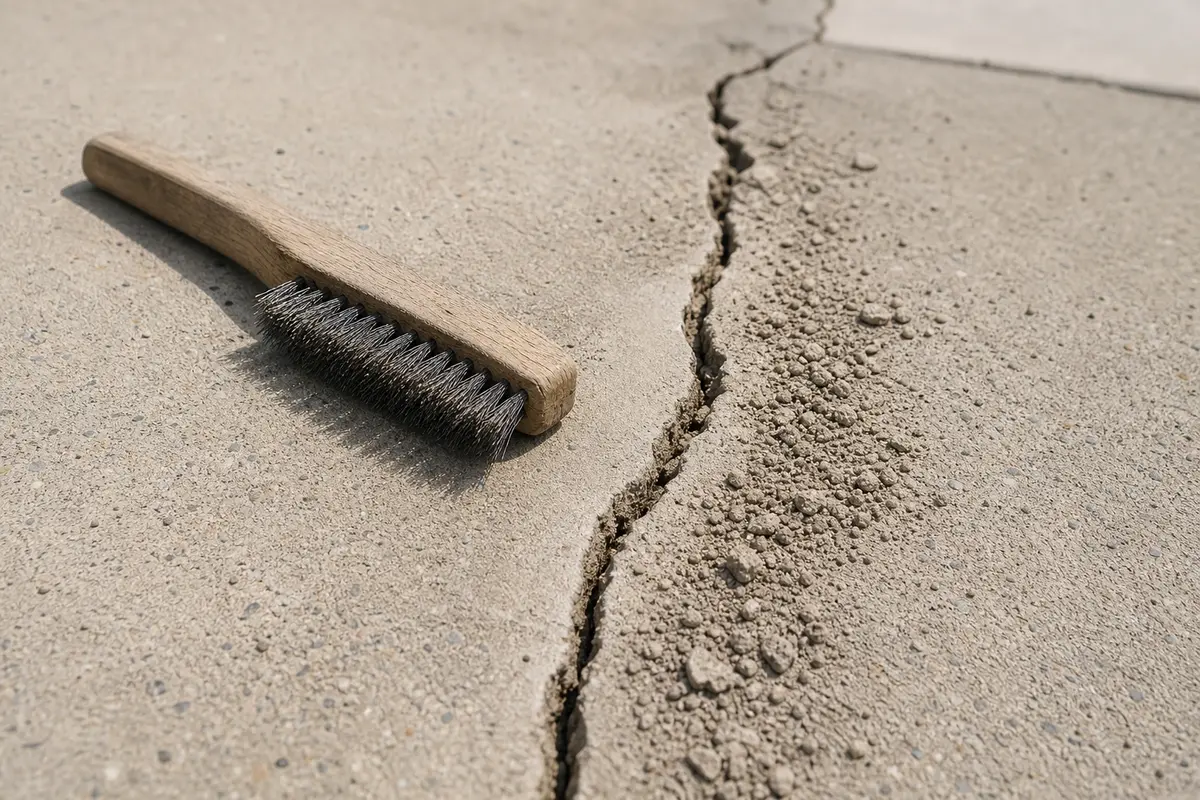
Helps when: Use it to remove loose dust and grit from a stable crack before repair.
Skip it when: Skip aggressive brushing when the edges crumble or the crack keeps widening as you clean.
Compare wire brushes on Amazon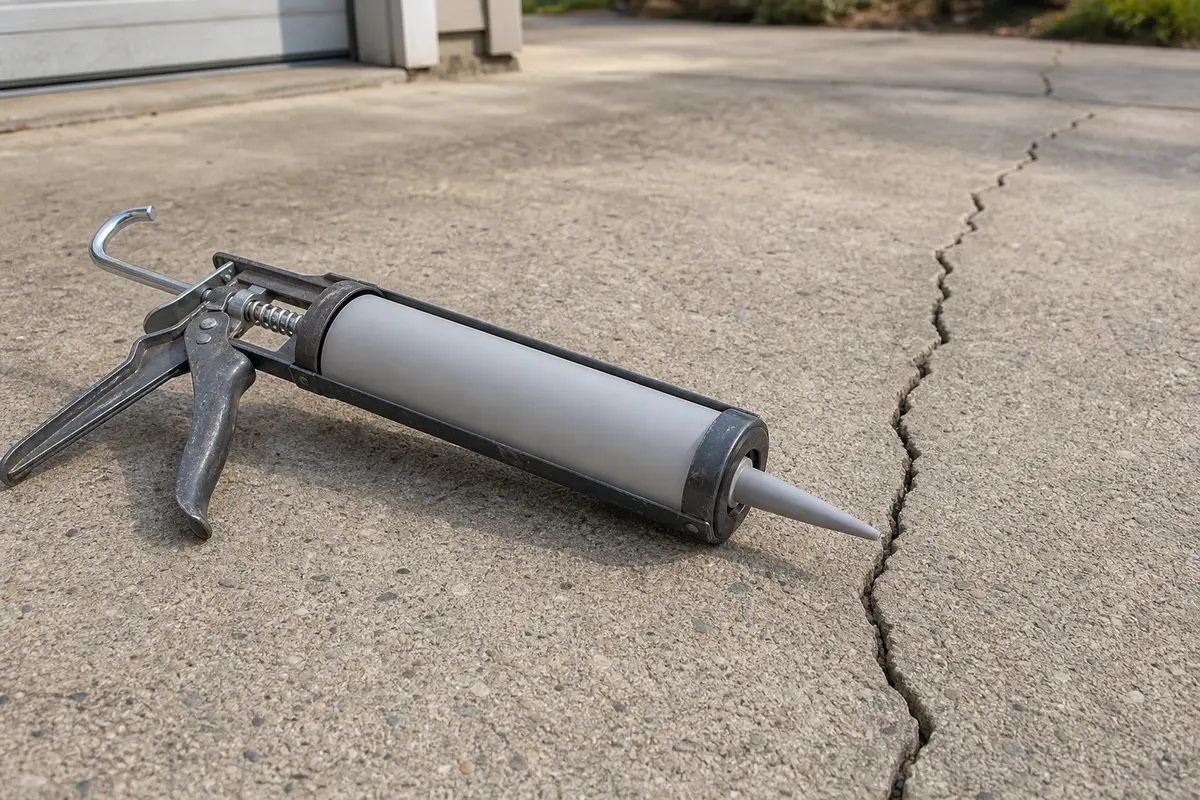
Helps when: Use it for tube-style driveway crack filler after the crack is confirmed stable and dry.
Skip it when: Skip it when the crack is offset, actively wet, too wide for the product, or tied to a void.
Compare caulk guns on AmazonAs an Amazon Associate I earn from qualifying purchases. Repair Riot may earn a commission at no extra cost to you.
Buy repair material only after the crack type is clear. Match surface type, crack width, cure time, weather window, and whether the driveway will carry vehicle traffic soon.
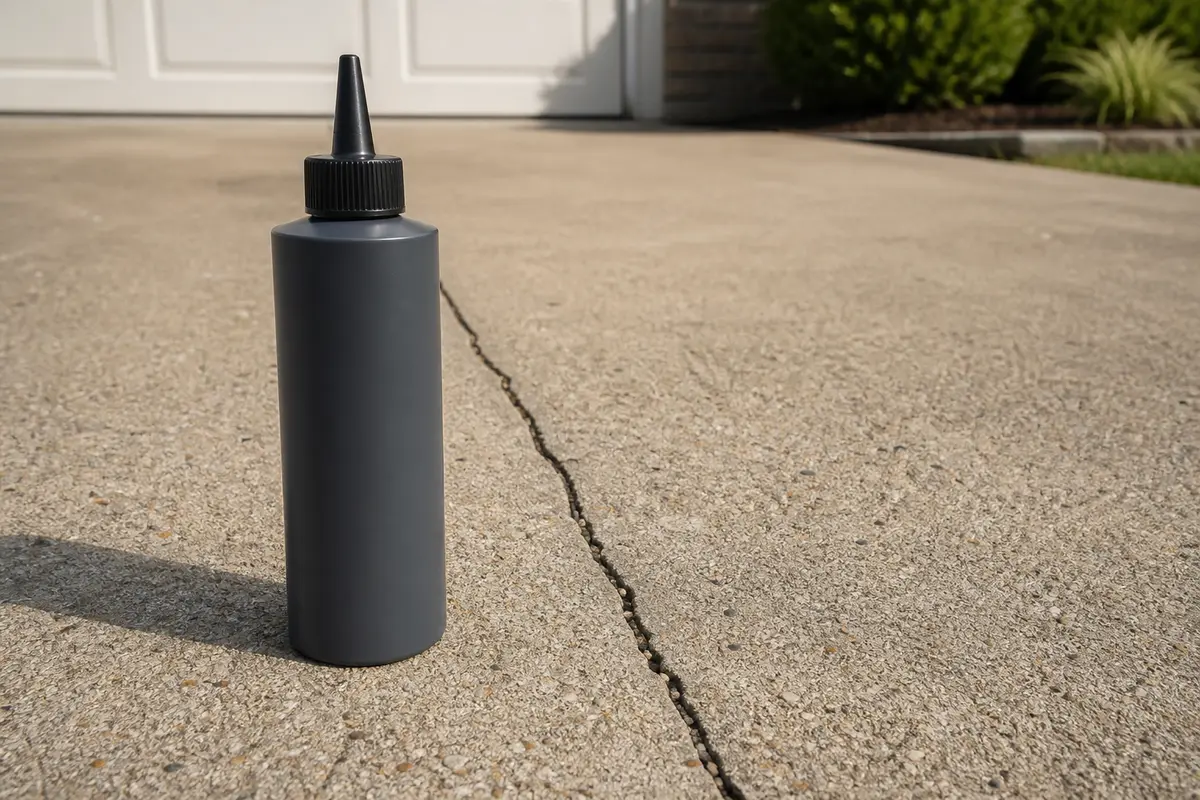
Helps when: Use it when the crack is narrow, dry, level, supported, and matched to the driveway surface.
Skip it when: Skip it when one side is raised or dropped, water is feeding the crack, or material disappears into a void.
Compare driveway crack fillers on Amazon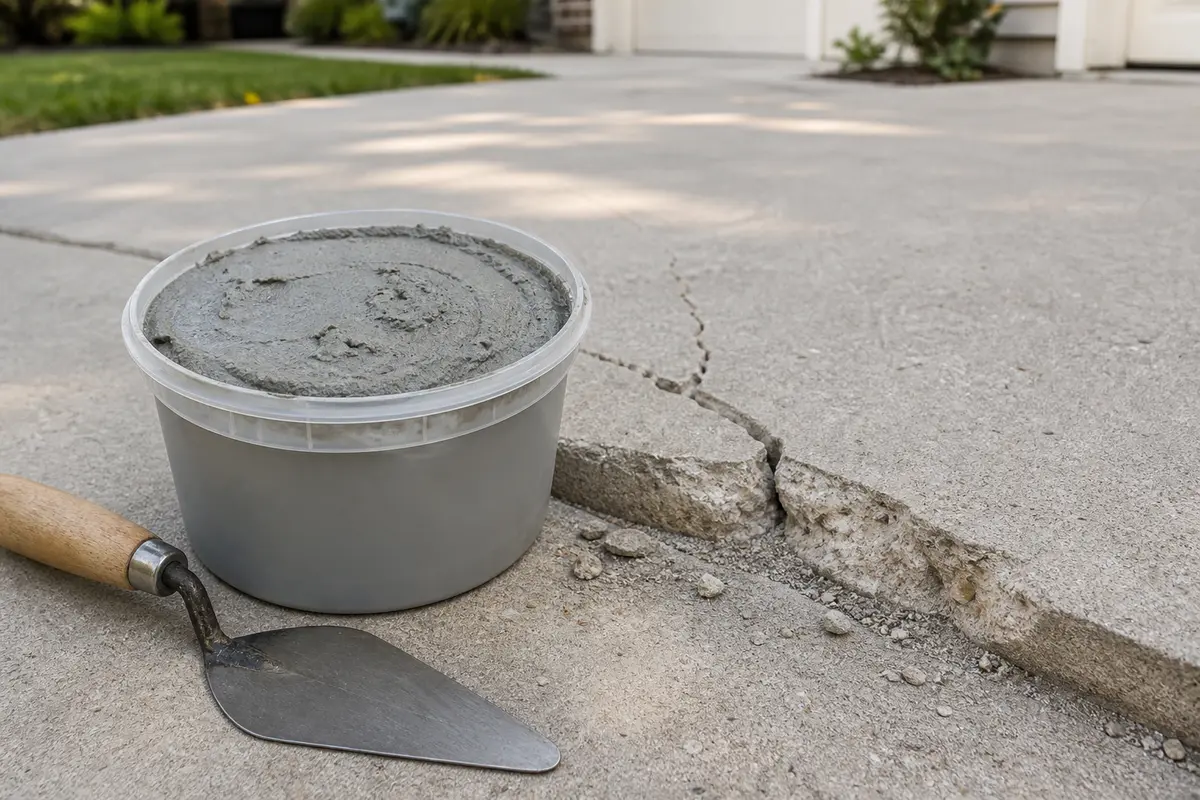
Helps when: Use it for shallow spalled concrete edges around a stable crack in otherwise sound concrete.
Skip it when: Skip it when the driveway is asphalt, the slab is offset, the section rocks, or the repair would feather onto weak material.
Compare concrete patch materials on AmazonAs an Amazon Associate I earn from qualifying purchases. Repair Riot may earn a commission at no extra cost to you.
Small hairline cracks can be normal with age, shrinkage, and weather exposure. A crack becomes more concerning when it widens, develops a height difference, or appears with sinking, heaving, hollow sounds, or crumbling edges.
Only if the crack is stable, narrow, level, clean, and dry. If the driveway section is moving, losing support, or getting wet from below, filler is usually temporary.
Look for one side higher or lower than the other, multiple connected cracks, hollow sounds, visible voids, standing water, or recurring movement after rain or winter. Those signs point beyond a simple surface crack.
Use driveway crack filler only after the opening is narrow, clean, dry, level, and stable, and match it to the driveway surface. Reach for concrete patch when the concrete around a small broken edge is still sound. If you find settlement, heave, hollow sections, or active washout, neither product is the fix.
Common reasons include water undermining the base, freeze-thaw movement, poor compaction, heavy loads, root pressure, or a repair applied to a dirty or moving crack.
Not always. A level hairline crack can be minor. Sinking is more likely when a straightedge shows one side lower, the section sounds hollow, water collects there, or cracks are spreading into broken pieces.
Yes. Runoff, downspouts, clogged drains, poor grading, and edge erosion can remove support below the driveway. If water is part of the pattern, correct it before sealing the crack.
Call a pro for offset edges, sinking or heaving, a visible void below the crack, fast-spreading damage, or a driveway that may need lifting, base repair, or section replacement.
Repair Riot built this page around visible driveway clues: crack width, vertical offset, edge soundness, hollow support, drainage paths, freeze-thaw movement, and where a surface repair becomes a support or drainage problem.