Is overflow broad across the run?
Expect routine leaf, seed pod, and roof-grit buildup. Clean only from a stable ladder setup and test flow afterward.
When gutters are clogged, the first real clue is where water backs up. Overflow at the downspout end usually points to packed debris at the outlet or inside the top elbow; standing water after cleaning points to sag, pitch, or hanger support.
Start from the ground, clean only a reachable section, then run a gentle hose test a few feet uphill from the outlet. A rising puddle around the outlet means the downspout path is still restricted.
This is a flow-path problem first. Separate leaf buildup from outlet blockage, downspout blockage, and a low gutter section before changing hardware.
Don’t start with: Do not buy gutter guards, hangers, or end caps from the word clogged alone. Choose parts only after flow is restored and the remaining defect is visible.
Expect routine leaf, seed pod, and roof-grit buildup. Clean only from a stable ladder setup and test flow afterward.
The outlet, top elbow, or downspout is the first suspect. Clear the outlet before buying parts.
The restriction is still in the outlet or downspout path. Work downward before calling the gutter run fixed.
That points to sag, poor pitch, or failed hanger support if the downspout is confirmed clear.
A gutter guard may help only after the gutter and downspout already drain normally.
Stop. That is support or wood repair, not a simple clogged-gutter cleanout.
Use three views: visible debris in the gutter run, a blocked downspout path, and a clean gutter/downspout reference for what normal flow should look like.
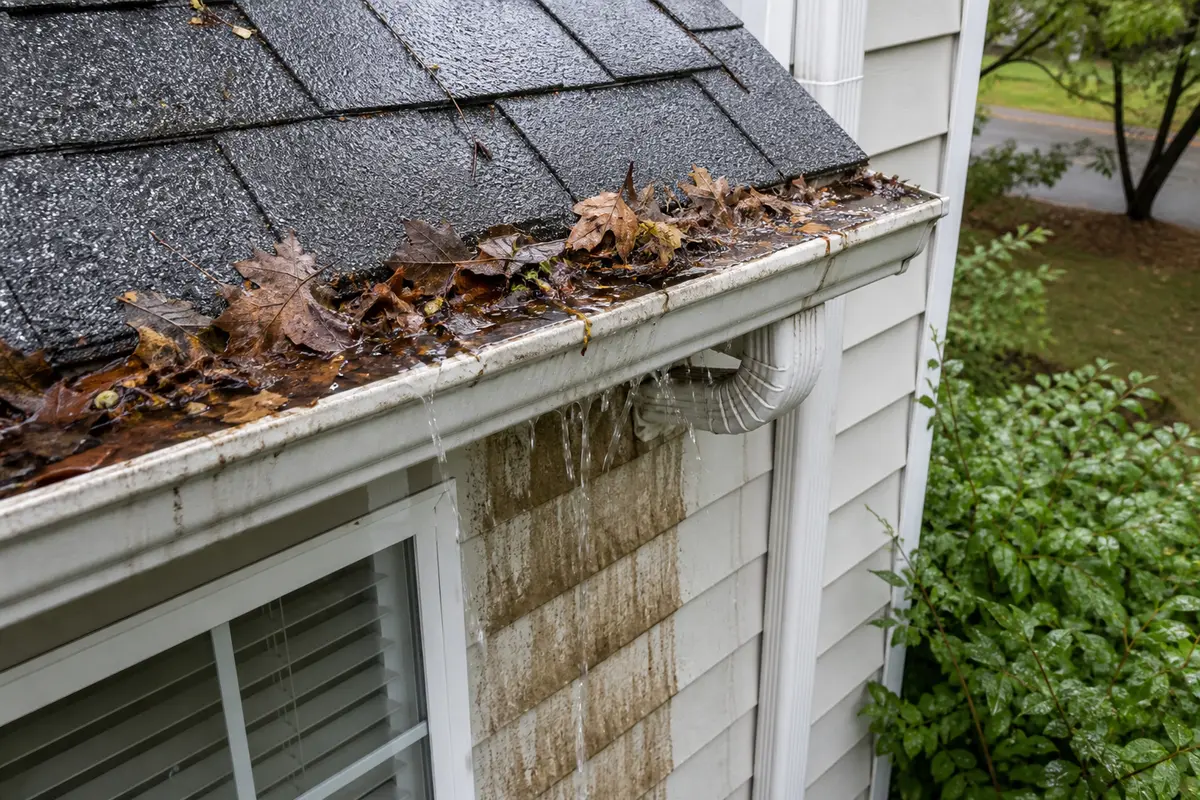
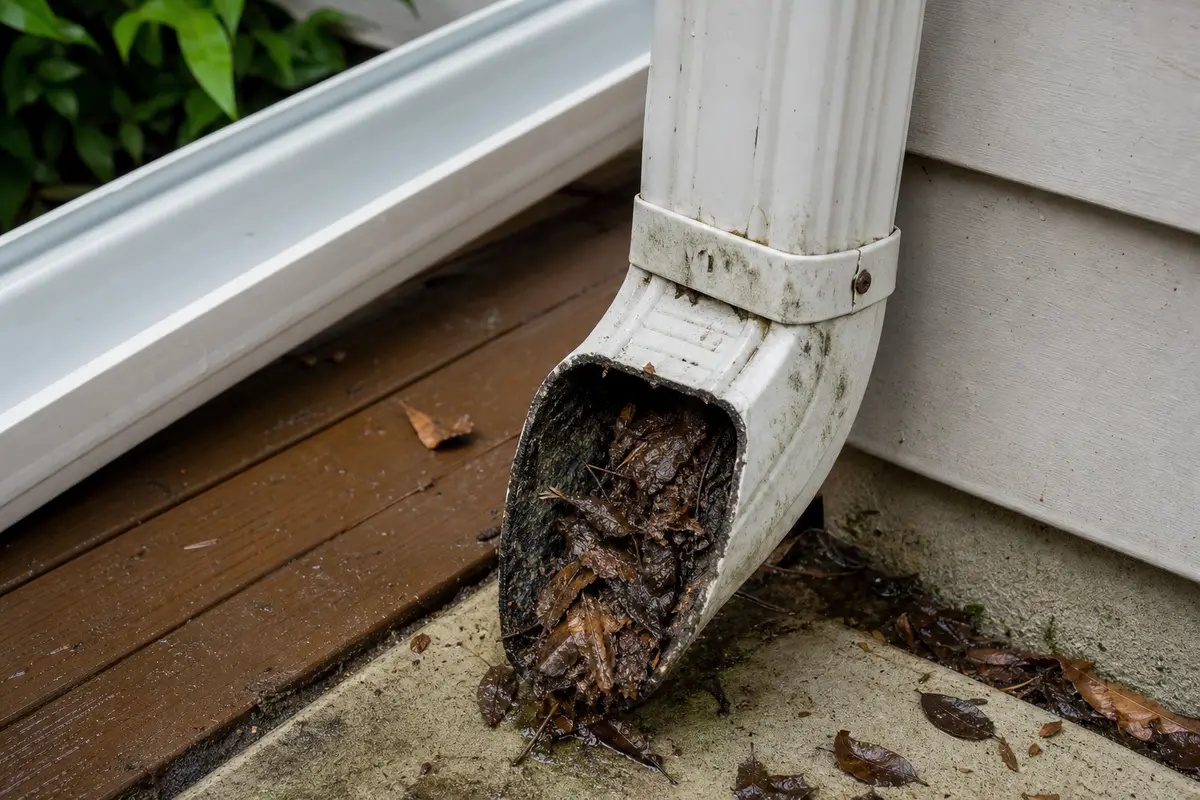
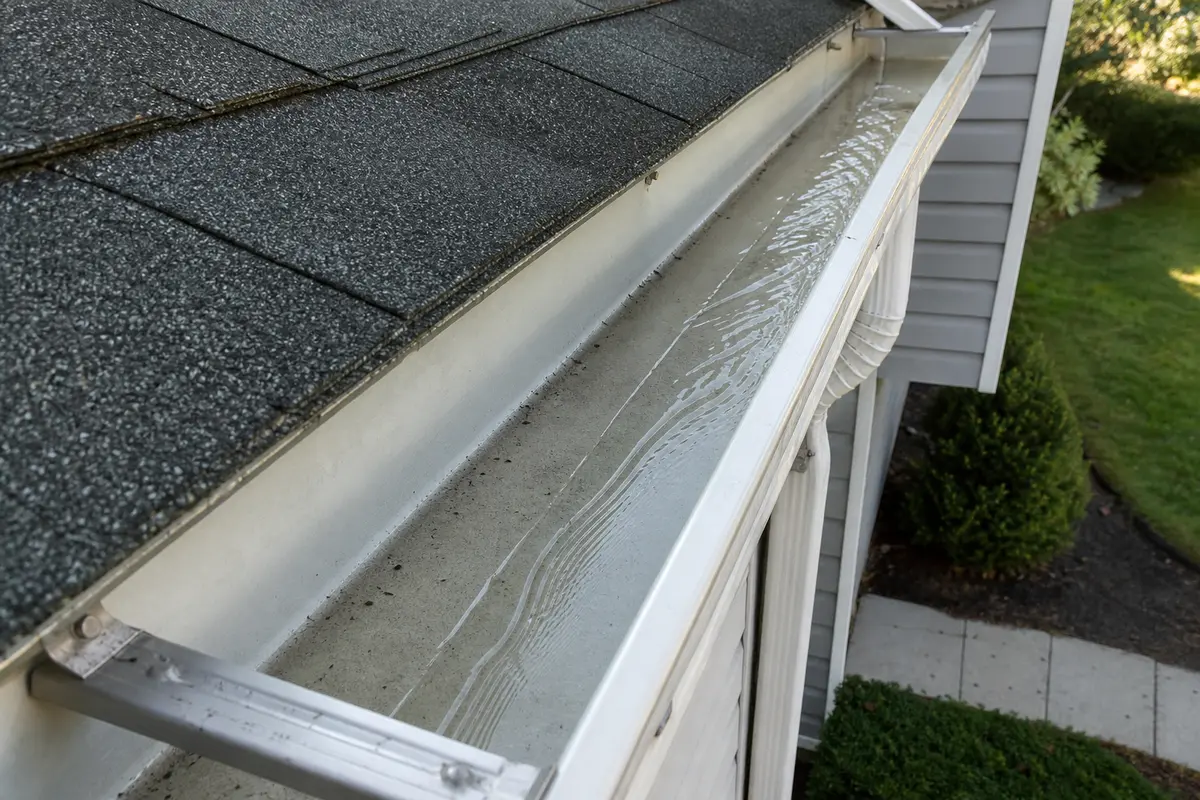
Match the exact diagnosis before buying. A rising outlet means clear the outlet, elbow, or downspout first; hangers, caps, and guards will not solve that blockage. After water runs freely, match the exact part to the visible defect. For a sagging solid-fascia section, match hanger style and gutter profile. For a leaking end, match end-cap size and left/right side. For recurring leaf buildup after clean flow, match guard width and roof-edge setup.
Where water spills tells you where to spend effort first. Broad overflow, one dead downspout, and one low spot are different problems.
After loose debris is out, a gentle hose test tells you whether water can actually leave the gutter.
| What happens | Likely meaning | Next move |
|---|---|---|
| Water rises around the outlet | Outlet or top elbow is blocked | Clear packed debris at the drop opening before changing hardware. |
| Outlet drains but little exits below | Downspout path is restricted | Check lower elbow, extension, or discharge end for leaves and grit. |
| Water exits below but gutter still ponds | Pitch or support problem | Inspect low spot, hanger spacing, and fascia condition. |
| Gutter drains cleanly but clogs again fast | Recurring debris load | Consider a guard only for the confirmed repeat section. |
| Gutter moves or fascia is soft | Support or wood damage | Stop and repair structure before adding gutter parts. |
The downspout branch is easy to miss because the trough can look mostly clean while the vertical path is still plugged.
Every bad shortcut skips a clue. Tie the repair to the test result you can see.
These tools support inspection, debris removal, and a gentle flow test. They do not make unsafe ladder work safe.
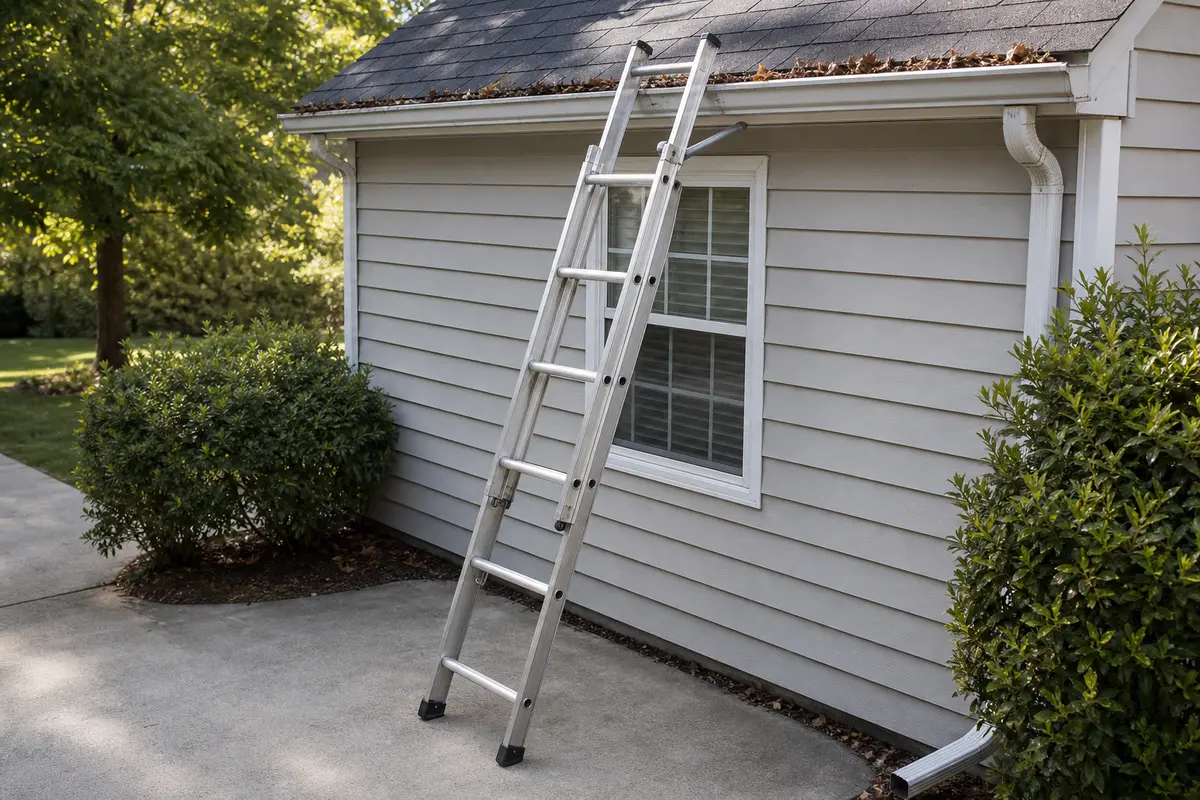
Helps when: You need stable access to a reachable gutter run without leaning on the gutter.
Skip it when: Skip it when the ground is uneven, the roof edge is icy, or overhead lines are nearby.
Compare extension ladders on Amazon
Helps when: Gloves protect your hands from wet debris, sharp edges, and hidden screws.
Skip it when: Skip it when the debris includes nests, contamination, or hazards that need cleanup planning.
Compare work gloves on Amazon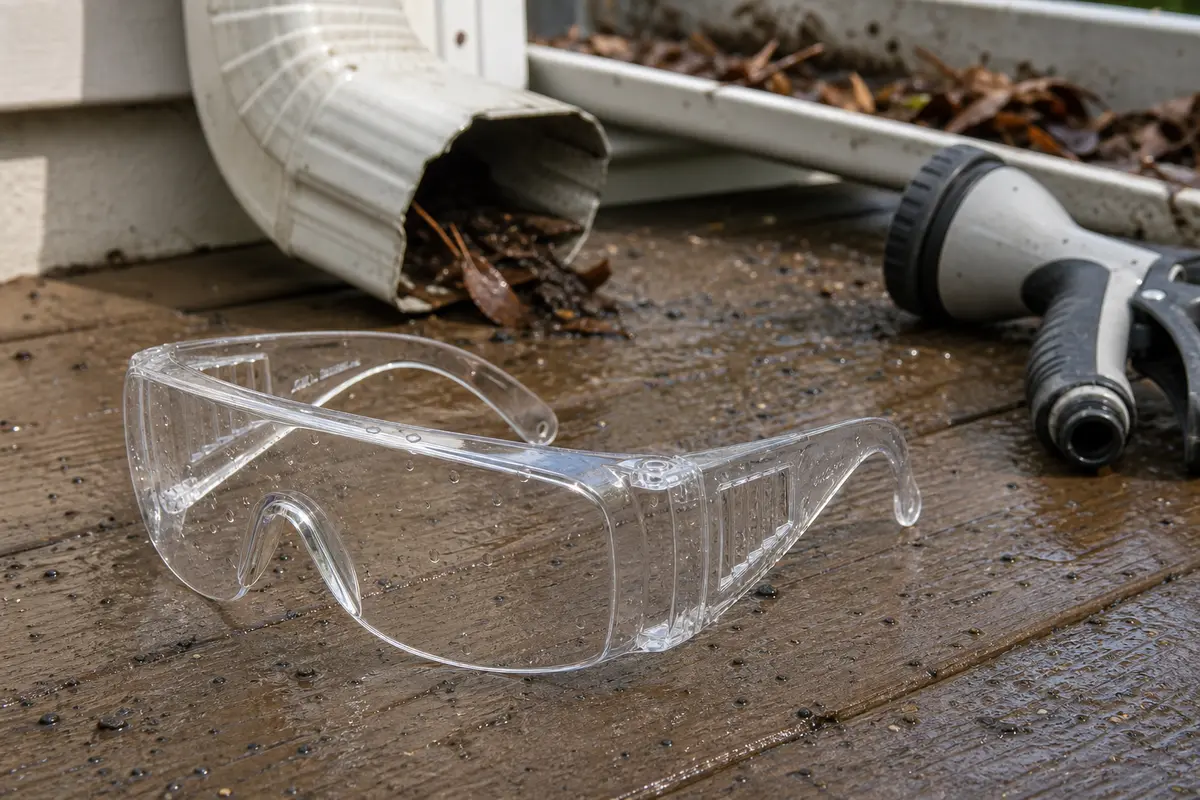
Helps when: Eye protection matters when grit, splashback, or downspout debris can fall back at you.
Skip it when: Skip the job, not the glasses, when you cannot control the hose and ladder safely.
Compare safety glasses on Amazon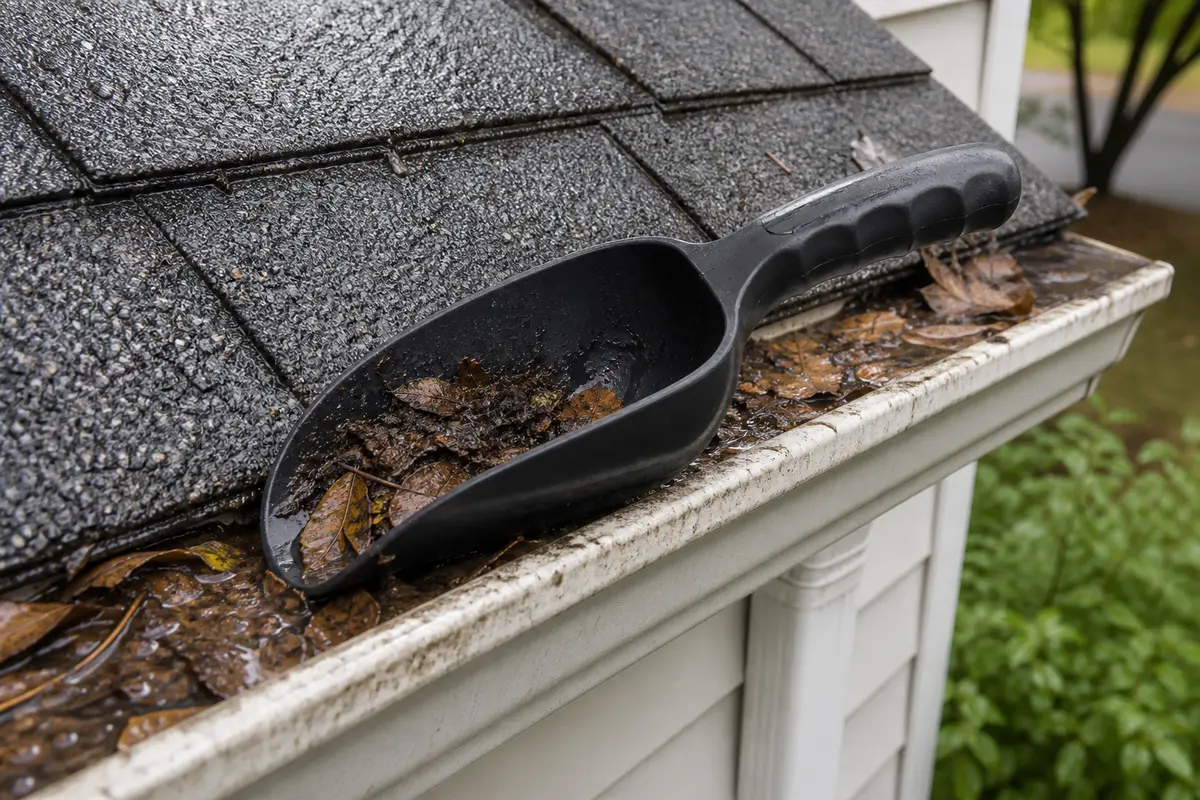
Helps when: A plastic scoop removes leaves and sludge without scraping or puncturing the gutter.
Skip it when: Skip it when debris is frozen solid or the gutter flexes heavily under light touch.
Compare gutter scoops on Amazon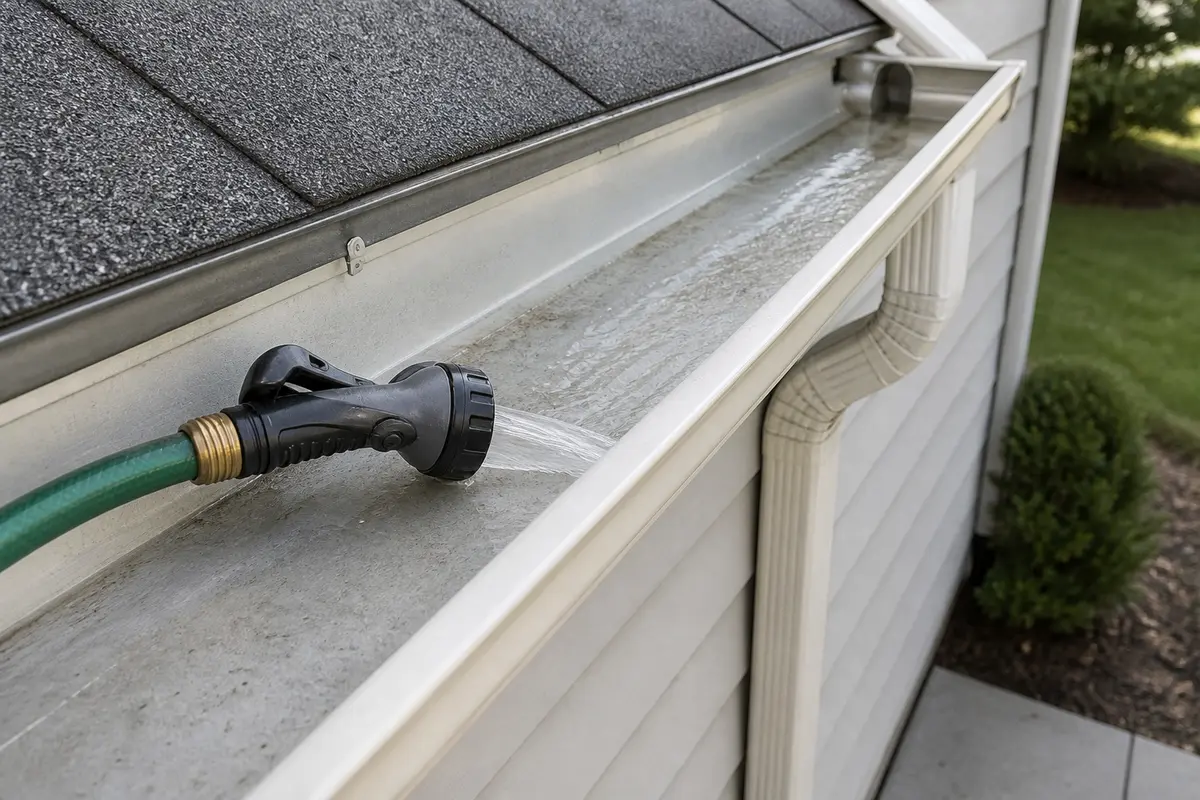
Helps when: A controlled flow test checks whether the outlet and downspout drain after cleaning.
Skip it when: Skip it when water could enter the house, flood the foundation, or reach electrical hazards.
Compare hose nozzles on AmazonAs an Amazon Associate I earn from qualifying purchases. Repair Riot may earn a commission at no extra cost to you.
Parts belong after flow is confirmed. The right purchase depends on the remaining visible defect.
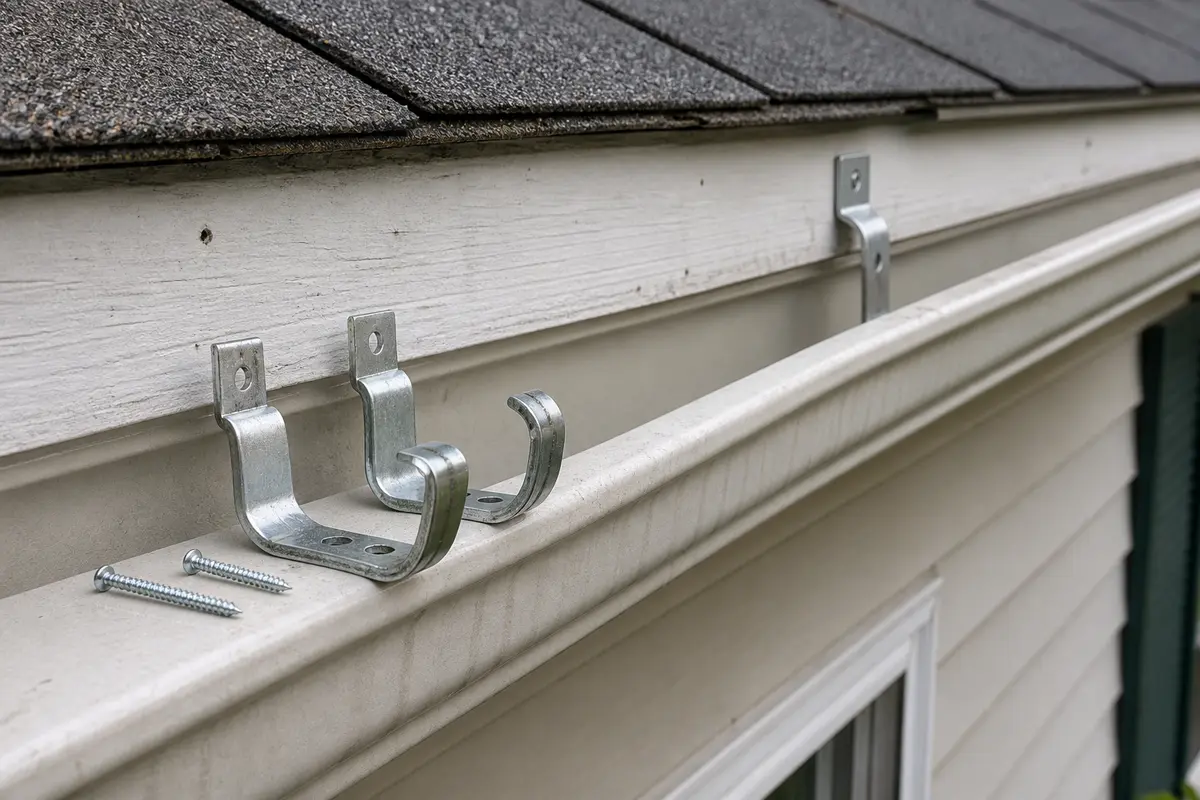
Helps when: A cleaned gutter still sags at one section and the fascia is solid enough to hold a new fastener.
Skip it when: Skip it when the gutter is still clogged, the fascia is soft, or the whole run needs re-pitching.
Compare gutter hangers on Amazon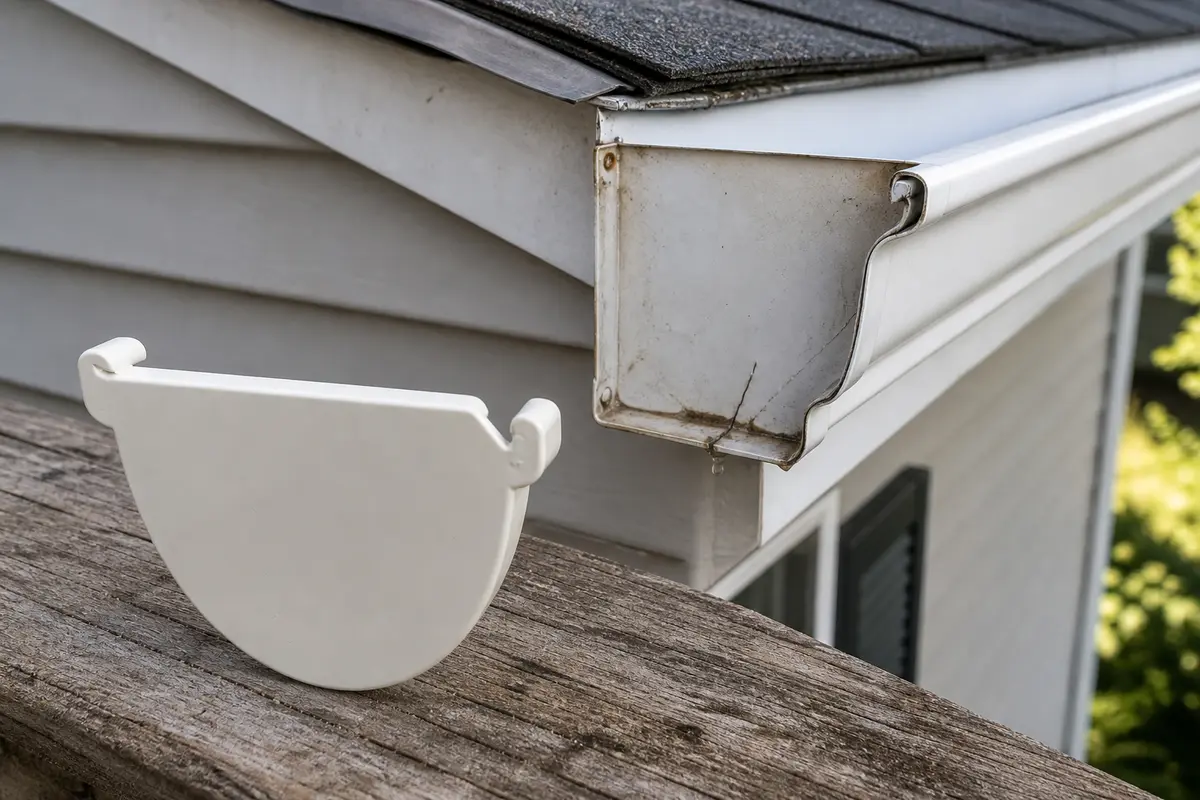
Helps when: The gutter end cap is cracked, missing, or leaking after the clog and overflow path are already handled.
Skip it when: Skip it when overflow is from a blocked outlet, downspout, or sagging section.
Compare gutter end caps on Amazon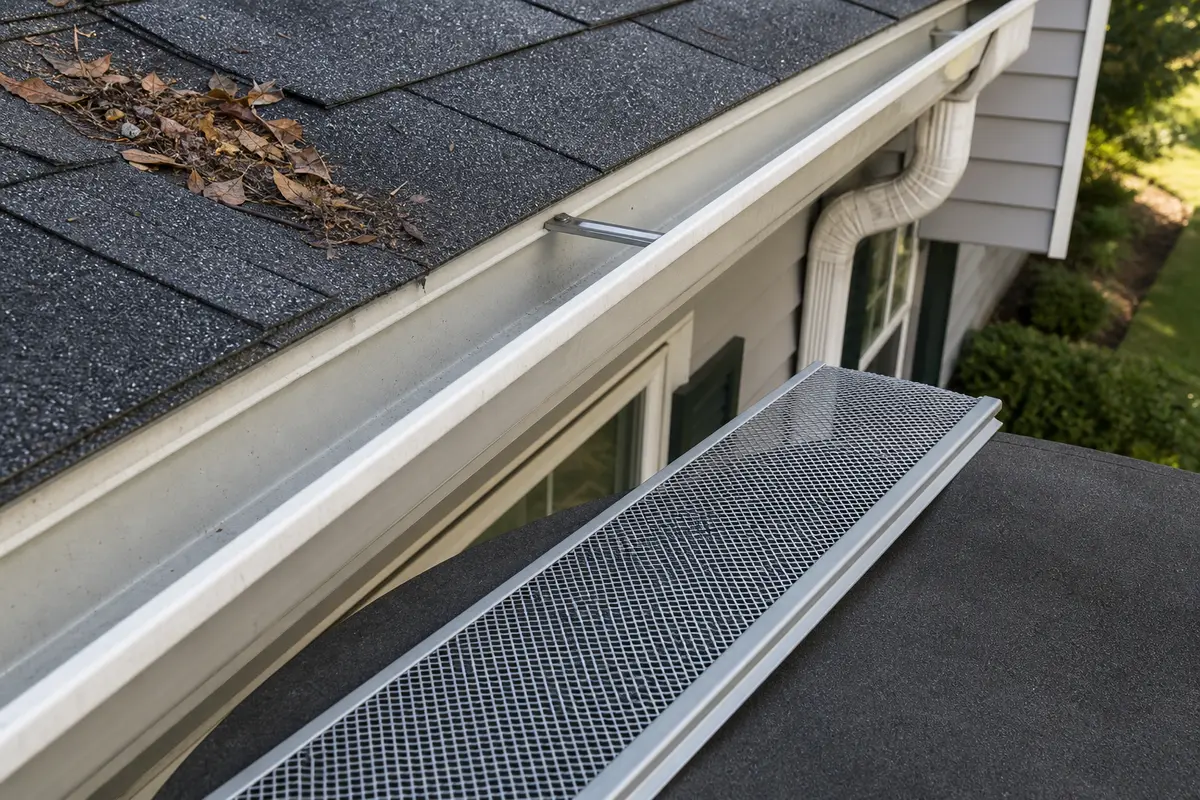
Helps when: The gutter drains normally after cleaning but the same section repeatedly catches leaves or roof-valley debris.
Skip it when: Skip it when the outlet is blocked, the downspout is clogged, or standing water remains.
Compare gutter guards on AmazonAs an Amazon Associate I earn from qualifying purchases. Repair Riot may earn a commission at no extra cost to you.
A small plug at the outlet or top of the downspout can make rain back up quickly. The trough may look partly open while the drain point is blocked.
Clean loose debris, then run water a few feet uphill from the outlet. Water rising around the outlet means the restriction is at the outlet or downspout path.
Only after the gutter and downspout already drain correctly. Guards can reduce future leaf buildup, but they do not clear a packed outlet, blocked downspout, or sagging gutter.
If the downspout flows but the same section still holds water, treat that puddle as a pitch or support clue. From the ground or a safe ladder setup, look for a belly in the run, loose hanger spacing, or gutter pulling away from the fascia; cleaning alone won't fix that branch.
A hanger makes sense after cleaning and flushing, when a specific section still sags and the fascia behind it is solid enough to hold fasteners.
An end cap is a separate repair for a cracked, missing, or leaking gutter end. It is not the fix for water spilling over from a blocked outlet.
Sometimes. If the lower elbow or extension is removable, check it from the ground first. If the top outlet is blocked, the gutter side still needs a safe access plan.
Call a pro if the gutter is high or unsafe to reach, the fascia is rotten, the gutter is pulling loose, slope correction spans a long run, or water is already damaging the house.
Repair Riot built this page around homeowner-visible gutter clues: overflow location, outlet backup, downspout discharge, standing water after cleaning, ladder risk, and when prevention products make sense.