Does the extension hold water after rain?
Disconnect the extension if it is accessible. Packed leaves, mud, or a crushed flexible run are common low-risk fixes.
If a downspout extension is clogged, start at the outlet, removable extension, and lower elbow. Standing water, packed leaves, mud at the end, or a crushed flexible run usually means the restriction is near ground level.
Good clue: if the vertical downspout drains after the extension is removed, the extension or outlet is the problem. If water still backs up, move to the elbow, vertical run, or buried line.
Work from the discharge end back toward the house. Disconnect reachable lower pieces from the ground, flush gently, and let the first backup point guide the next check.
Don’t start with: Do not start by replacing the whole downspout or climbing to the gutter. Prove whether the lower extension can pass water first.
Disconnect the extension if it is accessible. Packed leaves, mud, or a crushed flexible run are common low-risk fixes.
Remove the extension first. If backup remains, clear the lower elbow or connector before climbing higher.
Look downstream from the leak. A joint often leaks because water is trapped below it.
The clog may be in the vertical downspout, first elbow, or a buried outlet that fills and backs up.
Treat repeat backup as a drainage-line problem if the visible extension and downspout are clear.
Check for a sag, sharp bend, loose strap, misaligned connector, or buried outlet that traps debris.
Use three views: the flooded extension outlet, the packed downspout base, and the elbow or joint where backup escapes.
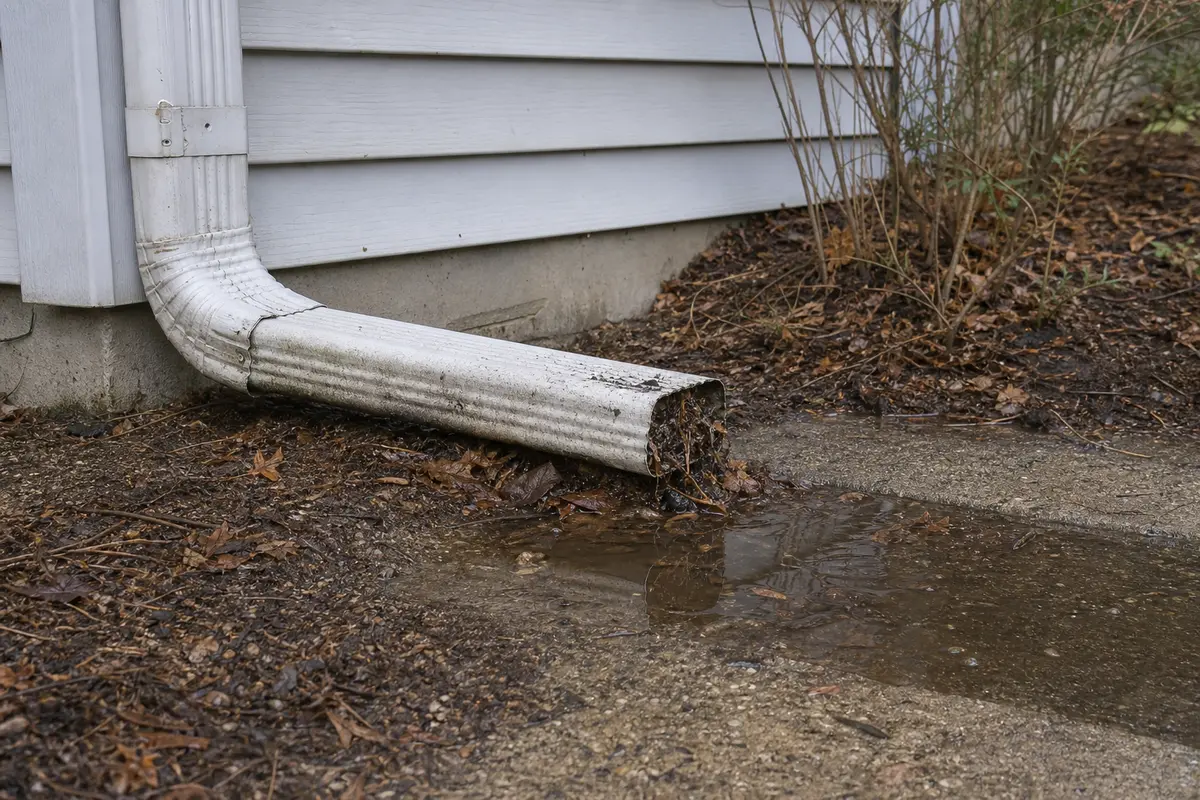
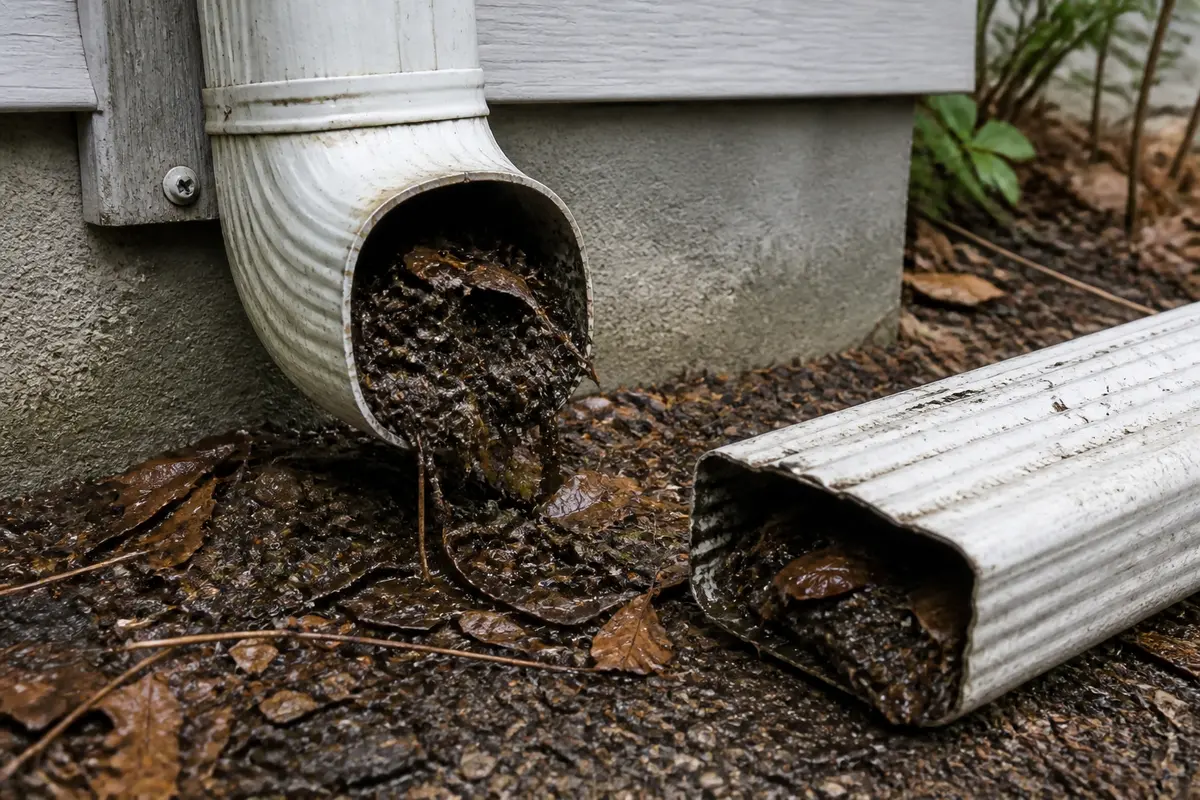
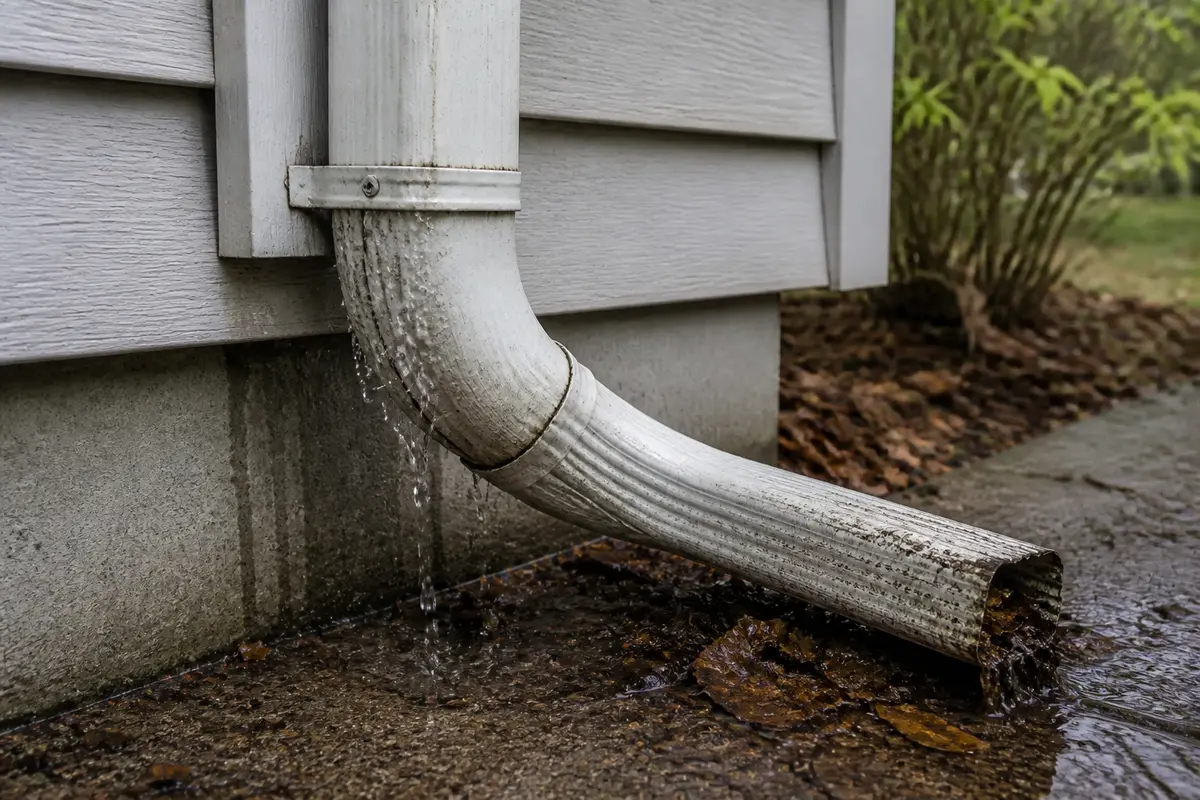
Match the exact diagnosis and the exact downspout profile before buying. Measure the size, shape, material, elbow angle, outlet direction, run length, and whether the lower end connects to an above-ground extension or buried adapter. A new extension helps only when the extension is crushed, split, warped, or shaped so it keeps trapping debris. An elbow, connector, or strap helps only when that part is damaged after the clog is cleared.
Most downspout-extension clogs can be sorted from the ground. Find the first place water stops before you climb, cut, or order parts.
Use the first visible water pattern to decide what to open. The clog is usually just below the first leak or backup point.
| What you see | Likely meaning | Next move |
|---|---|---|
| Extension holds water or trickles slowly | Leaves, roof grit, mud, sag, or crushed extension | Disconnect it and flush from both ends. |
| Water leaks from a lower elbow | Blockage below the leak point | Remove the extension and inspect that elbow or connector. |
| Vertical run drains after extension is removed | Extension or outlet is the confirmed restriction | Clean or replace only the failed extension part. |
| Vertical run still backs up with extension off | Higher downspout, top outlet, or buried-line restriction | Check lower elbows first, then use ladder access only if needed. |
| Water exits briefly, then backs up | Buried outlet or underground drain may be filling | Stop treating it as a simple extension clog. |
| Same joint separates after every storm | Loose strap, bad connector, or poor alignment | Secure and realign after the water path is clear. |
Mud, leaves, and roof grit settle in the low extension, especially where the run sags or the outlet sits in mulch.
A leak at an elbow often means water is trapped below it. Clear the downstream side before assuming the upper gutter is the problem.
The top opening and first elbow matter when water backs up immediately at the gutter outlet or lower sections test clear.
A hose test should name the next step, not force a blockage deeper. Use steady flow and watch the lowest visible outlet.
| Hose test result | What it points toward | What to do next |
|---|---|---|
| Extension flows when detached | Extension is not the remaining clog | Check the elbow, vertical run, or buried outlet. |
| Extension will not pass water | Packed or crushed extension | Clean it fully or replace the extension. |
| Water exits strongly after cleaning | Temporary debris blockage | Reconnect, slope away from the house, and recheck after rain. |
| Water leaks from a seam under flow | Downstream backup or bad joint alignment | Clear below the leak, then reseat the connector. |
| Water exits briefly then stops | Buried drain or outlet may be backing up | Switch to exterior drainage troubleshooting. |
These tools support visible cleaning, controlled water testing, and safe lower-section disassembly. They do not make unstable ladder work or buried drainage safe.
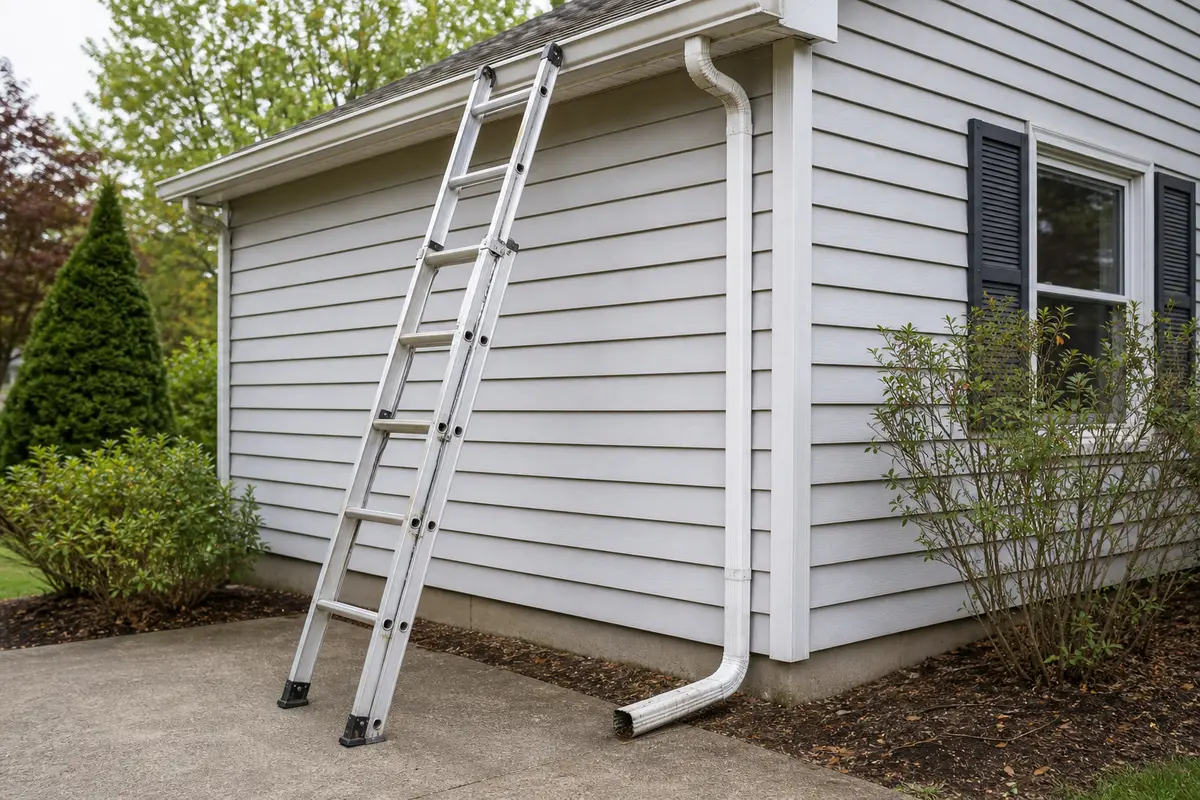
Helps when: Use one only when the top outlet or upper elbow is the confirmed next check and the setup is stable.
Skip it when: Skip ladder work when the clog is already proven at the extension, the ground is soft, or the downspout is near wires.
Compare extension ladders on Amazon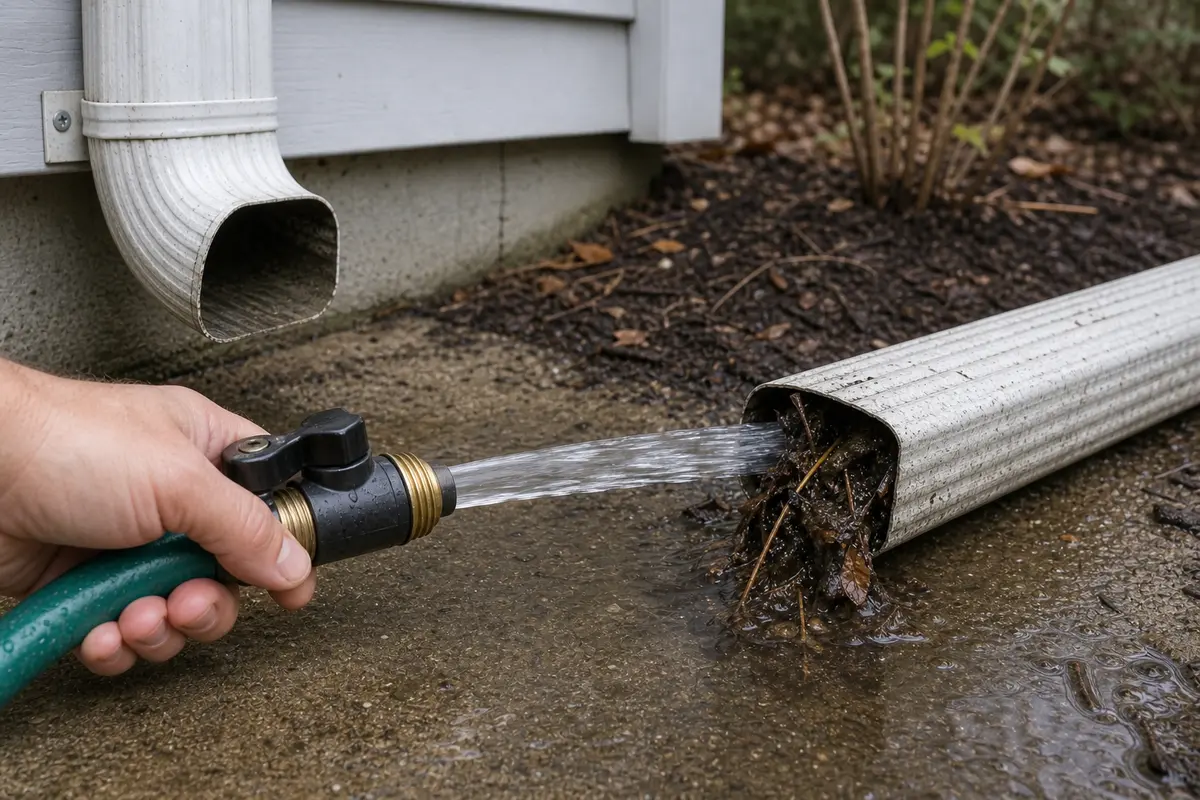
Helps when: Use steady flow to test whether the extension, elbow, or vertical run can pass water.
Skip it when: Skip forceful flushing when water is backing toward the house or the outlet disappears into a buried line.
Compare hose shutoff nozzles on Amazon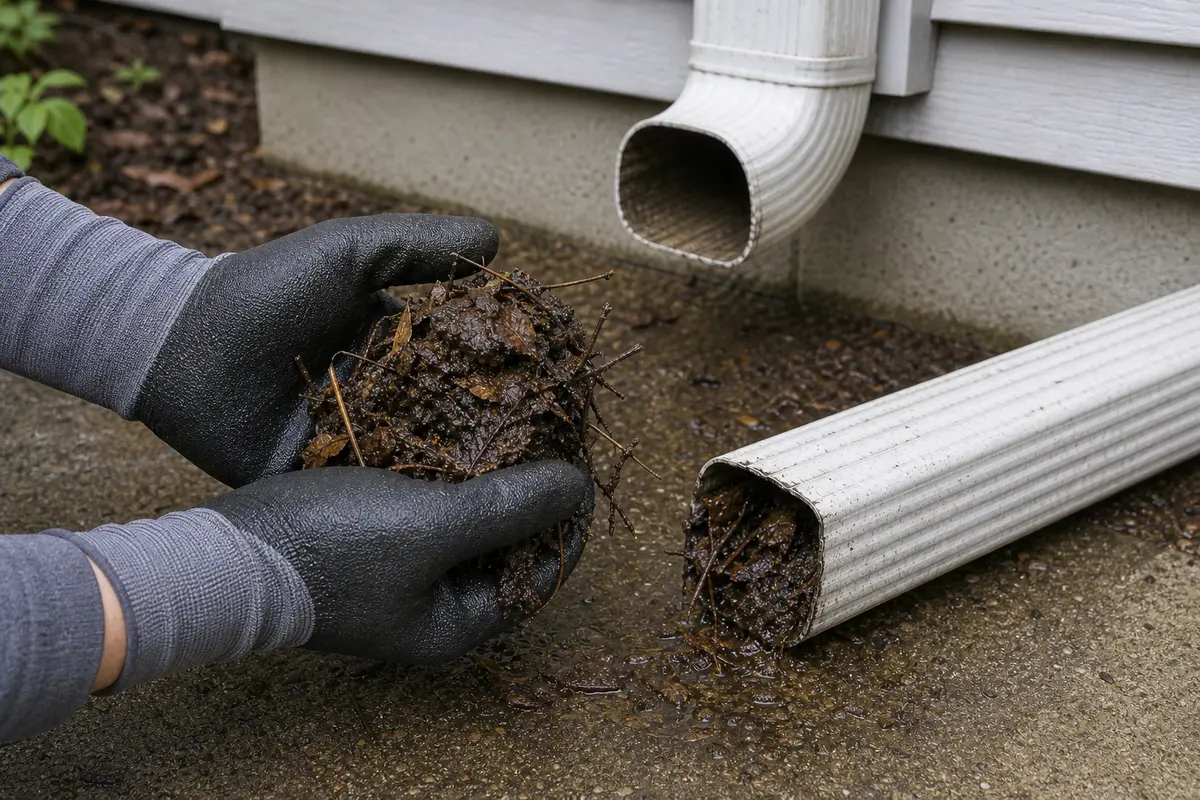
Helps when: Use them when pulling wet leaves, grit, mud, and sharp debris from the extension or lower elbow.
Skip it when: Skip hands-on clearing if the section is unstable, sharp enough to cut through gloves, or full of unknown waste.
Compare waterproof work gloves on Amazon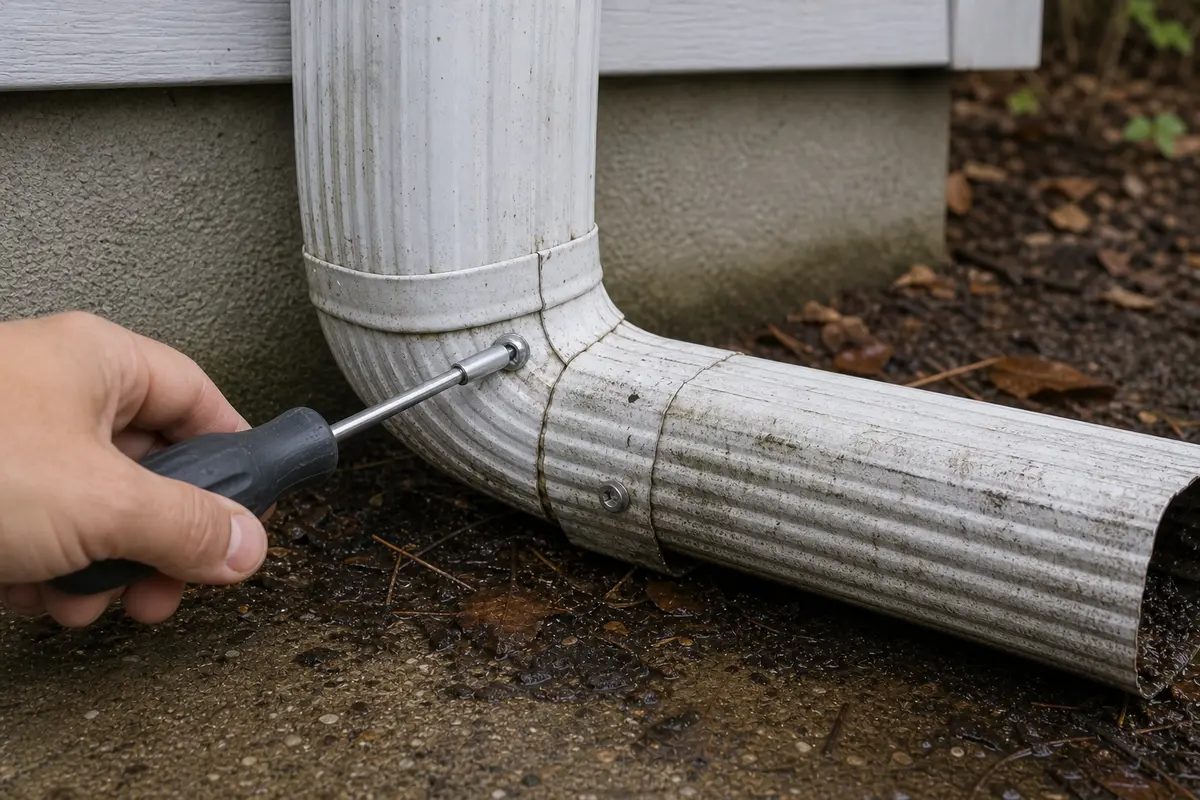
Helps when: Use one to remove reachable screws at the extension, elbow, strap, or connector.
Skip it when: Skip forcing fasteners when the downspout moves against the wall or the metal starts tearing.
Compare nut drivers on AmazonAs an Amazon Associate I earn from qualifying purchases. Repair Riot may earn a commission at no extra cost to you.
Buy the part that matches the confirmed failure and the exact profile on the house. Use the part only after a test names it: detached extension still plugged, elbow crushed, connector leaking after flow is restored, or strap missing while the run sags.
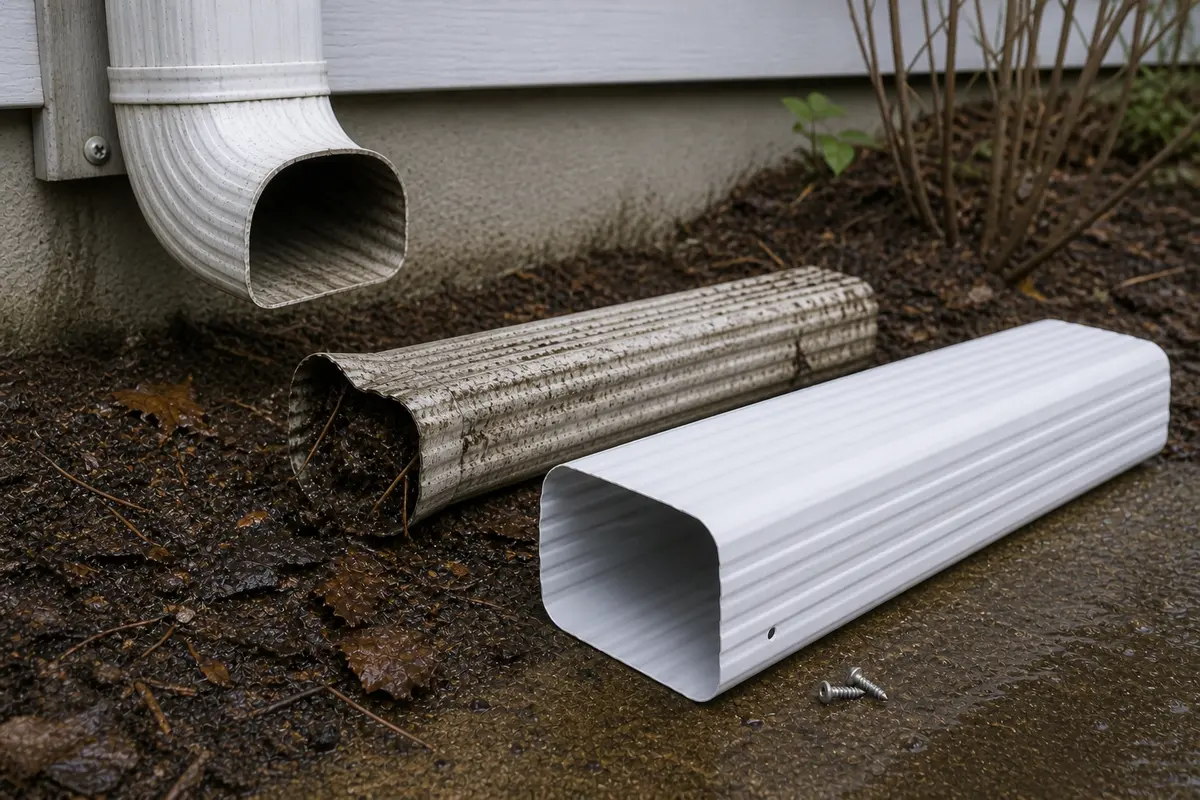
Helps when: Use one when the extension is crushed, split, warped, or cannot be cleared after the vertical downspout tests open.
Skip it when: Skip it when water still backs up with the extension removed; the restriction is somewhere else.
Compare downspout extensions on Amazon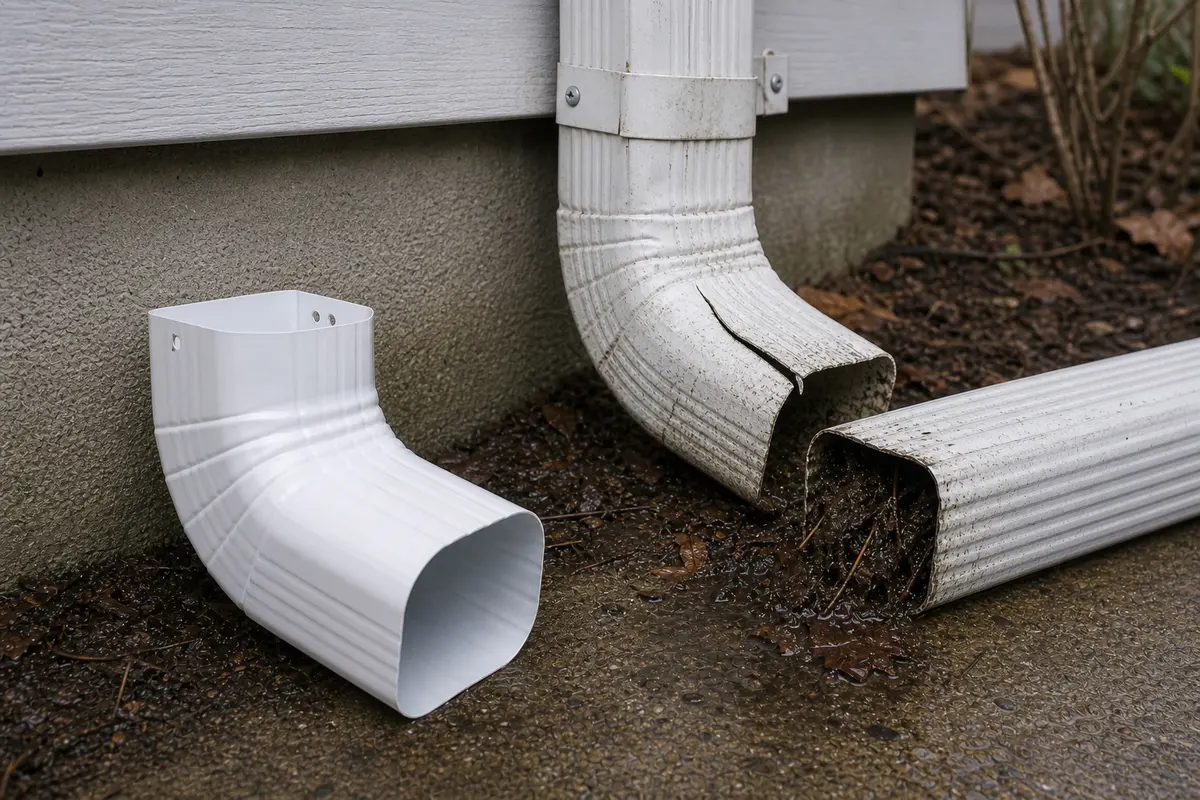
Helps when: Use one when a specific elbow is cracked, crushed, or deformed enough to catch debris repeatedly.
Skip it when: Skip it when the elbow only leaked because the extension or buried outlet was blocked downstream.
Compare downspout elbows on Amazon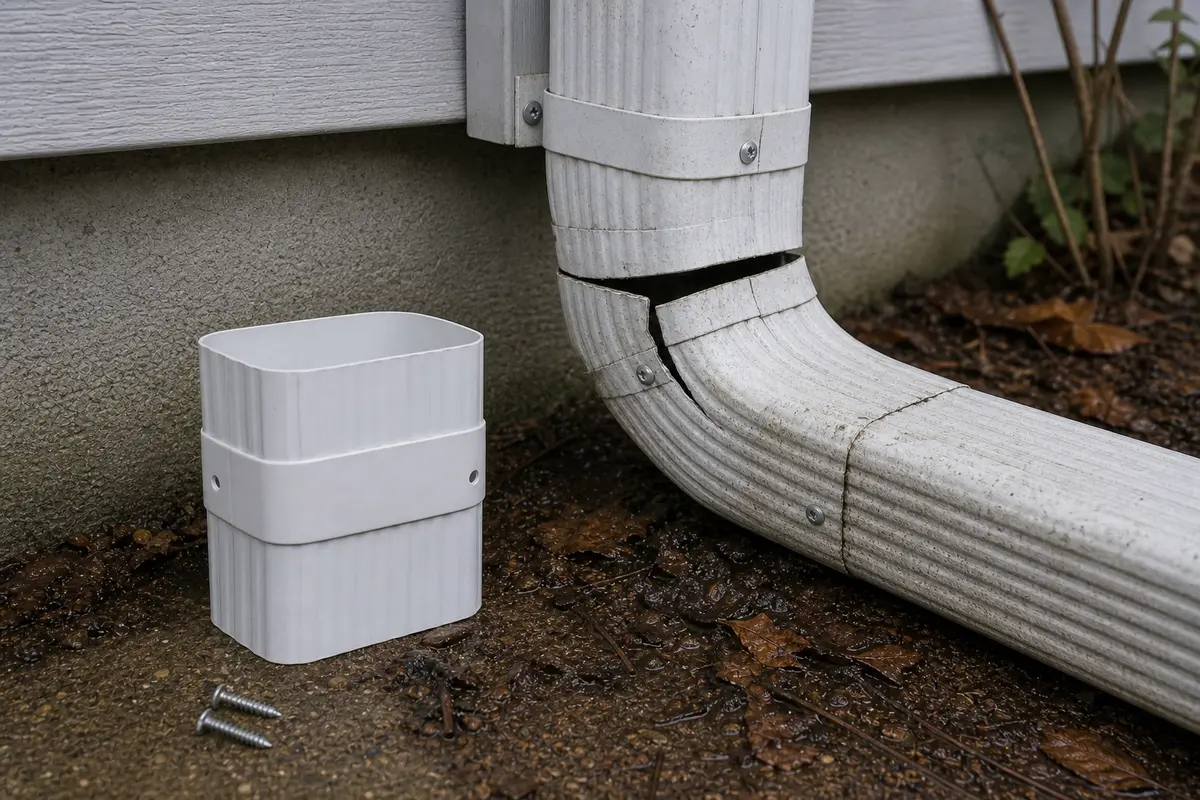
Helps when: Use one when the joint is cracked, misaligned, or cannot reseat after the clog is removed.
Skip it when: Skip it when the joint is sound and only leaked because water was backed up below it.
Compare downspout connectors on Amazon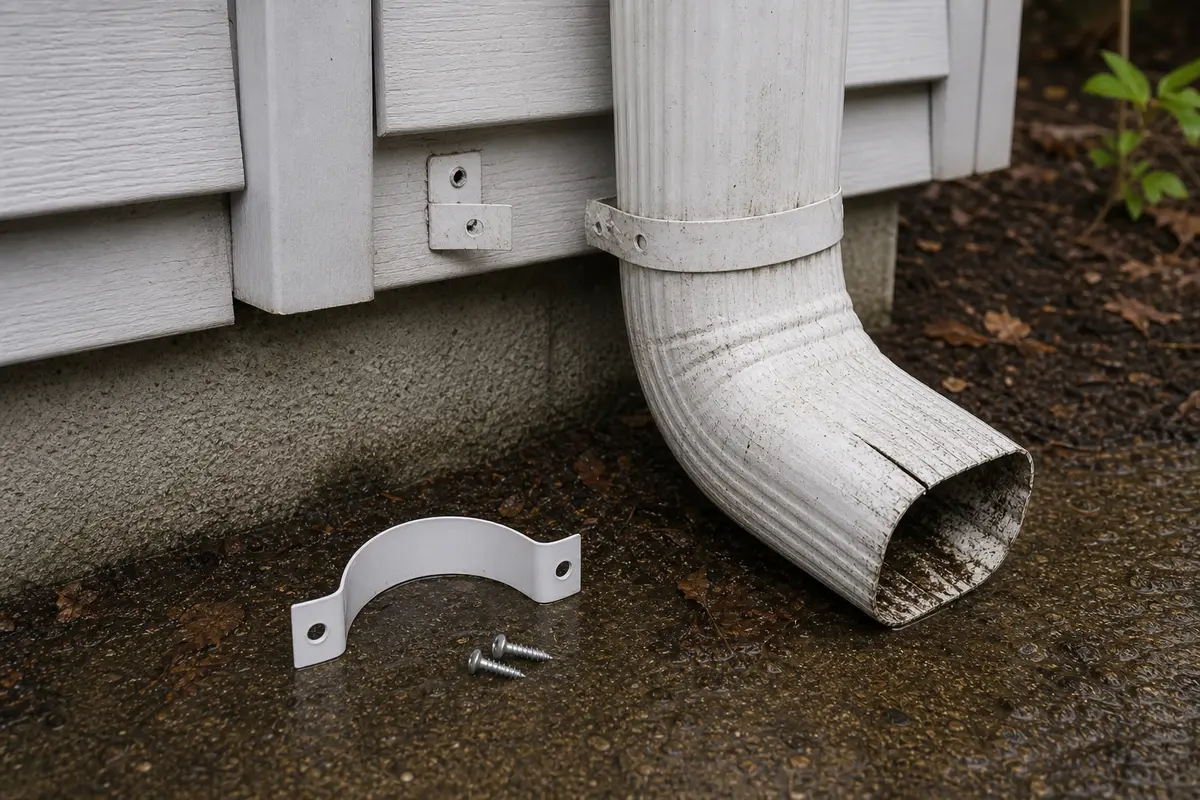
Helps when: Use one when loose support lets the downspout sag, shift, or separate enough to create repeat clogs.
Skip it when: Skip it when the support is sound or the wall surface is too damaged to hold fasteners.
Compare downspout straps on AmazonAs an Amazon Associate I earn from qualifying purchases. Repair Riot may earn a commission at no extra cost to you.
Disconnect the above-ground extension if you can reach it safely. If the vertical downspout drains normally without it, the clog is in the extension or at its outlet.
Water is usually being forced back by a blockage below the leaking seam. Check the extension and outlet first, then clear the lower elbow if backup remains. A loose joint can drip too, but if the seam stays dry after a hose test and the sections are aligned, the downstream clog was the real problem.
No. Chemical drain cleaners are not a good choice for downspouts or exterior drainage. Use mechanical debris removal and plain water flushing instead.
Replace it if it is crushed, split, badly warped, or keeps trapping debris because it cannot hold its shape. If it flows normally after cleaning, replacement is usually unnecessary.
The problem may be in the buried outlet or discharge point rather than the visible downspout. Treat it as an exterior drainage diagnosis if the outlet location is unknown or soil is washing out.
Repeated clogs usually mean the extension is holding water in a low spot, pinching flow at a sharp bend or crushed section, or discharging into mulch or soil. After cleaning, straighten the run, keep the outlet open, and recheck after rain. If the same spot fills again, fix that shape or discharge problem instead of just clearing debris again.
Use a strap when loose support lets the downspout sag, swing, or pull a joint out of alignment. It is not the fix for a blocked outlet or packed extension.
Call when upper access is unsafe, the gutter is high or near wires, or water is entering the house. Also call if the downspout is pulling loose or a buried line keeps backing up after the visible sections are clear.
Repair Riot built this page around homeowner-visible downspout clues: extension flow, lower elbow backup, seam leakage, outlet discharge, ladder risk, buried-line stop points, and part-fit decisions.