Does the noise happen only when water is pumping out?
Stay on this drain path. Start with the filter, sump well, air gap, hose route, and disposal connection before replacing parts.
If your dishwasher is noisy while draining, start with the drain path: filter, sump, air gap, hose route, and disposal connection. Do not price a drain pump until those checks are clean and the same growl or grind comes back.
A hard bit of food, glass, label scrap, seed, twist tie, or bone chip is rattling near the drain pump.
Pin down the timing first. Wash spray is a different problem; drain-only grinding, rattling, or a strained hum belongs in the drain path.
Don’t start with: Don’t start by ordering a dishwasher drain pump just because the sound is loud. First prove the noise happens only during drain, then clear the filter, sump, air gap, and hose route.
Stay on this drain path. Start with the filter, sump well, air gap, hose route, and disposal connection before replacing parts.
Look for hard debris in the filter opening and sump. Glass, seeds, labels, twist ties, and bone chips are common culprits.
Treat it as a restriction first. Check the filter, air gap, under-sink hose, disposal inlet, and sink drain behavior.
The restriction is usually downstream of the air gap. Clean the air gap and check the hose to the disposal or tailpiece.
The drain pump is now a reasonable suspect, especially if the same base-area growl returns after the filter, sump, air gap, hose route, and disposal connection are clean.
Drain noise can come from debris at the sump, a blocked air gap, a kinked hose, or the pump itself. Clear the visible path first.
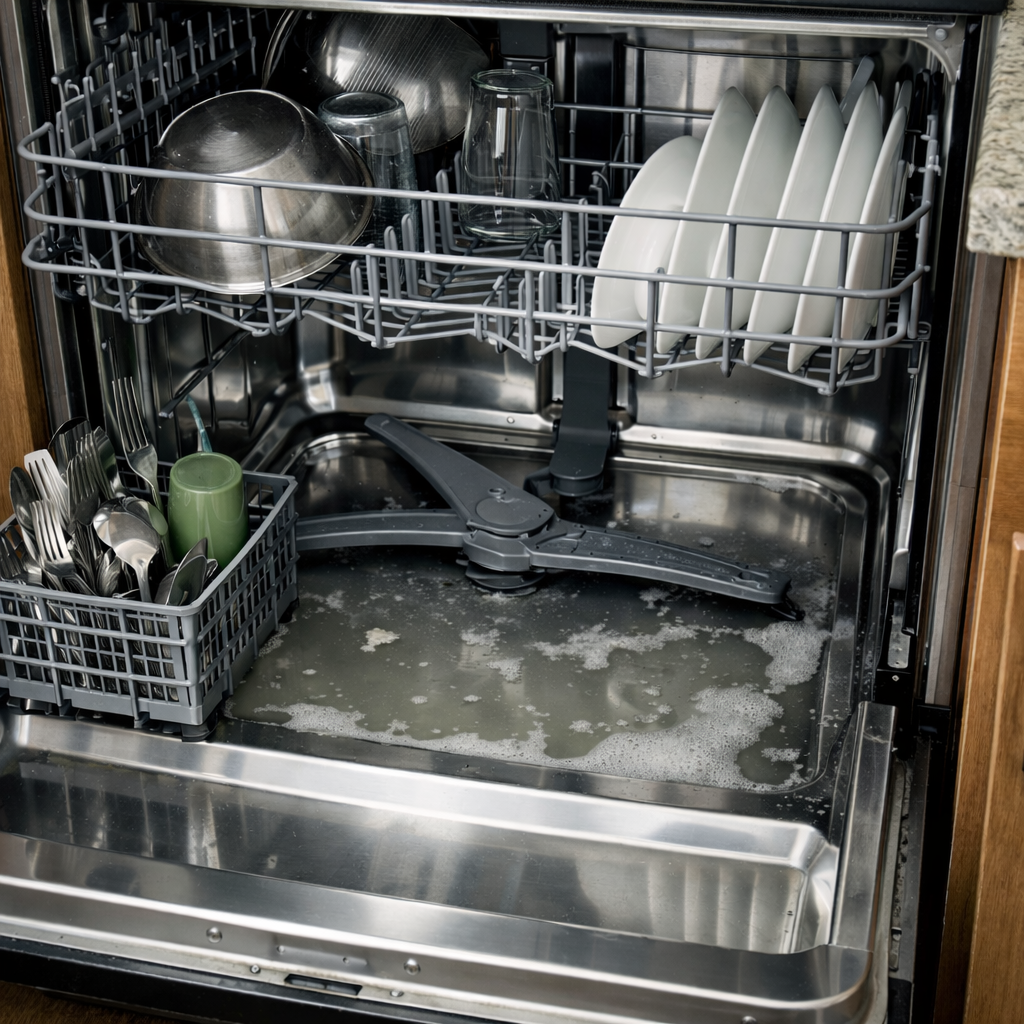
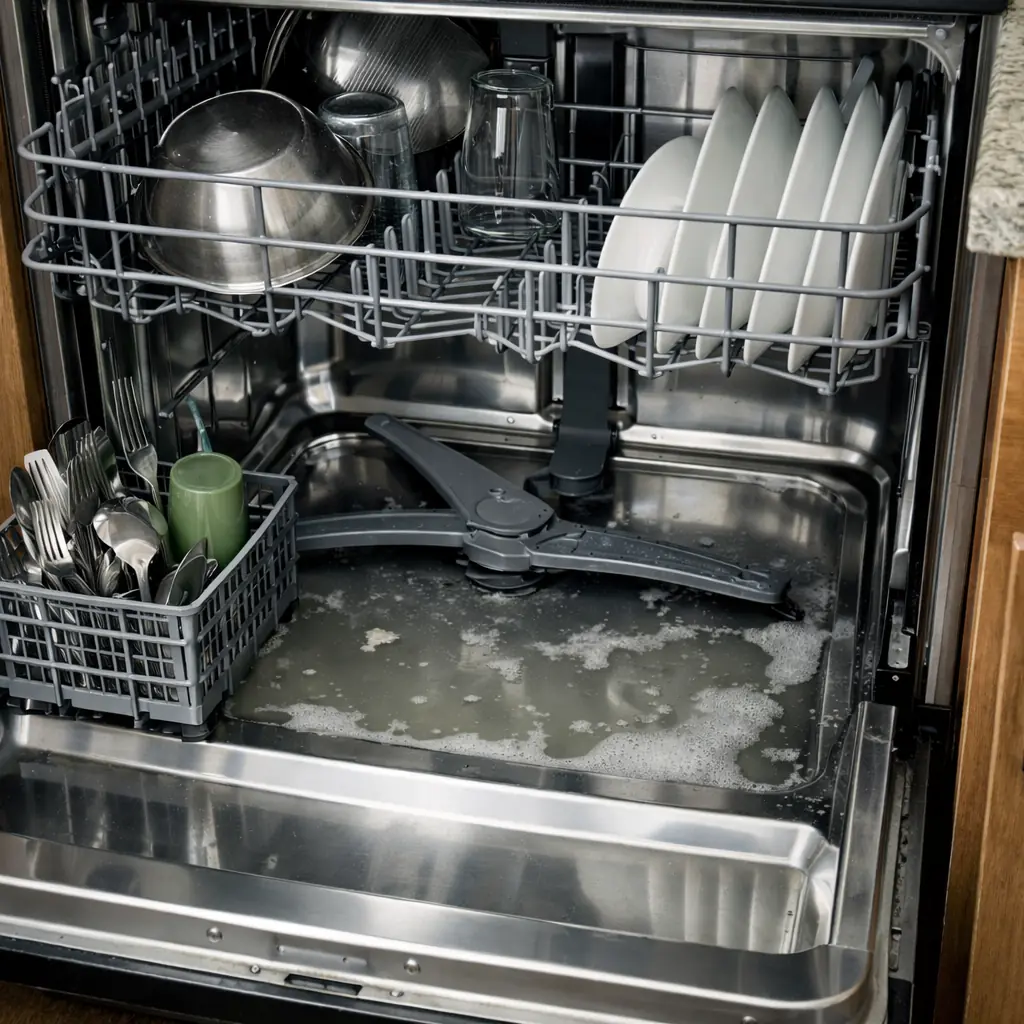
Do not buy a dishwasher drain pump from noise alone. First prove the sound is drain-only, clean the filter and sump, check the air gap and under-sink hose, and match any replacement part to the full model number.
A dishwasher that gets loud only while draining is usually fighting debris or backpressure. Check what you can see first: a dirty filter, packed sump, kinked hose, clogged air gap, or disposal connection that is making the pump work harder.
The costly shortcut is treating every loud drain sound like a failed pump. The messy shortcut is using chemicals before you know whether you need to open the hose or air gap.
Use one short rinse or cancel-drain cycle. Listen for the sound, then stop and inspect the clue it gives you instead of running the dishwasher over and over.
| What you hear or see | What it usually means | Next move |
|---|---|---|
| Sharp rattle or grinding only during drain | Hard debris is likely touching the impeller or sitting in the sump. | Shut off power, remove the lower rack and filter, and clear visible debris with gloves or pliers. |
| Steady hum with slow draining | The pump may be pushing against a blocked filter, air gap, hose, or sink-side connection. | Clean the filter and air gap, then inspect the under-sink drain hose for kinks or a packed inlet. |
| Water spits from the sink air gap | The hose or connection after the air gap is restricted. | Clear the air gap and check the hose to the disposal or tailpiece before touching the pump. |
| Noise started after garbage disposal work | The dishwasher connection under the sink may be blocked, kinked, or misrouted. | Check the disposal inlet area, hose path, and air gap if one is installed. |
| Same rough growl after every visible drain check is clean | The drain pump may be worn, damaged, or still jammed deeper than homeowner access allows. | Match the model number for pump service or book appliance repair if access requires pulling the machine. |
This is the first real repair step because it is common, cheap, and close to the sound. Work with the dishwasher powered off and enough light to see what is actually removable.
A loud dishwasher drain can be caused by the plumbing after the machine. This is especially likely when the sink gurgles, the air gap spits, or the noise started after disposal or sink drain work.
The pump moves up the list only after the visible drain path is clean. At that point, the sound pattern matters more than the fact that the dishwasher is loud.
These tools support the safe checks on this page. Skip any tool path that would mean opening wiring, pulling the dishwasher without shutting off water and power, or forcing a stuck pump cover.
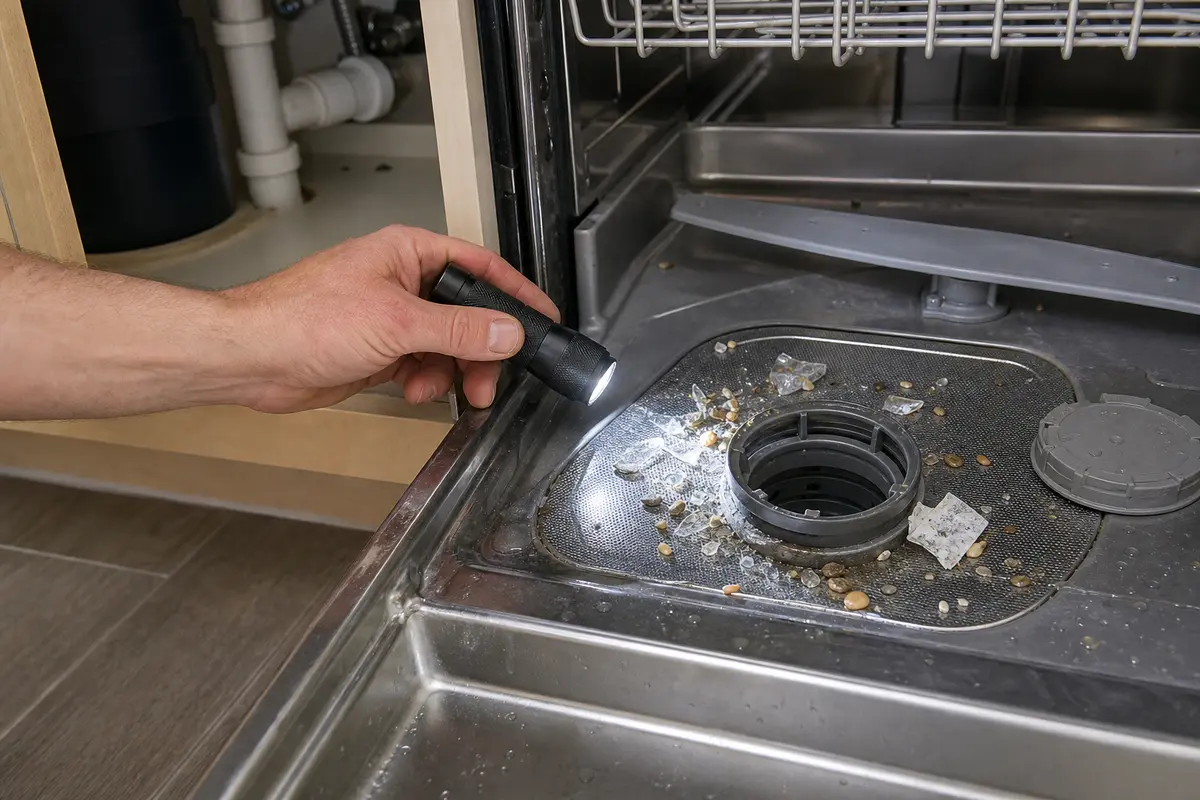
Helps when: Shows glass, labels, seeds, broken plastic, and water tracks inside the sump or under the sink.
Skip it when: The next view requires removing a powered panel or reaching into an area you cannot see.
Compare inspection flashlights on Amazon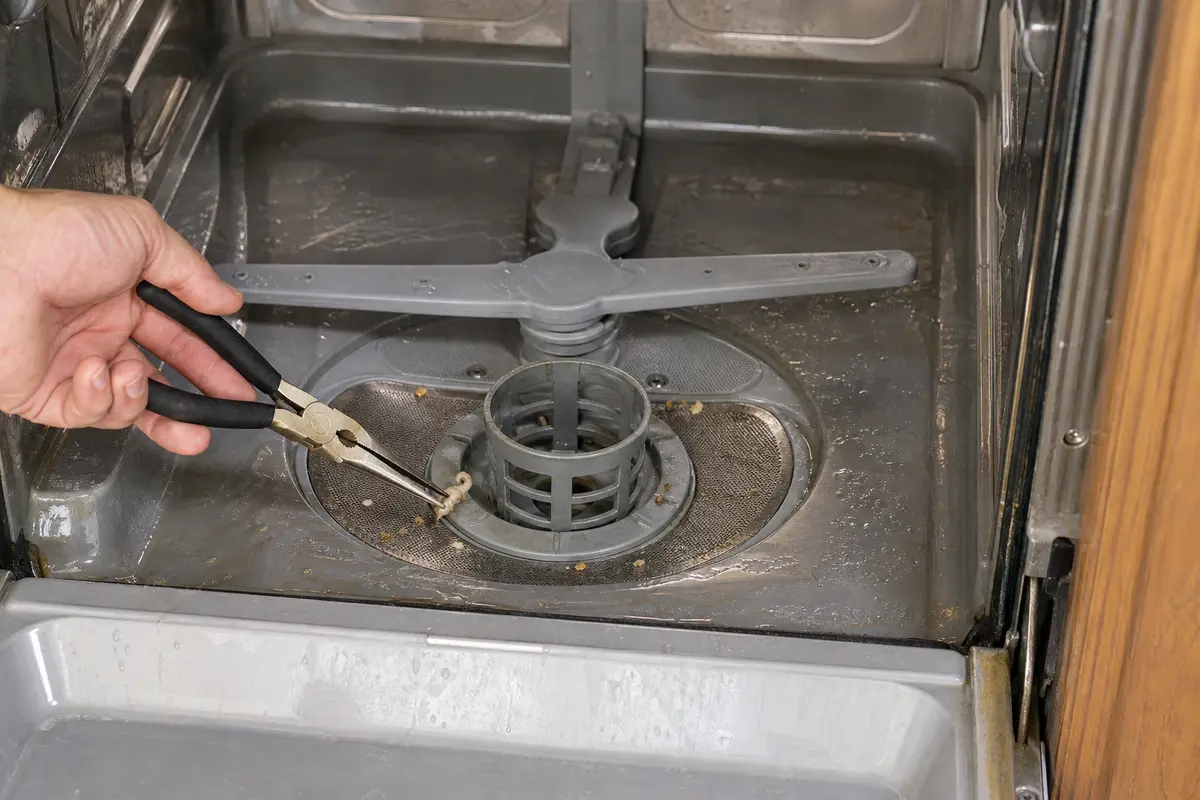
Helps when: Grips visible debris in the sump without pushing fingers into tight pump openings.
Skip it when: The debris is not visible or the part you are pulling may be a fixed dishwasher component.
Compare needle-nose pliers on Amazon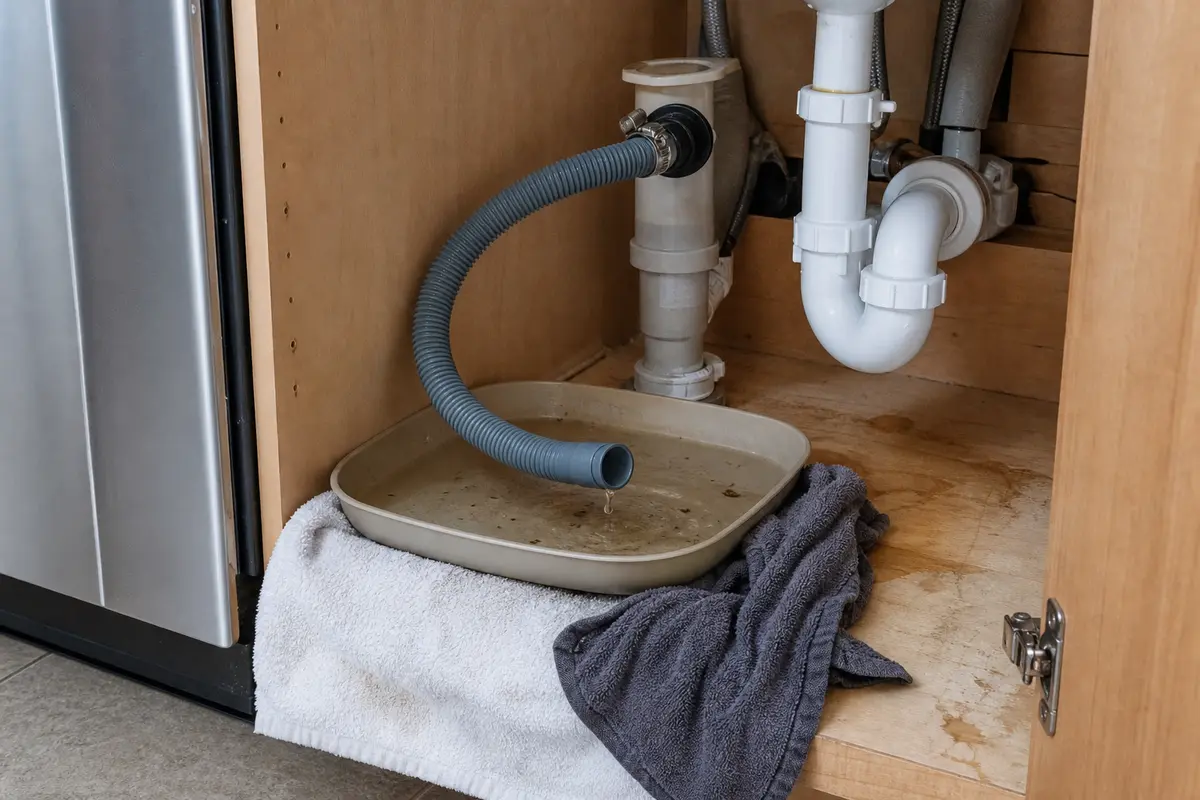
Helps when: Catches dirty water when an air gap or drain hose connection is opened under the sink.
Skip it when: Wastewater is backing up from the sink drain or another fixture, which points beyond this dishwasher check.
Compare shallow pans on Amazon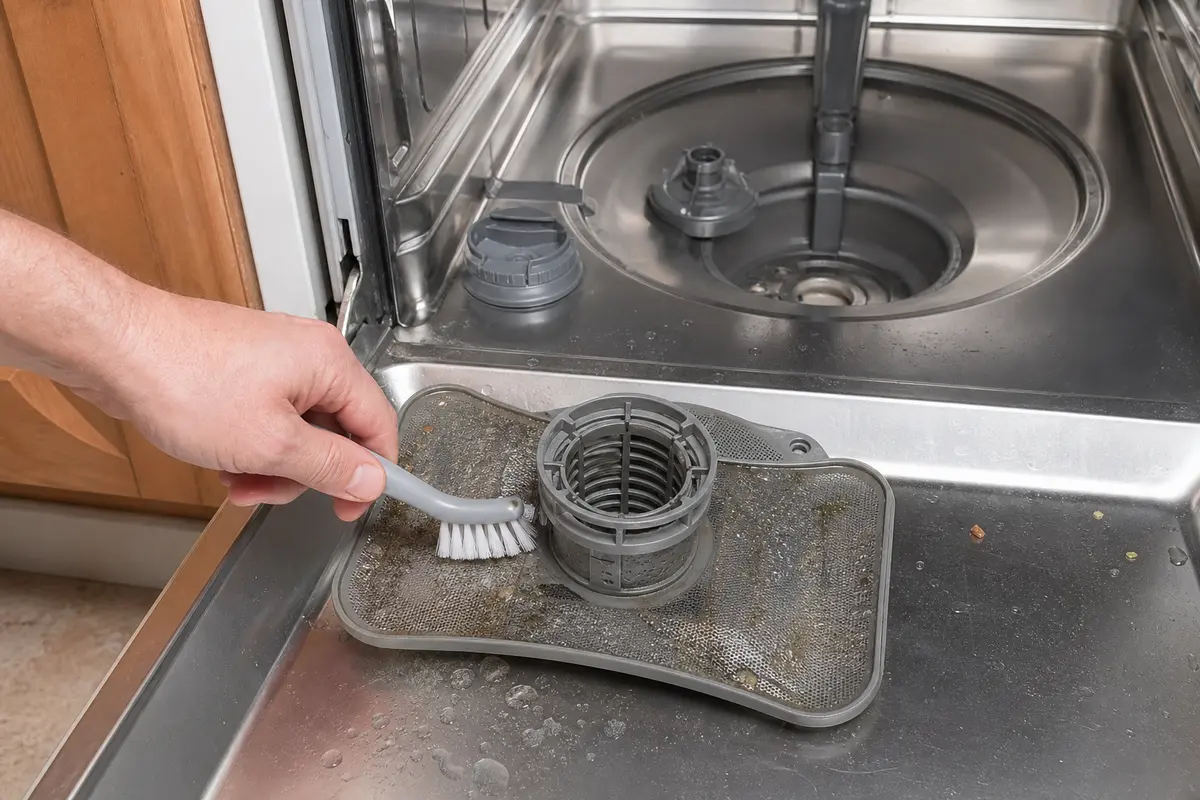
Helps when: Cleans grease and food film from the dishwasher filter without tearing the mesh.
Skip it when: The filter is cracked, warped, or missing tabs; cleaning will not make it seal correctly.
Compare soft cleaning brushes on AmazonAs an Amazon Associate I earn from qualifying purchases. Repair Riot may earn a commission at no extra cost to you.
Parts come after the clue. A dishwasher drain hose or filter is a reasonable homeowner buy when the old part is damaged or packed beyond cleaning. A drain pump needs stronger proof and exact model matching.
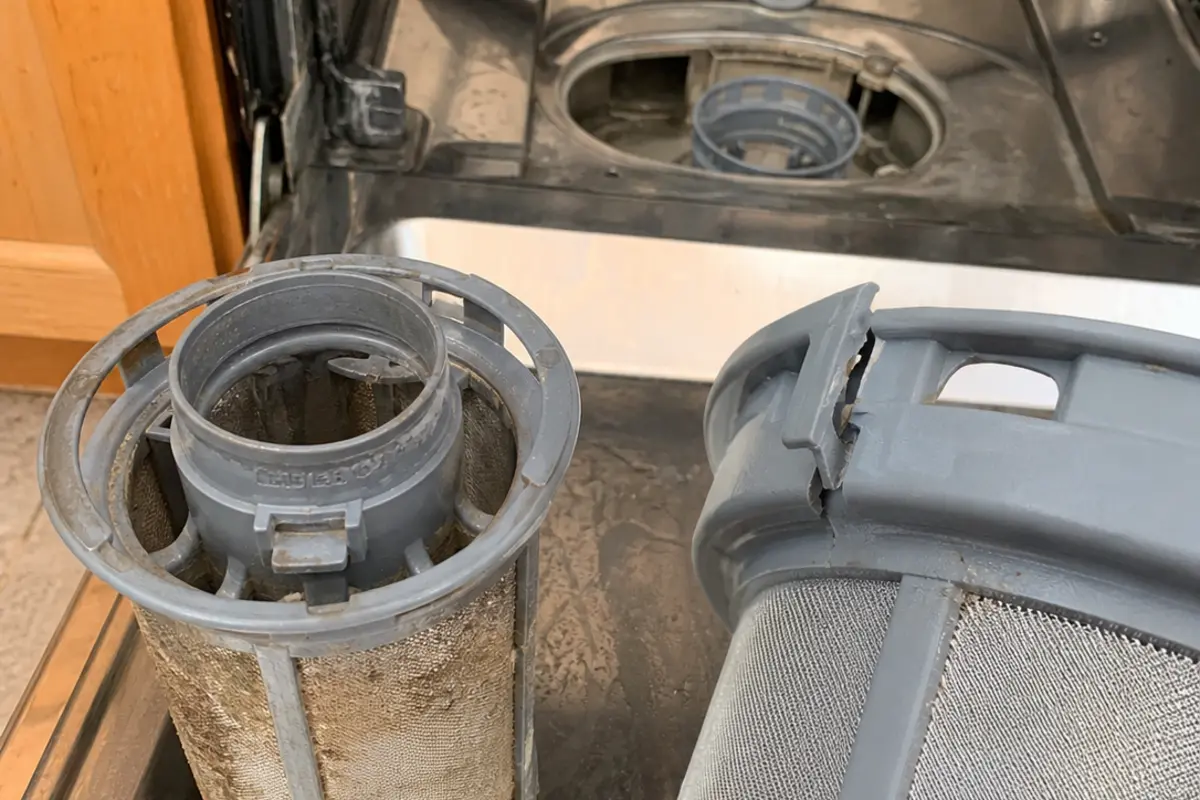
Helps when: The filter is cracked, torn, warped, missing tabs, or will not lock back into place after cleaning.
Skip it when: The filter is only dirty and seats tightly after washing.
Compare dishwasher filters on Amazon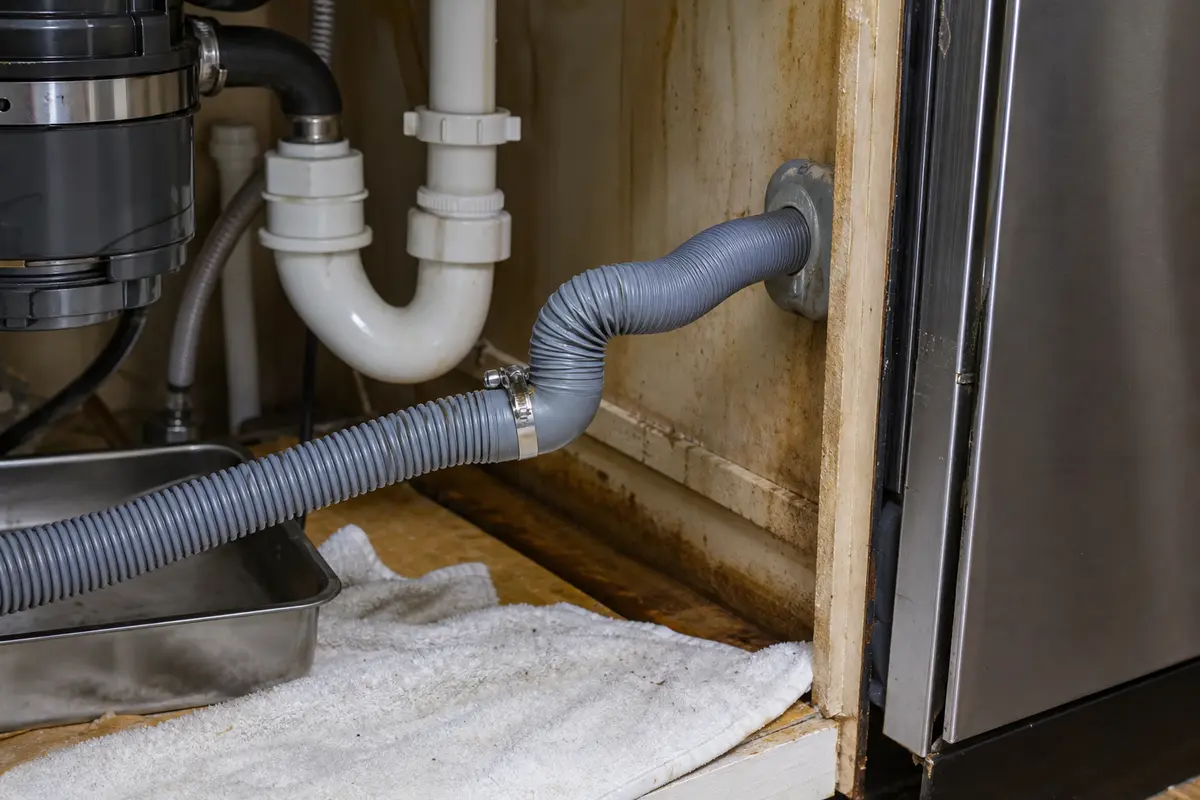
Helps when: The hose is kinked, split, brittle, collapsed, routed wrong, or clogged in a way you cannot clear safely.
Skip it when: The hose route is open and the noise clearly comes from the dishwasher base after all other checks.
Compare dishwasher drain hoses on Amazon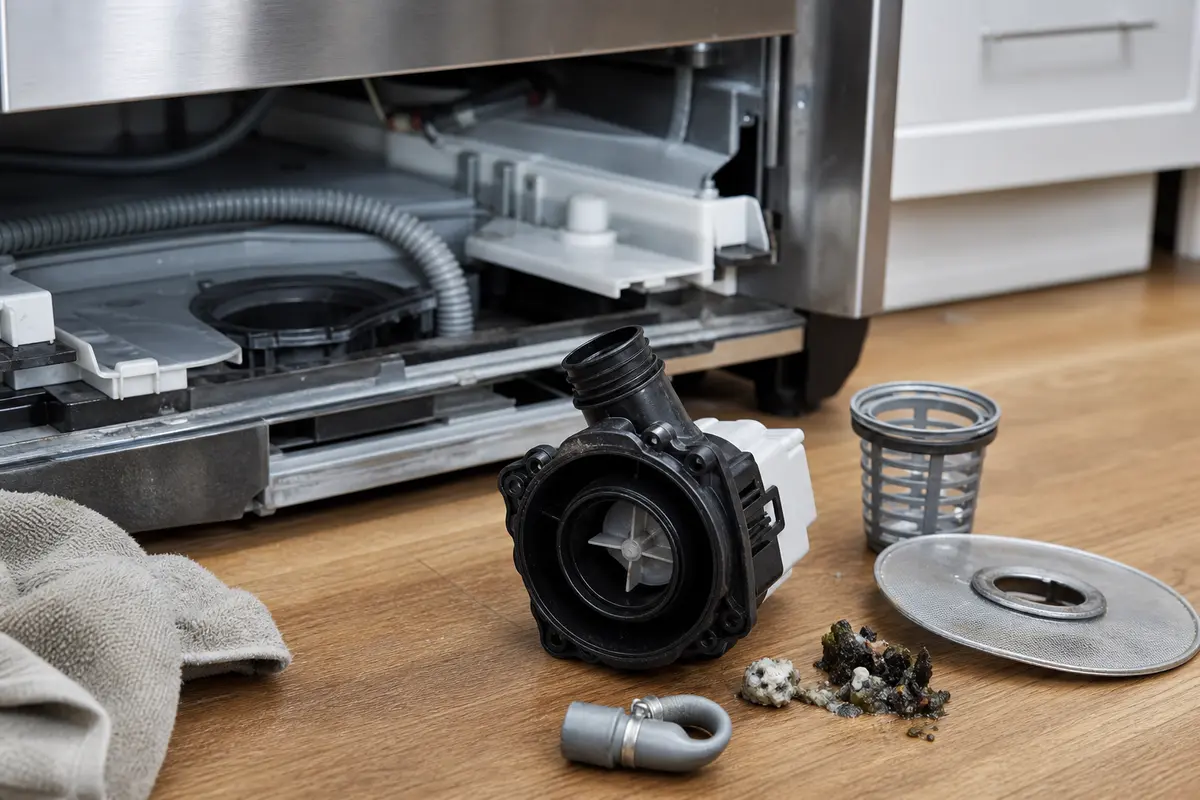
Helps when: Buy only after the filter, sump, air gap, hose, and sink-side connection are clear. The clue is the same loud hum, growl, or poor draining on every drain cycle.
Skip it when: You have not cleaned the visible drain path, the noise happens during wash instead of drain, or the model number is not confirmed.
Compare dishwasher drain pumps on AmazonAs an Amazon Associate I earn from qualifying purchases. Repair Riot may earn a commission at no extra cost to you.
That usually means the problem is on the drain side, not the wash side. Open the door after the noise stops and check whether water drained normally. Then start with debris near the dishwasher drain pump, a clogged filter, a restricted drain hose, a blocked sink air gap, or a restricted disposal connection.
Yes. A packed dishwasher filter can let sludge and small debris collect in the sump, which makes the pump work harder and sometimes sends debris into the impeller area. Clean the filter first before assuming the pump has failed.
A failing dishwasher drain pump often makes a steady loud hum, rough growl, or repeated grinding during the drain portion of the cycle. If the filter, sump, air gap, and hose are clear and the same noise keeps returning, the pump is a strong suspect.
That usually means the dishwasher is trying to push water through a restricted path after the air gap. Remove the air gap cap and look for sludge first, then check the dishwasher drain hose, disposal inlet, and sink-side connection for a restriction.
No. If the sound is harsh or new, stop and check the filter and sump first. Repeatedly running it can grind debris deeper into the pump or overheat a pump that is already struggling.
Not if the sound is clearly harsher than it used to be. A little pump noise is normal. A new rattling, grinding, or strained hum means you should stop and check the filter, sump, air gap, and hose route before blaming normal operation or ordering a pump.
That usually points under the sink, not inside the dishwasher. Check the dishwasher hose route, air gap if present, and the disposal dishwasher inlet for a blockage or installation debris before replacing the drain pump.
No. Drain cleaners can damage dishwasher parts, seals, hoses, and sink plumbing, and they do not remove glass, labels, bone chips, or plastic from the pump area. Clean the mechanical drain path instead.
Repair Riot built this page around homeowner-visible clues: drain timing, sump debris, filter condition, air gap behavior, hose routing, sink-side restrictions, and the point where pump service becomes more likely. The source links support safety and dishwasher-use context; the repair sequence is original guidance.