Standing water after the cycle
There is a pool of dirty or cloudy water in the tub, usually below the lower rack and around the filter area.
Start here: Start with the filter, sump opening, and any food or glass blocking the drain area.
A KitchenAid dishwasher F9E1 code means the control expected the tub to drain faster than it did. Most of the time, water is slowed by a packed filter, debris in the sump, a kinked drain hose, a clogged air gap, or a blocked disposal connection.
Start with standing water in the tub, then clear the filter, sump opening, drain hose route, air gap, and disposal inlet. Those checks solve this code far more often than replacing electrical parts, and they are the checks a service tech would make before selling you a pump.
If the tub has dirty water sitting in the bottom, you are on the right page. If the dishwasher is empty but keeps running the drain cycle, or if water is leaking onto the floor, treat that as a different problem. Reality check: F9E1 is usually something stuck, kinked, or packed with debris. Common wrong move: running cycle after cycle without clearing the filter, sump, hose, and sink-side drain path first.
Don’t start with: Don’t start by ordering a dishwasher drain pump or control board just because the code showed up. F9E1 is very often a blockage problem, not a bad board.
F9E1 is usually a slow-drain problem. The filter, sump, hose path, air gap, and disposal inlet deserve a look before the drain pump gets blamed.
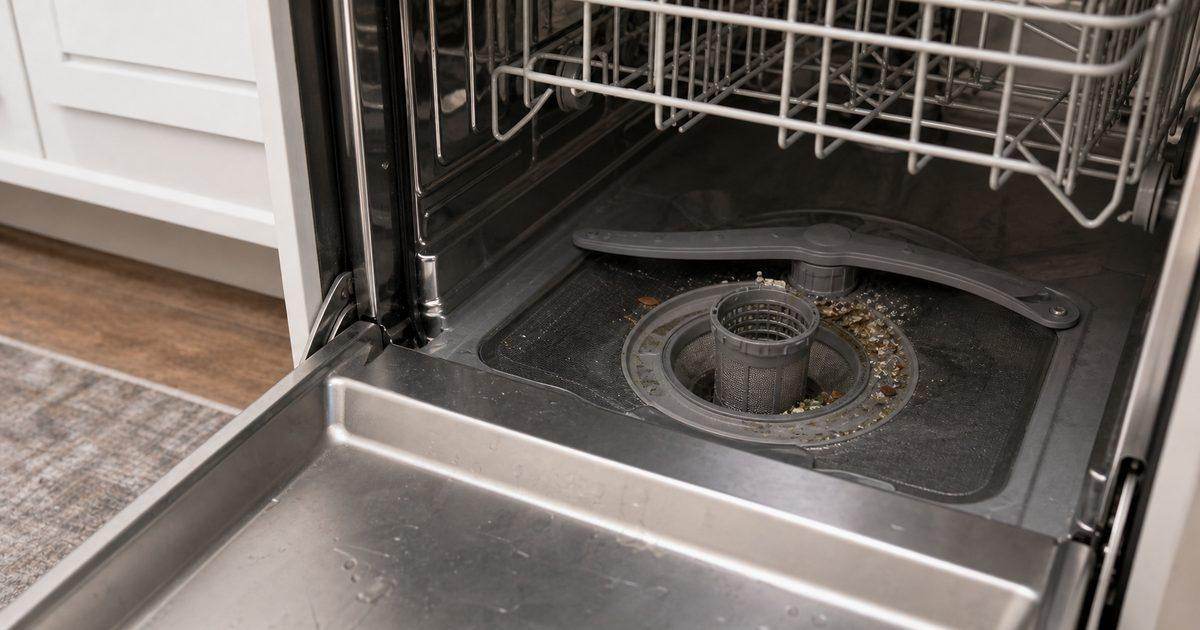
There is a pool of dirty or cloudy water in the tub, usually below the lower rack and around the filter area.
Start here: Start with the filter, sump opening, and any food or glass blocking the drain area.
The dishwasher makes normal drain noise, but the water level barely changes.
Start here: Check the dishwasher drain hose, air gap if you have one, and the sink-side connection for a clog.
The machine tries to drain and you hear a hum, but water remains in the tub.
Start here: Clear the filter, sump, hose, and sink-side path first. Then suspect a jammed or failing dishwasher drain pump if the path is open and the pump still cannot move water.
You clear the code, run another cycle, and F9E1 comes back near the drain portion again.
Start here: That usually means the restriction was not fully cleared or the drain pump is weak under load.
This is the most common cause. Food sludge, labels, broken glass, and grease slow the water enough to trigger a drain-time code.
Quick check: Remove the lower rack and inspect the filter area for sludge, hard debris, or anything covering the sump opening.
A partial blockage lets some water move but not fast enough. A sharp kink behind the dishwasher can do the same thing.
Quick check: Follow the dishwasher drain hose from the unit to the sink drain or disposal and look for pinches, sags packed with debris, or grease buildup.
The dishwasher may be fine, but the water has nowhere to go if the air gap is plugged or the disposal inlet is clogged.
Quick check: If you have an air gap on the sink, pop the cap and check for gunk. If the dishwasher was recently connected to a new disposal, make sure the knockout plug was removed.
If the drain path is clear and the pump only hums, drains very slowly, or stops intermittently, the pump may be jammed or worn.
Quick check: After clearing the filter, sump, hose, air gap, and disposal connection, run a cancel/drain. If the pump sounds strained and flow is still weak, the pump becomes more likely.
F9E1 points to draining, but you want to separate a true no-drain issue from a different symptom before pulling parts or panels. A few minutes here keeps you from replacing a good pump.
If the tub drains fully on cancel/drain and the code does not return, the issue may have been a temporary blockage or a one-off interruption. If water stays in the tub or the code comes back, move to the filter and drain path checks next.
Standing water confirms the dishwasher is not clearing water fast enough. The sound it makes during drain helps separate a blockage from a pump problem.
This is the highest-payoff check on this code. A packed filter or debris in the sump slows draining enough to trip F9E1, and it costs nothing but a careful cleanup.
If the dishwasher now drains normally, the restriction was at the filter or sump and you likely do not need parts. If the code returns or the tub still drains slowly, the blockage is likely farther down the drain path or the pump is not moving water well.
A dirty filter is the most common cause. If cleaning it changes the sound or improves draining even a little, stay focused on the drain path before blaming electronics or ordering a drain pump.
A kinked or partially clogged dishwasher drain hose is the next most common cause, especially if the machine drains a little but not enough.
Repair guide: How to Replace a Dishwasher Drain Hose
Once the filter and hose path are clear, the pump is the main remaining dishwasher-side cause of F9E1.
Repair guide: How to Replace a Dishwasher Drain Pump
You want to prove the drain path is truly clear before calling it fixed, and you only want to buy a part when the symptoms support it.
A good result: If the cycle finishes without F9E1 and the tub drains normally, the repair is complete.
If not: If F9E1 returns after all drain-path checks and the pump behavior is weak or abnormal, replace the dishwasher drain pump or call a pro for pump and wiring diagnosis.
A successful full drain confirms you fixed the restriction. A repeat failure after the path is clear points to the pump or a less common electrical issue.
As an Amazon Associate I earn from qualifying purchases. Repair Riot may earn a commission at no extra cost to you.
It usually means the dishwasher did not drain within the expected time. In plain terms, water is leaving too slowly or not leaving at all.
You can try one cancel/drain after clearing obvious debris, but repeated runs with standing water usually do not fix it. They just keep the same blockage or weak-pump problem in play.
A very common cause is the disposal inlet knockout plug not being removed. If that plug is still in place, the dishwasher cannot drain into the disposal.
Not always. A drain pump can hum, buzz, or spin weakly and still fail to move enough water. First clear the filter and hose path, then judge the pump by how strongly it actually moves water.
Usually no. Most F9E1 calls turn out to be a clogged filter, blocked hose, or sink-side restriction. Replace the dishwasher drain pump only after the drain path is clearly open and the pump still drains weakly or not at all.
Check standing water, the filter, the sump opening, and the sink-side drain connection first. Those are fast, common, and cheaper than guessing at a pump or control board.
Yes. The dishwasher may be doing its job but still have nowhere to send the water. Check the air gap, disposal inlet, tailpiece, and sink drain before deciding the dishwasher drain pump is bad.