Is water only below the filter cup?
A small puddle below the filter can be normal on some models. Run one cancel-drain or short rinse, then judge the level again.
Usually, a dishwasher that will not drain is blocked before the pump: dirty filter, sump debris, kinked hose, or a sink-side clog. If Cancel/Drain leaves water over the filter, clean the sump and confirm the hose route before pricing a pump.
A good clue is where the water stops. Standing water around the filter points inside the tub; water at the air gap or sink points outside the machine.
Work from the tub outward: water level, filter, hose, air gap or disposal, then pump sound.
Don’t start with: Do not use chemical drain cleaner or reach into the sump with power on. Order a drain pump only after the filter, hose route, air gap, and sink connection are clear and the pump still will not move water.
A small puddle below the filter can be normal on some models. Run one cancel-drain or short rinse, then judge the level again.
Power off, remove the lower rack, clean the filter, and look into the sump for labels, glass, seeds, or food debris.
Go under the sink first. The disposal inlet may be blocked, the hose may have moved, or the hose end may be packed with debris.
Treat the sink-side drain path as the lead clue: air gap, hose to disposal, tailpiece, or a slow sink drain.
Pump diagnosis moves up the list after the visible drain route is clear. Stop before live electrical work or guess-and-buy parts.
The first useful split is simple: water stopped inside the dishwasher, under the sink, or at the air gap. Each spot sends you to a different repair path.
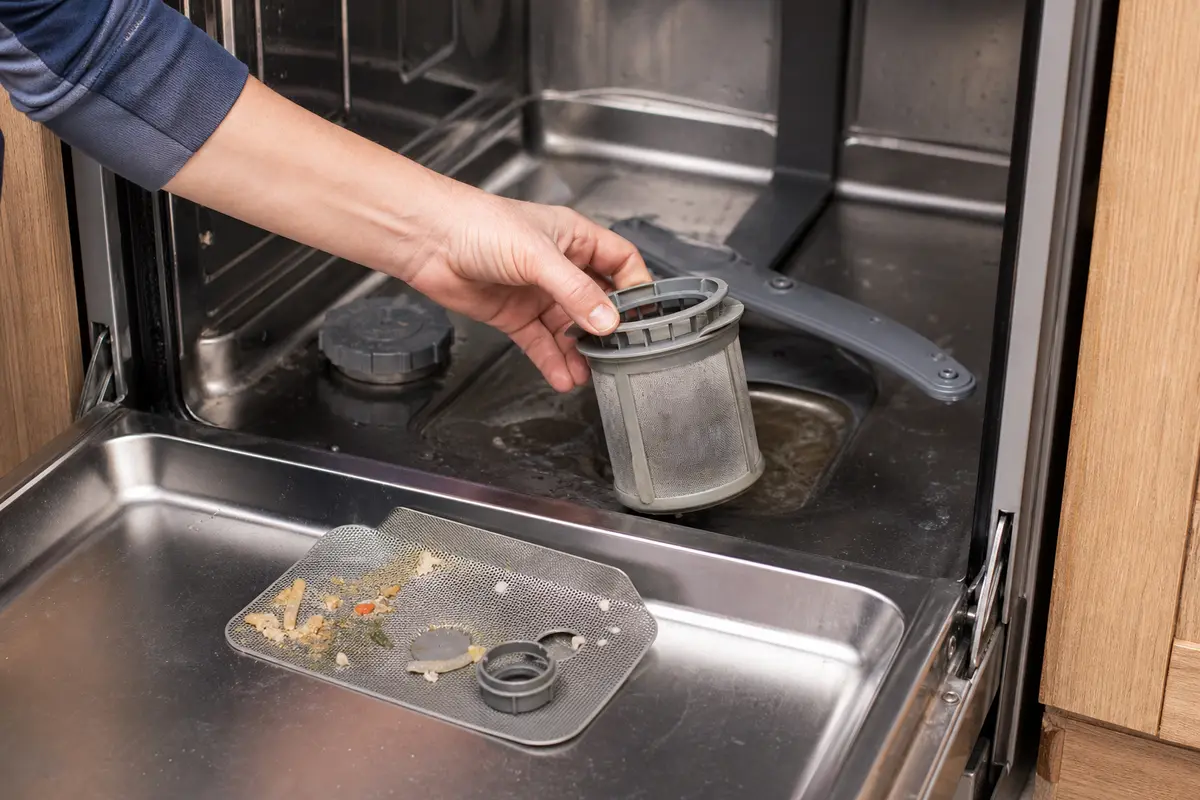
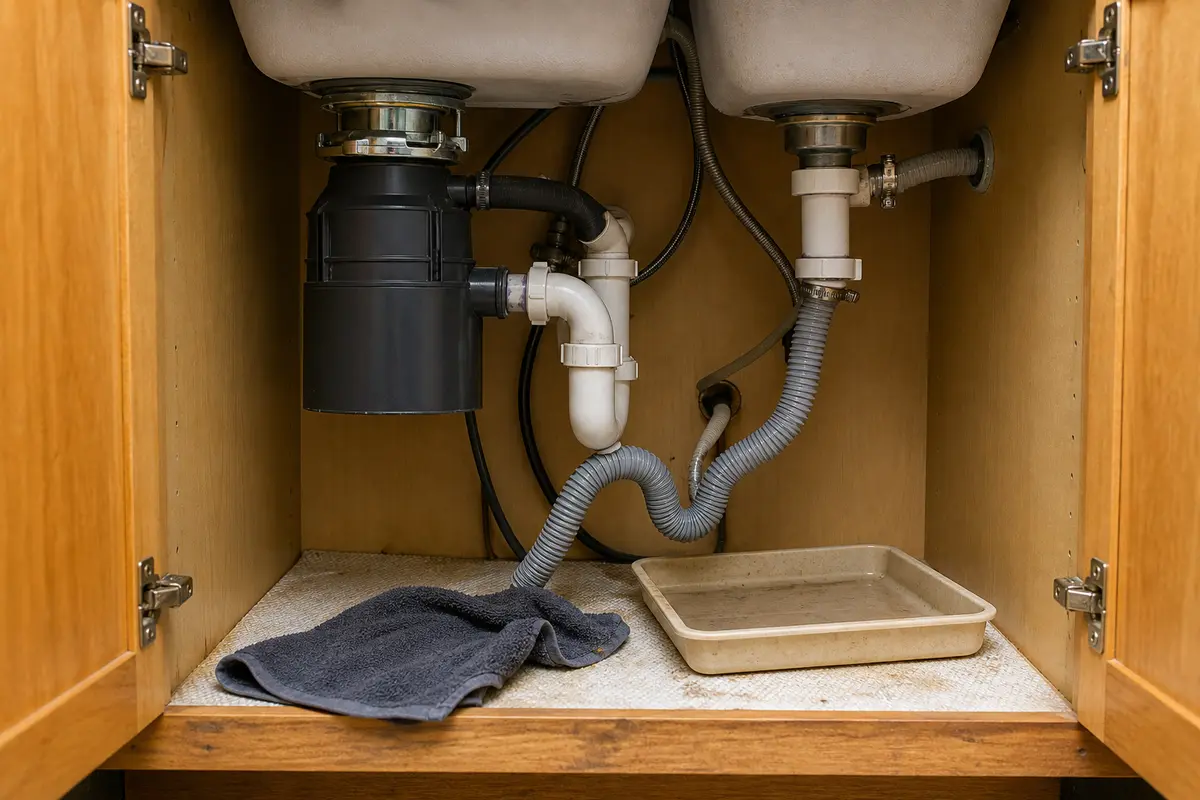
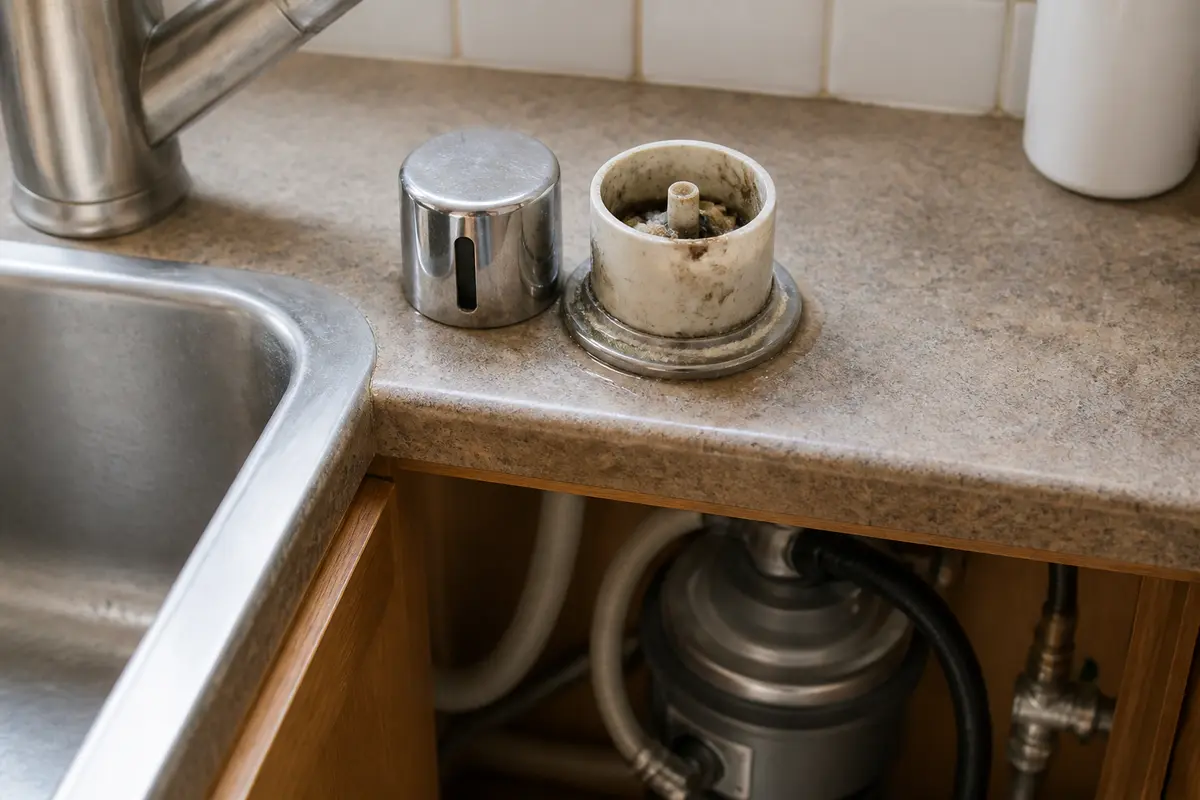
Copy the full model number from the door edge or tub frame before comparing parts. A filter belongs in the cart only if it is damaged or will not lock in place. A hose belongs there only if it is split, collapsed, permanently kinked, or blocked beyond cleaning. A drain pump comes later, after the visible drain route is clear and the pump behavior actually points there.
Start with the standing-water clue. If debris is packed around the filter, clean the sump; if the tub is clear but water backs up at the air gap or sink, move under the sink before testing the pump.
Set a shallow pan under the hose connection, switch power off, and open the filter, air gap, or hose end that matches the symptom. If water backs up at the sink, clear that connection before touching dishwasher parts.
Work from the least invasive area to the harder one. A good clue at any step can stop the repair path before it turns into pump shopping.
The drain attempt tells you more than the part list. Watch the hose end, air gap, sink, and tub level at the same time if you can do that without reaching into moving or energized parts.
| What you see | What it usually means | Next move |
|---|---|---|
| Water stays below the filter cup. | Often normal residual water, especially after a completed cycle. | Compare with the manual and run a short rinse before taking parts apart. |
| Water covers the tub bottom after Cancel/Drain. | The restriction may be at the filter, sump, hose, or sink-side connection. | Power off, clean the filter and sump, then follow the hose. |
| Water spits from the air gap. | The hose from air gap to disposal or sink drain is likely blocked. | Clean the air gap and downstream hose before blaming the dishwasher. |
| Sink drains slowly too. | The shared drain may be restricted. | Fix the sink drain or call a plumber before buying dishwasher parts. |
| Strong drain sound but no water leaves. | A hose end, disposal inlet, or tailpiece may still be blocked. | Inspect the under-sink connection and any recent plumbing work. |
| Weak hum, grind, or silence after everything is clear. | The pump or its electrical path may need diagnosis. | Stop before live electrical work and match parts only by exact model. |
These tools support cleanup and inspection. They are not a reason to open electrical covers, reach into moving parts, or pull the dishwasher out before the simple drain path is clear.
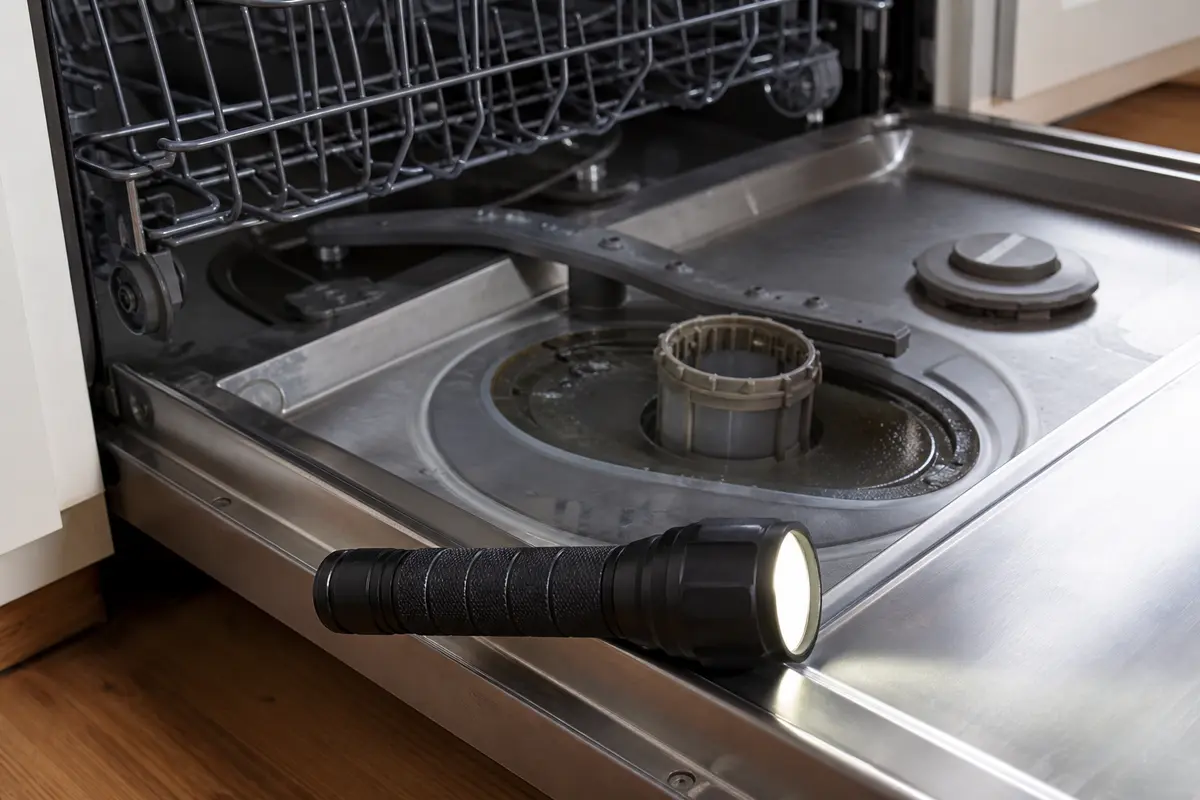
Helps when: You need to see the filter cup, sump opening, under-sink hose route, air gap, or model tag without guessing in a dark cabinet.
Skip it when: The next step would require exposed wiring, live electrical testing, or pulling the dishwasher where you cannot control the hose and floor.
Compare inspection flashlights on Amazon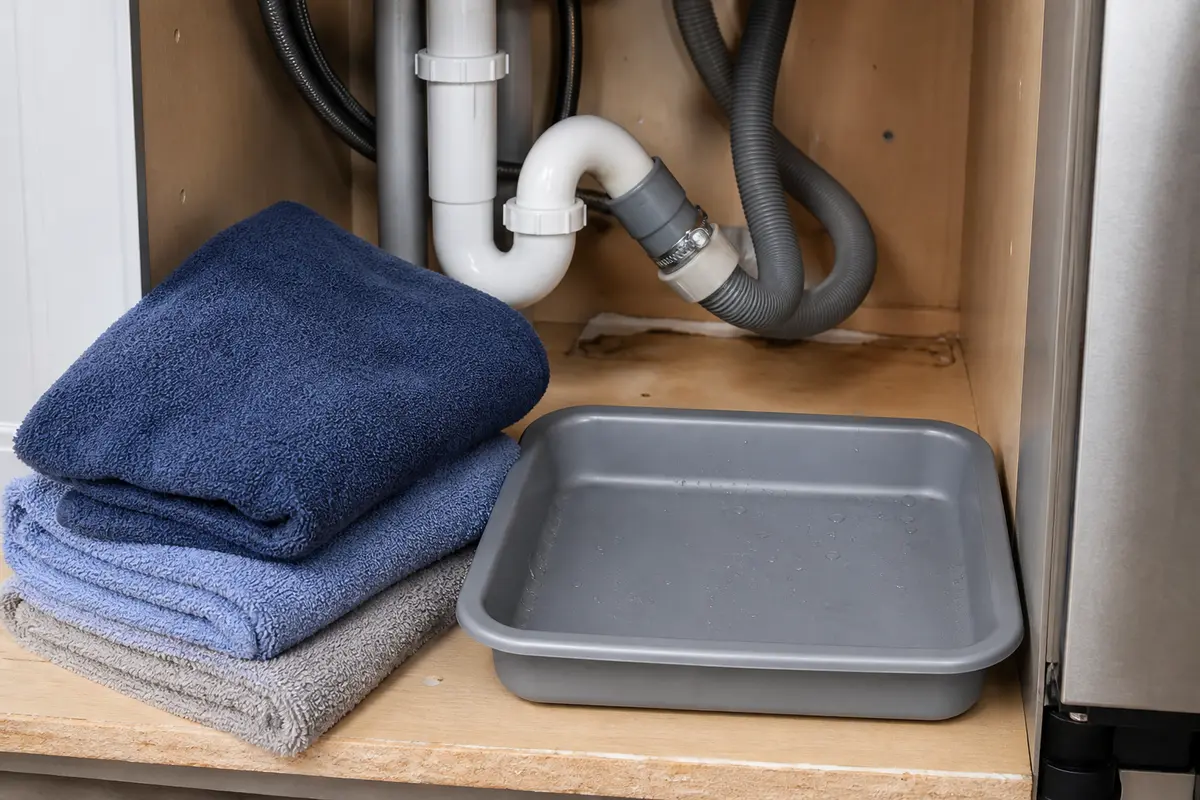
Helps when: You plan to loosen a hose clamp, air-gap hose, or tailpiece and need to catch dirty water before it reaches the cabinet base.
Skip it when: The connection is seized, leaking heavily, or you are not comfortable putting the drain plumbing back together leak-free.
Compare towels and drain pans on Amazon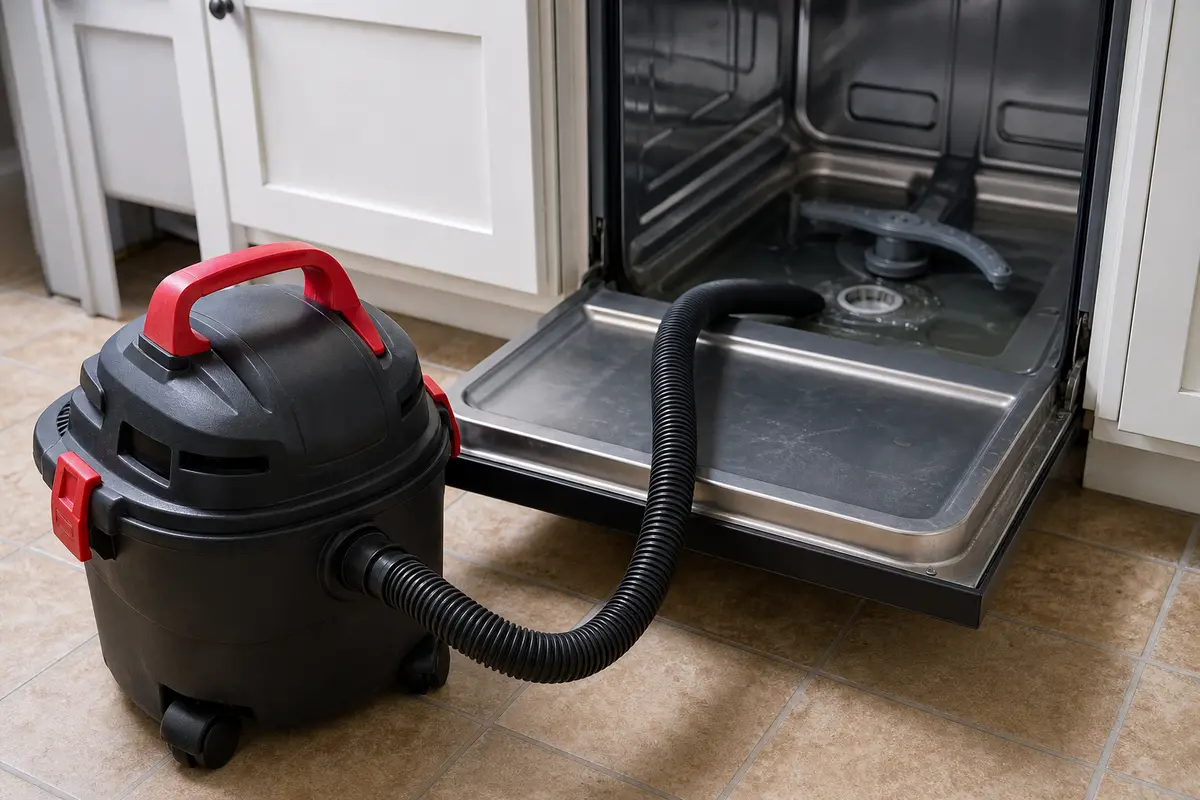
Helps when: Standing water covers the filter area and you need to lower the level before cleaning the sump or looking for debris.
Skip it when: You smell burning, see electrical damage, or the floor is actively flooding; control the hazard and call service instead.
Compare wet/dry vacuums on AmazonAs an Amazon Associate I earn from qualifying purchases. Repair Riot may earn a commission at no extra cost to you.
Good notes keep the repair from turning into guesses. A technician or parts counter can do more with exact symptoms than with a broad no-drain complaint.
Compare parts after the symptom points somewhere specific. Dishwasher filters, hoses, and pumps are model-specific, and a part that looks close can still have the wrong locking tabs, end fitting, connector, or pump housing.
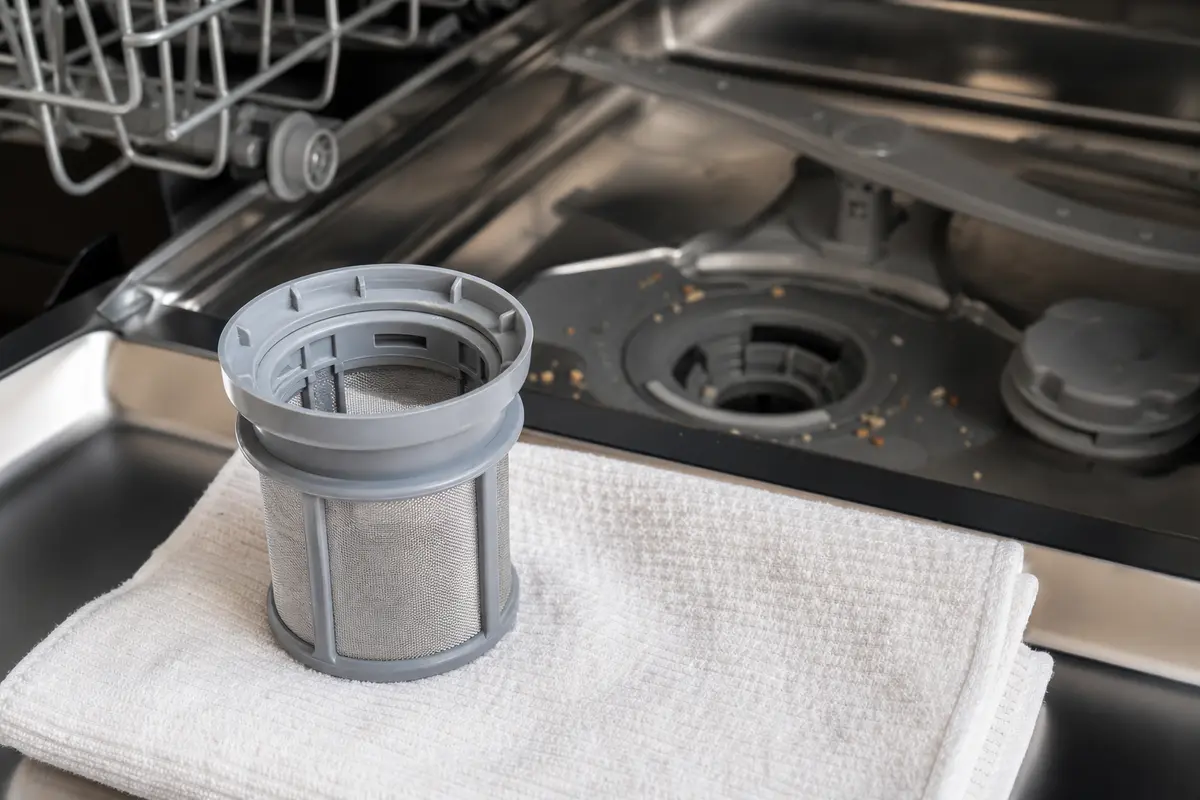
Helps when: The filter is cracked, warped, missing, or will not lock after cleaning, and debris is getting past the screen into the sump area.
Skip it when: The filter is only dirty and seats firmly after cleaning; a new filter will not clear a blocked hose or sink-side restriction.
Compare dishwasher filters on Amazon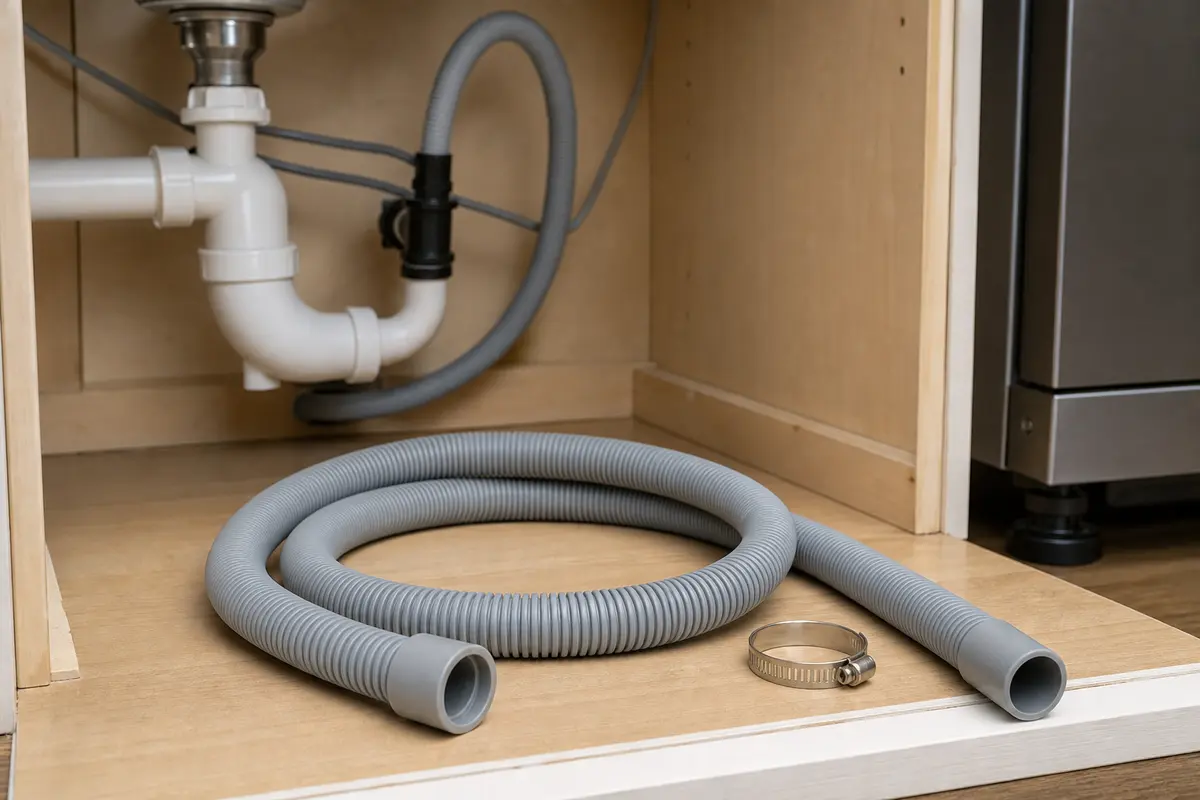
Helps when: The hose is split, brittle, crushed, permanently kinked, or still blocked after removal and cleaning at the accessible end.
Skip it when: The hose route was simply sagging or pinched and drains normally after you straighten it and secure the connection.
Compare dishwasher drain hoses on Amazon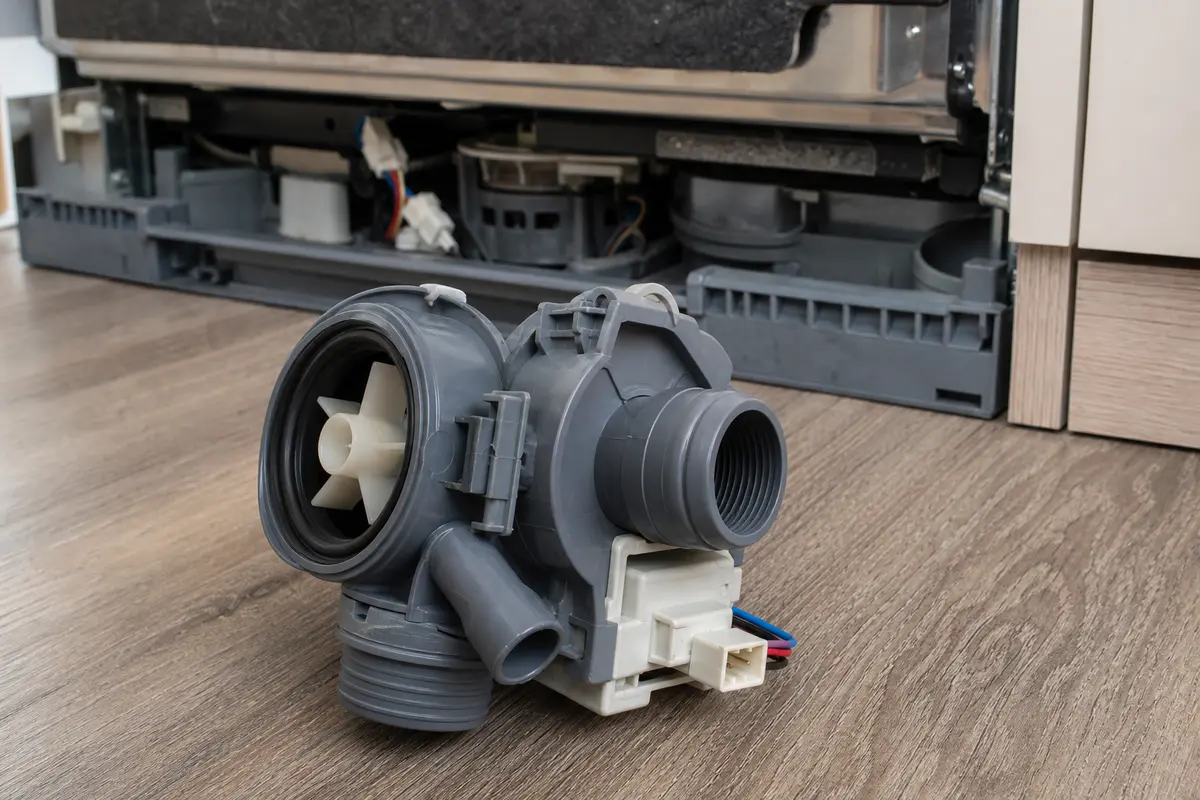
Helps when: The visible drain path is clear, but the pump still hums weakly, grinds, leaks, or fails testing.
Skip it when: There is still visible debris, a slow sink drain, air-gap overflow, or an unverified hose/disposal restriction; a pump will not fix those.
Compare dishwasher drain pumps on AmazonAs an Amazon Associate I earn from qualifying purchases. Repair Riot may earn a commission at no extra cost to you.
A little water below the filter cup can be normal on some dishwashers. Water spread across the tub bottom after a completed cycle points more toward a dirty filter, sump debris, blocked hose, sink-side restriction, or pump trouble.
Try one Cancel/Drain or short rinse only if the water is not rising and there is no leak risk. Stop if the level climbs, the sink backs up, water reaches the floor, or you smell anything hot.
Yes. Check the disposal inlet knockout or plug and the hose connection under the sink. If the no-drain problem started right after disposal work, that connection is the first place to inspect.
Water from the air gap usually means the downstream hose or sink-side connection cannot carry the discharge away fast enough. Clean the air gap and the hose from the air gap to the disposal or sink drain.
No. Chemical drain cleaners can damage dishwasher parts, hoses, seals, and nearby plumbing. Clean the filter, sump, air gap, and accessible hose ends manually instead.
Not automatically. A hum can come from debris near the impeller or a blocked hose. The pump becomes a better target only after the filter, sump, hose, air gap, disposal inlet, and sink drain are clear.
A hose that feels packed, holds dirty water in a low sag, has a blocked sink-side end, or keeps the tub full after the filter is clean deserves attention. Use a towel and shallow pan before loosening any clamp.
Usually no. Remove the lower rack, clean the filter and sump, then inspect the hose end under the sink. Pull the dishwasher only when those access points are clear and the remaining hose or pump access is unreachable.
Treat the sink drain as part of the evidence. A slow sink, backed-up disposal, or clogged tailpiece can make the dishwasher look broken even when the machine is pumping water correctly.
A filter only makes sense if it is damaged or will not seat. A hose only makes sense if it is split, collapsed, or blocked beyond cleaning. A pump belongs last, after the visible drain route is proven clear.
Open the door and look along the tub frame, door edge, or side label. Use the full model number before ordering a filter, drain hose, pump, or any part tied to a specific dishwasher layout.
Call service for burning smell, melted wiring, breaker trips, repeated leaking, water damage under cabinets, a seized connection you cannot reassemble, or any repair that requires energized electrical diagnosis.
Repair Riot built this page around the visible drain path: tub water level, filter and sump debris, hose route, air gap or disposal connection, sink behavior, and pump sound. The sources below informed public drain, filter, air-gap, and disposal-connection guidance; your model manual still wins for exact access steps.