Does the finished floor flex, dip, or feel spongy?
Block off the spot and inspect from below. Treat it as a strength problem until the subfloor and nearby framing prove solid.
Carpenter ants in a subfloor are usually a moisture and strength problem before they are a spray problem. Start from below, look for fresh frass and damp wood, then decide whether the panel still carries weight.
The usual setup is damp subfloor near a rim area, plumbing line, exterior wall, bathroom, kitchen, or humid basement pocket. Carpenter ants move into softened wood and push frass out of the galleries.
Soft flooring, fresh frass, or damp plywood changes the job. Stop the water, map sound wood, and confirm support before opening finish flooring.
Don’t start with: Do not start by spraying into the floor or patching the finish surface. If the wood stays wet or weak, the ants and floor movement can both come back.
Block off the spot and inspect from below. Treat it as a strength problem until the subfloor and nearby framing prove solid.
Keep the area open for inspection, trace the activity to damp wood, and plan pest treatment before closing the floor again.
Fix the moisture source first. A new panel or ant treatment will not hold if the joist bay keeps getting wet.
Clean out loose debris and watch for fresh frass. Old damage in sound wood may not need a cutout.
Plan to remove the weak section back to solid support. Add blocking where the new panel edge needs bearing.
Stop the DIY plan and bring in a carpenter, structural repair pro, plumber, or pest pro based on what is involved.
The visible ants are only one clue. Read the wood from below: fresh frass tells you where activity may be, staining tells you where water sat, and the probe tells you whether the subfloor can stay.
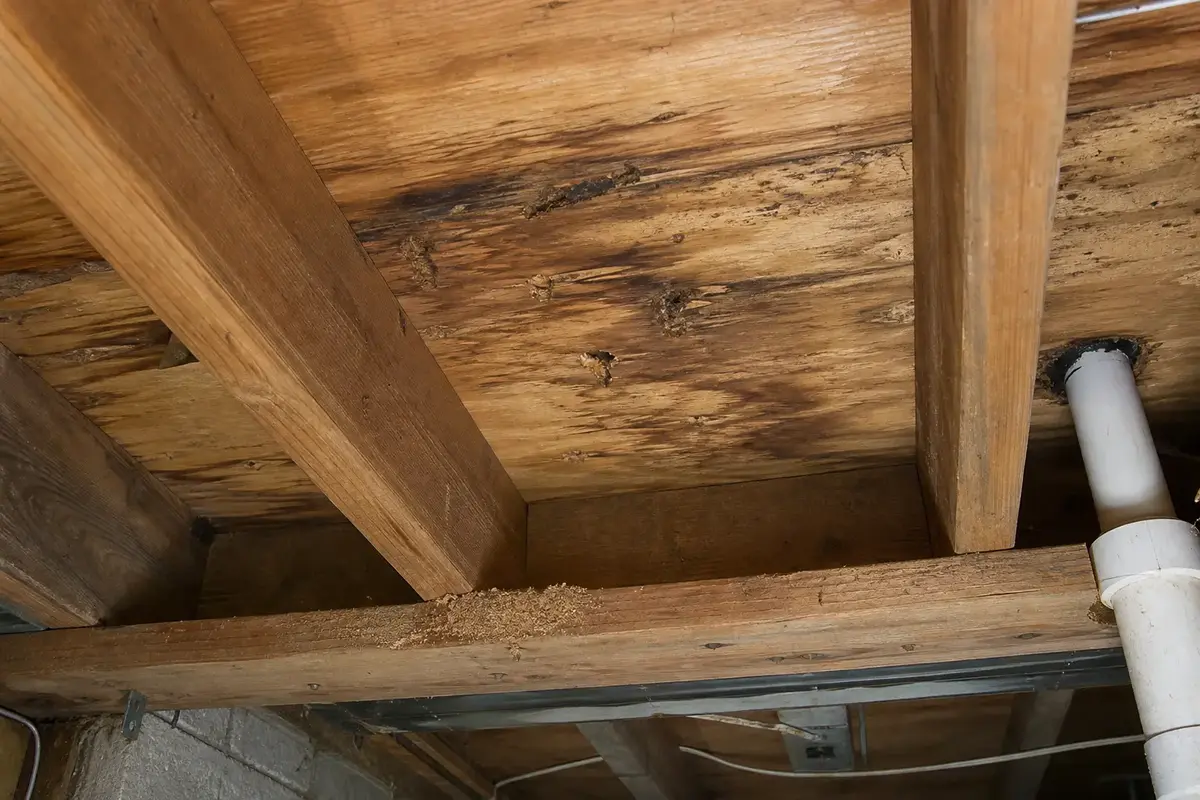
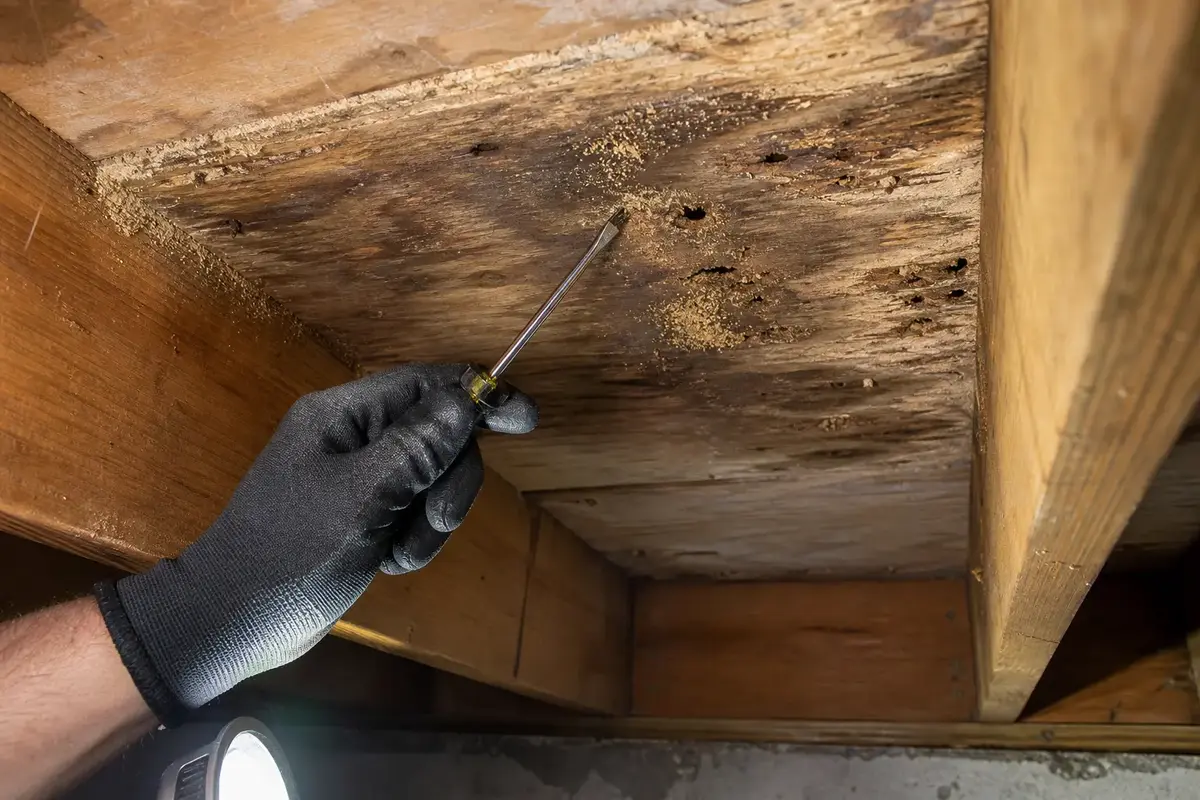
Do not buy subfloor panels, blocking, screws, pesticide, or filler until you match the exact diagnosis: active ants, corrected moisture, and the line where soft wood turns solid. Match the exact panel thickness and support before ordering materials.
Clean the debris once, look for fresh frass, and compare the probe feel with nearby dry wood. Those checks tell you whether the damp pocket is active, old, or weak enough to change the repair.
A subfloor can look mostly intact from below and still be weak under a foot. Keep the load off the suspect area while you learn how much sound wood remains.
Do not treat every stained board like active carpenter ant damage. Put the visible clue next to the probe result before you decide what to open.
| What you find | What it points toward | Next check |
|---|---|---|
| Fresh coarse frass below one joist bay | Possible active carpenter ant gallery | Brush it away once, mark the spot, and recheck for new debris |
| Large dark ants along pipes, wires, or wall edges | A travel path to damp wood or a satellite nest | Trace the line to the wettest wood before treating |
| Dry hard wood with old galleries | Old damage that may still carry load | Watch for new frass and compare probe firmness nearby |
| Mud tubes or soil-packed damage | Termites may fit better than carpenter ants | Stop closing the area and get the pest identified |
| Probe sinks in or layers flake away | Subfloor strength is compromised | Map the weak boundary and plan a supported cutout |
| Soft joist, rim, sill, or fixture support | The damage has moved into structure | Keep weight off the area and call a qualified repair pro |
Work in the order that protects the house: activity, water, strength, then repair. Closing the floor comes last.
The bad repair is the one that hides a wet, weak panel and leaves the real condition in place.
These tools are for inspection and a small accessible repair after the area is safe. They are not a substitute for shoring, pest treatment, mold containment, or structural carpentry; call a pro when those are part of the job.
Paid links. As an Amazon Associate I earn from qualifying purchases. Repair Riot may earn a commission at no extra cost to you.
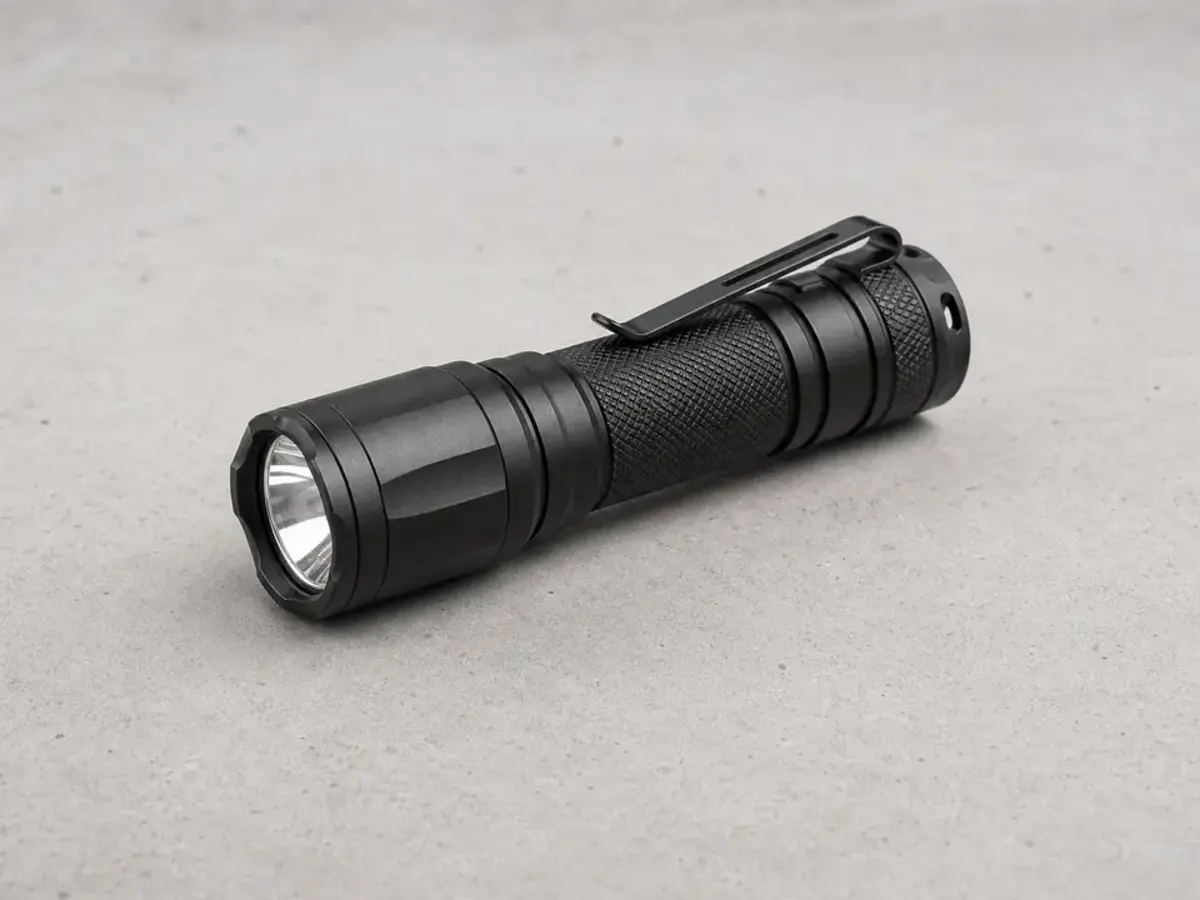
Helps when: Use an inspection flashlight to see frass, gallery openings, staining, pipe penetrations, and joist edges from below.
Skip it when: Skip the crawl-in inspection if access is unstable, the floor is sagging, or you would have to crawl under a weak area.
Compare inspection flashlights on Amazon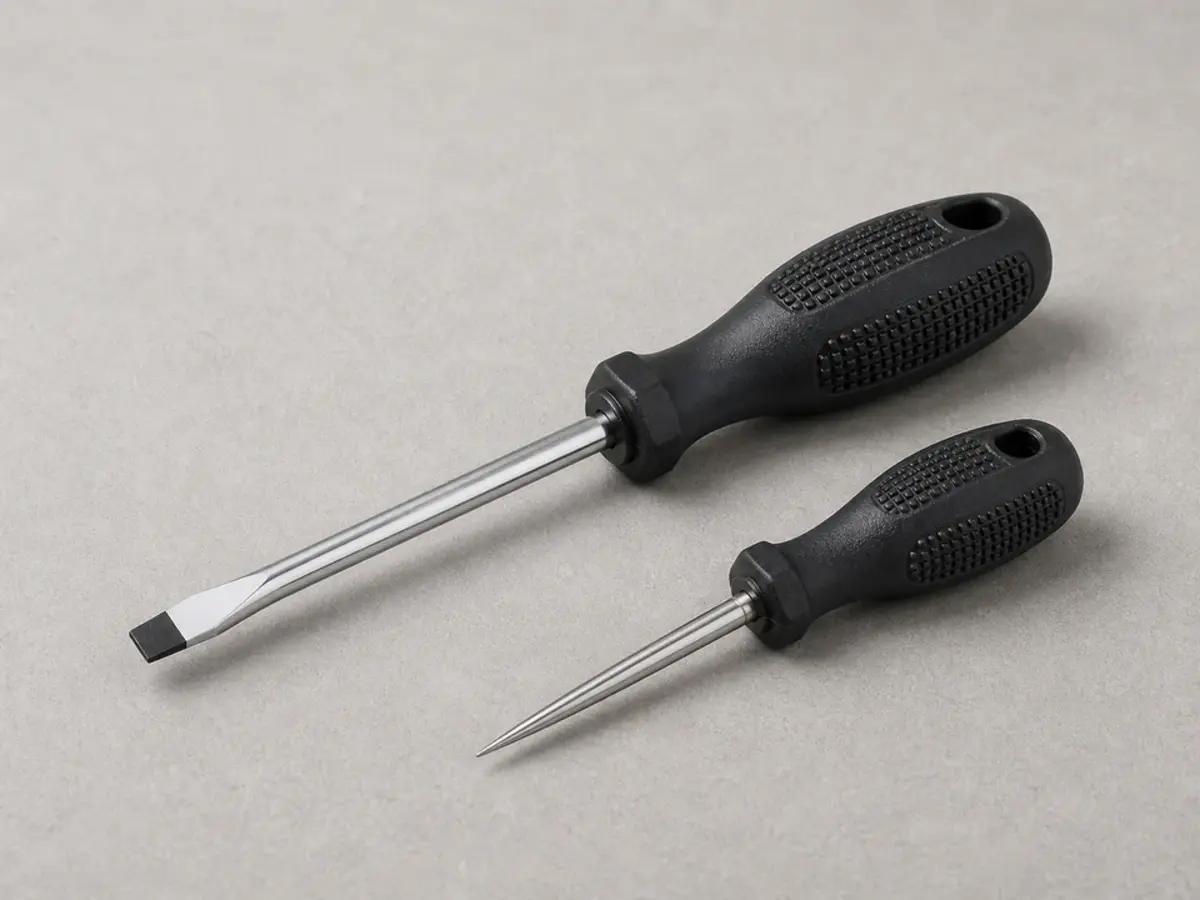
Helps when: Use light pressure with an awl or flat screwdriver to compare the suspect subfloor with nearby hard wood and mark the weak boundary.
Skip it when: Skip probing if the member is sagging, supporting a fixture, or breaking apart around a load path.
Compare awls and flat screwdrivers on Amazon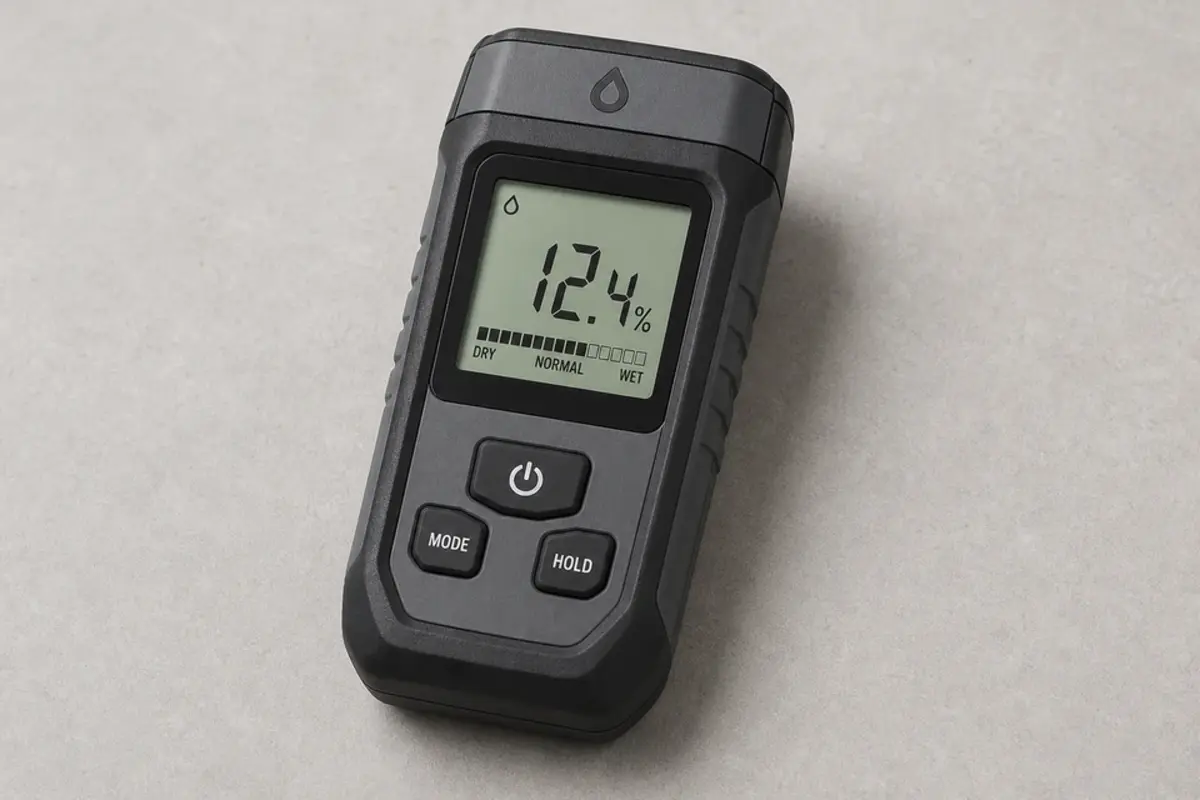
Helps when: Use a pinless moisture meter to compare the damaged joist bay with nearby dry wood after the obvious water source is corrected.
Skip it when: Skip buying one if you already have active leakage, sewage, visible mold, or structural damage; call a pro first.
Compare pinless moisture meters on AmazonBuy materials only after the damaged area is mapped. The part decision is really a support decision: the new panel has to match thickness and land on solid framing.
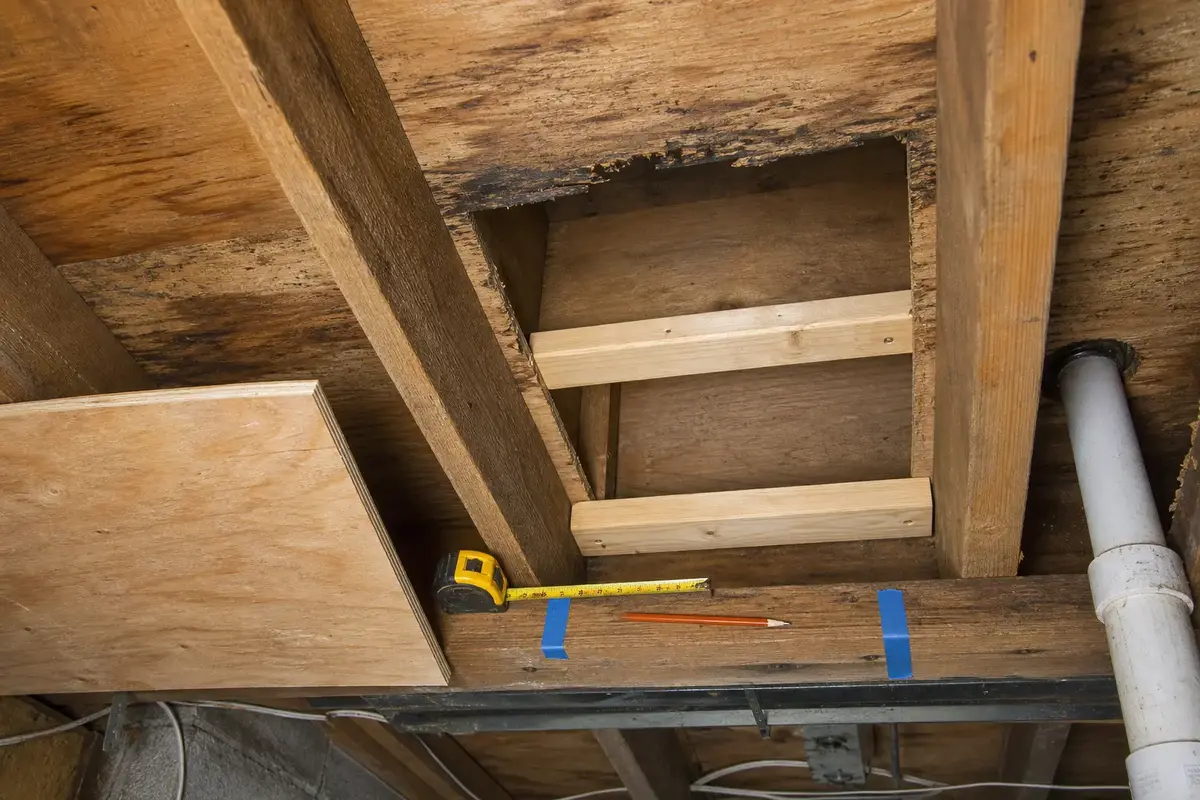
Paid links. As an Amazon Associate I earn from qualifying purchases. Repair Riot may earn a commission at no extra cost to you.
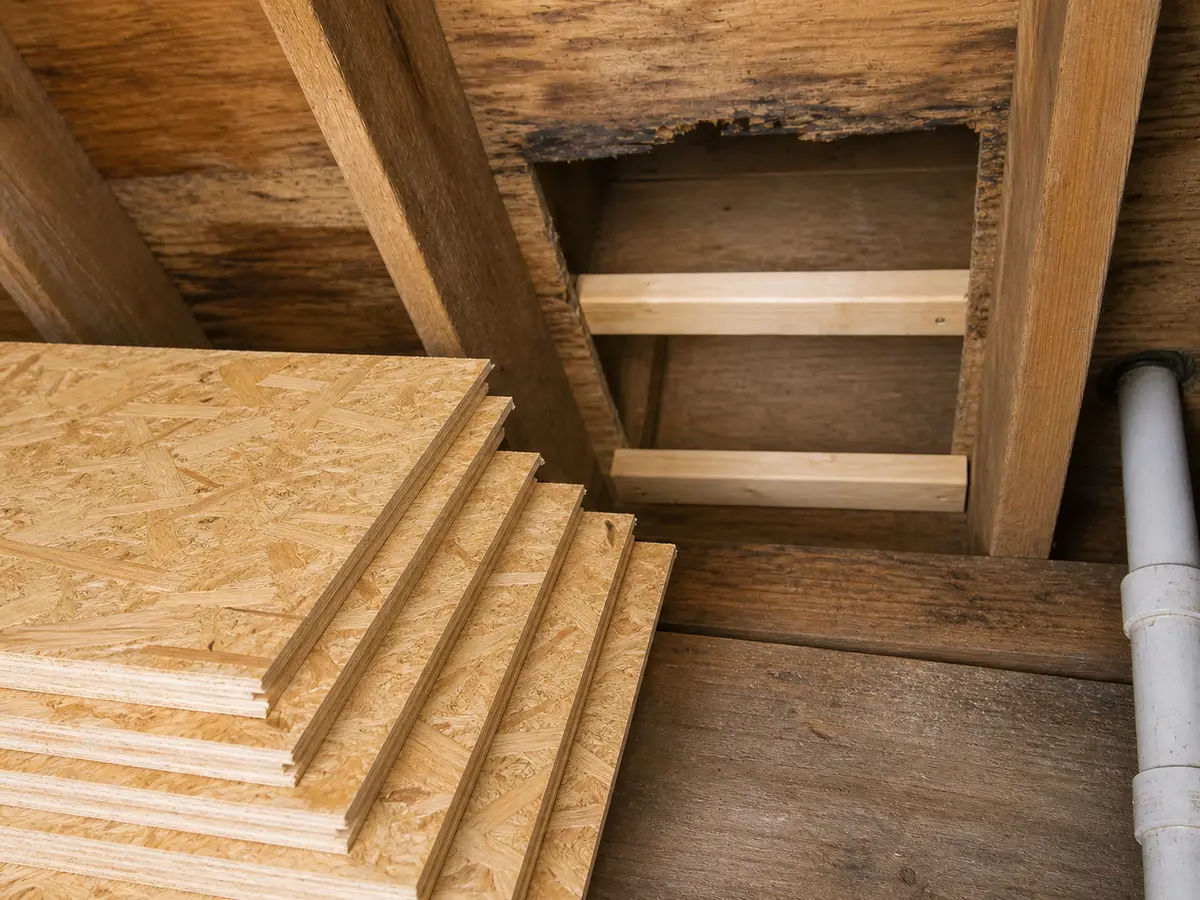
Helps when: Use a matched subfloor panel when the weak section is bounded, the framing is solid, and you know the original thickness.
Skip it when: Skip it when softness runs under a wall, tub, toilet, cabinet, or joist area that needs structural repair first.
Compare subfloor panels on Amazon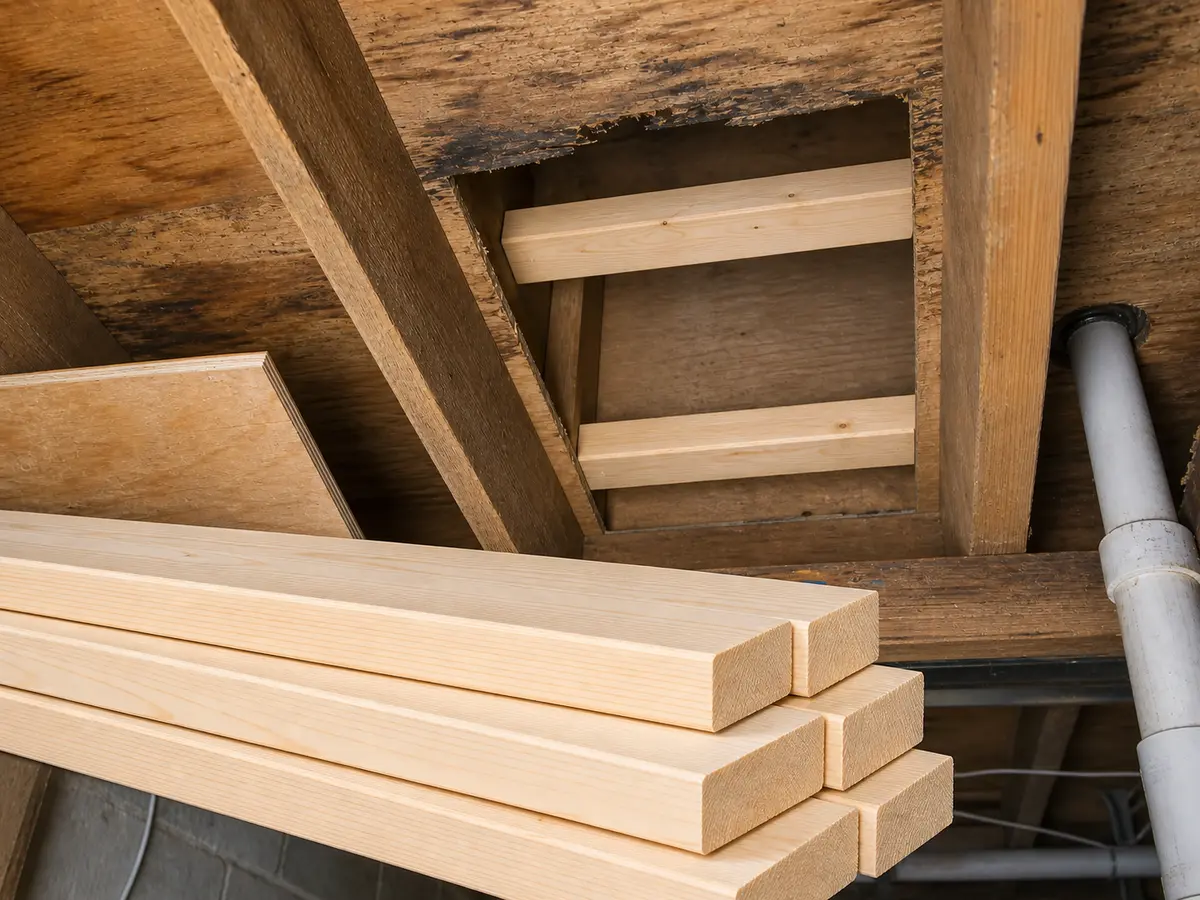
Helps when: Use solid blocking lumber when a cutout leaves a replacement panel edge between joists and the edge needs firm bearing.
Skip it when: Skip guessing at blocking if you cannot find solid framing to fasten into or the repair removes support near a wall.
Compare blocking lumber options on AmazonYes. They often start in damp, softened wood, then excavate galleries that can leave a panel weak, hollow, or spongy. The moisture source still matters because it is usually what made the subfloor attractive in the first place.
No. Carpenter ants excavate wood to make galleries. Termites feed on cellulose and often leave different evidence, including mud tubes or soil-packed damage. Either way, hidden structural damage is a stop-and-identify moment before repair.
Carpenter ant damage usually has smoother galleries and coarse frass that looks like wood shavings, sometimes with insect bits. Termite damage is often dirtier and may include mud tubes. If you are not sure, get the pest identified before closing the floor.
Only if the wood has lost strength. Dry, firm wood with old scars may be safe to clean and watch. Soft, flaking, hollow, or bouncy subfloor should not stay in service just because no ants are visible.
Sometimes, but only after the weak boundary is clear and the remaining wood is stable enough to fasten into. If the panel is soft, crumbling, or unsupported at the edges, cutting back to sound material is usually cleaner.
Stop the moisture first, then check whether ants are active. If the floor is unsafe, keep weight off it and get the structure stabilized. If ants are still active after the area is opened and drying, targeted pest treatment should happen before close-up.
Clear the frass once, mark the spot, and recheck. Fresh debris, live ants at dusk, or repeat traffic along pipes, wires, sill plates, or seams means activity may still be present.
It can be if the weak area is small, accessible, away from walls and fixtures, and the joists or rim area are solid. Once damage runs into framing, plumbing areas, stairs, or a bearing wall, get help before cutting.
Treat moisture as the first suspect. Leaks and thresholds can keep a panel wet long enough for ants and rot to show up together. Fix the water path and check the framing before replacing the panel.
Not as the first move. Spraying may reduce visible ants, but it does not dry the wood or restore strength. Confirm the nest activity, moisture source, and structural condition before any treatment or close-up.
Measure panel thickness, joist spacing, the cutout boundary, and where every new edge will be supported. Match the panel type and edge detail, and add blocking where the replacement would otherwise be unsupported.
Repair Riot built this page around field-sortable clues: fresh frass, damp wood, smooth galleries, probe results, supported panel edges, and stop points for structural or pest work. The references below ground the carpenter-ant facts and moisture-control boundaries.