Is the odor strongest at the drain opening?
Clean the stopper, drain throat, and upper drain body.
A bathroom sink that smells bad is usually holding odor in the pop-up stopper, drain throat, overflow passage, or P-trap. Smell at the drain, overflow hole, and vanity cabinet separately before buying parts.
Hair, toothpaste sludge, soap film, and biofilm around the stopper and overflow passage are the usual source. A dry or leaking P-trap moves up the list when the smell is sewer-like or strongest under the vanity.
The fastest way to fix sink odor is to locate where it is strongest. Drain-opening odor, overflow odor, and under-cabinet sewer odor lead to different repairs.
Don’t start with: Do not start with bleach, harsh drain cleaner, a new faucet, or air freshener. Clean the reachable buildup and confirm the trap has water first.
Clean the stopper, drain throat, and upper drain body.
Clean the visible overflow opening and reachable passage.
Check the P-trap for water, leaks, loose joints, or dry-trap conditions.
Water may be disturbing buildup in the drain or overflow. Clean those before buying parts.
Think vent or branch drain, not just a dirty stopper.
Odor source matters. Clean the part that actually smells strongest instead of masking the room.
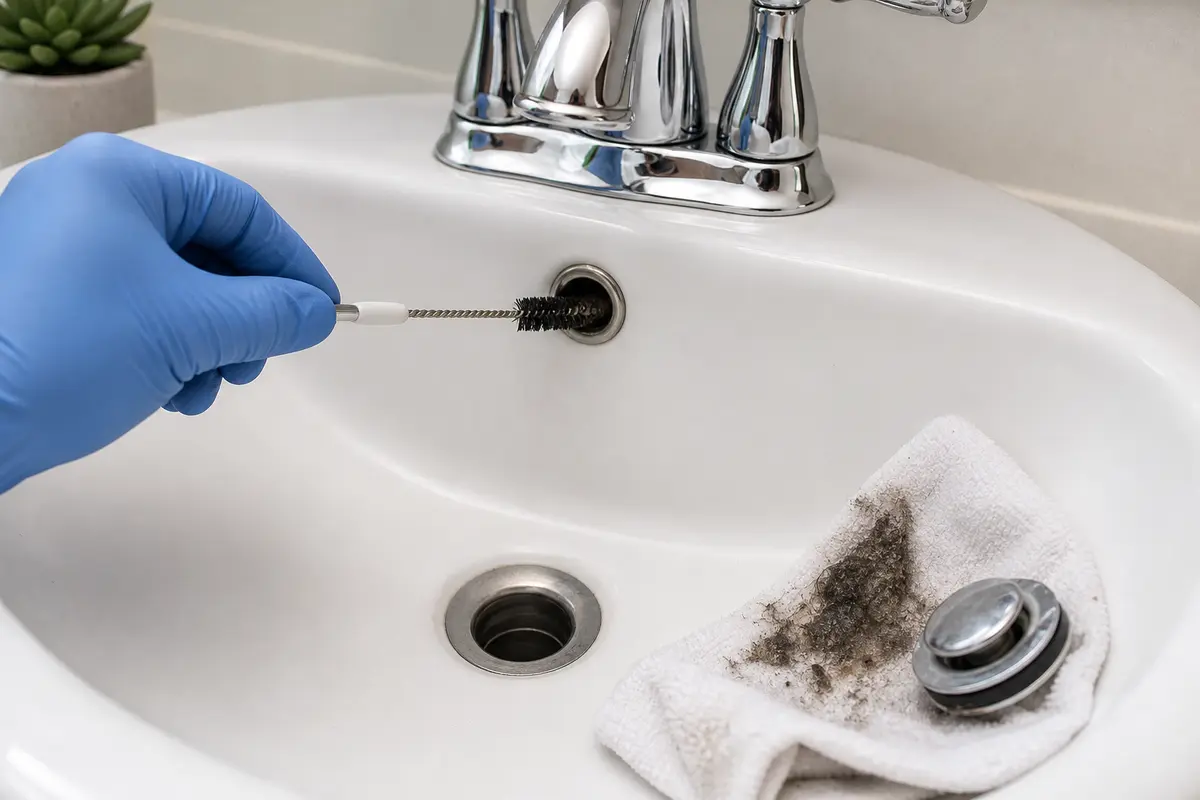
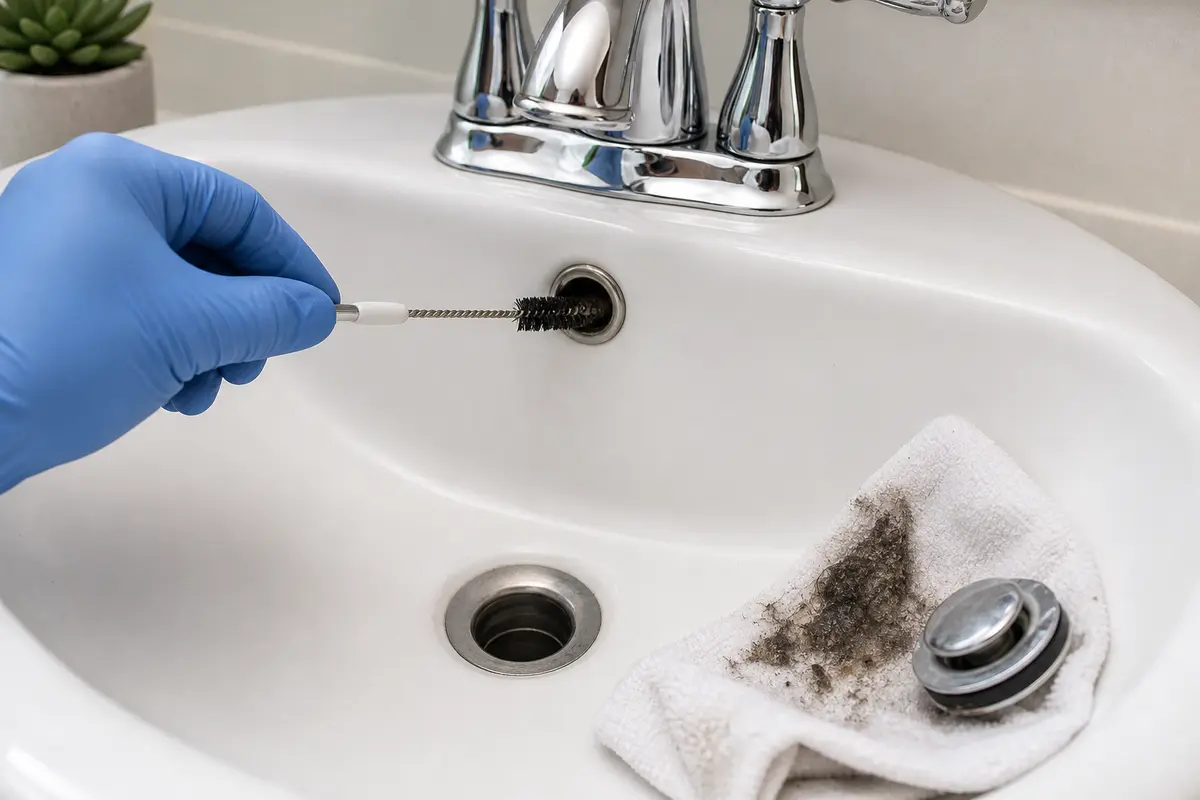
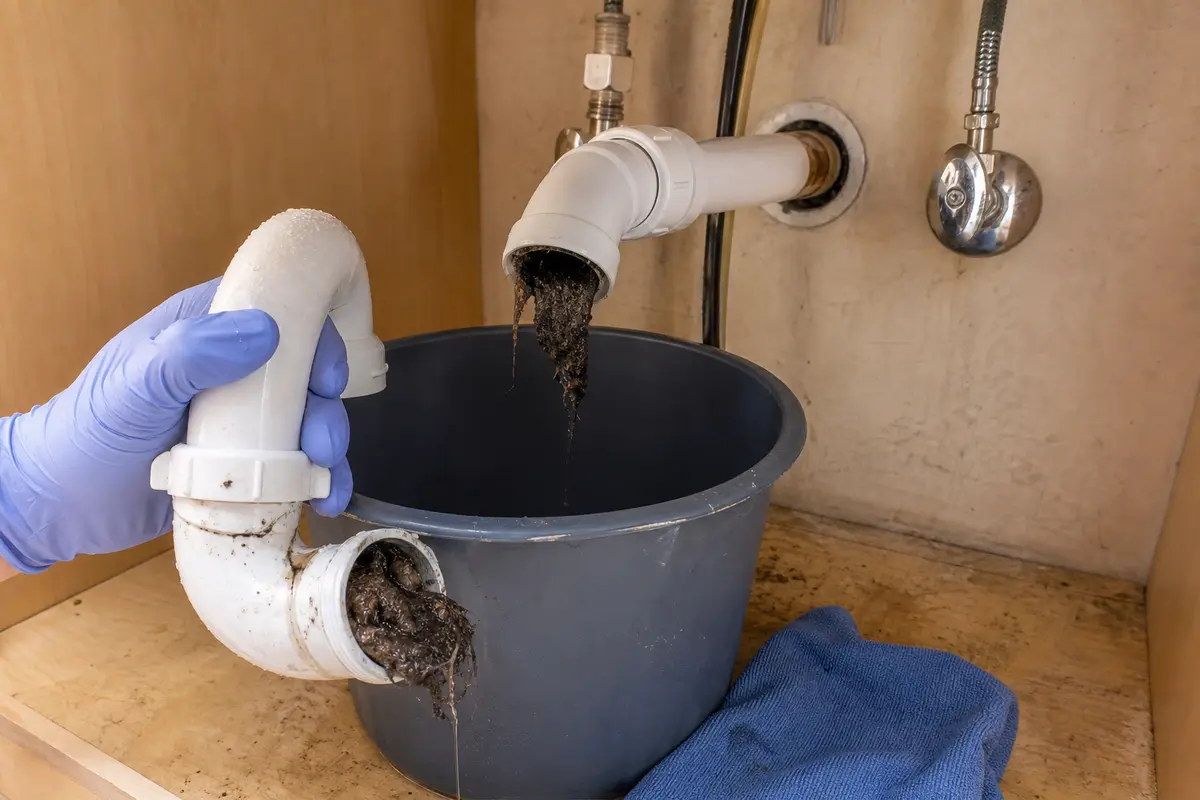
Do not buy a new faucet, drain assembly, trap, stopper, or odor product until the odor source map proves the exact odor source diagnosis. Match stopper style, drain finish, trap size, pipe material, and washer direction before ordering.
Bathroom sink odor usually comes from organic buildup, not a failed faucet.
Odor shortcuts often miss the actual source and leave the next repair messier.
Smell at three points before cleaning or shopping.
| Strongest smell | What it usually means | Next move |
|---|---|---|
| Drain opening | Stopper, drain throat, or upper drain body buildup. | Remove and clean the stopper. |
| Overflow hole | Biofilm in the overflow passage. | Use a narrow brush and warm water. |
| Inside vanity | P-trap issue, leak residue, or dry trap. | Inspect trap water and joints. |
| Worse when water runs | Flow is disturbing buildup or a partial clog. | Clean stopper, overflow, and trap path. |
| Returns quickly after cleaning | Vent, branch drain, or trap-seal problem. | Check nearby fixtures and consider a plumber. |
Start with reachable buildup. Replacement parts come later only if something is damaged.
These tools match the odor sources above. Use mild mechanical cleaning first.
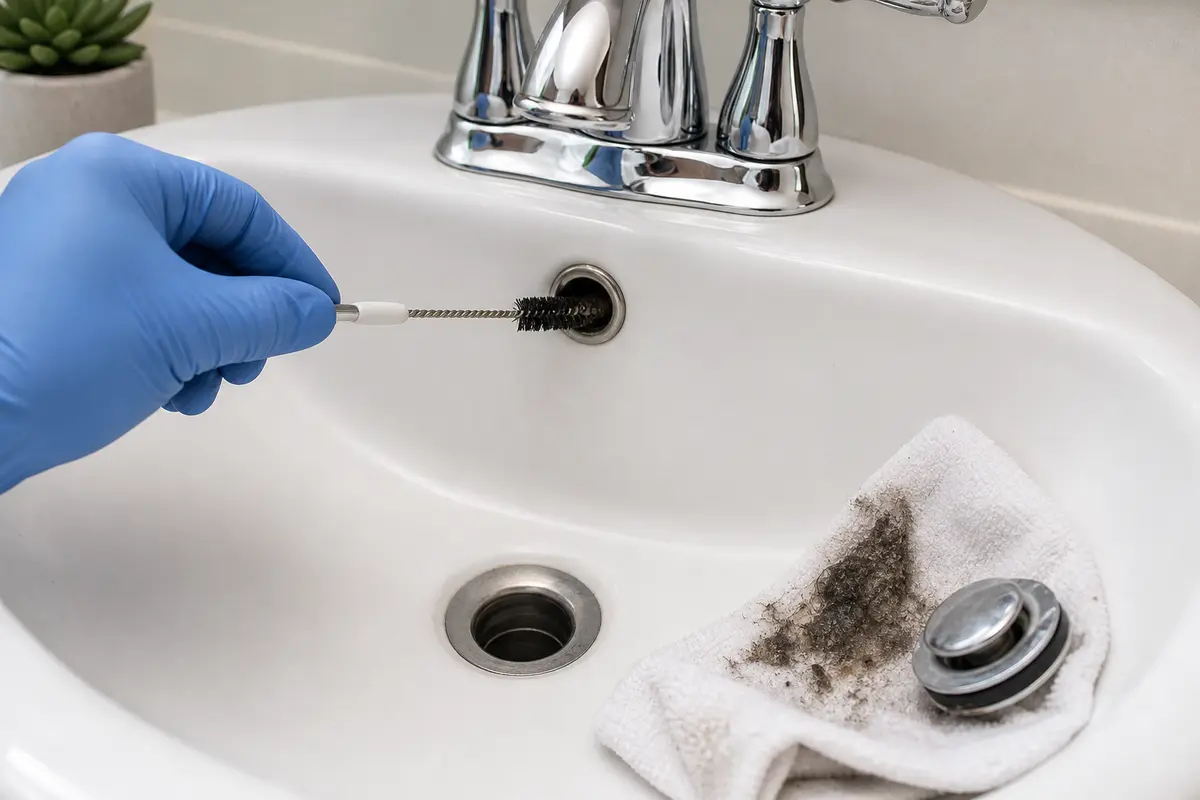
Helps when: Use to clean the visible overflow opening and reachable passage when odor or overflow staining starts there.
Skip it when: Skip jamming a stiff brush deep into the passage or using harsh chemicals with unknown residue.
Compare narrow cleaning brushes on Amazon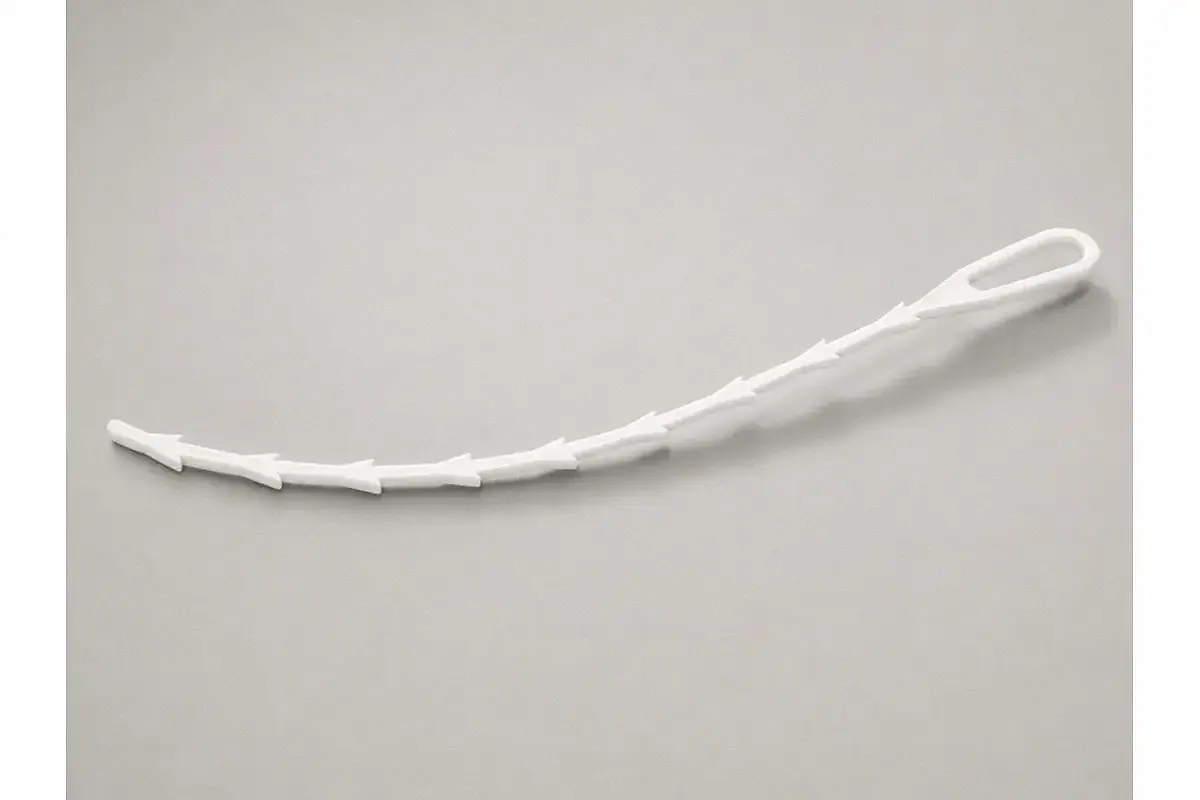
Helps when: Use first when odor points to hair and paste around the pop-up stopper.
Skip it when: Skip forcing it deep into a metal drain or past a hard obstruction.
Compare plastic drain cleaning tools on Amazon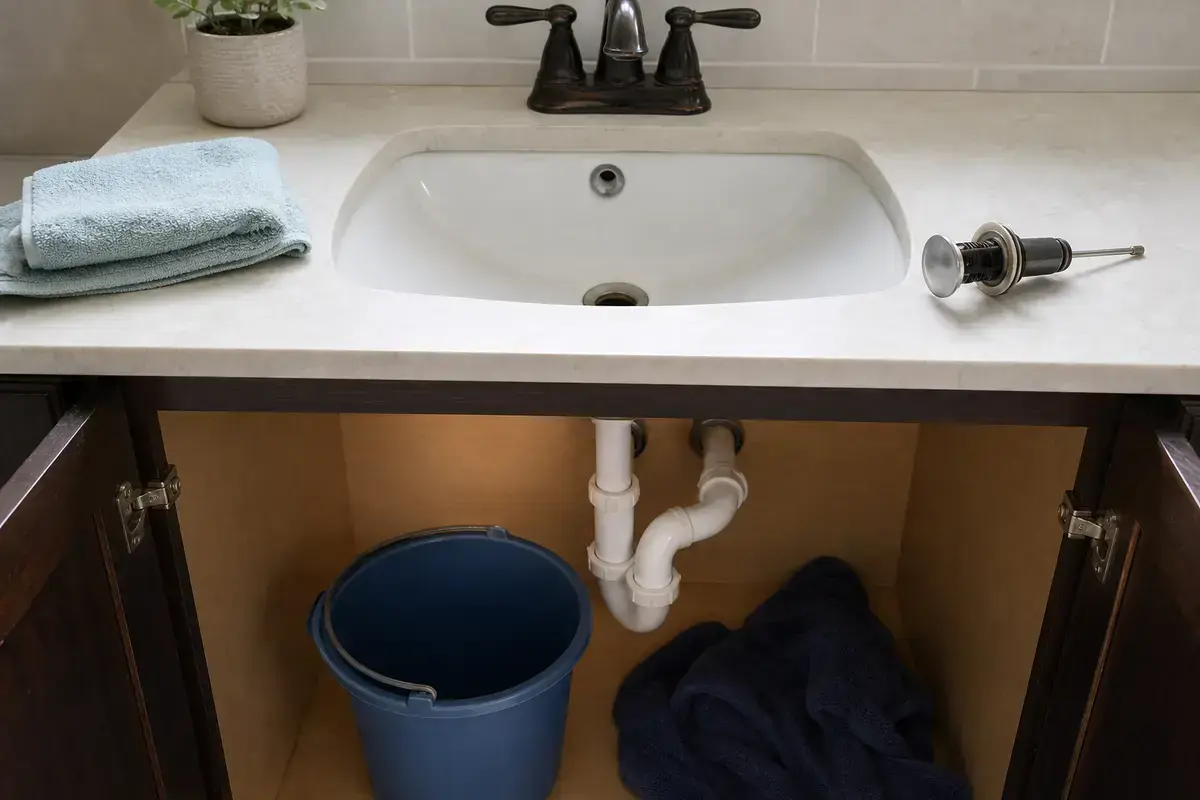
Helps when: Use under the vanity before opening the trap or testing the drain during odor checks.
Skip it when: Skip opening any drain fitting over an unprotected cabinet floor.
Compare small buckets and towels on Amazon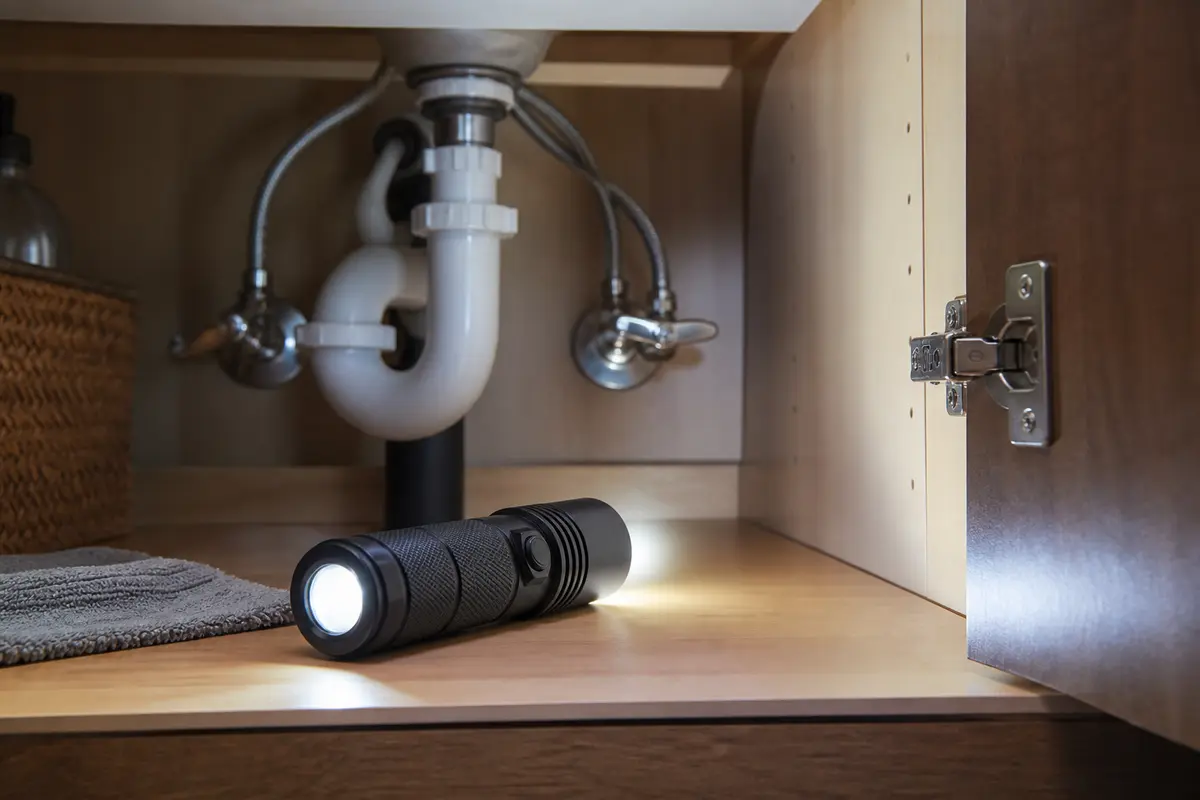
Helps when: Use to see the stopper linkage, trap joint, overflow path, and wall drain during odor checks.
Skip it when: Skip relying on overhead bathroom light when the back of the vanity is shaded.
Compare inspection flashlights on AmazonAs an Amazon Associate I earn from qualifying purchases. Repair Riot may earn a commission at no extra cost to you.
Most odor repairs need cleaning, not parts. Buy only when inspection proves damage or a part cannot seal.
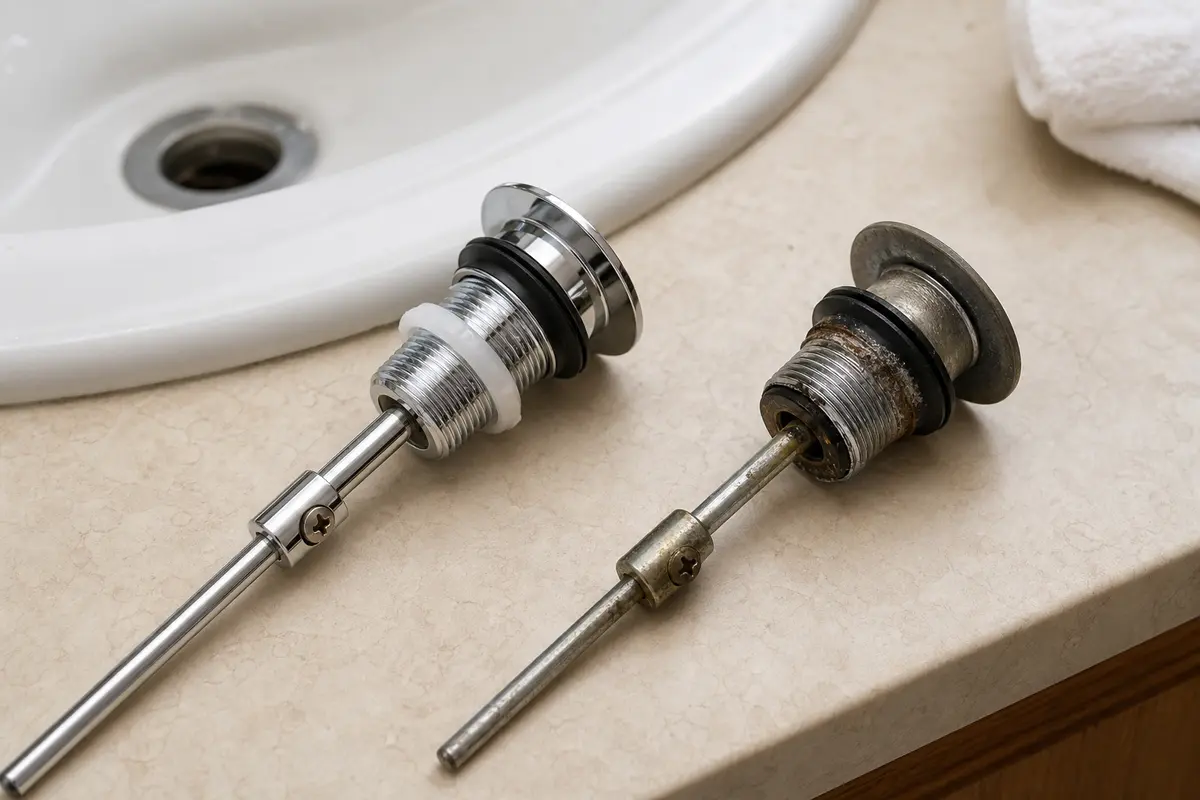
Helps when: Use when the stopper is corroded, missing pieces, jammed with buildup, or will not operate after odor cleaning.
Skip it when: Skip replacing it when cleaning restores movement and the drain body is sound.
Compare bathroom sink pop-up stoppers on Amazon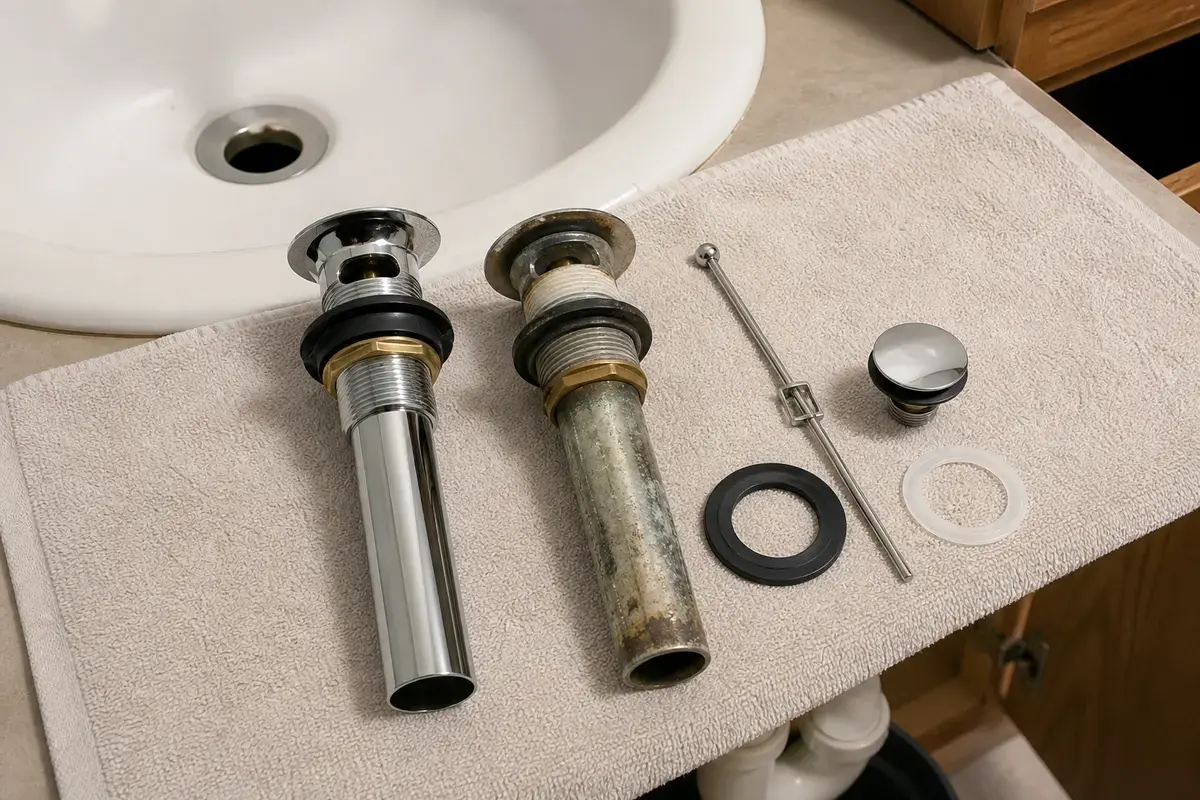
Helps when: Use only when odor cleaning proves the drain body, flange, tailpiece, or pivot opening is damaged.
Skip it when: Skip a full drain assembly when the problem is only hair on the stopper or a trap washer.
Compare bathroom sink drain assemblies on Amazon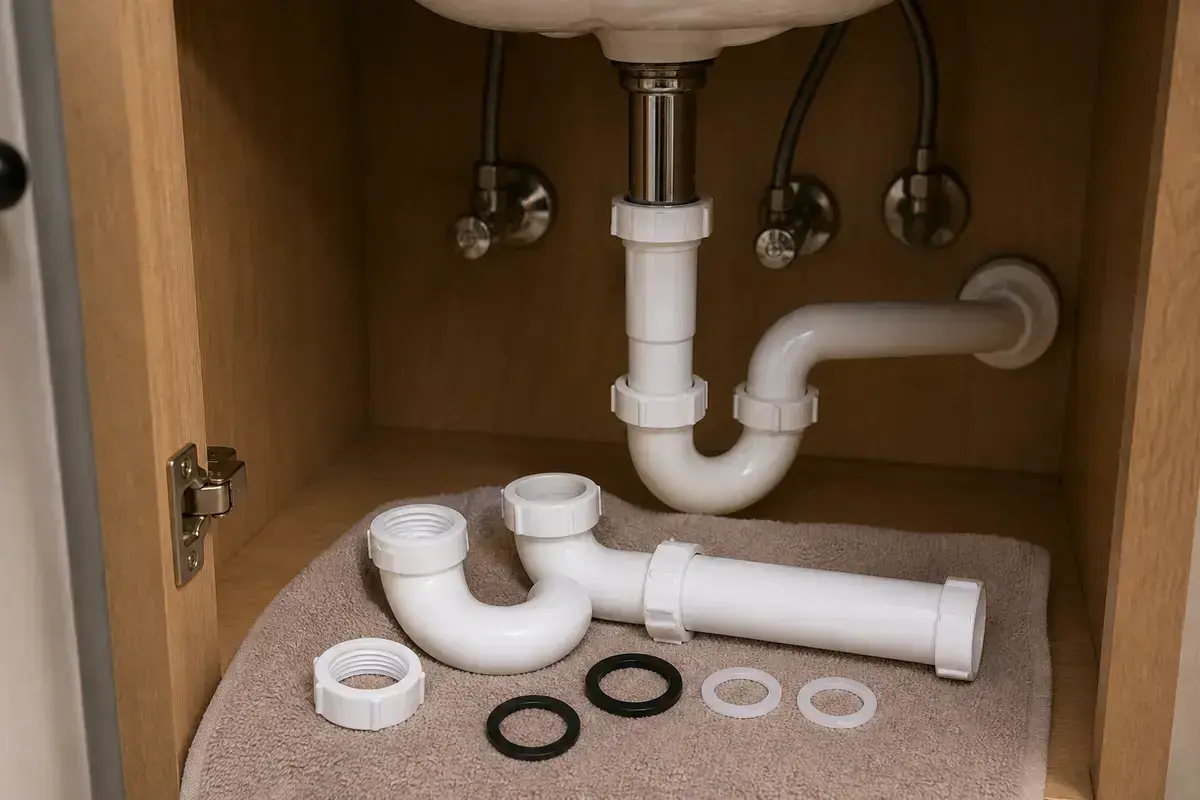
Helps when: Use when the trap is cracked, warped, corroded, leaking, or packed with buildup after odor checks.
Skip it when: Skip replacing the trap if it cleans out, aligns squarely, and seals with the existing fittings.
Compare bathroom sink P-trap kits on Amazon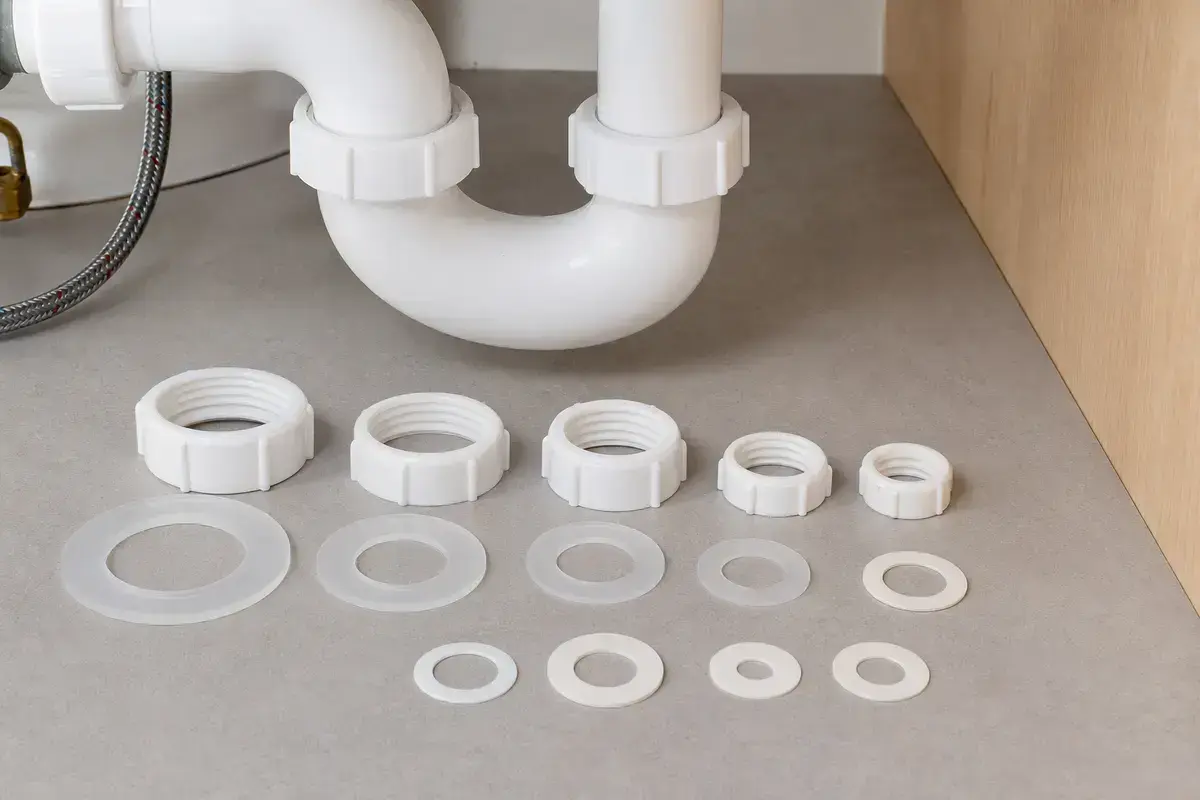
Helps when: Use when a trap or tailpiece joint leaks after trap reassembly and the old washer is flattened, split, or reversed.
Skip it when: Skip random washers that do not match the pipe size and bevel direction.
Compare slip-joint washer assortments on AmazonAs an Amazon Associate I earn from qualifying purchases. Repair Riot may earn a commission at no extra cost to you.
Odor can come from buildup on the stopper or overflow passage before the drain is slow enough to notice.
Running water can disturb biofilm in the drain or overflow passage. It can also move odor from a partial clog.
Yes. A little-used sink can lose its trap seal. Run water to refill it, then check whether the smell returns.
Not first. Bleach may not touch the buildup on the stopper or overflow walls, and mixing cleaners can be hazardous.
Replace it only if the drain body, flange, tailpiece, or pivot area is corroded, loose, leaking, or will not clean and seal.
Yes. Gurgling, moving trap water, or odor returning quickly after cleaning can point to vent or branch drain behavior.
Look for trap leaks, damp cabinet material, a dry trap, loose slip joints, or drain residue outside the pipe.
Match stopper linkage, drain finish, pipe size, trap material, slip-joint washer size, and the exact failed location.
This guide separates odor by location because drain-opening odor, overflow odor, and under-vanity odor have different fixes. The affiliate cards stay tied to cleaning and replacement only after the source is known.