Fan is silent?
Check whether the attic is hot enough to call, then check breaker, switch, and control clues from a safe position.
An attic fan that does nothing is usually one of four things: the attic is not hot enough to call, power is missing, the thermostat or humidistat is not closing, or the motor cannot start. Sort those clues before replacing the fan.
The common homeowner-side clues are a tripped breaker or switch, a control set too high, a blade that will not spin freely with power off, or a motor that only hums.
First decide what kind of dead it is: silent, humming, stiff by hand with power off, or not calling because the attic is still below the control setting.
Don’t start with: Do not start by buying a full fan assembly or forcing the control closed. Power, control, blade, and motor clues need to be separated safely.
Check whether the attic is hot enough to call, then check breaker, switch, and control clues from a safe position.
Turn power off and check for a jammed blade, rubbing guard, or failing motor.
Look for loose guard screws, blade rub, housing movement, or debris in the blade path.
Inspect belt condition and pulley alignment with power off.
Stop DIY diagnosis and schedule service.
Use safe closed-cover observations first, then power-off blade and motor checks if access is stable.
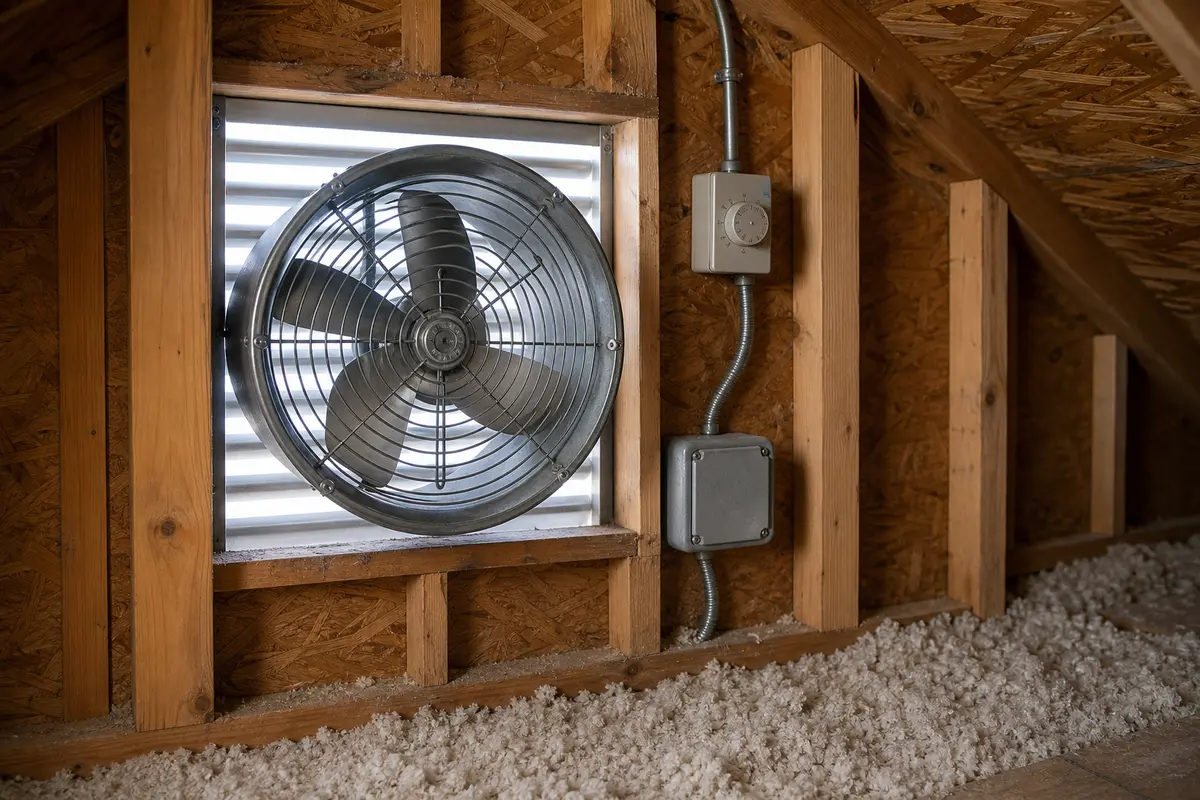
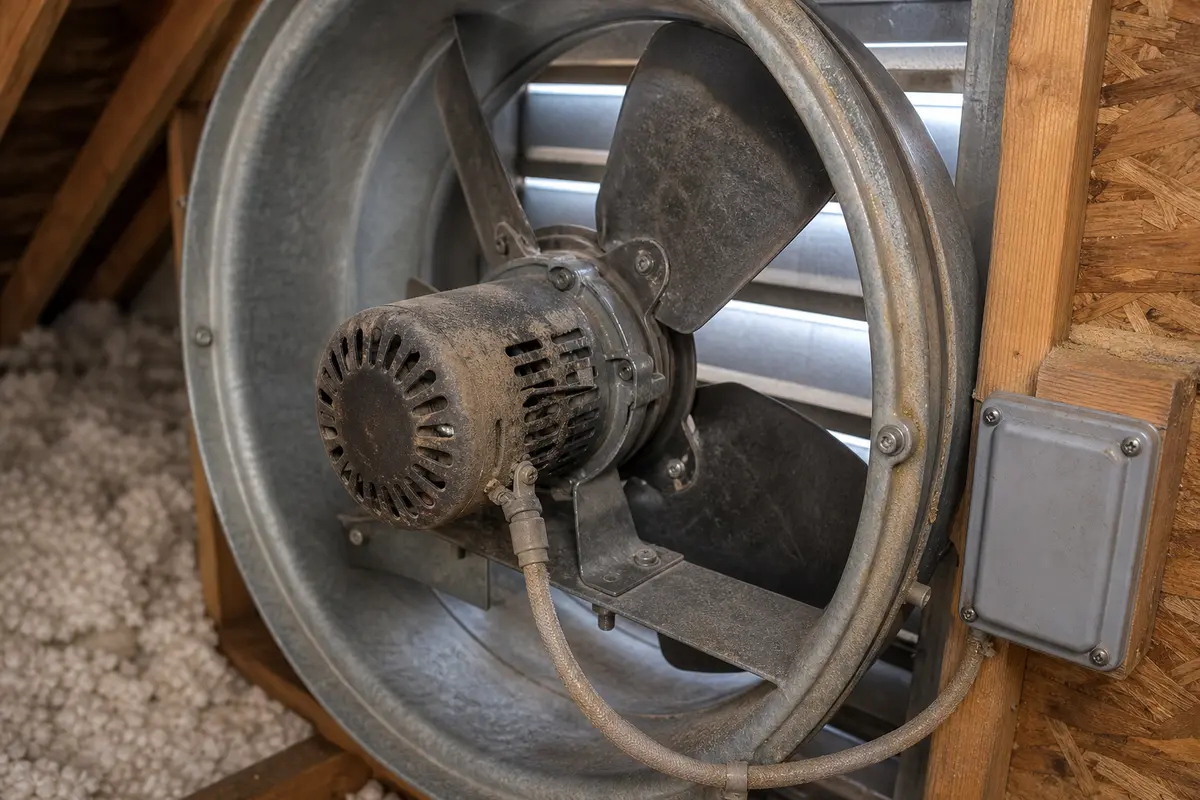
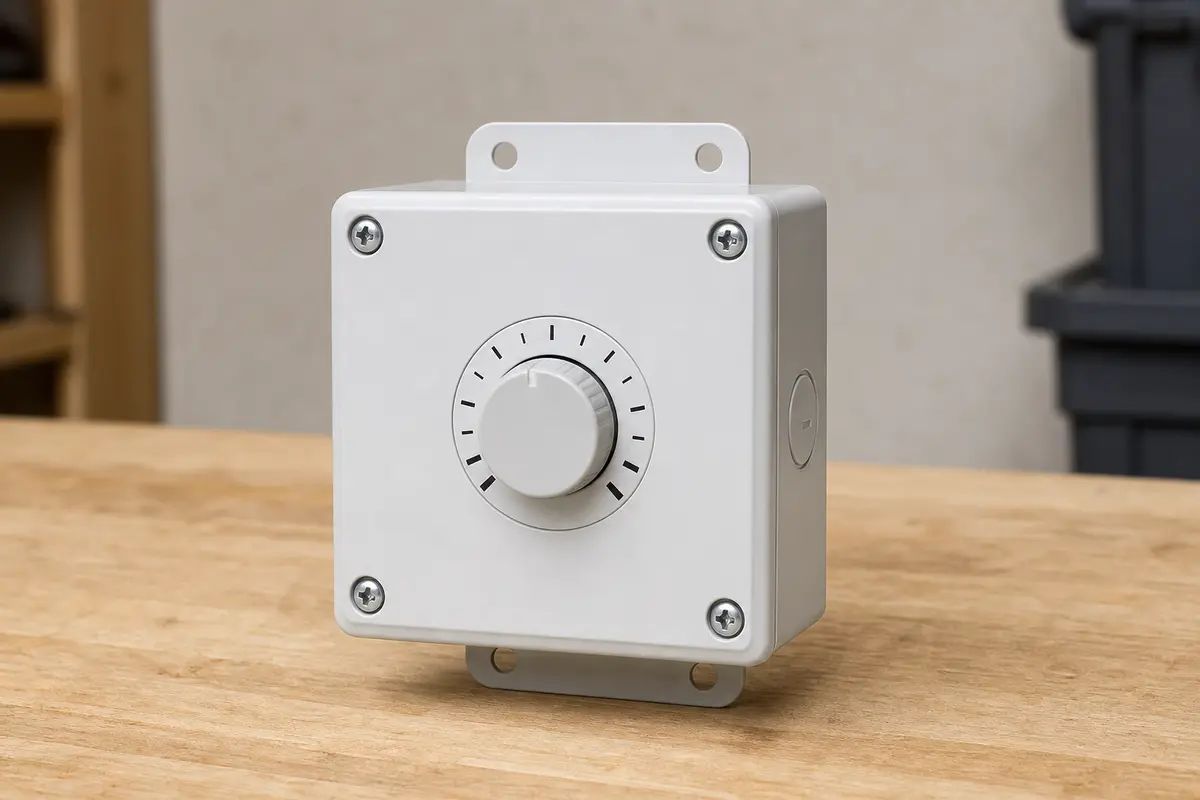
Match the part to the exact failure and the fan model. Motor shaft size, rotation, mount, horsepower, voltage, blade hub, belt length, pulley width, and control rating vary. Do not order parts from the symptom alone.
A powered attic fan can fail as an electrical device, a moving blade assembly, or a ventilation component. Separate those before ordering parts.
Fan symptoms make people skip straight to a new assembly. That can waste money or create a safety issue.
Use the sound, movement, and control behavior to choose the next check.
| What you see or hear | Likely meaning | Next move |
|---|---|---|
| Attic is cool and fan is silent | Control may not be calling | Check setting and attic temperature before buying parts. |
| Breaker or switch is off | Power path issue | Restore only if safe; stop if it trips again. |
| Blade is stiff with power off | Debris, rust, bearing, or blade rub | Clear visible debris or call service if the motor is seized. |
| Fan hums but will not spin | Motor failure or jammed blade | Stop repeated starts and match motor specs if replacement is supported. |
| Control never calls when attic is hot | Thermostat or humidistat control failure | Confirm rating and wiring before replacement. |
Basic inspection is reasonable. Wiring repair, roof-mounted service, and live diagnosis are not homeowner shortcuts.
Order only after the visible clue matches the part and the exact fan specifications are confirmed.
Helps when: Use when power is present, the blade spins freely with power off, and the control never calls at the expected attic temperature or humidity.
Skip it when: Skip if the circuit is dead, the blade is stuck, the motor hums, or the fan model uses a different control style.
Compare attic fan controls on Amazon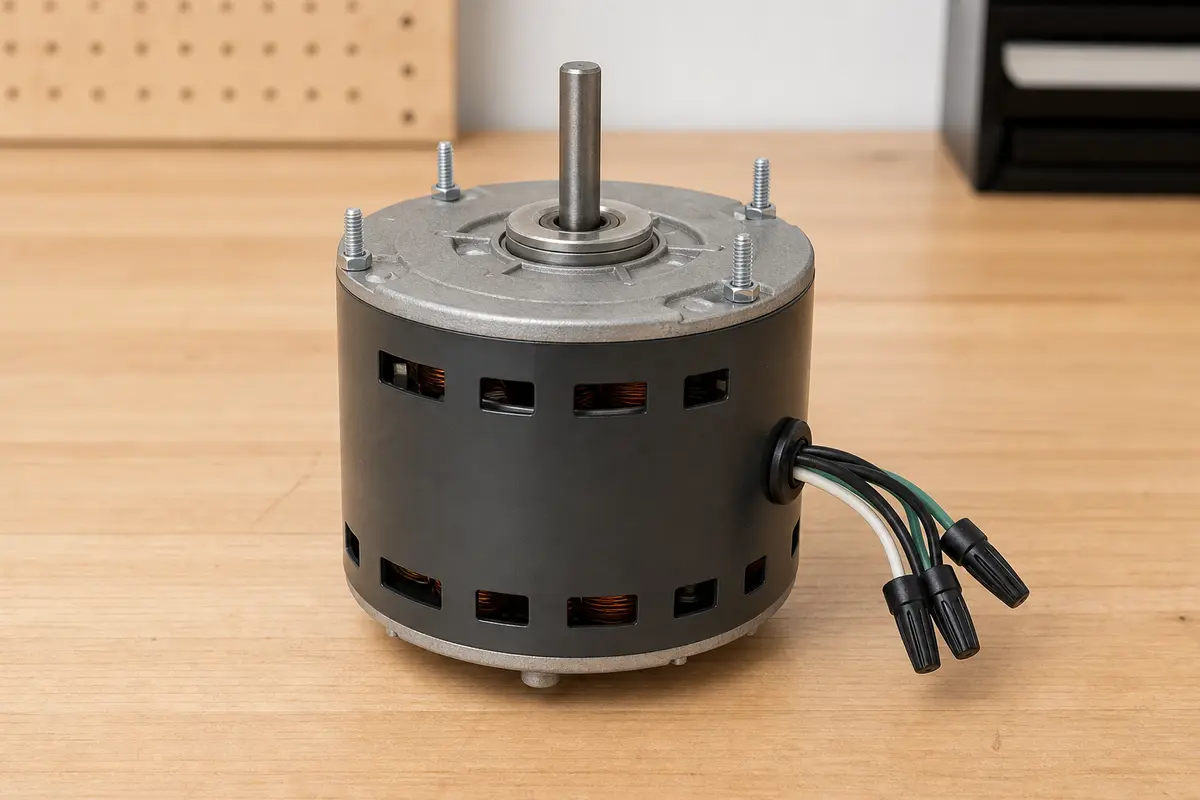
Helps when: Use when power is present and the motor hums, starts slowly, overheats, or will not run after blade and control checks.
Skip it when: Skip if the fan has no confirmed power, the thermostat is not calling, or the blade/housing is the actual bind point.
Compare attic fan motors on Amazon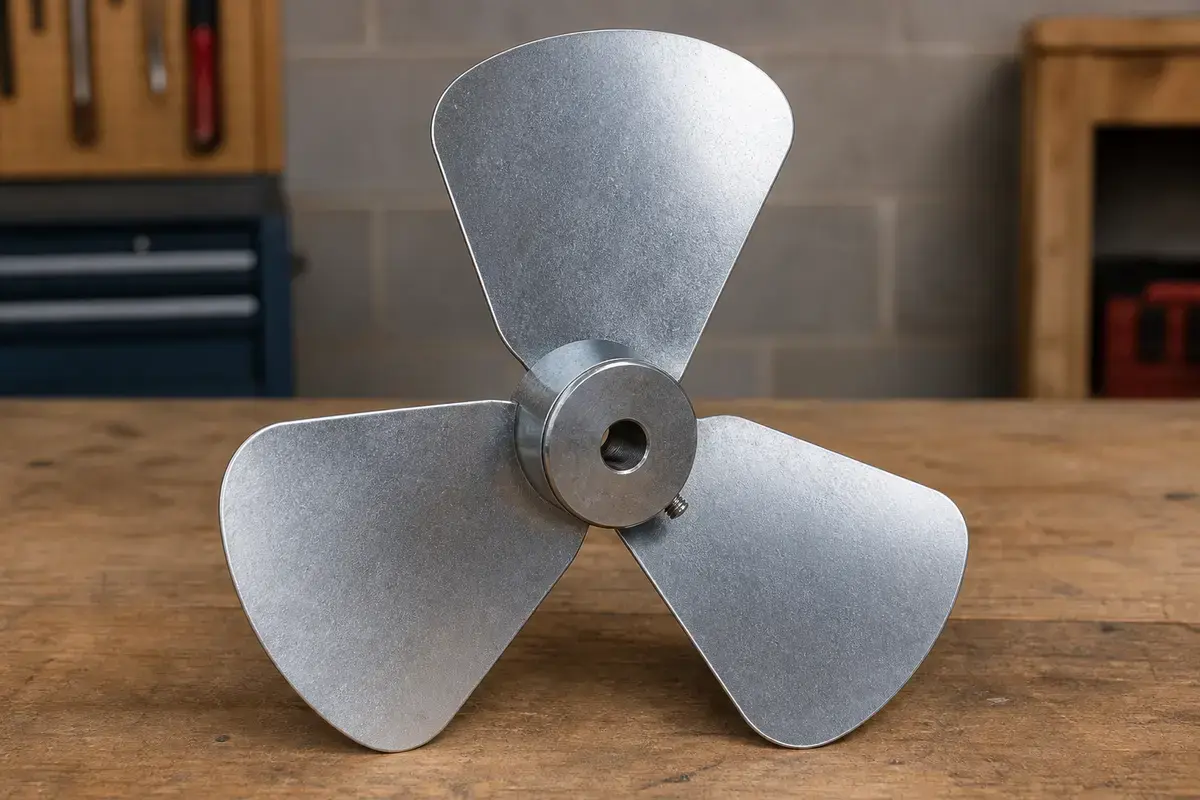
Helps when: Use when the blade is bent, cracked, seized on the hub, or rubbing the housing enough to stop startup.
Skip it when: Skip if the motor bearing is the failure, the fan is belt-driven, or the blade size and rotation cannot be matched.
Compare attic fan blades on AmazonAs an Amazon Associate I earn from qualifying purchases. Repair Riot may earn a commission at no extra cost to you.
These support safe inspection around an accessible fan. They do not make energized wiring or roof work safe.
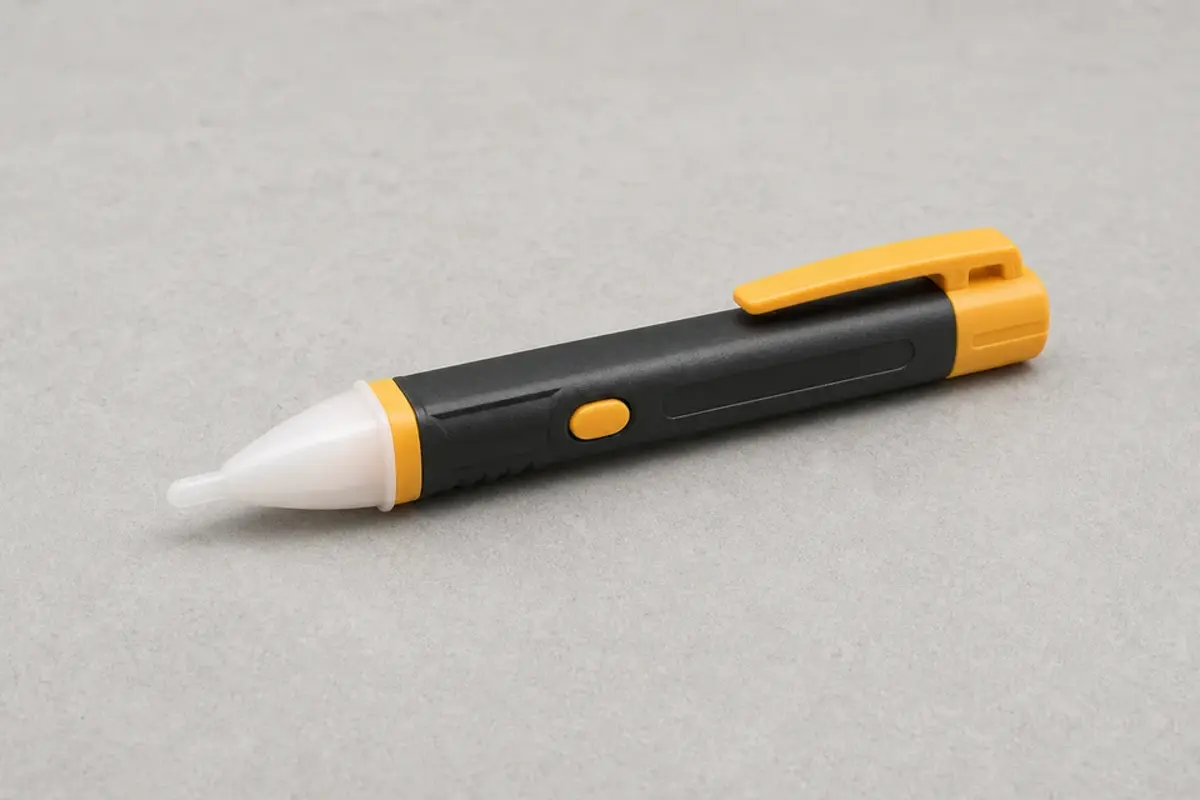
Helps when: Use to confirm the circuit is off before opening a cover or reaching near the attic fan wiring area.
Skip it when: Skip DIY electrical checks if wiring is damaged, wet, scorched, or you cannot identify the circuit.
Compare voltage testers on Amazon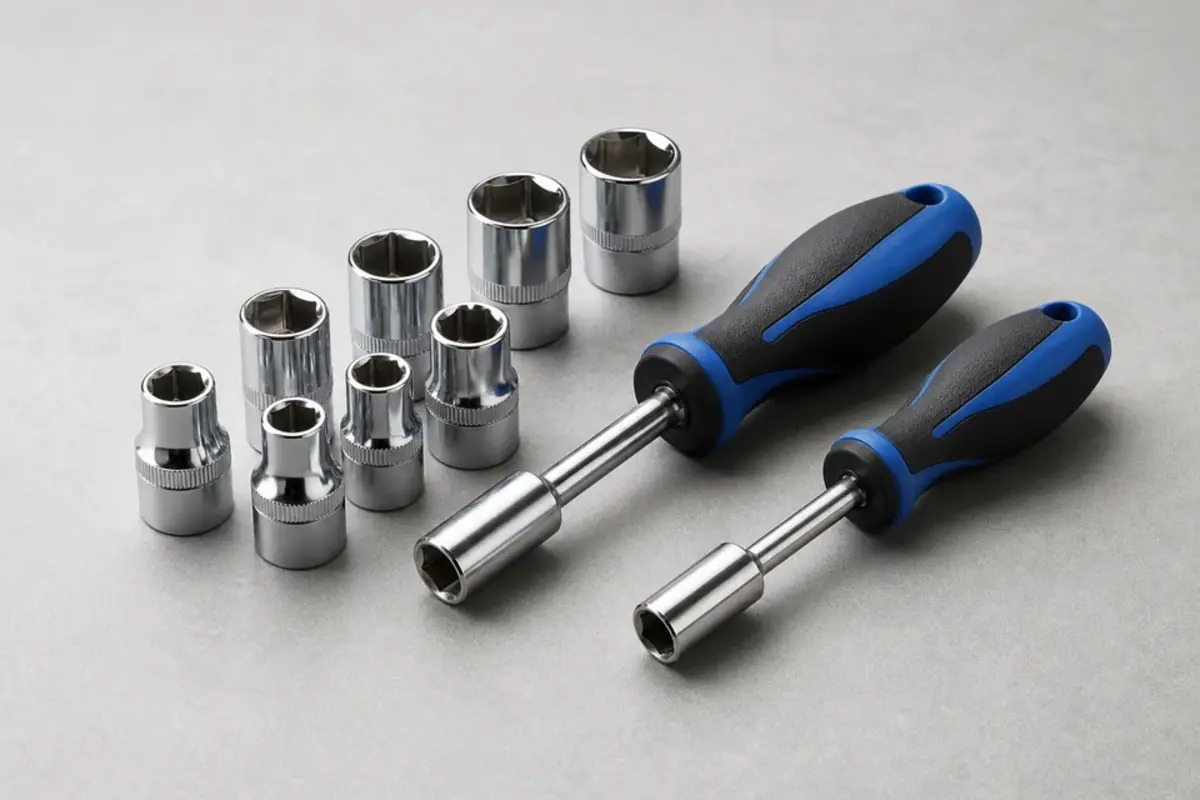
Helps when: Use to remove an accessible guard, cover, or mounting screw only after power is off.
Skip it when: Skip if the fastener is roof-side, the fan is energized, or the housing is unstable.
Compare nut driver sets on Amazon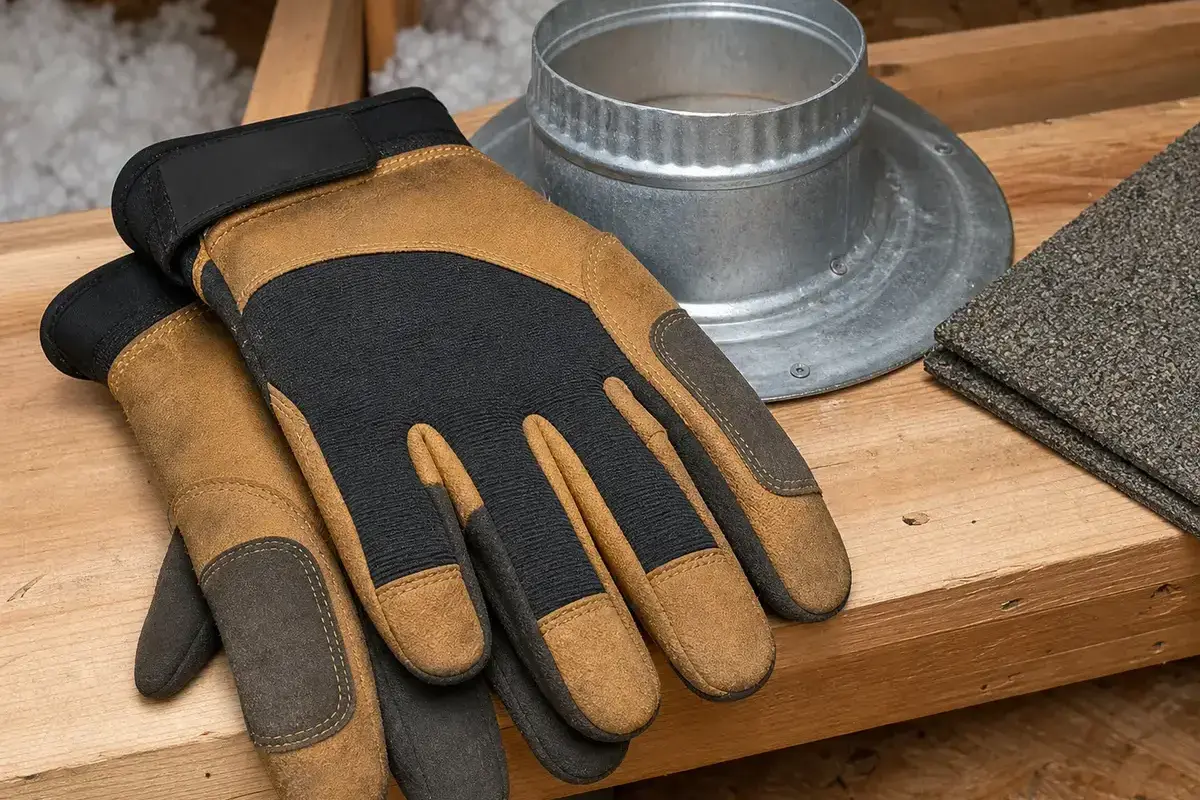
Helps when: Use to handle sharp fan guards, sheet metal edges, dusty framing, and rough attic materials.
Skip it when: Skip hands-on work around any blade that could start or any wiring that has not been shut off.
Compare work gloves on AmazonAs an Amazon Associate I earn from qualifying purchases. Repair Riot may earn a commission at no extra cost to you.
It may not be hot enough to call, or the fan may have lost power, a failed control, a stuck blade, or a bad motor.
If the attic is hot enough, power is present, the blade spins freely with power off, and the fan never calls, the control becomes more likely.
Often yes, but check for a jammed or rubbing blade with power off first. A motor that hums repeatedly can overheat.
No. Jumpering controls or working on energized wiring is not a safe homeowner shortcut.
Only after the housing, motor, blade, and control path justify it. Many failures are control or motor specific, but roof-mounted replacement may still be a pro job.
Poor passive ventilation can make the attic hot, but it does not usually make a powered fan silent. Treat a dead fan as a separate power, control, blade, or motor clue.
Leave it off and call a pro. A repeat trip can point to a motor or wiring fault, not a reset-and-try-again situation.
Record voltage, horsepower, shaft diameter, rotation, mount style, wiring style, and the fan model so the replacement matches the existing assembly.
Repair Riot built this page around homeowner-visible powered attic fan clues: sound, blade movement, guard clearance, control behavior, power-off checks, and stop points before electrical or roof work.