Follows cold nights?
Look for warm indoor air leaks and weak attic airflow.
High attic humidity usually means moist house air is entering the attic or outdoor airflow is not carrying moisture away. Start by comparing indoor and attic humidity, then look for hatch leaks, blocked soffits, and bath fan ducts.
Common cause: warm indoor air leaking up through the ceiling plane while eave intake is weak or blocked.
The number matters less than the pattern: timing, location, and surface moisture name the next check.
Don’t start with: Do not start with a powered attic fan or a dehumidifier in the attic. Find the moisture source first.
Look for warm indoor air leaks and weak attic airflow.
Treat roof, siding, or vent weather entry as the lead clue.
Open the low intake path before judging upper vents.
Air-seal confirmed dry, non-hot gaps after the source is known.
Stop homeowner cleanup and document the area for service.
Use the meter reading with visible sheathing, hatch, and eave clues before choosing supplies.
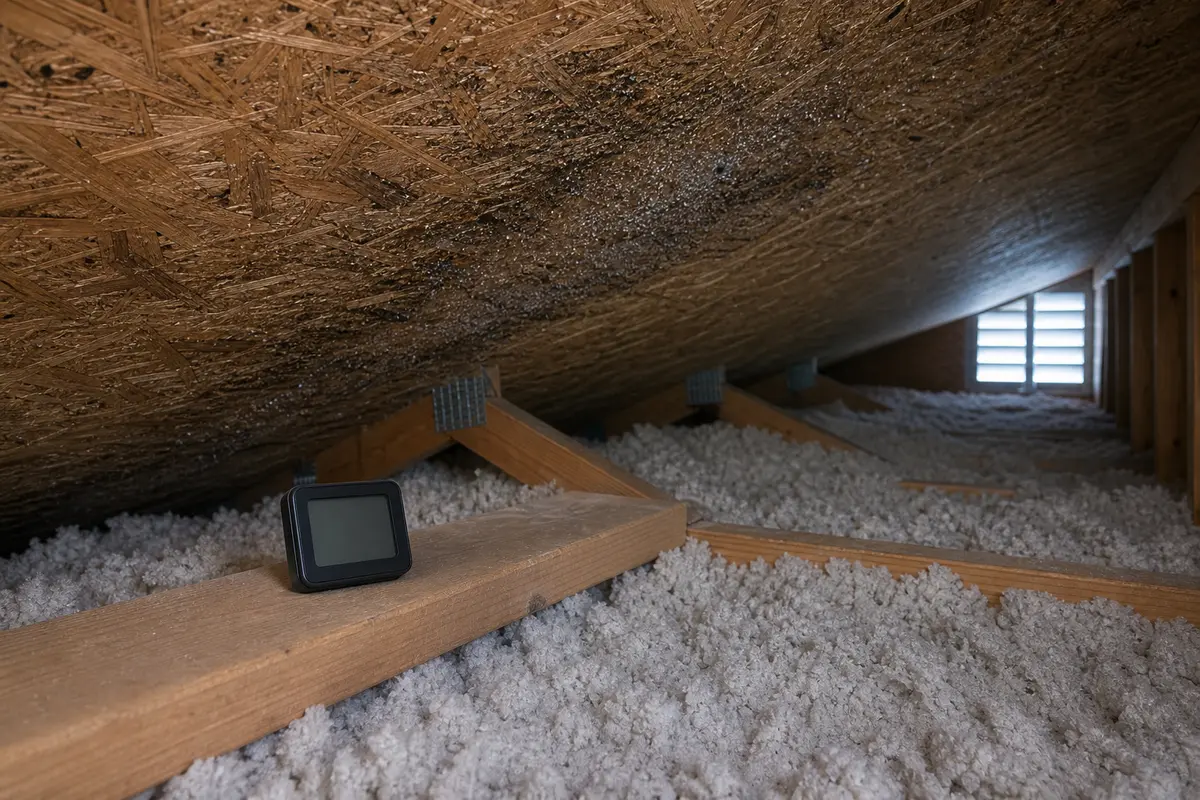
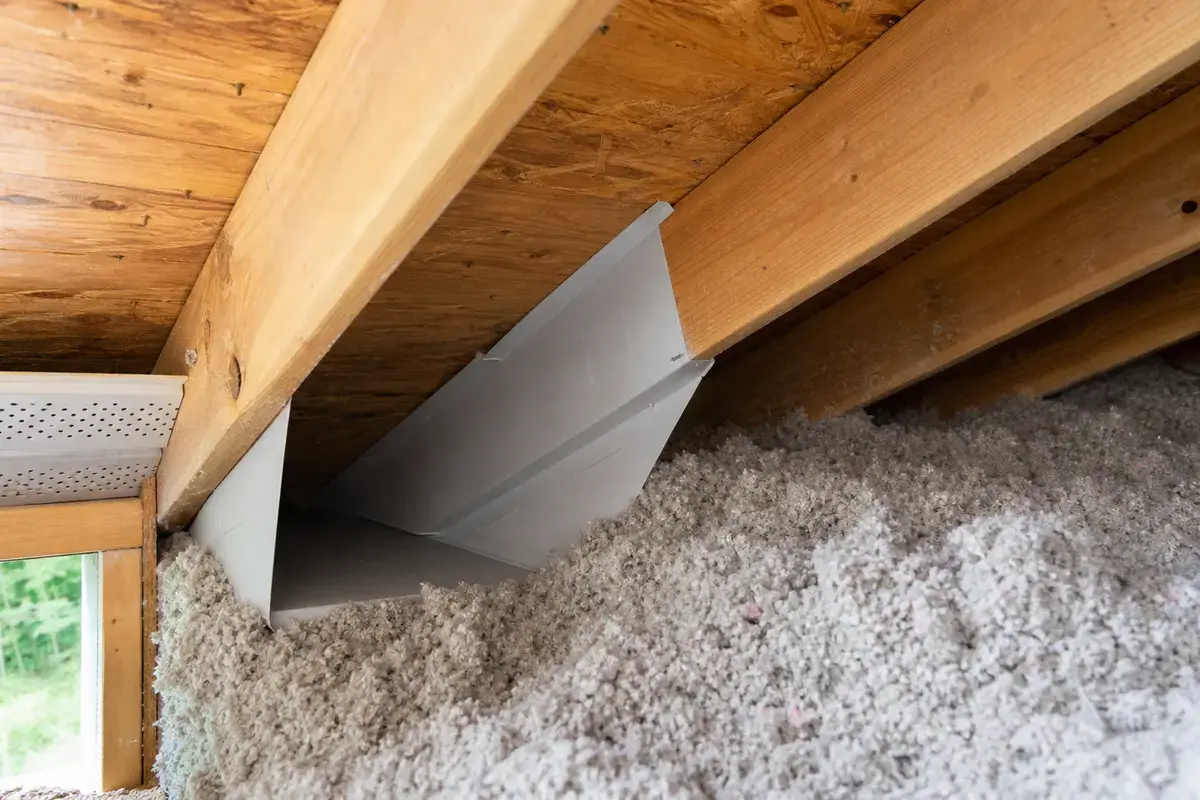
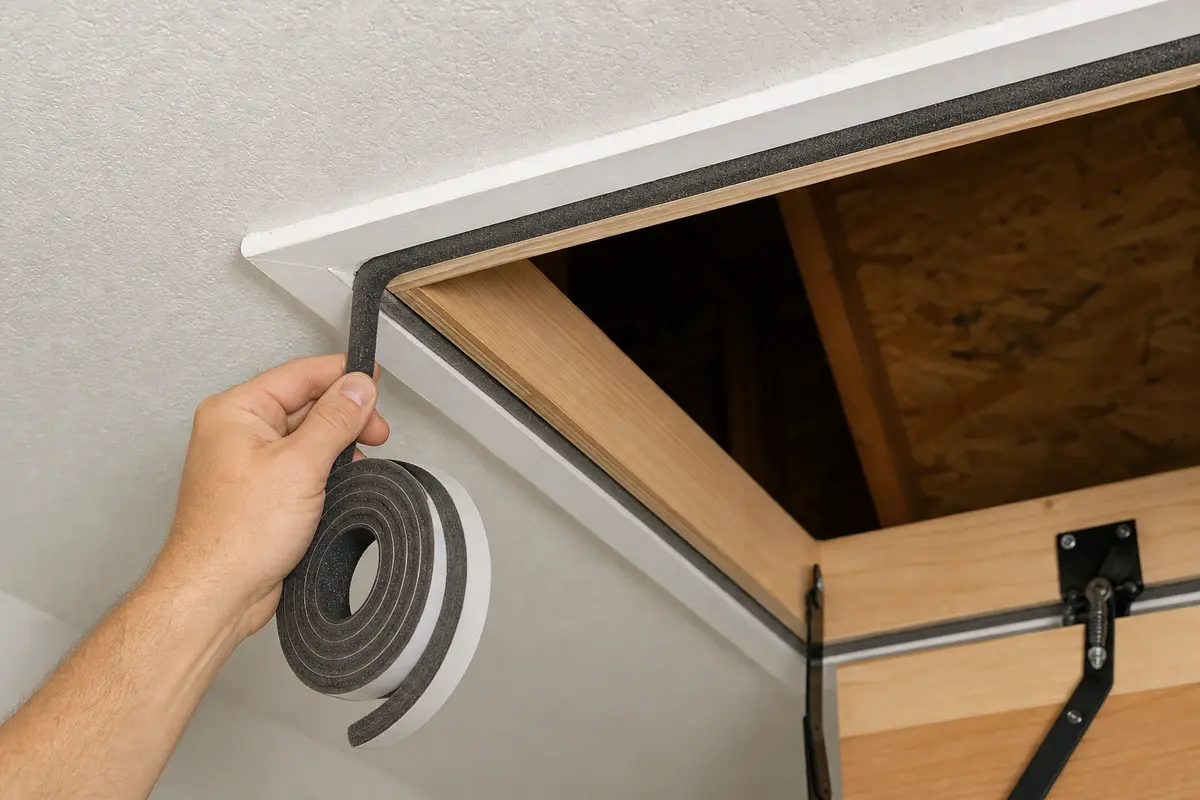
Match the exact diagnosis before buying anything; do not shop from the symptom alone. Measure rafter spacing and soffit layout for baffles, confirm a small dry ceiling-plane gap for sealant, and match hatch weatherstripping seal to the actual hatch closure and compression gap.
Start at the meter, then check the first damp surface, the hatch edge, and one eave bay before judging the vents.
The wrong first move can hide the evidence and leave the moisture source active.
Use weather timing, spread, and the first wet surface before choosing ventilation, air sealing, roof work, or cleanup.
| What you see | Likely meaning | Next move |
|---|---|---|
| High after cold nights | House air leaking upward | Check hatch, top plates, and ceiling penetrations. |
| High after rain | Weather entry or roof leak | Trace exterior path before air sealing. |
| High near eaves | Blocked intake | Open soffit channels and use baffles where needed. |
| High near bath area | Fan duct or indoor moisture source | Verify fan exhaust terminates outdoors. |
| High with wet sheathing | Active moisture problem | Document the pattern and stop covering the area. |
A good attic check follows both the outdoor intake path and the warm house-air leak path.
Use these only when a specific visible clue names the part.
Helps when: Use when insulation blocks the soffit intake path below the damp, icy, or musty attic area.
Skip it when: Skip when eave channels are already open, wetting follows rain, or roof flashing is the next repair.
Compare attic ventilation baffles on AmazonHelps when: Use when hatch dust lines, drafts, frost, or odor patterns show warm house air leaking into the attic.
Skip it when: Skip when the hatch is warped, will not close flat, or the moisture is isolated to a roof-side leak track.
Compare attic hatch weatherstripping on Amazon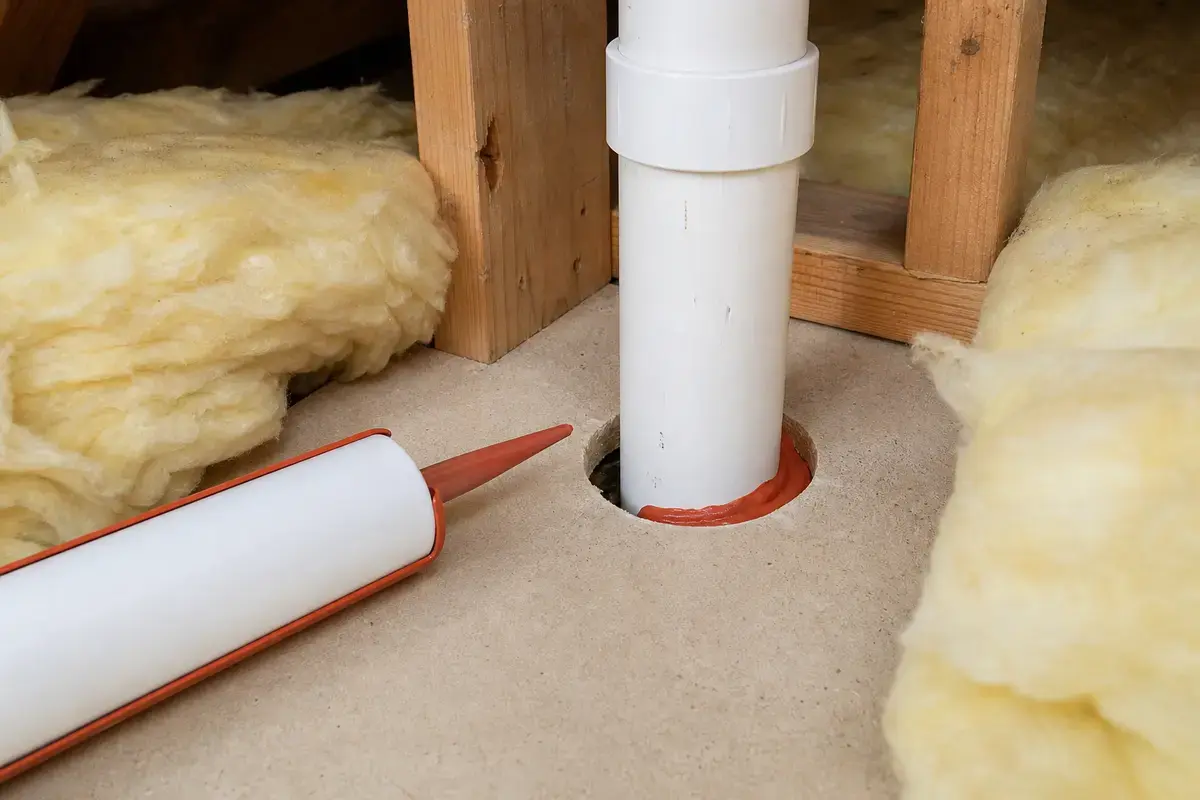
Helps when: Use on small confirmed dry ceiling-plane gaps after rain leaks and hot vent areas are ruled out.
Skip it when: Skip for chimneys, flues, wet framing, large open chases, roof leaks, or any fireblocking detail you cannot confirm.
Compare fireblock sealants on AmazonAs an Amazon Associate I earn from qualifying purchases. Repair Riot may earn a commission at no extra cost to you.
These support inspection and documentation. They do not make unsafe attic access, roof work, or electrical areas safe.
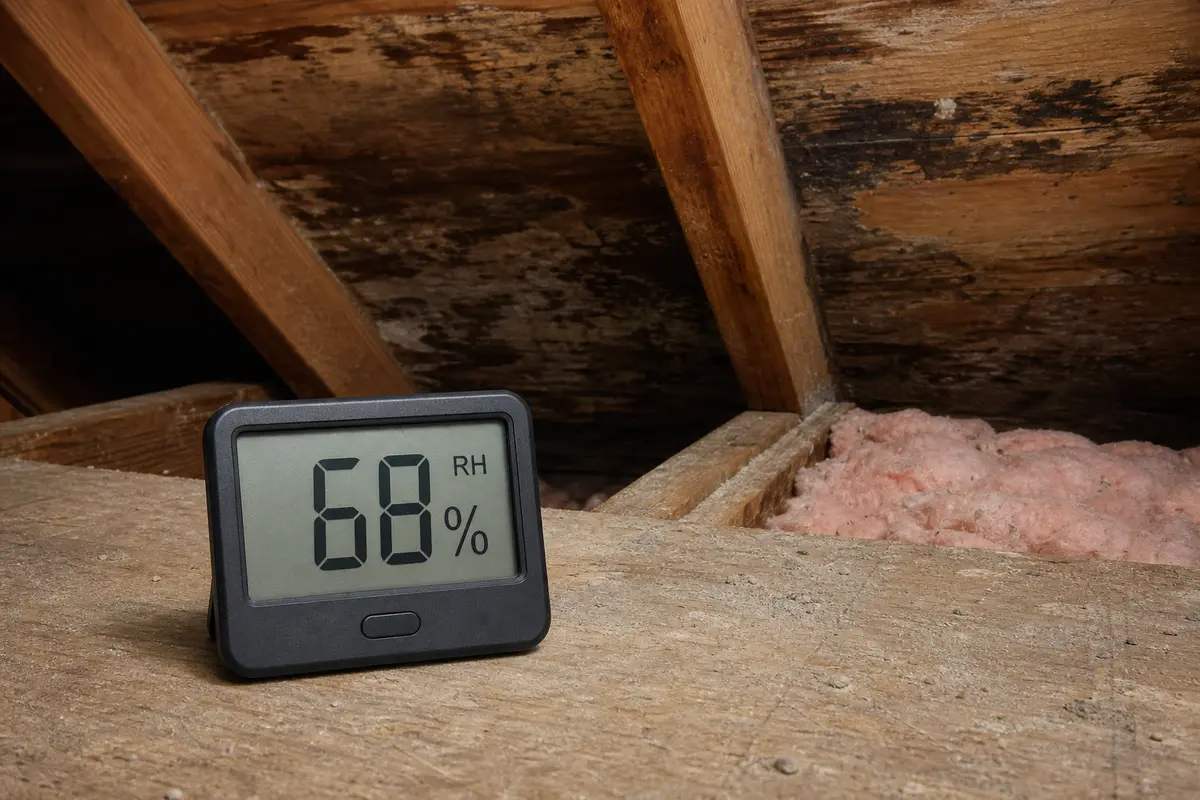
Helps when: Use to compare indoor humidity with attic readings before blaming the vents or buying airflow parts.
Skip it when: Skip using one reading alone; compare timing, rooms, weather, and visible attic moisture clues.
Compare hygrometers on Amazon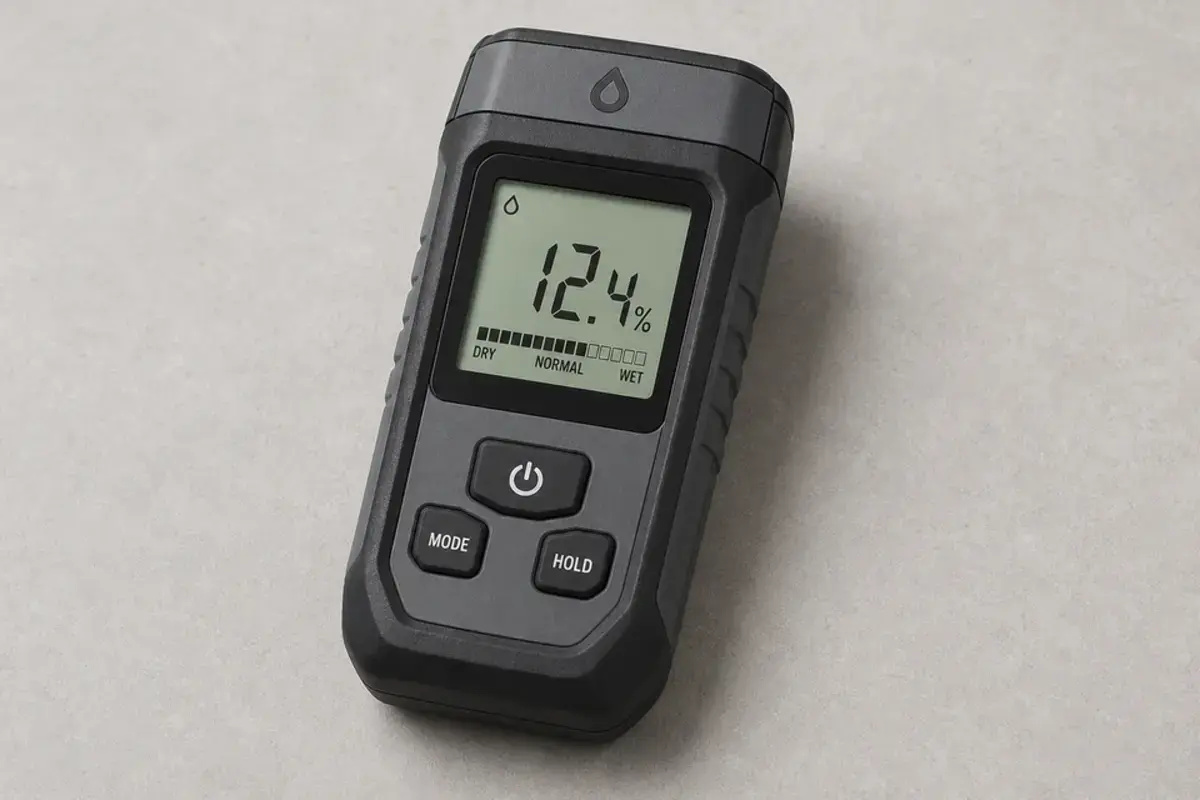
Helps when: Use to compare suspect sheathing, framing, or ceiling material with a dry reference area.
Skip it when: Skip treating meter numbers as proof by themselves; pair readings with timing and visible clues.
Compare pinless moisture meters on Amazon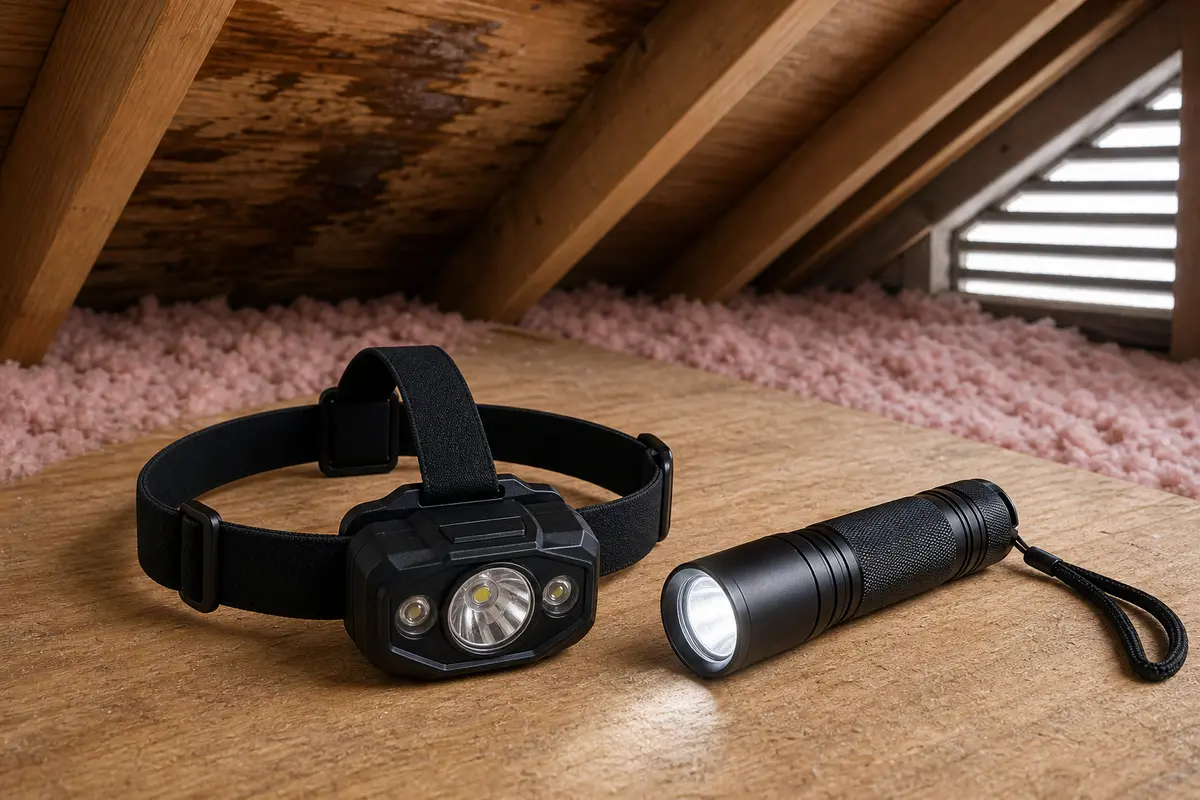
Helps when: Use to scan eave channels, roof-deck stains, ceiling-plane leak clues, and hatch edges while keeping hands free.
Skip it when: Skip attic entry if the walkway, wiring, contamination, heat, or access conditions are unsafe.
Compare headlamps on AmazonAs an Amazon Associate I earn from qualifying purchases. Repair Riot may earn a commission at no extra cost to you.
One number is not enough. A high reading that repeats with condensation, frost, staining, or wet insulation is the concern.
That is usually not the first fix in an unfinished attic. Find indoor moisture leaks, blocked intake, and exhaust duct problems first.
Yes. A disconnected or attic-terminated bath fan can dump warm wet air directly into the attic.
Only if the airflow path is the problem. Air leaks and indoor moisture sources still need correction.
Warm indoor air leaks into a cold attic and reaches the dew point on cold surfaces.
Yes. A hatch gap can move enough warm humid air to raise readings and create frost nearby.
Not until the attic is dry, air leaks are addressed, and soffit paths stay open.
Call for wet wiring, soft sheathing, heavy mold, roof leaks, unsafe access, or humidity that stays high after basic causes are corrected.
Repair Riot built this page around homeowner-visible attic moisture clues: timing, surface pattern, eave airflow, hatch leakage, roof-side entry, odor, and stop points before roof or cleanup work.